Jeroen De Geeter is a Researcher at the Faculty of Engineering Sciences, Vrije Universiteit Brussel, specializing in Electronics and Informatics. His roles include Scientific Employee and Electronics and Computer Science Doctorate. He is affiliated with the VUB's tauCAMTM research group and holds an ORCID identifier: 0000-0001-5373-3505 . Education: Doctorate in Electronics and Computer Science Research Interests: RF engineering and instrumentation Medical imaging innovations in PET/CT and radiation correction Prosthetics analysis and metal artifact reduction in diagnostics Signal processing for modulated systems Environmental health impacts on reproductive biology Recent Research Trends: Focus on interdisciplinary applications combining electrical engineering with medical diagnostics, including advancements in automatic ranging for RF experiments and artifact reduction in clinical imaging. His work bridges signal processing techniques with clinical challenges like prosthetic-induced imaging artifacts. Awards: No specific awards listed, but maintains an h-index of 29 with impactful publications in IEEE Transactions and EJNMMI Phys. Grants & Labs: Collaborates on projects involving VUB's tauCAMTM imaging systems and participates in conferences on multivariate function decoupling. Research teams include collaborations on PET/CT attenuation correction and cigarette smoking's reproductive effects.
Christine Schubert Kabban is a Professor of Statistics at the Graduate School of Engineering and Management , Air Force Institute of Technology (AFIT). Her work spans structural health monitoring, target detection, autonomous systems, and natural language processing, with over 150 publications in clinical, engineering, and statistical journals. She has secured funding from agencies like AFOSR, AFRL, and NIH. PhD in Applied Mathematics, AFIT MS in Applied Statistics, Wright State University BS in Mathematics, University of Dayton Her research integrates statistical methods with interdisciplinary applications, including biomedical studies (cytokine analysis, sleep disorders), network science (Barabási-Albert models), and defense systems (satellite reliability, ejection system safety). Recent work focuses on machine learning validation , 6D pose estimation , and ferroelectric material analysis . Notable awards include the 2024 Dean’s Distinguished Teaching Professor , 2022 Air Force Gage H. Crocker Outstanding Professor Award , and multiple Instructor of the Quarter recognitions. She has advised over 100 graduate students and contributed to defense acquisition cost modeling. She serves on the Wright Patterson Air Force Base IACUC and reviews grants for AFOSR, ensuring rigorous statistical evaluation in research ethics and funding.
Monica Abella Garcia is an Associate Professor in the Bioengineering Department at University Carlos III of Madrid . She leads the Biomedical Imaging and Instrumentation Group , focusing on advanced imaging techniques and software development for preclinical and clinical applications. Subjects: Biology and Biomedicine , Computer Science , Medical Imaging , Materials Science , Physics Research Interests Her work spans CT and X-ray imaging , deep learning applications , beam hardening and scatter correction , GPU-accelerated algorithms , and biomaterials for bone regeneration . She develops tools like XAP-Lab , FUX-Sim , and BoneAnalytics for quantitative imaging and protocol design. Projects & Grants Principal investigator on grants from Instituto de Salud Carlos III , Agencia Estatal de Investigación , and Banco Santander , focusing on AI in radiology , low-dose CT systems , and Covid-19 diagnostics . Co-investigator in EU-funded initiatives like ASPIDE and INFIERI , and MIT collaborations under the M+PET Project . Patents & Software Holds patents for tomography generation methods and developed software tools: 3DSTITCH (volume stitching), RadBoost (image enhancement), REXCT (fast reconstruction).
Professor Janusz Konrad is a distinguished faculty member in the Department of Electrical and Computer Engineering at Boston University's College of Engineering, where he has served since 1992 with increasing responsibilities, becoming a full Professor in 2008. He leads the Visual Information Processing (VIP) laboratory and is a key member of the Machine Learning, Information and Data Sciences (MINDS) group, the Center for Information and Systems Engineering (CISE), and the Rafik B. Hariri Institute for Computing and Computational Science & Engineering. Dr. Konrad earned his PhD from McGill University in 1989 and his M.Eng. from the Technical University of Szczecin, Poland in 1980. His academic journey began as a Lecturer in Poland (1980-1984), followed by research positions at McGill University and INRS-Telecommunications in Montreal before joining Boston University. His research focuses on computer vision, visual sensor networks, image and video processing, stereoscopic and 3-D imaging, and multidimensional digital signal processing. Recent work includes developing the COSSY (Computational Occupancy Sensing System) for energy-efficient HVAC control, plasmonic phase-imaging meta-sensors for cell classification, and privacy-preserving techniques for human activity recognition. His work bridges theoretical signal processing with practical applications in biomedical imaging, cybersecurity, and sustainable building technologies. Analysis of his recent publications reveals a strong trajectory toward practical applications of computer vision in public health (particularly post-pandemic social distancing monitoring), energy conservation through intelligent building systems, and biomedical diagnostics using advanced optical techniques. His work increasingly integrates machine learning with traditional signal processing approaches, particularly in the development of optical-digital hybrid neural networks. IEEE Fellow (2008) IEEE Signal Processing Society Distinguished Lecturer (2019-2020) ECE Outstanding Faculty Teaching Award, BU (2011) Faculty Service Award, BU (2024) EURASIP Fellow (2025) Multiple best paper awards including PETS Challenge Winner (2021), AVSS Best Paper (2010) Professor Konrad has secured significant research funding from diverse sources including NSF, DOE, NIH, DOD, and NSERC of Canada. His $1 million DOE ARPA-E contract for the COSSY project exemplifies his ability to translate theoretical research into practical solutions addressing energy conservation and public health concerns. As Deputy Editor-in-Chief of IEEE Transactions on Image Processing and through extensive service on conference committees, he has significantly shaped his field. He leads the VIP laboratory, which focuses on computer vision applications including event recognition, clutter analysis, human-computer interfaces, fisheye camera networks, and visual privacy. His lab collaborates extensively with the MINDS group and CISE, creating synergies between theoretical signal processing and practical applications in healthcare, cybersecurity, and sustainable infrastructure.
Wilker Aziz is an assistant professor at the Institute for Logic, Language and Computation (ILLC) within the Faculty of Science at the University of Amsterdam, where he leads the Probabilistic Language Learning research group. His academic journey includes a PhD from the University of Wolverhampton (2014), followed by research positions at the University of Sheffield and ILLC before joining the UvA faculty in January 2019. His research focuses on the intersection of machine learning, natural language processing, and probabilistic modeling. Aziz investigates how to design models and algorithms that learn to represent, understand, and generate language data, with particular emphasis on uncertainty estimation in language models, probabilistic inference techniques, and developing novel decoding algorithms for text generation. His work addresses fundamental problems in language modeling, machine translation, syntactic parsing, textual entailment, text classification, and question answering. Aziz's recent publications (2022-2024) demonstrate a strong focus on uncertainty in natural language generation, with multiple papers accepted at top-tier conferences including EACL and EMNLP. His research shows how language models can better align with human uncertainty patterns and how to properly evaluate model confidence when humans themselves disagree on annotations. Best paper award at Coling 2020 for 'Is MAP Decoding All You Need? The Inadequacy of the Mode in Neural Machine Translation' Outstanding Area Chair award at ICLR 2022 Active program committee member for major ML/NLP conferences including NeurIPS, ICML, ACL, EMNLP, and ICLR Aziz actively supervises PhD and MSc students, with a current cohort of five ongoing PhD candidates and numerous recent graduates. His Probabilistic Language Learning group develops theoretical frameworks and practical applications for uncertainty-aware natural language processing. He has contributed to open-source projects including PET (Post-Editing Tool), grasp (Randomised Semiring Parsing), and mosesdecoder, demonstrating his commitment to advancing the field through shared research tools.
Daniel Pflugfelder is a Researcher at the Plant Sciences (IBG-2) department of the Institute of Bio- and Geosciences at Forschungszentrum Jülich. His work focuses on developing non-invasive imaging tools to study plant root systems, carbon dynamics, and water uptake using Magnetic Resonance Imaging (MRI) and Positron Emission Tomography (PET) . He is based in Jülich, Germany, and his research supports sustainable agriculture and bioeconomy goals. Expertise: Plant research, Magnetic Resonance, 3D Data analysis, Positron Emission Tomography, Root research His research integrates molecular, physiological, and ecological approaches to analyze plant-environment interactions and develop technologies for alternative biomass utilization. He has contributed to plant phenotyping tools like phenoPET and phenoVein , enabling precise studies of root architecture, carbon allocation, and water fluxes in crops such as sugar beet, maize, and wheat. Daniel's publications emphasize multimodal imaging techniques , particularly MRI-PET co-registration , to explore heterogeneous carbon distribution, root hydropatterning, and symbiotic interactions in legumes. His work addresses challenges in quantifying root water uptake, soil-root interactions, and climate adaptation strategies in agriculture. Key applications of his research include improving resource efficiency in crops and understanding plant responses to drought stress and warming scenarios. He has also contributed to computational tools for image processing and radiation therapy optimization in earlier works.
Thomas Grosges is a Full Professor at the University of Technology of Troyes (France) since 2013, specializing in computational and numerical physics, electromagnetics, applied mathematics, and plasmonics. His academic journey includes an Associate Professorship at UTT (2004-2013), post-doctoral research at UCL/VKI (Belgium) and CORIA/UTT (France), a PhD in Theoretical Physics from Catholic University of Louvain (1999), and a Professorial Thesis (Habilitation) at University of Technology of Compiegne (2007). Research Domains: Computational Physics, Numerical Electromagnetics, Applied Mathematics, Near-Field Optics, Plasmonics, Photothermal Therapy Key Projects: Numerical solver developments for near-field microscopy, optimization of plasmonic nanostructures, adaptive meshing techniques, and applications in biomedical imaging/cryptography His scientific output includes 89 publications with 10,392 reads, focusing on: Photothermal cancer therapy using metallic nanoparticles 3D adaptive remeshing for electromagnetic/thermal simulations Positron Emission Tomography (PET) image reconstruction Plasmonic field enhancement and uncertainty propagation Development of pseudo-random generators using chaotic systems Professor Grosges holds a patent on tomographic encryption methods and has contributed to pedagogical works on the European Credit Transfer System (ECTS) and near-field optical microscopy signal processing.
Ole Myren Røhne is a Researcher at the Department of Physics , University of Oslo, specializing in High Energy Physics and Particle Physics . He has been actively involved in the ATLAS experiment at the LHC since 2010, focusing on detector development and data analysis. Education: M.Sc. in Physics (1988-1992) from Norwegian Institute of Technology (NTH) Dr.scient. in Physics (1993-1998) from University of Oslo Career: Postdoc at University of Oslo (1998-1999) Research Fellow at CERN (1999-2001) Postdoc at University of Pennsylvania (2002-2006) Researcher at University of Oslo (2010-present) Research Interests: Ole's work centers on silicon pixel detectors with 3D electrode structures , their application in medical imaging (e.g., PET scans), and high luminosity upgrades for the ATLAS experiment. His detector R&D aligns with Instrumentation and Radiation Damage Effects . Publication Trends: His recent contributions include studies on supersymmetry , Higgs boson properties , vectorlike quarks , and dark matter models (2024-2025). Key methodologies involve differential cross-section analysis , machine learning , and vertex reconstruction . Collaborations: He contributes to the ATLAS project's IBL and 3D Pixel R&D groups, working with institutions like CERN, SINTEF, and COMPETITION.
Andrew S. Nencka is a Professor and Director of the Center for Imaging Research at the Medical College of Wisconsin, Department of Radiology, with leadership roles including Associate Director of CIR (2016-present) and Chair of the Research MRI Safety Committee (2012-present). His educational background: PhD in Biophysics, Medical College of Wisconsin, 2009 BS in Physics & Mathematics, Marquette University, 2004 Dr. Nencka's research pioneers MRI acceleration techniques leveraging image phase and coil sensitivities for parallel acquisition, enabling 2N-fold acceleration with N-coil arrays. His GREASE pulse sequence achieves sub-300ms simultaneous T1/T2/T2* mapping through optimized echo-planar readouts and GRAPPA acceleration, facilitating perfect coregistration of relaxivity maps for neurological and musculoskeletal applications. Recent publications (2023-2025) reveal dominant themes in quantitative neuroimaging (epilepsy connectomics, concussion biomarkers, neuropathic pain phenotypes) and advanced musculoskeletal MRI (carpal kinematics, spinal cord injury assessment), heavily utilizing diffusion tensor imaging, quantitative susceptibility mapping, and multi-echo sequences. Scientific awards: None documented in source material. Research leadership includes directing MCW's Center for Imaging Research and developing institutional MRI safety protocols, with collaborative projects spanning multi-site neurocognitive studies (MINDS-ACHD) and metal artifact reduction methodologies. He maintains active research infrastructure through the Section of Imaging Research within Radiology's Division of Imaging Sciences.
Dr. Victoria Penpraze is a Senior Lecturer in Cardiovascular & Metabolic Health at the University of Glasgow. Her research focuses on physical activity measurement, obesity interventions, and health outcomes in populations including children with intellectual disabilities, adults with disabilities, and companion animals. She leads studies on accelerometer validation and has contributed to canine obesity research. Her work integrates clinical and applied research, with notable projects on: Accelerometer calibration protocols for disabled populations Family-pet exercise interventions (CPET trial) Graduate outcomes in sports science education Key grants include Baily Thomas Charitable Fund projects on sedentary behavior and physical activity interventions, plus NHS-funded studies on child disability health. She collaborates with veterinary researchers, sports scientists, and public health teams. Notable publications span journals like Pilot and Feasibility Studies , Advances in Physiology Education , and Research in Developmental Disabilities . Her 2021 book Acceptance and Commitment Approaches for Athletes’ Wellbeing highlights interdisciplinary health strategies.
Wolfgang Wein is the CEO of ImFusion GmbH's R&D lab and a senior research scientist affiliated with the Chair of Computer Science Applications in Medicine at Technical University of Munich (TUM). His work bridges computer science, physics, and medicine, with a focus on medical image computing. Key research areas include 3D cone-beam X-ray reconstruction, motion compensation, and ultrasound-based interventional navigation. He has contributed to clinical applications such as radiation treatment planning for head/neck cancer and image-guided navigation for liver/kidney interventions. Education: Dr. Wein holds a Diploma in Computer Science (minor in Physics) from TUM (2004) and a Ph.D. from TUM's Chair I16 under Prof. Nassir Navab (2006). His doctoral work focused on multimodal integration of medical ultrasound for treatment planning and interventions. Teaching: He coordinates courses on medical augmented reality, surgical robotics, and computational methods in healthcare. Recent lectures include Computer Aided Medical Procedures , Medical Augmented Reality , and Deep Learning for Medical Applications . Research & Labs: Active in labs like DHM (Medical Image Analysis), NARVIS (Generative Models), and RobUSt (Robotics & Ultrasound). His work involves datasets like SegThy and Leg-3D-US, advancing 3D reconstruction and interventional imaging. Supervision: Advised over a dozen students on topics ranging from ultrasound calibration to GPU-based registration algorithms. Notable advisees include Darko Zikic (deformable registration), Christian Wachinger (ultrasound mosaicing), and Diego Vivancos (PET-MR registration).
Christopher Kurz is a dedicated researcher and group leader in the Department of Radiation Oncology at LMU University Hospital, affiliated with the Faculty of Medicine at LMU Munich. His work bridges medical physics and clinical oncology, focusing on advancing MRI-guided radiation therapy through artificial intelligence. Education: PhD in Medical Physics, 2014, LMU Munich Diploma in Physics, 2011, Heidelberg University Dr. Kurz's research is centered on integrating artificial intelligence into radiation oncology, with a strong emphasis on improving imaging, targeting, and treatment adaptation. His work spans deep learning applications for auto-segmentation, real-time tumor tracking, synthetic CT generation, motion modeling, and dose calculation in MRI-guided and CBCT-based radiotherapy. He has made significant contributions to the development of patient-specific AI models and methods for online adaptive therapy, particularly for abdominal and lung cancers. His research also explores low-field MR-linac applications and the clinical implementation of quantitative imaging. The recent publications highlight a strong trend toward leveraging foundation models, generative AI, and patient-specific deep learning frameworks to enhance precision, reduce imaging doses, and enable real-time adaptive radiotherapy. His work increasingly focuses on creating robust, clinically viable AI tools that can be integrated into routine workflows. Scientific Awards: Mildred Scheel Postdoctoral Scholarship, German Cancer Aid Dr. Kurz leads a research group, implying active mentorship and guidance of junior scientists and students in the fields of medical physics and AI in oncology. His research is supported by competitive funding, including the German Research Foundation (DFG), as evidenced by the DFG-funded project AIM-CBCT-ART, which focuses on uncertainty calibration for deep learning in adaptive radiotherapy. His leadership in creating challenge datasets (SynthRAD2025, TrackRAD2025) also indicates a strong collaborative and community-engaged research profile. Dr. Kurz leads the research group on MR-guided Radiation Therapy within the Department of Radiation Oncology. His team focuses on developing and validating AI-driven solutions for real-time imaging, target localization, and adaptive treatment planning. The group's work involves close collaboration between physicists, clinicians, and data scientists, aiming to translate advanced computational methods into clinical practice for improved cancer care.
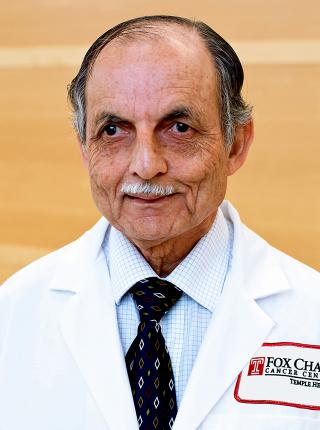
Mohan Doss is a Professor at Fox Chase Cancer Center, part of the Temple University Health System, where he conducts advanced research in nuclear medicine and medical physics, focusing on PET imaging and radiation dosimetry. He is affiliated with the Department of Radiology and plays a key role in developing and evaluating novel PET imaging agents. BSc in Physics, Madras University, 1971 MSc in Physics, Indian Institute of Technology, Kanpur, 1973 MS in Physics, Carnegie-Mellon University, 1975 PhD in Physics, Carnegie-Mellon University, 1980 Certified Member, Canadian College of Physicists in Medicine (Nuclear Medicine Physics), 1994 Dr. Doss's research centers on PET imaging, particularly in cancer staging and treatment monitoring. His work includes biodistribution and radiation dosimetry of new PET tracers such as HX-4, RGD-K5, and VM4-037, enabling safe clinical translation. He investigates quantitative Y-90 PET imaging for liver cancer radioembolization and applies textural analysis to predict treatment response. His preclinical studies explore Cerenkov imaging as a cost-effective method for evaluating radiotracer targeting. The recent publications reflect a strong trend in translational medical physics, combining clinical PET/CT with preclinical models to advance oncologic imaging. His work emphasizes radiation safety, dosimetry accuracy, and the development of targeted imaging agents for hypoxia, angiogenesis, and apoptosis. The integration of quantitative imaging with therapeutic monitoring highlights a move toward personalized cancer care. Dr. Doss has received several honors, including: Outstanding Leadership Award in the Field of Dose Response, International Dose-Response Society (2014) FCCC Ovarian SPORE Career Development Award (2003) His research is supported by institutional and collaborative grants, particularly through multi-center initiatives like the QUEST study on Y-90 PET quantification. While no formal students are listed, his leadership in research projects suggests mentorship of junior scientists and physicists. He has not received external fellowships but has led significant methodological advancements in dosimetry and imaging. Dr. Doss works within a multidisciplinary team at Fox Chase Cancer Center, utilizing state-of-the-art PET/CT scanners and software like OLINDA/EXM for dose estimation. His lab conducts human and animal studies, contributing to both clinical protocols and preclinical validation of imaging agents.
Dr. hab. Bożena Zgardzińska serves as a university professor at the Institute of Physics, Department of Material Physics at Maria Curie-Skłodowska University in Lublin, Poland. She currently holds the position of Deputy Director of the Institute and maintains regular student consultations. Her academic career has been deeply rooted in the Lublin nuclear physics research group specializing in positron annihilation phenomena. Her research focuses on Positron Annihilation Lifetime Spectroscopy (PALS) with applications spanning multiple scientific domains. She investigates the structure and properties of organic compounds, organic tissues for medical diagnostics applications, and multicomponent organic systems with industrial and medical potential. Her scientific work bridges fundamental physics with practical applications in materials science and medicine. Dr. Zgardzińska's publication record shows a strong emphasis on medical physics applications, particularly through the J-PET tomograph project, alongside fundamental studies of organic materials. Her research demonstrates consistent interdisciplinary collaboration across physics, materials science, and medical fields, with significant contributions to positron-based imaging techniques. She has secured competitive research funding, including leading the grant "Akademia kreatywnego rozwoju" (2018-2019) and the grant "Badanie struktury i własności materiałów kompozytowych i wieloskładnikowych materiałów organicznych metodą spektroskopii pozytonowej" (2014-2016). Her research program demonstrates sustained productivity and relevance across multiple scientific domains. As an educator, she has supervised students through bachelor's, engineer's, master's, and doctoral theses. She is also actively engaged in science communication through popular science publications like "Wiedza i życie," public lectures, and physics demonstrations for school groups. She co-founded and presides over the Lublin Educational-Scientific Association (LuTEN) and is a member of the Lublin Branch of the Polish Physical Society (PTF).