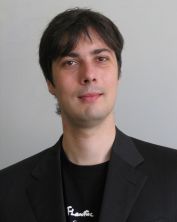
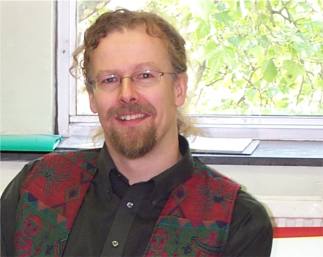
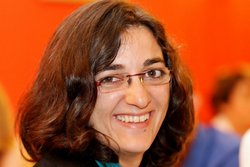
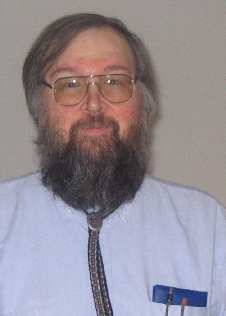
Laura Carrington is a researcher at the University of California, San Diego, specializing in High Performance Computing (HPC) with a focus on energy efficiency, memory management, and performance optimization. She has contributed to the development of tools like PEBIL for binary instrumentation, ADAMANT for data movement analysis, and frameworks for power management in large-scale systems. Her research spans multiple domains including ARM processor evaluation, Xeon Phi vectorization, and communication reduction in graph algorithms. Key collaborations include work with Michael Laurenzano, Allan Snavely, Ananta Tiwari, and Pietro Cicotti. Laura's work addresses critical challenges in HPC such as DVFS configuration optimization, workload colocation, and energy-aware algorithm design. While no explicit academic rank is stated, her extensive publication record across 2002-2019 in top venues like SC, IPDPS, and IJHPCA establishes her as a significant contributor to HPC research. Her work has influenced practices in system-level power management, scientific application characterization, and energy-efficient computing for both CPU/DRAM domains and emerging memory technologies.
Spyropoulos Thrasyvoulos is a Professor at the School of Electrical and Computer Engineering (ECE) at the Technical University of Crete. His work focuses on network optimization, machine learning, and telecommunications, with particular emphasis on edge computing, distributed systems, and 5G/6G networks. He holds an office in the Science/ECE Building (Λ) and can be reached at spyropoulos@tuc.gr. His research interests include decentralized optimization algorithms, network slicing, federated learning, and resource allocation strategies for next-generation networks. Notable contributions involve developing distributed machine learning frameworks, QoS-aware recommendation systems, and solutions for spatial fairness in mobile networks. Recent publications highlight advancements in edge resource scaling, peer-to-peer federated learning (FedDec), and LSTM-based resource allocation for beyond 5G networks. His work often bridges theoretical optimization with practical network deployment challenges, emphasizing scalability and real-world applicability. No scientific awards are explicitly listed, though his prolific publication record in top-tier venues indicates significant academic impact. He has not listed advisees/students in the provided materials, but his research collaborations suggest involvement in mentoring through projects like the COLOMBO initiative. No detailed grants or lab affiliations are specified in the text.
Hamdi Joudeh is an Associate Professor in the Department of Electrical Engineering at Eindhoven University of Technology (TU/e). He is affiliated with the Information and Communication Theory (ICT) Lab and the Signal Processing Systems (SPS) Group. His research focuses on information theory, communications, and signal processing, with applications in wireless networks and radar systems. He holds a Ph.D. in Electrical Engineering from Imperial College London and has held research positions at Technische Universität Berlin and Imperial College London. His research interests include quantum sensing, error exponents, MIMO systems, and channel coding. He leads projects such as the IT-JCAS (Information Theoretic Foundations of Joint Communication and Sensing) and ANTERRA (Beam Prediction for Fast-Moving LEO), addressing challenges in 5G/6G communication and radar technologies. He has received an ERC Starting Grant (2023) for his work on environment-scanning mobile networks. Education: Ph.D. in Electrical Engineering (Imperial College London), M.Sc. in Communications and Signal Processing (Imperial College London) Editorial Roles: Editorial board member of IEEE Transactions on Signal Processing , IEEE Communications Letters , and EURASIP Journal on Wireless Communications and Networking Labs/Teams: ICT Lab, SPS Group, and leads projects at TU/e’s Center for Wireless Technology Grants: ERC Starting Grant, TKI-HTSM/22.0547/TKI2212P11 RAIDAR, and others His recent work explores the intersection of communication and sensing, including quantum radar processing and robust beamforming techniques. He has published extensively on topics like error exponents, MIMO channel analysis, and interference management, with over 40 peer-reviewed articles.
Atul Kumar is a Researcher in computer science with publications spanning quantum computing, machine learning, and cybersecurity. His work appears in journals including IEEE Transactions on Visualization and Computer Graphics, Knowledge-Based Systems, and IEEE Access. His research focuses on quantum machine learning algorithms, medical image analysis, hardware security, and chaotic encryption systems. Recent investigations explore quantum support vector machines, hardware Trojan attacks, and uncertainty-aware neural representations for scientific visualization. Analysis of his publication portfolio reveals consistent methodological innovation in applying quantum computing principles to traditional computing problems, particularly in image processing and classification tasks. His security-focused research examines vulnerabilities in hardware systems and develops cryptographic solutions using chaotic maps.
Andreas F. Molisch is a Professor at the University of Southern California , specializing in wireless communications and 5G/6G network design. His work focuses on channel modeling, machine learning for network optimization, and THz/mmWave systems. His research interests include Wireless channel measurement and statistical modeling Cell-free Massive MIMO architectures Federated learning for video caching networks LEO satellite handover protocols Vegetation impact on ultra-wideband propagation Recent work explores double-directional channel measurements , semantic localization , and stochastic geometry-based network analysis . Publications span IEEE journals and conferences like GLOBECOM, ICC, and VTC.
Radu Dobrin is a Senior Lecturer and Head of Department at the Department of Computer Science and Software Engineering, Mälardalen University. He is associated with the Academy of Innovation, Design and Technology. His research focuses on real-time systems, scheduling algorithms, network protocols, and embedded systems. He also contributes to curricular development in computer science education, as evidenced by his work on curriculum mapping frameworks and ethics integration. Dobrin's recent work includes advancements in TSN (Time-Sensitive Networking), fault-tolerant scheduling, and probabilistic analysis of real-time systems. Despite no explicit mentions of awards or grants, his extensive publication record indicates substantial contributions to both theoretical and applied aspects of computer science. His research trends emphasize improving scheduling efficiency in real-time environments, handling cache-related preemption delays, and enhancing network resilience through adaptive frameworks like MALOC. Collaborations with industry are evident in projects like HUBLINKED and curriculum mapping initiatives. While specific student advisees are not listed, his academic role suggests involvement in mentoring graduate students in computer science and engineering disciplines. Technical responsibilities include managing the department's academic operations and contributing to Mälardalen University's digital infrastructure, as seen through his involvement in accessibility improvements and web-related projects. No specific grants or lab affiliations are detailed in the provided texts, though his research areas imply potential involvement in EU-funded or industry-sponsored projects.
Georgios Papageorgiou is a Research Associate at the School of Engineering & Physical Sciences, Institute of Sensors, Signals & Systems, Heriot-Watt University. His research focuses on advancing medical imaging technologies, particularly super-resolution ultrasound imaging for applications in cancer diagnosis and ischemia flow analysis. He specializes in developing algorithms for vascular-specific imaging, beamforming techniques, and computational modeling of biomedical systems. Key research areas include prostate cancer microvascular pattern mapping, ischemia flow dynamics using in silico studies, and the integration of machine learning with ultrasound imaging for enhanced diagnostic capabilities. His work contributes to UN Sustainable Development Goals by improving healthcare technologies and accessibility. Collaborations span interdisciplinary teams in biomedical engineering and signal processing, with recent studies published in journals like European Radiology Experimental and Physics in Medicine and Biology . His research emphasizes innovation in medical imaging algorithms, hybrid precoding for telecommunications, and spectrum sharing technologies. Current projects include evaluating super-resolution ultrasound algorithms for clinical applications and exploring stochastic optimization techniques in wireless communication systems. He is part of the Institute of Sensors, Signals & Systems, driving advancements in medical imaging and telecommunications.
Riccardo Lancellotti is an Associate Professor at the Department of Engineering 'Enzo Ferrari' of the University of Modena and Reggio Emilia, Italy. His primary research focuses on Fog/Edge computing, Cloud IaaS infrastructure management, and scalable resource allocation strategies. He actively contributes to international conferences and journals in computer science and networking. Research Interests: Current: Fog and Edge computing, Virtual elements management in SDN data centers, Cloud monitoring, IaaS optimization Past: Performance evaluation of web clusters, Social network analysis, P2P systems, cooperative caching His work emphasizes energy-efficient algorithms, load balancing in distributed systems, and genetic approaches for service placement. He has received a Best Paper Award for his 2014 publication on adaptive VM clustering techniques. Lancellotti collaborates closely with industry partners, including those involved in smart city infrastructure projects and multimedia processing optimization. Teaching Activity: Reti di calcolatori e lab (Computer Networks) Applicazioni Distribuite e Mobili (Distributed and Mobile Applications) Sistemi e Applicazioni Cloud (Cloud Systems and Applications) Lancellotti has advised on projects involving VM behavior analysis and cloud monitoring, though no formal student names are listed. He participates in significant initiatives like the SAMMClouds project and has a strong focus on open-source software advocacy, as seen in his contributions to Linux Day events. He is part of the Department’s research group exploring cloud and edge computing solutions, with a lab focusing on infrastructure optimization and sustainable computing practices.
Walter Binder is affiliated with TU Wien's Faculty of Informatics, Department of Compilers and Languages. He holds the title of Privatdozent and focuses on research in compilers, programming languages, and embedded systems. His work includes contributions to Java processors, cross-profiling techniques, and web services technology. His research interests span compilers and programming languages, embedded systems, and web services technology. He has explored design space exploration for Java processors, cross-profiling methodologies, and interface mediation for web services. His contributions aim to enhance performance and interoperability in both embedded systems and distributed service environments. Binder's publications from 2008–2009 highlight his focus on cross-profiling for Java processors, embedded systems optimization, and resolving interface heterogeneity in web services. His work bridges theoretical computer science with practical applications in embedded architectures and service-oriented computing. No scientific awards mentioned. No advising or grant details provided.
Antonio González Colás is a Full Professor at the Universitat Politècnica de Catalunya (UPC), affiliated with the Facultat d'Informàtica de Barcelona (FIB) and the Department of Computer Architecture. He leads the ARCO research group (Microarchitecture and Compilers) and focuses on advanced computer architecture, including GPUs, compilers, and embedded systems. In 2024, he received the ICREA Acadèmia distinction for his research on future computer systems integrating cognitive tasks and autonomous decision-making. His work emphasizes energy-efficient architectures, memory optimization, and hardware acceleration for AI and real-time applications. He holds a Doctorate in Computer Science and has over 1000+ publications, including top-tier journals and conferences. His research spans topics like GPU microarchitecture, compiler-assisted caching, DNN acceleration, and autonomous driving hardware. Major awards include the HiPEAC 2024 Paper Award and EU-funded projects under Horizon 2020. He advises numerous PhD students on topics such as point cloud processing for autonomous systems, GPU rendering optimizations, and neural network efficiency. His contributions bridge theoretical computer architecture with practical hardware-software co-design, addressing challenges in modern computing systems.
Paul H J Kelly is a Professor of Software Technology at Imperial College London, leading the Software Performance Optimisation research group. He serves as co-Director of the Centre for Computational Methods in Science and Engineering and Director of Industrial Liaison for the HiPEDS Centre for Doctoral Training in High-Performance Embedded and Distributed Systems. Research Interests His research focuses on: Compiler technology for computational science Performance portability across heterogeneous architectures Domain-specific languages (DSL) for scientific computing Optimization of finite element methods and PDE solvers Data locality and parallelism trade-offs Computer vision algorithms and SLAM systems He actively collaborates with hardware vendors and application developers in computational science, robotics, and quantum chemistry. Article Trends Recent publications emphasize: Temporal and spatial tiling for PDEs and stencil computations Quantum circuit simulation optimization Distributed SLAM systems Performance portability frameworks (e.g., Firedrake, Devito) Compiler techniques for GPUs and custom accelerators Memory hierarchy optimization Scientific Awards Senior Member of the ACM (2021) Imperial College Engineering Faculty Teaching Excellence Award (2013) Best Robotics Paper at 18th Conference on Robots and Vision (2021) Student Mentoring He has mentored numerous PhD and postdoctoral researchers now in academic positions including: Luigi Nardi - Assistant Professor at Lund University Sajad Saeedi - Assistant Professor at Ryerson University Lawrence Mitchell - Assistant Professor at University of Durham Current students include Renato Salas-Moreno , David Ham , and Miklos Homolya .
George Darzanos is a researcher affiliated with the Department of Computer Science at Athens University of Economics and Business (AUEB), actively contributing to the fields of network economics, game theory, cloud computing, and 5G network services. His work focuses on resource allocation, pricing strategies, and socially-aware traffic management in federated environments. Education: Ph.D. in Computer Science from AUEB (2013-2022), MSc in Computer Science from AUEB (2011-2013), and BSc in Informatics and Telecommunications from National and Kapodistrian University of Athens (2005-2011). Research Interests: Network economics, game theory, cloud federations, edge computing, 5G, and socially-aware traffic management. His publications and projects emphasize decentralized governance models, IoT federations, and optimization in multi-provider environments. He has collaborated on initiatives like IoT Federations (IoTFeds), 5G Vertical Innovation Infrastructure (5G-VINNI), and 5G Exchange (5GEx), contributing to business models, resource management, and network slicing. His contact information includes an office in the Theory, Economics and Systems Laboratory at AUEB, with an email address ntarzanos@aueb.gr .
Claire Maiza is an Associate Professor at Grenoble INP's Ensimag (École nationale supérieure d'informatique et de mathématiques appliquées de Grenoble) and a member of the Verimag laboratory. She holds a Habilitation à Diriger des Recherches (HDR) awarded in June 2023. Her research focuses on timing analysis, real-time systems, and predictable execution models for embedded and multi-core/many-core platforms. Her work emphasizes worst-case execution time (WCET) evaluation, cache-related timing anomalies, and resource interference analysis in shared environments. Key contributions include frameworks for multi-core response time analysis, memory interference mitigation strategies, and novel approaches to model cache behaviors like LRU and PLRU policies. She also investigates scheduling algorithms resilient to preemption delays and software/hardware co-design for deterministic execution. Her research addresses challenges in hard real-time systems, including mixed-criticality scheduling, network-on-chip (NoC) timing, and WCET estimation using program semantics. Claire's methodologies aim to bridge theoretical timing analysis with practical implementation constraints in industrial applications. No academic awards or grants are explicitly listed in the provided text. She is affiliated with the SharedResources group, though specific lab/team details beyond Verimag are not elaborated.
Gerald Quentin Maguire Jr. is a Professor (emeritus) at KTH Royal Institute of Technology, Sweden, specializing in Computer Science and Communication Systems. He holds a Ph.D. in Computer Science from the University of Utah and a B.A. in Physics from Indiana University of Pennsylvania. His academic roles include Professor of Computer Communication at KTH since 1994, and prior positions at Columbia University and the U.S. National Science Foundation. He has contributed to fields like data communications, medical imaging, and mobile computing. Education: Ph.D. in Computer Science, University of Utah, 1983 M.S. in Computer Science, University of Utah, 1981 B.A. in Physics (magna cum laude), Indiana University of Pennsylvania, 1975 Research Interests: Focuses on network protocols, mobile computing, medical imaging integration, and high-performance computing. His work includes cognitive radio systems, GPU-centric networking, and CT/PET fusion for medical diagnostics. Awards: IEEE Fellow (2013) Teacher of the Year (2006/2007, KTH) Giovanni DiChiro Award (1997) Multiple honors in medical imaging and network research Advising & Grants: Supervised 8 doctoral students and over 75 master's students. Authored 5 books and numerous papers, with over 200 invited lectures globally. His research has been supported by grants from Swedish and international funding bodies. Labs & Teams: Formerly led the Computer Communication Systems Lab (CCSlab) at KTH and collaborated with Karolinska Institutet on medical imaging projects.
Xing Cai is a Professor at the Department of Informatics, University of Oslo, specializing in Scientific Computing and Machine Learning. His academic career spans several decades with a consistent focus on high-performance computing and its applications to complex scientific problems. He maintains an active research profile with numerous publications in top-tier journals and conferences. Professor Cai's research interests encompass parallel programming and high-performance computing, performance modeling and optimization, automated code generation, heterogeneous computing, and numerical methods for solving partial differential equations. His work extends to specialized applications in computational cardiology, computational geoscience, and biomedical computing. His research bridges theoretical computer science with practical applications in medicine and earth sciences, demonstrating exceptional interdisciplinary reach. An analysis of his recent publications (2019-2024) reveals a strong trend toward leveraging novel hardware architectures (GPUs, AI processors, specialized accelerators) for scientific computing, with particular emphasis on cardiac modeling applications. His work shows increasing sophistication in hardware-aware algorithm design, with publications spanning from fundamental performance modeling to domain-specific applications. The interdisciplinary nature of his work is evident in the diverse range of journals and conferences where he publishes, from computer science venues to specialized medical and geoscience publications. Professor Cai leads or participates in several significant research projects including the EuroHPC Centre of Excellence: Numerical Modeling of Cardiac Electrophysiology at the Cellular Scale (MICROCARD-2), High resolution simulation of cardiac electrophysiology on realistic whole-heart geometries, Maelstrom Associate Team, ODISSEE, Simula-Berkeley Education and Research collaboration (SIMBER), and aCG eX3: Experimental Infrastructure for Exploration of Exascale Computing. These projects reflect his leadership in both computational methodology development and domain-specific applications. His research group maintains strong collaborations with medical researchers, particularly in cardiac electrophysiology, and with geoscientists working on reservoir simulation. The publications list demonstrates consistent mentorship of junior researchers, with frequent co-authorship patterns suggesting an active supervision of PhD and postdoctoral researchers. His work on the EMI model for cardiac tissue represents a significant contribution to computational cardiology with potential clinical applications. The laboratory environment surrounding Professor Cai's work appears to be well-equipped for high-performance computing research, with access to advanced hardware platforms including GPU clusters, AI processors, and specialized accelerators. His publications on the use of Graphcore IPUs, Xeon Phi processors, and NVIDIA architectures indicate a well-resourced research environment capable of experimenting with cutting-edge hardware.