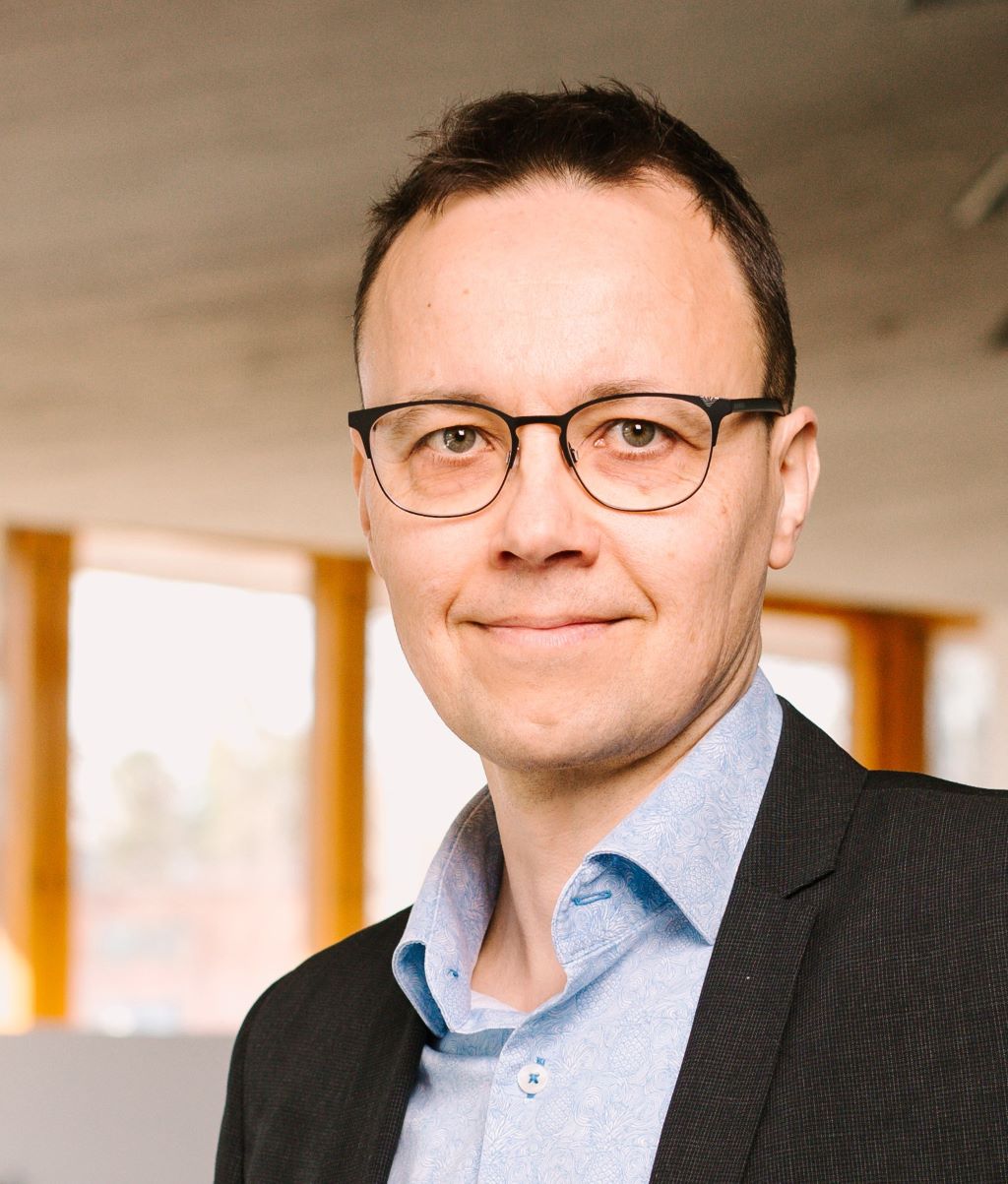
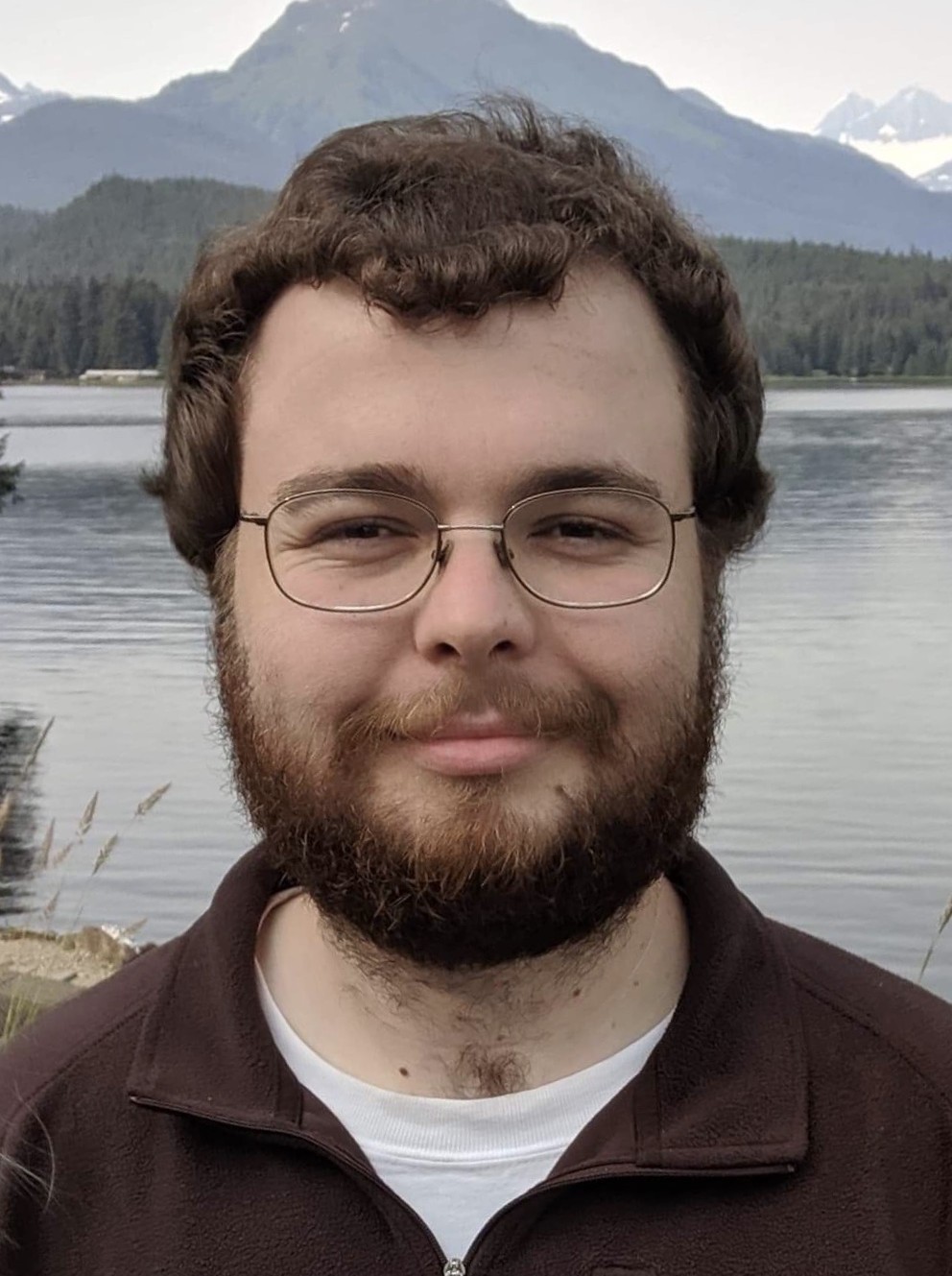
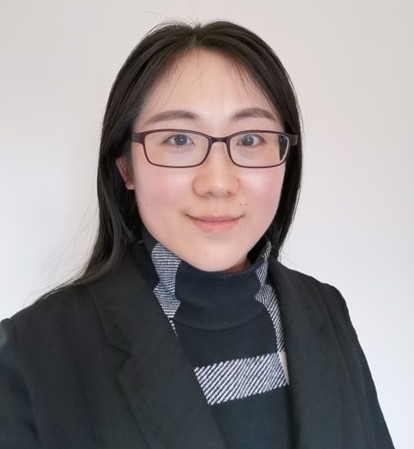
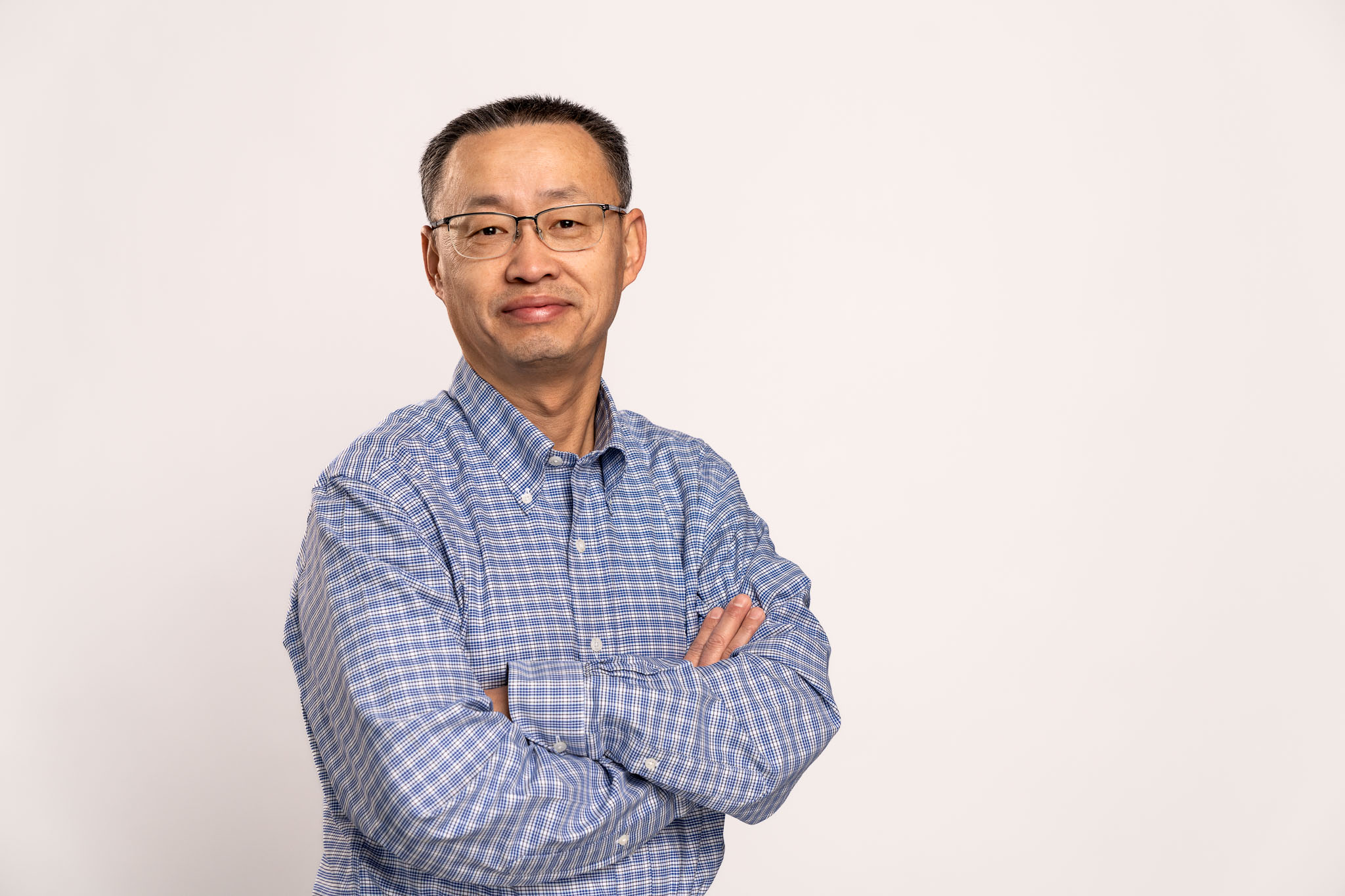
Assoc Prof Ng Teng Yong is an Associate Professor at the School of Mechanical & Aerospace Engineering (NTU), specializing in numerical modeling and simulation. With a background as Research Manager at A*STAR Institute of High Performance Computing, his work spans materials science, nanotechnology, and aerospace engineering. Current focus on graphene-based desalination membranes Expertise in molecular dynamics simulations Investigates nanoscale fluid mechanics and structural dynamics Recent publications highlight advancements in energy-efficient electrodialysis, smart robotics, and nonlinear vibration analysis. His interdisciplinary approach integrates computational methods with experimental validation in additive manufacturing and soft material mechanics.
Simo Hostikka is a Professor in the Department of Civil Engineering at Aalto University's School of Engineering. His research focuses on fire safety engineering , utilizing numerical fire simulations to address critical challenges in building and infrastructure safety. Key Expertise: Fire Dynamics Simulator (FDS) development, thermal radiation heat transfer, pyrolysis modeling, fire toxicity calculations, and probabilistic risk analysis. Leadership: Supervises advanced fire safety research and contributes to international fire safety standards. Research Trends: Recent publications emphasize fire toxicity modeling , hydrogen fire safety , radiation heat transfer , and fire retardancy of polymeric materials . His work bridges computational methods with real-world fire safety applications. Scientific Awards: Philip Thomas Medal of Excellence (2008, 2005) Sjölin Award (2012) Interflam Trophy (2007) Harmathy Award (2020, 2019) Dean’s Award for Best MSc Thesis (2020) Best Paper in Rakenteiden Mekaniikka (2009) Advising: Supervised Topi Sikanen, who received the Young Talent Award from the International Water Mist Association.
Xiaoze Pei is a Professor in the Department of Electronic & Electrical Engineering at the University of Bath, affiliated with the Institute for Advanced Automotive Propulsion Systems (IAAPS) and the Electronics Materials, Circuits & Systems Research Unit (EMaCS). His research focuses on superconductivity applications in electric systems, cryogenic power electronics, and DC network technologies for aerospace and renewable energy integration. Key projects include leading initiatives such as Towards Zero Emissions Electric Aircraft through Superconducting DC Distribution Network and HSTEA - Aerospace R&I , addressing challenges in electric propulsion, fault current limiters, and cryogenic power converters. His work contributes to UN Sustainable Development Goals related to clean energy and sustainable transport. Expertise: Superconducting fault current limiters (SFCL), DC circuit breakers, cryogenic power systems. Current roles: Principal Investigator (PI) on multiple UK and EU-funded projects. Collaborations: Extensive work with industry partners and academic institutions on electric aircraft, hydrogen control systems, and e-mobility technologies. Recent research emphasizes high-current cryogenic DC circuit breakers, superconducting air-core motors for aircraft, and topology optimization for power electronics. He actively supervises doctoral students in these areas and has published over 90 peer-reviewed articles. Labs/Teams: Leads research within EMaCS and collaborates with teams specializing in power electronics, cryogenics, and aerospace propulsion.
Pooya Davari is a Professor and Head of the Section for Applied Power Electronic Systems at Aalborg University , Denmark. He leads the EMI/EMC in Power Electronics Research Group and serves as Vice Chair of the Energy Efficiency Mission. His research focuses on electromagnetic interference (EMI) and harmonic mitigation in power electronic systems, with over 200 publications and significant contributions to renewable energy integration. Education: B.Sc. and M.Sc. in Electronic Engineering (2004, 2008), Ph.D. in Power Electronics from Queensland University of Technology (2013) Prior Roles: Lecturer at QUT (2013–2014), Postdoc at AAU (2014) Research Interests: Harmonic and EMI analysis in grid-tied converters High power density converter design Signal processing for converter modeling Reliability of power electronic systems Article Trends: Recent work emphasizes EMI/EMC in renewable energy systems, wide bandgap semiconductors (SiC/GaN), and reliability modeling for EVs and hydrogen production via electrolysis. Sub-fields include converter topologies, grid integration challenges, and AI-driven diagnostics. Scientific Awards: Equinor 2022 Prize (Denmark’s oldest engineering award) IEEE EMC Society Young Professional Award (2020) World’s Top 2% Highly Cited Scientist (Stanford, 2021–2025) Multiple best paper awards (IEEE, Applied Sciences, etc.) Grants & Editorial Roles: Recipient of grants from Innovation Fund Denmark (Supra-EMC project), Horizon Europe (SOLARIS), and industry partnerships. Serves as Area Editor for IEEE Transactions on Transportation Electrification , Associate Editor for IEEE Transactions on Power Electronics , and Editor-in-Chief of Circuit World Journal (2020–2025). Labs & Standards: Coordinator of the EMC Laboratory at Aalborg University. Member of IEC standardization Working Groups 6 and 8 (TC77A), focusing on EMC strategies for power grids.
Ethan Williams is an Assistant Professor at the University of California, Santa Cruz, Department of Earth & Planetary Sciences. His research focuses on distributed acoustic sensing (DAS) applications in seismology, oceanography, and environmental monitoring, particularly studying wave dynamics, subduction geohazards, and ocean-solid Earth interactions. Ph.D. in Geophysics, California Institute of Technology (2023) M.S. in Geophysics, California Institute of Technology (2019) B.S. in Geophysics and B.A. in Music, Stanford University (2017) Research Interests: Williams specializes in DAS technology, subduction zone geohazards, surface wave dynamics, and ocean-solid Earth coupling. His work bridges seismic monitoring, marine geophysics, and environmental sensing. Publication Trends: His recent articles emphasize DAS innovation for offshore seismic monitoring, wave propagation analysis, and integrating fiber-optic data with conventional measurements. Themes include earthquake detection, climate change impacts, and multi-scale ocean dynamics. Scientific Awards: 2022 SSA Student Presentation Award for 'Continuous seismic monitoring of a building over 20 years' Advising & Collaboration: Williams collaborates with institutions like the University of Washington and Caltech, working on NSF-funded projects such as the Ocean Observatories Initiative. He invites prospective students/postdocs to contact him via email.
Peter C.J.M. van der Wielen is a part-time Professor of Reliability Grid Components at the Department of Electrical Engineering, Eindhoven University of Technology (TU/e), while maintaining a full-time role as Business Director for Power Failure Investigations and Principal Consultant in Power Cables at DNV GL – Energy. His work bridges academic research and industrial applications, focusing on grid component reliability, power cable technology, and asset management. Role: Part-time Professor (since 2018) Primary Affiliation: DNV GL – Energy (since 2000) Academic Affiliation: TU/e Department of Electrical Engineering His research interests center on grid component reliability , power cable degradation , and failure analysis , with a strong emphasis on translating scientific findings into practical tools like "Smart Cable Guard" for on-line partial discharge monitoring in medium voltage cables. He explores remaining life estimation , condition assessment , and maintenance methodologies to enhance power grid availability. Recent publications highlight his expertise in load scenario modeling using copulas, thermal monitoring of power cables via wave velocity, and congestion management strategies for power grids. These works align with his broader focus on asset management and reliability engineering . Scientific Awards : Hidde Nijland Award (2014) for groundbreaking power cable technology research At DNV GL, he leads power failure investigations and provides consultancy on power cable systems. As a TU/e Professor, he teaches grid component reliability and contributes to research on degradation mechanisms , failure analysis , and dynamic cable rating in collaboration with industry partners.
Dr. Wenjuan Song is a Lecturer in Electrically Powered Aircraft, Propulsion, Electrification & Superconductivity Group at the James Watt School of Engineering, University of Glasgow. She holds a PhD in Electrical Engineering from Beijing Jiaotong University (2019) and has held postdoctoral positions at Victoria University of Wellington (2016–2018) and the University of Bath (2019–2021). Her research focuses on accelerating net-zero transitions in transport sectors through superconductivity and AI-driven solutions. Research Interests: Net-zero aviation, renewable energy systems, superconducting fault current limiters, cryogenic systems, and AI applications in electrification. Awards: Global Talent (UK Royal Academy of Engineering, 2021), featured in IEEE PES Women in Power, and COST Action publications. Teaching: Course coordinator for Simulation of Engineering Systems, Simulation of Aerospace Systems, and Power Engineering 3. Professional Activities: Organizing Committee member (UK Fluids Conference 2023), guest editor (Superconductor Science and Technology), and session chair at international conferences. Her work integrates superconductivity and AI to address challenges in electric aircraft, high-speed rail, and marine electrification. Key contributions include fault detection systems for HTS components and predictive modeling of superconducting materials.
Nicholas Vlachopoulos is a Professor of Civil Engineering at the Royal Military College of Canada (RMC) with cross-appointments at Queen's University's Department of Geological Science and Geological Engineering and School of Environmental Studies. He holds a PhD (2009) from Queen's University and B/A.Sc/M.A.Sc degrees from RMC. His research focuses on geotechnical engineering, geomechanics, and environmental engineering, emphasizing physical testing, field observations, and analytical techniques to advance engineering practices. Key roles include Research Director of the GeoEngineering Centre, CEO of Geologos Inc., and Director of RMC's Green Team addressing environmental challenges in military facilities. Education: PhD in Geological/Geotechnical Engineering - Queen's University (2009) M.A.Sc in Civil Engineering - Royal Military College (1995) B.A.Sc in Civil Engineering - Royal Military College Research Interests: Geotechnical Engineering (rock mechanics, tunneling) Environmental remediation in defense facilities Structural health monitoring using fiber optics Rock bolt and ground support systems Military infrastructure resilience Professional Contributions: Founder of Geologos Inc., specializing in geotechnical solutions Recipient of DND Innovation Award for environmental solutions Teaching excellence awards (2018) Supervised award-winning graduate students (2017-2021) Lab/Team Leadership: RMC Green Team: Environmental engineering solutions for Canadian Forces bases GeoEngineering Centre: Interdisciplinary geotechnical research
Wenbo Duan is a Senior Lecturer and MSc Programme Leader in Mechanical Engineering at the University of Hertfordshire. He holds a PhD from the University of Manchester (2010) and previously served at Brunel University London as a Research Fellow, Senior Research Fellow, and Technical Advisor. His research focuses on advanced non-destructive testing techniques, including ultrasonic and guided wave methods, finite/spectral element modeling, and acoustic communication in industrial pipelines. He specializes in numerical simulations of wave propagation in complex media, defect detection, and signal processing innovations. Education: PhD in Mechanical Engineering, University of Manchester (2010) MSc in Engineering BSc (Distinguished) in Engineering Research Interests: Ultrasonic Non-Destructive Testing (NDT) Guided Wave Defect Detection Piezoelectric-Structure Coupling Acoustic Communication in Pipes Multiphysics Spectral Element Modeling Fluid-Structure Interaction Analysis Key Projects (2021–2025): "Noise Cancelling for Powered Air Purifying Respirators" (PI) "Guided Wave Inspection in Fluid-Filled Wells" (PI) "Assessing the Impact of Strain on Temperature Readings" (Co-Investigator) Advisees & Grants: No specific advisees listed. Active in securing research funding for NDT and acoustics-related projects. Labs & Teams: Involved in the Centre for Engineering Research at the University of Hertfordshire, focusing on computational mechanics and industrial applications.
Dr. Alojz Ivankovic is a Full Professor of Mechanics of Materials at the School of Mechanical and Materials Engineering , University College Dublin (UCD). He also serves as a Visiting Professor at Imperial College London and has held leadership roles such as Head of Mechanical Engineering Programs at UCD since 2012. His research group focuses on advanced materials science, fracture mechanics, and additive manufacturing, supported by over €25M in research funding. Educational Background: MEngSc from the University of Sarajevo and PhD from Imperial College London. Research Interests: Process-structure-property relationships in materials, fracture behavior of polymers and composites, adhesion science, and biomechanics of atherosclerosis. His work bridges computational modeling (e.g., finite volume methods) with experimental validation. Recent Achievements: Awards include the Fellowship of Wessex Institute (2004) and Royal Academy of Engineering Travel Grant (2001). He leads the UCD Centre of Adhesion and Adhesives and collaborates with industry partners like Atlas Copco and BP Chemicals. Grants & Funding: Over €27M in research funding since 2004, including a €2.5M SFI grant for drag reduction studies. Current grants focus on floating offshore wind cables and sustainable composites. Teaching: Coordinates modules in Computational Continuum Mechanics and supervises PhD/MSc students. His group includes 5 MSc, 7 PhD students, and 4 PostDocs. Publications: Over 346 publications, including 109 journals and 232 conference papers. Recent work addresses diamond powder mechanics, piezoelectric composites, and aerodynamic drag reduction.
Professor David John Richardson FRS, FREng is Deputy Director of the Optoelectronics Research Centre/Zepler Institute at the University of Southampton and Head of the ORC Fibre and Laser Group. With over 30 years of experience at the ORC, he is globally recognized as a leading authority in optical fibre technology and its applications, spanning telecommunications, high-power laser systems, and biomedical applications. His educational background includes: B.Sc. in Fundamental Physics from Sussex University (1985) PhD in Fundamental Physics from Sussex University (1989) Richardson's research focuses on hollow core optical fibres for telecommunications, lasers and sensing; high power fibre lasers for industrial materials processing; optical communications including high performance optical amplifiers; and ultrafast lasers for biomedical imaging. His work bridges fundamental physics with practical engineering solutions, creating technologies with significant academic and industrial impact. The interdisciplinary nature of his research connects materials science, photonics, telecommunications, and biomedical engineering, resulting in practical applications across multiple sectors. His recent publications demonstrate a strong emphasis on hollow core fiber technology, with numerous papers exploring novel designs, manufacturing techniques, and applications across telecommunications, sensing, and medical fields. Key trends include the development of ultra-stable fibers using specialized materials, high-energy laser systems based on hollow core architectures, and biomedical applications leveraging the unique properties of advanced optical fibers for precision medical procedures. Professor Richardson's scientific achievements have been recognized with numerous prestigious awards: Fellow of the Royal Society (2018) Fellow of the Royal Academy of Engineering (2009) IET Team Innovation Award (2010) Royal Society Wolfson Research Merit Award (2013) EU Horizon 2020 Prize "Breaking the Optical Transmission Barriers" (2016) Sir Harold Hartley Medal (2022) Fellow of IEEE, OSA, and IET Throughout his career, Professor Richardson has supervised over 70 PhD students to completion and mentored more than 100 postdoctoral research fellows, many of whom have established successful careers in academia and industry. His research has been supported by substantial grants from EPSRC, European Union programs, and industry partners, including major projects like the EPSRC Hyperhighway and Airguide Photonics Programmes and EU PHASORS, MODEGAP and SAFARI projects. His work has resulted in more than 1,500 research papers and over 30 patents. Professor Richardson leads the ORC Fibre and Laser Group, a world-renowned research team that has pioneered numerous advances in optical fiber technology. The group maintains strong collaborations with industry partners and has co-founded two successful spin-out companies: SPI Lasers Ltd (2000) for industrial fibre lasers and Lumenisity Ltd (2017) for telecommunications cables, demonstrating his ability to translate fundamental research into commercially viable products with global impact.
Prof. Dr Dragan Tasić is a distinguished Professor at the Power Engineering Department of the Faculty of Electronic Engineering, University of Niš, Serbia. With decades of academic and research experience, he has established himself as a leading expert in power transmission, power system components, and electrical cable technology. His work spans theoretical research, practical applications, and educational contributions to the field of electrical engineering. Dr. Tasić's research interests focus on power transmission systems, electrical cable technology, relay protection, power system analysis, and grounding systems. His work particularly emphasizes thermal aspects of power cables, electrical energy losses in distribution networks, and innovative solutions for improving cable performance. He has pioneered research on thermal management of underground cables, including the use of hydronic asphalt pavements and cool pavements to eliminate hot spots and increase cable ampacity. His publication record demonstrates consistent productivity with numerous books, journal articles, and conference papers spanning over three decades. Recent research (2019-2023) shows continued innovation in areas such as thermal aging management of underground cables, photovoltaic system integration, and optimization of distribution networks with energy storage. His work frequently employs advanced computational methods including Finite Element Method (FEM) and hybrid optimization algorithms. Dr. Tasić has led and participated in numerous significant research projects funded by Serbian government agencies, focusing on energy efficiency, power system optimization, and technological improvements in electrical distribution networks. His work has practical applications in the Serbian power industry and contributes to international knowledge in electrical engineering. As an educator, Dr. Tasić has contributed to curriculum development and has authored multiple textbooks that are widely used in electrical engineering education in Serbia. His teaching focuses on core power engineering subjects including power transmission, electrical networks, and power cable technology.
Professor Jinjun Shan is a Full Professor of Space Engineering and former Department Chair (2018-2023) in the Department of Earth and Space Science and Engineering at York University's Lassonde School of Engineering. An internationally recognized expert in dynamics, control and navigation, he joined York University as an Assistant Professor in 2006, was promoted to Associate Professor in 2011, and became a Full Professor in 2016. Dr. Shan received his B.Eng., M.Eng., and Ph.D. degrees from Harbin Institute of Technology, China, in 1997, 1999, and 2002, respectively. Before joining York, he was a Post-Doctoral Fellow at the University of Toronto Institute for Aerospace Studies (2003-2006) and a Research Assistant at City University of Hong Kong (2002-2003). His research focuses on dynamics, control and navigation, autonomous systems, multi-agent systems, smart materials and structures, space instrumentation, active vibration control, and orbit dynamics. Dr. Shan has made significant contributions to national and international space missions including NEOSSat and has attracted over $5 million in research funding from governmental agencies and industry partners. His laboratory, the Spacecraft Dynamics Control and Navigation Laboratory (SDCNLab), which he founded in 2006, conducts cutting-edge research in space engineering. Dr. Shan's extensive publication record includes over 200 peer-reviewed journal and conference papers, with his most recent work focusing on multi-agent formation control, autonomous vehicle decision-making, quadrotor control systems, and smart material applications. His research shows a clear progression from fundamental dynamics and control theory toward increasingly complex multi-agent systems and real-world applications in autonomous vehicles and space engineering. Fellow of Canadian Academy of Engineering (CAE) Fellow of Engineering Institute of Canada (EIC) Fellow of American Astronautical Society (AAS) Associate Fellow of AIAA Alexander von Humboldt Research Fellowship JSPS Fellowship Lassonde Educator of the Year Award (2022) Named in Stanford's list of world's top 2% researchers Dr. Shan has successfully mentored numerous graduate students and post-doctoral fellows, with current advisees working on cutting-edge projects in multi-agent systems, UAV control, and smart materials. His research is supported by substantial funding from NSERC, CSA, and industry partners. As the founding director of SDCNLab, he has built a comprehensive research facility for spacecraft dynamics, control, and navigation, recently expanding to include autonomous unmanned vehicle research through a CFI JELF award. His laboratory continues to make significant contributions to both theoretical advancements and practical applications in space engineering and autonomous systems.
Dr. Andrea Zappatore is an Assistant Professor in the Department of Energy at Polytechnic University of Turin, specializing in nuclear engineering and fusion technology. His research focuses on superconducting magnet systems for tokamak reactors, including thermal-hydraulic analysis and quench propagation modeling. Prof. Zappatore works on experimental characterization of superconducting conductors for fusion applications, particularly for ITER and DEMO reactors. His group develops advanced computational models for electromagnetic and thermo-mechanical behavior of fusion magnet systems. He contributes to the Divertor Tokamak Test (DTT) facility design and collaborates on international projects including ITER central solenoid testing. Prof. Zappatore supervises graduate research in fusion engineering applications.
Mohamed Bayoumy is an Assistant Professor at the University of Pittsburgh, specializing in optical fiber sensors, materials science, and their applications in extreme environments like nuclear reactors and energy systems. His work focuses on developing radiation-resistant sensors, machine learning-enhanced monitoring, and distributed fiber sensing technologies. He actively contributes to advancing sensor design for harsh conditions and energy sectors. Research interests include distributed fiber optic sensing, radiation tolerance in materials, machine learning for sensor data analysis, and applications in nuclear engineering, additive manufacturing, and hydraulic fracturing. His projects often integrate optical fibers for real-time monitoring of temperature, strain, and environmental parameters. Presentation topics include survey-based studies on remote education during the pandemic, project-based learning in optics, and sensor behavior prediction using neural networks. A patent on optical fiber-based sensing for electrical cables and radiation detection reflects his innovation in applied sensor technologies. Key collaborations involve institutions like Oak Ridge National Laboratory (Daw, Carpenter), Penn State (Ohodnicki, Buric), and international partners. His work bridges fundamental materials science with applied engineering solutions for energy and infrastructure challenges.