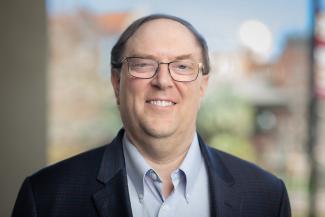
Prof. Dr. Günther Dissertori is a Full Professor and Rector of ETH Zurich, where he oversees teaching and academic affairs. His academic journey began at the University of Innsbruck, followed by a doctoral position at CERN, and he joined ETH Zurich as an Assistant Professor in 2001 before becoming a Full Professor in 2007. Academic Role: Full Professor of Particle Physics Institutional Leadership: Rector of ETH Zurich (since 2022) Contact: guenther.dissertori@sl.ethz.ch Research Interests: Dissertori's work spans Particle Physics and Experimental Physics , notably contributing to the CMS experiment at CERN, which was instrumental in the Higgs boson discovery. His group also developed cost-effective PET devices, leading to the spin-off Positrigo AG . Research keywords include Detector Development , Medical Imaging , and Quantum Physics . Teaching Excellence: Recognized with multiple Golden Owl awards (2005–2020) and the Credit Suisse Award for Best Teaching (2013), Dissertori is celebrated for his pedagogical impact in the Department of Particle Physics. Scientific Contributions: His publications include advancements in CMOS technology, quantum dynamics, and medical applications, reflecting interdisciplinary expertise in high-speed electronics, environmental science, and architectural history.
Kristin Baker Spohn is a Lecturer in Management at the Stanford Graduate School of Business (GSB) and a General Partner at CRV, focusing on healthcare and technology startups. She has extensive experience as an operator and investor, leading roles at Collective Health and Castlight Health, and driving investments in ventures like Viz.ai and Marley Medical. Education: MBA, Stanford Graduate School of Business, 2010 BA, Middlebury College, 2005 Research Interests: Healthcare technology innovation, digital health equity, and policies enabling startup-driven healthcare access. Her work bridges translational research and commercialization, emphasizing scalable solutions for systemic healthcare challenges. Teaching: Teaches courses such as Startup Garage: Design and Testing and Launch , focusing on entrepreneurship and scalable business models. Affiliated with the Stanford-Coulter Translational Research Grant Committee.
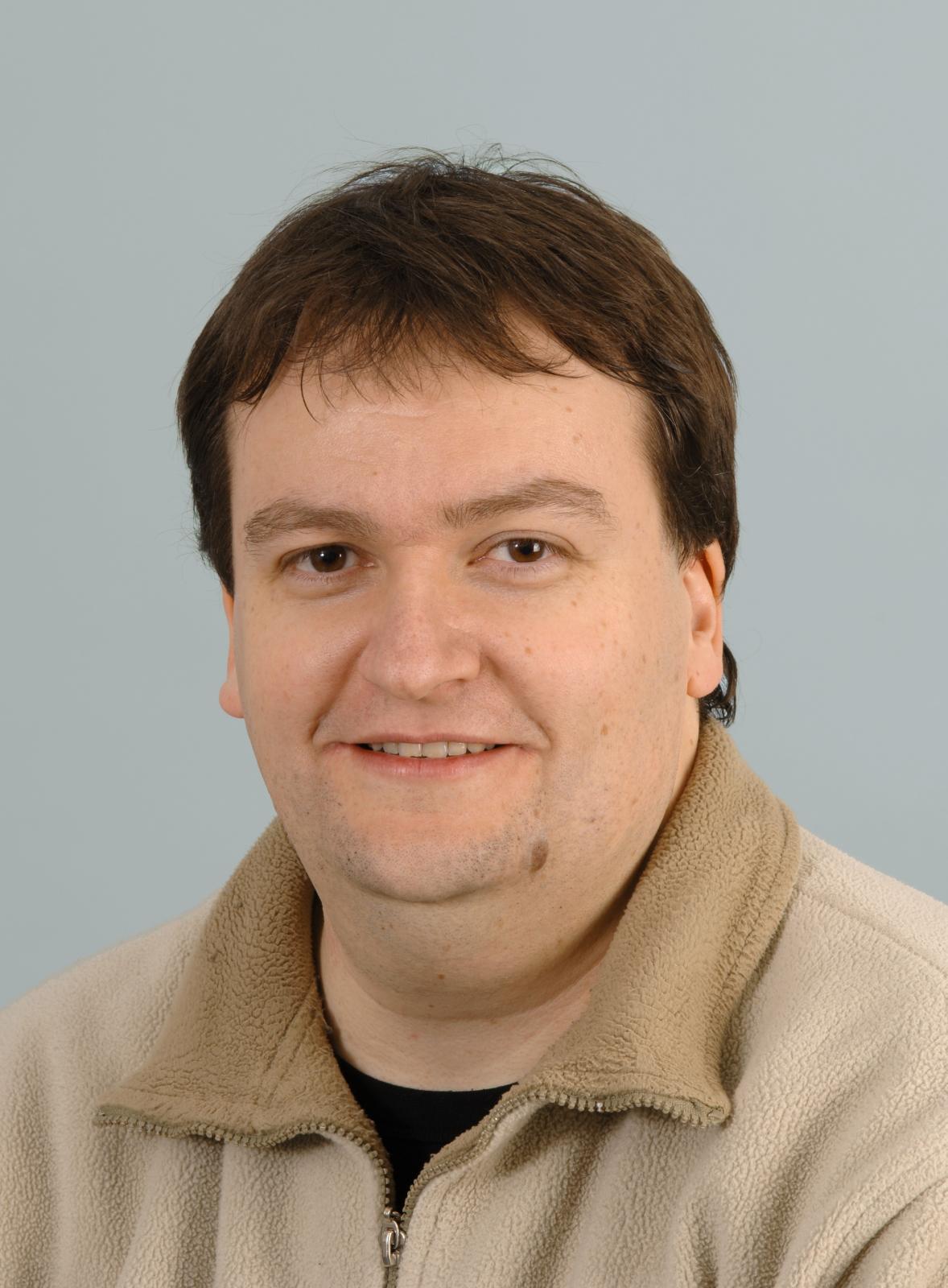
Todd Adams is a Professor in the Department of Physics at Florida State University . He leads research in particle physics (high energy experiment) with the CMS Experiment at CERN and previously the D0 Experiment at Fermilab , focusing on searches for new physics in underexplored datasets through long-lived particles , machine learning techniques , and charged particle detection . Education : PhD in Experimental Particle Physics from University of Notre Dame (1997); Postdoctoral researcher at Kansas State University (1997-2001) His research includes electromagnetic calorimeter studies for CMS, calorimeter upgrade investigations , and Monte Carlo simulation leadership for D0. He pioneered searches for neutral long-lived particles and top quark decay anomalies , co-authored key publications in Physical Review Letters and Journal of High Energy Physics , and served as Faculty Senate President and Board of Trustees member at FSU. Notable affiliations include: Collaborations : CMS, D0, NuTeV, NuSOnG Laboratories : CERN (Geneva), Fermilab (Chicago), Florida State High Energy Physics Group Key contributions: Co-convenor of D0 Monte Carlo Simulations and New Physics Signatures groups Expert in heavy quark production , dimuon analysis , and neutral current studies Publications on Higgs boson discovery implications, supersymmetry , and anomalous gauge couplings Scientific Awards : Fellow, American Association for the Advancement of Science Multiple Fermilab Result of the Week highlights (2006, 2008, 2013) Contributor to CMS Thesis Award Committee He advises graduate students in experimental particle physics and contributes to detector technology development, particularly in timing studies , calibration , and trigger systems . His research program will continue through the LHC's 2035 operations with ongoing CMS data analysis.
Gunther Roland is a Professor of Physics and Division Head of Experimental Nuclear and Particle Physics at MIT. His research focuses on emergent properties of strongly interacting matter under extreme conditions, such as those created in high-energy nuclear collisions at the Large Hadron Collider (LHC). He leads the MIT Relativistic Heavy Ion Group, which collaborates with the CMS experiment at CERN to study the Quark-Gluon Plasma (QGP). Education: PhD in Physics from the Institut für Kernphysik, Frankfurt (1993). He joined MIT in 2000, became Associate Professor in 2004, and Full Professor in 2011. Research interests include QGP transport properties, parton propagation, and collision signatures in proton-proton and proton-lead systems. His group is developing advanced calorimeter triggers and online event selection tools for future LHC experiments. Awards: Heraeus Foundation Endowed Visiting Professorship (2023), APS Fellow (2013) Labs/Groups: Relativistic Heavy Ion Group, Phobos Collaboration Future Work: High-luminosity data analysis using Z+jet correlations and advanced detector systems.
Prof. Dr. André Rubbia is a Full Professor of Experimental Physics at ETH Zurich's Department of Physics, holding this position since December 2003 after serving as Associate Professor from 1998. His research spans neutrino physics, astro-particle physics, and dark matter detection through major international collaborations including CERN, Gran Sasso National Laboratory, and Fermilab. He currently serves as Co-Spokesperson for the billion-dollar DUNE neutrino project at Fermilab, managing over 900 scientists. His educational background includes: Diploma in Physics from the University of Geneva (1990), with thesis work on the L3 experiment at CERN's LEP accelerator Ph.D. in Physics from MIT (1993) under Nobel Laureate S.C.C. Ting, focusing on high-energy electron-positron collisions Rubbia's research centers on fundamental particle interactions, particularly neutrino oscillations and physics beyond the Standard Model. He pioneered liquid Argon Time Projection Chamber (LAr TPC) technology and dual-phase detection systems, enabling breakthroughs in neutrino mass measurements and dark matter searches. His work spans underground laboratories (Gran Sasso, Canfranc), the LHC's CMS detector, and neutrino beam experiments like T2K. Recent explorations include antimatter gravity tests, electron-positron bound states, and dark hidden sector searches. His 2025 publications reveal intense focus on neutrino oscillation parameter precision (T2K, Hyper-Kamiokande), FASER's LHC neutrino program, and DarkSide-20k dark matter detector development. Key themes include cross-section measurements, advanced detector technologies (SiPMs, emulsion tracking), and statistical methods for oscillation analysis, reflecting integration of theoretical modeling with cutting-edge instrumentation. Scientific recognition includes: Breakthrough Prize for Fundamental Physics (2016) awarded to the international team for discovering matter-anti-matter asymmetry in neutrino oscillations APS Viewpoint selection for editing the paper announcing first electron neutrino appearance at accelerators Rubbia has supervised over fifty PhD and Master's theses while securing substantial research funding as Principal Investigator for 20+ Swiss National Science Foundation projects and Coordinator of two EU FP7 Design Studies. His DUNE leadership involves complex international grant management across 30+ countries. He leads ETH Zurich's experimental particle physics group across multiple facilities: the ICARUS neutrino detector at Gran Sasso, CMS at CERN, DUNE at Fermilab, and DarkSide-20k for direct dark matter detection. His team developed the first underground ton-scale liquid argon detector and maintains collaborations with Japanese (Super-Kamiokande) and American (Fermilab) institutions.
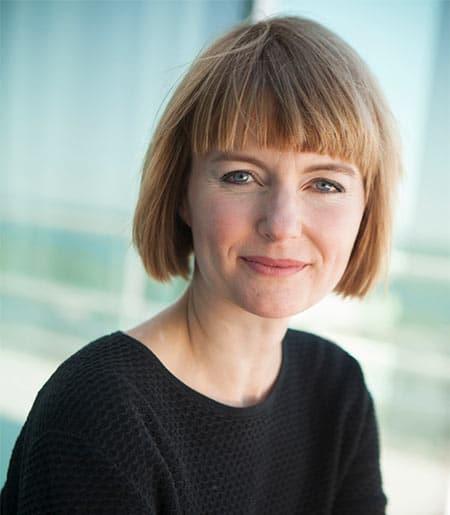
Julia Thom-Levy is a Professor of Physics in the College of Arts and Sciences at Cornell University, serving as Deputy Director of the Cornell Laboratory of Accelerator-Based Sciences and Education and Vice Provost for Academic Innovation. Her career at Cornell progressed from Assistant Professor (2005-2012) to Associate Professor (2012-2018) and Professor (2018-present), following prior research roles at SLAC and Fermilab. She earned her Physics Dipl. (1997) and Ph.D. (2001) from Hamburg University. Her research centers on experimental particle physics, with expertise in heavy quark physics, hadron collider physics, and silicon detector development for both particle physics and X-ray science applications. She leads critical work on CMS experiment upgrades at CERN's LHC, focusing on radiation-hard pixel detectors and Higgs boson/top quark physics analysis. Her 2013-2018 publications reveal a consistent focus on precision measurements in top quark physics and Higgs boson studies through CMS collaboration, alongside innovative detector technology development. The research demonstrates strong interdisciplinary connections between high-energy physics and advanced materials science. Awards and Honors: Fellow, German National Scholarship Foundation (1993-1997) She advises graduate student Lena Franklin and has mentored postdocs Joseph Reichert and Jose Monroy, along with undergraduates Hannah Hu, Benjamin Myers, Jeffrey Backus, and Alexander Albert. Her group secures significant funding including a $3.8M NSF grant for early universe research and $2.7M for the Active Learning Initiative. She directs detector R&D for CHESS light source applications and leads Cornell's academic innovation efforts through the Active Learning Initiative, which has transformed classroom instruction across STEM disciplines.
Jonathan C. Pober is an Associate Professor of Physics at Brown University, leading research into the Epoch of Reionization (EoR) and Cosmic Dawn through low-frequency radio astronomy. His work focuses on detecting the highly-redshifted 21 cm line emission from neutral hydrogen during the early Universe, addressing challenges in separating this signal from astrophysical and human-generated radio interference. He develops novel analysis techniques and collaborates on cutting-edge experiments like the Murchison Widefield Array (MWA) and the Hydrogen Epoch of Reionization Array (HERA). Education: PhD in Physics, University of California, Berkeley (2013) MA in Physics, University of California, Berkeley (2010) MPhil in Physics, University of Cambridge (2008) BA in Physics, Haverford College (2007) Research Interests: Cosmic Reionization, Radio Astronomy, 21 cm Cosmology, Signal Processing, and Instrumentation Development. His lab explores methods to mitigate radio frequency interference and optimize interferometric calibration for precise EoR measurements. Teaching: Courses include Basic Physics B, Astronomy, Astrophysics and Cosmology, and Advanced Electromagnetic Theory. He emphasizes bridging theoretical concepts with observational techniques in his curriculum. Awards: NASA Roman Technology Fellow Lab & Projects: Directs the Pober Lab at Brown University, advancing experiments like FARSIDE (Farside Array for Radio Science Investigations of the Dark Ages and Exoplanets), a proposed lunar-based array to study the Dark Ages.
Alberto Belloni is an Associate Professor at the University of Maryland's Department of Physics. He is a key member of the CMS Collaboration at CERN, contributing to the Hadronic Calorimeter (HCAL) upgrade. His research focuses on high-energy particle physics experiments at the Large Hadron Collider (LHC), particularly Higgs boson studies and detector technology advancements. Education: B.S. from University of Pisa and Scuola Normale Superiore (2002), Ph.D. in Physics from MIT (2007). Teaching responsibilities include courses such as Physics 273 (Waves), Physics 275/276 (Experimental Physics), and advanced quantum/Modern Physics modules. Notable contributions include co-authoring landmark publications on Higgs boson discovery (ATLAS Collaboration, 2012) and precision W/Z boson measurements (2010). His work supports ongoing LHC experiments exploring fundamental particles and interactions.
Jeffrey D. Richman is a Professor of Physics at the University of California, Santa Barbara, where he maintains an active research program in experimental elementary particle physics. He is a member of the High Energy Physics (HEP) Group at UCSB, focusing on research with the CMS experiment at CERN's Large Hadron Collider (LHC) and previously with the BaBar experiment at SLAC. Dr. Richman's research spans several critical areas in particle physics: Studies of the Higgs boson and its properties Comprehensive searches for supersymmetry (SUSY) across multiple final states Development of electronics for the CMS muon cathode-strip chamber (CSC) system Heavy-quark physics, particularly rare B meson decays Construction and operation of the Silicon Vertex Tracker (SVT) for the BaBar experiment His recent publications demonstrate an intensive focus on SUSY searches in leptonic and all-hadronic final states, higgsino pair production, and rare Higgs decay modes. Dr. Richman has held significant leadership roles including co-convener of the CMS Supersymmetry physics analysis group and co-chair of both the Exotica and SUSY Publications Boards. As an educator, Dr. Richman has taught a wide range of physics courses at UCSB including graduate and undergraduate particle physics, quantum mechanics, classical mechanics, analog and digital electronics, and introductory physics. His teaching evaluations consistently rank among the highest, with graduate particle physics courses (Ph 225a/b) regularly receiving perfect 1.0 scores on the 1-5 evaluation scale (where 1 is best). Dr. Richman has mentored several graduate students whose work has made notable contributions to the field, including Michael Mazur (thesis on semileptonic B meson decays to tau leptons), Anders Ryd (measurement of B meson semileptonic decay form factors), Natalia Kuznetsova, and David Lange.
Johannes Brandstetter is an Associate Professor at the Institute for Machine Learning at Johannes Kepler University Linz (JKU) where he leads the "AI for data-driven simulations" research group. He is also Co-founder and Chief Scientist at Emmi AI, bridging academic research with industrial applications in AI-driven physics simulation. Brandstetter earned his PhD after working at CERN's CMS experiment on Higgs boson physics. In 2018, he transitioned to machine learning, joining Sepp Hochreiter's research group in Linz. From 2021-2023, he worked at the Amsterdam Machine Learning Lab under Max Welling and Microsoft Research, developing expertise in Geometric Deep Learning and neural surrogates for partial differential equations. He returned to JKU in October 2023 to establish his own research group. His research spans Machine Learning, Deep Learning, and Physics-Informed Machine Learning with focus areas including Neural PDE solvers, Computational Fluid Dynamics, and Climate Modeling. Brandstetter believes AI is poised to revolutionize industrial-scale simulations, potentially saving thousands of compute hours across engineering domains. His work integrates computer vision, numerical simulation, and engineering components to advance data-driven approaches. Recent publications reveal a strong trend toward foundation models for scientific applications, particularly in atmospheric modeling (Aurora), geometric deep learning, and neural surrogates for complex physical systems. His interdisciplinary work spans computer vision, climate science, computational physics, and engineering, demonstrating the versatility of his research approach. Principal Investigator for "AlKa-DL: Alpine karst spring discharge prediction" (FWF-funded, 2024-2027) Principal Investigator for Cluster of Excellence "Bilateral Artificial Intelligence" (FWF-funded, 2024-2029) Co-PI for "Fast, efficient and flexible CFD simulation through generative AI" (FFG-funded, 2025-2026) As an educator and researcher, Brandstetter actively engages with the scientific community through invited talks at major conferences including presentations on "Closing the Gap Between Scientific Foundation Models and Real-World Applications" (March 2025) and "Scientific Machine Learning for Science and Engineering" (February 2025).
Didar Dobur is an Associate Professor at the Department of Physics and Astronomy , Faculty of Sciences , Ghent University . His research focuses on Experimental Particle Physics , particularly High-Energy Physics and Collider Studies . He leads projects at the CERN Large Hadron Collider using the CMS detector , investigating New Physics Beyond the Standard Model , including axion-like particles, supersymmetry, and Higgs-top couplings. Current projects: AxiTop , FLAMENCO , Unlocking the charm-Higgs coupling Grants: Research Foundation - Flanders (FWO) , Special Research Fund His recent publications (2023-2025) analyze top quark interactions , Higgs boson decays , and long-lived particle signatures using LHC data. Key subfields include Effective Field Theory , Muon Radiography , and Neutrino Experiments . As a PhD supervisor and promotor , he has guided researchers like Bob Oeyen and Luka Lambrecht in studies of CERN experiments and detector development . Current lab collaborations involve CMS Phase-2 Upgrade and SHiP experiment R&D.
Mitchell Wayne is a Professor in the Department of Physics and Astronomy at the University of Notre Dame. His research centers on proton-proton collisions at the CMS detector at CERN's Large Hadron Collider, including Higgs boson studies and searches beyond the Standard Model. Honors include American Physical Society Fellowship and multiple teaching awards. His detector R&D focuses on fiber tracking, calorimetry, and Silicon Photomultipliers for CMS upgrades. Awards: Fellow of APS, Joyce Teaching Award (2019), Shilts-Leonard Teaching Award (2002), Kaneb Teaching Award (1999) Student Advising: Supervised 5 PhD students in particle physics and detector development
Professor Malcolm Fairbairn is a faculty member at King's College London's Department of Physics, part of the Faculty of Natural, Mathematical & Engineering Sciences. His research focuses on the intersection of cosmology, particle physics, and astrophysics, particularly dark matter, dark energy, and cosmological inflation. He leads projects like the ERC Consolidator Grant (2015–2020) investigating dark matter in the early Universe. He collaborates with initiatives such as the MoEDAL experiment at CERN (magnetic monopole searches) and the Cherenkov Telescope Array (CTA) for gamma-ray astronomy. His interests extend to gravitational waves, supermassive black hole formation, and particle astrophysics. Fairbairn has contributed to studies on axion dark matter, primordial black holes, and dark matter constraints from dwarf galaxies. He is affiliated with the Theoretical Particle Physics & Cosmology (TPPC) Group, exploring beyond-Standard-Model physics, including supersymmetry and extra dimensions. Publications span topics like dark matter relic abundance, JWST observations of black holes, and LHC searches for exotic particles. He has advised on outreach projects like the 'Dark Matter' exhibition at Science Gallery London and interviews with alumni (e.g., Royal Navy submariner Chris Tuckley).
Prof. Rainer Wallny is a Full Professor of Physics at ETH Zurich and Head of the Institute for Particle Physics and Astrophysics. His research focuses on high-energy particle physics, particularly through the CMS experiment at the Large Hadron Collider (LHC), emphasizing Higgs boson studies and detector upgrades. He leads projects on Higgs boson characterization in photon and b-quark final states, as well as CMS pixel detector upgrades for Phase-2. His group also explores future collider technologies and contributes to teaching at all academic levels. Education: Studied Physics at Universities of Tübingen, Washington (M.Sc., 1994), and Heidelberg (Diplom, 1996) PhD in Physics from University of Zurich CERN Research Fellow (2001–2003) Faculty at UCLA (2003–2010), promoted to Full Professor in 2010 Joined ETH Zurich as Full Professor in 2010 Research Interests: Higgs boson properties and decay channels Supersymmetry searches in CMS data Detector development for CMS (pixel trackers, diamond sensors) Phase-2 LHC upgrade technologies Experimental particle physics at high-luminosity colliders Grants and Advising: Supervised over 20 PhD students since 2010 Leadership roles in CMS collaboration and detector R&D initiatives Active in curriculum design for physics education at ETH Labs & Teams: Wallny Group at ETH Zurich Institute for Particle Physics and Astrophysics (D-PHYS) Collaborations with CERN and global CMS teams
Eva Halkiadakis is a Professor of Physics at Rutgers University, affiliated with the Department of Physics and Astronomy within the School of Arts and Sciences. She is a member of the High Energy Experiment group and contributes to the CMS experiment at CERN. Her research focuses on particle physics, experimental high-energy physics, and supersymmetry studies. She has held significant roles, including co-convener of the Supersymmetry Search group within CMS. Research Interests : Eva Halkiadakis’s work centers on high-energy physics experiments, particularly at the Large Hadron Collider (LHC). She investigates phenomena such as supersymmetry and particle interactions using data from the CMS detector. Her contributions advance our understanding of fundamental particles and their behavior under extreme conditions. Awards & Honors : Rutgers Board of Trustees Research Fellowship (2014) NSF CAREER Award (Year not specified) LHC Physics Center Fellowship (2011-12) Elected Fellow of the American Physical Society (2014) Advising & Grants : Eva advises graduate student Steven Clark, who received a NSF Graduate Research Fellowship. Her grants include funding from the National Science Foundation and the LHC Physics Center. She also contributed to Tai Wai Hu’s Goldwater Scholarship (though no explicit advisor role stated). Labs/Teams : She is a core member of the CMS experiment collaboration at CERN and leads the Supersymmetry Search group. Her work integrates with global teams analyzing LHC data to explore new physics beyond the Standard Model.