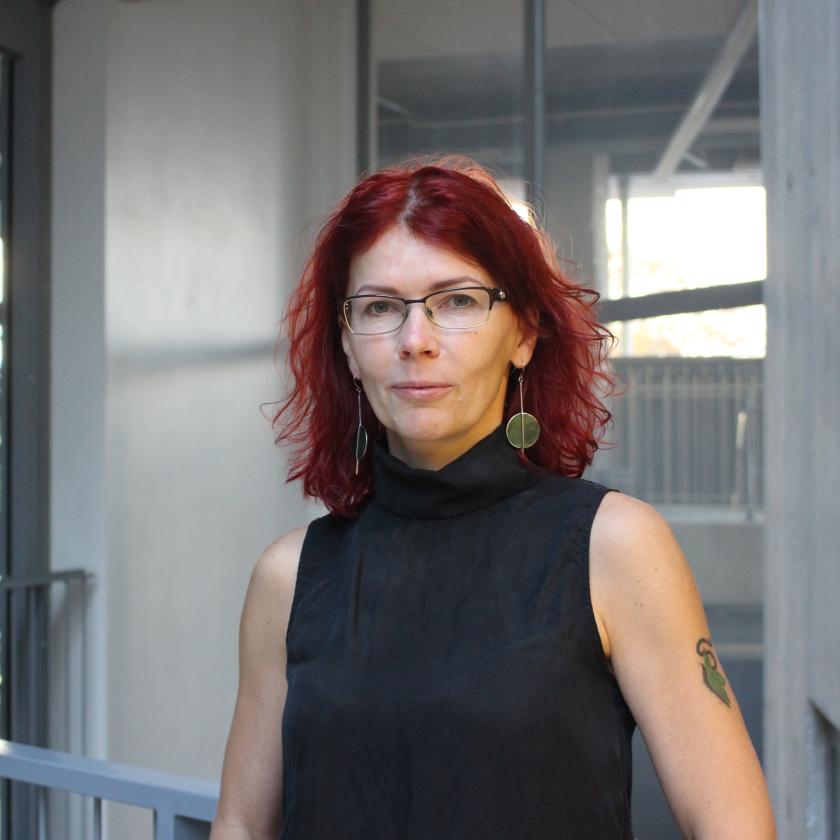
Tetsuo Harada is a Professor at Waseda University 's Faculty of Education and Integrated Arts and Sciences. He holds a Ph.D. in Applied Linguistics from UCLA (1999), an M.A. in Phonetics from University College London (1992), and a B.A. in English Language and Literature from Waseda University (1984). His career includes visiting scholar roles at University of Washington (2024-2025) and UCLA (2013-2014). Research Interests : Second Language Acquisition, Phonetics/Phonology of Japanese and English, Content-Based Instruction (CBI), Content and Language Integrated Learning (CLIL), English Medium Instruction (EMI), Bilingual Education. Notable Contributions : Pioneering studies on age-of-acquisition effects in immersion education, VOT (Voice Onset Time) analysis in bilingual speech, and EMI pedagogical frameworks. Scientific Recognition : Recipient of multiple Japan Society for the Promotion of Science grants, Freeman Foundation fellowship, and NIH-funded collaborations. Academic Leadership : Editorial board member for Journal of Second Language Pronunciation and New Sounds symposium organizing chair.
Dr. Antroulla Papakyriakou is an Associate Professor at the Department of Languages and Literature, University of Nicosia, within the School of Humanities and Social Sciences. She holds a PhD in General Linguistics from Humboldt University (Berlin, Germany) and an MA in German Language and Literature from the same institution. Her academic career includes roles as a member of the Senate at the University of Nicosia (2008–2014), Intercollege (2003–2006), and Humboldt University (1990–1992). She has coordinated EU projects such as the European Curricula in New Technologies and Language Teaching (Comenius 2.1) and contributed to initiatives like Language Network for Quality Assurance and WeReLaTe. Her research focuses on the Syntax-Semantics interface, technology in language teaching, CLIL, and multilingualism policies. Dr. Papakyriakou’s research interests extend to linguistic ecology, plurilingualism promotion, and refugee/migrant education. She leads initiatives like the Cyprus Linguistics Society and Cyprus Teachers of German Association. Key projects include NEOLAiA (European University Alliance) and studies on linguistic policies in Cypriot universities. Recent work explores terminology management in academic contexts and integration strategies for marginalized groups. Her contributions span over 20 publications and collaborative projects across Europe. She actively promotes multilingualism through institutional frameworks and pedagogical innovation, emphasizing societal impact and policy development.
Madhura Joshi is a Lecturer in English Studies at Toulouse 1 Capitole University, affiliated with the Center for Anglophone Studies (CAS) and the Department of Languages and Civilizations. She holds a doctorate from Paul Valéry University Montpellier III and is actively engaged in research on Indian sociolinguistics, education policies, and cultural identity. Her research interests include sociolinguistics, language transmission and learning, Indian studies, education policies in India, marriage and family dynamics, religious and regional identity, Indian cinema, ecofeminism, and the didactics of French and English as foreign languages. She explores how language, power, and identity intersect in both educational and familial contexts, particularly within Indian society. Madhura Joshi's publications span journal articles, book chapters, and conference communications, with a strong focus on sociolinguistic analysis of Indian social practices, language teaching methodologies, and cultural representations. Her recent work investigates ecofeminism, health and colonization, and feedback mechanisms in language education, reflecting a growing interdisciplinary engagement with postcolonial and environmental themes. Very Honorable Mention with unanimous congratulations from the jury for Doctorate (2012) She has held significant academic responsibilities, including serving as President of the Society for Activities and Research on Indian Worlds (SARI) since 2020 and as Deputy Director of the Department of Languages and Cultures at Toulouse 1 Capitole (2021–2023). She also manages the multilingual scientific journal Miroirs . There is no mention of research grants, student advising, or laboratory affiliations in the provided texts.
Kari Sahan is a Lecturer in Second Language Education at the University of Reading's Institute of Education. They co-direct the MA in English Language Education (Guangdong), offering programs delivered in collaboration with Guangdong University of Foreign Studies. Their teaching focuses on research methods, second language pedagogy, assessment strategies, and multilingualism in education. Research interests center on English as a global language's impact on education, particularly in higher education contexts. Key areas include English Medium Instruction (EMI), Content and Language Integrated Learning (CLIL), translanguaging pedagogy, and language policy in transnational education. Ongoing and completed projects include studies on EMI implementation in Turkey, Thailand, Vietnam, and digital innovation in teacher training funded by the British Council. Publications span conference presentations and peer-reviewed articles addressing EMI policy-practice gaps, student and teacher perceptions, and global EMI trends. Current projects emphasize multilingual research methodologies and EMI's emotional dimensions. Supervision focuses on EMI pedagogy, translanguaging, and global Englishes in teaching. Key grants: British Council-funded EMI teacher training (2022), Global EMI Mapping (2020-2021) Professional roles: Member of EMI Oxford Research Group, Assistant Project Lead for Teaching English in Global Contexts
Katherine Smith is a faculty member in the Department of Modern Languages and ESL at Saint Louis University-Madrid, where she contributes to English Education. Her academic work integrates bilingual education, literacy development, and innovative teaching methodologies within multilingual contexts. Educational Background: Ph.D. (candidate), Bilingual Education, Facultad de Educación, Universidad Complutense de Madrid M.S., Teaching English as a Second Language, Florida International University B.A., Spanish with minor in Linguistics, University of Florida Her research focuses on English as a Second Language, Bilingual Education, and Literacy in educational settings. She actively explores how pedagogical approaches such as CLIL and service-learning can enhance intercultural competence and civic skills among pre-service teachers. Her work emphasizes the integration of cultural and visual literacy, particularly through the use of picture books across age groups to support character development and language acquisition. The recent publication and conference presentations reflect a strong trend in teacher education for CLIL, service-learning innovations, and interdisciplinary classroom activities aimed at developing social and civic competencies. Her scholarship bridges theory and practice, focusing on empowering educators through experiential learning and collaborative teaching models. She has not received any publicly listed scientific awards. Katherine Smith is actively involved in advising and educational projects, particularly through service-learning and teacher training initiatives. She has contributed to funded projects including the UCM Proyecto de Servicio-Aprendizaje (2020–present) and UCM Proyecto de Innovación (2016–2020), indicating sustained engagement in curriculum development and pedagogical innovation. While specific advisees are not named, her presentations suggest mentorship of student teachers in literacy and bilingual education contexts. She is associated with research teams at Universidad Complutense de Madrid and collaborates internationally, including with scholars like Aoife Ahern. Her work is linked to active research groups focused on language education, teacher training, and educational innovation in multilingual settings.
Dr. Haoran Zheng is a Lecturer in Early Childhood Education at the University of New England, affiliated with the School of Education within the Faculty of Humanities, Arts, Social Sciences and Education. He holds a PhD from Monash University and is actively engaged in research and teaching in early childhood education. His educational background includes a doctoral degree from Monash University, where his thesis applied Bourdieu’s theoretical framework to examine the professional experiences of international pre-service teachers in Australian early childhood settings. Dr. Zheng's research focuses on socially-just early childhood education, with key interests in early STEM learning, digital and multiliteracies, diversity, refugee and migrant communities, and early childhood teacher education. His work emphasizes inclusion, equity, and the professional development of educators across diverse cultural contexts. The recent publications highlight a consistent focus on diversity, inclusion, and international perspectives in early childhood education. His research often explores the experiences of marginalized communities, particularly refugee families and international students, and investigates pedagogical practices that foster belonging and equity. There is a strong transnational and multidisciplinary thread, frequently addressing digital and intercultural dimensions of teaching and learning. His scientific awards include the Monash University Faculty Postgraduate Publication Award (2019), the Monash Education Research Community Publication Award (2018), and the Three Minutes Thesis People’s Choice Award (2018). Monash University Faculty Postgraduate Publication Award 2019 Monash Education Research Community Publication Award 2018 Three Minutes Thesis People’s Choice Award 2018 Dr. Zheng has secured competitive research grants, including the 2022 Australian Teacher Education Association (ATEA) Early Career Researcher Grant for a project titled “Teaching diversity through picturebooks,” and the 2019 VicTESOL Student Travel Grant. He has collaborated extensively with scholars such as Annabel Keary, Susanne Garvis, and Jane Faulkner. While no formal advisees are listed, his work supports early career researchers and pre-service teachers. He is an active member of professional organizations including ATEA, AARE, VicTESOL, and ACTA. There is no mention of a specific research lab or team, but his collaborative publications suggest active participation in multidisciplinary research networks focused on early childhood, inclusion, and international education.
Helga Norheim is an Associate Professor at Oslo Metropolitan University, affiliated with the Faculty of Teacher Education and International Studies and the Department of Kindergarten Teacher Education. Her work centers on early childhood education and care (ECEC), with a strong emphasis on inclusion, multiculturalism, and partnerships between educators and families. Her research focuses on the dynamics of parent-professional collaboration, particularly in multicultural and immigrant-inclusive ECEC settings. Key themes include barriers to engagement, cultural sensitivity, language integration, and equity in early education. She investigates how teacher beliefs, classroom diversity, and institutional contexts shape educational practices and policies. Helga Norheim's recent publications reveal a consistent focus on cross-national and comparative studies, particularly in European contexts. Her work spans empirical research, policy analysis, and practical implementation in kindergarten and primary education. She frequently collaborates with international scholars, contributing to major conferences such as EARLI and EECERA, and publishes in leading journals like the European Early Childhood Education Research Journal and the International Journal of Early Childhood . She actively disseminates findings to both academic and public audiences, including through barnehage.no, indicating a commitment to practical impact. Her recent outputs highlight trends in inclusive pedagogy, teacher self-efficacy in diverse classrooms, and innovative approaches like content and language integrated learning (CLIL). Selected Dissemination Contributions: Quality of interaction is one of the most demanding areas to supervise (2024, barnehage.no) Parental cooperation in kindergarten - one size does not fit all (2019, barnehage.no) Helga Norheim advises on educational practices and policy through her research, though no formal students are listed. She participates in collaborative research projects examining teacher-parent relationships and diversity in education across six European countries. Her work contributes to improving interaction quality and equity in early educational settings. She is involved in research teams focused on multicultural education, diversity beliefs, and professional practices in ECEC. These teams include international collaborators from institutions across Europe, working on cross-national studies on inclusion and teacher efficacy.
Dr. Almud Gembus is an Academic Councillor in the Department of English at Weingarten University of Education, where she has been actively contributing since 1999. Her work bridges academic research and practical pedagogy in early foreign language education. Research Interests: Her expertise lies in narrative teaching methods, particularly in primary school English instruction for grades 1 and 2. She focuses on storytelling, action research, and innovative language teaching methodologies tailored to young learners. Her work emphasizes practical classroom application and teacher training. The recent publications reflect a consistent focus on early English language acquisition through narrative and project-based approaches . Themes such as storytelling, thematic units (e.g., potatoes, sports), and creative projects (e.g., big books) dominate her scholarly output, indicating a strong commitment to engaging, child-centered pedagogy. Professional Activities: Academic Councillor, English Department, Weingarten University of Education (since 2010) Prior roles include technical school councilor and seconded teacher at the same institution Presented research at national conferences including DGFF and FFF She has advised on curriculum development and teacher training, though no formal graduate students are listed. Her publications include journal articles, teaching materials, and a completed dissertation on narrative methods.
Luk Van Mensel is a Researcher specializing in bilingual education and multilingualism, with a focus on Content and Language Integrated Learning (CLIL) . He has led projects like ARC 14/19-061: Assessing CLIL (2014-2019) and conducted PhD research on language practices in Dutch-medium education in Brussels (2007-2014). His recent publications (2023-2025) examine CLIL's impact on dyslexic students' academic achievement language emotions and motivation vocabulary acquisition dynamics Collaborating with Belgian and French researchers, his work addresses educational outcomes and policy in multilingual contexts. Van Mensel has actively participated in conferences (e.g., Sociolinguistics Symposium 24, Psychology of Language Learning 4) and served as a peer reviewer for journals like Journal of Multilingual and Multicultural Development . He also contributed to media discussions on Brussels' multilingual demographics and immersion education.
Dr. Marie Steffens is an Assistant Professor in the Department of Languages, Literature and Communication at Utrecht University’s School of Humanities . Her work bridges language education, lexicography, and sociolinguistics, with a focus on multilingualism and digital tools. Expertise: Teaching of Culture in Second-Language Education, Online Education, Lexical Semantics, Discourse Analysis Research Themes: Applied Data Science, Dynamics of Youth, Higher Education Research, Migration and Societal Change Her recent publications examine language ideologies , Covid-19 neologisms in francophone dictionaries, and innovative language teaching methods like CLIL (Content and Language Integrated Learning). She actively contributes to projects addressing integration, educational equity, and digital lexicography. Collaborations include work with Sergio Baauw and others on initiatives such as the EDINA GoPro calendar for newcomers, and her research engages with transnational language dynamics in multilingual classrooms and healthcare settings.
Anna M Krulatz is Professor of English at the Department of Teacher Education, Faculty of Social and Educational Science, Norwegian University of Science and Technology (NTNU) in Trondheim, Norway. She holds a PhD in Linguistics from the University of Utah and is an active member of the international TESOL community. Her research focuses on multilingualism with English, pragmatic development in adult language learners, Content and Language Integrated Learning (CLIL), and language teacher education. Dr. Krulatz has developed the Multilingual Approach to Diversity in Education (MADE), a methodology for linguistically and culturally diverse classrooms that challenges traditional monolingual approaches to language education. Her extensive publication record (2023-2025) demonstrates continued leadership in multilingual education, with particular emphasis on how Norwegian teachers implement multilingual approaches, the impact of professional development on teaching practices, and the application of the Dominant Language Constellation framework. Her work consistently advocates for recognizing students' full linguistic repertoires as assets rather than viewing multilingualism as a barrier to language learning. Dr. Krulatz serves on the board of The International Research Foundation for English Language Education and the International Association of Multilingualism, highlighting her leadership in the field. She has secured significant research funding including "Acquisition of English in the multilingual classroom" from The Research Council of Norway (2018-2022), "Increasing teacher awareness about the positive impact of multilingualism on the acquisition of English" from Sør-Trøndelag University College (2015), and "Multilingualism in Trondheim public schools" from The Norwegian Ministry of Education and Research (2014). She teaches courses including LGU12008 English 1 module 2 (Content-Based Language Teaching), LGU52009 English 1 module 2 (Content-Based Language Teaching), LGU53003 English 2 (Second language acquisition), and supervises BA theses (LGU53002) at NTNU.
Alba del Pozo is a Lecturer in Spanish at the University of Leeds , specializing in 19th-20th century Spanish and Catalan literature. Her research bridges gender studies , medical discourse analysis , and language pedagogy . Key affiliations: ADHUC (postdoctoral researcher since 2017), UNESCO Chair Women, Development and Cultures (2014-2017), and editorial roles at Lectora: Revista de Dones i Textualitat . Research focuses on fin de siècle subjectivity , gendered illness tropes , and CLIL methodologies for Spanish language acquisition. She has extensively published on authors like José María Llanas Aguilaniedo, Emilia Pardo Bazán, and Enrique Vila-Matas. Her article trends analyze spas as chronotopes, medicalization of leisure, and intercultural challenges in language education. Current projects explore transatlantic female travel writing and modernist subversion of scientific paradigms.
Francisco José Lorenzo Bergillos is a Professor at Universidad Pablo de Olavide in the Department of Philology and Translation . His research focuses on Bilingual Education , Content and Language Integrated Learning (CLIL) , and Language Policy , with significant work on Second Language Acquisition and Historical Literacy . He has published extensively on bilingual program implementation in monolingual regions, particularly in Andalusia, Spain. His scholarly work examines the interdependence of language and content in CLIL, disciplinary literacies across Europe, and the role of connectives in L2 academic writing . Using computational tools like Coh-Metrix, he has tracked longitudinal language development in bilingual history education. His research also addresses equity in bilingual systems and policy adaptation to regional contexts. Key trends in his publications include empirical validation of CLIL effectiveness, analysis of cognitive academic language proficiency (CALP) , and critiques of one-size-fits-all educational models . He emphasizes the need for complex research frameworks in bilingual studies and has contributed to debates on language integration strategies in non-traditional contexts.
Merilyn Meristo is an Associate Professor of French at Tallinn University, specializing in foreign language education and teacher training. She holds a PhD in educational sciences, focusing on novice teachers’ motivation, self-efficacy, and school climate. Her research interests span CLIL, ESP, and language acquisition, with a strong emphasis on applying Self-Determination Theory. Her work explores themes such as multilingual classroom dynamics, teacher collaboration in CLIL contexts, and the historical evolution of foreign-language education in Estonia. Notable contributions include analyses of virtual classroom experiences during the pandemic and comparative studies on teacher support systems in Estonian and Finnish schools. Meristo’s publications highlight trends in educational leadership during crises, adolescent motivation in language learning, and the role of psychological needs in fostering engagement. Her research bridges theoretical frameworks with practical applications, influencing teacher training programs and policy recommendations.
Caballero García is a Research Fellow and Quality Coordinator at the UCJC Faculty of Education in Madrid. With a PhD in Philosophy and Educational Sciences from the University of Murcia and an accredited ACAP professor status, they specialize in teaching methodologies, emotional education, and educational innovation. Their career spans 33 years across preschool, primary, secondary, and higher education institutions in Murcia and Madrid. Education: PhD in Philosophy and Educational Sciences (University of Murcia), Master's in Family Counseling (Pontifical University of Salamanca), Graduate in Pedagogy. Research Interests: Focus on pedagogical innovations, emotional intelligence, entrepreneurship education, and inclusive teaching strategies. Key topics include learning styles, cooperative work, educational technology, and family-school collaboration. They have directed 9 completed doctoral theses and 3 in progress, alongside numerous publications in peer-reviewed journals and conference proceedings. Scientific Contributions: Over 36 articles, 50 book chapters, and 8 books. Notable awards include the UCJC Excellence in Teaching Prize (2009–2010) and multiple UCJC Research Grants (2013–2016). Their work emphasizes practical applications of research, such as maker spaces and CLIL (Content and Language Integrated Learning). Leadership Roles: Served as Dean of the Faculty of Social Sciences and Education, Director of the Master's in Secondary Education, and Director of Doctoral Studies at UCJC. Currently chairs the Quality Coordination Committee and participates in expert groups for Madrid's higher education initiatives. Grants & Projects: Led research groups on social-emotional learning and educational quality, including international collaborations with Latin American institutions. Finalist for the Ibero-American Award for Educational Quality (2018). Key Labs/Teams: Member of UCJC's MEDEA Research Group (Teaching Methodologies) and IMECA (Alcalá University's Inclusion Group). Founded the ASE (Social and Emotional Learning) research group in 2010.