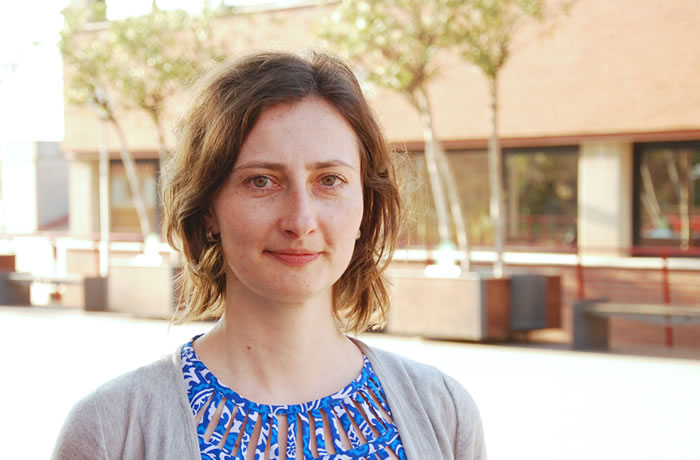
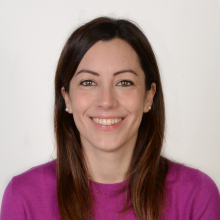
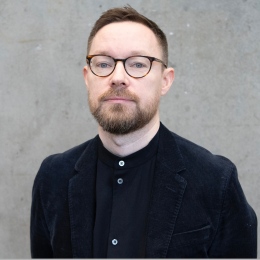
Francesca Coccetta is an Associate Professor at Ca' Foscari University of Venice , affiliated with the Department of Comparative Linguistic and Cultural Studies and the Interdepartmental Center SELISI in Treviso. Her research focuses on Multimodal Discourse Analysis , Corpus Linguistics , and English Language Teaching with a specialization in Scientific and Medical Discourse . She teaches multimodal analysis and translation across various degree programs including Medicine, International Economics, and Communication Studies. Recent publications analyze video abstracts (2024-2022) as emerging academic genres, with methodological frameworks for multimodal corpus construction and phase-based structural analysis . Her work extends to medical communication and cultural discourse studies , including European Capital of Culture promotional materials and Twilight Saga narrative analysis. She employs data-driven learning and intersemiotic competence frameworks in educational contexts. Active in international research projects like the Living Knowledge EU initiative (2009-2011) and PRIN (2005-2007), she has presented at conferences including EUROCALL , Learner Corpus Research Conference , and International Symposium on Multimodal Environments . Her academic career includes visiting positions at University of Sydney (2018) and Universidad Autónoma de Madrid (2020) under Erasmus+ mobility programs.
Karen Bauer is an Associate Professor in Foreign Language Didactics at the Department of Teacher Education, Faculty of Social and Educational Sciences at the Norwegian University of Science and Technology (NTNU). She has been working at NTNU since 2015 and serves as course leader for multiple teacher education programs including PPU4656 (German subject didactics - part 1), PPU4657 (German subject didactics - part 2), PPU4246 (subject didactics foreign languages - full-time), and PPU4540 (subject didactics English and foreign languages). Dr. Bauer received her doctorate in Germanic literature from Freie Universität Berlin in 2001. Prior to her position at NTNU, she worked as a lecturer in French, German and German as a foreign language at Freie Universität in Berlin, and as a cultural trainer at various institutions including the Goethe-Institut across multiple countries (France, Netherlands, Norway, Germany, and USA). Her research focuses on innovative approaches to language teaching, with particular emphasis on physical learning methods in language education. She heads the teaching materials research group at ILU and is an active member of NTNU's research group for physical learning. Her work explores the integration of movement into language instruction, word learning strategies with movement, and the analysis of teaching materials for German as a foreign language. She is particularly interested in how bodily engagement enhances language acquisition processes and student engagement. Bauer's publication record demonstrates a clear trajectory toward embodied learning approaches in language education. Her recent work shows increasing focus on physical learning methods, with numerous publications from 2021-2025 examining movement integration in language classrooms. Her research spans theoretical frameworks of bodily learning while maintaining strong practical applications for language teachers. Collaborative work with Beate Lindemann on German teacher training in Norway and with Gerard Doetjes on German textbooks reveals her commitment to improving language education through empirical research. As an academic leader, Bauer currently supervises one PhD fellow, Nico Schlösser, and serves as co-supervisor for a master's student at the University of Jena in Germany. She has been instrumental in developing teacher training programs and actively participates in international research collaborations focused on foreign language education in Nordic countries. Her work extends to practical applications through workshops and professional development activities for language teachers, focusing on digital storytelling, movement integration, and improvisational theater techniques to reduce language anxiety. She has presented her research at numerous national and international conferences, demonstrating her active engagement with the broader academic community.
Kristen Lindahl is a Professor in the Department of Bicultural-Bilingual Studies and Associate Dean for Strategic Partnerships, Preparation, and Growth at the University of Texas at San Antonio. Her scholarly work focuses on critical teacher language awareness, content-language integrated pedagogy (CLIL), and identity construction in teacher education. She leads Project SELFIES as Principal Investigator and contributes to field development through editorial work as Associate Editor of TESOL Journal. Teacher identity development across multicultural contexts Language ideology critique in professional preparation Leadership roles in TESOL International Association Specialized work with emergent bilinguals and Latinx educators Innovative approaches to practicum reform and teacher cognition International collaborations in CLIL professional development Her peer-reviewed publications examine raciolinguistic policing, epistemic modality in intercultural exchanges, and sociocultural pedagogy implementation. Current research includes the intersection of language ideologies and awareness among educators, with particular attention to marginalized bilingual populations. She has served as English Language Specialist for the U.S. Department of State and held leadership positions at TexTESOL II.
Tarja Nikula-Jäntti serves as a Professor at the Centre for Applied Language Studies within the Faculty of Humanities and Social Sciences at the University of Jyväskylä. Her academic work centers on language education frameworks, particularly examining intersections between language and subject content in multilingual educational environments across diverse institutional contexts. Nikula-Jäntti's research adopts socio-functional perspectives emphasizing language's contextual and variable nature, with foundational work on content-language integration in CLIL classrooms. She argues for prioritizing language's role in knowledge construction rather than treating it as an isolated skill, advocating for collaborative dialogue between language specialists, content teachers, and researchers. Her scholarship directly addresses challenges in linguistically heterogeneous classrooms and informs language-aware pedagogical approaches applicable beyond CLIL contexts. Her 2023-2025 publications reveal consistent focus on disciplinary literacies operationalization, multimodal knowledge construction in science education, and equity dimensions in CLIL implementation. Significant cross-national comparisons (Finnish-Spanish contexts) and European-wide CLIL policy analyses demonstrate her international research scope, while Tanzania-based teacher education collaborations reflect applied commitment to multilingual pedagogy in global contexts. No scientific awards were documented in the provided materials for Tarja Nikula-Jäntti. As lead implementer for Finland's PISA 2025 Foreign Language Assessment (English), Nikula-Jäntti directs her unit's work on large-scale language proficiency evaluation. This high-visibility project connects her theoretical expertise in language assessment to national educational policy, though specific grant histories weren't detailed in available sources. Her collaborative networks include the CLIL Network for Languages in Education (CLILNetLe) working groups across 20+ European countries. The Centre for Applied Language Studies at University of Jyväskylä serves as her primary research hub, supporting international collaborations like the Tanzania teacher education initiative and CLILNetLe's European-wide reporting. Her work consistently bridges theoretical linguistics with classroom practice through physics/chemistry multimodal studies and Finnish-Spanish comparative research, demonstrating commitment to contextually grounded language education solutions.
Prof. Dr. Ute Smit holds the Chair in Multilingualism, Interculturality and Language Lab (CU.mil) at the University of Vienna , Faculty of Philological and Cultural Studies , and Department of English . With over 30 years as an applied linguist, her research bridges classroom discourse, language policy, internationalization, English as a lingua franca (ELF), disciplinary biliteracy, and multilingualism. Key roles: Chair of ICLHE Association, Vice Head of #YouthMediaLife platform Education: Habilitation (2008), PhD (1995), MA (1990) from University of Vienna Research Focus examines English-medium instruction (EMI/EMEMUS) across secondary and tertiary education, combining ELF and CLIL/ICLHE frameworks. Her work explores: Language dynamics in business/technical education Translanguaging and disciplinary knowledge construction Impact of internationalization on multilingual university settings Policy implementation and stakeholder perspectives Longitudinal classroom discourse studies Digital literacy and extramural language exposure Scientific Contributions include: Co-developer of ROAD-MAPPING framework for EMI research PI of EU-funded projects (CLILNetLE, MCC Project) Co-founding organiser of AILA CLIL Research Network (2006-14) Key publications: ROAD-MAPPING English Medium Education (Palgrave Pivot 2020), ELF and multilingualism in EMI (JELF 2024) Teaching & Supervision spans undergraduate to PhD levels at the University of Vienna, with emphasis on applied linguistics and teacher training. She supervises 12+ theses on topics like: Plurilingual communication in STEM education Vocabulary acquisition through extramural English Facebook as rhetorical tool in political discourse Comparative EMI/TMI in Thai higher education
Dr Thi Kim Anh Dang is a Senior Lecturer (TESOL and Languages Education) at Monash University's Faculty of Education. Previously, she held roles at Melbourne Graduate School of Education and La Trobe University. Her research focuses on teacher education, sociocultural theory, Indigenous education, and English-medium instruction (EMI) globalization impacts. She has published widely in international journals and authored 'Education Policy: Mapping the Landscape and Scope' (2016). Education: PhD in Teacher Education (University of Melbourne, 2014) with a sociocultural activity theoretical study of paired-placements; M.Ed (2002) on genre-based ESL writing pedagogy; B.Ed (Honours) in English Language Teaching (Vietnam National University, 1996). Research Interests: Teacher education, professional learning, TESOL, education policy, sociocultural activity theory, Indigenous education. She has consulted on projects addressing Indigenous student engagement in business education and EMI implementation strategies. Awards: Early Career Researcher Commendation (AARE 2015), Vietnam's Excellent Research Supervision Award (2007), and multiple scholarships/fellowships for academic excellence. Collaborations: Key projects include EMI professional learning programs in China and Germany, and Indigenous education initiatives in Australia. She leads the AARE Teacher Education & Research Innovation SIG.
Graziano SERRAGIOTTO is a Full Professor at Ca' Foscari University of Venice, holding roles as President of the University Language Center (CLA) and referent for Teaching Qualification processes. He is affiliated with the Department of Linguistics and Comparative Cultural Studies and the Research Institute for Digital and Cultural Heritage. His work focuses on CLIL (Content and Language Integrated Learning), language assessment, and intercultural communication in Italian language education. He has contributed extensively to research on teaching methodologies, digital tools in language learning, and cross-cultural educational models. His research interests span CLIL methodology, language assessment frameworks, and the integration of digital storytelling and multimedia resources in language education. He has published widely on Italian as a foreign language, teacher training, and multicultural education strategies. He leads projects on language policy in academic institutions and collaborates with international institutions like the Italian Cultural Institutes in Japan and China. Key areas of focus include: Development of CLIL curricula and teacher training programs Evaluation of language learning outcomes and competence assessment Use of technology in language education and professional development Cross-cultural teaching approaches for immigrant communities His publications highlight contributions to language education theory and practice, with a recent emphasis on digital tools and online professional development for teachers. He also leads initiatives to enhance intercultural communication in language learning contexts.
Beth Dillard is an Assistant Professor in the Woodring College of Education at Western Washington University, specializing in Multilingual Education. She serves as Co-Director of Bilingual Teacher Community Routes and coordinates Grow Your Own (GYO) certification programs for dual-language teachers. Previously, she taught high school social studies and ESL. She holds a Ph.D. in Second Languages Education (University of Minnesota, 2016), an M.Ed. in Curriculum and Instruction (University of Oregon, 2006), and a B.A. in History (Auburn University, 2003). Her research focuses on systemic functional linguistics, content-language integration, teacher learning, and bilingual education. She actively contributes to academic discourse through presentations and publications, including work on SFL analysis and classroom strategies. Her Orcid ID is 0000-0002-3941-7562. Education: Ph.D. (2016), University of Minnesota: Second Languages Education M.Ed. (2006), University of Oregon: Curriculum and Instruction (Secondary Social Studies & ESOL) B.A. (2003), Auburn University: History (cum laude) Research Interests: Systemic Functional Linguistics, Content and Language Integration (CBI/CLIL), Teacher Learning, Bilingual Education, Activity Theory, Discourse Analysis (including conversation analytic approaches). Professional Engagement: Coordinates GYO pathways for bilingual teachers, advises on Multilingual Education programs, and collaborates with schools in South King County. She has presented at international conferences like AAAL and co-organizes events on multilingual education and teacher development.
Aoife Kathleen Ahern is an Associate Professor at the School of Education of Complutense University of Madrid and a Senior Lecturer in the Foreign Language Teaching Unit, Faculty of Education. She teaches language teaching methodology for young learners of English as a Foreign Language (EFL) and literacy in EFL. As pedagogical coordinator of the English specialization studies for Primary Education, she integrates digital competencies and service learning in bilingual literacy. Her research focuses on pragmatics, second language acquisition, and literacy teaching in multilingual contexts. She holds a PhD in Spanish Linguistics (Summa cum Laude, European Doctorate from UNED and University College London), a BA in English (UNED), and a BA in Spanish Philology with an Honorary Award (UCM). Her international experience includes postdoctoral work at the University of Edinburgh and research collaborations in Spain and the UK. Research interests include the interplay between linguistic meaning and pragmatics, bilingual education, and CLIL approaches. She has led projects funded by CNEAI (Central Council of Spanish Languages) and contributed to initiatives like the SPIRIM Research Project and SIGGRAM Network. Her work emphasizes practical applications, such as improving academic literacy in teacher training and addressing challenges in multilingual education. Administratively, she served as Departmental Academic Secretary (2012–2017) and evaluated EU education projects (Erasmus+, Leonardo da Vinci) for OAPEE and SEPIE. She also contributed to university accreditation processes for the Catalan Quality Agency (AQU). Key groups include the ForMuLE Group (Multilingualism and Literacy in Education) and SIGRAM, highlighting her engagement in both theoretical and applied research.
Elisa Hidalgo McCabe is an Assistant Professor at the Foreign Language Teaching Unit within the Faculty of Education – Teacher Training Center at Complutense University of Madrid (UCM). She teaches subjects related to Foreign Language Teaching (English) and holds a Master's in Applied Linguistics from the University of Massachusetts Boston and a PhD from the Autonomous University of Madrid (UAM). Her research focuses on CLIL (Content and Language Integrated Learning), bilingual education policies, and classroom interaction dynamics. She is a member of the UAM-CLIL research group and has led projects funded by the Spanish Ministry of Science, including 'LongAd-CLIL' (2019–present) and 'TRANS-CLIL' (2015–2018). Her work examines affective factors in CLIL transitions, neoliberal influences on educational policies, and the sociocultural dimensions of language learning. Notable publications include studies on student motivation in bilingual education and critical analyses of parental choice policies. She has collaborated with institutions like Harvard University and contributes to academic platforms such as ResearchGate and Academia.edu.
Natalia Evnitskaya is a Professor at the Department of Applied Linguistics within the Institute for Multilingualism at Universitat Internacional de Catalunya (UIC Barcelona). She holds a doctoral contract (Contractada Doctora) and specializes in research areas including Content and Language Integrated Learning (CLIL), bilingual education, classroom interaction analysis, and educational linguistics. Her research focuses on optimizing language and content integration in multilingual classrooms, particularly in science and history disciplines. She has led projects such as the GRAM research group (Grup de Recerca en Adquisició Multilingüe) and contributed to initiatives like the Trans-CLIL project analyzing curriculum transitions in bilingual education. Her work frequently employs conversation analysis and multimodal interaction studies to explore pedagogical strategies. Dr. Evnitskaya teaches courses across undergraduate and postgraduate programs, including Methods for Teaching English as a Foreign Language and Master's Dissertation supervision in the Master's Degree in Language Acquisition and Teaching English as a Foreign Language. She has also developed specialized programs such as the Expert in TEFL in Early Childhood Contexts. Her recent publications address topics like peer interaction repair mechanisms, cognitive discourse functions in CLIL, and the role of non-verbal communication in teaching. She co-authored influential studies on CLIL inequities, teacher smile usage, and sociolinguistic factors influencing educational choices in multilingual contexts.
Camilla Spaliviero is a Research Fellow at Ca' Foscari University of Venice (SSD: GLOT-01/B), specializing in second language acquisition, multilingual education, and intercultural pedagogy. She holds a PhD in Linguistics from Ca' Foscari, focusing on literary texts in foreign language classrooms. She also teaches Italian as a Second Language (L2) at the University of Bologna, Ferrara, and Turin. Her current Marie Skłodowska-Curie grant (2025–) supports the LATECO project, fostering multilingualism through teacher collaboration, based at the University of Bergen (Norway), with secondments at the University of Graz (Austria) and the University of Copenhagen. Her research emphasizes multilingualism, digital resources, and teacher training. She coordinates the 'Itals Letteratura' project, exploring multimodal and digital tools in L2 education. She is affiliated with several research networks, including the 'Multilingualism on My Mind' (MoMM) group at the University of Bergen and the 'Literature in Language Learning and Teaching Network' (LiLLT ReN). Spaliviero has extensive international experience, including visiting roles at the University of Valencia and Bergen. She is a member of editorial boards for Rassegna Italiana di Linguistica Applicata (RILA) and EL.LE. Educazione Linguistica , and has reviewed for leading journals. Her work integrates literary texts, digital storytelling, and intercultural education to address migrant writers' contributions and multilingual classroom dynamics. Key awards include the Marie Skłodowska-Curie grant (2025–), and her research spans over 45 publications, including monographs and peer-reviewed articles on language pedagogy, teacher training, and literary education. She also trains Italian language teachers internationally and examines for the CEDILS certification.
Janne Kontio is a Senior Lecturer at the Department of Education, Stockholm University, where he conducts research and teaching in vocational education and related fields. He is affiliated with the Vocational and Educational Training (VET/YL) research group, which focuses on skills, qualifications, competences and professional knowledge across various vocational education contexts. Dr. Kontio's primary research interests include Vocational education, Content and Language Integrated Learning (CLIL), Classroom interaction, Language and identity, and Digitalization. His work often examines how language functions in vocational settings, particularly in bilingual contexts, and how digital technologies impact vocational learning environments. He has conducted empirical research on vocational education, with a specific focus on how students navigate language requirements in vocational programs. His publication record shows a consistent focus on vocational pedagogy, with recent work addressing dilemmas in leisure education, digital challenges in classrooms, and the evolving nature of vocational training. His research demonstrates particular attention to how students use technology in vocational settings and how language shapes professional identity formation. PhD in Education (defended June 2016) Postdoctoral position at Karlstad University (2017-2019) Editor for Springer Series on TVET Co-producer of Poddagogen, a podcast on recent doctoral theses in education Dr. Kontio collaborates extensively with Sofia Lundmark and other researchers in the VET field, producing numerous edited volumes and research articles that address contemporary challenges in vocational education and training across multiple contexts.
Maria Lim Falk is a researcher at the Department of Swedish Language and Multilingualism, Stockholm University . She leads key projects like IntensiveSwedish and collaborates with the Swedish National Agency for Education. PhD in Scandinavian Languages (2008) with focus on bilingual education Academy Fellow in Swedish Didactics (2010–2015) Research Focus: Bilingual education, CLIL pedagogy, academic writing in multilingual contexts, grammar instruction for second-language learners, and sociolinguistic challenges in education. Her work bridges theory and practice through teacher-researcher collaborations. Publication Trends: Analyzes Swedish/English code-switching, CLIL effectiveness, vocabulary acquisition, and curriculum design for refugee students. Key themes: multilingual competence, educational equity, and language policy implementation. Scientific Awards: Royal Swedish Academy of Literature Fellowship (2010–2015) Collaborative Work: Coordinates teacher-researcher partnerships, contributes to national educational models, and leads projects on language literacy. Her studies inform policies for sustainable educational practices.
Ruth Fielding is Associate Professor of Languages and TESOL Education at Monash University's School of Curriculum Teaching & Inclusive Education. She specializes in multilingualism, language education, and identity studies, with a focus on intercultural approaches and bilingual program development. Current Chief Investigator for 'Voices from the Margins: Linguistic Discrimination in Higher Education' (SSHRC-funded, 2025-2030) Lead ARC Discovery project 'Teacher Capabilities in Superdiversity' (2021-2025) Founded Bilingualism Matters @Monash Education (2023) Her research has appeared in International Journal of Bilingual Education , Foreign Language Annals , and multiple edited volumes. Key publications include: Multilingualism in the Australian Suburbs (Springer, 2015) Multilingualism, Identity and Interculturality in Education (Springer, 2022) Teacher Education for Content-Language Integration (Multilingual Matters, 2024) Scientific awards include: Michael Clyne Prize for best bilingualism thesis (2010) ALAA Travel Scholarship (2007) University Postgraduate Award (2008) Trevor Miller Memorial Fund Scholarship (2008) Excellence in Teaching Award (2011) Professional engagements: CLIL Theme Co-Leader, Research in Primary Languages Network (2020–) Consultant for AITSL, NSW Department of Education, and French Embassy




.jpg)