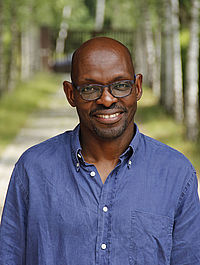
Joyce Marie Jackson is the James J. Parsons Endowed Professor in the Department of Geography & Anthropology at Louisiana State University (LSU), part of the College of Humanities & Social Sciences. She holds a Ph.D. from Indiana University and additional studies from Atlanta University and LSU. Her research focuses on African American folklore, music traditions, and cultural identity in the U.S. South. Jackson explores topics such as spirituals, blues, gospel quartets, Mardi Gras Indian rituals, and diasporic religious practices. Her work bridges anthropology, musicology, and cultural studies, often examining how African cultural heritage manifests in Southern U.S. communities. Notable contributions include studies on the Fazendeville community displacement, Easter Rock rituals, and the cultural significance of New Orleans second-line traditions. Jackson teaches courses on urban ethnography, African American folklore, and ritual theory. Jackson’s publications span academic journals, encyclopedias, and music documentation projects. She has contributed to Smithsonian Folkways recordings and Louisiana state cultural initiatives. Her research frequently highlights marginalized voices and historical preservation efforts in Louisiana and the broader South.
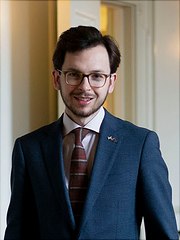
Eamonn Bell is an Assistant Professor in the Department of Computer Science at Durham University, with affiliations to the Institute of Advanced Study. His research focuses on digital humanities, applying computational methods to musicology and examining the history of digital technology in music production. He leads projects like CCP-AHC and DISKAH to enhance digital infrastructure for arts researchers. Previously, he was a postdoctoral Research Fellow at Trinity College Dublin, studying the cultural impact of the Compact Disc. He holds a PhD in Music Theory from Columbia University (2019) and a joint degree in Music and Mathematics from Trinity College Dublin (2013). His educational background includes advanced studies in music theory, digital humanities, and mathematics. He teaches courses on algorithms, software engineering, and music processing within Durham’s Computer Science curriculum. Supervision includes postgraduate students focusing on music technology and computational analysis. Research interests span digital musicology, the history of technology, and accessibility of computational tools for non-specialists. Awards include the Government of Ireland Postdoctoral Fellowship (2019–2021). His work addresses ethical issues in genetic studies of musicality and explores emerging digital tools for music analysis, such as time-coded YouTube comments and CD data extraction techniques. Key initiatives include designing DRI projects for UK-based researchers and advancing digital skills through collaborative frameworks. He actively participates in academic conferences and has published widely on topics ranging from media archaeology to interdisciplinary computational research.
Abdoulaye Sounaye is a Research Professor at the Leibniz Center for Modern Oriental Studies (ZMO) in Berlin, Germany, and an Associate Professor at Abdou Moumouni University in Niamey, Niger. His career spans over two decades, with roles including research fellowships, editorial contributions, and academic leadership in Islamic studies, African societies, and religiosity. Habilitation in African Studies (2021, University of Vienna) PhD in Religious Studies/Anthropology (2012, Northwestern University) MA in Religious Studies (2005, Arizona State University) Research Interests Dr. Sounaye's work critically engages with Islamic reform in West Africa, focusing on Salafism, state-society relations, and the role of media in reshaping religious practices. His scholarship interrogates how Islamic authority is constructed through audiovisual tools like CDs/DVDs, and how youth movements on university campuses negotiate religious identities within political frameworks. He has extensively analyzed transnational Islamic networks between Niger and Nigeria, particularly the influence of Hausa-language preachers (wa’azi) and their role in spreading Salafi ideologies. Recent Publications His 2023 edited volume Religiosity on University Campuses in Africa synthesizes interdisciplinary perspectives on campus religious dynamics. Earlier works like Salafi Aesthetics (2017) and Islam et Modernité (2016) explore the interplay between Islamic ethics, modernity, and reislamization processes in Niger. His articles in Journal of Religion in Africa and edited collections address topics such as ritual spaces in Berlin's West African diaspora and gendered dimensions of Islamic authority. Scientific Awards Dr. Sounaye has received prestigious fellowships including the Thyssen Foundation (2023), Volkswagen Foundation's Knowledge for Tomorrow (2018-2019), and Fulbright (2003-2005). He was a Presidential Fellow at Northwestern University and a Gwendolen M. Carter fellow, underscoring his expertise in Islamic studies and African societies. Advising and Grants He has led the ZMO research unit 'Contested Religion' since 2020, examining religiosity, morality, and intellectual culture. His projects often bridge academic research with policy analysis, as seen in his work on state-led Islamic deradicalization in the Sahel. Collaborations include Lasdel, the Nordic African Institute, and the West African Research Association. Labs and Collaborations Dr. Sounaye collaborates with institutions like Abdou Moumouni University, Northwestern University, and Arizona State University. His fieldwork in Niamey and cross-border studies in West Africa reflect his commitment to ethnographic approaches in studying Islamic media, youth activism, and transnational religious networks.
Mag. phil. Mag. art. Dr. phil. Stephan Hametner is a Professor at PH-OÖ (University College of Teacher Education Upper Austria) since 2014, specializing in Subject Didactics for General Music Education across elementary and secondary levels. His expertise spans Systemic-constructivist didactics Empirical research in music education Curriculum development Academic supervision Organizational development Academic background highlights include: PhD in Music Education/Pedagogy (2004, magna cum laude ) Diploma in Music Education (University of Music and Performing Arts Vienna & University of Vienna, 2000 magna cum laude ) Diploma in Rhythmics (1996 magna cum laude ) Research focuses on systemic-constructivist music pedagogy , with key contributions in Didactic frameworks for music interpretation Empirical validation of teaching methods Integration of movement and music Subject-oriented educational theory His publications analyze music's role in cognitive development and pedagogical innovation, emphasizing experiential learning. He also contributes to media education through 50 ethnomusicological radio programs (Radio Orange 94.0, 2000-2005) Interactive educational CD-ROMs Academic case studies Active in international collaborations, he serves as expert for Bern University of the Arts and contributes to the Rhythmic Expositur Biel project. Current projects include reception-aesthetic film analysis for teacher training and music identity development in educational settings.
Robert Frei is a Professor of Geochemistry at the Department of Geosciences and Natural Resource Management, University of Copenhagen, where he has been employed since 1999. His academic journey began at ETH Zürich, where he completed his PhD in 1992, followed by postdoctoral work at the University of Bern. He joined the University of Copenhagen as Laboratory Manager in 1997 before becoming a full professor. His research focuses on applying isotope geochemistry to understand Earth's history, particularly using cadmium, chromium, and other non-traditional isotope systems as tracers of paleoenvironmental conditions. His work spans from Precambrian oxygenation events to more recent climate changes, including the Cretaceous-Paleogene boundary and Bronze Age human mobility studies. Professor Frei's publications demonstrate a clear trend toward interdisciplinary research, bridging geochemistry with archaeology, paleoclimatology, and oceanography. His recent papers show increasing focus on using multi-isotope approaches (particularly Cd-Cr systems) to unravel complex biogeochemical processes across major geological transitions. The research spans from ancient Earth history to contemporary climate issues, demonstrating remarkable versatility. His scientific recognition includes: Membership in the Royal Danish Academy of Sciences and Letters (since 2004) 396 peer-reviewed journal articles with an H-index of 79 Over 20,000 citations according to Google Scholar Professor Frei has successfully supervised 17 PhD students and 7 postdoctoral researchers. His research has been supported by substantial grants including: Independent Research Fund Denmark projects totaling over DKK 14 million Carlsberg Foundation grants exceeding DKK 7 million European Commission Marie Skłodowska-Curie Actions funding (Euro 3.75 million) Co-founding the Nordic Center for Earth Evolution (NordCEE) with DKK 88 million funding He leads research in the Danish Center for Isotope Geology, operating advanced facilities including LA-ICP-MS and TIMS instruments. His international collaborations span Europe, North America, and South America, reflecting the global nature of his research on Earth's geochemical evolution.
Dr. José Antonio Frías Montoya is a full Professor at the University of Salamanca's Department of Library and Information Science. Holding a PhD in Documentation from Complutense University of Madrid since 1995, he has authored 60+ specialized journal articles and directed 22 doctoral theses. His leadership roles include former department director (1999-2008), master's program coordinator (2013-2014), and deputy director of Salamanca's Women's Studies Center (2010-2014). Current Research Interests Research Methodologies in Information Science Scientific Communication on Social Web Gender and Sexual Diversity Studies Key Institutional Roles Member, Steering Board of EUFEM Platform Vice President, Ibero-American Information Science Association (EDICIC) His publications analyze information retrieval systems, cataloging evolution in digital contexts, and open access impact on scholarly communication. He has mentored 23 doctoral students and contributed to over 20 funded research projects, primarily as principal investigator. Professional engagements include advisory board memberships for multiple international journals and guest lectures at universities across Spain and the Americas.
Dr. Alasdair Grant is a historian specializing in the medieval Mediterranean and Caucasus regions, holding dual appointments as a Research Fellow in the Department of Byzantine Studies at Johannes Gutenberg University Mainz (since 2025) and Research Associate in the Emmy Noether junior research group 'Social Contexts of Rebellion in the Early Islamic Period' at the University of Hamburg (since 2021). He additionally serves as a Young Academy Fellow of the Academy of Sciences in Hamburg (since 2024). His academic formation includes: PhD in History, University of Edinburgh (2016-2021), dissertation: 'Cross-Confessional Captivity in the Later Medieval Eastern Roman World, c.1280–1450' MSt with Distinction in Late Antique and Byzantine Studies, University of Oxford (2015-2016) MA (Hons.) First Class in Latin and Mediaeval History, University of St Andrews (2011-2015) Grant's research centers on socioeconomics in medieval societies, with groundbreaking work on cross-confessional slavery systems and rebellion dynamics. His scholarship bridges Byzantine, Islamic, and Caucasian histories through rigorous analysis of primary sources, revealing interconnected power structures across religious boundaries. He examines how marginalized groups navigated medieval empires, with particular attention to captivity narratives and resistance movements. His publication trajectory reveals a consistent focus on Mediterranean socioeconomics, evolving from early studies of medieval piracy and crusader correspondence toward contemporary analyses of the Greek Revolution's transnational dimensions. Recent work demonstrates sophisticated integration of Armenian, Greek, and Islamic sources to reconstruct social histories of rebellion and slavery, establishing new methodological frameworks for cross-confessional medieval studies. Key recognitions include: Young Academy Fellowship, Academy of Sciences in Hamburg (2024) Junior Fellowship, Byzantine Studies, Dumbarton Oaks (2020) Grant's current Emmy Noether research group represents a major German Research Foundation grant investigating rebellion contexts in early Islamic societies. Though no formal advisees are documented, his Hamburg research group involves collaborative mentoring. He maintains active roles in the Mainz Byzantine Studies department and Hamburg's Asia-Africa Institute, where he contributes to interdisciplinary projects connecting historical methodologies with contemporary social science approaches. His departmental affiliations anchor his work in institutional frameworks supporting Mediterranean and Caucasus historical research, with the Mainz position providing continuity in Byzantine studies while the Hamburg affiliation facilitates Islamicate world scholarship.
Eamonn Bell is an Assistant Professor in the Department of Computer Science at Durham University, specializing in the digital humanities and the history of technology in music production. His research examines the intersection of computational methods with musicology, including early uses of digital computers in musical analysis and the cultural impact of formats like the CD. Previously, he was a postdoctoral Research Fellow at Trinity College Dublin (TCD), funded by the Irish Research Council (2019–2021). Bell holds a PhD in Music Theory from Columbia University (2019), where he explored computational approaches to musical scores under Joseph Dubiel, and a B.A. (Mod.) in Music and Mathematics from TCD (2013). His work spans topics such as the socio-technical history of CD audio formats, algorithmic creativity in early AI research, and the preservation of obsolete digital media. He teaches across computer science curricula, emphasizing interdisciplinary methods in digital humanities. Bell’s research has been supported by UK Research and Innovation (UKRI) and smaller institutional grants, and he contributes to projects like DRI initiatives for UK-based arts researchers. Key awards include the Government of Ireland Postdoctoral Fellowship. His teaching experience includes courses on digital music critique and music theory fundamentals at Columbia, alongside workshops in data visualization and music technology. Bell’s lab and team collaborations focus on emerging technologies in musicology, such as AI’s role in cultural analysis and the challenges of preserving born-digital artifacts.
Michael Liebler is an Associate Professor of Teaching in the Department of English at Wayne State University's College of Liberal Arts and Sciences. A globally recognized poet, literary arts activist, and educator, he has taught since 1980 and authored 15 books/chapbooks. His work spans Detroit-focused poetry, war literature, and creative writing pedagogy. Education: M.A. in English. Research Interests: Creative writing, Detroit studies, world fiction, and war literature. His poetry explores themes such as cultural identity, geopolitical landscapes, and labor movements, with performances across 50 U.S. states and countries including Afghanistan, Israel, and Germany. Recent Trends in Publications: Liebler’s work increasingly integrates Detroit’s cultural heritage with global narratives, as seen in anthologies like Heaven Was Detroit and RESPECT: Poets on Detroit Music . His poetry often bridges multimedia formats (e.g., CD integrations) and bilingual translations. Awards: Fulbright Specialist Grants (2014, 2016) Michigan Humanities Champion of the Year (2021) Library of Michigan Notable Book Awards (2011, 2017, 2021) Advising & Grants: Co-founded the National Writer’s Voice Project and Springfed Arts. Secured grants including the Knight Foundation Award and State Department Cultural Grants for international teaching initiatives. Labs/Teams: Director of the National Writer’s Voice Project and co-editor of multiple literary anthologies.
Laurence DAURES is a Professor of Finance at ESSEC Business School, specializing in financial market microstructure. She holds a PhD from HEC Paris (2003) and a Habilitation from Toulouse I Capitole (2024). Her research focuses on market liquidity, dealer behavior, and fragmentation in financial markets. Key roles include Board Director positions at Dassault Systèmes and LCL, where she chairs audit/compensation committees. She has received prestigious awards including the Joseph de la Vega Prize (2013) and IFSID Best Paper Award (2015). Active in academic leadership, she co-founded the Women in Microstructure conference series and organized major finance workshops. Grants include ANR funding (PRC 2024, JCJC 2011) and Europlace research support. Education: PhD in Finance (HEC Paris 2003), Habilitation (Toulouse I 2024) Research Interests: Market microstructure, liquidity dynamics, credit derivatives, high-frequency trading regulation Grants: Over €3M from ANR, Europlace, and INEX (2018) Awards: 5 major academic prizes including European market structure recognition Leadership: Department Head (2010-2011), ESSEC Finance Seminar organizer (2006-2015) Her recent work analyzes strategic market-making in fragmented markets and transparency effects in CDS trading. Ongoing research explores client heterogeneity in credit derivatives markets and pre-opening mechanisms in fragmented equity markets.
Evan Mack is a Senior Teaching Professor in the Music Department at Skidmore College, where he has established himself as a prominent composer specializing in opera and song. His work bridges the worlds of academic music composition and civic engagement, particularly through his organization We Are Instrumental which brings quality instruments to students in Northern New York. Mack's research interests focus on Opera Composition , Music Theater , and the intersection of Arts with Civic Engagement . His creative work demonstrates a commitment to making opera accessible through various formats, from traditional grand opera to innovative micro-operas designed for digital platforms. He has developed a unique approach to connecting music composition with community needs, particularly in rural areas. Mack's compositional output shows a clear trajectory from traditional opera toward more experimental and community-focused works. His pieces often address contemporary social themes while maintaining strong theatrical elements. The evolution of his work demonstrates increasing engagement with community issues and innovative performance formats. 2018 Professional of the Year by Musical America Composing fellow at the John Duffy Composers Institute Resident artist at Yaddo National Opera Association's Argento Chamber Opera Competition winner Mack actively engages in academic service through his course "The Arts & Rural Poverty: Solving Real-World Problems with Creative Solutions," which provides students with hands-on experience addressing real-world challenges facing public school music programs in rural New York. His organization We Are Instrumental extends this work into the community, focusing on instrument accessibility for students. Through his work with Skidmore College and We Are Instrumental, Mack has established partnerships with rural school districts in the Adirondack region, creating a sustainable model for addressing instrument shortages through collection drives and community engagement.
Clément Stagnol is a French lutenist, musicologist, and associate professor (professeur agrégé) currently completing a PhD in musicology at Sorbonne University . From 2019 to 2024 he taught musicology in the UFR of Music and Musicology at Sorbonne, holding successively a doctoral teaching contract (2019–2023) and an ATER position (2023–2024). In 2025 he took up the post of Professor of Artistic Education – history of music and musical analysis – at the Regional Conservatory of Grenoble (CRR) . Education & Training 2019 → PhD in Music & Musicology, Sorbonne University (in progress) 2020 Agrégation de Musique (3rd/30) 2014 Master Recherche Musique & Musicologie, Sorbonne University 2019 Master Musique – Musicien-interprète (lute), CNSMD Lyon 2017 Master Musique – Culture musicale, CNSMD Lyon 2021 Certificat de piano complémentaire, CNSMD Paris 2025 Prix de Polyphonie XVe–XVIIe s., CNSMD Paris DEM guitare & formation musicale, CRD L’Haÿ-les-Roses (2011) Research Interests Stagnol’s scholarship centres on 17th-century French opera (especially the works of Cambert and Collasse immediately before and after Lully), lute music , the social history of music under the Ancien Régime , and historically-informed performance practice . His doctoral dissertation, supervised by Raphaëlle Legrand, investigates the tragédies en musique produced by the collaboration between Bernard de Fontenelle and Pascal Collasse (1689–1690) through the lens of the Quarrel of the Ancients and the Moderns. Performance & Ensemble Leadership As a professional lutenist, he co-founded the ensemble ApotropaïK , devoted to medieval repertoires and currently in residence at the Fondation Royaumont . The ensemble has released the CD Bella Donna (2023) and collaborates regularly with major French festivals. Scientific Awards & Distinctions 2020: Lauréat boursier, Adami (Society for performers’ rights) 2009: Premier prix, Concours Général Jury – Éducation musicale 2025: Prix de Polyphonie des XVe–XVIIe siècles, CNSMD Paris (unanimous TB) Grants & Doctoral Support Doctoral contract & teaching mission, Sorbonne University (2019→) ATER (Attaché temporaire d’enseignement et de recherche), Sorbonne (2023–2024) Vacation grant, French Ministry of Culture – programme Sequentia , IReMus (2015) Research Centre & Affiliations Doctoral studies are carried out within the Institute for Research in Musicology (IReMus, UMR 8223) , a joint unit of the National Library of France and Sorbonne University.
Robert H. Dillon is a Professor of Mathematics at Washington State University (WSU), specializing in Mathematical Biology, Computational Biofluids, and Scientific Computing. He holds a B.A. in History from Stanford University (1967), followed by a B.S., M.S., and Ph.D. in Mathematics from Western Washington University (1987-1989) and the University of Utah (1993). His research focuses on fluid-structure interactions in biological systems, including tumor microenvironments, biofilm dynamics, and cell motility. He has received awards such as the NSF Postdoctoral Fellowship (1995-1998) and WSU’s Outstanding Research Award (2008). Education: B.A., History, Stanford University, 1967 B.S., Mathematics, Western Washington University, 1987 M.S., Mathematics, Western Washington University, 1989 Ph.D., Mathematics, University of Utah, 1993 Research Interests: Mathematical Biology: Modeling tumor microenvironments, biofilm dynamics, and cell motility Computational Biofluids: Fluid-structure interaction in biological systems Numerical Methods: Immersed boundary and Lagrangian mesh techniques His work integrates computational models with experimental data to study systems like ciliary beating, sperm motility, and dielectrophoretic particle interactions. Recent projects include developing hybrid methods for AC dielectrophoresis and modeling TGF-β signaling pathways in tumors. Awards: NSF Mathematical Sciences Postdoctoral Research Fellowship (1995-1998) University of Utah Graduate Research Fellowship (1991-1992) WSU Department of Mathematics Outstanding Research Award (2008) He has advised numerous collaborative projects, including grants like the CDS&E grant for tumor microenvironment modeling. His lab focuses on interdisciplinary applications of computational methods in biology and engineering.
Eamonn Bell is Assistant Professor in the Department of Computer Science at Durham University, where he teaches across the computer science curriculum including introductory algorithms, software engineering projects, and a specialized music processing module. He also holds an Associate Fellowship in the Institute of Advanced Study at Durham. Dr. Bell's research falls under the broad umbrella of digital humanities, with specific focus on the application of computational techniques to musicology and humanities, history of computational sciences related to musical production, and lowering barriers to digital research infrastructure for humanities scholars. His work bridges music theory, computer science, and media history. His recent publication portfolio reveals a strong focus on the history of digital audio technologies, particularly compact disc (CD) format, YouTube comment analysis, and digital skills infrastructure for music researchers. His work shows an interdisciplinary approach connecting historical analysis of media technologies with contemporary digital humanities research methods. Dr. Bell currently supervises postgraduate research students and accepts new master's and doctoral students. His research has been funded by UK Research and Innovation (UKRI), the Irish Research Council, and various institutional grants since 2019. He leads significant projects including Toward a Collaborative Computational Project (CCP) for Arts, Humanities, and Culture Researchers (CCP-AHC), Accelerating Digital Skills for Music Researchers, and Digital Skills in Arts and Humanities (DISKAH). Prior to joining Durham, Dr. Bell was a postdoctoral Research Fellow at the Department of Music, Trinity College Dublin, where he examined the Compact Disc audio format's design and history under an Irish Research Council Postdoctoral Fellowship. He holds a PhD in Music Theory from Columbia University (2019) and a joint honours degree in Music and Mathematics from Trinity College Dublin (2013).
Dr. Hassan Juma Ndzovu serves as a Senior Lecturer in the Department of Philosophy, Religion and Theology at Moi University, Kenya, and is a Cluster Member of the Africa Multiple Cluster of Excellence at the University of Bayreuth since 2019. He holds a PhD in Religious Studies from the University of Kwazulu Natal and has held postdoctoral positions at Northwestern University (2009-2010) and Freie Universität Berlin (2013-2014). His educational background includes: PhD in Religious Studies, University of Kwazulu Natal, South Africa Dr. Ndzovu's research centers on Islam in Sub-Saharan Africa with emphases on religion-politics intersections, religious conflict, Islamic education, and religion-sexuality dynamics. His work critically examines Kenyan Muslim communities' historical political engagement, marginalization experiences, and evolving religious authority structures through both traditional institutions and media-mediated channels. His recent publications (2019-2020) demonstrate consistent focus on socio-political dimensions of African Islam, particularly media's role in reshaping religious authority, faith-humanitarianism intersections, and religious pluralism challenges. These works reflect interdisciplinary engagement across religious studies, political science, gender studies, and media anthropology. No scientific awards were mentioned in the source materials. While specific student advising details are unreported, his postdoctoral appointments indicate competitive research funding history. His current Bayreuth-supported project examines women-led Islamic education through physical institutions (chuo/madrassas) and digital sermons (CDs/DVDs), analyzing how these mediums reconstruct religious authority and gender dynamics in Kenyan Muslim communities. Dr. Ndzovu actively contributes to the Africa Multiple Cluster of Excellence, where his project Women, Education and Mediatized Sermons investigates curriculum structures of women-only Islamic institutions, sermon content analysis, and media technology's impact on knowledge transmission traditions among Kenyan Muslims.