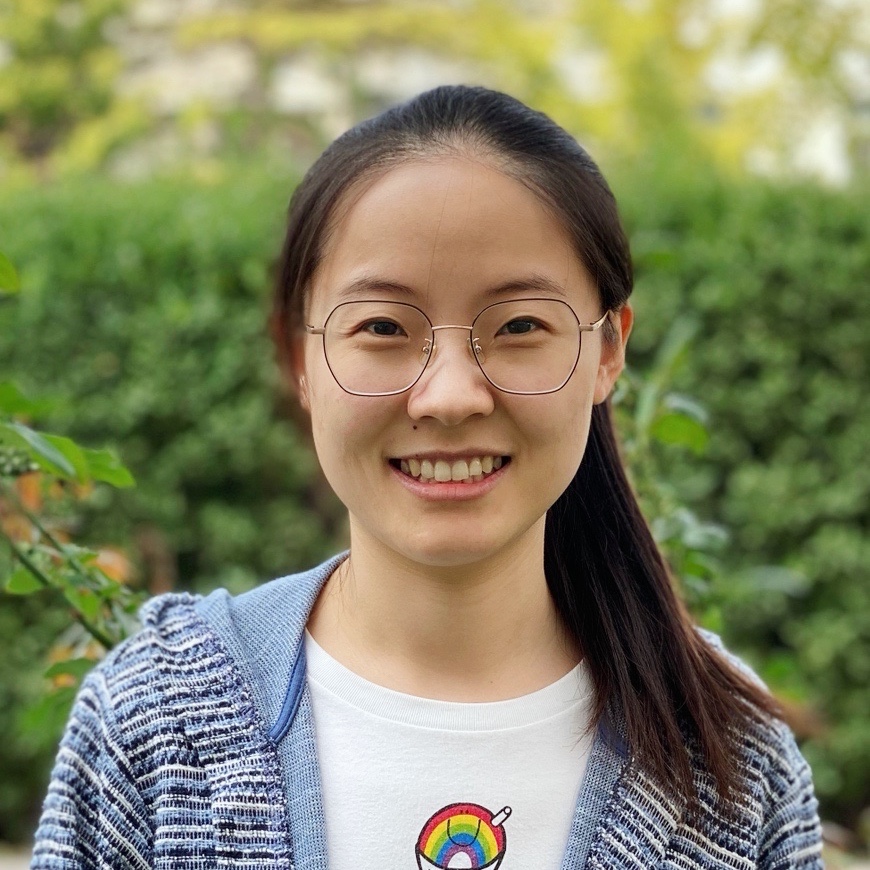
B.S. (Bas) Baalmans is a Managing Director and Lecturer at the Faculty of Economics and Business, University of Groningen. His expertise spans Digital Transformation, Agile/Scrum project management, and LEAN Six Sigma. He is affiliated with the Groningen Digital Business Centre (GDBC), where he contributed to a notable book and media engagements. Research focuses on digital business strategies and education, evidenced by his editorial role in the 2022 publication "Digital Transformation: A Guide for Managers" . Media coverage highlights his work in bridging digital innovation with managerial practices, emphasizing practical applications in business contexts. No formal awards or grants are listed, though his role in GDBC suggests involvement in collaborative initiatives. No advising relationships or student supervision details are provided.
Shoshana Vasserman is an Assistant Professor of Economics at Stanford Graduate School of Business and a Faculty Research Fellow at the National Bureau of Economic Research. Her research applies industrial organization and applied microeconomics to policy analysis, focusing on information revelation, risk sharing, and commitment mechanisms in contexts such as public procurement, pharmaceutical pricing, and auto insurance. She received her PhD in Economics from Harvard University in 2019, an AM in Economics from Harvard (2016), and a BS in Mathematics and Economics from MIT (2013). Prior to joining Stanford, she was a Postdoctoral Fellow at the Stanford Institute for Economic Policy Research. Vasserman's work often combines theoretical modeling with empirical analysis to study auction design, privacy policies, and market efficiency. Her publications appear in leading journals including Econometrica and PNAS. Honors include: Rosenberg Faculty Scholar (2023–24) Lacob Family Faculty Scholar (2021–22) Padma Desai Dissertation Prize (2019) She teaches courses in data-driven decision making (OIT 274) and mentors students through the Research Fellows Practicum (GSBGEN 697). Current projects explore congestion pricing, bargaining in pharmaceutical markets, and robustness measures for welfare analysis.
Jürgen Mihm is a Professor of Technology and Operations Management at INSEAD. He holds a Doctorate from WHU’s Otto Beisheim School of Management and a joint degree in Business and Electrical Engineering from Technische Universität Darmstadt. As Director of the Strategic R&D Management executive program, he focuses on enhancing innovation agility in established firms, addressing coordination in large engineering programs, and integrating design thinking. His research appears in top journals like Management Science and Manufacturing & Service Operations Management , where he also serves as an editor. He teaches innovation and R&D management across Executive, PhD, EMBA, and MBA programs. Previously, he was a consultant at McKinsey & Company, specializing in semiconductor and automotive sectors. His work explores R&D portfolio dynamics, collaboration effects, and sourcing strategies for innovation. Education: Doctorate, WHU Otto Beisheim School of Management; Joint Degree (Dipl. Wirtsch. Ing.), Technische Universität Darmstadt. Research interests span innovation management, R&D processes, and design integration. His recent work examines optimal R&D spending allocation, feedback mechanisms in innovation contests, and the impact of collaboration on breakthrough inventions. He co-authored influential studies on patenting strategies and the role of 'star' collaborators in creativity. His articles analyze systemic vs. component-based sourcing, cyclicality-product quality linkages, and design patent trends. Teaching includes executive programs and custom client engagements. He co-designed role-play simulations for project portfolio management, featured in case studies like Project Portfolio Simulation: Introduction . His industry focus spans automobiles, engineering, and electronics sectors. Professional roles include editorial positions at leading journals and prior McKinsey experience. No specific grants or labs are highlighted, though his research involves extensive collaboration with industry partners.
Shuangning Li is an Assistant Professor of Econometrics and Statistics at the University of Chicago's Booth School of Business. He holds a Ph.D. from Stanford University's Department of Statistics, advised by Professors Emmanuel Candès and Stefan Wager, and a Bachelor of Science from the University of Hong Kong. Prior to his current role, he was a postdoctoral fellow in Statistics at Harvard University. His research focuses on causal inference, machine learning, and statistical methodology with applications in econometrics, networks, and genomics. **Education:** Ph.D. in Statistics, Stanford University (Advisors: Emmanuel Candès, Stefan Wager) Bachelor of Science, University of Hong Kong **Research Interests:** Causal inference in complex systems (e.g., networks, high-dimensional data) Statistical methods for experimental design and robustness Machine learning applications in genomics and reinforcement learning Randomization-based testing and knockoff filters **Recent Work Trends:** His articles emphasize methodological innovations in causal effect estimation, network interference modeling, and transfer learning. Recent work addresses challenges in stochastic congestion, multi-environment analysis, and cooperative learning frameworks. His 2024 paper advances covariate shift correction for conditional randomization tests, while his 2023 studies explore robustness in model-X inference and dyadic reinforcement learning dynamics. **Advising & Academic Background:** His doctoral training under Candès and Wager shaped his focus on rigorous statistical foundations. He has not yet listed advising relationships in available materials, but his research collaborations span academia and industry.
Dr. Sandris Zeivots is a Senior Lecturer at the University of Sydney Business School and Interim Academic Director of Business Co-Design. His research focuses on creating transformative educational experiences through co-design methodologies, learning spaces, and emotional dimensions of learning. Zeivots explores student engagement optimization through collaborative educational design and investigates hybrid teaching models. His publications demonstrate consistent focus on innovative pedagogies, with recent work examining generative AI's impact on assessments, connected learning spaces in business education, and cross-disciplinary professional development. Research trends show progression from experiential learning foundations to technologically-enhanced educational frameworks. Zeivots leads the Disruptive Innovations in Business Education Research Group and has secured multiple grants including an Australian Business Deans Council commission. As academic director, he oversees curriculum development initiatives and facilitates faculty development programs through Sydney Facilitators Network and HERDSA networks. His pedagogical approach emphasizes authentic industry engagement and meaningful learning experiences in postgraduate business education.
Christopher Asakiewicz is a Teaching Professor at the School of Business, Stevens Institute. His research focuses on Collaborative Research and Discovery, IT-Enabled Business Process Innovation, Knowledge Mining and Visualization, Healthcare Analytics, Cognitive Systems, and Artificial Intelligence. PhD in Information Management (2003), Stevens Institute MS in Electrical Engineering (1983), Stevens Institute BS in Electrical Engineering and Computer Science (1977), Columbia University His research explores the intersection of artificial intelligence and healthcare, particularly in accelerating translational research through knowledge mining, cognitive systems, and data integration. He has pioneered methods for leveraging AI in biobanking, collaborative discovery, and healthcare analytics, with a focus on enterprise-level applications. Recent publications highlight applications of AI and machine learning in translational research, healthcare analytics, and IT-enabled business process innovation. His work often bridges computer science, systems engineering, and life sciences. Asakiewicz contributes to institutional service through roles on the Institute Curriculum Committee and BI&A Advisory Board. He has secured significant research funding for projects involving Merck Pharmaceuticals, Genesis Research, and the Department of Defense.
Prof. Dr. Wanja Wellbrock is a Professor at Heilbronn University's Faculty of Economics, focusing on Supply Chain Management, Sustainability, and Circular Economy. She leads the cooperative doctoral program with Tallinn University of Technology, focusing on 'Innovative Supply Chain Management in the Context of Industry 4.0 and Sustainable Management.' Her research spans funded projects like the 'Emission-free campus transport' (€200,000) and collaborations with organizations such as Hendricks, Rost & CIE and Lumics GmbH. Her academic roles include membership in the Senate Committee for Research, Transfer and Innovation, the Ethics Committee, and the Contact Point against Racism. She supervises doctoral students at the Schwäbisch Hall campus and actively contributes to international conferences and journals, including the 'Supply Management' symposium and 'GSI Journals Serie C.' Key research themes include sustainable procurement, risk management in supply chains, and digital technologies in logistics. Recent work explores circular economy innovations, cross-cultural communication, and the environmental impact of consumer choices. Research Collaborations: Philips University of Marburg (Innovative Supply Chain Management) Lumics GmbH (Process Orientation and Disruption Management) Grants: €200,000 from the Baden-Württemberg Ministry for 'Emission-free Campus Transport.' Her publications address sustainability in various sectors, including automotive, construction, and retail, with a focus on practical case studies and policy implications.
Prof. Hendro Wicaksono is a Professor of Data-Driven Industrial Systems at the School of Business, Social & Decision Sciences, Constructor University Bremen gGmbH. His expertise lies in applying AI and data-driven methods to enhance decision-making in complex industrial systems. He holds a Dr.-Ing. from Karlsruhe Institute of Technology (Germany) and M.Sc./B.Sc. degrees from German and Indonesian institutions. Research Interests : Focuses on causal AI, explainable AI, digital twins, sustainable industrial systems, and smart cities. His work integrates machine learning with domain-specific challenges in supply chains and energy management. Projects : Led over 10 funded projects including Delfine (accelerating energy transition), Talenta (digital asset management), and xAgri (agri-food supply chain analytics). Collaborates with global partners like Stadtwerke Trier and JetBrains. Teaching : Courses include Data Management in Industry 4.0, Production Planning, and Smart Cities. Recently on sabbatical in Spring 2023. Students : Supervises 20+ PhD/Master students researching topics like causal ML in software projects, EV adoption modeling, and blockchain logistics. Affiliations : Visiting Professor at University of Exeter, Adjunct Professor at Sebelas Maret/Airlangga Universities (Indonesia), and Academic Leader at Bandung Institute of Technology.
Dr. Yanni Ping is an Associate Professor in the Business Analytics & Information Systems Department at St. John's University's Peter J. Tobin College of Business. She holds a Ph.D. in Decision Sciences from Drexel University, an MS in Industrial Engineering from Georgia Tech, and a BS in Material Science and Engineering from Shanghai Jiao Tong University. Her research focuses on E-commerce analytics , leveraging machine learning, econometrics, and large language models to address service and operational challenges. Key themes include recommender systems, content creator performance, and KOL influence analysis. She also explores supply chain coordination mechanisms and disaster preparedness strategies. Teaching responsibilities include courses like Machine Learning for Business, Text Analytics, and Prescriptive Analytics. Dr. Ping currently serves as Associate Editor for Electronic Commerce Research and has published in journals such as Journal of Services Marketing and Electronic Commerce Research and Applications . Her work bridges marketing, operations, and data science with a focus on real-world business applications. Recent publications analyze user engagement in recommender systems, the impact of peer influence on video game adoption, and the moderating effects of pandemic attitudes on brand loyalty. Her research combines rigorous quantitative methods with practical industry insights. Dr. Ping's academic journey includes interdisciplinary collaborations across business analytics, operations management, and digital marketing. She actively contributes to global scholarly networks through conference presentations and editorial work.
Dr. Frederic Ang is an Associate Professor in the Business Economics Group at Wageningen University & Research since 2023, specializing in agri-food sector productivity and sustainability. He holds a joint Ph.D. from KU Leuven and Hasselt University (2015), followed by postdoctoral roles at the University of Reading and Swedish University of Agricultural Sciences. His research focuses on sustainable intensification, dynamic optimization, and agricultural productivity analysis. He currently serves as Associate Editor of the Journal of Productivity Analysis and Co-Editor of the Journal of Agricultural Economics . Key honors include the 2023 AES Outstanding Contribution Award and 2020 Best Referee Award. His work addresses agricultural efficiency, environmental policy, and farm-level decision-making. Education: Joint Ph.D. in Bioscience Engineering and Business Economics (2015) Master of Advanced Studies in Economics (2015) M.Sc. in Tropical Natural Resources Management (2009) B.Sc. in Biosystems Engineering (2007) Research Interests: Dr. Ang examines agricultural productivity through lenses of production economics, exploring sustainable practices and environmental-economic trade-offs. His work bridges theoretical models (e.g., Hicks-Moorsteen productivity indicators) with applied analyses of farm-level data, emphasizing nitrogen management, energy resilience, and microbial innovations. Awards & Grants: Recognized for contributions to agricultural economics journals and policy research. Active in OECD initiatives on productivity and environment. Projects include leading the SIMBA initiative on microbiome applications and the MINDSTEP project modeling farmer decisions under EU policies. Labs & Collaborations: Engaged with interdisciplinary teams in the Business Economics Group and international partners via projects like MIXED (agroforestry systems) and MINDSTEP. Coordinates research on circular economy principles and climate-smart agriculture.
Daniela Maresch is an Associate Professor at GEM, affiliated with the Management, Technologies and Strategy Department since December 2020. She holds a PhD in Business Administration and an LL.M. in Business Law from WU Vienna University of Business and Economics (Austria), followed by a postdoctoral qualification (Habilitation) from Johannes Kepler University Linz (Austria). Her research focuses on entrepreneurship, regional development, and innovation, particularly in areas like entrepreneurial finance, technology entrepreneurship, social/migrant entrepreneurship, and education. Her work bridges interdisciplinary fields, combining legal, economic, and managerial perspectives. Dr. Maresch’s research has been published in journals such as Journal of Corporate Finance , Technological Forecasting and Social Change , and the European Central Bank Working Paper Series, with funding from the EU, the Swedish Kamprad Family Foundation, and private enterprises. She has held visiting roles at Aalto University (Finland), Cranfield University (UK), Lund University (Sweden), and currently serves as a visiting professor at Johannes Kepler University Linz. She is also an editorial board member for Technological Forecasting and Social Change and Review of Managerial Science . Her research explores themes such as entrepreneurial ecosystems, scaling strategies in digital eras, and the socio-economic impact of disruptive technologies. Key themes include innovation adoption in SMEs, governance of emerging technologies (e.g., additive manufacturing), and the role of fear-of-missing-out in decision-making. She advocates for policies fostering scalable ventures and ethical considerations in technology deployment, such as moral frameworks for social robots. Dr. Maresch’s work addresses challenges in rural entrepreneurship, including social enterprise sustainability and innovation. She collaborates with academic and industry partners to advance practical applications of her research, emphasizing interdisciplinarity and real-world relevance.
Arnaldo Delli Carri is an Associate Professor at the CEES School of Engineering, serving as Curriculum Lead and actively involved in academic leadership. His research focuses on Nonlinear Dynamics and Finite Element Analysis, with expertise in structural analysis, modal testing, and vibration dynamics. He is currently accepting PhD students in areas like Nonlinear Vibration Analysis and FE model validation. Research interests include advanced topics such as nonlinear system identification, model upgrading, and machine learning applications in structural performance prediction. Notable projects involve analyzing planetary gearboxes, 3D printing opportunities in Africa, and laser vibrometer-based nonlinear detection. His work integrates experimental and computational methods to address challenges in mechanical systems and biomedical engineering. Collaborations span international partnerships, focusing on structural dynamics and nonlinear systems. His contributions include over 17 publications since 2011, with a focus on vibration analysis, finite element validation, and additive manufacturing applications. He currently supervises PhD candidates exploring nonlinear dynamics and FE formulations.
FANG Xin is a Full-time Faculty Member and Associate Professor of Operations Management at the Singapore Management University (SMU), affiliated with the Lee Kong Chian School of Business . He also serves as Director of PhD Programmes and MPA Research Fellow since 2023. Ph.D. in Operations Management (2014), Carnegie Mellon University B.S. in Information Systems (2008), Fudan University Research Interests: Corporate Social Responsibility in Supply Chains Digital Economy and E-Commerce Platforms Co-opetition and Network Stability Sustainable Operations and Urban Logistics Consumer Behavior and Decision Theory Selected Publications (2013-2025): Focus on supply chain ethics, game theory applications, and digital platform strategies. Notable themes include anti-counterfeiting, CSR dynamics, urban delivery solutions, and transshipment network formation. Scientific Awards: M&SOM Meritorious Service Award (2024) Lee Kong Chian Fellowship (2020) William Larimer Mellon Fellowship (2008-2014) Multiple Dean's Teaching Honor List recognitions (2019-2024) MPA Fellowships in Maritime Business (2021, 2024) Leadership Roles: Program Director, PhD in Business (2023-Present) Program Coordinator, PhD in Business (Operations Management) (2020-2023)
Alin Deutsch is a Professor of Computer Science at the University of California, San Diego (UCSD), specializing in database systems, graph databases, and formal verification. He has contributed significantly to research areas including query optimization, data integration, and privacy-preserving systems. His work spans theoretical foundations and practical implementations, such as the Linked Data Benchmark Council (LDBC) and the TigerGraph database system. He co-authored over 100 papers and has been involved in major conferences like SIGMOD and VLDB. Research interests include graph query processing, parallel computing, data-centric business processes, and automated system verification. Recent work focuses on scalable hybrid analytics and graph databases. Deutsch is also active in database education, co-authoring a paper on UCSD's database curriculum. He has led projects in privacy-aware systems, such as policy-aware location-based services, and contributed to tools like CLIDE for interactive query formulation in service-oriented architectures. His collaborations involve industry partners like TigerGraph and academic institutions globally.
Hajo A. Reijers is a Professor at the University of Utrecht, Netherlands, with a former affiliation at Vrije Universiteit Amsterdam. His research focuses on Business Process Management (BPM), Process Mining, and Robotic Process Automation (RPA), emphasizing practical applications in healthcare, organizational processes, and human-computer interaction. He contributes to developing tools like SWORD for detecting workarounds and DEUCE for auditing electronic health records. His work spans algorithm development for process discovery, predictive analytics, and optimization techniques. Key areas include analyzing event logs, modeling workplace behavior, and enhancing process transparency. Reijers collaborates extensively with industry partners, addressing challenges in process automation, employee acceptance of AI, and ethical monitoring. His contributions to conferences like BPM, CAiSE, and ICIS highlight interdisciplinary approaches, combining computer science with organizational studies. Notable projects include frameworks for task mining, reinforcement learning in care processes, and pattern recognition in government transparency assessments. Research initiatives often involve cross-disciplinary teams, exploring topics like workplace well-being through process mining, decision-making support systems, and overcoming barriers to BPM adoption. His work bridges theoretical advancements with real-world impact, influencing both academic discourse and practical business solutions.