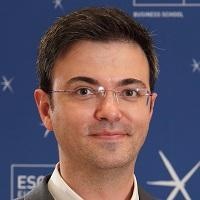
Dr. Ana-Marija Stjepić serves as a Researcher at the Department of Informatics , University of Zagreb Faculty of Economics , with over 9 years of teaching experience in business informatics and digital technologies. She actively contributes to research projects funded by the Croatian Science Foundation (HRZZ) and University of Zagreb , focusing on business intelligence systems, digital transformation, and technology adoption in SMEs. PhD in Business Informatics Specializes in Business Intelligence and Digital Literacy Research Interests : Her work bridges Business Process Management (BPM) with Business Intelligence (BI) , examining their alignment in organizational performance. She investigates technology adoption models (TOE framework) in SMEs, digital transformation strategies, and social media analytics in business contexts. Recent projects focus on IoT integration in BPM and green IT in education. Scientific Contributions : With 15+ peer-reviewed publications, her research spans: Senior 2030 Project : Digital solutions for elderly care PROSPER Project : Process intelligence for business performance Digital Literacy Studies : Generational differences in ICT adoption She teaches courses on database management , data warehousing , and digital governance across bachelor's, master's, and specialist degree programs.
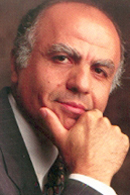
Prof. Dr. Eddy Vaassen is a Professor of Accountancy at Tilburg University and a Scientific Advisor at BDO . He is affiliated with Erasmus University Rotterdam , serves as Vice-President Europe/Africa/Mid East for the Accounting Information Systems SIG of the Association for Information Systems , and contributes to the Dutch Commissie Eindtermen Accountantsopleiding (CEA) . Primary Affiliation: Tilburg University, Department of Accountancy Secondary Roles: Scientific Advisor at BDO, Erasmus University Rotterdam Key Organizations: CEA, Association for Information Systems (AIS SIG) His research focuses on Accounting Information Systems (AIS) , IT Governance , and Management Control . He explores intersections of digital transformation with auditing practices, ERP systems, and decision-making frameworks. His work addresses challenges in IT security , internal control , and business value of IT . Recent publications emphasize blockchain technology , decision aid systems , and IT control mechanisms . Articles highlight trends in AIS, the role of process mining , and the professional judgment in internal control assessments . His work bridges academic theory with industry practices in IT and accounting. Dr. Vaassen supervises doctoral research on topics like ERP implementation , audit innovations , and just-in-time information systems . He contributes to editorial boards of journals such as the Journal of Information Systems and the International Journal of Digital Accounting Research , ensuring alignment with evolving digital accounting standards. He actively engages in continuing professional education for institutions like KLM , Rabobank , and TIAS Business School , combining academic rigor with real-world applications.
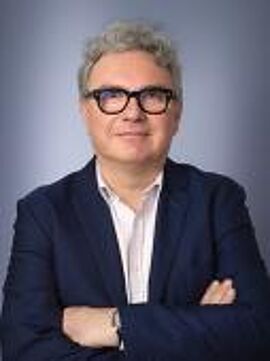
Dr. Ellen Belitzky serves as a Lecturer in the Economics and Business Analytics Department within Pompea College of Business at the University of New Haven, where she also coordinates the B.S. Business Analytics program. Her academic appointments include teaching graduate courses in Operations Management and Power BI dashboarding while maintaining active industry connections through her extensive corporate background. Education Background: Ph.D. in Technology Management, University of Bridgeport MBA in Marketing, University of Connecticut M.S. in Education (Educational Management & Organization Psychology), University of Pennsylvania B.S. in Economics (Decision Sciences and Marketing), The Wharton School of the University of Pennsylvania Dr. Belitzky's research focuses on business analytics applications in healthcare and education systems, with particular emphasis on social media's role in knowledge management and ethical business strategy development. Her work explores Universal Design for Learning implementation in business education and addresses talent diversity challenges in STEM fields. Current investigations examine how business analytics frameworks can optimize healthcare capability through digital platforms while maintaining ethical standards in data utilization. Academic Service: Reviewer for IEEE Transactions on Engineering Management Reviewer for Measuring Business Excellence journal Her industry experience as a business intelligence and IT leader in global consumer-packaged goods companies provides practical context for classroom instruction, bridging theoretical concepts with real-world applications in operations, marketing, and finance domains. Dr. Belitzky integrates her Project Management Professional (PMP) and Quality Management certifications into curriculum development, emphasizing process optimization and organizational transformation methodologies.
Dr. Spero Simeon Z. Paravantes serves as Lecturer in the History of International Relations at Utrecht University's Department of History and Art History, with additional appointments as Adjunct Professor in Economic History at Milan's Catholic University of the Sacred Heart and Senior Fellow at UC Berkeley's Institute of European Studies. His scholarly profile centers on 20th-century diplomatic history with emphasis on transatlantic relations and European integration processes. Paravantes specializes in Early Cold War American-European relations, Modern Greek political history, and European federalism dynamics. His research examines pivotal moments including Anglo-American diplomacy during Greece's civil war, reparations' role in European integration, and comparative analysis of historical referenda. Methodologically grounded in archival research and diplomatic history, his work bridges institutional analysis with geopolitical case studies across Western Europe and the Balkans. His publication trajectory from 2010-2020 reveals consistent focus on Cold War origins, European integration mechanisms, and Greek political crises. Key contributions include the 2020 monograph analyzing Anglo-American policy in post-WWII Greece and multi-part studies on reparations' impact on European unity. Thematic threads connect NATO/WEU security frameworks, Benelux integration models, and historical precedents for contemporary European challenges. Research funding includes four major peer-reviewed grants (2014-2018) examining US influence on early European integration, supplemented by numerous smaller competitive grants supporting international conference participation. Four peer-reviewed research grants (2014-2018) for US role in European integration studies Multiple smaller peer-reviewed research grants for 20th-century history projects Paravantes actively disseminates research through international lectures across North America and Europe, and co-organized the 2019 Luxembourg conference on Benelux integration dynamics. His scholarly network includes collaborations with institutions in Greece, Italy, and Luxembourg, with conference proceedings forthcoming from Brill Publications. While institutional affiliations show strong European base, his work maintains transatlantic perspective through Berkeley fellowship and comparative methodology. No dedicated research laboratories or permanent teams are documented, though conference co-organization indicates project-based collaborative networks.
Prof. D.M. van Solingen serves as a Professor in the Software Engineering department within the Electrical Engineering, Mathematics and Computer Science school at Delft University of Technology. His academic career spans over two decades with continuous research output through 2024, demonstrating active engagement in both theoretical and practical aspects of software development. His research interests focus on Agile methodologies , global software development , and value-driven project management . Key areas include empirical studies on offshoring economics, Scrum framework optimization, stakeholder value quantification, and organizational transformation during Agile adoption. His work bridges academic rigor with industry applicability, particularly in measuring the true costs of distributed development and identifying critical turnover impacts in global teams. Analysis of his recent publications (2016-2024) reveals a strong trend toward practical Agile implementation and value measurement . Over 60% of his work addresses real-world challenges in scaling Scrum, optimizing offshoring strategies, and quantifying business value. His research increasingly incorporates empirical data from industry collaborations, with significant focus on the human factors affecting software project outcomes. EASE 2016 Best Paper Award for research on stakeholder satisfaction and project impact Prof. van Solingen's advisory work includes doctoral supervision and industry collaborations focused on software process improvement. His research has attracted significant industry interest, evidenced by 118 Mendeley readers for his 2013 media coverage on hyperproductive Scrum teams and consistent Scopus citations across his publications. His work demonstrates sustained engagement with both academic and practitioner communities through books, conference workshops, and empirical studies.
Jukka Luoma serves as an Associate Professor in the Department of Industrial Engineering and Management at Aalto University School of Business. His research bridges competitive dynamics, behavioral strategy, and data-driven organizational decision making, with publications in premier journals including Strategic Management Journal , Organization Science , and Harvard Business Review . He contributes to academic discourse as an editorial board member for Long Range Planning and Strategic Organization . Luoma's research explores managerial cognitions and organizational routines underlying competitive interactions, employing computational modeling and experimental methods. Recent work examines AI integration in strategic decision processes, crisis management during pandemics, and data valuation frameworks in organizations. His studies reveal how feedback-based learning shapes competitive patterns and how cognitive biases influence market entry responses. Analysis of his 2021-2025 publications shows increasing convergence of digital transformation with core strategic management themes. Key trends include AI's role in organizational knowing (2025), non-linear crisis progression (2022), and the cognitive foundations of data-driven decisions (2023). His retailing and mobile gaming industry studies demonstrate contextual application of theoretical frameworks. Luoma's recognition includes: Tuta Education Award (2021) for teaching excellence in the IEM program Teacher of the Year by Prodeko Guild (2020) Best Paper Award at EURAM Strategic Management SIG (2014) Academy of Management Best Paper Proceedings (top 10%, 2012) Teaching Developer of the Year at Aalto School of Business (2016) Teacher of the Year at Helsinki University of Technology (2010) While specific advising details are undocumented, his editorial roles and extensive publication record indicate significant mentorship contributions. His research program demonstrates sustained funding through Aalto University support, with recent work addressing pandemic responses and AI integration challenges. No dedicated research labs or specialized teams are mentioned in available materials, though his collaborative publications suggest cross-institutional partnerships in strategic management research.
Professor José Ramón Cobo is a faculty member at ESCP Business School, where he serves as Professor in Strategic and Innovation Project Management. He teaches across various Master Programs (MIM, MSc, MS, MBA, EMBA) and Executive Education programs with a focus on agile management, innovation, digital transformation, and change management. At ESCP Business School, Professor Cobo previously served as the scientific director for the MSc in Business Project Management and Consulting. He currently leads the Executive Master in International Business. In 2020, he was appointed Associate Dean for Learning Innovation, responsible for providing inclusive, stimulating, flexible, and adaptable learning experiences at the highest academic standards. His research focuses on Strategic and Innovation Project Management, including digital transformation, processes optimization, project management maturity models, organizational design of complex projects, development of management skills in cross-cultural contexts, and agile management. Professor Cobo's research outputs have been implemented through innovation and agile practices in major companies such as Atos, Amadeus, Indra, Repsol, L'Oreal, Airbus, IAG, BNP Paribas, Generali, and Axa. Before joining ESCP, in 2006 he began his academic career as an associate professor at the Department of Engineering Organization and Management Sciences at the Technical University of Madrid. As a practitioner, he has extensive experience in strategic and management consulting, implementing digital solutions in international companies, and leading more than twenty R&D international projects. Professor Cobo is certified as a Project Management Professional (PMP®) and Agile Certified Practitioner by the Project Management Institute.
Lars Bengtsson is a Professor at the University of Gävle's School of Business, Healthcare and Social Sciences, serving as Vice-Chancellor. His research focuses on industrial economics, innovation management, and global supply chain strategies. Research areas: Lean methodologies, knowledge integration, open innovation, and production outsourcing Leadership: Center for Logistics and Innovative Production (CLIP) International collaborations: Studies on global supply chains and cross-border knowledge dynamics His recent works examine: Lean implementation in healthcare Sustainable procurement strategies Knowledge integration challenges in global manufacturing Appropriability mechanisms in open innovation Supplier capability development Cost-innovation tradeoffs in outsourcing Key affiliations include international research partnerships and industry collaborations. Publications analyze innovation outcomes, purchasing strategies, and maturity models across sectors.
Jalal Soroosh serves as Professor of Accounting in the Department of Accounting at Loyola University Maryland's Sellinger School of Business, bringing over twenty years of combined academic and professional experience from major firms including Arthur Andersen, PwC, and RSM McGladrey. His academic credentials include: Ph.D. in Accounting, University of Mississippi MBA, George Washington University BA, Iranian Institute of Advanced Accounting Professor Soroosh's research centers on evolving accounting standards , with particular expertise in International Financial Reporting Standards (IFRS) , SEC climate-related risk disclosures , and complex corporate reporting issues . His work bridges theoretical frameworks with practical implementation challenges faced by CPAs, emphasizing actionable strategies for regulatory compliance and financial transparency in dynamic business environments. Analysis of his 15 most recent publications reveals a clear evolution from foundational IFRS adoption research (2007-2011) toward contemporary sustainability accounting (2020-2023), demonstrating responsiveness to regulatory shifts. Early work focused on technical standards implementation (FIN 46(R), SFAS 158), while recent scholarship addresses climate risk disclosure frameworks and SEC proposals, reflecting the profession's growing emphasis on ESG integration. His distinguished recognition includes: New York State Society of CPA 2004 Max Block Award for groundbreaking work on special purpose entities Most Valued Professor designation by Executive MBA Fellows (Class of 2007) Prestigious KPMG Faculty Fellowship (2000-2001) With extensive global teaching experience in MBA/EMBA programs across China, Professor Soroosh has mentored generations of business leaders. His industry engagements, particularly the KPMG fellowship, provide critical real-world context to his academic work. While specific grant details remain undisclosed, his research impact is evident through sustained publication in leading practitioner journals and direct influence on professional accounting practices. His scholarly contributions are integrated into Loyola's accounting curriculum and professional development programs, with no dedicated research labs but significant influence through curriculum design and industry partnerships that shape contemporary accounting education and practice.
Professor AYHAN ÖZER is a distinguished academic at Gaziantep University, Faculty of Fine Arts, Department of Painting, where he has served as a Professor since 2024. Previously, he held positions as Associate Professor (2018-2024), Assistant Professor (2013-2018), and Doctor Lecturer (2013). His academic journey began with research assistantships at Mustafa Kemal University and Ankara University, establishing a strong foundation in art education. Professor Özer earned his Doctorate in Fine Arts Education from Ankara University (2004-2011), followed by a Master's degree in Fine Arts Education from Mustafa Kemal University (2001-2004), and his undergraduate degree in Painting-Craft Teaching from Hatay Mustafa Kemal University (1997-2001). His research spans diverse areas including Plastic Arts, Contemporary Art, Art Criticism, and Interdisciplinary Art Education, with particular focus on Sustainable Art and Design, Digital Art, and the intersection of Gastronomy with Visual Arts. Professor Özer has extensively explored Mythology in Art, particularly examining Prometheus and similar myths, while also contributing to the field of Art Ethics through his work on business ethics courses and artist oaths for fine arts faculties. His scholarly output reveals a consistent trajectory exploring the relationship between traditional art forms and contemporary challenges. Recent publications demonstrate increasing focus on digital transformation in art, public space interventions, and critical analysis of art education systems in Turkish universities. His research bridges historical perspectives with contemporary concerns, particularly evident in his examination of letter art, mythological themes in modern contexts, and the evolving landscape of art criticism in Turkey. Professor Özer has demonstrated significant leadership through his administrative roles including Dean (2025-present), Head of Main Art Department (2023-present), Faculty Board Member (2022-present), Institute Board Member (2021-present), and previously as Vice Dean (2020-2022, 2013-2023) and Department Head (2020-present). His artistic practice is equally robust, with numerous exhibitions including personal shows like 'Suret'i Nefisler' (2025), 'VANİTAS' (2023), and 'POST TRUTH HAKİKAT SONRASI PORTRELER' (2023), alongside participation in international exhibitions such as 'Projections of Paper' in Pinelo Art Gallery (2021) and 'Lonely Feathers' (2024). He has also organized significant events including the International Ethics Research Symposium (2018) and various art workshops. Professor Özer's contributions extend to design work, having created book covers for publications like 'Ülkü Tamer Hayatı Sanatı Eserleri' (2016) and 'New Feathers Anthology' (2023), as well as designing the logo for the 'ACADEMIC ETHICS PLATFORM' (2018). His teaching portfolio includes graduate courses in Contemporary Turkish Painting Art and undergraduate courses in Art Concepts and Theories, Art Criticism and Writing, and Painting Studios.
Dr. Valentina Battista is a Lecturer in Human Resource Management at Cranfield School of Management, Cranfield University, where she conducts research at the intersection of human resource management, performance measurement systems, and workplace technology. Her work bridges theoretical frameworks with practical applications across various organizational contexts. Education: PhD in Accounting, Management and Finance from the University of Pescara (Italy) Dr. Battista's research program centers on how organizations measure and manage performance in evolving work environments. She has developed expertise in cross-cultural management studies, particularly comparing Italian and Finnish managerial approaches, and has made significant contributions to understanding how digital technologies transform workplace dynamics and HR functions. Her scholarly work explores comprehensive performance measurement systems, with particular attention to the Balanced Scorecard framework and its implementation challenges. She has also investigated generational differences in workplace expectations, focusing on Generation Z in the UK context, and examined the relationship between organizational controls and institutional performance, especially in higher education settings. Her publication record reveals a clear evolution toward examining technology's impact on work, with increasing focus on quantified self technologies, employee monitoring, and digital transformation of HR functions. The interdisciplinary nature of her work spans human resources, organizational psychology, management control, and cross-cultural studies, often employing mixed-method approaches to address complex organizational challenges. Current Research Focus: Measuring employee performance using new technologies Impact of emerging technologies on HR functions Cross-cultural differences in managerial decision-making Comprehensive performance measurement systems design
Nicole Cade is an Associate Professor of Business Administration and James Allen Faculty Fellow at the University of Pittsburgh's College of Business Administration (Katz School of Business), where she joined in 2016 after completing her PhD at the University of Washington. Her primary academic appointment resides in the Accounting department. Her educational credentials include: PhD in Business Administration (Accounting) from the University of Washington Master of Science in Business Administration (Accounting) from the University of Washington Bachelor of Science in Business Administration (Accounting; Minor in Mathematics) from Ithaca College Dr. Cade's research centers on individual judgment and decision-making in financial reporting, stemming from her industry experience as a hedge fund accountant and municipal bond trader. She investigates how investors and managers process accounting information through experimental methodologies, focusing on disclosure formats, nonverbal cues, and psychological barriers to information acquisition. Her work bridges accounting, behavioral science, and finance with strong implications for regulatory practices. Her recent publications (2018-2025) in top-tier journals reveal consistent themes: the impact of emerging disclosure channels (video, social media), cognitive biases in financial judgment, and experimental approaches to measuring earnings manipulation. A significant portion examines investor behavior in crowdfunding and securities markets, highlighting how peripheral information and communication modes alter financial decision-making. Dr. Cade's accolades include: James Allen Faculty Fellowship Katz Excellence in Research Award Multiple Katz Excellence in Teaching Awards (CBA Program) Edward W. Kay & Mary Margaret Kay Award for Teaching Excellence in Accounting Deloitte Foundation Doctoral Fellowship University of Pittsburgh Momentum Fund Priming Grant Numerous athletic and academic honors from her undergraduate years She has secured research funding through the University of Pittsburgh Momentum Fund Priming Grant (2023) and actively contributes to doctoral education through courses in Experimental Research and Critical Thinking in Accounting. Her industry background informs both her research agenda and teaching philosophy, creating practical connections between academic theory and financial markets.
D. (Dimka) Karastoyanova is a Professor of Information Systems at the University of Groningen , Faculty of Science and Engineering, Computer Science Department. She leads the Information Systems Group and serves as vice-chair of the Bernoulli Institute Board since 2024. Previously, she was Head of the Computer Science Department (2020-2024) and a member of the Informatics Europe Board since 2023. Dimka's research focuses on data-driven, service-based process automation for cross-organizational collaboration, emphasizing runtime adaptability, security, and sustainability . Her work spans applications in manufacturing, logistics, healthcare, and eScience , integrating Scientific Workflows, Cloud Computing, and Middleware Systems to enhance process flexibility. Her scientific contributions include 15+ publications on topics like Choreography Lifecycle Management, BPEL Adaptation, and Cloud Migration Frameworks , reflecting her expertise in Service-Oriented Computing, Workflow Technologies, and Distributed Systems . She received the Rosalind Franklin Fellowship and has served on program committees for IEEE, ICWS, and BPM conferences . Dimka holds a PhD in Computer Science (TU Darmstadt, 2006), an MSc in Computational Engineering (University of Erlangen-Nuremberg), and MSc/BSc in Industrial Engineering (Technical University of Sofia). She previously held roles as Associate Professor of Data Science at KLU Hamburg and Senior Researcher at Hasso Plattner Institute, University of Potsdam.
Dr. Carla Winsor serves as a Lecturer in the Department of Civil and Environmental Engineering at the United States Coast Guard Academy, leveraging her interdisciplinary expertise across mechanical engineering, biomedical engineering, and education to advance biomechanics research and STEM pedagogy. Her unique background spans national laboratories, medical institutions, and military education, fostering an innovative approach to engineering education. Education: Ph.D., Mechanical Engineering, University of Wisconsin-Madison, 2022 M.S., Biomedical Engineering, University of Wisconsin-Madison, 2019 M.S., Mechanical Engineering, University of Wisconsin-Madison, 2019 M.S., Engineering Mechanics, University of Wisconsin-Madison, 2017 B.B.A., Business Administration (Organizational Leadership), University of New Mexico, 2014 B.S., Mechanical Engineering, Illinois Institute of Technology, 2013 United States Coast Guard Academy Class of 2011 (Mechanical Engineering/Management) Winsor's research integrates computational biomechanics with educational innovation, focusing on bone density analysis through quantitative computed tomography (QCT), femoral fracture prediction, and calibration methodologies. Her work addresses critical gaps in orthopedic biomechanics while simultaneously tackling systemic barriers in STEM education through system dynamics modeling. This dual focus manifests in publications spanning medical imaging accuracy, sex-specific anatomical modeling, and stakeholder-driven STEM pipeline interventions. Analysis of her 15 most recent publications reveals a consistent trajectory toward interdisciplinary convergence: 70% center on biomechanical imaging techniques (particularly QCT calibration and femoral strength prediction), while 30% address STEM education systems. The biomechanics work demonstrates increasing sophistication in phantom-less calibration methods and sex-specific modeling, whereas her educational research evolves from literature reviews toward actionable system dynamics frameworks for pipeline obstacles. Scientific Awards: SB3C MS Paper Competition finalist (2019) Whitaker International Program Continuing Initiatives Grant Whitaker International Program Fellowship Illinois Tech Interprofessional Projects Dean’s Choice Award Illinois Tech Interprofessional Projects Best in Track Award Congressional Leadership Award: Gold Medal Girl Scout Gold Award Winsor has secured competitive research funding through the Whitaker International Program, supporting her biomechanics collaborations with European institutions. Her educational outreach initiatives, recognized by multiple awards, focus on systemic analysis of STEM pipeline obstacles through stakeholder mapping and literature synthesis. She actively mentors students through Coast Guard Academy senior projects and engineering design labs while teaching core mechanics courses. Professional engagement includes the American Society of Engineering Education, American Society of Mechanical Engineers, International Council of Systems Engineers, and Virtual Physiological Human Institute, where she contributes to computational medicine standards and in silico clinical trials frameworks developed during her tenure at Insigneo Institute for in silico Medicine.
Fabien Blanchot is a University Professor at Université Paris Dauphine-PSL, where he heads the Management and Regulations research team at the DRM Laboratory. He serves as scientific director of the Trust, Cooperation and Management chair, director of the Dauphine MBA in Human Resources Management, co-head of the Master's degree in Human Resources Management, and director of multiple international MBA programs across several countries including Lebanon, Algeria, Ivory Coast, Madagascar, Morocco, Indian Ocean, Senegal, and Tunisia. His extensive administrative roles include being a director on the board of Paris Dauphine - PSL, president of the disciplinary section regarding users, and member of various boards including the DRM board and MSO board. Professor Blanchot's research focuses on business mergers, inter-firm cooperation dynamics, and management, with particular emphasis on intercultural management and trust-based management. His work explores strategic alliances, organizational trust mechanisms, and the complexities of international business integration. His research methodology combines theoretical frameworks with practical applications, often drawing on James S. Coleman's social theory to analyze organizational behavior and trust dynamics in business contexts. His publications reveal a consistent focus on trust as a central theme in organizational management, spanning from theoretical explorations of trust foundations to practical applications in strategic alliances, mergers and acquisitions, and international business contexts. The research shows evolution from early work on partnership models and joint ventures to more recent investigations of trust in democratic institutions and citizen participation, indicating expanding theoretical scope while maintaining core management focus. Officer in the Order of Academic Palms (2017) Auditor of the Institute of Advanced Studies in Science and Technology (IHEST, Jeanne Barret class of 2017-2018) Professor Blanchot has held significant leadership positions including vice-president of the board of directors (2012-2016), president of the Ethics, Social Responsibility and Sustainable Development Committee, and editor-in-chief of the Paris-Dauphine newsletter. He has been instrumental in the EQUIS accreditation process (2008-2014) and serves as associate editor-in-chief of the Revue Management International. His expertise is sought by organizations including the Agency for the Evaluation of Research and Higher Education (AERES), the Association Progrès du Management, and ASAP France where he served as vice-president. At the DRM Laboratory, Professor Blanchot leads research on management regulations and trust dynamics. His Trust, Cooperation and Management chair serves as an interdisciplinary platform bringing together academics and practitioners to explore trust mechanisms in organizational contexts. The chair facilitates research collaborations, organizes conferences, and develops educational programs focusing on trust-based management approaches across different cultural and organizational settings.