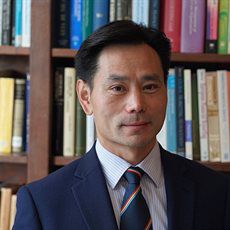
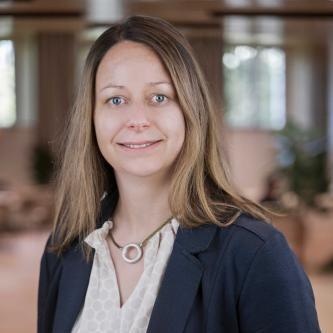
Prof. Dr. Frank Ulbrich is a Lecturer and Programme Director for the BSc Business Administration at the Lucerne School of Business (HSLU). He holds a PhD in Business Administration from the Stockholm School of Economics. His academic career spans roles at universities in Sweden, the UK, Canada, and Switzerland, alongside IT & Management consulting experience. Research focuses on management education, project management, information management, and organizational change. He has published extensively in areas like shared services, digital transformation, and curriculum development. Notable awards include multiple Emerald Literati Awards and a Fellowship from the Higher Education Academy. Education: PhD in Business Administration (Stockholm School of Economics) Affiliations: Institute of Business and Regional Economics at HSLU Teaching Subjects: Academic Methods, Higher Education Management, Project Management, Digital Transformation Recent presentations include discussions on bridging academia-industry gaps, curriculum integration of SDGs, and data-driven learning strategies. His work emphasizes aligning education with labor market needs and advancing evidence-based teaching practices.
Christopher L. Tucci is a Professor of Digital Strategy & Innovation at Imperial College London's Business School and currently serves as Interim Vice Dean of Education. He is also the Founding Dean of NEOM's College of Business & Innovation in Saudi Arabia. Previously, he held the Chair in Corporate Strategy & Innovation at École Polytechnique Fédérale de Lausanne (EPFL), where he served as Dean of the College of Management from 2013 to 2018. His academic qualifications include a PhD in Management from MIT and multiple degrees from Stanford University: an AB in Music, BS in Mathematical Sciences, and MS in Computer Science and Computer Science. His research focuses on digital strategy, innovation management, open innovation, and business model innovation, with particular emphasis on how firms transition to new technologies and organizational forms. He has pioneered work on crowdsourcing, inter-networking, and AI-driven innovation. His award-winning article 'Crowdsourcing as a Solution to Distant Search' (co-authored with Allan Afuah) has received multiple accolades, including the AMR Decade Award in 2022. Professor Tucci teaches courses such as AI Ventures, Co-Creation in AI & Robotics, and Design Thinking. He actively contributes to academic leadership roles, including serving on the Academy of Management's Board of Governors and leading initiatives like Imperial's I-X (Artificial Intelligence and Digital Innovation hub). His work integrates technology, strategy, and organizational dynamics to address modern business challenges. Educations: PhD in Management, MIT (1992–1997) SM in Technology & Policy/EECS, MIT (1989–1991) BS in Mathematical Sciences, Stanford (1978–1982) AB in Music, Stanford (1979–1983) MS in Computer Science, Stanford (1982–1984) Labs/Teams: Co-Director of Imperial's I-X initiative, focusing on AI, data science, and digital innovation.
Christian Kowalkowski is Assistant Professor of Marketing at Hanken School of Economics, affiliated with the Centre for Relationship Marketing and Service Management (CERS) in Helsinki. He obtained his PhD in 2008 from Linköping University and holds adjunct professorships in Industrial Marketing and Service Management. His research focuses on service infusion in product firms, relationship dynamics in B2B contexts, service innovation frameworks, solutions marketing strategies, and value-creation methodologies. His work bridges theoretical concepts with practical business applications. Kowalkowski's publications primarily explore the evolution of service-oriented business models, technological impacts on service operations, and pricing strategy development. His research demonstrates consistent focus on service ecosystem development and organizational transformation. Awards recognizing his scholarly contributions include: The Service Industries Journal Best Paper Award (2014) Emerald Citations of Excellence (2015) Literati Network Award for Excellence (2012) Månadens forskare (Researcher of the Month, 2011) He serves in editorial roles for multiple journals including Journal of Services Marketing and Industrial Marketing Management , and participates in PhD supervision and examination committees.
Alex Wilson is an Associate Professor at Queen's Business School, Queen's University Belfast. He holds leadership roles including Director of Internationalisation and Direction of Reputation and Rankings at Queen's Business School, and previously held directorships at Loughborough University's School of Business and Economics. Research Interests: Open Strategy, Digital Strategizing, Strategy as Practice, Future of Management Education. Expertise in qualitative methods, IT/social media's role in strategic work, and business school innovation. His research explores how technology mediates strategic processes, organizational legitimacy, and the evolving purpose of business schools. He has advised on strategic initiatives for institutions globally and contributed to defining digital strategizing frameworks. Key Achievements: Recipient of CABS Research Fellowships (2017, 2018) Dean’s Award for Early Career Teaching Excellence (2015) Led studies on Singapore Management University's strategic evolution and UK business school competitiveness. Advises PhD students focusing on topics like corporate sustainability tensions, services offshoring, and Christian values in business. Active in hosting international delegations and delivering invited talks on open strategy and digital transformation.
Prof. Dr. Ulrich Frank is a full Professor of Business Information Systems and Enterprise Modeling at the University of Duisburg-Essen, Faculty of Computer Science. He serves as Director of IS:link, an international student exchange network he founded. His academic career spans multiple prestigious institutions including University of Mannheim, GMD, IBM Almaden Research Center, University of Koblenz-Landau, and University of Duisburg-Essen since 2004. His educational background includes: Business Administration studies (minor in Applied Computer Science) at University of Cologne Doctorate in Political Science from University of Mannheim (1986) Habilitation at University of Marburg (1993) Prof. Frank's research focuses on multi-perspective enterprise modeling, with particular emphasis on object-oriented and multi-level modeling approaches. His work bridges business administration and computer science, exploring conceptual modeling, knowledge management systems, business process reorganization, and the theoretical foundations of business informatics. He has made significant contributions to modeling languages like FMMLx and XModelerML, advancing multi-level modeling techniques for enterprise information systems. His recent publications demonstrate a strong focus on multi-level modeling languages, with particular attention to UML extensions, language engineering, and the application of large language models in systems engineering. The research trajectory shows consistent development of modeling frameworks that support enterprise architecture, business process modeling, and domain-specific language design, with increasing attention to AI-assisted modeling approaches in recent years. Prof. Frank has received significant recognition through editorial positions at leading journals: Co-Editor of Enterprise Modelling and Information Systems Architectures Co-Editor of Business & Information Systems Engineering Co-Editor of Information Systems and E-Business Management Co-Editor of Software and Systems Modeling Member of the Standing Committee of the European Conference on Information Systems (ECIS) Prof. Frank has served in numerous academic leadership roles including as Chairman of the Examination Board for Business Information Systems, member of the Research Commission at University of Duisburg-Essen, and Appointment Commissioner (2021-2023). He has reviewed for major funding organizations including the German Research Foundation, Federal Ministry of Education and Research, and Swiss National Science Foundation. As founder and senior consultant of IS:link, Prof. Frank leads an international student exchange network connecting universities worldwide. His research group focuses on multi-perspective enterprise modeling (MEMO), developing frameworks and tools for business information systems design and implementation.
Benjamin Lee is a Senior Lecturer of Accounting and Director of Student Matters at the School of Accountancy, Singapore Management University. He serves as an SMU-X Academic Champion, driving experiential learning initiatives and promoting AI integration in accounting education and practice across multiple institutional roles. His academic background includes: Doctor of Philosophy in Management (Strategy and Technology Management), University of Glasgow, 2025 Master of Science in Business Analytics with Distinction, University of Surrey, 2017 Bachelor of Accountancy, Singapore Management University He is a Chartered Accountant of Singapore with prior industry experience as a consulting data analyst at Singapore's Accountant-General’s Department. Dr. Lee's research centers on AI-driven analytics (AIDA) applications for accounting problem-solving, including fraud detection, financial forecasting, and credit risk analysis. His work explores organizational dynamic capabilities in digital transformation and AI governance frameworks within professional service firms. His publication portfolio (2017-2025) reveals consistent focus on digital transformation across accounting and SME contexts, with recent emphasis on machine learning applications in fraud detection and public transport optimization. The research bridges academic theory with practical industry implementation through numerous case studies. His teaching excellence has been recognized through multiple awards including: Dean’s List for Teaching Excellence (2023-2025) SMU-X Excellent Teacher Award (2023) Howard Teall Award for Innovation in Accounting Education (2023) Wharton-QS Reimagine Education Digital Readiness Award (2022) While specific doctoral advising isn't documented, Dr. Lee actively mentors students through SMU-X experiential projects and industry collaborations. His industry partnerships with ISCA and media contributions to The Business Times demonstrate practical knowledge transfer beyond academia. He holds leadership positions including Director of Student Matters, SMU-X Academic Champion, and member of ISCA's AI Taskforce Sub-Committee on Policy and Regulation, where he shapes professional standards for AI implementation in Singapore's accounting sector.
Associate Professor Ida Asadi Someh is affiliated with the UQ Business School at The University of Queensland and serves as a research affiliate at the Centre for Information Systems Research (CISR) , MIT Sloan School of Management. She completed her PhD at The University of Melbourne in 2015, receiving the best PhD thesis award from the Melbourne School of Engineering and the Vice Chancellor’s PhD Prize . Her research spans business analytics , artificial intelligence , and data governance , focusing on the organizational and societal impacts of data and AI. Key areas include ethics of AI , privacy , accountability , and synergy in analytics systems . Recent publications highlight generative AI in business transformation, algorithmic fairness in public welfare systems, and data governance frameworks for ethical AI. Her work addresses digital transformation in both corporate and public sectors. Scientific awards include the best PhD thesis and Vice Chancellor’s PhD Prize at The University of Melbourne. She supervises PhD and Master’s students in data-driven organizations , privacy-preserving AI , and sepsis management through data .
Jonny Holmström serves as Professor at Umeå University's Department of Informatics and directs the Swedish Center for Digital Innovation (SCDI), which he co-founded. He holds an additional affiliation as Professor at the Centre for Transdisciplinary AI, focusing on bridging theoretical research with practical AI applications across sectors including forestry, banking, and public services. His work appears in premier journals such as MIS Quarterly, Information Systems Journal, and Journal of Information Technology. His research centers on digital innovation, transformation, and entrepreneurship, examining how organizations navigate digital change through platform governance, AI integration, and entrepreneurial storytelling. Recent work investigates generative AI's impact on business model design, data work practices, and organizational transformation, emphasizing practical frameworks for managing digital transitions while addressing resistance and ethical considerations. Analysis of his 15 most recent publications (2024-2026) reveals a dominant focus on generative AI's organizational implications, particularly its role in reshaping platform governance, facilitating innovation through prompting, and transforming business models. Concurrent themes include digital platform evolution, data flow management in innovation networks, and citizen-centric digital government design, reflecting a consistent emphasis on practical implementation challenges in real-world contexts. Holmström leads significant research initiatives including a 28 MSEK program at Umeå University and the Kempe Foundation-funded SCDI AI Business Lab. His current project 'Using No-Code AI to Teach Machine Learning in Higher Education' (2024) aims to democratize AI education. He serves on editorial boards for CAIS, EJIS, Information and Organization, and JAIS, and heads the Swedish Center for Digital Innovation research group while participating in 'AI and society' collaborations. He founded and directs the Swedish Center for Digital Innovation (SCDI), which operates the SCDI AI Business Lab exploring practical AI applications for businesses. His work integrates with the Centre for Transdisciplinary AI to advance cross-sector AI implementation, particularly in public services and sustainable business models within the circular economy framework.
Prof. Dr.-Ing. Michael Möhring is a Professor of Data Science at Reutlingen University's Faculty of Informatics. He serves as Prodekan for the Herman Hollerith Zentrum (HHZ) and leads research in data analytics, Industry 4.0, and process mining. Previously, he held roles as an IT consultant, project manager at Bosch Group/BSH, and academic researcher. Education: Dr.-Ing. (PhD) in Business Informatics M.Sc. in Business Informatics B.Sc. in Business Informatics Research Interests: Focuses on leveraging structured/unstructured data for industrial applications, enterprise architecture management, digital twins integration, and AI-driven decision support. Specializes in bridging technical systems with organizational processes in manufacturing and service industries. Lab Affiliations: AI-Real Lab AIDA Future Mobility Lab Internet of Things Lab Virtual Reality Lab Articles Trends: Recent work emphasizes practical implementations of AI in production failure analysis (language models), energy optimization systems (HollerithEnergyML), and technical debt management in SMEs. Consistently explores data integration challenges across manufacturing, service ecosystems, and digital twin frameworks. Grants & Collaborations: Active in EU-funded projects like 5G-PreCiSe and bwHealthApp. Collaborates with industry partners on digital transformation initiatives through HHZ's applied research programs.
Dr. Jonghyuk Cha is a Senior Lecturer in Information Systems and Project Management at Westminster Business School, University of Westminster. Previously, he worked as a Research Associate at the University of Manchester and held roles in software/IT consulting. He holds a PhD and MSc from Alliance Manchester Business School and a degree in Industrial Systems Engineering and Business Management from Yonsei University. He was also a Visiting Research Fellow at South Korea's Science and Technology Policy Institute. His research focuses on digital transformation, digital government, organisational project management, and benefits realisation. Key publications explore owner challenges in major projects, digital transformation dynamics, and government transformation strategies. He has been awarded the 2021 JAIS Best Paper Honorable Mention, 2021 BAM Best Developmental Paper Award, and 2017 ICIS Best Paper-a-Thon Paper Award. Teaching modules include Digital Innovation, Project Management, Social Media for Business, and Web-enabled Business. He is part of the Centre for Digital Business Research, contributing to interdisciplinary studies on digital business and organisational transformation.
Professor Yufeng Zhang is a Chair in Operations Management and Head of the Department of Management at Birmingham Business School, University of Birmingham. He is also a Senior Fellow of the Higher Education Academy and a Fellow of the Alan Turing Institute. His academic journey began at Shanghai Jiao Tong University, continued at the Technical University of Berlin, and culminated with a PhD from the University of Cambridge, where he also worked as a Research Associate before joining Birmingham in 2009. PhD, Engineering – University of Cambridge MSc/Dipl-Ing, Global Production Engineering – Technical University of Berlin BEng, Mechanical Engineering & Automation – Shanghai Jiao Tong University BEng, International Finance – Shanghai Jiao Tong University PG Cert in Learning & Teaching in Higher Education Yufeng Zhang’s research focuses on sustainability, digitalisation, engineering innovation, and global network operations. His work integrates engineering and management perspectives, employing qualitative, quantitative, and simulation methods. He has led numerous projects funded by UK, EU, and international bodies, and has published over 80 refereed papers in top-tier journals such as Journal of Operations Management , International Journal of Production Economics , and Journal of Cleaner Production . His recent publications highlight trends in green operations, sustainable supply chains, digital transformation, and network capabilities. The research spans subfields including environmental performance, IoT integration, supply chain flexibility, and servitisation, reflecting a strong interdisciplinary focus on modern operational challenges. His scientific awards include the University’s Excellence in Teaching and Learning Award (2013), Literati Nominations for Highly Recommended Papers (2008, 2013), and recognition as a Senior Fellow of the Higher Education Academy and Turing Fellow. Yufeng has supervised over 20 PhD students and has held key roles such as Deputy Lead for REF2021, Director of Business Programmes with Engineering, Sciences, Law and Languages (2010–2017), and Coordinator of Europe China High Value Engineering Networks (EC-HVEN). He is an External Examiner for multiple universities and a Visiting Professor at Zhejiang University, demonstrating extensive academic leadership and collaboration. He leads and contributes to research labs and networks focused on engineering innovation and sustainable operations, including collaborations with industry and international institutions. His future work continues to explore the intersection of digital technologies, sustainability, and global operations, aiming to shape resilient and responsible business practices.
Prof. Dr. Ralf Plattfaut is a Professor for Information Systems and Transformation Management at the University of Duisburg-Essen since 2023. He heads the Process Innovation & Automation Lab , focusing on digital transformation, business process management, and robotic process automation (RPA). Prior to this, he was Professor for Business Informatics at the South Westphalia University of Applied Sciences (2019–2023), and a management consultant at McKinsey & Company (2013–2019). Current Role: Professor (since 2023) Lab Leadership: Process Innovation & Automation Lab Consulting: Management consultant and keynote speaker Research Interests span digital transformation, IT governance, RPA adoption, and postcolonial perspectives in information systems. His work addresses organizational challenges in process automation, agile methodologies, and human-AI collaboration. Recent Publications (2024–2025) examine paradoxes in agile transformations, postcolonial IT governance in NGOs, AI adoption in healthcare, and behavioral barriers like status quo bias. These studies often employ computational grounded theory and cross-organizational case analyses. Scientific Recognition includes multiple Best Paper and Best Conference Paper nominations at ICIS, HICSS, and IFIP E-Government Conferences, as well as recognition by Wirtschaftswoche as a top German-speaking management researcher under 40.
Sofia Kalakou is an Assistant Professor in the Department of Marketing, Operations and General Management at ISCTE Business School, where she teaches operations management across undergraduate, graduate, and postgraduate programs. She also serves as Director of the Industrial Management and Logistics degree program. Her research focuses on urban and air transport planning, technology integration in operations, sustainable practices, and performance evaluation. She coordinates four EU-funded projects on operations management and new technologies. Dr. Kalakou holds a doctorate and master’s in Transport Systems from ISCTE, a civil engineering diploma, and prior experience as a transport and mobility consultant. Her work bridges academic research with practical applications, addressing challenges like airport terminal optimization, drone delivery systems, and gender-sensitive mobility policies. She has published extensively on topics ranging from lean six sigma applications in telecom repair to SWOT analysis of Greek seaplane operations. Her funded projects emphasize sustainable transport solutions and capacity-building for local authorities implementing MaaS and smart mobility initiatives. Key contributions include frameworks for setting transport sustainability targets and analyzing passenger behavior in airports through activity-based modeling.
Dr. Eng. Katarzyna Jasińska is affiliated with the Department of Management and Entrepreneurship at Wrocław University of Economics. Her work focuses on Industry 4.0, ICT sector dynamics, project management, and digital transformation. She has conducted extensive research on topics such as robotic process automation (RPA), AI implementation, and organizational adaptation to technological changes. Her research interests span across: Industry 4.0 adoption and its implications for businesses Digital transformation challenges in service and manufacturing sectors Project management methodologies in ICT enterprises RPA and AI integration in organizational processes Key contributions include case studies analyzing Polish companies' adaptation to Industry 4.0 post-pandemic challenges, cybersecurity frameworks, and innovative project management approaches. Her work emphasizes bridging the gap between technological innovation and practical implementation in real-world business contexts.
Leona Wiegmann is an Associate Professor of Management Control at ESCP Business School in Paris. Her research examines how digitalization reshapes accounting practices, focusing on tensions between technology and human actors, evolving roles of management accountants, and external stakeholder engagement. She employs qualitative methods like field studies, vignettes, and netnography to explore forecasting, performance management, and accountability. Previously, she held faculty positions at WHU – Otto Beisheim School of Management (Germany) and Monash University (Australia). Open to supervising PhD students, her work appears in journals such as Contemporary Accounting Research and Accounting, Auditing & Accountability Journal . Education: PhD from WHU – Otto Beisheim School of Management Key Research Themes: Digitalization in Accounting, Organizational Dynamics, Qualitative Methodologies Her articles analyze topics ranging from proxy advisor accountability to information search during crises, reflecting her focus on real-world organizational challenges. While no scientific awards are listed, her contributions to accounting and organizational studies literature highlight her scholarly impact.