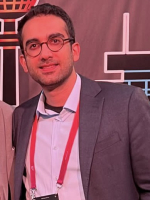
Dr. Kees H. Tillema is affiliated with the Faculty of Economics and Business at the University of Groningen, specializing in Accounting and Auditing — Management . Contact: k.h.tillema@rug.nl . Research Focus : Activity-Based Costing integration with quality management, organizational efficiency, and performance metrics. His work explores synergies between cost accounting and quality control systems, particularly in business process optimization. Publications include a 2003 article in Maandblad voor Accountancy en Bedrijfseconomie and a 2002 thesis. He contributed to a 2021 media discussion on organizational change processes.
Shuting Wang is an Assistant Professor in the Paul H. Chook Department of Information Systems and Statistics at Baruch College's Zicklin School of Business. With a PhD in Management Information Systems from Temple University and prior degrees in Operations Management and Logistics Management, her research focuses on social media risks, fake news detection, and digital health platforms. PhD: Temple University (Management Information Systems) MSc: Shanghai University of Finance and Economics (Operations Management) BSc: Zhongnan University of Economics and Law (Logistics Management) Her expertise spans Big Data Marketing , Social Media Analytics , Technology Strategy , and Digital Health . Current research examines: Fake news mitigation through multimedia elements Telemedicine accessibility via SMS technology Social media's impact on business reputation FinTech startup success factors Psychological impacts of digital appearance Cybersecurity effects on startup funding Key Scientific Awards : Research Cluster Interdisciplinary Incentive Grants (2025) Eugene M. Lang Fellowship (2021) Presidential Fellowship at Temple University (2014) Full Tuition Scholarship at Shanghai University of Finance and Economics (2009) Active in teaching roles including Data Mining for Business Analytics and Database Management, she has received grants from the National Science Foundation and CUNY Central Office. Her work has been featured in outlets like NPR and Campaign US.
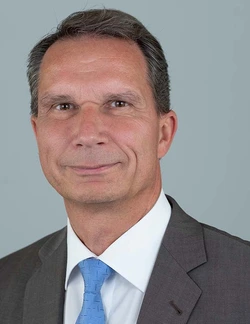
Prof. Dr. Johannes Wolf is a Professor of Business Administration (Dual Study Program) at the Hamburg Distance Learning University (since 2012) and previously served as Chancellor of the university (2013–2020). He also held roles as Professor of Logistics Management and (Founding) Dean of the Logistics Management Department at the European University of Applied Sciences (EUFH) in Brühl. His career includes over 30 years of academic and professional experience in logistics, supply chain management, and business systems. Education: Johannes Wolf holds a doctorate in Business Administration from Fernuniversität Hagen (1986) with a thesis on industrial energy use and production planning, following a degree in Business Administration from the University of Cologne. Research interests focus on logistics management, supply chain optimization, ERP system implementation, dual study programs, and educational frameworks for business and logistics disciplines. He has contributed to over 50 publications, including handbooks and peer-reviewed articles on topics like IT systems in logistics, risk management, and competency development. He is a member of the Federal Association of Logistics (BVL) and the German Informatics Society (GI), and has served as an external expert for institutional accreditation reviews by the German Science Council. Key professional roles include management consultancy work (1993–2003) and early career roles in organizational controlling and energy procurement in industry.
Dr. Peyman Badakhshan is a Researcher at the Chair of Information Systems and Business Process Management at the University of Münster. His expertise spans Business Process Management, Process Mining, and Industrial Engineering. Educational background includes a PhD in Business/Managerial Economics from Universität Liechtenstein, an MSc in Information Systems, and an M.Eng. in Industrial Engineering. Research focuses on operationalizing process analytics across domains like supply chain, healthcare, and manufacturing. Recent work develops frameworks for agile BPM and process mining tools, with applications in medical training, emergency services, and industrial process optimization. Publications demonstrate consistent innovation in mapping business process landscapes, developing diagnostic instruments, and creating large-scale datasets for academic use. Research integrates methodologies from decision analysis, fuzzy logic, and pattern recognition to solve complex operational challenges.
Agostino Cortesi is a Full Professor at Ca' Foscari University of Venice , affiliated with the Department of Environmental Sciences, Informatics and Statistics. He serves as Rector's Delegate for Research Quality Assessment and Deputy Coordinator of the Scientific Committee for the Innovation Ecosystem Project. His academic career includes a PhD in Applied Mathematics and Informatics from the University of Padova (1992), a postdoctoral fellowship at Brown University, and visiting professor roles at institutions such as the University of Illinois and École Normale Supérieure Paris. Research interests focus on software engineering , static analysis , security applications , and abstract interpretation . He has pioneered techniques for formal verification of software systems and explored cybersecurity in e-Government and robotics. His work spans over 200 publications in top journals and conferences (e.g., ACM TOPLAS, IEEE TSE, POPL, PLDI). Key contributions include advancements in abstract domains for behavioral property verification and security-oriented analysis frameworks. He has held leadership roles including Vice-Rector at Ca' Foscari, Dean of Computer Science programs, and Chair of the Department of Computer Science. Cortesi coordinates EU Horizon 2020 projects (e.g., Families_Share €1.6M) and regional initiatives like CEVID (€360K). He founded Factors , a university spin-off focused on robotic systems verification, which won the 2020 Veneto SmartCup ICT Prize. Education: PhD in Applied Mathematics and Informatics (1992, University of Padova) Editorial Roles: Co-Editor-in-Chief of Springer’s 'Services and Business Process Reengineering', and member of editorial boards for 'Computer Languages' and others Grants: Over €3M in EU and regional funding for projects in cybersecurity, Industry 4.0, and digital innovation Teaching includes courses on Software Correctness , Data Programming , and Computer Networks across Computer Science and Management programs. His research lab actively engages in industrial partnerships with Cisco, Leonardo, and AGID (Italy’s Digital Agency).
Gerhard Hillmer is a Professor and Program Director of the Industrial Engineering & Management Master's program at the Management Center Innsbruck. He holds a Dr.-Ing. in Chemical Engineering from Friedrich-Alexander-University Erlangen-Nuremberg (1993) and an MSc in Management from Management Center Innsbruck (2008). His career spans over 25 years in academia and industry, including leadership roles as Department Head (2009-2023) and Study Coordinator in Process Engineering. Prior to academia, he held strategic roles in ExxonMobil and Esso Italiana focusing on business planning and operations optimization. His research focuses on leadership development in engineering education, interdisciplinary competency models, and organizational change management. He has authored textbooks such as Key Competencies in Leadership and Project Work (2022) and pioneered training concepts for engineering graduates' soft skills and responsible management practices. His work emphasizes integrating non-technical competencies like conflict resolution, project management, and ethical decision-making into engineering curricula. Recent publications address global business strategies in Africa, AI-driven HR practices, and corporate ethics expectations. Hillmer has supervised over 50 theses on topics ranging from cross-cultural leadership to resilient supply chains. His presentations at international conferences highlight trends in engineering education reform and organizational transformation in VUCA environments. Notable contributions include developing the PRiME-based Responsible Management certificate and advancing qualitative research methods for change processes in manufacturing. His work bridges academic research with practical industry challenges, emphasizing sustainable career development for engineers and leadership excellence in multinational contexts.
Dr. Shaun Aghili serves as an Assistant Professor in the Faculty of Management at Concordia University of Edmonton (CUE), bringing extensive industry experience from the financial services sector. His academic focus centers on internal audit, fraud prevention, and information systems assurance within financial institutions. His educational credentials include: D.B.A. from Argosy University, USA (2003) M.Sc. in Financial Planning and Wealth Management from College for Financial Planning, USA (1999) B.A. from The Catholic University of America, USA (1985) Dr. Aghili's research integrates Risk Management , Cybersecurity , and Financial Services through frameworks like COBIT 5 and Lean Six Sigma. His work develops methodologies for fraud detection using data analytics, improves information systems audit protocols, and addresses security challenges in cloud computing and biometric authentication systems. Notable contributions include operational audit frameworks and corporate forensics governance models. His publication trend (2009-2014) reveals a strategic shift toward interdisciplinary solutions combining information security standards with financial risk management. This evolution demonstrates increasing focus on automated forensic approaches, e-government security models, and cloud computing SLA evaluations within financial contexts. Award recognitions include: IMA Certificate of merit for advancing management accounting literature 2009 IMA merit award for Lean Six Sigma audit framework research As a doctoral advisor, Dr. Aghili has successfully guided three PhD candidates through dissertation research on leadership dynamics in Taiwanese hospitality, workers' compensation fraud patterns, and RFID privacy implications in identification systems. His professional certifications—including CISSP, CISA, and CIA—enhance his industry-relevant research approach within the ISSAM Research Cluster. He actively contributes to CUE's ISSAM (Information Systems Security and Assurance Management) Research Cluster, focusing on cybersecurity risk mitigation strategies for financial institutions through collaborative framework development.
Prof. Dr. Stefan Rock serves as a Professor at Ingolstadt University of Applied Sciences (THI) in the Business School, specializing in Retail Management and Retail Logistics since 2007. His office is located in Room F222 with direct contact via +49 841 9348-7370. His academic credentials include: Diplom-Kaufmann in Business Management from the University of Mannheim (1991) Doctorate (Dr. rer. pol.) from the Technical University of Munich (2005) Research focuses on restructuring operational logistics in aviation, retail logistics optimization, and service management frameworks. His work integrates logistics management, cost analysis, and process reengineering across retail and transportation sectors, emphasizing practical industry applications. Prior to academia, he led Logistics/SCM and Retail departments at TCW Transfer-Centrum GmbH & Co. KG (2000-2007) and managed large-area retail operations (1991-2000).
Dr. Victoria Chiu is an Associate Professor of Accounting at the School of Business, SUNY Oswego, specializing in accounting bibliometrics, fraud detection, and data analytics. She joined SUNY Oswego in 2016 after serving as an Assistant Professor at SUNY New Paltz and a doctoral fellow at the AAA/Deloitte Foundation/J.M. Cook Consortium. Dr. Chiu holds a Ph.D. in Accounting from Rutgers University (2013) and a BS from National Changhua University of Education (2008). Her research focuses on applying bibliometric methods to analyze accounting subfields, with a particular emphasis on fraud detection, continuous auditing, and emerging technologies in accounting education and practice. Dr. Chiu has published over 25 peer-reviewed articles in journals like International Journal of Accounting Information Systems, Accounting & Finance, and Journal of Forensic Accounting Research. She has received two Best Faculty Paper Awards from the AAA Strategic and Emerging Technologies Workshop (2017, 2018) and has served on editorial boards for major journals, including the International Journal of Accounting Information Systems and Journal of Emerging Technologies in Accounting. Her teaching spans undergraduate and graduate courses in accounting, including Principles of Accounting and Cost Accounting. She has been recognized for her teaching excellence through multiple Professor Recognition Awards (student-nominated) and actively contributes to curriculum development integrating emerging technologies like process mining and machine learning. Dr. Chiu’s research also emphasizes pedagogical innovation, such as hands-on learning approaches for transaction cycles and adapting AACSB’s Standard A5 into accounting curricula. Professional service includes roles on the AAA Research and Publications Committee (2023–2024) and the Innovation in Accounting Education Awards Committee (2019–2020). Her work bridges academic research and practical applications, particularly in leveraging technology to enhance auditing, fraud detection, and educational outcomes.
Anniina Saari is a Postdoctoral Researcher at the Department of Built Environment, School of Engineering, Aalto University, focusing on blockchain-driven digital transformation in real estate and sustainable finance mechanisms. Her work bridges technology adoption with green building financing strategies in Nordic housing markets. Her research interests concentrate on blockchain applications for real estate transactions, digital transformation frameworks in housing industries, and innovative financial instruments like green mortgages. She investigates how community power purchase agreements accelerate sustainable building transitions and examines EU Taxonomy impacts on Nordic housing funds, emphasizing empirical case studies and cross-industry collaboration. Recent publications (2022-2025) reveal consistent exploration of blockchain implementation challenges, green financing scalability, and regulatory frameworks for sustainable real estate. Key trends include empirical analyses of housing industry transformation, financial incentive structures in low-interest environments, and ecosystem development for green mortgages, predominantly within Nordic contexts. No scientific awards were documented in the source material. No student supervision or grant information was provided in the available text. She participates in Aalto University's Real Estate research group, contributing to interdisciplinary projects on sustainable built environments and digital innovation.
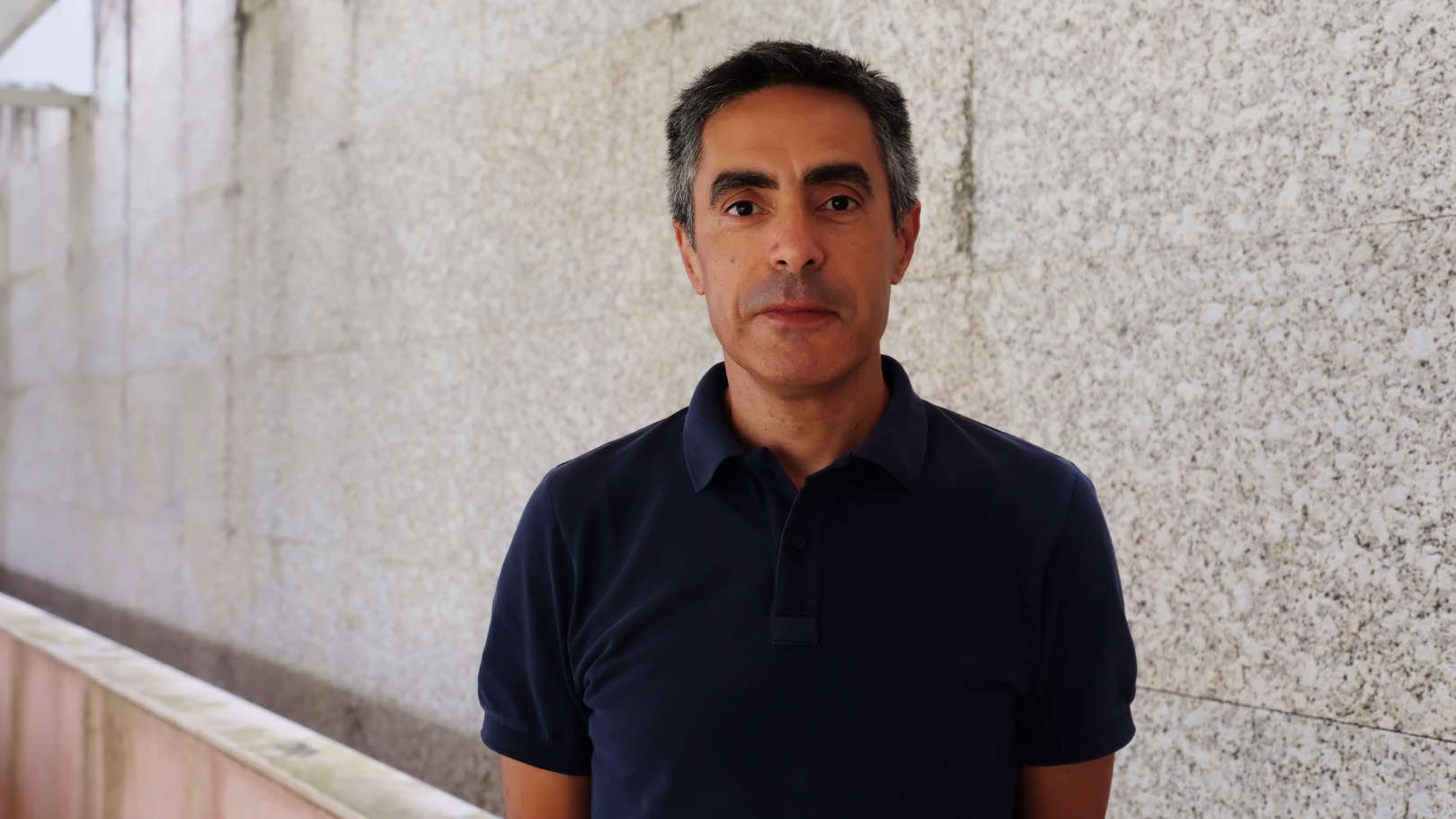
António Nestor Ribeiro is an Assistant Professor at the Department of Informatics, University of Minho, Portugal, and holds the role of Senior Researcher at the High-Assurance Software Centre (INESC TEC) since 2011. He earned both his MSc (1998) and PhD (2008) in Computer Science from the University of Minho. His research focuses on object-oriented modeling, program analysis, and requirements engineering for large-scale systems. He is affiliated with the High Assurance Software Laboratory Research Group and the Large Scale Distributed Systems Group. His work emphasizes software architecture reengineering, middleware development, and low-code platforms. He teaches model-driven engineering and has supervised numerous theses on microservices, distributed systems, and API platforms. Key research contributions include studies on HCI integration in software education, performance evaluation of microservices, cognitive models for usability in low-code platforms, and entrepreneurship education for informatics students. He has published in venues like HUMAN FACTORS and the EUROPEAN JOURNAL OF ENGINEERING EDUCATION. Education: PhD in Computer Science (University of Minho, 2008) Research Groups: High Assurance Software Lab, Large Scale Distributed Systems Group Teaching: Model-Driven Engineering courses His recent supervised theses address topics like microservices architecture principles, middleware integration, and API democratization platforms. He actively collaborates on industry projects, including Bosch process-support applications and telemonitoring systems for chronic diseases.
Prof. Dr. Peter Buxmann is a full professor of business informatics at the Technical University of Darmstadt, holding the Chair in this field. He is an internationally renowned speaker, senior business advisor, and podcaster for the Frankfurter Allgemeine Zeitung. His roles include advisory board memberships for institutions like the Weizenbaum Institute for the Networked Society and Eckelmann AG. His research focuses on AI applications, digital transformation, and future work paradigms, with over 300 publications in top journals and conferences. Education: PhD and habilitation from University of Frankfurt, including a research stay at UC Berkeley's Haas School of Business. Previous positions: Professor at Technical University of Freiberg (2000-2004). Research Interests: Artificial Intelligence (applications in business, healthcare, and ethics), Digital Transformation (organizational and societal impacts), Data-Driven Business Models (platform economics, innovation ecosystems), and Future of Work (human-robot collaboration, agile principles). Keynote Topics: Generative AI and its industry applications Strategic digital transformation frameworks Ethical AI governance Labs/Teams: Leads the HIGHEST innovation center at TU Darmstadt and collaborates with TechQuartier Frankfurt. Founded multiple startups focusing on AI solutions.
Dr. José Berbel Vera is a faculty member at the University of Valencia, affiliated with the Faculty of Economics and the Department of Accountancy. His academic rank is Assistant Professor , with expertise in leveraging digital transformation for organizational success. Research Interests Financial Economics and Accounting Management Control Systems Dynamic Digital Capabilities Corporate Strategy in Digital Contexts Publications Trends : His recent work focuses on the intersection of digital transformation and organizational governance, spanning industries in Spain and Latin America. Key themes include technology adoption, dynamic capabilities, and strategic alignment through management control systems. Education Doctorate in Economics and Business from Universitat de València (2023)
Takahiro Fujimoto is a Professor at the Faculty of Commerce under the Institute for Business and Finance. He specializes in Business Administration and Technology & Operations Management, with a focus on the automotive industry and lean manufacturing. Research areas: Business Administration, Technology & Operations Management Academic rank: Professor His publications cover topics such as production systems, product development, and supplier networks, primarily in the automotive sector. His work includes influential books on lean manufacturing and strategic design. Scientific awards include: The Shingo Prize of Excellence Manufacturing (2000, 2001) Jai Doblin Award (1991) 日経図書文化賞 (Nikkei Book Culture Award, 1993) 組織学会高宮賞 (Takamiya Award of the Organizational Society, 1998) He teaches courses in production development management and technology & production management at the Graduate School of Business and Finance.
Wei He is a Professor at Indiana State University's Scott College of Business, specializing in Management Information Systems and Business Education. With a Ph.D. in Organization Studies from Boston College (2004), a Master's in Industrial Administration (Dalian University of Technology, 1989), and a Bachelor's in Psychology (Peking University, 1986), He's academic career spans over two decades. Ph.D., Boston College (2004) M.S., Dalian University of Technology (1989) B.S., Peking University (1986) Wei He's research focuses on Human Resource Management , Organizational Behavior , and International Business , examining workplace dynamics through lenses like psychological capital, identity discrepancies, and cross-cultural management. Their publications show a strong emphasis on employee innovation , constructive deviance , and HR trends , with recent works addressing AI integration in HR practices and environmental instability impacts. Scientific awards include the Faculty International Recognition Award (2013) and Excellence in Teaching Award (2010). He also received International Travel Grants for academic engagement (2004–2014) and Promising Scholarship (2010). As a faculty advisor and committee member across multiple university initiatives, He contributes to student success councils , China interest committees , and open education resource award selection . Their scholarship includes empirical studies on workplace anxiety , supervisor incivility , and employee psychological safety .