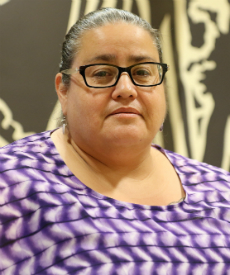
Susan Hill is an Associate Professor at the University of Toronto's Department of History, affiliated with the Faculty of Arts and Science. Her research focuses on Indigenous history, colonialism, and Haudenosaunee studies. She works extensively on land ethics, treaty agreements, and Indigenous women's historiography. Education: PhD, Trent University Research Interests: Indigenous land tenure systems Historical treaties and legal traditions Colonialism and decolonization Environmental justice narratives Oral histories in academic research Publications span topics like Haudenosaunee land ethics, Indigenous pedagogy, and treaty agreements, emphasizing decolonizing methodologies and community-based research. Her 2017 monograph The Clay We Are Made Of explores Grand River land tenure. Awards: SSHRC Insight Grant (2016-2021) as Co-Investigator
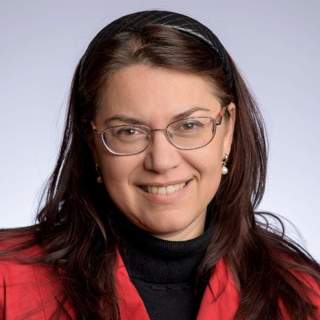
Professor Mohamed Naim is a distinguished academic at Cardiff Business School, Cardiff University, where he holds the position of Professor in Logistics and Operations Management. He has served in several leadership roles, including former Head of the Logistics and Operations Management Section and former Deputy Dean at the Business School. He was also the founding director of the Centre for Advanced Manufacturing Systems at Cardiff (CAMSAC). He is actively engaged in high-impact research and industrial collaboration, currently leading a Knowledge Transfer Partnership (KTP) with Tower Cold Chain Solutions Ltd. and contributing to major research programs such as ASTUTE, ASTUTE2020, and AFAIR. His research interests center on the development of business systems engineering approaches to resilient supply chains, with a focus on sustainability, circularity, and flexibility in lean and agile systems. He has made significant contributions to supply chain dynamics, particularly in engineer-to-order (ETO) sectors such as construction and shipbuilding. His recent work explores digital transformation in logistics, including 5G-enabled smart ports, building information modelling (BIM), and AI-driven decision-making. The analysis of his recent publications reveals a strong trend toward interdisciplinary research, integrating operations management with healthcare (trauma systems), digital technologies, and sustainable industrial practices. His work frequently employs system dynamics, simulation, and empirical case studies to address complex supply chain challenges. Scientific Awards: Institution of Electrical Engineers' Manufacturing Division Premium (1996) Royal Academy of Engineering Global Research Award (2003) Professor Naim is actively involved in research supervision and has contributed to two Research Excellence Framework (REF2021) impact cases on innovative procurement and financially sustainable supply chains. He is a founding member of the Logistics Systems Dynamics Group (LSDG) and has led and co-directed multiple large-scale research initiatives. His work is characterized by strong industry engagement, particularly through Knowledge Transfer Partnerships and collaborations with public sector bodies like the Welsh European Funding Office (WEFO). Research Centers and Teams: Logistics and Operations Management Section, Cardiff Business School Centre for Advanced Manufacturing Systems at Cardiff (CAMSAC) Logistics Systems Dynamics Group (LSDG) ASTUTE / ASTUTE2020 / ASTUTE East programmes AFAIR project (Expert Advisor)
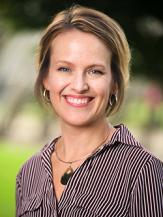
Gary F. Peters is the Senior Associate Dean and S. Robson Walton Endowed Professor of Accounting at the Sam M. Walton College of Business, University of Arkansas. He has been a key academic and administrative leader since joining the university in 2003, previously serving as Department Chair (2016–2023) and Director of the Master of Accounting Program (2006–2016). His leadership includes overseeing faculty resources, strategic planning, AACSB accreditation, and major fundraising initiatives, including a $10 million gift to name the William Dillard Department of Accounting. PhD, University of Oregon MS, University of Missouri - Columbia BS in Accounting, Arkansas Tech University His research centers on audit risk, corporate governance, accounting disclosure, and professionalism, with a focus on the roles of audit committees, internal and external auditors. His work bridges accounting with information systems and ethics, appearing in top journals like The Accounting Review , Journal of Accounting Research , MIS Quarterly , and Journal of Business Ethics . His recent publications explore sustainability reporting, SOX compliance, executive compensation, and the impact of IT on auditing. Analysis of his recent articles reveals a strong trend toward interdisciplinary research, particularly at the intersection of accounting, governance, and sustainability. His work increasingly examines non-financial disclosures, ESG assurance, and the role of technology in audit quality and compliance. Many studies involve large-scale empirical analyses using public firm data, often co-authored with leading scholars in governance and internal audit. Joseph A. Silvoso Faculty Merit Award University of Arkansas Honors College Distinguished Faculty Award S. Robson Walton Endowed Chair Southeastern Conference Academic Leadership Development Fellow Walton College Outstanding All-Around Faculty Member Glezen and D. Cook Endowed Chairs KPMG Research Grant Bank of America Research Fund Nolan E. Williams Lectureship Gary Peters has led major curriculum and program development initiatives, including the creation of the Integrated Master’s path, the online undergraduate accounting degree, and the Master of Professional Accounting. He has been instrumental in securing endowed chairs, scholarships, and strategic funds. He advises on faculty policy, accreditation, and budgeting, and has expanded student experiences through programs like the Rome Accounting Program and enhanced analytics curriculum. His leadership extends to national service, including presidency of the Federation of Schools of Accounting and roles in AACSB accreditation committees. He has played a central role in building the Department of Accounting’s research culture and strategic direction, leading multiple AACSB reviews and developing the department’s Strategic Focus Area document. His philanthropic efforts have established numerous scholarships and strategic use funds, and he has expanded advisory boards at both departmental and college levels.
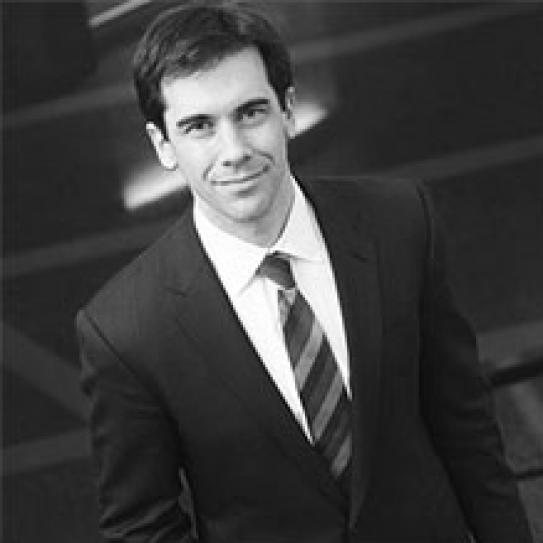
Samuel Leder is a doctoral researcher at the Institute of Computational Design and Construction (ICD) under the Cluster of Excellence IntCDC at the University of Stuttgart. His work focuses on the integration of robotics and architectural design, particularly in developing distributed robotic systems for timber construction. He has been actively involved in research projects such as RP 19-1 – Robotic Kinematic System for Parallel Construction and RP 19-2 – Co-Design for Distributed Cooperative Multi-Robot Systems . Additionally, he serves on the Equal Opportunity Commission at ICD. Bachelor of Design in Architecture (summa cum laude), Washington University in St. Louis Bachelor of Applied Science in Systems Science and Engineering (magna cum laude), Washington University in St. Louis MSc in Architecture via the Integrative Technologies and Architectural Design Research (ITECH) program, University of Stuttgart Samuel’s research explores the synergies between agent-based modeling , robotic systems , and architectural design . His work aims to create minimal robotic machines capable of constructing complex spatial assemblies, particularly with timber structures . He investigates the co-design of robots and the structures they build, emphasizing modular systems and kinematic behaviors . Recent publications highlight advancements in digital twins , adaptive assembly , and human-robot collaboration for timber construction. The 15 most recent articles reveal trends in collective robotic construction , agent-based modeling , and material-robot interaction . These works emphasize timber fabrication , modular systems , and interactive simulation for large-scale construction tasks. Key sub-fields include adaptive assembly , cyber-physical systems , kinematic control , and human-guided robotics . Scientific Awards: German Academic Exchange Service (DAAD) Award for Outstanding Achievement Deutschlandstipendium Samuel’s research is conducted within the ICD at University of Stuttgart , where he collaborates on the Wood Building Systems for Distributed Robotics associated project. His work bridges architecture , robotics , and computational design , aiming to redefine on-site construction methodologies through innovative robotic systems.
Morten Birkved is a Professor at the Department of Green Technology, University of Southern Denmark, and Head of SDU Life Cycle Engineering. He leads the SDU Climate Cluster and actively contributes to research on Life Cycle Assessment (LCA) , Circular Economy , and Environmental Sustainability . His work spans cross-disciplinary collaborations in Denmark and internationally. Education: M.Sc. in Environmental Chemistry, PhD in Sustainable Development His research interests focus on integrating LCA with circular economy principles, analyzing environmental impacts of construction materials, and developing sustainable solutions for agriculture and energy systems. Recent projects include microbial protein production, green fuels in shipping, and biorefineries for organic waste valorization. Recent publications highlight 2025 advancements in: Eco-design strategies for buildings Hybrid wastewater treatment systems Carbon-storing asphalt pavements Comparative LCA of housing typologies These studies emphasize Denmark as a case study region and leverage both parametric and probabilistic modeling approaches. Scientific Awards Recipient of SCC Fast Track Prize (2025) Teaching & Supervision Supervised PhD research on circular agriculture and plastic circularity Lectured on chemical processes and environmental impacts since 2019 Labs & Projects Coordinates EU-funded initiatives like FLAVOURFERM (plant-based fermentation) and AgriLoop (circular agriculture) Develops microbial platforms for waste-to-protein conversion Advances biostimulants for sustainable agriculture
Maricela De la Torre Castro is a Professor of Natural Resource Management at Stockholm University , affiliated with the Department of Physical Geography . Her research focuses on coastal and ocean governance through a social-ecological systems lens, emphasizing gender dynamics , seagrass conservation , and climate change adaptation in tropical coastal communities. BSc in Oceanology (Universidad Autonoma de Baja California) MSc, PhD, and Docent in Natural Resource Management (Stockholm University) Her work examines seagrass ecosystem services , small-scale fisheries governance , and gendered impacts of marine protected areas . Recent studies analyze: 2025: Habitat loss risks from seaweed cultivation 2024: Gender-poverty dynamics in Zanzibar MPAs 2022: Adaptive capacity differences between genders 2021: Blue Justice frameworks for fisheries governance Active projects include SEAgender (Swedish Research Council) analyzing gendered effects of MPAs . She supervises PhD candidates in tropical marine systems and has extensive experience with EU Erasmus programs and UNDP collaborations . Research emphasizes hybrid methods , cultural value mapping , and interdisciplinary monitoring of coastal initiatives.
Georges Gielen is Full Professor in the Department of Electrical Engineering (ESAT) at KU Leuven, Belgium, and part-time Research Director at imec. He has held multiple leadership roles including Chair of ESAT Department (2012-2013, 2020-2024) and Vice-Rector for Science, Engineering & Technology (2013-2017). His academic career spans over 30 years at KU Leuven, progressing from Assistant to Full Professor. His research focuses on analog and mixed-signal integrated circuit design automation , with expertise in CAD tools, design optimization, sensor interfaces, and neuromorphic systems. His work bridges hardware design with machine learning, particularly in hardware-efficient AI implementations and biomedical applications. He has pioneered techniques for automated analog circuit sizing, topology synthesis, and reliability-aware design in nanometer CMOS. Gielen has received numerous accolades including the IEEE CAS Mac Van Valkenburg Award (2015), IEEE CAS Charles Desoer Award (2020), and EDAA Achievement Award (2021). He holds an ERC Advanced Grant AnalogCreate and is an IEEE Fellow since 2002. As a prolific scholar, he has chaired major conferences including DATE (2006), ICCAD (2007), and ESSCIRC (2017). He has graduated over 55 PhD students through the MICAS research group at KU Leuven, currently supervising 13 doctoral candidates. His research team collaborates extensively with imec and industry partners on cutting-edge projects in carbon-aware AI accelerators, uncertainty-aware design, and neuromorphic sensor interfaces.
Marta Gonzalo Quiroga serves as a faculty member at King Juan Carlos University's School of Law, specializing in Private International Law with extensive contributions to international arbitration, mediation systems, and the intersection of artificial intelligence with legal frameworks. Her academic profile spans over two decades of scholarly work, thesis supervision, and active engagement in legal reform initiatives across European and Latin American jurisdictions. Her research focuses on the evolving landscape of Alternative Dispute Resolution (ADR) mechanisms, with particular emphasis on how artificial intelligence transforms family law arbitration, sustainable development goal integration in mediation practices, and cross-border legal harmonization. Recent publications demonstrate a strategic pivot toward technology's role in legal systems, examining AI applications in international arbitration while maintaining foundational work in traditional mediation frameworks and private international law. Academic leadership is evidenced through her direction of four doctoral theses addressing critical gaps in mediation practices across Ecuador, Spain, and Mexico, with research outputs contributing to emerging frameworks like the University Coexistence Law and transnational mediation protocols. Her collaborative work extends to European regulatory frameworks, particularly in developing standardized mediation practices across jurisdictions while addressing cultural and systemic differences. Professional engagement includes significant contributions to collective works on international dispute resolution, with recent chapters addressing psychosocial risks in digital-age conflict resolution and technological innovations in workplace mediation. Her scholarly impact is reflected in a publication record spanning 25 journal articles, 48 collective work contributions, 11 books, and consistent engagement with contemporary legal challenges through both theoretical and practical lenses.
Professor Donna Green is an internationally recognized environmental scientist at the University of New South Wales (UNSW), affiliated with the School of Biological, Earth & Environmental Sciences. She holds a PhD from the University of California, Berkeley (2004) and leads multidisciplinary research at the intersection of climate change, energy policy, and air pollution. Her work focuses on balancing improvements in indoor air quality against outdoor pollution sources such as traffic, bushfires, and industry, while addressing increasingly recognized risks from indoor air contaminants including airborne diseases. PhD, University of California, Berkeley (2004) Professor Green's research spans environmental science, climate change impacts, air pollution health effects, renewable energy policy, and environmental justice. Her work demonstrates particular expertise in the health impacts of climate change, with emphasis on vulnerable populations including Indigenous communities. She investigates the synergistic impacts of urban air pollution compounding climate emergencies, and has published extensively on environmental injustice in resource-rich Aboriginal Australia. Her research often bridges scientific findings with practical policy solutions, working collaboratively with engineers, legal practitioners, and public health experts to design evidence-based approaches to environmental challenges. The most recent publications reveal a strong focus on wildfire smoke impacts on health, indoor air quality in educational settings, climate litigation trends, and the intersection of renewable energy development with Indigenous rights. Her work shows increasing attention to the health consequences of climate change, particularly through the MJA-Lancet Countdown reports which document Australia's preparedness (or lack thereof) for climate-related health challenges. There's also a clear trend toward interdisciplinary collaboration, with publications spanning environmental science, public health, engineering, and social justice perspectives. Clean Air Society Australia & New Zealand Innovation & Excellence in Air Quality Award for CleanAir Schools program Professor Green leads the CleanAir Schools program and is currently implementing Fresh Air Innovators in 100 NSW school classrooms. She has secured significant research funding through collaborations with multiple institutions and has supervised numerous students, though specific advisees aren't listed in the provided text. Her research has informed policy discussions on air quality standards, climate adaptation strategies, and environmental justice frameworks. Professor Green directs research teams investigating indoor air quality solutions, climate-health interactions, and renewable energy policy frameworks. Her CleanAir Schools initiative represents a major practical application of her research, translating scientific findings into classroom interventions that protect children from air pollution. She collaborates extensively with engineers, public health experts, and policy practitioners to develop evidence-based solutions to environmental challenges.
Hiroshi Onoda is a Professor at the Faculty of Science and Engineering and Graduate School of Environment and Energy Engineering , Waseda University. His work focuses on environmentally friendly design , LCA , resource recycling , renewable energy systems , and smart communities . He holds a Doctor of Engineering from Waseda University and has held various leadership roles, including Dean of the Graduate School of Environment and Energy since 2022. Education : PhD in Mechanical Engineering (Waseda University, 2006) Professional Leadership : Environment Energy Advisor (Saitama Prefecture, 2010–2015), Director of Waseda Environmental Institute Co., Ltd. (2011–2017) Research Themes : Onoda’s research spans smart waste management , EV integration , CO2 reduction , and renewable energy deployment . He emphasizes AI and IoT applications in waste systems, decentralized energy solutions for developing nations, and decarbonization strategies for urban and industrial contexts. Publication Trends : His recent work addresses AI-driven recycling optimization , community-level GHG inventories , and DAC-based fertilizer systems , reflecting his commitment to circular economy and low-carbon mobility . Key sub-fields include robotic waste sorting , decentralized energy planning , and plastic recycling economics . Scientific Awards : Environment Minister’s Commendation (2024) Best Paper Award, ICET4SD (2021) JSME Environment Division Award (2014) JSME Research Encouragement Award (2018) Grants and Projects : Onoda has led nationwide evaluations of low-carbon industrial zones , hydrogen utilization , and plastic recycling policies . He contributes to Japan’s decarbonization roadmap through roles in NEDO and Ministry of the Environment committees. Labs and Initiatives : He founded the Waseda Environmental Research Institute, Inc. (2003) and drives innovation through the BRIDGE LIFE Platform for smart communities in Japan.
Mila N. Koeva is a Vice Dean Research and senior Associate Professor at the University of Twente's Faculty of Geo-Information Science and Earth Observation (ITC), Department of Urban and Regional Planning and Geo-Information Management. Her research focuses on 3D modeling and Digital Twins for land management and urban planning, integrating geospatial technologies, UAV data, and AI/ML methods. PhD in architectural photogrammetry MSc in Engineering (Geodesy) Research Themes: Digital Twinning for urban ecosystems AI-driven cadastral boundary extraction 3D modeling with LiDAR and satellite data Global partnerships in Rwanda, Kenya, and Ethiopia Interoperability standards for local digital twins Scientific Contributions: Geospatial World Innovation Award 2021 Copernicus Masters Competition (3rd place 2016) Editorial roles in Photogrammetric Records and MDPI journals Keynote speaker at 3D GeoInfo, GI Forum, and FIG events Her educational impact includes developing courses, lecturing, and supervising students whose work has received top awards in The Netherlands and international competitions.
Kath Scanlon is a Distinguished Policy Fellow at LSE London and CASE Associate with 25 years of experience at the London School of Economics. She specializes in housing policy research across multiple tenures including social and private rented housing as well as owner-occupation, with additional expertise in comparative mortgage finance and collaborative housing approaches. Her research is grounded in economics but draws on techniques and perspectives from geography and sociology to improve the evidence base for policy decisions. Since 2015, she has focused on accelerating new housing development in London, examining solutions from cohousing to large-scale private rented schemes. She has also edited the authoritative book Social Housing in Europe (Wiley, 2014). Scanlon's publications reveal a strong focus on practical housing policy applications across multiple dimensions including private renting, social housing, housing finance, and collaborative approaches. Her work increasingly incorporates cost-benefit analysis methodologies applied to housing policy questions, with recent projects examining NRPF policies, domestic abuse support systems, and metropolitan area strategies. She has worked with numerous national and international institutions including the Council of Europe Development Bank, the Inter-American Development Bank, Denmark's Realdania foundation, and the European Investment Bank. Her international experience spans living and working in the USA, Spain, Denmark, Yugoslavia, Kuwait and Peru, and she speaks Spanish, Italian, Serbian, Danish and French. Scanlon has led numerous policy-relevant research projects for clients including the Scottish Government, London Councils, Camden Council, Shelter, the Greater London Authority, and various housing associations. Her work consistently bridges academic research and practical policy implementation in the housing sector.
Louisa Foss-Kelly is a Professor and Coordinator of the Counselor Education and Supervision Program at Southern Connecticut State University. Her work bridges clinical practice, counselor education, and legislative advocacy, with a focus on poverty-related counseling and professional identity development. Education: Ph.D. in Counseling from Kent State University Research Interests : Counseling people living in poverty via the I-CARE Model Legislative advocacy for professional counseling Substance abuse prevention in school counseling Graduate counseling student experiences Multicultural and socioeconomic competence Article Trends emphasize poverty interventions (I-CARE Model), counselor education innovations, and legislative advocacy. Her work spans qualitative research, clinical tools, and policy-focused studies. Leadership Roles include: President, Connecticut Counseling Association 2023-2024 President, Chi Sigma Iota Honor Society Grants highlight SBIRT training, evidence-based practices, and addictions counseling program development. She collaborates with researchers like Margaret Generali on poverty and counselor training initiatives.
Christian Smith is an Associate Professor and Lecturer at the Department of Robotics, Perception and Learning at Kungliga Tekniska Högskolan (KTH Royal Institute of Technology). His research focuses on robotics and applications in human-centered environments like home environments, small workshops, and healthcare facilities, including the development of new robotic systems for research. Teaching Roles: Course Coordinator/Teacher/Examiner for courses such as Introduction to Robotics (DD2410), Research Project in Robotics (DD2411), and Java Programming for Python Programmers (DD1380) Research Themes: Human-Robot Interaction, Behavior Trees, Exoskeletons, Intent Recognition, and Multimodal Perception Awards: No specific scientific awards mentioned in the provided text His KTH profile highlights work on adaptive robotics systems and formalized control strategies. The research portfolio spans from theoretical studies on behavior tree programming to applied work in assistive technologies and teleoperation systems.
Constantine E. Kontokosta is Professor of Urban Science and Planning at NYU Marron Institute of Urban Management, Director of Civic Analytics and Urban Intelligence Lab, with cross-appointments at Center for Urban Science and Progress (CUSP) and Department of Civil and Urban Engineering. He serves as affiliated faculty at Wagner School of Public Service and previously held leadership roles including inaugural Deputy Director of CUSP. His educational background includes: PhD, Urban Planning (Minor: Econometrics) from Columbia University MPhil, Urban Planning from Columbia University MS, Urban Planning; Quantitative Analytics from Columbia University MS, Real Estate Finance and Economics from New York University BSE, Systems Engineering - Civil from University of Pennsylvania Kontokosta leverages large-scale data and computational methods to advance urban energy/climate policy, neighborhood dynamics, and bias detection in public decision-making. His research integrates urban planning with data science to develop equitable solutions for sustainable development, with recent projects analyzing COVID-19 disparities through mobility data and creating methods to reduce building emissions. The work emphasizes evidence-based policy, information transparency, and uncovering algorithmic discrimination. His honors include the IBM Faculty Award, UN Data for Climate Action Challenge Award, Goddard Junior Faculty Fellowship, and multiple best paper awards. Key recognitions: 2023 Best Paper Award (ICLR Climate Workshop) 2021 Article of the Year (Journal of American Planning Association) 2017 Microsoft Azure Research Award 2014 IBM Faculty Award 2012 Fellow of Royal Institution of Chartered Surveyors Funded by National Science Foundation, MacArthur Foundation, Sloan Foundation, U.S. Department of Transportation, NYC Mayor’s Office of Sustainability, Lincoln Institute, and HUD, Kontokosta has served on UNEP Sustainable Buildings Council, Royal Institution of Chartered Surveyors Americas Board, and Suffolk County Planning Commission. His entrepreneurial ventures translate research into practical urban solutions. He leads the Urban Intelligence Lab focused on data-driven urban methodologies and Civic Analytics program advancing evidence-based policy through transparent knowledge democratization, with research featured in Nature Communications, PNAS, and major media outlets.