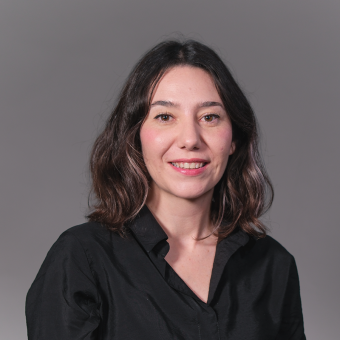
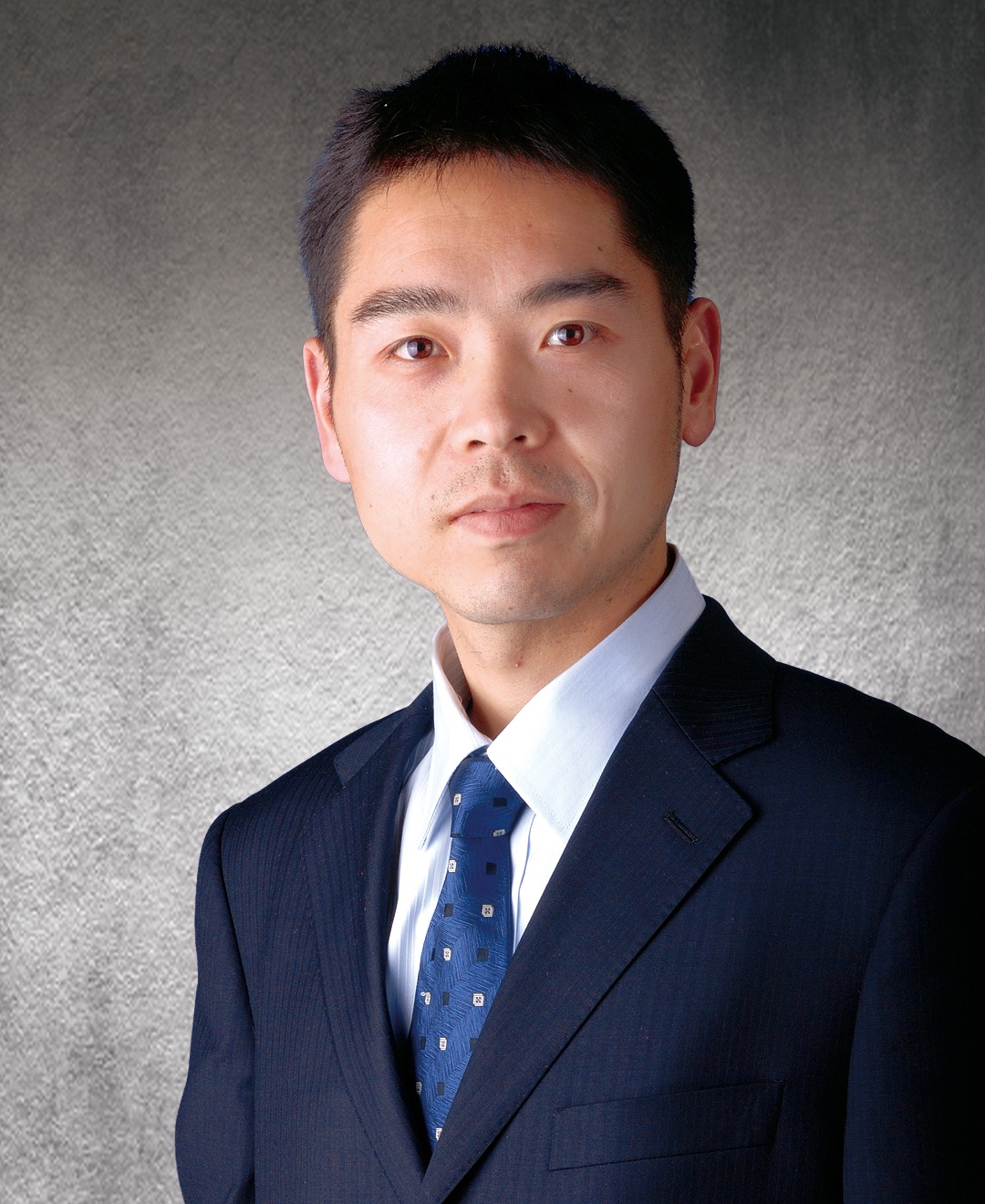
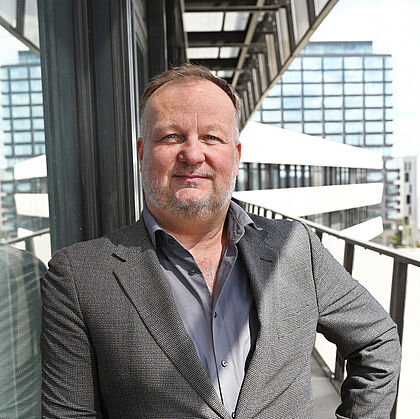
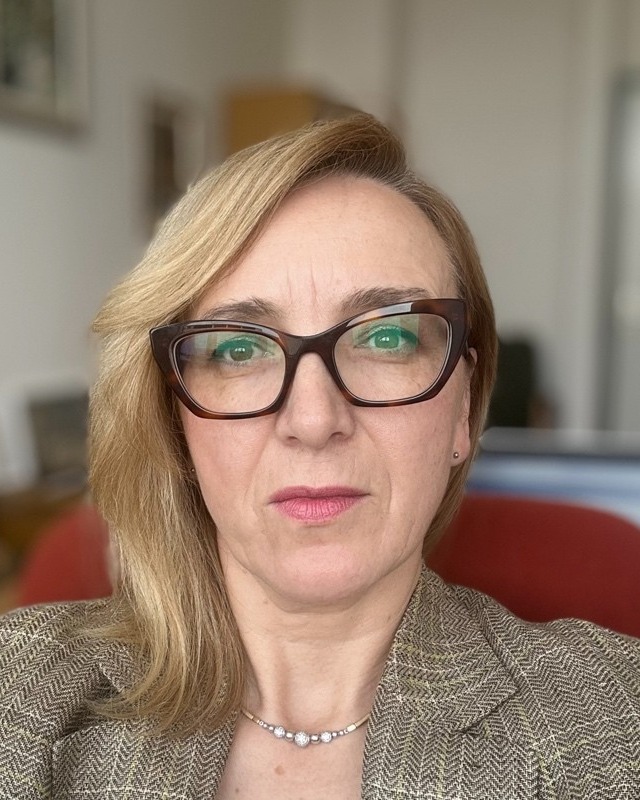
Olena Yevhenivna Borysenko is an Associate Professor at the Department of Marketing and Logistics within the Faculty of Business Technologies and Economics at Zaporizhzhia Polytechnic University. Holding a Candidate of Economic Sciences degree, she has been affiliated with the university since 1990 and continues to be an active academic with recent publications through 2023. Her research focuses on resource management for enterprise production activities, innovative development of enterprises, economics and trade organization, marketing product policy, and product innovation policy. Over her career, she has developed expertise in diagnostics of resource management systems and innovative development methodologies for industrial enterprises. Professor Borysenko teaches several key courses including Marketing Product Policy, Product Innovation Policy, Marketing, Trade Organization, Marketing Distribution Policy, and Startup Development Technologies. Her scholarly output shows consistent growth with publications spanning from 2013-2023, demonstrating particular strength in marketing applications for industrial enterprises and resource management diagnostics. Active member of Ukrainian Marketing Association (Certificate No. 537) ORCID: 0000-0003-0143-2625 ResearcherID: ABE-1607-2020 Her recent work shows increasing focus on digital marketing tools, e-commerce challenges, and innovative business models, reflecting adaptation to contemporary market conditions. Professor Borysenko has received numerous awards from university administration, city councils, and educational organizations recognizing her professional contributions.
Mehmet Mustafa ÖNAL is a full Professor of Civil Engineering at Ahi Evran University's Faculty of Engineering and Architecture, where he has served since 1988. He currently holds the position of Department Head and has previously served as Vocational School Director. His academic journey began with a Bachelor's degree from Gazi University in 1981, followed by a Master's degree in 1993, and culminated with his PhD in 2002, all from Gazi University's Faculty of Technical Education, Department of Construction Education. ÖNAL's research primarily focuses on reinforced concrete structures, structural mechanics, and construction technologies. His work demonstrates a consistent emphasis on practical applications in earthquake engineering, structural strengthening techniques using advanced materials like CFRP and GFRP, and building assessment methodologies. He has made significant contributions to understanding soil-structure interactions and developing methods for evaluating building stock quality in relation to seismic risk. His publication pattern reveals a strong trajectory in structural engineering research, with numerous articles examining reinforced concrete behavior, strengthening techniques, and earthquake risk assessment. ÖNAL has also extended his expertise to historical structure analysis, as evidenced by his work on Roman thermal baths, and has maintained an active research profile well into 2025 with studies on thermal engineering applications. As an educator, ÖNAL has supervised 10 Master's theses between 2019 and 2024, demonstrating his ongoing commitment to mentoring the next generation of civil engineers. His research has been supported by multiple projects, including studies on structural strengthening methods and building assessment. ÖNAL has authored six textbooks in civil engineering subjects including Statics, Topography, Strength of Materials, and Structural Analysis, establishing himself as a significant contributor to engineering education in Turkey. His work bridges theoretical knowledge with practical applications in structural engineering and construction technology.
Prof. Dr. Ayla Oğuş Binatlı serves as a faculty member and Department Chair at the Department of Economics, Izmir University of Economics, Turkey since 2009. She joined the institution in 2002 after two years as an assistant professor in the USA following her doctoral completion. Her academic credentials include: Undergraduate: Boğaziçi University, Department of Economics Graduate Studies: University of Alberta and Boston College PhD: Boston College (1999) Her research specializes in international economics and applied econometrics, with significant contributions to Turkish economic analysis. She has published extensively on current account sustainability, foreign direct investment determinants, environmental economics (particularly climate policy and CO2 emissions), and cultural economics applications. Her methodological focus consistently employs advanced econometric techniques to address real-world economic challenges within the Turkish context. Publication trends show evolving research concentrations: early work (2006-2012) examined current account dynamics and cultural economics; mid-career (2014-2019) expanded into banking stability and FDI; recent studies (2020-2022) address macroprudential policy effectiveness, environmental policy, and financial market behavior. All publications demonstrate rigorous empirical analysis of Turkish economic data across micro and macro domains.
Jelena Kljakić serves as a Lecturer at the University of Banja Luka's Faculty of Architecture, Civil Engineering and Geodesy, specifically within the Department of Architectural Technologies. She also maintains affiliation with the Faculty of Science and Mathematics' Department of General Physics. Her academic appointment as Senior Assistant Associate (II-5) was confirmed on September 21, 2023. Her research focuses on building physics and energy efficiency, with particular expertise in thermal comfort analysis, indoor air quality assessment, and sustainable renovation of prefabricated residential buildings. Current projects examine the correlation between building envelope quality and indoor environmental conditions in educational facilities, alongside modular renovation strategies for Yugoslavia-era housing stock in Bosnia and Serbia. Dr. Kljakić actively contributes to international research through publications in Thermal Science and conference proceedings at Places and Technologies. Her work demonstrates strong regional collaboration across Balkan institutions, addressing critical challenges in building energy performance and occupant health. Current research projects include: Test laboratory for solar cooling using Peltier modules (2024-2026) Correlation between envelope quality and indoor air quality (2024-2026) Strategies for improving energy efficiency in residential buildings (2019-2022) She collaborates extensively with researchers from the Faculty of Mechanical Engineering, Medical Faculty, and international partners on energy retrofitting initiatives targeting Bosnia-Herzegovina's building stock.
Dr. Begum Diker serves as an Assistant Professor at Özyeğin University within the Faculty of Architecture and Design, specializing in building energy performance and zero-energy building transitions. Her work addresses critical financial barriers in sustainable building retrofitting for the Turkish residential sector. Her academic foundation includes: PhD in Building Sciences from Istanbul Technical University (2024) Master's in Environmental Control and Building Technology from Istanbul Technical University (2017) Bachelor's in Architecture from Kocaeli University (2013) Research focuses on nearly zero-energy building (nZEB) conversion for existing Turkish housing stock, with emphasis on financial feasibility analysis and policy-driven solution frameworks . Her doctoral thesis pioneered methodologies for overcoming economic hurdles in energy efficiency retrofits through innovative financing models. Current investigations extend to lifecycle cost analysis and regulatory incentive structures for sustainable building practices. Prior to her faculty appointment, she accumulated six years of professional architecture experience (2013-2018) followed by six years as a research assistant at Doğuş University (2018-2024).
Liu Chun is an Associate Professor in the Department of Finance at Tsinghua University's School of Economics and Management. He holds a PhD from the University of Toronto (2002-2007), a Master's (1999-2001) and Bachelor's (1995-1999) in Economics and Management from Tsinghua University. His research focuses on capital markets, financial measurement, and risk management. Professor Liu teaches courses including Intermediate Financial Theory, Financial Data Analysis, and Financial Practice Classes. His research explores diverse aspects of China's financial system including local government financing, SME credit access, investor behavior, and market microstructure. Recent work analyzes policy impacts using advanced econometric methods like Bayesian latent variable models and survival analysis. His publications predominantly appear in finance and economics journals, with thematic concentrations in: Chinese financial market dynamics Behavioral finance and investor decision-making Policy evaluation and regional development Financial econometrics and statistical modeling Market microstructure and volatility analysis Fintech innovations and digital finance Professor Liu maintains research collaborations across departments and supervises projects on financial infrastructure development. His office is located in Room B310 of Tsinghua University's Lihua Building in Beijing.
Prof. Dirk Krutke serves as a substitute professor for Technical Building Services (TGA) at HafenCity University Hamburg since October 2022. Previously, he was a guest professor at BTU Cottbus-Senftenberg from April 2020 to October 2022, leading the Construction Economics department. His academic journey began with civil engineering at Technical University Berlin, followed by architecture studies at Brandenburg University of Technology Cottbus and University of the Arts Berlin, where he graduated with distinction. Prof. Krutke's research focuses on sustainable building practices, energy efficiency, and climate-responsive architecture. He has developed a comprehensive approach that integrates building physics with architectural design, emphasizing resource conservation and sustainable solutions. His work addresses critical issues like water scarcity, renewable energy integration, and circular economy principles in construction. He has authored a successful book series 'simply sketched' covering Building Climate (2022), House Technology (2023), and Building Physics (2024). Current research explores urban mining and resource extraction from existing building stock Investigates energy-optimized construction methods addressing climate, material, and supply crises Develops simulation tools for design processes using BIM, VR, and energy modeling software His students have achieved notable success, with Reeva Al-Asaadi, Maryam Hosseinzadeh, and Hassibullah Halimi winning an international competition with their 'Children's Oasis' design. Juliane Schnock and Anna Schweim also made the shortlist in another international competition with their 'MOONWARTS' project developed in his Moonbase elective module. Prof. Krutke leads a team including lecturer Reeva Al-Asaadi for building physics, tutor Amina Zink, and DGNB specialist Lisa Schlabitz who teaches building certification. The department offers specialized modules in simulation tools, energy-optimized construction, and pneumatic construction, with a strong emphasis on practical application through student projects and competitions.
Kun Sun is a postdoctoral researcher at the Department of Green Technology (IGT) within the Faculty of Engineering at the University of Southern Denmark. His work intersects machine learning, remote sensing, and urban sustainability, focusing on material flow analysis and environmental impact assessment. Research Interests: Active in material flow analysis, remote sensing applications, and emission reduction strategies, Kun Sun's research combines deep learning techniques with environmental science to address urban sustainability challenges. His recent projects include building material identification and sociometabolic transitions in Eastern Europe. Scientific Awards: Contributed to the project "Exploring the green transformation of the Danish pork supply chain and its contribution to carbon neutrality" (2025). Projects: Participates in ongoing research analyzing the Danish pork supply chain's role in achieving carbon neutrality. This work emphasizes circular economy strategies and industry transformation. Media Contributions: Has been featured in three 2025 press releases discussing AI applications for building material recycling, climate benefits in AI, and scanning technologies for urban sustainability.
Aushim Koumar is a Visiting Professor in the Department of Mechanics of Materials and Constructions at Vrije Universiteit Brussel, Belgium. His academic work focuses on structural engineering and sustainable design, with a strong emphasis on transformable and adaptable structures. Research interests include Structural optimization Genetic algorithms Post-disaster relief shelters Circular economy in building design Kinematic analysis Research trends from his publications highlight advancements in scissor structures, applications of genetic algorithms for computational modeling, and innovations in materials science for sustainable and circular building economies. Key themes also include disaster resilience and mobile infrastructure design. Scientific awards include Laureate ie-price 2012 (Infrastructure and Mobility category) Millennium Development Goal Award 2012 (VUB) As an active researcher, Koumar has presented at international conferences including the IASS Symposium and European Development Days, with peer-reviewed publications and scholarly editions contributing to structural engineering discourse.
Kim B. Wittchen is a Senior Researcher at Aalborg University's Department of Construction, Urban and Environmental Engineering, focusing on building sustainability. With expertise in civil engineering, energy efficiency, and climate adaptation, Wittchen contributes to research on nearly zero-energy buildings, energy demand management, and thermal storage capacity in building stocks. Wittchen's recent publications analyze NZEB regulations across Nordic countries, climate-adaptive building codes, and energy flexibility frameworks. Their work intersects with UN Sustainable Development Goals like Education and Climate Action. Best paper award, Cold Climate HVAC 2021 Active in academic activities, Wittchen organizes conferences (e.g., Nordic Symposium on Building Physics) and contributes to peer review. Their research emphasizes future climate extremes over historical averages, influencing building design and renovation policies.
Džana Kadrić is a Full Professor at the Faculty of Mechanical Engineering , University of Sarajevo , specializing in energy efficiency and sustainable building systems. She holds a PhD in Technical Sciences (2014) and has led numerous projects focused on energy audits, district heating optimization, and renewable energy integration. Education : PhD in Technical Sciences (2014), MSc in Technical Sciences (2008), Dipl.Eng. in Mechanical Engineering (2001) Research Interests include industrial and building energy efficiency, renewable energy systems, and cooling technology. Her work emphasizes practical implementation of energy-saving measures and policy development for decarbonization. Recent projects cover carbon-neutral campus planning, multi-objective retrofit optimization, and alternative heating systems for Bosnia and Herzegovina. Scientific Contributions span 15+ peer-reviewed articles on topics like energy retrofit strategies, cooling tower performance, and renewable resource assessment. She co-authored books on experimental design and residential building typology, and her research has informed national energy policies. Awards : Recognition for Best Technical Project in BiH (2022), University of Sarajevo Scientific Achievement Awards (2022, 2021) Leadership : Invited reviewer for journals like Sustainable Cities and Society , mentor in 34+ student projects, and trainer for energy auditors and women's professional development programs
Prof. Dr. Hadis Bajrić is a Full Professor at the Faculty of Mechanical Engineering, University of Sarajevo, where he is affiliated with the Department of Industrial Engineering and Management. He has been serving as a regular professor since June 2024, following his promotion from Associate Professor (2018-2024). He also serves as the Head of the Lean Learning Factory Laboratory at the University of Sarajevo since April 2022. His educational background includes: PhD in Mechanical Engineering from University of Sarajevo (2013), with dissertation on "Development of models and expert system for inventory management with deterministic ordering times and stochastic demand" Master's degree in Industrial Engineering and Management from University of Sarajevo (2008) Bachelor's degree in Mechanical Engineering from University of Sarajevo (2006), with thesis on "Modeling portfolios for issuers of the Sarajevo Stock Exchange from SASX index" Prof. Bajrić's research focuses on industrial engineering and management, with particular expertise in lean management, supply chain management, inventory optimization, and data envelopment analysis. His work bridges theoretical frameworks with practical applications in manufacturing, healthcare, education, and public administration sectors. He has developed numerous models for inventory management, production optimization, and efficiency assessment across various industries. His recent publications demonstrate a strong trend toward applying lean principles in manufacturing systems, energy efficiency in building design (particularly healthcare facilities), and data-driven approaches to organizational efficiency. His research increasingly incorporates machine learning techniques and advanced analytics for prediction and optimization problems. Prof. Bajrić has received significant research funding through multiple EU-funded projects including BOOST, PRODIGI, ErgoLAB, ABCD, and UMANE, where he has served as project leader or key team member. These projects focus on innovation, digitalization of SMEs, human-centered entrepreneurship, and deep tech applications in the Western Balkans region. His scientific contributions include: Over 30 peer-reviewed journal articles and conference papers Three textbooks: "Supply Chain Management: Inventory" (2024), "Numerical Methods for Engineers" (2023), and "Six Sigma - Basic Statistical Tools" (2018) Extensive consulting work with numerous companies implementing lean and six sigma methodologies Prof. Bajrić has supervised more than 25 master's theses on topics ranging from lean manufacturing and supply chain optimization to quality management systems and Industry 4.0 adoption. His students have explored practical applications in diverse industries including furniture manufacturing, automotive supply chains, and healthcare logistics. He has established strong industry connections through his role as co-founder of Frontline d.o.o. Sarajevo (2022-present) and Stamen d.o.o. Sarajevo (2021-2022), as well as through numerous consulting projects with manufacturing companies across Bosnia and Herzegovina. His practical experience includes designing solar power plants and hydroelectric facilities, demonstrating his engineering expertise beyond academia.
Наталія Михайлівна Левченко is a Professor at Zaporizhzhia Polytechnic National University, where she has been actively teaching and conducting research since 2007. She holds the position of Professor in the Department of Entrepreneurship, Trade and Stock Exchange Activities within the Faculty of Business Technologies and Economics. With a Doctor of Science in Public Administration, she has established herself as a respected academic in the fields of sustainable economic development, decarbonization, and project management. Her research interests span sustainable economic development, decarbonization, ESG competitiveness, project management, construction economics, waste management, and digital transformation. Professor Levchenko has published extensively across these fields, with numerous articles in reputable journals. Her work demonstrates a strong commitment to addressing contemporary economic challenges, particularly in the areas of sustainability and digital transformation. She has developed innovative approaches to evaluating investment attractiveness, stakeholder analysis, and decoupling phenomena in economic decision-making. Professor Levchenko's recent publications highlight her focus on critical contemporary issues such as decarbonization of transportation, sustainable construction practices, ESG competitiveness metrics, and energy enterprise development in the context of green transformation. Her research consistently bridges theoretical frameworks with practical applications, addressing real-world economic and environmental challenges facing Ukraine and the global community. Certificate of Honor from Zaporizhzhia City Council (2011) Certificate of Honor from Zaporizhzhia Regional State Administration (2012) Multiple certificates for scientific supervision of student competitions Appreciation for mentoring winning students in university competitions Professor Levchenko actively supervises student research and has served as a scientific advisor for numerous student projects that have won awards in university, regional, and national competitions. She has participated in international projects including the UKRAINE DIGITAL 24 project with DAAD funding, the RE-ENERGIZE UKRAINE case championship, and the USAID DOBRE project on decentralization. She also serves on editorial boards of scientific journals including 'Sustainable Development of Economy' and 'Kyiv Economic Scientific Journal'.
Christian Dorninger is a researcher at the Institute for Social Ecology (SEC), part of the University of Natural Resources and Life Sciences Vienna (BOKU). His work focuses on material flow analysis , international trade , socio-ecological transformation , and climate protection through sustainable resource use. Research interests include global sustainability transitions , ecological economics , and urban-rural resource dynamics . His publications analyze socioeconomic material stocks , climate policy gaps , and international trade's environmental impacts , often using biophysical modeling and leverage points frameworks . Recent studies explore sufficiency strategies in EU trade agendas, household GHG footprints in Austria, and human-nature reconnection for sustainable futures. Collaborative projects span climate change mitigation , biodiversity protection , and sustainable land-use policies across European and global scales.
Dr. Ming Hu is an Associate Professor at the University of Notre Dame with dual appointments in the School of Architecture and College of Engineering. She serves as Associate Dean for Research, Scholarship, and Creative Work, leading multidisciplinary research on decarbonizing the built environment. School of Architecture, University of Notre Dame College of Engineering, University of Notre Dame Research Interests BUILT4CLIMATE: Measuring urban embodied carbon through BIM, LCA, and BSDM integration BUILT2LAST: Sustainable building design and retrofitting for low-income households BUILT4HEALTH: Linking housing conditions to health risks via ML-powered models Scientific Contributions Authored 3 books including Green Building Costs: The Affordability of Sustainable Design (2023) Developed BUILT2AFFORD framework for ML-driven affordable housing retrofits Created urban carbon mapping tools for Chicago's 1+ million buildings Awards & Grants NSF grant for HOUSE4HEALTH project addressing housing-health equity Leading multiple multidisciplinary research initiatives Laboratory Dr. Hu directs the Built Environment Decarbonization (BEDA) Lab at Notre Dame, combining architecture, engineering, ecology, and material science to advance data-driven decarbonization strategies.