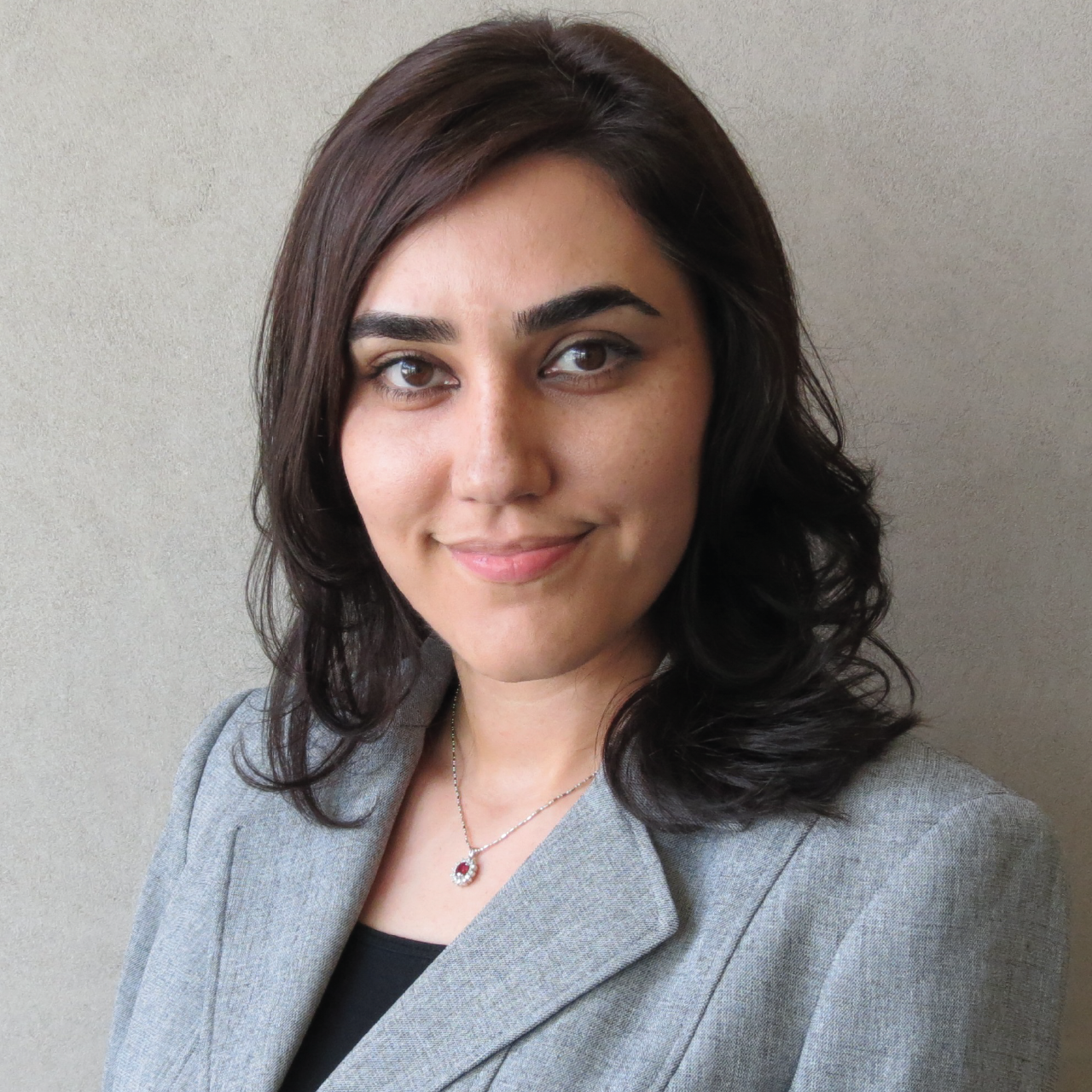
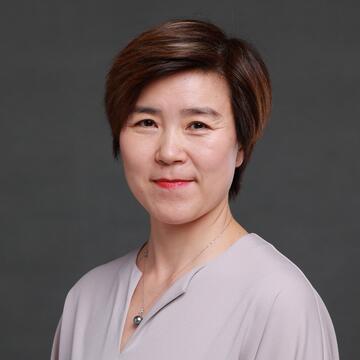
Smajil Halilovic is a Researcher at the Chair of Renewable and Sustainable Energy Systems at the Technical University of Munich . His work focuses on energy systems modeling and optimization, particularly for geothermal and renewable energy integration. Current projects include Geo.KW , a coupled hydrothermal and infrastructure model for urban-scale geothermal use Research emphasizes optimization techniques for groundwater heat pump systems Key contributions in PDE-constrained optimization and thermal resource assessment Halilovic has published extensively in Renewable Energy and Energy Conversion and Management , with recent work on spatial optimization of geothermal systems and urban heat planning. His collaborations with Prof. Thomas Hamacher and Kai Zosseder highlight his role in advancing sustainable energy infrastructure. He teaches Mathematical Modeling of Complex Systems in the Energy Field and contributes to interdisciplinary projects like the Interdisciplinary project internship: Concept development of a renewable energy system in a developing country . His publications demonstrate expertise in geothermal integration, optimization algorithms, and urban energy modeling.
Riccardo Pollo is an Associate Professor at the Interuniversity Department of Territorial Sciences, Planning and Policies (DIST) of the Polytechnic University of Turin. He serves as Scientific Manager for multiple research projects and is a member of the Future Urban Legacy Lab. Research Interests: Healthy City, Urban Metabolism, Sustainable Architecture, Environmental Design ERC Sectors: PE8_3 (Civil Engineering & Architecture), PE8_11 (Sustainable Design), SH2_9 (Urban Studies) SDGs: Goal 11 (Sustainable Cities), Goal 12 (Responsible Consumption) Scientific Awards: 2004: Award from Sustainable Building Conference Board (Poland) 2014–2017: Fellow, SITDA Italian Society of Architectural Technology 2017–2020: Fellow, SITDA Recent Publications focus on urban climate modeling, IoT applications in building technology, and modular approaches to community healthcare facilities, aligning with his expertise in sustainable urban transitions and architectural technology. Teaching includes courses on Healthy and Connected Built Environment, Design for Adaptive Innovation, and Final Design Studio D. He supervises PhD students in Urban and Regional Development. Research Networks: TECHNE Journal Editorial Board (2014–2017) TECHNE Journal Assistant Editor (2017–2020) Coordinator of TESIS Interuniversity Research Center (2017–2030)
Harel Shouval is a Professor in the Department of Neurobiology and Anatomy at The University of Texas Health Science Center at Houston (UTHealth) and a Professor in the Electrical and Computer Engineering department at Rice University. His office is located in the McGovern Medical School Building (MSB) 7.264, and he can be reached at 713-500-5708 or harel.shouval@uth.tmc.edu. Dr. Shouval's research focuses on identifying the rules by which changes in synaptic strength—believed to be the basis of learning, memory, and development in the cortex—take place. His work spans multiple levels of analysis, from molecular mechanisms to functional implications, with an emphasis on theoretical and computational approaches. Key areas of investigation include: The molecular basis of synaptic plasticity, including complex simulations of signal transduction pathways and calcium dynamics Development of simplified cellular models of synaptic plasticity, such as his unified calcium-dependent plasticity model The contribution of synaptic plasticity to receptive field development in visual cortex Long-range horizontal connections in visual cortex and their role in map formation The stability mechanisms of long-term synaptic plasticity His extensive publication record demonstrates a consistent focus on computational and theoretical aspects of synaptic plasticity. Dr. Shouval's work bridges molecular neuroscience with systems-level understanding, particularly through his development of the unified calcium-dependent plasticity model that accounts for various induction paradigms including spike time-dependent plasticity. His research shows strong interdisciplinary connections between neuroscience, electrical engineering, and computational modeling, with applications to understanding learning, memory, and developmental processes in neural circuits. Dr. Shouval teaches courses in theoretical neuroscience at both institutions, including 'Theoretical Neuroscience I: Cells, Circuits and Systems' and 'Theoretical Neuroscience II: Learning, Perception and Cognition.' His teaching spans from biophysical foundations of neuronal cells to advanced topics in learning, perception, and cognition, reflecting his integrated approach to neuroscience education. The Shouval Lab for Theoretical Neuroscience maintains an active research program investigating the fundamental mechanisms of synaptic plasticity. The lab has trained numerous graduate students and postdoctoral fellows who have contributed to the field of theoretical neuroscience, as indicated by the 'Former Graduate Students' and 'Former Postdoctoral Fellows' sections on the lab website.
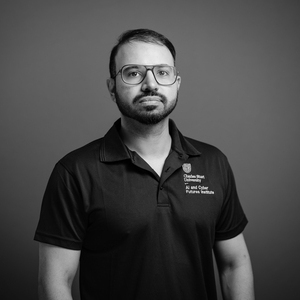
Dr. Ibrar Yaqoob serves as a Senior Research Fellow and Program Lead for the Smart and Resilient Supply Chain strand at the Artificial Intelligence and Cyber Futures Institute (AICF) at Charles Sturt University. He leads a research team comprising PhD students and postdoctoral fellows, and previously held research positions at Khalifa University in the UAE and Kyung Hee University in South Korea. Dr. Yaqoob holds a PhD in Computer Science from Universiti Malaya (2017) and has been a Visiting Academic at the University of Cambridge. His research focuses on blockchain, NFTs, and metaverse applications for healthcare, supply chain and logistics, wireless networks, IoT, and smart cities, with additional expertise in mobile edge-cloud computing and big data. Dr. Yaqoob has published over 100 research articles with more than 24,000 citations and an h-index of 58, with 98.9% of his publications appearing in Q1 journals. His recent publications demonstrate a strong trend toward practical blockchain implementations across diverse sectors including healthcare data management, sustainable supply chains, and smart city infrastructure. His work frequently combines blockchain with emerging technologies like NFTs, metaverse applications, and large language models to solve complex real-world problems in supply chain transparency, medical data security, and sustainable development. Ranked in the world's top 0.1% of researchers for three consecutive years (2023-2021) as a Highly Cited Researcher Listed among the World's top 2% scientists for five consecutive years (2020-2024) 2024 IEEE Consumer Electronics Magazine Best Paper Award (1st Place) 2024 Vice Chancellor's Researcher of the Year Commendation 2024 AICF Research Excellence Award 13 highly cited papers (top 1%) and 21 most downloaded articles Dr. Yaqoob serves as Chief Investigator on multiple significant research projects including the AgriTwins project (AUD $2.38 million), Trustworthy Operations and Supply Chain Management project (AUD $10,000), and Decentralized AI Juries project (AUD $13,875). He actively mentors PhD students and postdoctoral researchers while serving on editorial boards for prestigious journals including IEEE Network Magazine, Future Generation Computer Systems, and IEEE Access. His research team at the AICF Institute focuses on bridging emerging technologies with practical applications to address real-world challenges in supply chain resilience and sustainability.
Jeffrey Erochko is an Assistant Professor in the Department of Civil and Environmental Engineering at Carleton University, Ottawa, Canada. His research and teaching focus on structural engineering, particularly seismic-resistant and self-centering systems for timber and hybrid structures, as well as innovative pedagogical techniques in engineering education. B.A.Sc. Engineering Science, University of Toronto Ph.D., Civil Engineering, University of Toronto Prof. Erochko’s research spans advanced seismic design for timber buildings, hybrid simulation methods, fire performance of structural systems, and nonlinear dynamic analysis of multi-hazard scenarios. His work integrates experimental testing with computational models to enhance resilience in civil infrastructure. Key trends in his publications include hybrid timber-steel/concrete systems, self-centering dampers, nonlinear modeling of seismic responses, and fire safety engineering. His pedagogical contributions emphasize technology-driven assessment tools like micro-video projects and weighted rubrics. He leads the Carleton Hybrid Simulation Research Group and collaborates with the university’s multi-hazard infrastructure protection facility, which explores integrated experimental and computational approaches to natural hazards such as earthquakes, fire, blast, and wind.
Dr Jennifer Badham is an Assistant Professor in the Department of Sociology at Durham University, with the following key roles: Director of the MA Social Research Methods Programme Lead for MDS (Health Data Science) in the Faculty of Social Sciences and Health Fellow of the Wolfson Research Institute for Health and Wellbeing Her research interests span computational methods for complex systems, network diffusion, public engagement, and social network structure. She specializes in agent-based modelling and network analysis to investigate how social structure shapes the transmission of ideas, disease, and behaviour. Additionally, she examines the role of models in policy processes and public engagement with data. Analysis of her recent publications reveals a strong focus on agent-based modelling and network analysis applied to health and social systems. Key trends include the development of synthetic network generation methods, simulation of network interventions for behaviour change, and the integration of participatory approaches in model building. Her work addresses pressing issues such as epidemic planning and health behaviour. Dr Badham is Principal Investigator on the MRC-funded project "Generating Socially Realistic Synthetic Networks" (2023-2026, £528,850). She supervises postgraduate students, including Tengpeng Zhang, and draws on her prior experience as a senior health policy advisor in Australia to inform her research and teaching. As a Fellow of the Wolfson Research Institute for Health and Wellbeing, she contributes to interdisciplinary health research. She also leads the Health Data Science strand within the Durham Research Methods Centre.
Mario Harper is an Assistant Professor in the Department of Computer Science at Utah State University. His research emphasizes Machine Learning, Data Science, Robotics, and their intersections with Finance and Artificial Intelligence. He specializes in autonomous systems, energy-efficient robotics, and AI-driven solutions for transportation and urban sustainability. His work includes developing tools like simulators for electric vehicle systems and stealth-centric navigation algorithms inspired by biological systems. Key research areas include multi-robot coordination, reinforcement learning applications in robotics, and algorithmic approaches to environmental and economic challenges. He has contributed to projects like POSEIDON-SAT for satellite-based fishing vessel detection and electrified transportation equity analysis in urban settings. His publications span topics from trajectory planning in legged robots to AI modeling for economic systems. Beyond research, he designs interactive visualization tools to support policy decisions on sustainable transportation infrastructure. No scientific awards are explicitly listed in the provided information. Mario Harper’s advising and grants focus on robotics, energy systems, and AI applications, though specific student advisees or grant details are not detailed here. He collaborates on projects involving lab tools such as the Unknown Building Exploration Simulator (UBES) and Stealth Centric Autonomous Robot Simulator (SCARS), advancing robotic autonomy in unstructured environments.
Niyousha Hosseinichimeh is an Associate Professor in the Grado Department of Industrial and Systems Engineering at Virginia Tech's College of Engineering. Her research focuses on improving health and healthcare systems through system dynamics modeling and simulation. She holds a Ph.D. in Public Policy from SUNY Albany (2012) and a B.S. in Mechanical Engineering from Sharif University of Technology (2001). Her work addresses complex issues like adolescent drinking/driving behaviors, major depressive disorder, and infant mortality. Methodologically, she advances calibration techniques for dynamic models and group model-building approaches. Her research has been funded by NIH, NSF, and the Ohio Department of Health. Notable contributions include modeling the hypothalamus-pituitary-adrenal axis and developing tools for rapid parameter estimation in system dynamics. She advises students such as Alba Rojas-Cordova (winner of multiple awards) and Arash Baghaei Lakeh. Her grants include projects on depression dynamics and emergency department utilization. Her work intersects systems engineering, public health, and computational methods, emphasizing practical policy and clinical applications.
B. F. Spencer Jr. is the Nathan M. and Anne M. Newmark Endowed Chair in Civil Engineering at the University of Illinois at Urbana-Champaign, where he directs the Multi-Axial Full-Scale Sub-Structured Testing & Simulation Facility and the Smart Structures Technology Laboratory. He joined the university in 2002 after serving as Leo E. and Patti Ruth Linbeck Professor of Engineering at the University of Notre Dame (1985-2002). Education includes: Ph.D. in Theoretical and Applied Mechanics, University of Illinois at Urbana-Champaign (1985) M.S. in Theoretical and Applied Mechanics, University of Illinois at Urbana-Champaign (1983) B.S. in Mechanical Engineering, University of Missouri-Rolla (1981) His research focuses on pioneering innovations in structural health monitoring, stochastic mechanics, and smart sensor technologies. Key areas include development of wireless sensor networks for real-time infrastructure assessment, seismic hazard mitigation strategies, and AI-driven damage detection systems. His work bridges theoretical computational mechanics with practical civil engineering applications to enhance resilience against natural disasters. Recent publications emphasize digital twins, UAV-based structural inspection, machine learning for damage identification, and advanced sensor networks. Trends show strong integration of AI, 3D visualization, and edge computing for rapid post-disaster evaluation and predictive maintenance of critical infrastructure. Major scientific honors: ASCE Housner Medal (2015) J.M. Ko Medal (2014) Foreign Member of Polish Academy of Sciences (2005) Structural Health Monitoring Person of the Year (2011) JSPS Fellowships (1999, 2000) He leads significant infrastructure projects including NSF-funded facilities and industry collaborations. Laboratory initiatives involve full-scale testing of bridges, gates, and seismic mitigation systems. Educational outreach includes K-12 STEM programs like 'Shakes and Quakes' to inspire future engineers.
Sukumar Natarajan is Professor in the Department of Architecture & Civil Engineering at University of Bath, where he directs the EPSRC Centre for Decarbonisation of the Built Environment (dCarb) and serves as Deputy Director of the Centre for Energy and the Design of Environments (EDEn). His research examines building energy modeling, occupant behavior, and climate adaptation strategies. Natarajan's work addresses thermal comfort in vulnerable communities, with field studies in refugee camps and informal settlements. Current projects include developing low-cost energy advisors (ENLITEN) and climate-resilient shelter design (CREST). His team creates high-resolution weather datasets for building simulation under climate change. He leads international collaborations on sustainable building design, including Newton Fund projects on peak energy reduction in India. Recent work investigates overcooling phenomena in hot climates and adaptive comfort standards. Natarajan contributes to climate-resilient design guidelines and assesses social media for heat wave detection. His group maintains open datasets on thermal comfort in refugee shelters.
Dr. Francisco Queiroz is a Lecturer in Digital Innovation Design at the School of Design, University of Leeds. He holds a PhD in Design from the Pontifical Catholic University of Rio de Janeiro, Brazil, and has academic qualifications in Digital Games Design (MA) and Advertising (BA). His research focuses on scientific software usability, immersive technologies, and gamification applied to citizen science and civic engagement. Key research interests include: Scientific software user experience (UX) Color psychology in digital environments Design for cognitive performance enhancement VR applications in education and design Gameful interfaces for scientific practice Recent work explores color's impact on cognitive tasks in virtual reality, digital material design for education, and bridging gaps between academia and industry through game-based methodologies. His editorial role with the Information Design Journal (2020–2022) reflects his commitment to advancing design communication standards. Teaching focuses on creative campaign development and digital innovation in advertising, integrating emerging technologies like AR/VR into design pedagogy.
Raphaël Baur is a Lecturer at the Department of Humanities, Social and Political Sciences at ETH Zürich, with affiliations to the ETH AI Center and OAT X. His research focuses on integrating cognitive science and reinforcement learning into architectural design, emphasizing evidence-based methodologies and educational tools. He develops frameworks for human-centered design and investigates how feedback mechanisms can enhance AI-driven decision-making in architecture. His work spans interdisciplinary areas, including the application of machine learning to architectural learnability, the design of educational tools like MazeMastery for high school curricula, and the creation of toolkits such as DesignMind to bridge cognitive science and spatial design. Key publications highlight trends in reinforcement learning with human feedback, evidence-based architectural pedagogy, and the cognitive foundations of architectural practice. Baur’s contributions aim to advance both theoretical and applied aspects of design through computational and behavioral insights. Labs/Teams: Active member of the ETH AI Center and OAT X, collaborating on projects at the intersection of AI, education, and spatial design.
Tanya Marwah is a Research Fellow at the Simons Foundation , collaborating with Polymathic AI . She earned her PhD from Carnegie Mellon University's Machine Learning Department, co-advised by Prof. Andrej Risteski and Prof. Zachary Lipton, and holds a master's degree from CMU's Robotics Institute. Her research bridges Machine Learning and Scientific Computing , focusing on generative modeling , inverse problems , and building scientific agents . Her work explores theoretical and empirical foundations for applying ML to differential equations, with key contributions in neural operators , memory mechanisms , and edge embeddings in GNNs . Recent publications highlight trends in PDE solvers via LLMs , cross-modal adaptation , and implicit regularization in SGD . She has received the prestigious Siebel Scholar award and actively contributes to top ML venues (NeurIPS, ICML, ICLR, TMLR). Her collaborations span institutions including Carnegie Mellon University, Polymathic AI, and CMU's Robotics Institute.
Lawrence Sass is a Professor and Chair of the Computation Group in the Department of Architecture at MIT's School of Architecture + Planning. His research focuses on design innovation using digital fabrication, particularly in low-cost housing and construction automation. He pioneered methods to reduce home construction steps through computational tools, including the concept of Snap Assembly building systems showcased at MoMA in 2008. His work has inspired startups in digitally fabricated housing. B.Arch from Pratt Institute (1990) Master’s (1994) and PhD (2000) from MIT Research interests include sustainable construction techniques, 3D printing in architecture, and material optimization. He co-founded LuBan3D, a software system enabling large-scale 3D modeling with affordable tools. Current projects explore AI and robotic systems for home production. Awards include the prestigious MacVicar Faculty Fellow recognition. His teaching includes courses like Design Computation (4.500) and Tiny Fab (4.501), emphasizing computational methods in architectural design. Collaborations include work with Singapore-based researcher Prof. Lujie Chen on large-scale fabrication software. His lab focuses on integrating digital tools into physical production workflows, aiming to democratize construction through accessible fabrication technologies.
Dr. Yiqun Pan is a Special Faculty at Carnegie Mellon University's Center for Building Performance and Diagnostics, and a Visiting Professor at Lawrence Berkeley National Laboratory. With 25+ years of experience, she specializes in building performance simulation, energy efficiency, and sustainable design. Her work integrates machine learning and big data to enhance building performance and occupant well-being. Research focuses include low-carbon building technologies, energy flexibility optimization, and carbon reduction strategies. She has led projects funded by the China National Science Foundation and U.S. Energy Foundation. Dr. Pan has authored six books and over 150 publications, including 42 English journal papers. Teaching includes courses on LEED certification, green infrastructure, HVAC systems for low-carbon buildings, and building energy systems integration. Awards include IBPSA Fellow and ASHRAE Membership. She chaired the 2023 Building Simulation Conference, demonstrating global leadership in building science. Her contributions span tool development (e.g., DeST 3.0 simulation platform) and interdisciplinary collaborations. Current work bridges academic research with practical applications, advancing sustainable urban development and zero-carbon building practices.