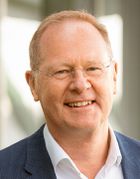
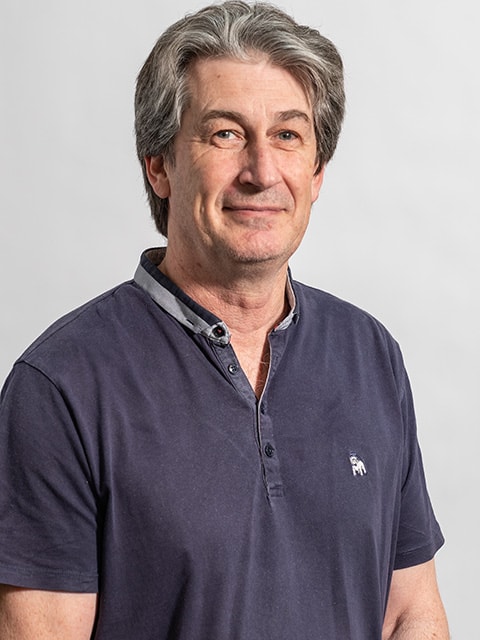
Roger Boltshauser is a Full Professor and Deputy Head at the Department of Architecture, ETH Zurich. His practice and academic work emphasize tectonic building culture, proportion, and material experimentation, diverging from mainstream German-Swiss architectural trends. He combines teaching with active architectural practice, influencing younger generations at ETH and TU Wien. Key themes: Tectonic structures, grid-based order, social responsibility in architecture, critique of modernist canons Notable projects: Hochhaus H1 Zwhatt-Areal (2025), Masterplan Zoo Basel (2025), Centre for Dental Medicine Zurich (2025) His buildings prioritize mass and permanence , evident in projects like the Kopfholz School and Rauch House . Recent works at the EPFL Solar Biennale (2025) and Architecture of Memory exhibition (2025) explore sustainable design and cultural narratives. Boltshauser’s studio on Dubsstrasse exemplifies research into load-bearing structures and urban spatial relationships.
Jennifer Minner is an Associate Professor in the Department of City and Regional Planning at Cornell University’s College of Architecture, Art, and Planning. She directs the Just Places Lab and is actively engaged in research on urban change, memory, and equitable development. Her affiliations span urban planning, regional science, and media studies, and she serves on the faculty advisory board of Cornell Cinema. Ph.D. in Community and Regional Planning, University of Texas at Austin M.U.R.P., Portland State University B.A. in Cultural Anthropology, University of Washington Her research centers on adaptive reuse, circular economies in cities, historic preservation, and social justice . She investigates how communities care for, preserve, and reimagine places through participatory planning and material reuse. Her work connects urban policy with climate action, embodied carbon, and the social legacies of mega-events such as the Olympics and World Expos. She uses spatial analytics, film, and community-based methods to explore equitable urban futures. Her recent publications reflect a strong trend toward environmental justice, circular construction, and urban memory . Topics include deconstruction policy, UAVs in preservation, and post-mega-event urban development. These works span disciplines including urban planning, sustainability, media studies, and public policy, with a consistent focus on equity and community engagement. Town and Gown Award (2024) for CR0WD network Climate Neutral Cities Alliance grant on embodied carbon and justice Atkinson Center Fast Grant for NYS circular construction policy NCPTT grant on reuse scenario planning with 3D modeling Mui Ho Center grant on scaling circular construction in NY Jennifer Minner mentors graduate and undergraduate researchers, co-founded the CR0WD network, and leads the CURTA-Y student club. She has secured multiple grants focused on deconstruction, policy design, and community engagement. Her teaching includes courses on circular cities, land use planning, and advanced planning theory, emphasizing participatory and justice-oriented methods. She leads the Just Places Lab , which fosters interdisciplinary research on urban care, memory, and equity. The lab collaborates with the Circular Construction Lab, Historic Ithaca, and community partners on exhibitions, walking tours, and policy initiatives. Projects like Deconstructing Demolition and Waste(d) Imagination Tour exemplify their community-engaged, creative approach to urban sustainability.
Adi Ćorović is an Assistant Professor at the International University of Sarajevo , specializing in architectural heritage and conservation. He has served as an expert for the Commission to Preserve National Monuments of Bosnia and Herzegovina since 2007. His work includes coordinating the Preventive Conservation of the National Museum of BH (2019-2022) and overseeing the executive project for the Museum of Contemporary Art in Sarajevo (2022-2023). Notably, he was awarded the Knight Honorship by Italy's President Sergio Mattarella in 2018 for his restoration work on the Red Cross Building. Academic Role: Assistant Professor, International University of Sarajevo Key Projects: Museum of Contemporary Art (Renzo Piano layout), National Museum of BH Conservation Awards: Knight Honorship (2018) Research focuses on architectural heritage, Ottoman hammams, modernization trends in Bosnian architecture, and preventive conservation strategies. His publications span topics from 19th-century Sarajevo Bazaar facilities to intercultural dialogue through heritage restoration. Scientific awards include Knight Honorship by President of Italy (2018)
Tim Ibell is a Professor in the Department of Architecture & Civil Engineering at the University of Bath, affiliated with the Centre for Climate Adaptation & Environment Research (CAER). He has held leadership roles including Head of Department, Associate Dean (Graduate Studies), and Associate Dean (Research). His career includes a Fulbright Distinguished Scholar Award (2002) and a stint as Sir Kirby Laing Professor of Civil Engineering at the University of Cambridge. He is a Fellow of the Royal Academy of Engineering and has received six best journal-paper awards. Education: Postdoctoral research at the University of Cambridge following industry experience. Joined Bath in 1997. Research focuses on sustainable construction materials, FRP reinforcement, and embodied carbon reduction in concrete structures. His work aligns with UN SDGs on climate action and sustainable cities. Key innovations include fabric-formed concrete structures and low-carbon pile foundations. Recent projects include EPSRC-funded studies on pile optimization, creative design teaching, and resource efficiency in industrial strategy. Collaborations span UK and international institutions. Awards include the Institution of Structural Engineers' recognition and Royal Academy of Engineering Fellowship. Advising and grants: Supervises PhD students in sustainable construction. Leads multi-million-pound research projects addressing embodied carbon and material efficiency. Labs/Teams: Directs CAER and collaborates with interdisciplinary teams on projects like ACORN (Automating Concrete Construction) and MEICON (Minimising Energy in Construction).
Tan Chuan Hoo is an Associate Professor (tenured) and Deputy Head of the Department of Information Systems and Analytics at the National University of Singapore's School of Computing. With a distinguished academic career spanning multiple continents, he brings expertise in digital transformation, healthcare informatics, and enterprise systems to his teaching and research. His educational background includes: B.Sc. (1st Class Honours, National University of Singapore) M.Sc. (Accelerated, National University of Singapore) Ph.D. (National University of Singapore) Professor Tan's research focuses on digital transformation, particularly designing, deploying, and evaluating technological innovations. His work centers on two critical areas: digital commerce (provision of digital services such as online shopping aids) and digital organization (ensuring operational efficiency and performance). His research has significant implications for healthcare institutions, corporations, and crisis preparedness and response organizations. He conducts comprehensive analyses using various scientific methodologies including field experiments and mixed methods to understand how digital technologies reshape business operations and enhance societal well-being. His publication record shows a consistent focus on information systems, with recent articles (2020-2025) emphasizing healthcare informatics, digital transformation, and open innovation. His work demonstrates a clear trajectory toward understanding how technology intersects with organizational effectiveness and societal implications, with increasing attention to healthcare applications and digital crisis management. Professor Tan has received numerous prestigious awards for his contributions to the field: Faculty Teaching Excellence Award, NUS (2024, 2017) Information Management Research Award, China Information Economics Society (2023) Reviewer Hall of Fame, Journal of AIS (2020) Outstanding Associate Editor Award, MIS Quarterly (2016) Best Reviewer Award, Journal of AIS (2016) INFORMS ISS Design Science Award (2013) Honorable Mention, Journal of AIS (2015) He has successfully advised PhD students and collaborated with public and private entities on research projects. His editorial service as Associate Editor for Information Systems Research and MIS Quarterly, along with board memberships at other leading journals, demonstrates his significant influence in the field. Professor Tan has secured research grants supporting projects on digital crisis preparedness, disaster response technology, and healthcare digitalization. His research group focuses on understanding how technology can be designed and implemented to support organizations in crisis situations, enhance healthcare services, and improve digital commerce. Current projects include examining digital crisis management, technology for disaster response, and the digital transformation of healthcare services.
Leena Aarikka-Stenroos is a Professor at Tampere University, leading the Research Centre for Managing Circular Economy (ManCE). She holds a Doctor of Science degree in Economics and Business Administration from Turku School of Economics (2011). Her research focuses on circular economy innovation, business models, sustainability transitions, and value creation mechanisms. She has pioneered studies on catalysts for circular economy ecosystems, B2B customer referencing, and the role of digital technologies in enabling circular value chains. Academic Qualification: PhD in Economics and Business Administration (Turku School of Economics, 2011) Roles: Head of Research Centre for Managing Circular Economy, Tampere University Research Interests: Circular Economy, Sustainability, Business Models, Innovation Management, Value Creation Her work contributes to UN Sustainable Development Goals, particularly addressing climate action and responsible consumption. Key contributions include frameworks for circular business model innovation and stakeholder engagement strategies in sustainability transitions. She has received prestigious awards such as the Alex Gofman Award (2016) and multiple best paper recognitions. Her research spans industries like construction, textiles, and healthcare, emphasizing cross-sector collaboration. Recent articles explore emotional dynamics in innovation, ethical value co-creation, and AI-driven value creation in B2B contexts. She actively collaborates internationally, contributing to conferences and editorial boards. Her work bridges theoretical insights with practical business strategies for environmental sustainability.
Valerie Thomas is the Anderson Interface Chair of Natural Systems at Georgia Tech, holding joint appointments in the H. Milton Stewart School of Industrial and Systems Engineering and the School of Public Policy. Her research focuses on energy systems, sustainability, industrial ecology, and science and technology policy. She earned a B.A. in Physics from Swarthmore College and a Ph.D. in Theoretical Physics from Cornell University, followed by postdoctoral research at Carnegie Mellon and Princeton Universities. Her work addresses low-carbon transportation, environmental impacts of food systems, and energy development in Africa. Key research areas include life cycle assessment, climate policy, and technology assessment. Thomas has contributed to over 80 technical publications and serves on advisory boards for the U.S. EPA and USDA/DOE. Education: Ph.D. in Physics, Cornell University; B.A. in Physics, Swarthmore College Awards: AAAS and APS Fellowships, Georgia Tech’s 1934 Outstanding Interdisciplinary Award Her teaching spans energy policy, lifecycle analysis, and engineering economics. She leads interdisciplinary teams at the Climate and Energy Policy Laboratory and the Technology Policy and Assessment Center, advancing sustainable systems engineering and policy solutions.
Achim Menges is a Research Professor and Max Planck Fellow at the University of Stuttgart, where he directs the Institute for Computational Design and Construction (ICD). His work bridges architecture, engineering, and computational design, with a focus on developing innovative construction methods and materials. Menges leads the Cluster of Excellence IntCDC: Integrative Computational Design and Construction for Architecture, a major research initiative funded by the German Research Foundation. Menges' research centers on computational design, robotic construction, and biomimetic architecture, with particular emphasis on timber construction, adaptive building systems, and digital fabrication. His work integrates principles from bionics to create responsive, sustainable building systems that adapt to environmental conditions. Notable projects include the BUGA Wood Pavilion (2019), Urbach Tower, BUGA Fibre Pavilion, and the livMatS Biomimetic Shell, all demonstrating his commitment to material innovation and sustainable construction practices. His recent publications reveal a consistent focus on advancing timber construction techniques, developing bio-inspired responsive systems, and implementing robotic fabrication processes. The research shows a clear trajectory toward more sustainable, resource-efficient building methods that integrate digital design with physical construction processes. Menges' work increasingly addresses multi-story timber systems and circular construction principles. Bauwende Prize der Universität Stuttgart 2025 Menges leads numerous research initiatives through the Cluster of Excellence IntCDC, securing significant funding for projects exploring computational design and robotic construction. His work involves extensive collaboration with industry partners and interdisciplinary research teams. Menges directs the ICD research laboratory, which focuses on developing novel computational design methods, robotic fabrication processes, and innovative material systems for architecture. The institute maintains strong partnerships with industry leaders in construction technology and materials science, facilitating the translation of research into practical applications.
Elena Simperl is a Professor of Computer Science and Deputy Head of Department for Enterprise and Engagement at King's College London's Department of Informatics. She co-directs the King's Institute for Artificial Intelligence and serves as Director of Research for the Open Data Institute. As a Hans Fischer Senior Fellow at the Technical University of Munich's Institute for Advanced Study, she leads the Trustworthy Knowledge Graphs focus group and contributes to advancing human-centric AI research across European institutions. Professor Simperl obtained her doctoral degree in Computer Science from the Free University of Berlin and her diploma from the Technical University of Munich. Prior to joining King's, she held academic positions in Germany, Austria, and at the University of Southampton, and was a Turing Fellow. Her career trajectory demonstrates consistent leadership in bridging academic research with practical applications in data ecosystems. Her research sits at the critical intersection of AI and social computing, focusing on human-centric approaches to building sociotechnical systems that integrate data, algorithms, and human capabilities. She investigates how to make knowledge engineering more accessible, how to leverage collective intelligence for data quality improvement, and how to design participatory AI systems that address societal challenges like misinformation. Her work spans knowledge graphs, semantic technologies, crowdsourcing, and open data, with particular emphasis on the social dimensions of data-intensive systems and the governance frameworks needed for trustworthy AI deployment. Analysis of her recent publications reveals a strong evolution toward integrating large language models with traditional knowledge engineering practices while maintaining human oversight. There's a clear trajectory from foundational work on knowledge representation toward increasingly applied research addressing real-world challenges in media ecosystems, citizen science, and data governance, with growing attention to policy implications of AI technologies. Fellow of the British Computer Society Fellow of the Royal Society of Arts Hans Fischer Senior Fellow at TUM-IAS (2023) Ranked among top 100 most influential scholars in knowledge engineering of the last decade Included in Women in AI 2000 ranking Professor Simperl has led 14 major European and national research projects totaling millions in funding, including MediaFutures (a Horizon 2020 program tackling online misinformation), QROWD, ODINE, Data Pitch, and ACTION. She currently co-chairs the Croissant working group in ML Commons developing data standards for AI, and serves as president of the Semantic Web Science Association. Her research has directly influenced the development of data ecosystems supporting startups and citizen science initiatives across Europe, demonstrating exceptional ability to translate theoretical advances into practical impact. As Director of Research at the Open Data Institute, she oversees initiatives connecting data entrepreneurs with artists and civic organizations. Her leadership in the MediaFutures project established a data-driven innovation hub that supported 51 startups/SMEs and 43 artists through three open calls, creating a sustainable model for arts-technology collaborations addressing media challenges. Her work with the ODINE project helped create a European ecosystem for data-driven startups, demonstrating her commitment to building practical applications of open data principles.
Assoc. Prof. Dr. Sema Alaçam Doğan has been affiliated with Istanbul Technical University since 2014, serving as an Associate Professor in the Department of Architecture . She has held administrative roles including Deputy Head of Department and Erasmus Coordinator. Education : PhD in Informatics in Architectural Design (2008-2014), MS in Informatics in Architectural Design (2005-2008), and BS in Architecture (1999-2005) from Istanbul Technical University. Her research explores Computational Design , Artificial Intelligence in Architecture , and Sustainable Material Innovation . She investigates digital tools for heritage preservation, daylight optimization in BIM, and cognitive development in architecture students. Recent publications analyze AI-assisted design literacy , machine learning for Sinan mosques , and environmental comfort in Harran houses . Her work integrates algorithmic frameworks with sustainable practices. Scientific awards include multiple ITU Publication and Performance Awards (2021-2024), FABFEST Prizes , and the 2024 Artemis Educator Award from NASA. Active projects like "Physical Computation in Architectural Drawing" and "Robotic Fabrication with Recycled Wind Turbine Blades" demonstrate her leadership in computational and sustainable research.
Ian Ewart is an Associate Professor at the University of Reading's School of the Built Environment, serving as Head of Construction and Engineering Management and Research Group Lead for Organisation, People and Technology. He chairs the Research Ethics Committee since 2016 and supervises undergraduate/postgraduate dissertations. His academic journey spans engineering and anthropology: DPhil Social and Cultural Anthropology, University of Oxford, St Hugh's College (2007-2012) MSc Material Anthropology and Museum Ethnography, University of Oxford, St Hugh's College (2006-2007) BA (Hons) Archaeology and Anthropology, University of Oxford, Harris Manchester College (2003-2006) Diploma in Management Studies, University of the West of England (1990-1994) BEng (Hons) Mechanical Engineering, Staffordshire University (1983-1987) Ewart's research integrates ethnographic methods with digital technology studies, examining human-technology interactions in construction and domestic settings. His work bridges engineering practice and social anthropology, focusing on skill transmission, sustainable design, and multisensory experiences in virtual environments. Publications from 2025-2013 reveal a dominant trajectory in digital twins for socio-ecological sustainability, VR-based occupant behavior prediction, and HBIM for heritage conservation. The corpus demonstrates consistent cross-disciplinary innovation, merging archaeological reconstructions with healthcare applications while maintaining anthropological rigor. Key recognition: ESRC Future Research Leader fellowship (2013) for Designing Healthy Homes project He supervises PhD candidates like Afolabi Dania (Nigerian sustainable construction) and Joanna Hull (Heritage BIM), leveraging ESRC funding for ethnography-VR health studies. His grants emphasize participatory design and real-world impact assessment in built environments. Leaders the Organisation, People and Technology research group, developing multisensory Roman town reconstructions with sound/smell integration to advance archaeological and architectural experience modeling.
Ahmed Hammad is an Associate Professor in the Department of Civil and Environmental Engineering at the University of Alberta's Faculty of Engineering, where he also serves as Director of Academic Integrity, ENG WIL, Co-op and Career Connections. With 25 years of industry experience as a Project Planning & Control Manager on global mega-projects (including Oil Sands, LNG, and Infrastructure across Canada, UAE, Australia, and Egypt), he brings extensive practical expertise to academia. Education: Doctorate of Philosophy, Construction Engineering & Management, University of Alberta (2009) Master of Science, Construction Engineering & Management, University of Alberta (1999) Master of Engineering, Construction Engineering and Management, Cairo University (1996) Bachelor of Science, Civil Engineering, Mansoura University (1989) Research Focus: Dr. Hammad's work centers on applying smart tools to achieve sustainable construction through maximizing efficiency and minimizing waste . His research employs Machine Learning , Multi-Criteria Decision Making , Knowledge-Based Decision Support Systems , and digital twin technologies to optimize project planning, resource allocation, and sustainable material selection. He investigates the integration of BIM and Augmented Reality to enhance construction processes while reducing environmental impact. Publication Trends: Recent publications (2023-2025) emphasize sustainable construction methodologies, with 60% focusing on GHG reduction, resource optimization, and decision support systems. Key themes include machine learning for labor estimation, TOPSIS/MCDM for sustainable material selection, and digital twins for production planning, reflecting his NSERC-funded projects on KBDSS and construction-oriented digital twins. Scientific Recognition: Best Paper Award at 8th International Conference on Industrial Engineering and Operations Management (2018) Best Paper Award at HBRC Green Smart Sustainable Buildings Conference (2024) Research Leadership: Dr. Hammad secures major industry-academic partnerships, including NSERC Mission Alliance Grants ($1.2M+) with 16 industry partners for GHG reduction projects and NSERC Alliance Grants with 9 partners for digital twin development. His completed projects include collaborations with the City of Edmonton and Alberta Ministry of Infrastructure on resource allocation models. Research Ecosystem: As leader of the Sustainable Construction Research Group (SCRG), he fosters industry-academia collaboration through regular workshops with construction firms and government agencies, focusing on translating research into practical tools for sustainable project delivery.
Hyun J Koo is an Assistant Professor in the Department of Civil and Environmental Engineering at Wayne State University, specializing in construction engineering and management. He focuses on defect and risk management, design management, Building Information Modeling (BIM), and adaptive reuse of buildings. Education: Ph.D. from The University of Texas at Austin M.S. from University of Illinois, Urbana-Champaign B.S. from Hanyang University Dr. Koo teaches graduate and undergraduate courses including Construction Techniques and Methods , Advanced Construction Engineering and Management , and Building Information Modeling (BIM) . His research integrates BIM methodologies with sustainable construction practices and risk mitigation strategies. Contact: hjkoo@wayne.edu | Phone: 313-577-8073 | Office: Room #0504.03, 5050 Anthony Wayne Drive
Prof. Dr.-Ing. Werner Lang serves as Vice President for Sustainable Transformation and holds the Chair of Energy Efficient and Sustainable Design and Building (ENPB) at the Technical University of Munich (TUM), within the TUM School of Engineering and Design. Previously, he was Professor of Sustainable Building and Director of the Center for Sustainable Development at the University of Texas School of Architecture in Austin (2008-2010). Lang also directs the Oskar von Miller Forum and is a partner at Lang Hugger Rampp GmbH Architekten in Munich. Lang's research focuses on developing strategies for buildings with positive environmental footprints through regenerative energy systems, renewable materials, and closed material cycles. His work emphasizes comprehensive life cycle analysis considering ecological, economic, and social aspects. Current research areas include climate-resilient urban neighborhoods, circular economy in construction, and sustainable building materials. The ENPB institute conducts numerous research projects such as Building Climate-Municipal, CircularFTmehrRAUM, and Urban Green Infrastructure. Lang's publications reveal a strong trend toward life cycle assessment, multi-criteria decision-making, and computational approaches for sustainable building design. His recent work integrates machine learning with building performance analysis and focuses on practical implementation of circular economy principles in urban contexts, with increasing emphasis on quantifying environmental benefits of urban green infrastructure. TUM Sustainability Award 2022 Doce et Delecta (Second Prize for Best Teaching), 2019 Bayerischer Energiepreis 2014 International Building Skin Tech Award (2008) Promotionspreis der TUM (2000) Lang leads the Institute of Energy-Efficient and Sustainable Design and Building with numerous research grants including projects like Building.Lab+, NAWAREUM, and ECO+. His team includes researchers working on topics ranging from urban mining to life cycle assessment tools. The institute maintains several products and startups including MoMeBo, Bilanzlabor, and EnergyML that translate research into practical applications for the building industry.
Professor Graham Sander is a Professor of Hydrology at Loughborough University, affiliated with the School of Civil and Building Engineering. His research focuses on mathematical modeling of soil erosion, unsaturated soil flow, contaminant transport dynamics, and nonlinear diffusion-convection equations. He leads the NERC-funded project on multi-dimensional soil erosion and chemical transport, collaborating with Lancaster University’s Department of Environmental Science. His academic qualifications include a BSc (Hons) and PhD. Recent research emphasizes integrating particle size-selective models to predict sediment and contaminant delivery to water bodies, supported by lab and field experiments. He has also pioneered pseudospectral methods for infiltration modeling and explored flood risk management through nature-based solutions like leaky barriers. Key contributions include advancing understanding of rainfall-driven erosion dynamics, including splash effects and rock fragment coverage impacts. His work spans experimental hydrology, numerical simulation, and interdisciplinary approaches to environmental challenges. He co-edits hydrology journals and advocates for rigorous scientific communication in the field. Grants: NERC-funded soil erosion project, Australian Research Council project on unsaturated soil flow. Labs/Teams: Collaborator with Lancaster University’s Environmental Science Department.