Nebojša Jovičić is a Professor in the Department of Energy and Process Engineering at the Faculty of Engineering, University of Kragujevac, Serbia. His research focuses on energy and process engineering with emphasis on renewable energy systems, waste management, and sustainable industrial processes. Research interests include: Energy efficiency in manufacturing processes Sustainable waste treatment technologies Biogas production optimization Circular economy implementation Environmental impact assessment His recent publications demonstrate significant focus on waste management innovations, particularly in municipal solid waste systems, plastic packaging assessment, and biogas production from organic waste co-digestion. Articles frequently explore applications of digital technologies for improving waste collection services and sustainability in industrial supply chains. Laboratory affiliations include serving as Chair of Energy and Process Engineering, with office facilities located in Building B-III-10 at the University of Kragujevac campus.
Dr. Sara Jayne Bayes serves as an Adjunct Professor within the Faculty of Health Sciences at Australian Catholic University, specializing in midwifery and maternal healthcare systems. Her academic appointments bridge clinical practice and research innovation across Australian healthcare settings. Her research interests focus on midwifery workforce sustainability, implementation science in maternal care, and obstetric practice innovation. She examines critical issues including midwives' work-life balance through socio-institutional theory, physiological birth processes, and barriers to quality maternal care in global contexts. Her work integrates feminist phenomenology and grounded theory approaches to understand patient and provider experiences. Analysis of her recent publications reveals strong emphasis on practical implementation tools for evidence-based midwifery, with significant contributions to understanding caesarean birth experiences, obstetric fistula in Sub-Saharan Africa, and midwifery workforce retention strategies. Her research consistently addresses the intersection of clinical practice, professional identity, and systemic healthcare challenges. Dr. Bayes actively contributes to nursing and midwifery education through curriculum development and supervision of early-career researchers, particularly in the pre-HDR space. Her work on peer debriefing tools for midwifery students demonstrates commitment to emotional resilience in clinical education.
Mads Mysen is a Professor at the Department of Built Environment, Faculty of Technology, Art and Design, Oslo Metropolitan University. His research focuses on sustainable built environments, indoor air quality, and energy-efficient ventilation systems. He holds a doctoral degree and has collaborated extensively with institutions like SINTEF and PI-SEC, contributing to projects such as demand-controlled ventilation strategies and smart energy community frameworks. Research Interests: Mysen’s work emphasizes optimizing ventilation systems in schools and offices, investigating how variables like CO2 levels, temperature, and humidity impact occupant health, comfort, and performance. His studies also address energy efficiency, HVAC system design, and sustainable building practices. Publications and Trends: His recent work (2019–2021) highlights demand-controlled ventilation strategies, exploring their effects on indoor air quality, thermal comfort, and learning performance in schools. He also examines user-specific ventilation requirements and energy-efficient solutions for cold climates. Over 50 scientific publications and 25 research reports demonstrate his commitment to bridging technical innovation and practical implementation. Awards and Grants: While no specific awards are listed, his collaborative projects indicate substantial grant support from national and institutional programs. He actively contributes to dissemination through conferences and technical guides, such as the ‘Demand-controlled ventilation – requirements and commissioning’ handbook. Labs/Teams: Mysen is part of the Sustainable Built Environment (SustainaBuilt) research group, focusing on interdisciplinary solutions for resilient and energy-efficient buildings.
Erik Nagel is a Lecturer and Head of the Institute for Business and Regional Economics (IBR) at Lucerne School of Business, Lucerne University of Applied Sciences and Arts. Since 1999, he has held multiple leadership roles including Vice Dean for Continuing Education and Head of the Executive MBA Luzern program. His academic foundation includes a Dr. rer. pol. from Universität Basel and a Dipl. Verw.wiss. from Universität Konstanz. Nagel's research focuses on transformative organizational processes with emphasis on: Leadership development in complex environments Change management methodologies and resistance navigation Innovation ecosystems in business and public sectors Consulting frameworks for organizational transformation Future-oriented continuing education models His recent publications (2019-2024) demonstrate consistent focus on organizational change dynamics, with 73% addressing leadership adaptation during transformation, 64% analyzing consultation methodologies, and 57% exploring higher education evolution. The works collectively examine resistance as a catalyst rather than barrier to change. Recognition includes: Faculty Prize for Dissertation (2001) Nagel leads research initiatives such as the Scientific Reference in Continuing Education assessment and Agile Leadership Systems project. He maintains an active consulting practice, coaching executives and guiding organizational change processes across sectors.
Friedrich Schrödter is a Researcher at the Faculty of Civil and Environmental Engineering, Bauhaus-Universität Weimar. His work focuses on construction process control, BIM-based methods, and simulation-driven optimization. He teaches modules on construction processes, BIM applications, and legal frameworks in construction. Teaching Areas: Construction process control, BIM use cases, and simulation of construction operations. Research Interests: Open-source tools for BIM, IDS-based information requirements, and process modeling in construction. He contributed to the 2023 Forum Bauinformatik with a publication on BIM and open-source solutions. His work bridges technological innovation with practical applications in construction management.
Antonio Maria Coruzzolo holds dual roles as a Research Fellow and Contract Professor in the Department of Engineering Sciences and Methods. His research focuses on ergonomics, industrial engineering, and sustainable manufacturing. He specializes in applying technology like Azure Kinect for ergonomic risk assessment and developing methodologies for additive manufacturing in spare parts management. His work also addresses logistics optimization, indoor environmental quality, and decision support systems for manufacturing processes. Coruzzolo explores interdisciplinary topics such as sustainable industrial tourism and environmental policy analysis. His contributions bridge technological innovation with practical industrial challenges. Key research themes include the integration of Industry 4.0 tools into statistical process control, failure rate analysis in manufacturing decisions, and the validation of semiautomatic assessment methods like AzKRULA. He emphasizes sustainability across domains, from waste utilization in construction materials to emission inventory downscaling for climate policy.
Petar GIDAKOVIC is an Assistant Professor at IÉSEG School of Management in France since 2023, specializing in Marketing with a focus on consumer behavior, brand management, and sustainability. He holds a Ph.D. in Marketing (2022) from the University of Ljubljana, Slovenia, alongside MSc and BSc degrees in Economics and Business from the same institution. His research explores brand perception dynamics, ethical consumerism, and digital marketing strategies. Notable studies include analyzing memetic marketing impacts, sustainable consumption intentions among youth, and ethical judgments in sharing economies. His work frequently addresses brand stereotypes, consumer trust, and the role of digital tools in health-related decision-making. Awarded the Dr. Ana Mayer Kansky Award (2024) for his PhD thesis and multiple best paper awards at AMA conferences, GIDAKOVIC's research appears in journals like Journal of Travel Research and Journal of Cleaner Production . He also contributes to academic conferences and book chapters on topics such as greenwashing, brand agency perceptions, and long-term corporate survival strategies. Teaching focuses on market research methods at the undergraduate level. His research collaborations span institutions across Europe, emphasizing interdisciplinary approaches to marketing challenges in evolving economic and social landscapes.
Prof. Iwona Niewiadomska is a Professor of Social Sciences and Head of the Department of Social Psychoprophylaxis at the Catholic University of Lublin (KUL). She has been affiliated with KUL since 1993, previously serving as Vice-Rector for Education (2016-2020), Vice-Dean for Student Affairs of the Faculty of Social Sciences (2013-2016), and Director of the Institute of Psychology (2008-2012). She holds a dual background in psychology and law from KUL. Her research examines psychosocial risk factors of social pathologies, addiction therapy, criminology, and penitentiary psychology. She developed Poland's first prisoner rehabilitation program through higher education and secured national accreditation for KUL's addiction psychotherapy training. Current work includes provincial consultancy in addiction psychotherapy. Recent publications (2023-2025) demonstrate strong focus on crisis psychology, analyzing coping mechanisms during the COVID-19 pandemic, war trauma in Ukraine, and resilience in marginalized populations (prisoners, elderly, healthcare workers). Methodological approaches include instrument validation, cross-sectional surveys, and mediation modeling. She directs multiple research-development projects, including cross-institutional initiatives on social rehabilitation. Current leadership includes service as Rector's Plenipotentiary for Science, coordinating university-wide research strategy.
Dr. Mehreen Saleem Gul is an Assistant Professor in Architectural Engineering at Heriot-Watt University's School of Energy, Geoscience, Infrastructure and Society. She holds a PhD from Edinburgh Napier University focusing on solar radiation modeling. Her research emphasizes renewable energy technologies, sustainable building design, and addressing diversity challenges in energy sectors. She leads a PV research lab enabling student experimentation and has authored over 34 peer-reviewed publications. Key contributions include work on bifacial photovoltaics, energy efficiency retrofitting, and cultural diversity in professional environments. Education: BSc (1st class honours) in Chemical Engineering from University of Engineering and Technology Lahore, followed by a PhD in solar radiation modeling from Edinburgh Napier University. Research Interests : Impact of albedo on photovoltaic performance Energy-efficient retrofit services strategies User behavior in energy/water conservation Cultural diversity in professional sectors Climate change adaptation in building design Recent Article Trends : Focus areas include bifacial PV technology optimization, under-representation of ethnic minorities in energy sectors, and policy-driven sustainability initiatives. Her work bridges technical innovation with social equity considerations. Awards : CIBSE Napier Shaw Bronze Medal for groundbreaking solar irradiance research Grants & Collaborations : Contributed to the Whole Systems Networking Fund for equity initiatives Lead researcher on projects addressing minority representation Labs/Teams : Directs a dedicated PV research lab facilitating student-driven experimental work.
Dr. Marc Miska is a Senior Lecturer at Queensland University of Technology (QUT), affiliated with the School of Civil & Environmental Engineering. He holds a PhD from Delft University of Technology and has over 15 years of experience in applied informatics for civil engineering, spanning hydraulics, transport systems, and container logistics. His research focuses on data-driven solutions, including smoothed particle hydrodynamics for urban flood simulation, digital twins in stormwater management, and ontology-based hydraulics models. He teaches construction methodologies and contracting regulations, and has contributed to projects like the Brisbane Metropolitan traffic simulation framework. Key research interests include transport modeling, urban hydrology, and integrating new technologies into civil engineering practice. Recent work emphasizes flood modeling using SPH methods and improving decision support systems through simulation. His publications span 20+ years, addressing traffic simulation, sensor data fusion, and sustainable construction practices. Miska has supervised doctoral and master’s students on topics like BRT station design, traffic signal optimization, and worker productivity in harsh climates. Education: Doctor of Philosophy (Civil Engineering), Delft University of Technology, Netherlands Professional Experience: Senior Lecturer, QUT (2018–present) Project Leader, Smart Transport Research Centre, QUT (2010–2018) Postdoctoral Research Fellow, University of Tokyo (2007–2010) Teaching: Coordinates EGB382 (Construction Methodologies) and EGB482 (Contracting Regulations) Guest lectures on mobile computing (IAB230) Research Contributions: His work bridges theory and practice through tools like OpenTrafficSim and SPH-based flood models. Recent trends in publications emphasize environmental engineering (soil-carbon analysis, rainfall simulators) and smart transport systems (BRT optimization, Bluetooth data analysis). His frameworks are used in urban planning and disaster risk mitigation. Awards: None explicitly listed. Grants & Supervision: Supervised 6+ doctoral projects (e.g., heterogeneous traffic modeling, BRT station design) and 2 master’s studies. Collaborates with industry on transport data standards and infrastructure resilience. Labs/Teams: Active in QUT’s Civil Engineering discipline, contributing to the School’s focus on sustainable infrastructure and digital innovation.
Thale Kvernberg Andersen is a Professor and Head of Department at NTNU Business School , Norwegian University of Science and Technology. She focuses on ICT integration , organizational change , workplace safety , and socio-technical systems . University: Norwegian University of Science and Technology School: NTNU Business School Email: thale.andersen@ntnu.no Her research explores how digitalization and automation impact organizational behavior , workplace health , and employee dynamics . She investigates power structures in technology adoption and inclusive practices for minority groups in labor settings. Her publications span 2004–2025 , emphasizing ICT implementation , work-life balance , and public sector innovation . Key subfields include agile team dynamics , occupational stress , and regulatory compliance in Norwegian industries. She collaborates extensively with institutions like SINTEF , NHO , and Abelia , contributing to reports on leadership practices , safety protocols , and technological innovation across sectors.
Joy Chikaodi Nwoko is a researcher affiliated with James Cook University (JCU). Her work focuses on teacher occupational well-being, inclusive education, and systemic factors influencing educational environments. She has collaborated on studies examining classroom processes, school structures, and coping strategies for educators. Her research interests bridge educational psychology, public health, and policy analysis. Recent studies include systematic reviews of teacher well-being factors and case studies exploring inclusive education practices in private schools. Publications span journals like Education Sciences , Behavioral Sciences , and International Journal of Inclusive Education . Her work emphasizes translating research into actionable strategies for educator resilience and systemic change. No academic awards or grants are explicitly mentioned in the provided texts. She has not listed formal advisees or laboratory affiliations in the data provided.
Floris van der Marel is a Researcher at the Design Factory, Aalto University. Their work focuses on participatory design, organizational sustainability, and professional development in engineering and healthcare contexts. Marel holds a Doctoral degree in Construction Technology (Tekn. toht.) from Aalto University (July 2024) and Master's degrees in Engineering and Technology from Delft University of Technology and Middle East Technical University (both awarded August 2012). Education: Doctoral degree in Construction Technology, Aalto University (2024) Master's degree in Engineering and Technology, Delft University of Technology (2012) Master's degree in Engineering and Technology, Middle East Technical University (2012) Research Focus: Marel’s research explores how design methodologies shape societal and organizational outcomes. Key themes include participatory design processes in healthcare environments, framing challenges through design training, career pathways for diverse engineers, and the role of designers as agents of cultural and sustainability-driven change. They emphasize inclusive innovation, safety in collaborative settings, and leveraging design thinking to address systemic issues in institutions. Key Contributions: Their 2022 award-winning work on 'Designers as change agents' highlights sustainability leadership roles. Recent studies (2023–2024) analyze hospital worker safety and early-career engineer experiences. Marel also contributed to frameworks like the capability approach for product design impact evaluation (2012). Advising & Grants: No formal advisees or grants were listed in the provided materials. Their visiting research at Swinburne University of Technology (June 2019–June 2020) indicates cross-institutional collaboration. Labs/Teams: Affiliated with the Design Factory at Aalto University, an interdisciplinary hub for collaborative design research addressing global challenges through innovation.
Ben Searle is an Honorary Senior Lecturer at the School of Psychological Sciences, Macquarie University. With over 20 years of expertise, his research focuses on work design, stress appraisal mechanisms, and employee wellbeing. He has developed workplace wellbeing assessment tools and received awards for teaching and research. Searle is also the creator of the podcast Mind On The Job , promoting organizational psychology insights. Education: PhD in Psychology, University of New South Wales (2001) Bachelor of Science in Psychology, University of New South Wales (1997) Research Interests: Ben explores how job characteristics influence employee wellbeing, particularly stress appraisal processes. His current work addresses how employees perceive workplace demands as challenges versus hindrances. He has led projects on resilience strengthening through stressor exposure and team impacts on stress appraisals. His recent articles analyze stress appraisal models, team diversity effects, and proactive behavior in workplaces. Awards: 2017: Honourable Mention for Best Article in Journal of Occupational Health Psychology (2015-16) 2016: Macquarie University Vice Chancellor’s Award for Enhancing Learning Programs Advising & Grants: Contributed to projects like 'Exploring Systematic Coping Reflection' and 'Role of Resources in Appraisal of Work Demands.' Collaborated with institutions like LendLease Building on workplace surveys. Outreach: Through media interviews and public speaking, Ben advocates for organizational psychology’s role in solving workplace challenges.
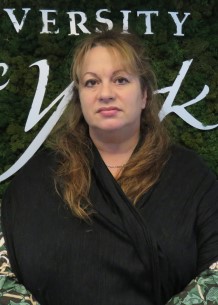
Dr Jane Neal-Smith serves as Reader in Management at the University of York's School for Business and Society, bringing over 22 years of expertise in management education. A Senior Fellow of the Higher Education Academy and Certified Management and Business Educator, she maintains active research output with recent publications through 2025 and regular office hours at York Science Park. Education: PhD in Industrial Psychology, University of Bradford (Thesis: Working lives of British women airline pilots) Research Focus: Her work critically examines gender dynamics in aviation history, notably as joint editor of 'Absent Aviators'. Current research explores creative pedagogy through heutagogy, action learning sets, and narrative/metaphor-based frameworks to enhance online learning engagement and reflexivity. She bridges organizational behavior theory with practical human factors applications in educational settings. Publication Trends: Recent articles (2023-2025) reveal three converging trajectories: 1) Gender exclusion analysis in aviation history using intersectional frameworks, 2) Innovative online pedagogy through storytelling and visual metaphors, and 3) Reflexivity development via action learning communities. Her work consistently connects feminist theory with practical management education. Scientific Recognition: Senior Fellow of the Higher Education Academy Certified Management and Business Educator Professional Activities: While specific grant details aren't provided, her 22-year career shows sustained development of management education frameworks. She actively contributes to pedagogical innovation through publications and likely curriculum development given her certification status. No formal advising relationships are documented, but her reflexive practice research suggests mentorship involvement. Academic Environment: Based in the Church Lane Building at York Science Park, her work appears integrated within the School for Business and Society's broader research ecosystem, though no dedicated labs or research teams are specified in available materials.