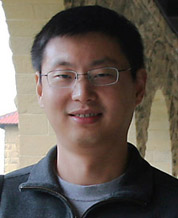
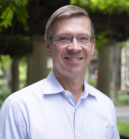
Jianghai Hu is a Professor of Electrical and Computer Engineering at Purdue University, affiliated with the Elmore Family School of Electrical and Computer Engineering within the College of Engineering. He holds a BE from Xi'an Jiaotong University (1994), MS and MA from the University of California, Berkeley (1999-2000), and a PhD in Electrical Engineering from UC Berkeley (2003). His research focuses on control systems, optimization theory, multi-agent systems, hybrid systems, and energy-efficient building management. Key areas include automatic controls, sensor networks, and signal processing. Research Interests: Hybrid systems and multi-agent coordination Optimal control and optimization Applications in energy-efficient buildings and autonomous systems Stochastic control and game theory Recent publications highlight contributions to zeroth-order learning in games, robust control for autonomous vehicles, and distributed optimization algorithms. His work bridges theoretical foundations with practical applications in robotics, energy systems, and networked control. Jianghai Hu advises numerous graduate students and collaborates on projects involving building control systems and distributed algorithms. His research has been supported through interdisciplinary initiatives at Purdue and industry partnerships.
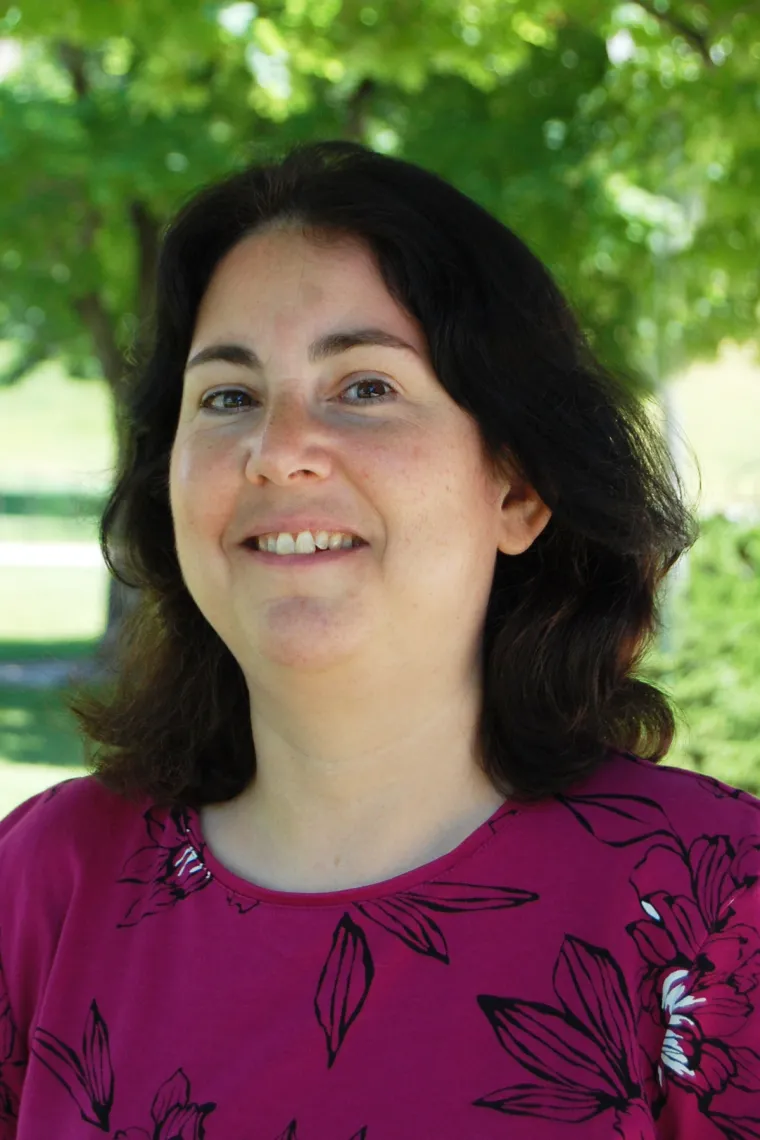
Dr. Binbin Xie is an Assistant Professor in the Department of Computer Science and Engineering at The University of Texas at Arlington (UTA). She holds a Ph.D. from the Manning College of Information and Computer Sciences at the University of Massachusetts Amherst, where she was a recipient of the prestigious Google PhD Fellowship in Mobile Computing. Her research focuses on wireless sensing, mobile health, cyber-physical systems, smart IoT, and wireless networking. Dr. Xie’s academic journey includes a tenure-track position at UTA since September 2024. She has received notable awards such as the Emerging Rockstar (IEEE Pervasive Computing, 2025), Rising STARs Award (UT System, 2024), and multiple scholarships including the Krithi Ramamritham Computer Science Scholarship (2023). Her work spans innovative applications in wireless sensing, leveraging LoRa, mmWave radar, and RFID technologies for real-world challenges like in-vehicle sensing and indoor localization. Her recent publications highlight advancements in LoRa sensing coexistence with communication, mmWave radar human sensing using secondary reflections, and combating interference in multi-target localization. She actively contributes to the academic community through service roles, including Technical Program Committee memberships for MobiSys 2025 and EWSN 2025, and as a reviewer for top-tier conferences like IMWUT/UbiComp and journals such as ACM Transactions on Sensor Networks. Dr. Xie’s teaching includes courses like CSE 4321 (Software Testing & Maintenance). Her research and educational efforts aim to bridge theoretical innovations with practical implementations in wireless and IoT systems.
Soumya Dutta is an Assistant Professor in the Department of Computer Science and Engineering at the Indian Institute of Technology Kanpur (IITK), where he leads the INSIGHT: Intelligent Scientific and Visual Computing of Big Data Research Group. He joined IIT Kanpur in October 2022 after working as a Scientist II at Los Alamos National Laboratory (LANL) from July 2019 to August 2022, and previously as a Postdoctoral Research Associate at LANL from June 2018 to July 2019. His educational background includes a Ph.D. and M.S. in Computer Science and Engineering from The Ohio State University (2011-2018), where he was part of the GRAVITY research group, and a B.Tech. in Electronics and Communication Engineering from West Bengal University of Technology, India (2005-2009). Research Interests: Dr. Dutta's research focuses on the intersection of machine learning, visual computing, big data, and high-performance computing. His primary research areas include Machine Learning for Visual Computing and Image Analysis, Big Data Visualization and Analytics, Data Science and HPC, Machine Learning for Scientific Computing, and Explainability and Interpretability of AI Models. His work addresses various big data characteristics including the 5 Vs: Volume, Velocity, Variety, Veracity, and Value. He develops techniques that make complex machine learning models more interpretable and explainable, enabling their effective adoption in real-life applications across scientific domains, social media, IoT, healthcare, and industry applications. Dr. Dutta's research group has secured multiple funded projects including: DAVi: An Intelligent Data Analytics and Visualization Framework (funded by ISRO), Intelligent Visual Computing of Extreme-scale Data for Accelerating Scientific Discovery (IIT Kanpur Initiation Grant), Enabling Interactive Big Data Analytics and Visualization at Exascale (SERB), Development of AI-Enabled National Portal for Efficient Search of Missing People (C3iHub), and Proactive and Generalized Deepfake Defense Mechanisms (C3iHub). Best Reviewer, Honorary Mention Award for IEEE Transactions on Visualization & Computer Graphics (TVCG), 2021 Best Paper Award at ISAV 2021, co-located with Supercomputing (SC) LAAP Award at Los Alamos National Laboratory, 2021 Best Paper Award at TopoInVis 2019 Best Paper Award at ISAV 2018, co-located with Supercomputing (SC) Best Poster Award in 12th Annual CSE Student Poster Exhibition, The Ohio State University, 2018 Best Poster Award in 11th Annual CSE Student Poster Exhibition, The Ohio State University, 2017 Best Paper Honorable Mention Award at IEEE Visualization Conference (IEEE VIS) 2016 Dr. Dutta actively mentors a large group of students including Ph.D., M.Tech., and B.Tech. students. His current Ph.D. students include Shanu Saklani, Sankhadeep Bhowmick, Ananya Chaturvedi, Arpita Santra, Anubhav Dixit (co-supervised), and Robin Shah. He has supervised numerous M.Tech. students with thesis topics ranging from uncertainty-aware neural networks to deepfake detection. Dr. Dutta currently teaches courses including CS360 - Introduction to Computer Graphics and CS661 - Big Data Visual Analytics. The INSIGHT research group collaborates internationally with researchers from Meta, Oak Ridge National Laboratory, and National Taiwan Normal University. The group's work focuses on building machine learning and data science-based solutions to analyze large-scale multifaceted data in a scalable way, enabling interactive and interpretable analytics of complex data from scientific simulations, social media, IoT, healthcare, and other application domains.
Olga Fink is a Tenure Track Assistant Professor at the École Polytechnique Fédérale de Lausanne (EPFL), affiliated with the Department of Intelligent Maintenance and Operations Systems (IMOS) within the School of Architecture, Civil and Environmental Engineering (ENAC). She also holds roles in PhD program committees for Civil and Environmental Engineering (EDCE) and Robotics, Control, and Intelligent Systems (EDRS). Her research focuses on machine learning for infrastructure monitoring, predictive maintenance, and physics-informed AI models. She teaches courses on machine learning, data science for infrastructure, and advanced deep learning topics. Fink advises multiple PhD students and is involved in interdisciplinary projects such as ThermoNeRF (multimodal 3D thermal modeling) and physics-informed neural networks for fault diagnostics. Her work bridges AI and engineering with applications in smart infrastructure, energy systems, and industrial IoT. Education: PhD in Engineering (inferred from role) Affiliations: IMOS Lab, ENAC-SGC, EPFL PhD Committees (EDCE, EDRS) Key Research Themes: Explainable AI, Digital Twins, Structural Health Monitoring, Domain Adaptation Her publications (2023–2025) emphasize robust AI for industrial systems, including fault detection in high-voltage equipment, multimodal data fusion, and physics-consistent models. She collaborates on EU and industry-funded projects, focusing on real-world applications like predictive maintenance and energy efficiency.
Ellen Riloff serves as Department Head and Professor in the Department of Computer Science at the University of Arizona, where she leads research at the intersection of natural language processing (NLP) and artificial intelligence. Her work bridges theoretical advancements with real-world applications in social computing, planetary science, and crisis response systems. Education: Ph.D. in Computer Science, University of Massachusetts at Amherst (1994) Research Focus: Dr. Riloff specializes in affective computing and information extraction , developing techniques to recognize emotion, social cues, and embodied expressions in text. Her methodologies frequently employ bootstrapping, stacked learning, and semantic lexicon induction. Recent projects address crisis informatics (e.g., social cue recognition in emergencies) and interdisciplinary applications like the Mars Target Encyclopedia for planetary science data extraction. Publication Trends: Analysis of her 15 most recent publications (2021–2025) reveals three dominant trajectories: (1) affective event modeling in social contexts with applications to crisis response; (2) domain-specific NLP for planetary science and food systems; and (3) advanced language model techniques including retrieval-augmented generation and multi-view prompting. Her work increasingly integrates deep learning with traditional linguistic features. Grants and Leadership: Dr. Riloff has directed multiple NSF-funded projects, including RI: Small: Recognizing Implicit Personal States in Natural Language (2016) and RI: Small: Acquiring Domain Knowledge from Text through Cooperative Bootstrapping (2010). These initiatives pioneered bootstrapping frameworks for affective event recognition and information extraction. She also co-organized the Workshop on Pattern-based Approaches to NLP (2023), highlighting her leadership in advancing hybrid NLP methodologies. Collaborative Infrastructure: She co-developed the Mars Target Encyclopedia—a large-scale information extraction system that processes planetary science literature to create structured databases of Mars surface targets. This project demonstrates her commitment to building reusable scientific infrastructure through NLP.
Toby Jia-Jun Li is an Assistant Professor in the Department of Computer Science and Engineering at the University of Notre Dame, where he leads the SaNDwich Lab. He also serves as the Director of the Human-Centered Responsible AI Lab in the Lucy Family Institute for Data & Society and is a Faculty Fellow at the Institute for Educational Initiatives (IEI). Previously, he was affiliated with Carnegie Mellon University's Human-Computer Interaction Institute (HCII) and GroupLens Research. Dr. Li's research spans the intersection of Human-Computer Interaction (HCI), End-User Software Engineering, Machine Learning (ML), and Natural Language Processing (NLP), with recent work focusing on addressing societal challenges in the future of work through human-AI collaborative approaches. His work has resulted in over 40 publications at premier venues including CHI, UIST, CSCW, ACL, and ICSE, with 8 papers winning Best Paper or Honorable Mention awards. His recent publications demonstrate a strong focus on human-AI collaboration across various domains, including code understanding, privacy, accessibility, and creative tools. The work shows a trajectory toward increasingly sophisticated integration of human-centered design with AI capabilities, particularly using large language models to enhance human productivity and address societal challenges. Google Research Scholar Award recipient Recipient of Yahoo! Fellowship ($100,000/year) Best Paper Award at UIST 2020 Best Paper Honorable Mention Award at CHI 2021 Best Paper Award at CSCW 2024 Best Paper Award at CHI 2025 Dr. Li actively mentors Ph.D. students and has established collaborations with Google, Microsoft Research, IBM Research, Adobe, Verizon, and J.P. Morgan. His research has been supported by NSF, Google Research Scholar Program, AnalytiXIN Initiative, Yahoo! InMind project, and J.P. Morgan. He is currently recruiting Ph.D. students and undergraduate researchers for his SaNDwich Lab, which focuses on developing interactive systems to empower individuals to create, configure, and extend AI-powered computing systems.
Jundong Li is an Assistant Professor at the University of Virginia with primary appointment in the Department of Electrical and Computer Engineering and secondary appointments in Computer Science and the School of Data Science. He is affiliated with the School of Engineering and Applied Science and conducts research at the intersection of machine learning, data mining, and artificial intelligence. Education: Ph.D. in Computer Science, Arizona State University, 2019 M.Sc. in Computer Science, University of Alberta, 2014 B.Eng. in Software Engineering, Zhejiang University, 2012 His research focuses on graph machine learning , trustworthy and fair AI , and large language models . He investigates how to make deep learning models more interpretable, robust, and equitable, especially in graph-structured data and NLP applications. His work combines causal inference, feature selection, and model explanation techniques to build reliable AI systems. His recent publications (2024–2022) reveal a strong trend toward large language models , with topics including in-context learning, knowledge editing, and collaborative reasoning. Simultaneously, he continues pioneering research on fairness and interpretability in graph neural networks , addressing structural bias, adversarial attacks, and node attribution. His work is highly interdisciplinary, spanning computer science, data science, and social impact. Scientific Awards: SIGKDD Rising Star Award (2024) PAKDD Best Paper Award (2024) NSF CAREER Award (2022) SIGKDD Best Research Paper Award (2022) JP Morgan Faculty Research Award (2021, 2022) Cisco Faculty Research Award (2021) Stanford/Elsevier Top 2% Scientist (2024) Jundong Li actively advises graduate students, as seen in his co-authored papers with researchers like Song Wang, Yushun Dong, and Binchi Zhang. His research is generously funded by the National Science Foundation (NSF) through multiple programs including CAREER, III, SaTC, SAI, and S&CC, as well as by the Department of Energy (DOE) , Office of Naval Research (ONR) , Jefferson Lab , and industry partners including JP Morgan, Cisco, Netflix, and Snap . He leads a dynamic research group focused on advancing the frontiers of graph learning and trustworthy AI, with projects on causal inference, model unlearning, and explainable systems. His lab contributes to both theoretical foundations and real-world applications in public health, transportation, and network security.
Witold J. Henisz serves as Vice Dean and Faculty Director of the Impact, Value, and Sustainable Business Initiative at The Wharton School, University of Pennsylvania, holding the Deloitte & Touche Professorship in Management. His research centers on political and social risk identification, ESG impact materiality, and corporate diplomacy frameworks that transform stakeholder relationships into strategic assets. His educational background includes a Ph.D. in Business and Public Policy from UC Berkeley's Haas School and an M.A. in International Relations from Johns Hopkins SAIS. Henisz has served as Departmental Editor at Journal of International Business Studies and Associate Editor at Strategic Management Journal , reflecting his scholarly influence. Research interests converge on geopolitical risk quantification, stakeholder engagement optimization, and sustainable business model innovation. His work demonstrates how political hazards materially impact firm valuation and how corporate diplomacy can mitigate conflict through strategic stakeholder alignment. Recent publications leverage massive media datasets (4+ billion articles) to model populism dynamics, indigenous land conflicts, and ESG-credit risk linkages. Award highlights include the Aspen Institute Ideas Worth Teaching Award (2020), Iron Prof recognition (2019), and Academy of International Business Fellowship. His geostrategy framework Geostrategy by Design (2024) provides executives with actionable methods for navigating geopolitical volatility. Aspen Institute Ideas Worth Teaching Award (2020) Iron Prof recognition (2019) Academy of International Business Fellow (2014-present) Multiple Wharton Excellence in Teaching Awards (2006-2021) Industry Studies Association Best Paper Award (2019) Henisz consults through PRIMA LLC for multinational firms (Rio Tinto, Shell), financial institutions (Eaton Vance, World Bank), and NGOs. His executive education programs train leaders in ESG integration and geopolitical risk management, while his KEROVKA crisis simulation develops real-time strategic response capabilities. Media frequently cites his expertise on ESG controversies, with 50+ major publications featuring his analysis since 2022 including Financial Times , Bloomberg , and Wall Street Journal .
Mani Golparvar Fard is a Professor at the University of Illinois at Urbana-Champaign, holding joint appointments in the Siebel School of Computing and Data Science and the Department of Civil and Environmental Engineering. He also contributes to the Technology Entrepreneur Center. His research focuses on integrating artificial intelligence, computer vision, and data analytics to advance construction management, infrastructure monitoring, and automation. Key areas include BIM integration, reality capture systems, and deep learning-based progress tracking. His work emphasizes automated construction progress monitoring through semantic segmentation, vision-language models, and UAV-based data collection. He has pioneered methods like Scan2BIM-NET for converting point clouds into BIM models and developed frameworks for worker safety analysis using machine learning. Awards: Walter L. Huber Civil Engineering Research Prize (2018) Daniel W. Halpin Award for Scholarship (2016) Advising & Grants: While no specific grant details are provided, his research is supported by collaborations with industry and government initiatives, such as the Japanese national bridge inspection project. He advises a team focused on AI-driven construction solutions and maintains active partnerships with engineering firms. Labs & Teams: Leads research groups in vision-based construction analytics, automated scheduling systems, and BIM integration. His work is disseminated through platforms like the VisualSiteDiary system and the InstaDam open-source platform for structural damage analysis.
Claudia R. Binder is Full Professor at EPFL's School of Architecture, Civil and Environmental Engineering, leading the Laboratory for Human-Environment Relations in Urban Systems (HERUS) since 2016. Previously, she held professorships at the University of Munich (2011-2016), University of Graz (2009-2011), and University of Zurich (2006-2009). She served as Dean of EPFL's ENAC School from 2020-2023 and holds advisory roles with Swiss federal institutions including the Mercator Foundation since 2024. Her academic foundation includes a Biochemistry degree and PhD in Environmental Sciences from ETH Zurich, followed by postdoctoral research at the University of Maryland. This interdisciplinary background underpins her research approach spanning natural and social sciences. Professor Binder's work centers on urban sustainability transitions, examining urban metabolism dynamics through systems science frameworks. She investigates energy-food-transport interdependencies in cities using transdisciplinary methods that integrate material flow analysis, spatial modeling, and socio-technical assessments. Her research particularly emphasizes regulatory mechanisms and transformation drivers in human-environment systems, with case studies across Swiss and global urban contexts. Recent publications reveal evolving focus from foundational urban metabolism studies toward actionable transition strategies. Her 2024-2025 work increasingly addresses social tipping dynamics, circular decarbonization, and spatially explicit waste management, demonstrating methodological innovation through geo-referenced material flow analysis and participatory backcasting frameworks. Key thematic clusters include energy innovation diffusion, plastic waste governance, and demand-side flexibility in residential systems. She actively mentors 7 current PhD candidates while supervising 11 graduates since 2018, with research spanning urban metabolism modeling, sustainability assessment, and transition governance. Her leadership extends to Swiss National Science Foundation committees and National Research Program 71 on energy consumption management. At EPFL, she directs the HERUS laboratory which develops the Sustainability Solution Space methodology for urban assessment. The lab operates at the intersection of data science, environmental engineering, and social theory, maintaining strong field connections in Switzerland, Indonesia, and Germany for empirical validation of transition models.
Associate Professor Mohsen Kalantari is a Geospatial Engineering academic at the University of New South Wales (UNSW) School of Civil and Environmental Engineering , with concurrent roles as co-founder of the startup Faramoon . His career spans roles at the University of Melbourne's Department of Infrastructure Engineering and Victorian government's land administration initiatives through DELWP. Education : PhD in Geomatics Engineering (2008, University of Melbourne), Master of GIS Engineering (2004), Bachelor of Surveying Engineering (2001) His research bridges geospatial engineering with construction automation , focusing on 3D cadastre , BIM-GIS integration , and smart cities . Recent publications show trends in underground land administration , digital twins , and LADM standard implementations . Scientific Awards : National educational recognition (2019), Victorian educational grants (2018), and prestigious fellowships (2012) As a supervisor , he guides PhD candidates in topics ranging from BIM for waste management to underground cadastral systems . His industry engagement includes partnerships with the United Nations , Open Geospatial Consortium , and Singapore Land Authority .
David L. Schwartz serves as the William G. and Virginia K. Karnes Research Professor of Law at Northwestern University's Pritzker School of Law, where he joined the faculty in 2015 and served as Associate Dean of Research & Intellectual Life from 2019-2022. His interdisciplinary work bridges legal scholarship, data science, and technology policy with emphasis on patent systems and judicial transparency. His educational foundation includes a BS from the University of Illinois at Urbana-Champaign and a JD cum laude from the University of Michigan Law School. Professor Schwartz specializes in empirical analysis of intellectual property systems , particularly patent litigation dynamics and court record accessibility. His research leverages computational methods to transform legal scholarship through projects like SCALES OKN, where he examines how technological interventions can democratize access to justice. This work situates him at the nexus of legal informatics , patent policy , and court system innovation , challenging traditional methodologies in legal academia. His publication trajectory reveals a decisive shift toward technology-driven legal transparency since 2018, with recent work focusing on large-scale court record analysis and open justice infrastructure. The 2024 Northwestern University Law Review article represents the culmination of his NSF-funded SCALES initiative, demonstrating how machine-readable litigation data can reshape legal scholarship and practice. As Co-Principal Investigator of the NSF-funded Systematic Content Analysis of Litigation EventS Open Knowledge Network (SCALES OKN), he leads a multidisciplinary consortium developing tools to convert opaque court records into structured, analyzable datasets. This $1.2M grant supports collaboration between legal scholars, computer scientists, and data engineers to build public infrastructure for judicial transparency. The SCALES OKN project operates as a cross-institutional research collective involving Northwestern faculty, data scientists from multiple universities, and partnerships with legal technology organizations. It maintains active development teams for natural language processing pipelines, litigation event databases, and public-facing analytical interfaces serving legal practitioners and researchers.
Geert Deconinck is a full professor at KU Leuven , leading the Electrical Energy Systems and Applications (ELECTA) research group within the Department of Electrical Engineering (ESAT). He also serves as scientific leader of the EnergyVille research center's algorithms domain, focusing on smart electrical networks and thermal systems. M.Sc. and Ph.D. from KU Leuven Head of ELECTA since 2012 (10 professors, 8 postdocs, 70+ PhDs) Over 8 million EUR research budget in last 5 years 44 completed PhDs and 10 current advisees IEEE Transactions editorial board member His research spans smart grid architectures , distributed control , and cyber-physical security , with recent focus on EV-grid integration , renewable energy democratization , and multi-carrier energy systems . Current projects include: Smart Charging - E-Mobility meets Renewable Energy Early Detection and Defense Systems for Smart Grids Open-source P2P energy sharing platforms Microgrid control strategies for PV-battery systems Awarded IET Fellow and IEEE Senior Member status, his work combines machine learning with power systems engineering through both theoretical modeling and experimental validation . He has contributed over 575 publications with 9800+ Google Scholar citations.
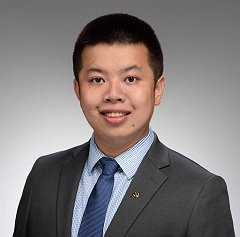
Tiancheng Zhao is a principal researcher at the Binjiang Institute of Zhejiang University and founder of the Om Artificial Intelligence Laboratory (Om AI Lab), dedicated to frontier open multimodal AGI research for building next-generation agents that transform work and life through advanced human-machine interaction. His academic credentials include: Ph.D. in Computer Science from Carnegie Mellon University (2016-2019) under Prof. Maxine Eskenazi, Prof. Louis-Philippe Morency, Prof. William W. Cohen, and Dr. Dilek Hakkani-Tur, with pioneering dissertation “Learning to Converse With Latent Actions” in end-to-end generative conversational models M.S. in Computer Science from Carnegie Mellon University (2014-2016) B.S. in Electrical Engineering from UCLA (2010-2014) with Summa Cum Laude, focusing on speech signal processing under Prof. Abeer Alwan Dr. Zhao’s research centers on multimodal foundation models and agents, tackling three core challenges: Multimodal Models for cross-modal representation learning in high-dimensional data, Learning to Learn for effective skill acquisition from diverse signals (supervised labels, rewards, meta-learning), and AI Agents for open-world understanding and complex decision-making. His work bridges computer vision, natural language processing, and real-world applications including healthcare analytics and remote sensing. Analysis of his 50+ publications reveals accelerating innovation in multimodal large language models (2024-2025), with emphasis on stable vision-language architectures (VLM-R1), agent orchestration frameworks, and domain-specific applications in geospatial analysis and healthcare. Key trends include solving long-tail distribution challenges in satellite imagery, developing human-like zooming capabilities for multimodal LLMs, and creating unified benchmarks for autonomous GUI testing. His scientific recognition includes: National Breakthrough Technology Award by Ministry of Science and Technology (2021) Microsoft Research Best & Brightest PhD (2018) BEST PAPER AWARD at SIGDIAL 2018 Best Paper Nomination at SIGDIAL 2016 Top 1 Outstanding Bachelor of Science Award at UCLA (2014) As Om AI Lab founder, Dr. Zhao leads research teams developing computational building blocks for human-AI collaboration. While specific student mentorship details aren’t public, his extensive publication record with junior co-authors indicates active research supervision. Current projects focus on practical system implementations for real-world multimodal agent deployment across diverse domains.
Dr. Xinwen Fu is a Professor in the Miner School of Computer & Information Sciences at the University of Massachusetts Lowell, where he also serves as Director of the iSAFER Center. He received his Ph.D. in Computer Engineering from Texas A&M University (2005), M.S. in Electrical Engineering from University of Science and Technology of China (1998), and B.S. in Electrical Engineering from Xi'an Jiaotong University (1995). Research Interests Dr. Fu specializes in Computer Security and Privacy , with particular focus on IoT Security , Mobile Security , Network Security , and Digital Forensics . His research has been published in all four top computer security conferences: IEEE Symposium on Security and Privacy (S&P/Oakland), ACM Conference on Computer and Communications Security (CCS), USENIX Security Symposium, and Network and Distributed System Security Symposium (NDSS), as well as prestigious journals like ACM/IEEE Transactions on Networking and IEEE Transactions on Dependable and Secure Computing. His work has gained significant media attention from CNN, Wired, Huffington Post, Forbes, Yahoo, MIT Technology Review, and PC Magazine, including multiple appearances on CNN Domestic and International. He has also served as TPC member for numerous prestigious conferences including ACM CCS, IEEE INFOCOM, and IEEE ICDCS. Scientific Awards Best paper award at IEEE International Conference on Industrial Internet (ICII) 2019 Best paper award, International Conference on Wireless Algorithms, Systems, and Applications (WASA), 2017 Teaching Excellence Award of Department of Computer Science, UMass Lowell, 2016 Best paper award, International Performance Computing and Communications Conference (IPCCC) 2016 Award of Excellence, GeekPwn 2016 Ethic Smart Life Hack Competition Erich Spengler Student Cyber Paper Award with students, The Colloquium for Information Security Education (CISSE), 2016 Spotlight Paper of the IEEE Transactions on Mobile Computing (TMC), February 2014 Best paper award, International Conference on Wireless Algorithms, Systems, and Applications (WASA), 2013 Best paper award, IEEE International Conference on Communications (ICC): Communications and Information Security Symposium, 2013 Teaching award, Department of Computer Science, University of Massachusetts Lowell, 2011