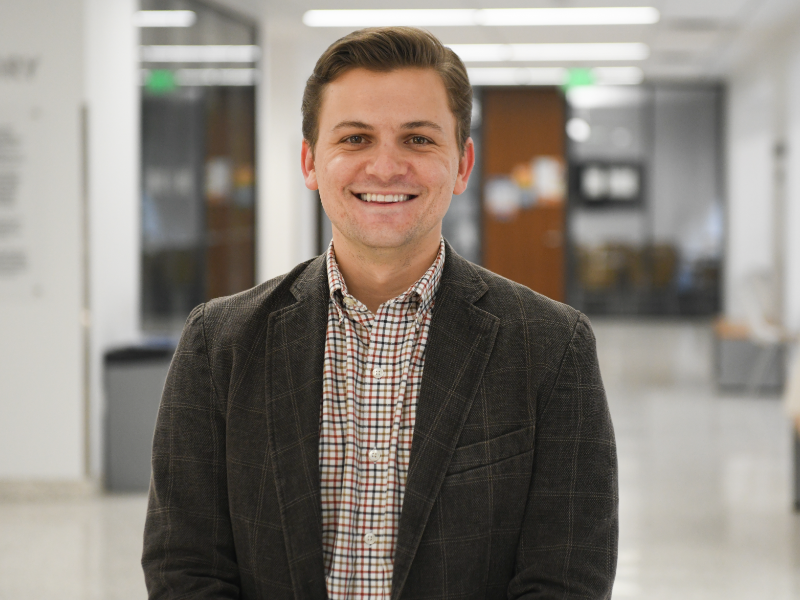
Andrew Fix is an Assistant Professor at the University of Texas at Austin in the Department of Civil, Architectural, and Environmental Engineering, with a courtesy appointment in Mechanical Engineering. He leads the Building Energy and Environments (BEE) faculty group, focusing on sustainable thermal systems and energy-efficient air dehumidification technologies. Ph.D., Mechanical Engineering, Purdue University (2023) B.S., Mechanical Engineering, University of Tulsa (2019) His research bridges HVAC innovation, membrane-based dehumidification, and atmospheric water harvesting. Recent projects include optimizing heat pump systems for cold climates, developing hollow fiber membrane technologies for industrial drying, and advancing active membrane energy exchangers for high-efficiency air conditioning. His work emphasizes thermodynamic principles to improve system performance and sustainability. Key trends in his publications highlight membrane technologies for dehumidification, energy-efficient HVAC design, and integration of thermal systems with renewable energy. Awards include the 2023 Dean’s Teaching Fellow at Purdue and fellowships from the Department of Energy IBUILD and Laura Winkelman-Davidson programs. Dean’s Teaching Fellow (2023) Department of Energy IBUILD Fellowship Laura Winkelman-Davidson Fellowship
Prof. Thomas H. Kolbe serves as Chair of Geoinformatics at the Technical University of Munich (TUM), where he leads research in spatial, temporal, and semantic modeling of urban environments. His work focuses on developing foundational frameworks for 3D/4D city models, digital twins, and smart city applications through international standardization efforts including CityGML and IndoorGML. His research spans virtual city modeling, urban system simulation, and GIS integration with emerging technologies. Current projects emphasize AI-driven urban scenario generation, semantic streetspace modeling, and IoT integration in digital twin ecosystems. Recent publications demonstrate strong interdisciplinary connections between computer vision, urban planning, and geospatial data science, with particular emphasis on practical implementations of 3D city models for sustainability challenges. Prof. Kolbe actively contributes to professional organizations including the Round Table GIS eV (as Chairman since 2013) and the Munich Data Science Institute (as core member since 2021). His leadership extends to the Leonhard Obermeyer Center for digital methods in the built environment and the Hans Eisenmann Forum for agricultural sciences. His work bridges theoretical geoinformatics with practical urban applications through numerous collaborative projects with municipal governments and industry partners.
PASCUAL ALVAREZ GOMEZ is a Professor at the University of Cádiz, affiliated with the Department of Industrial Engineering and Civil Engineering. His research focuses on Ground Engineering and Thermal Engineering, with a particular emphasis on geothermal heat pumps and thermal performance modeling. He is associated with the TEP221 Thermal Engineering research group and contributes to the PAIDI area of Production Technologies. Education: PhD in Industrial Engineering from the University of Cádiz (2014), with a thesis on "Vertical Ground Heat Exchanger Simulation Model for Geothermal Heat Pumps" Research: Specializes in hybrid thermal modeling, CFD analysis for evaporation rates, and machine learning applications in corrosion prediction His publications highlight advancements in geothermal systems, low-concentration photovoltaics, and biogas environment corrosion analysis. He employs both analytical and computational fluid dynamics (CFD) approaches for energy efficiency improvements.
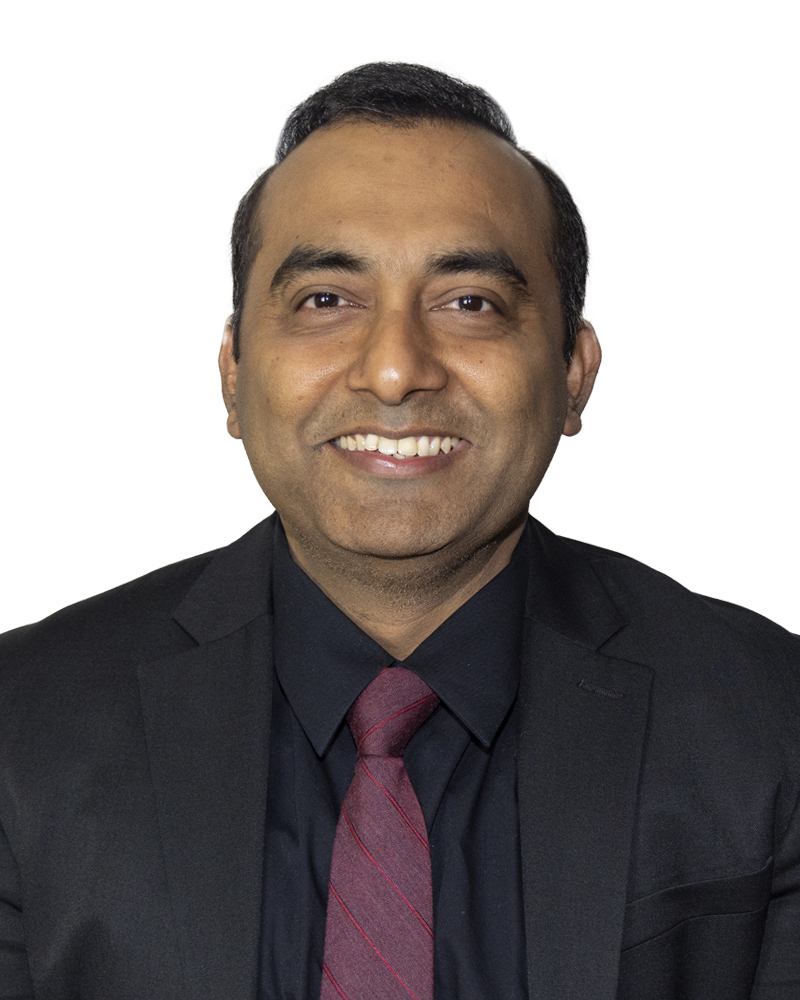
Priyanko Guchait is a tenured Full Professor and Program Director of the Doctorate in Global Hospitality Leadership (DGHL) at the Conrad N. Hilton College of Global Hospitality Leadership , University of Houston. His research focuses on organizational behavior, leadership, human resources, and service management in hospitality contexts, with over 75 peer-reviewed articles published. Education: B.E. in Mechanical Engineering, University of Pune, India M.S. in Hospitality Management, University of Missouri M.S. in Human Resources and Employment Relations Ph.D. in Hospitality Management, The Pennsylvania State University Research Interests include error management culture, psychological safety, service recovery performance, leader behavioral integrity, and AI’s impact on hospitality workers’ mental health. His work examines shame, forgiveness climate, and team dynamics in service environments. Article Trends show a focus on multi-level error management, human-robot collaboration in service recovery, diversity inclusion climates, and cross-cultural leadership studies. Recent papers explore AI ethics, pandemic response strategies, and emotional labor in hospitality roles. Awards & Honors Stephen Rushmore/HVS Research Excellence Award (2023, 2015) Donald Greenaway Excellence in Research, Teaching, and Service Award (2022) Best Paper Award, The Service Industries Journal (2023) ICHRIE Faculty Collegiality Award (2021) ICHRIE McCool Breakthrough Award (2021) Honored as 50-in-5 Scholar (2021) Provost’s Excellence Award (2015) Best Reviewer Awards (IJCHM 2016-2017) Committee & Editorial Roles include Associate Editor of IJCHM, Coordinating Editor of IJHM, and leadership positions at ICHRIE (President 2020-2021, Vice President 2019-2020). He has served on university curriculum, research, and Ph.D. selection committees.
Assoc. Prof. MMag. Dr. Alexandra Rausch is an Associate Professor at the Department of Controlling and Strategic Management , Institute of Management at Alpen-Adria-Universität Klagenfurt . Her research focuses on corporate decision-making, budgeting, controlling, and economics, with particular emphasis on agent-based modeling of organizational dynamics and team coordination. University: Alpen-Adria-Universität Klagenfurt Affiliation: Institute of Management Department: Department of Controlling and Strategic Management Rausch's research explores: Organizational behavior and individual-group interactions Coordination mechanisms in dynamic teams Strategic management and adaptive systems Controlling frameworks for corporate sustainability Agent-based modeling of distributed decision-making Recent publications demonstrate interdisciplinary work spanning both management science (team coordination, strategy-making) and pharmacological chemistry (indazole derivatives for autoimmune therapies). 2022-2025 work highlights coordination benefits in virtual teams, dynamic group adaptation, and pharmaceutical compound development. She teaches courses in controlling and strategic management, with consultation hours available by appointment via email at Alexandra.Rausch@aau.at . Contact details: Phone +43 463 2700 4032 | Office S.0.10 Main Building, South Wing West, Level 0.
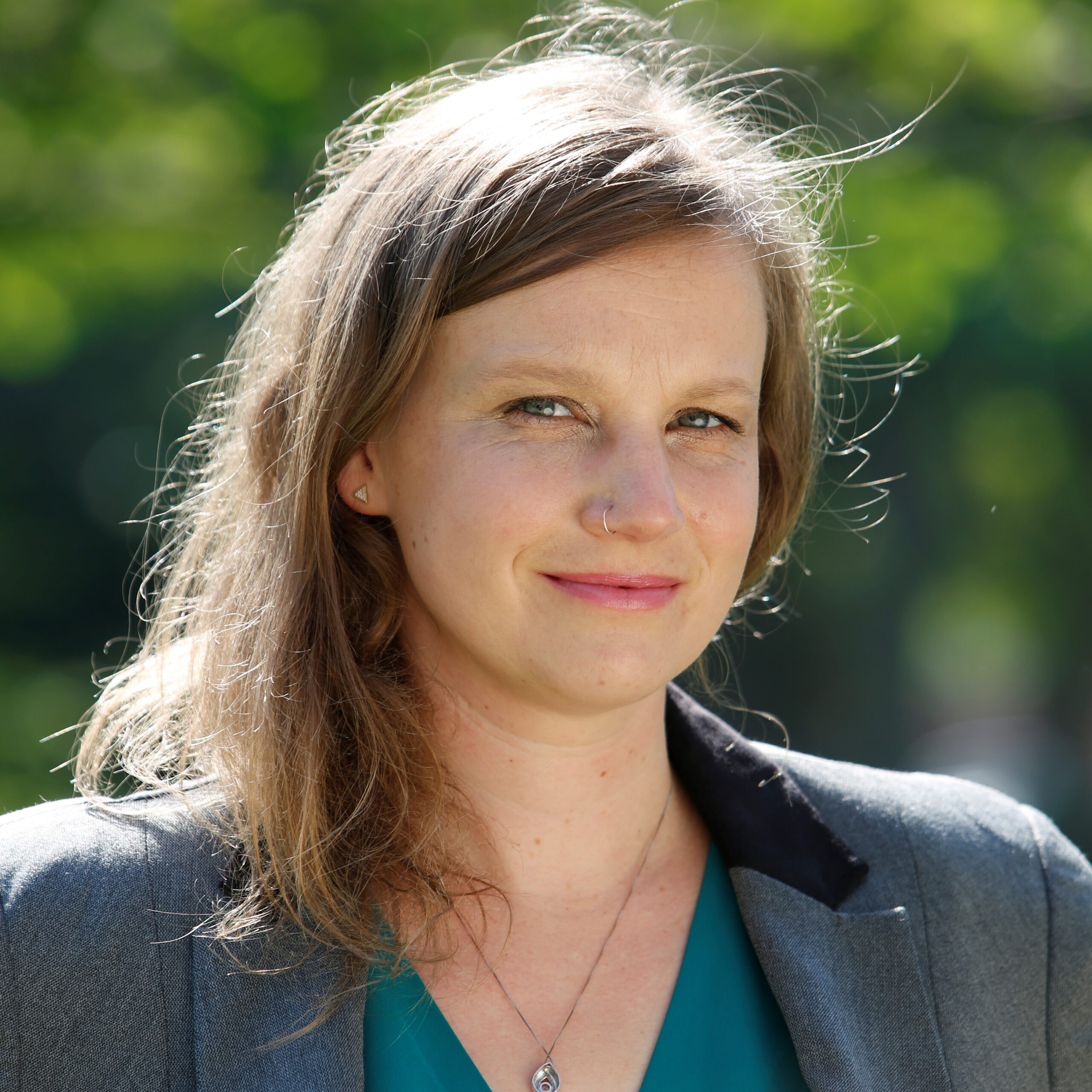
Jennifer Drake is a Professor and Tier II Canada Research Chair in the Department of Civil and Environmental Engineering at Carleton University, leading the Drake Stormwater Research Group. Her work focuses on sustainable stormwater solutions for Canadian urban environments, with expertise in low impact development and green infrastructure systems. Dr. Drake's educational background includes: B.Eng & Scty from McMaster University M.A.Sc. from the University of Guelph Ph.D. from the University of Guelph Her research centers on stormwater management , urban flooding mitigation , and water quality improvement through innovative technologies. She investigates diverse systems including bioretention cells, permeable pavements, and green roofs, emphasizing sustainability and interdisciplinary design for Canada's unique climate challenges. Recent publications (2020-2024) reveal strong trends toward practical field applications and climate resilience. Key themes include microplastic removal in bioretention systems, biochar-enhanced green infrastructure, winter performance of permeable pavements, and standardized reporting methodologies for long-term system evaluation. Scientific recognition includes: Tier II Canada Research Chair in Stormwater Management Dr. Drake's research program involves extensive field monitoring across Ontario communities, with collaborations spanning municipal governments and industry partners. Her group actively tests emerging technologies like blue-green roofs and regenerative street sweepers while addressing real-world challenges such as road salt pollution and urban flooding exacerbated by climate change. The Drake Stormwater Research Group operates the Sponge City Lab, conducting hands-on experiments with undergraduate and graduate students on green roof rehabilitation, bioretention performance monitoring, and permeable pavement maintenance. Current projects focus on building climate-resilient urban water infrastructure through integrated technological and ecological approaches.
Jay Barney is the Presidential Professor of Strategic Management and Pierre Lassonde Chair of Social Entrepreneurship in the Department of Entrepreneurship & Strategy at the University of Utah's David Eccles School of Business. Previously holding the Chase Chair for Excellence in Corporate Strategy at Ohio State University, he is a foundational scholar in strategic management renowned for developing the resource-based view of the firm. Education: Doctor of Philosophy, Yale University Master of Arts, Yale University Bachelor of Science, Brigham Young University Barney's research revolutionized strategic management through his seminal work on how costly-to-copy firm resources create sustained competitive advantage, establishing the VRIN (Valuable, Rare, Inimitable, Non-substitutable) framework. His scholarship bridges strategic management and entrepreneurship, examining opportunity formation processes, social entrepreneurship for poverty alleviation, and the philosophical foundations of entrepreneurial research. Current work increasingly focuses on integrating social impact with strategic advantage, particularly through industrialization solutions to poverty and stakeholder engagement under uncertainty. Analysis of his 2012-2016 publications reveals three dominant research streams: (1) theoretical extensions of resource-based theory into human capital, IT capabilities, and multinational contexts; (2) philosophical and methodological foundations of entrepreneurship research; and (3) social entrepreneurship applications addressing poverty and public interest. These works consistently appear in top-tier journals including Strategic Management Journal and Academy of Management Review, demonstrating rigorous theoretical development coupled with practical implications for organizational strategy. Scientific Awards: SMS Fellow Fellow of the Academy of Management Honorary Doctorate from University of Lund Honorary Doctorate from Copenhagen Business School Honorary Doctorate from Universidad Pontificia Comillas As a dedicated educator, Barney teaches doctoral seminars and strategy courses while mentoring PhD students in strategic management and entrepreneurship. His professional impact extends through executive training programs across North America and Europe, and strategic consulting engagements focused on organizational transformation. He has significantly shaped the field through editorial leadership as associate editor of Journal of Management, senior editor of Organization Science, and co-editor of Strategic Entrepreneurship Journal, while serving in officer roles for both the Strategic Management Society and Academy of Management's Business Policy and Strategy Division. Barney's research activities are closely integrated with the Lassonde Entrepreneur Institute at the University of Utah, where his social entrepreneurship chair supports initiatives connecting strategic management principles with poverty alleviation efforts and opportunity creation in resource-constrained environments.
Steven Semken is a President's Professor of Geology and Education in the School of Earth and Space Exploration at Arizona State University. He holds additional affiliations as an Affiliated Faculty member with the Humanities for the Environment Global Network, the Global Drylands Center, the Osher Lifelong Learning Institute, the Global Futures Scientists and Scholars program, and the Division of Teacher Preparation at the Mary Lou Fulton College for Teaching and Learning Innovation. Dr. Semken earned his educational credentials from prestigious institutions: Certificate in Diné (Navajo) Educational Philosophy, Diné College, 1991 Ph.D., Materials Science (Ceramics), Massachusetts Institute of Technology, 1989 M.S., Geochemistry, University of California, Los Angeles, 1984 S.B., Earth and Planetary Science, Massachusetts Institute of Technology, 1980 As an ethnogeologist and geoscience-education researcher , Dr. Semken's work spans multiple interconnected domains that bridge scientific inquiry with cultural understanding. His primary research focuses on place-based and culturally responsive geoscience teaching methods, which he has developed through extensive fieldwork in geologically and culturally diverse regions of southwestern North America and Latin America. His research specifically investigates how sense of place influences geoscience learning, particularly among Indigenous and Latina/o communities, and how teaching approaches can be modified to honor cultural connections to land. This work extends to studying geological heritage and developing virtual field geology education experiences that maintain the pedagogical value of traditional fieldwork while increasing accessibility. His scholarship also encompasses the geological evolution of southwestern North America , which informs both his research and teaching practices. Analysis of Dr. Semken's recent publications reveals several key trends in his scholarly work. His research increasingly focuses on the integration of virtual and immersive technologies in geoscience education, particularly examining how virtual field experiences compare with traditional in-person fieldwork. There is also a strong emphasis on culturally responsive pedagogy , with numerous studies exploring how Indigenous knowledge systems can inform and enhance geoscience teaching. His work consistently bridges cognitive and affective domains of learning, recognizing that emotional connections to place are as important as intellectual understanding in geoscience education. Additionally, his scholarship demonstrates growing attention to issues of accessibility and inclusion in geoscience field education, developing methods to make geological field experiences available to students with diverse abilities. Dr. Semken's scientific achievements have been recognized with numerous prestigious awards: Fellow of the Geological Society of America Past-President and former Distinguished Speaker of the National Association of Geoscience Teachers ASU President's Professor (2025) 2014-2015 Zebulon Pearce Distinguished Teaching Award in Natural Sciences Highest awards for science teaching at Diné College in 1990, 1991, 1992, and 1995 Goodwin Medal (highest award for graduate teaching assistants at MIT) in 1985 Winner of the 2020 JGE Outstanding Paper Award from the National Association of Geoscience Teachers Winner of the 2015 Best Geologic Guidebook Award from the Geoscience Information Society Dr. Semken has been deeply involved in mentoring graduate students and early-career educators through numerous professional development workshops and research collaborations. He has co-organized and led over 20 educator professional-development workshops since 2009, focusing on place-based teaching, cultural context in geoscience education, and virtual field experiences. His grant-funded work includes collaborations with NASA, the American Geosciences Institute, and the EarthScope National Office, particularly supporting teacher leadership academies and workshops for Native American science educators. As a Principal Investigator and Co-PI on multiple NSF-funded projects, he has secured significant resources to advance research on the affective domain in geoscience education, place-based learning methodologies, and culturally responsive teaching approaches. Dr. Semken's research activities are supported by multiple collaborative teams and initiatives. He is associated with the Julie Ann Wrigley Global Futures Laboratory and is a Community Member of the Science Education Resource Center (SERC). His work on the "Trail of Time" at Grand Canyon National Park represents a significant public-facing educational initiative that combines geological time education with place-based interpretation. He has also developed the "Regional Geology of the Southwest" course as a living laboratory for place-based education research. His current research group includes graduate students working on projects related to virtual field experiences, ethnogeological knowledge systems, and cross-cultural science education. Through his leadership in the Earth Educators' Rendezvous and other professional networks, he has helped establish communities of practice focused on innovative geoscience teaching methods.
Professor Oliver Wild is based at the Lancaster Environment Centre , Lancaster University , where he serves as Programme Director for Environmental Science and Earth and Environmental Science degree schemes. Previously, he was Associate Director for Research (2017-2023) and Undergraduate Admissions Tutor for Environmental Science degrees. His research focuses on atmospheric composition and chemistry , particularly modeling intercontinental transport of ozone and its precursors , indirect climate impacts of short-lived gases (NOx, CO), and Earth System interactions . He contributes to international policy through the UN-ECE HTAP task force and has participated in IPCC climate assessments (2001, 2007, 2013). Current projects include HYDRA (hydrogen economy climate impacts), COP-AQ (net zero policy effects on air quality), and ACITES (atmospheric chemistry in Earth systems). His work spans global to urban scales , with collaborations across US, Japan, China , and involvement in model intercomparison projects (ACCENT, HTAP, CCMI). Scientific Awards EGU Outstanding Reviewer Award He teaches undergraduate courses on atmosphere, weather, and climate, and supervises PhD studentships supported by ExaGeO, E5 DTP , and Edinburgh .
Timothy Fogarty is the Andrew D. Braden Professor of Accountancy in the Accountancy Department at Case Western Reserve University's Weatherhead School of Management. Appointed in 1989, he has established himself as one of the most prolific scholars in accounting worldwide with over 200 peer-reviewed publications. He currently serves as editor of Accounting and the Public Interest and associate editor of Accounting, Auditing and Accountability Journal . Fogarty has held significant leadership roles including senior associate dean and department chair in accountancy, and currently serves as vice president of the AAA Education Division. Education: Doctor of Philosophy, The Pennsylvania State University (1989) Master of Arts in Formal Organizations, Occupations, University of North Carolina at Greensboro (1984) Master of Arts in Microeconomics, Regional Taxation, University of North Carolina at Greensboro (1982) Master of Business Administration, State University of New York at Buffalo (1976) Juris Doctorate, State University of New York at Buffalo (1976) Bachelor of Arts in Sociology, State University of New York at Buffalo (1973) Fogarty's research spans three primary domains: accounting regulation, organizations that influence accountants' work, and accounting education. His work often applies institutional theory to examine professional socialization, regulatory environments, and educational outcomes. Recent publications reveal a growing focus on tax enforcement issues, particularly IRS operations and mission creep within criminal investigation divisions, alongside continued exploration of accounting education methodologies and outcomes. His interdisciplinary approach bridges accounting with sociology, law, and organizational theory. Analysis of his recent publications shows a consistent pattern of scholarly contribution across multiple dimensions of accounting. While maintaining his foundational work in accounting regulation and professional organizations, Fogarty has increasingly examined the practical applications of accounting education, tax enforcement challenges, and the relationship between research productivity and teaching effectiveness. His qualitative research on IRS operations represents a significant contemporary contribution to understanding tax administration challenges. Awards and Honors: Hall of Fame (2018) American Accounting Association President's Award (2018) Ohio Region of the AAA Best Accounting Paper (2014) Numerous AAA Best Paper Awards Fogarty has been deeply involved in academic service, directing the American Accounting Association Doctoral Consortium (2007-2008) and serving on the Common Reading Committee (2008-2010). His teaching portfolio includes Income Tax: Concepts, Skills, Planning; Legal Environment for Managers; and Accounting, Finance, and Engineering Economics. He maintains strong connections with the accounting profession through his editorial roles and conference participation, regularly serving as panelist, discussant, and moderator at AAA meetings. Prior to academia, Fogarty worked as an attorney, accountant, insurance consultant, and economist, bringing practical experience to his scholarly work.
Rebecca Cheung serves as Associate Adjunct Professor and Assistant Dean of Leadership Development programs at UC Berkeley's Berkeley School of Education, directing the Principal Leadership Institute and LEAD EdD. As Principal Investigator for the California Department of Education-funded 21st Century School Leadership Academy (21CSLA), she leads statewide efforts to develop equitable learning environments through educational leadership. Her educational background includes an EdD in Educational Leadership from UC Berkeley (2008) and an MA in Educational Leadership from Mills College. Dr. Cheung's research centers on leadership preparation for equity and social justice, with emphasis on systems that nurture educator diversity. Her work explores: Leadership development frameworks for marginalized communities Policy mechanisms for increasing educator diversity Equity-focused practices in urban schooling contexts Intersection of data analysis and social justice leadership Her 2018-2022 publications reveal consistent focus on leaders of color, mentorship systems, and innovative assessment models for school leadership preparation. Key trends include cross-institutional collaboration methodologies and culturally responsive leadership frameworks. Scientific recognition includes: Emerging Leader by Phi Delta Kappan (2013) As PI for the 21CSLA State Center—a $15M+ initiative—the grant supports California's educational leaders across seven regional academies. Her advisory roles with California state education entities and EdPrepLab demonstrate significant policy influence. While specific doctoral advisees aren't listed, her LEAD EdD program leadership implies extensive mentorship of education professionals. She directs the 21CSLA consortium involving UCLA School of Education, California Subject Matter Projects, and regional academies, while leading Berkeley's Principal Leadership Institute that trains over 200 administrators annually.
Prof. Michele Germani is a Full Professor at the Polytechnic University of Marche, Department of Industrial Engineering and Mathematical Sciences. His research focuses on ergonomics, sustainability, and human-centered design, with particular emphasis on industrial automation, wearable technologies, and circular economy principles. He leads projects on ergonomic risk assessment, environmental impact modeling, and smart manufacturing systems. Academic Background: Holds a position in the Faculty of Engineering, contributing to both teaching and research. His work integrates machine learning, sensor-based systems, and virtual reality to address challenges in manufacturing, healthcare, and sustainable design. Research Interests: Prof. Germani explores topics such as design for disassembly, eco-design tools, and the application of advanced technologies (e.g., exoskeletons, cobots) to enhance workplace safety and efficiency. His studies often bridge engineering and environmental science, aiming to reduce carbon footprints through innovative design methodologies. Key Projects: Development of decision support systems for fall risk detection, sensor-based ergonomic evaluation tools, and frameworks for circular economy implementation. He also investigates the impact of Industry 4.0 technologies on workforce dynamics and operator training via mixed reality simulations. Grants & Collaborations: Engaged in interdisciplinary collaborations focusing on sustainable manufacturing, healthcare technology, and smart systems. His research has led to tools like Durabot for durability analysis and Greenbuild for green building design. Labs & Teams: Oversees labs developing eco-design strategies, human-robot collaboration systems, and ergonomic assessment protocols, with a focus on real-world industrial applications.
Prof. MARIA ROSARIA MARCONE is a Full Professor at the Department of Management, Polytechnic University of Marche. Her research focuses on Business Economics and Management, with emphasis on supply chain resilience, innovation management, sustainability, and digital transformation in manufacturing and agritech sectors. She explores topics such as knowledge management, international SME strategies, and the role of technology in reshaping industry dynamics. Her work frequently addresses global challenges like green transformation and digital platforms' impact on creativity. Contact: mrmarcone@univpm.it or m.r.marcone@univpm.it . Research Interests: Supply Chain Management & Resilience Sustainable Business Models Innovation Ecosystems Knowledge Transfer Mechanisms Agritech & Manufacturing Digitization SME Internationalization Strategies Recent Trends in Publications: Recent work highlights the interplay between digital technologies and sustainability, with studies on green transformation in China's real estate, innovative supply chain ecosystems, and the role of third-party actors in business relationships. She also investigates how digital platforms enhance remote worker creativity through knowledge sharing. Labs/Teams: Active in interdisciplinary research groups focusing on supply chain innovation and sustainability, leveraging her university's strategic location in Marche's manufacturing districts.
Ewa Kępa is a Lecturer at the Faculty of Cultural Studies, University of Białystok, specializing in gender studies, autoethnography, and contemporary cultural identity. She teaches aesthetics, cultural theory, visual anthropology, and interdisciplinary methodologies, including English-language workshops. She collaborates internationally with universities in Spain and Italy. Her research examines feminine identity construction through craft practices (knitting, pottery), DIY culture, and autobiographical narratives. Work explores themes of cultural resistance, material heritage, and gendered labor in Polish contexts. She publishes on folk traditions, craftivism, and post-communist cultural memory. Key domains include textile subcultures, domestic ritual objects, and ethnographic approaches to everyday life. She integrates feminist frameworks with visual and material culture analysis. Administrative roles include coordinating Erasmus+ programs and serving on editorial boards for gender studies journals. Office location: Faculty of Cultural Studies building.
Prof. Dr. Göksel N. Demirer is a Professor at the Department of Environmental Engineering, Middle East Technical University (METU), Ankara, Turkey. His academic career spans over two decades, holding roles from Lecturer to Chairperson of the Department (2006-2012). He specializes in Anaerobic Biotechnology, Wastewater Engineering, and Sustainable Production systems. Education: Ph.D. in Environmental Engineering, Vanderbilt University (1996) M.Sc. and B.Sc. in Environmental Engineering, METU (1991, 1989) Research Interests: Focuses on anaerobic digestion of organic wastes, bioenergy generation, cleaner production, nutrient recovery (struvite precipitation), and industrial symbiosis. His work bridges environmental biotechnology with sustainable industrial practices, emphasizing waste-to-resource转化 and pollution prevention. Awards & Recognition: Recipient of METU's Academic Performance Award (2001-2012) Mustafa Parlar Educator of the Year Award (2000-2001, 2005-2006) Australian Endeavour Research Fellowship (2007) Professional Roles: President of Water Environment Association of Turkey (2001-2003) Editorial Board Member of Journal of Cleaner Production and International Journal of Environmental Sciences Lead over 25 research projects as PI, including EU-funded collaborations on nutrient recovery and bioenergy Advising & Capacity Building: Supervised 26 Ph.D./M.Sc. theses, developed METU's Cleaner Production course, and conducted nationwide training programs for municipalities and industries. Labs & Collaborations: Active in anaerobic digestion and bioenergy research through METU's Environmental Engineering labs. Collaborates with institutions like RMIT University (Australia), Trier University (Germany), and Villanova University (USA).