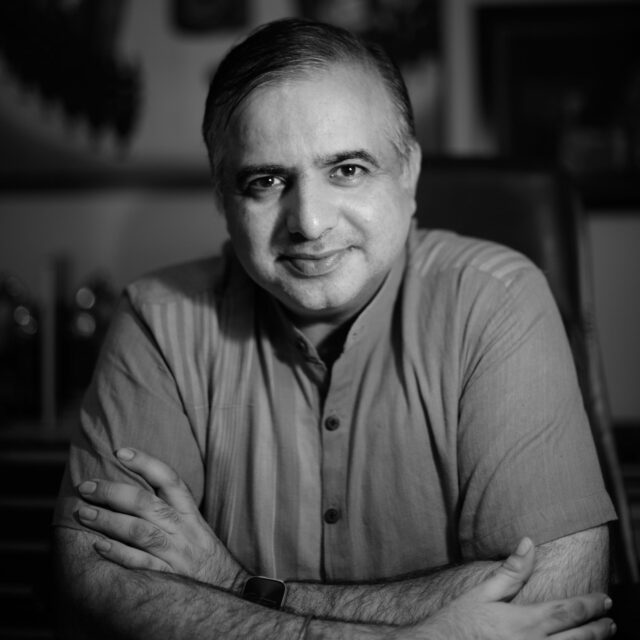
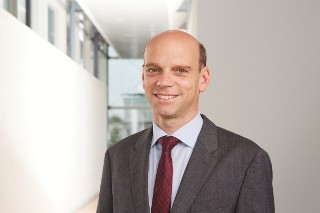
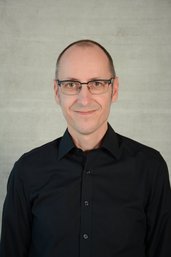
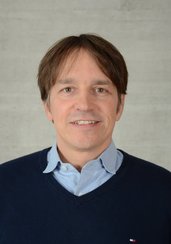
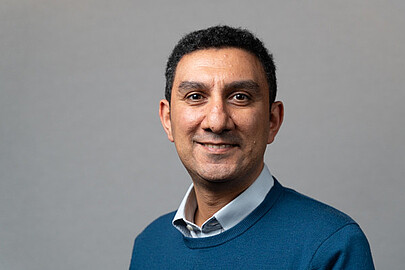
Prof. Gaurav Raheja is a Professor at the Department of Architecture & Planning, IIT Roorkee, and Co-coordinator of the Design Innovation Centre. He holds joint faculty positions at the Centre for Transportation Systems and is Professor-in-charge of Inclusion and Accessibility Services. His academic journey includes a PhD (2008) and M.Arch (2002) from IIT Roorkee, and a B.Arch from PTU Jalandhar (2000). His research focuses on universal design, inclusive mobility, urban sustainability, and accessibility for marginalized groups such as persons with disabilities, children, and the elderly. He leads the Laboratory of Inclusive Design (LID) and advises India’s government on accessibility policies. Notable awards include the Mphasis Universal Design Award (2010) and DAAD Research Ambassadorship (2018–2022). He has authored over 50 publications, including books on universal design and accessibility. His recent work explores children’s independent mobility in urban areas, inclusive urban futures, and accessibility in pilgrimage towns. He collaborates with global institutions like TU Berlin and TU Dresden through DAAD-funded programs. His teaching spans courses on universal design, architectural theory, and sustainable urban planning.
Dr. Sven Mackenbach serves as a Postdoctoral Researcher and Senior Engineer at RWTH Aachen University's Institute of Construction Management, Digital Engineering and Robotics in Construction (ICoM) since January 2023. Holding a doctorate in circular construction from the same institution, he leads the development of the "Circular Construction" research area, oversees multidisciplinary projects, and teaches Sustainable Construction Management to engineering students. His academic credentials include: PhD in Circular Construction, RWTH Aachen University (2023) Mackenbach's research integrates circular economy principles with digital construction technologies, focusing on strategic management frameworks for sustainable building practices. His expertise spans modular construction methods, BIM-based sustainability assessment, and digital twinning applications for infrastructure management. He bridges theoretical research with practical implementation through sustainability consulting for construction stakeholders, addressing real-world challenges in resource efficiency and regulatory compliance. His publication portfolio reveals a decisive shift toward data-driven circular construction solutions, with increasing emphasis on BIM-ontology integration for deconstruction planning, public participation systems, and sewer infrastructure management. Recent works demonstrate sophisticated methodological approaches to quantify ecological, economic, and social sustainability metrics without specialized expertise. As a scientific supervisor, Mackenbach mentors research assistants in project execution while contributing to curriculum development through his specialized course instruction. His leadership in research project coordination indicates substantial grant management experience, though specific funding sources aren't detailed in available materials. Within ICoM's collaborative environment, he contributes to cross-disciplinary teams advancing digital engineering and robotics applications in construction, particularly through the KaSyTwin sewer management project and BIPV facade digitalization initiatives.
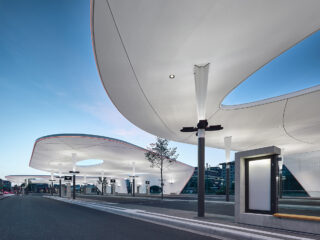
Prof. Dr.-Ing. Stephan Engelsmann is Professor of Structural Design and Structural Mechanics in the Department of Architecture at the State Academy of Fine Arts Stuttgart since 2002 and Deputy Chairman of the Architecture Study Commission. He also serves as President of the Baden-Württemberg Chamber of Engineers since 2014 and co-founded Engelsmann Peters GmbH Consulting Engineers in 2006. His career uniquely bridges academic excellence and professional engineering practice across multiple disciplines. His educational journey includes: Civil Engineering degree from Technical University of Munich (Dipl.-Ing., 1991) Research assistant at University of Stuttgart (1993-1998), earning Dr.-Ing. with dissertation on 'Integral concrete bridges' Architecture studies at University of Bath, UK (1998-1999), completing Master of Arts in Architectural Design with dissertation 'Rethinking the urban bridge as public space' Prof. Engelsmann's research focuses on the creative intersection of structural engineering and architectural design, where he emphasizes that 'constructive design is a controlled interaction between reason and emotion.' His work spans structural theory, innovative construction methods, and the integration of artistic expression with technical precision. He specializes in lightweight structures, bridge design, and the use of advanced materials including plastics, glass, and concrete, with particular emphasis on sustainable building practices and resource efficiency. His recent publications reveal a strong focus on innovative structural solutions for public infrastructure, particularly gridshell structures for shopping centers, elegant bridge designs, and sustainable construction methods. His work consistently explores the potential of unconventional materials and construction techniques, demonstrating how aesthetic considerations can be seamlessly integrated with structural efficiency in projects ranging from bus stations to cultural buildings. His numerous awards reflect excellence across engineering and architectural design disciplines: Multiple Hugo Häring Auszeichnungen (2020) for library and military facility projects Staatspreis Baukultur Baden-Württemberg (2020, 2016) German Design Gold Winner (2018) Preis des Deutschen Ingenieurbaus (2016) Iconic Design Award (2016) Red Dot Award (2015) Elias-Holl-Preis (1986) Throughout his career, Prof. Engelsmann has guided numerous student projects that bridge theory and practice, from the AKA seesaw (2011) to the UC°A Mobile climate adaptation project (2023). His teaching methodology emphasizes hands-on learning, with students developing and constructing innovative structures using materials ranging from traditional wood to advanced plastics. He has secured significant funding from organizations including the Baden-Württemberg Foundation to support research in sustainable construction and climate-adaptive architecture. Prof. Engelsmann leads the 'Class for Structural Design and Structural Engineering' at the State Academy of Fine Arts Stuttgart, where he and his team explore the boundaries between architecture and engineering. His consulting firm, Engelsmann Peters GmbH, works on sophisticated structural projects worldwide. Current research focuses include pneumatic structures for sun protection systems, experimental clay construction, and innovative approaches to urban climate adaptation through structural design, continuing his decades-long commitment to merging artistic expression with engineering precision.
Prof. Achim Menges is a leading academic and researcher in architecture and computational design at the University of Stuttgart. As Director of the Institute for Computational Design and Construction (ICD), he focuses on interdisciplinary research into sustainable, digitally planned, and robotically manufactured building systems. He is renowned for pioneering projects like the livMatS Pavilion, a biomimetic structure made of robotically wound flax fibers, and for leading the IntCDC Excellence Cluster, Germany's only architecture-focused research consortium. His work integrates computational methods, material innovation, and robotic fabrication to advance resource-efficient and future-proof architectural practices. Research Interests: Menges explores biomimetic design, robotic fabrication, sustainable timber engineering, and circular construction systems. His projects often involve cross-disciplinary collaboration, such as with biologists from the University of Freiburg for the livMatS Pavilion. His methodologies emphasize open-ended experimentation and foundational insights to transform architectural practice. Awards: 2023 Gottfried Wilhelm Leibniz Prize (Germany’s top research honor) Labs/Teams: Institute for Computational Design and Construction (ICD), IntCDC Excellence Cluster Grants/Projects: Leibniz Prize funding ($2.5M), livMatS Pavilion, HYGROSHELL, Terra Incognita His publications span robotic construction workflows, bio-inspired materials, and collaborative human-robot systems, reflecting a commitment to bridging computational design, engineering, and fabrication for scalable, sustainable outcomes.
Oliver A. Bucklin is a Researcher and doctoral candidate at the Institute for Computational Design and Construction (ICD) at the University of Stuttgart. His work focuses on sustainable building practices, particularly the development of energy-efficient solid timber construction systems using computational design and advanced fabrication techniques. Master of Architecture (M.Arch) – Harvard Graduate School of Design Bachelor of Fine Arts in Ceramics – University of Washington His research explores the integration of thermodynamic principles, robotics, and computational models to optimize timber building envelopes. Additional interests include embedded electronics, sensing networks, and kinematic control algorithms. He contributes to teaching in computational design and robotic fabrication within the ITECH Master’s Program at the University of Stuttgart. Oliver’s projects include the IBA Timber Prototype House and the ITECH Research Demonstrator , emphasizing material efficiency and recyclability. He is part of the Performative Wood research group at ICD, advancing innovations in solid timber systems.
Roland Reitberger is a Research Fellow at the Chair of Energy Efficient and Sustainable Design and Building at the Technical University of Munich . His work focuses on Life Cycle Assessment , thermal-dynamic building simulation , and parametric methods for analyzing the built environment. He investigates interactions in urban systems and synergy effects in sustainable construction. Research interests include climate-resilient urban planning, integration of green infrastructure with building systems, and data-driven optimization of building energy performance. His recent publications demonstrate expertise in multi-objective decision support for neighborhoods, GIS-based urban tree analysis , and holistic climate assessments of construction projects. Reitberger contributes to urban climate resilience research through parametric modeling of building density-vegetation relationships and develops frameworks for circular economy strategies in building densification and refurbishment. His methodological innovations combine machine learning with building simulation for explainable AI applications in office energy management.
Xiliu Yang is a Research Associate at the Institute of Computational Design and Construction (ICD) , University of Stuttgart. Bachelor of Arts in Architecture, University of Hong Kong Master of Science (Distinction), ITECH programme, University of Stuttgart Her research explores the intersection of human–robot collaboration (HRC) , augmented reality (AR) systems , and timber prefabrication . She investigates how AR interfaces can enhance multi-user workflows with industrial robots, focusing on safety protocols, task allocation, and user agency in automated environments. Recent publications highlight her work on large-scale multi-human-robot systems , error-handling in AR-assisted construction , and asymmetric AR instruction methods . Her studies often involve industry partnerships and real-world fabrication demonstrators, such as the livMatS biomimetic shell and Spatial Lacing composite systems. Scientific Awards: IntCDC Thesis Grant Research Residency at Autodesk Technology Centre She previously co-founded 3DNA , a startup developing cloud-based platforms for eyewear manufacturing, and contributed to distributed robotic platforms for fibrous material fabrication.
Dr. Tilmann E. Kuhn is the Deputy Head of the Department Energy Efficient Buildings at Fraunhofer ISE, specializing in energy-efficient building systems and solar technologies. He holds a PhD in Physics from the National and Kapodistrian University of Athens and has been with Fraunhofer ISE since 1999. His research focuses on building-integrated photovoltaics (BIPV), solar thermal systems, and smart building technologies. He has led the Solar Building Envelope Group (2004-2022) and coordinated numerous national and international projects. His work emphasizes interdisciplinary collaboration, standardization, and practical implementation of renewable energy solutions. Education: PhD in Physics: Design, Development, and Testing of Innovative Solar-Control Facade Systems (University of Athens) Studies in Physics (University of Heidelberg) Research Interests: Dr. Kuhn’s work spans BIPV integration, thermal performance of building envelopes, and digital tools for energy-efficient design. His innovations include anti-glare PV modules, solar thermal facade systems, and semantic web-based building data frameworks. He advocates for standardized methodologies to bridge research and industry needs, ensuring practical adoption of sustainable technologies. Projects & Grants: He has coordinated projects like SolConPro and contributed to initiatives like BIPV Baden-Württemberg . His teams develop prototypes (e.g., MorphoColor PV modules) and testing protocols (e.g., GWERT-TRACKER) to advance BIPV and solar thermal applications. Labs & Teams: His division collaborates across Fraunhofer ISE’s R&D infrastructure, focusing on energy-efficient building systems, materials science, and digital simulation tools. Key areas include facade innovation, thermal management, and interdisciplinary energy solutions.
Mariana Popescu is an Assistant Professor for Digital Fabrication at TU Delft's Civil Engineering & Geosciences Faculty. Her research bridges computational design, digital fabrication, and sustainable construction methodologies. Developed KnitCrete textile formwork technology for concrete structures 2019 MIT Technology Review Innovator Under 35 (Pioneer category) 2020 Digital Futures 'Young' Award recipient Research focuses on material-saving fabrication techniques and sustainable construction solutions. She pioneered the award-winning KnitCandela shell system and explores adaptive architectural elements using smart materials. Her work has significant implications for rapid, low-carbon construction in emergency contexts like refugee camps. Scientific awards include: MIT Technology Review Innovator Under 35 (2019) Digital Futures 'Young' Award (2020)
Ulrich Königs serves as Professor of Construction and Design at Bergische Universität Wuppertal (BUW) since 2004, following his role as Deputy Professor (2002-2004) and prior research assistantship at RWTH Aachen (1996-2001). His academic work integrates with Königs Architects, the Cologne-based practice he co-founded in 1996, which executes projects ranging from residential conversions to institutional buildings like Berlin's Petriplatz Visitor Center. His educational foundation includes: Architecture Diploma at RWTH Aachen (1984-1991) Erasmus scholarship at Bartlett School, London (1990) Postgraduate studies at Architectural Association London (1993-1995) Research centers on urban transformation (DIVERCITY project on 21st-century urbanity, NOSPOLIS Village Atlas for multifunctional neighborhoods), sustainable reprogramming (energy renovation of Bilbao's German School), and advanced construction (self-organizing systems with ARUP, UV-permeable glass, free-form masonry). His methodology emphasizes transdisciplinary collaboration between academia, government, and industry to address real-world spatial challenges. Publications from 1997-2013 reveal consistent exploration of material-performance relationships, with recent works focusing on practical applications in glazing and masonry technologies. These bridge theoretical frameworks like adaptive systems with tangible construction solutions, reflecting his dual commitment to scholarly innovation and built outcomes. Major grants include IFG Ulm funding for DIVERCITY (1999-2003) and Federal Ministry support for Bilbao School renovation (2012-13). His advisory role extends through project leadership rather than listed students, with research teams frequently partnering with ARUP across London, Berlin, and Düsseldorf offices. Collaborative networks define his work, particularly with engineering firm ARUP on material-systems projects (SS-CC, BRICK, GLASS) and civic organizations like Wir sind Dorf e.V. for NOSPOLIS. These partnerships enable testing theoretical concepts—such as reprogramming as a design tool—in actual buildings including Estonia's National Museum and Chemnitz's Sportstadium.
Prof. Markus Binder is a Professor at the Stuttgart University of Applied Sciences, Faculty of Architecture and Design, specializing in integrated building technology. He serves as Dean of the Bachelor's program in Architecture and Dean of Studies in Faculty A since 2013. He is also a Managing Partner at CAPE climate architecture physics energy since 2012 and has held various academic roles since 2004, including Acting Professor and Lecturer. His expertise spans energy-efficient construction, building physics, and sustainable design, with a focus on renewable energy integration and innovative materials like vacuum insulation panels (VIPs). Education: Studied architecture at the University of Stuttgart (Dipl.-Ing.) and building physics at HFT Stuttgart (Dipl.-Ing. FH). Professional experience includes roles at planning offices and academic research projects. Research interests include mono-material construction, passive solar energy systems, and energy optimization in historic buildings. Key contributions include the ENO.SAFE project (2019) for window renovation tools and studies on VIPs' thermal performance. His work bridges architectural innovation with practical energy solutions. Scientific contributions span books, journal articles, and conference reports, emphasizing energy-efficient building practices and sustainable technologies. Projects often involve interdisciplinary collaborations, such as the Solar Decathlon Europe 2010 and membrane structure applications for existing buildings. Labs/Teams: Active in CAPE and university-based research groups, focusing on climate engineering and architectural physics.
Prof. Dr.-Ing. Berndt Zeitler is a Professor of Building and Room Acoustics, and Technical Acoustics at HFT Stuttgart, serving as Deputy Director of the Institute for Applied Research (IAF) and head of the Acoustics Laboratory since 2015. He leads the Competence Center for Acoustic and Thermal Building Physics (ZFB) and chairs research initiatives on sustainable construction and urban acoustics. His expertise spans building acoustics, noise control in structures, and innovative materials like CFRP-reinforced concrete. He holds a Magna Cum Laude doctorate in Acoustics from TU Berlin and has held roles at NRC Canada and Rolls-Royce. His research focuses on acoustic insulation, vibration analysis, and smart city infrastructure. Academic Roles: Professor (HFT Stuttgart), Deputy IAF Director, Acoustics Lab Head Educational Background: TU Berlin (PhD Acoustics, 2005; Diplom Elektrotechnik, 1999) Research Focus: Prioritizes noise reduction in buildings, sustainable construction acoustics, and interdisciplinary projects like IMIAD (hemp acoustics) and Eco Box (multi-story sustainable construction). His work integrates acoustic modeling with materials science and urban planning, addressing challenges in low-frequency sound transmission and flanking noise. Projects: Leads initiatives such as Streetmoves4iCity (smart urban logistics) and InDeckLe (clay composite ceilings). Collaborates on acoustic sensor networks for urban noise mapping and UAV-based wildlife monitoring. His research bridges theoretical acoustics with practical applications in building physics. Academic Contributions: Serves as a reviewer for Acta Acoustica , Journal of the Acoustical Society of America , and others. Active in HFT Senate (2019–present) and policy formulation for building codes, particularly in Canada and Germany.
Chujun Zong is a Research Fellow at the Chair of Energy Efficient and Sustainable Design and Building, Technical University of Munich (TUM), since 2022. Her work integrates dynamic life cycle assessment, multi-objective optimization, and building simulation to address uncertainty in sustainable building design and urban development. Education Background: Bachelor of Architecture, Technical University of Munich (2014-2019) Exchange Semester, Architecture, École polytechnique fédérale de Lausanne (2016-2017) Master of Resource Efficient and Sustainable Building, Technical University of Munich (2019-2022) Research Focus: Zong specializes in dynamic life cycle analysis of buildings, stochastic optimization under uncertainty, and machine learning applications for occupant behavior modeling. Her work bridges temporal variations in building performance with holistic evaluation frameworks spanning material-level carbon footprints to urban district sustainability metrics. Current projects emphasize system dynamics modeling for insulation materials and multi-stage decision-making in façade design. Publication Trends: Her 11 publications (2022-2024) reveal a cohesive trajectory toward integrating stochastic optimization with building simulation. Key themes include life cycle carbon footprint modeling for materials, non-intrusive occupant behavior prediction, and urban-scale sustainability metrics. The research consistently addresses methodological gaps in handling uncertainty during early design phases through robust computational frameworks. Academic Engagement: As part of Prof. Lang's chair, Zong assists in teaching courses on sustainable architecture and scientific methodology. The chair drives major initiatives like CircularFTmehrRAUM (circular economy) and Klimalyse (climate analysis), positioning her within TUM's ecosystem for climate-resilient urban development through projects spanning building materials to neighborhood-scale green infrastructure.
Mike de Saldanha serves as Professor at Darmstadt University of Applied Sciences within the Architecture program, holding multiple key roles including International Representative, Research Representative, Doctoral Representative, and Confidence Professor. His academic career spans teaching, research, and international collaboration with significant focus on sustainable building practices. Specialist Areas: Building technology + Energy technology, Intercontinental construction, Design Teaching: Humans and Environment, Building Services Engineering, Project courses (Bachelor); Indoor Climate and Technology, Energy Engineering, Intercontinental Construction (Master) Committee: Center for Research and Development Professor de Saldanha's research centers on creating buildings that achieve optimal performance with minimal technological complexity. His work emphasizes climate-responsive design, energy-efficient building envelopes, and sustainable construction methods that prioritize harmony with nature. He champions approaches that move beyond mere compliance with standards to achieve genuine sustainability in architectural practice. His publications reveal a consistent focus on resource optimization in building design, with particular attention to climate-adaptive solutions for international contexts. The pattern shows progression from fundamental building science concepts to comprehensive urban-scale sustainable development strategies. Handelsblatt Energy Award German Energy Efficiency Award for China Founding member of the ODH and Fraunhofer Society Member of the Handelsblatt Energy Academy Professor de Saldanha actively mentors students through his role as Doctoral Representative and Advisory Lecturer for International Students. His international collaborations include the International Summer University Darmstadt, cooperation with Ajman University Dubai, and participation in Expo 2020 preparations. He serves on architectural competition juries as an expert in energy and sustainability assessment. His research activities span multiple international projects including the German-Chinese House at Expo 2010 in Shanghai, Northern Sahara research expedition, Tannerhof Energy Concept, and various urban district development concepts. These projects demonstrate his commitment to applying sustainable building principles across diverse climatic and cultural contexts.
Prof. Dr. Amr Rizk is a Full Professor at Leibniz University Hannover since 2024, affiliated with the College of Electrical Engineering and Computer Science and the Institute of Communications Technology . Previously, he served as Tenured Professor at University of Duisburg-Essen (2021-2024) and Assistant Professor at Ulm University (2019-2021). His academic journey includes a Habilitation at TU Darmstadt (2019) and a doctorate with distinction (2013) from Leibniz University Hannover. Education: Doctorate (Leibniz University Hannover, 2013); Habilitation (TU Darmstadt, 2019) Prof. Rizk's research focuses on Statistical Performance Evaluation of Communication Systems , Design and Hardware-acceleration of Real-time Distributed Systems , and Coding and Transport of Immersive Multimedia . His work bridges theoretical analysis with practical implementations in network performance and real-time systems. His recent publications analyze stochastic scheduling, network calculus, and queuing models, with applications in 5G networks and distributed computing. Notable awards include multiple best paper recognitions (IEEE QCNC 2024, ACM MMSys 2023, ACM/USENIX Middleware 2017) and the Athene Young Investigator Award (2017). Scientific Awards: IEEE QCNC Best Paper (2024), ACM MMSys Best Paper (2023), ACM/USENIX Middleware Best Paper (2017), Athene Young Investigator Award (2017), ACM MMSys Excellence in DASH Paper Award (2016) Prof. Rizk has served as Associate Editor for Elsevier Computer Communications (Q1) since 2021 and organized key conferences including IEEE MIPR (2023), Workshop on Network Calculus (2020), and ACM MMSys (2019). His leadership extends to projects like ENVELOPE (Horizon Europe, 2023), FlexShield (BSI, 2023), and SPINE (DFG, 2018). He currently resides at Appelstr. 11/11A, 5th floor, building 3403, room A528 (Hanover, Germany) due to construction work at his primary address (Appelstraße 9a, 30167 Hanover; building 3408, room 1421).