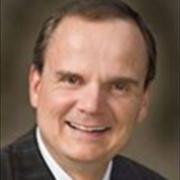
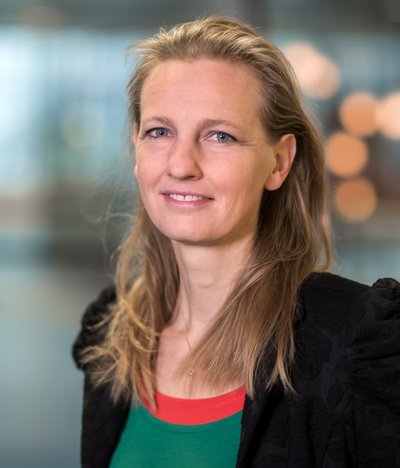
Markus Leeb serves as Senior Lecturer and Research Group Leader at the Building Planning Center for Alpine Construction (FH Salzburg - University of Applied Sciences). His work focuses on energy performance certification, urban building energy modeling, and climate-neutral district development, contributing to UN Sustainable Development Goals (SDGs) through applied research in energy flexibility and Alpine construction challenges.
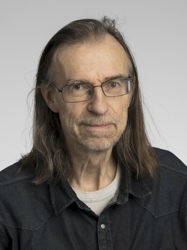
Hans Georg Beyer is an Affiliated Professor in Energy Engineering at the Faculty of Science and Technology, The University of the Faroe Islands. His work focuses on sustainable energy systems with emphasis on renewable energy integration and meteorological aspects of power generation. With extensive publication history spanning over three decades, he has established himself as a leading researcher in renewable energy systems analysis. Professor Beyer's research interests center on sustainable energy supply systems based on renewables, with special emphasis on relating system performance characteristics to meteorological conditions. His work in Energy Meteorology covers analysis and modeling of spatial and temporal statistics of wind and irradiance fields, including forecasting methods for wind speed and solar irradiance with horizons of 6-35 hours and near now-casts in minute time scales. In Renewable Energy Systems, he investigates layout, dimensioning, modeling and performance analysis of grid-connected and stand-alone solar, wind and hybrid systems. His research bridges meteorological science with practical energy engineering applications, particularly for island and remote communities. His publication record shows consistent research activity with 55 research outputs documented, including significant contributions to solar and wind energy forecasting, hybrid system design, and grid integration challenges. Notable work includes the development of methods for satellite-derived irradiance data applications in PV system monitoring and performance assessment. Solar Energy Best Paper Award, ISES 1999 Solar World Congress, Jerusalem Professor Beyer has been instrumental in several major collaborative projects including PVSAT-2 (satellite-based PV system performance monitoring), SWERA (UNEP solar resource assessment), and various European initiatives focused on renewable energy integration. His work demonstrates strong international collaboration, particularly with German, Brazilian, and other European research institutions. While specific grant details aren't provided in the source material, his extensive publication record in high-impact journals suggests substantial research funding support throughout his career.
Mathias Kirchner is a Researcher at the University of Natural Resources and Life Sciences, Vienna (BOKU), affiliated with the wZGWN Centre for Global Change and Sustainability. Currently on parental part-time status (available Mondays and Wednesdays), he contributes to teaching and research in climate change economics, with a focus on policy-relevant modeling for Austrian sustainability transitions. His research spans : Climate Change Economics (CO2 pricing, decarbonization pathways) Environmental Policy (land use, stakeholder integration) Social Equity (distributional impacts, poverty assessments) Integrated Assessment Modeling (system dynamics, multi-model approaches) Work emphasizes Austrian contexts while addressing global challenges like SDG implementation and climate justice. Recent publications (2022-2025) reveal three dominant trends : (1) Economic modeling of carbon taxation with focus on revenue recycling and triple dividends, (2) Social equity analyses of decarbonization in housing/mobility sectors, and (3) Stakeholder-driven methodologies for SDG pathway validation. Key subfields include distributional impacts across income groups, land-use change under climate scenarios, and causal loop diagram applications. Dr. Kirchner operates within the wZGWN Centre for Global Change and Sustainability , an interdisciplinary hub at BOKU addressing climate adaptation, resource management, and policy coherence through integrated modeling approaches that bridge natural and social sciences.
Robert Tremblay is a Full Professor at the Department of Civil, Geological and Mining Engineering at Polytechnique Montréal. He holds a B.Sc.A. from Laval University, an M.Sc. from Laval University, and a Ph.D. from the University of British Columbia. His expertise spans seismic design, structural stability, steel and concrete materials, and earthquake engineering. Affiliations: Groupe de recherche en génie des structures (GRS), Centre d’études interuniversitaire des structures sous charges extrêmes (CEISCE) Research Interests: Seismic design of steel and concrete structures, dynamic analysis, structural stability, cold-formed steel sections, bridge engineering Recent Publications: Focus on seismic coefficients for composite walls, buckling-restrained braced frames, and machine learning applications in bridge pier simulations Scientific Recognition: Recipient of the 2021 Discovery Grant and ranked among the top 2% most cited scientists in his field. Supervised 63 graduate students, including 16 PhD candidates. Media frequently cites his work on Montreal’s earthquake vulnerability and Champlain Bridge research.
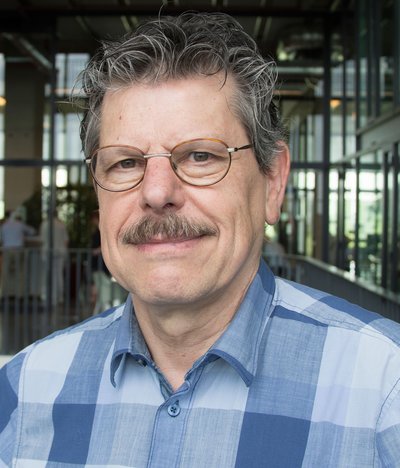
Henk Schellen is an Associate Professor in Building Physics at Eindhoven University of Technology's Built Environment department. With expertise in monumental buildings, heritage conservation, and heat/moisture transfer, he focuses on experimental and numerical analysis of microclimates for cultural preservation. Key Research Areas : Monumental building physics, hygrothermal modeling, climate control systems, energy-efficient conservation Notable Collaborations : Anne Frank House, TNO, TU/e, national museums His work bridges building technology with art preservation, using CFD modeling and field measurements to optimize climate conditions in historic structures. Recent projects examine display cases, repository airflow, and climate-induced damage mechanisms. Selected Publications (2020-2022): 2022 - Experimental-numerical investigation of climate-induced damage in historical cabinet door panels 2021 - Indoor Airflow Distribution in Repository Design 2020 - Dynamic Hygrothermal Models for Monumental Buildings
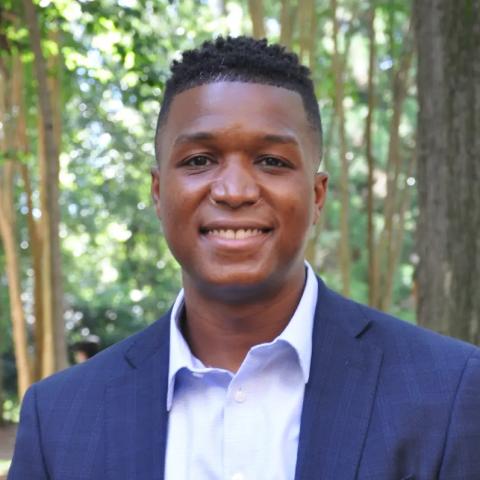
Joe F. Bozeman III is an Assistant Professor in the School of Civil and Environmental Engineering at the Georgia Institute of Technology's College of Engineering, with a courtesy appointment in the School of Public Policy. He serves as the SEI Lead for Ethics in Energy Transition and directs the Social Equity and Environmental Engineering Lab (SEEEL). His work bridges engineering practice with ethical considerations in climate change adaptation and mitigation strategies. Dr. Bozeman's educational background includes: Ph.D. in Industrial Ecology from University of Illinois at Chicago (2020) M.S. in Environmental Engineering from Wright State University (2010) B.S. in Environmental Engineering from Wright State University (2008) As an industrial ecologist, Dr. Bozeman focuses on developing ethical climate change adaptation and mitigation strategies. His research spans circularity analysis, food-energy-water nexus systems, sustainable urban systems, and life cycle assessment. His work uniquely integrates sociodemographic considerations into environmental engineering practice, examining how different demographic groups experience environmental impacts differently. This focus on systemic equity in industrial ecology applications has positioned him as a thought leader addressing the 'wicked' challenges of our time through cross-disciplinary collaboration with psychology, economic, and public health experts. Dr. Bozeman's scientific contributions have gained significant attention, with research featured in mainstream media outlets including NPR, the New York Post, Popular Science, and Free Speech TV. His work on U.S. food-consumption impacts across sociodemographic subgroups has particularly resonated with broader audiences. His publications demonstrate recognition through frequent citations and media coverage. With over a decade of experience in public and private sectors as an energy and environmental practitioner before joining Georgia Tech, Dr. Bozeman brings practical insights to his academic work. His SEEEL lab serves as a hub for integrating ethics, engineering, and community engagement, exploring innovative ways to merge technical findings with artistic expression for broader public accessibility. Dr. Bozeman maintains affiliations with multiple research centers at Georgia Tech, including Sustainable Systems, Renewable Bioproducts, Energy initiatives, and the Institute for Matter and Systems. His work on urban carbon management strategies, food-energy-water equity, and circular economy approaches demonstrates his commitment to creating more just and sustainable systems through engineering practice.
Clara Good is an Associate Professor at the Department of Technology and Safety , UiT The Arctic University of Norway . Her research focuses on sustainable energy systems, particularly solar energy in northern contexts and its integration with electric transportation. Current projects: Northern Homes (Arktis 2030), Electric Aviation Research groups: ARC - Arctic Centre for Sustainable Energy , Sustainable Technology and Safety (STS) Research interests center on: Evaluating solar energy potential in urban Arctic environments Developing PV-EV energy systems for grid stability Assessing life cycle emissions of zero-emission buildings Exploring solar thermal and photovoltaic-thermal (PV/T) systems Advancing electric aviation infrastructure through solar integration Conducting sensitivity analysis on emission compensation strategies Recent publications demonstrate expertise in: Hybrid electric aircraft energy optimization City-scale spatiotemporal solar/EV modeling PV/T system performance for Arctic buildings Life cycle assessments of solar-integrated systems User engagement in energy transition projects Feasibility of pure renewable national energy grids Teaching responsibilities include: TEK-2008 Sustainable Transport Technology TEK-1001 Introduction to Sustainable Technology Clara leads the Northern Homes project (2022-2025) and contributes to smart energy initiatives like Smart Senja/RENEW . She actively collaborates across European institutions while maintaining fieldwork in Tromsø.
Kevin MICHENEAU is a Teacher-Researcher at CESI School of Engineering, affiliated with the LINEACT research laboratory in Guipavas, France. His work bridges building energy systems and experimental particle physics, focusing on data-driven optimization of smart buildings and dark matter detection. Education: PhD in Subatomic Physics, University of Nantes (2018): "Study of residual electrons in the XENON100 experiment" Master's degree in Research in Subatomic Physics, University of Nantes (2014) Research Focus: Dr. MICHENEAU develops advanced models for building energy performance with emphasis on occupancy behavior impact and smart control systems . His methodology combines sensor fusion and multi-objective optimization to balance energy efficiency with occupant comfort. Previously, he contributed to XENON dark matter experiments through signal reconstruction and background modeling. Publication Evolution: His research trajectory shows a strategic pivot from particle physics (2017-2019) to building energy systems (2024), applying rigorous data analysis techniques across domains. The 2024 MPC optimization study demonstrates transferable methodology from high-precision physics to sustainable engineering. Mentorship: Currently supervising PhD candidate BOURGOIN on "Towards modeling the impact of occupancy on the energy behavior of smart buildings" (2023-2026). Research Ecosystem: Member of the "Engineering and Digital Tools" team within LINEACT, teaching Computer Science, Mechanics, and Physics across preparatory and engineering cycles while contributing to PhD training at University of Nantes.
Maria Gini is a distinguished Professor in the Department of Computer Science and Engineering at the University of Minnesota's College of Science & Engineering. She holds the titles of CSE Distinguished Professor and Distinguished University Teaching Professor, reflecting her exceptional contributions to both research and education in computing. Dr. Gini's research focuses on artificial intelligence, robotics, and intelligent agents, with particular expertise in decision making for autonomous agents across various application domains. Her work spans swarm robotics, distributed methods for task allocation, robot exploration of unknown environments, navigation in dense crowds, and conversational agents. She leads the Next Generation Robotics Laboratory and has directed significant projects including MAGNET (Intelligent Agents for Electronic Commerce) and TAC-SCM (Autonomous Agents for Supply-Chain Management). Her recent publications demonstrate a consistent trajectory toward increasingly sophisticated autonomous systems capable of operating in complex, dynamic environments. The research shows strong interdisciplinary connections between robotics, artificial intelligence, and real-world applications in emergency response, environmental monitoring, e-commerce, and social interaction. A notable trend in her recent work is the emphasis on diversity and inclusion in AI research and education. Presidential Award for Excellence in Science, Mathematics and Engineering Mentoring (PAESMEM), 2025 Winner of the IJCAI Donald E. Walker Distinguished Service Award, 2024 ACM/SIGAI Autonomous Agents Research Award, 2022 ACM Fellow, IEEE Fellow, and AAAI Fellow Numerous university-level awards for teaching and service Dr. Gini has advised an impressive 34 PhD students throughout her career, demonstrating her commitment to mentoring the next generation of computer scientists. She has secured significant research funding through grants from NSF and other agencies, supporting projects like the Summer Computing Academy for high-school students and MinneWIC (the ACM-W Celebration of Women in Computing in the Upper Midwest). Her service contributions include leadership roles in major professional organizations including serving as President of the International Foundation on Autonomous Agents and Multi-Agent Systems (IFAAMAS) and General Chair of IJCAI 2021. In addition to her research laboratory, Dr. Gini has been instrumental in establishing several important initiatives including the Summer Computing Academy, MinneWIC, and DREU (Distributed Research Experiences for Undergraduates). Her work extends beyond traditional academic boundaries through collaborations with industry and government agencies focused on applying AI to real-world challenges in emergency response, commerce, and environmental sustainability.
Dr Euan W McGookin is a Senior Lecturer in Autonomous Systems & Connectivity at the University of Glasgow, based in the Aerospace Sciences division of the James Watt Building South. He coordinates Glasgow-delivered aerospace degree programmes in Singapore and serves on the IFAC Technical Committee on Marine Systems, underlining his sustained engagement with both local and international academic activities. Education: 1st Class Honours Master of Engineering in Avionics, University of Glasgow PhD in Optimisation of Sliding Mode Controllers for Marine Applications, University of Glasgow (1997) Research Interests Dr McGookin’s core expertise lies in the design, simulation, control and physical realisation of autonomous robotic systems. His work spans Autonomous Underwater Vehicles (AUVs) , Unmanned Aerial Vehicles (UAVs) , Planetary & Terrestrial Rovers , and Biomimetic Robotics . He is particularly recognised for applying biologically inspired principles to robotic locomotion, navigation and control. Complementary themes include advanced control methodologies—Sliding Mode Control, H-infinity, Inverse Model Control—optimisation heuristics, guidance & navigation, fault detection & isolation (FDI), and system health monitoring for both terrestrial and space applications. Publication Trends Across 80 publications from 1995 to 2025, his work has evolved from early genetic-algorithm-based controller optimisation for marine vessels to cutting-edge multi-rover mission planning and health monitoring for planetary exploration. Recent outputs (2022–2025) concentrate on micro-rover coordination, friction modelling for planetary soils, reinforcement-learning-driven sensor fusion, and robust health-monitoring architectures, reflecting a strategic pivot toward space robotics while retaining strong roots in control theory and autonomous systems. Scientific Awards & Fellowships Member, IFAC Technical Committee on Marine Systems Grant & Advising Narrative While specific grant values are not disclosed, his continuous funding stream is evidenced by sustained publication output, international conference leadership, and ongoing supervision of postgraduate projects. Dr McGookin advises a steady cohort of PhD and MSc students whose theses align with his research themes—ranging from rover fault diagnosis to biomimetic AUV coordination—thereby fostering the next generation of control and robotics engineers. Laboratory & Team Dr McGookin heads research activities within the James Watt Building South, leveraging interdisciplinary laboratories that integrate simulation suites, rapid-prototyping facilities for AUV and UAV subsystems, and dedicated test rigs for biomimetic propulsion and rover mobility studies. Collaborative networks extend across the University of Glasgow’s Aerospace Engineering group, Singapore Institute of Technology partners, and international consortia such as ESA and IFAC.
Ziya MÜDERRİSOĞLU is an Assistant Professor at the Department of Civil Engineering , Faculty of Engineering and Architecture , Beykent University. His research focuses on earthquake engineering, seismic risk assessment, and structural analysis of reinforced concrete systems. His work emphasizes energy dissipation in structural elements, aftershock hazard modeling, and finite element analysis of building collapse capacities, often integrating machine learning techniques for improved seismic performance prediction. Notable recent contributions include studies on ground motion record scaling, sidewalk survey parameters for risk assessment, and post-earthquake observations from the 2020 Aegean Sea and 2023 Kahramanmaraş earthquakes.
Andre Filiatrault is an Adjunct Professor at the Department of Civil Engineering within McMaster University . His research spans seismic engineering, structural dynamics, and performance-based design, focusing on nonstructural components, damping systems, and wood/steel structures. Key contributions include seismic isolation, passive energy dissipation, and experimental validation of building systems. Research Interests: Earthquake Engineering, Structural Dynamics, Performance-Based Seismic Design, Nonstructural Components, Steel and Wood Structures, Seismic Retrofit Recent Trends: Advanced studies on viscous dampers, seismic loss estimation for acceleration-sensitive elements, and integration of building information modeling with seismic analysis.
Dr. Timothy O. Adekunle is an Associate Professor at the University of Utah School of Architecture , where he serves as Interim Chair since 2023. He holds degrees including a Ph.D. in Architecture from the University of Kent, UK, and professional architecture degrees from Nottingham and [B.Arch institution]. A Fellow of the UK Higher Education Academy and member of AIA Utah Board, his work focuses on sustainable building practices and thermal comfort analysis. Ph.D. in Architecture, University of Kent M.Arch, University of Nottingham PGCHE, University of Kent His research interests span thermal comfort in historic and modern timber buildings, building energy efficiency , and urban environmental physics , with a particular focus on climate adaptation in diverse building typologies. Recent publications explore energy demands in CLT buildings , urban traffic CO2 impacts in Jakarta , and gender variations in thermal perception . His work has been recognized with multiple Outstanding Reviewer Awards from journals like Automation in Construction and Energy and Buildings . As a educator , he leads graduate architecture programs and teaches courses in sustainable design , building technology , and energy efficiency . His professional activities include leadership roles in AIA Utah and editorial board service. Current research grants support campus sustainability initiatives like CLT building evaluation and passive design strategies.
Mariëlle Aarts serves as an Assistant Professor in the Department of the Built Environment at Eindhoven University of Technology (TU/e), specializing in human-centered lighting research. Her work spans multiple research groups including Building Lighting and the Intelligent Lighting Institute, with office location at Vertigo 6.11. She also chairs the Board at the Light and Health Research Foundation SOLG at TU/e, where she promotes awareness of light's impact on human health and connects researchers in this field. Her research focuses on the intersection of lighting with human wellbeing, particularly examining daylight, electrical lighting, comfort, and energy considerations within the built environment. Aarts maintains special expertise in lighting applications for working environments and elderly populations, recognizing the distinct requirements for these groups compared to general populations. Her work extends to therapeutic applications of light for affective disorders and lighting conditions in medical facilities. Analysis of her recent publications reveals a strong emphasis on translational lighting research connecting engineering principles with health outcomes. Her work spans building science, environmental psychology, and public health domains, with particular attention to methodological improvements in light measurement, the impact of light on vision development, and the psychological effects of natural versus artificial lighting patterns. Aarts demonstrates consistent collaboration across international research teams, particularly with colleagues at TNO and other European institutions. Chairman of the Board, Light and Health Research Foundation SOLG at TU/e Former researcher at TNO (2001) Member of the Daylight Committee of the Dutch Lighting Foundation Aarts teaches multiple courses including 'Advancing light for human functioning', 'Physics of light and lighting design', and 'Healthy & sustainable living environments'. Her educational activities emphasize the practical application of lighting principles for human benefit, connecting theoretical knowledge with real-world implementation. Her research laboratory environment includes the Intelligent Lighting Institute where she collaborates on projects examining lighting's physiological and psychological impacts.
Jens Forssén is an Assistant Professor in the Department of Technical Acoustics , Vibroacoustics research group at Chalmers University of Technology . His work focuses on outdoor sound propagation , community noise , and urban acoustics , with a particular emphasis on the influence of meteorology , terrain , and soil properties on noise levels. Research Interests: Outdoor acoustics, urban soundscapes, road and train traffic noise, wind turbine noise, noise barriers, auralization techniques, and health impacts of environmental noise. Recent Trends: Analysis of low-frequency noise in urban environments, 3D noise mapping , digital twinning for urban design, and sonic crystal applications in noise reduction. Scientific Contributions: Publications on noise propagation models , auralization methods , traffic noise assessment , and health impact studies related to urban sound environments. Labs & Collaborations: Collaborates with the LISTEN project , SONORUS project , and HOSANNA project to develop urban noise mitigation strategies. His work includes partnerships with researchers like Wolfgang Kropp , Leon Müller , and Maarten Hornikx .