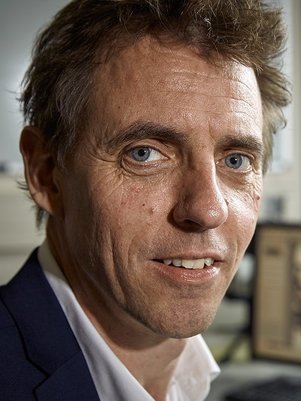
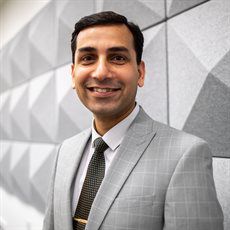
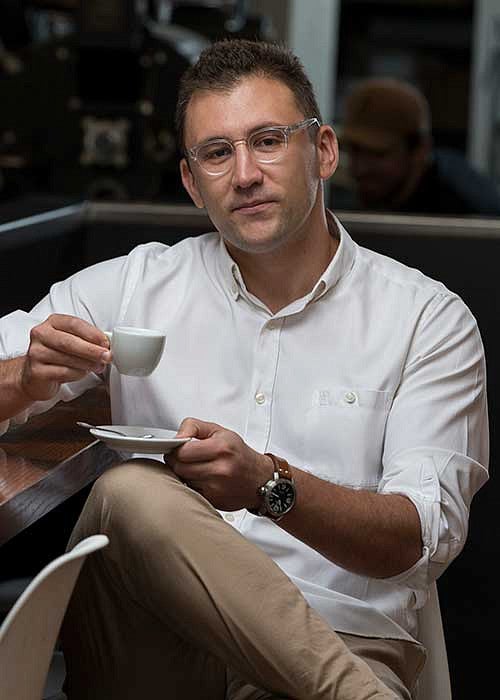
Prof. Dr. Henk Jonkers is a leading researcher at Delft University of Technology's Faculty of Civil Engineering and Geosciences , serving as Professor of Bio-adapted and Sustainable Building Materials since 2021 and Departmental Director for Materials, Mechanics, Management & Design since 2024. Education: PhD in Marine Microbiology (University of Groningen, 1999) MSc in Marine Biology (University of Groningen, 1989) His research pioneers bio-adapted building materials that integrate living organisms to enhance structural performance and sustainability. Key innovations include bacteria-based self-healing concrete and moss-receptive concrete , reducing environmental impact through nature-based solutions in urban environments. Research themes encompass: Circular building methods Biodegradation mechanisms Climate-resilient infrastructure Human wellbeing in urban ecosystems Scientific contributions include: Nomination for European Inventor Award 2015 Co-inventor of patented self-healing bioconcrete technology Educational leadership includes: CT3602 - Analysis of materials, energy, and water flows CIE4100 - Materials and Ecological Engineering CTB1320 - Construction Materials and Sustainability He also provides scientific advisory services to startups like Basilisk Self Healing Concrete and Respyre.
Dr Choo yoon Yi is an AXA Postdoctoral Fellow at the School of Architecture and Landscape, University of Sheffield, specializing in Building Physics and Liveability research. Her work focuses on sustainable 'Healthy Ageing' resilient to climate change, with particular emphasis on optimizing indoor environments for older people in care homes while transitioning to net zero energy systems. She collaborates with Professor Darren Robinson and Dr Chengzhi Peng on innovative modeling approaches to balance heat stress mitigation with carbon reduction goals. Dr Yi earned her PhD at Sheffield School of Architecture in 2019, preceded by an MSc in Sustainable Architectural Studies at the same institution and a B.Sc. in Architectural Engineering from Hanyang University in South Korea. Her educational background bridges engineering fundamentals with sustainable architectural applications. Her research program addresses critical challenges in climate change adaptation for vulnerable populations through housing stock energy modeling, computational urban microenvironment analysis, and bioclimatic design frameworks. Current projects focus on developing reliable modeling tools to identify effective space cooling measures that mitigate indoor heat stress risk in care homes while meeting net zero CO 2 emission targets by 2050. Analysis of Dr Yi's publication record reveals a clear progression toward increasingly applied research with direct policy implications. Starting with fundamental building physics and urban microclimate modeling, her work has evolved to address specific challenges for elderly populations in care settings, demonstrating strong interdisciplinary integration between architectural science, public health, and climate policy. Dr Yi has secured substantial research funding including: AXA Fellowships (2023-2025) for 'Renovating care homes fit for the future: balancing indoor heat stress risk mitigation with net zero ready by 2050' Higher Education Innovative Fund (2021-2022) for 'Co-producing an environmental performance guidelines framework for care homes fit for the future' ESRC Postdoctoral Fellowships (2020-2021) for 'Thermal stress vulnerability and resilience: Housing stock transformation fit for an ageing society in future climate' She is an active member of the Architectural and Urban Science research group at Sheffield.
Krister Larsson is a Professor of Practice and Docent at the Department of Technical Acoustics, Chalmers University of Technology. He also serves as a senior consultant at Efterklang (AFRY) and has held previous roles at SP and RISE, where he managed acoustics labs and conducted senior research. His expertise spans building acoustics , community noise , and machine noise , with significant contributions to noise reduction in urban environments and lightweight structures. Research Interests : Larsson focuses on acoustic modeling , vibroacoustic systems , thermoacoustic devices , and noise control in transportation infrastructure . His work bridges theoretical acoustics and practical applications, including sound classification standards, noise barriers, and sustainable urban planning. Scientific Awards : While no awards are explicitly listed, his extensive publication record and leadership roles in acoustics research groups underscore his professional impact. Teaching & Affiliations : He teaches foundational and advanced courses in the ACE program and Master's program in Sound and Vibration . His career includes collaborations with research institutions (SP, RISE) and industry (AFRY).
Dr. Imran Qureshi is an Associate Professor in the Department of Mechanical Engineering at the University of Birmingham Dubai Campus, part of the School of Engineering. He previously served as an Assistant Professor at the American University of Sharjah, UAE, before joining the University of Birmingham. His academic and industrial expertise lies in mechanical and aerospace engineering, particularly in gas turbine systems and sustainable energy technologies. BEng (Hons) in Aerospace Engineering, NUST, Pakistan MSc in Mechanical Engineering, University of Leeds, UK DPhil in Engineering Science, University of Oxford, UK Chartered Engineer (CEng), IMechE UK Dr. Qureshi's research focuses on experimental and computational fluid dynamics , gas turbine engines , heat transfer , and sustainable energy systems . His work bridges industrial applications and academic inquiry, particularly in improving turbine performance and advancing renewable energy technologies. He has investigated aggressive inlet swirl effects, combustor temperature nonuniformity, and dynamic engine modeling using artificial intelligence. His recent publications reflect a growing emphasis on sustainability, with studies on net-zero energy buildings , photovoltaic and concentrated solar technologies , and hydrogen propulsion . The integration of AI in turbine diagnostics and performance monitoring marks a significant trend in his scholarly output. His work spans both fundamental aerothermal investigations and applied sustainability solutions. Dr. Qureshi has no listed scientific awards in the provided text. He teaches undergraduate modules including Thermodynamics and Fluid Mechanics , Sustainable Energy and Environment , Engineering Mathematics , Powertrain and Vehicle Engineering , and supervises final-year individual engineering projects. There is no mention of students he has advised or research grants he has led. No specific lab or research team is referenced in the text.
Klemen Rupnik is an Associate Professor in the Department of the Built Environment at Aalborg University, under the Faculty of Engineering and Science. His work is centered within the Indoor Environmental Quality and Building Systems Research Group, where he contributes to advancing knowledge in building technology, indoor climate, and sustainable building systems. His research focuses on improving indoor environmental quality and optimizing building systems for energy efficiency and occupant comfort. This includes studies on ventilation, thermal comfort, indoor air quality, and integrated design approaches for high-performance buildings. His interdisciplinary work bridges engineering, architecture, and environmental health. The research group emphasizes both experimental and computational methods to analyze and enhance building performance. Projects often involve system-level integration of HVAC technologies, monitoring of real-world building conditions, and development of control strategies for healthier indoor environments. Klemen Rupnik has not listed any scientific awards in the provided information. He is involved in research activities related to building technology and indoor environmental systems, though specific grants or funding sources are not mentioned. He is part of a dedicated research group working on next-generation building solutions, focusing on sustainability, occupant well-being, and technological innovation in the built environment.
Christopher Hendon is an Associate Professor in the Department of Chemistry and Biochemistry at the University of Oregon, where he leads research in computational chemistry, sustainable materials, and energy storage. He is a key member of the university’s Energy and Sustainable Materials Initiative, promoting interdisciplinary collaboration to address global sustainability challenges. Department: Department of Chemistry and Biochemistry School: College of Arts and Sciences University: University of Oregon Lab: HMS Oregon – located in the Lewis Integrative Sciences Building Education: BSc (Advanced Hons) from Monash University, PhD from the University of Bath, Postdoc at MIT Hendon’s research spans computational modeling of metal-organic frameworks (MOFs), defect chemistry in semiconductors, and the physics of coffee extraction. He uses quantum chemical simulations to study electron transport, doping, and catalytic mechanisms, with applications in batteries, hydrogen storage, and carbon capture. His work in coffee science has revolutionized understanding of water chemistry, grinding, and brewing reproducibility, influencing both industry and academic communities. The recent articles from his group reflect a strong interdisciplinary trend, combining chemistry, biology, environmental science, and sensory analysis. Key themes include coffee quality, food safety (e.g., mycotoxins), microbiome interactions, packaging, and neurocognitive effects of caffeine. The research increasingly integrates data science, consumer behavior, and sustainability metrics. Scientific Engagement: Author of Water for Coffee , a foundational text in specialty coffee Collaborator with World Barista Champions (Maxwell Colonna-Dashwood, Kyle Ramage) COHOP research collaboration in coffee science Developer of a proposed interdisciplinary coffee research lab at UO Hendon actively mentors graduate and undergraduate students and collaborates with experimentalists worldwide. His lab does not handle traditional chemicals but uses supercomputers for quantum simulations. While he currently cannot support postdoctoral scholars due to funding limitations, he encourages applications from motivated graduate students through the UO Chemistry Department. His outreach through coffee has made complex scientific concepts accessible to broad audiences. Lab and Research Team: Graduate Students: Tekalign T. Debela, Parker Brodale, Doran Pennington, Brian Diamond, Casey Clark Undergraduates: Jasper Sterling, Julio Miranda, Maggie French, Laurel Wood, Ian Reynolds, Octavio Solórzano Visiting Scholar: Matthew Sciprint Focus Areas: MOFs, defect engineering, energy materials, coffee science
Prof. Dr. Walter Commerell serves as Professor at Technische Hochschule Ulm (THU) , holding the role of International Representative for the Faculty of Production Engineering and Production Management. He is the Spokesperson for ASIM (Simulation of Technical Systems Division) and Head of Steinbeis Transfer Center System Design , while also being a member of the International Energy Competence Center (IECN) and Institutes for Energy and Drive Technology/Vehicle Systems Technology.
Dr. Zhan Liu is affiliated with Southwest University of Science and Technology, where he conducts advanced research in thermal systems, fluid dynamics, and energy storage technologies. His work focuses on hydrogen fuel cell vehicles, liquefied natural gas storage, and industrial ventilation systems. His research interests include: Thermal Management in Energy Systems Fluid Sloshing and Thermo-Mechanical Coupling Pollutant Dispersion in Industrial Environments Hazard Control in Hybrid Ventilation Systems Hydrogen Storage Tank Performance Renewable and Clean Energy Engineering The recent publications indicate a strong focus on modeling and experimental analysis of thermal and fluid behavior in next-generation energy and industrial systems, particularly under extreme or dynamic conditions such as rapid charging and intermittent ventilation. Dr. Liu actively collaborates with researchers from Chongqing University and other institutions, contributing to impactful studies in high-impact energy and engineering journals. He has not listed any scientific awards or formal mentoring roles in the provided text.
Flavio Caresana is an Associate Professor at the Department of Industrial Engineering and Mathematical Sciences (DIISM) within the Faculty of Engineering at Università Politecnica delle Marche (UNIVPM) in Ancona, Italy. His academic work focuses on energy systems with particular emphasis on sustainable technologies and environmental applications. Professor Caresana's research spans multiple areas of energy engineering, with primary focus on heat pump systems , hydrogen storage technologies , renewable energy integration , and energy recovery systems . His work combines theoretical modeling with experimental validation, particularly in the areas of thermal engineering and sustainable energy systems. He has developed methodologies for multi-objective optimization of energy systems, techno-economic analysis of emerging technologies, and dynamic control strategies for energy storage solutions. His recent publications demonstrate a strong trend toward addressing climate change mitigation through technological innovation. Key research themes include the integration of renewable energy sources into building systems, carbon-neutral urban planning, and the development of efficient energy storage solutions. Professor Caresana's work often bridges theoretical engineering principles with practical applications in the energy sector. Professor Caresana maintains an active research profile with numerous publications in international journals and conference proceedings. His work contributes significantly to the fields of thermal engineering, sustainable energy systems, and environmental technology.
Priv.-Doz. Dipl.-Ing.Dr. Ulrike Pitha is a Senior Lecturer at the Institute of Soil Bioengineering and Landscape Construction , University of Natural Resources and Life Sciences Vienna. Her work focuses on Vegetation Technology , Green Infrastructure , and Sustainable Landscape Construction , with expertise in integrating bio-based solutions into urban planning. Academic Affiliation : Department of Landscape, Water and Infrastructure Key Research Areas : Urban Microclimate Regulation, Stormwater Management, Permeable Pavement Systems, Nature-Based Solutions Her recent 15 publications (2012–2025) span topics like green roofs , vertical greening systems , greywater treatment , and climate-resilient urban design , emphasizing environmental engineering , plant-soil interactions , and sustainable materials . She has contributed to scientific panels (e.g., Innovationsnetzwerk Funktionsfassade, Regentropfen Society) and supervised 15+ theses (2008–2025) on urban greening, turfgrass resilience, and pollutant reduction. Pitha’s community engagement includes media appearances (ORF, Die Presse) and editorial roles in journals like BIOTOPE CITY JOURNAL and Sustainability , ensuring her research bridges academia and societal impact.
Dr Gatheeshgar Perampalam is a Senior Lecturer in Civil Engineering at Teesside University's School of Computing, Engineering and Digital Technologies. He holds a PhD in Structural Engineering (2021) from Northumbria University and a BEng (Hons) in Civil Engineering (2017) from the University of Peradeniya, Sri Lanka. His research focuses on advanced structural analysis of cold-formed steel systems, modular construction optimization, and fire/thermal performance of building materials. PhD: Structural Engineering, Northumbria University (2021) BEng: Civil Engineering (First Class), University of Peradeniya (2017) Key research areas include steel structures, numerical modeling, sustainable construction practices, and energy-efficient building designs. His recent work explores machine learning applications in structural performance prediction and thermal efficiency improvements in light-gauge steel panels. He has contributed 68 research outputs and collaborated with industry partners like Intelligent Steel Solutions. Current affiliations include Teesside University and active participation in research networks related to structural engineering and sustainability.
Oliver Meixner is an Associate Professor at the Institute of Marketing and Innovation within the Department for Economics and Social Sciences at the University of Natural Resources and Life Sciences, Vienna (BOKU) . His work focuses on agricultural economics, sustainable marketing, and consumer behavior in food systems. Key Research Areas: Sustainable agriculture and food economics Consumer behavior and market research Innovation and digital transformation in agrifood Notable Contributions: Developed methodologies for AHP group decisions and fuzzy priority aggregation Evaluated eco-label effectiveness and food waste reduction strategies Assessed EU rural development programs' impact on agricultural competitiveness Publications & Projects (2016-2024) show a consistent focus on: Food labeling and consumer trust Sustainability assessments in agribusiness Digital transformation in food networks Climate crisis impact on consumer behavior Innovative marketing models for agrifood chains Scientific Recognition Award of Excellence (ISAHP 2020) Most Innovative Idea Award (ISAHP 2016) Literati Network Outstanding Paper (2013) Advising spans 123 theses including topics on: Consumer preferences for eco-labels Acceptance of alternative proteins Digital food shopping behavior Payment willingness for sustainable products
Per Kvols Heiselberg serves as Professor and Deputy Head of Department for Research at the Department of Construction, Urban and Environmental Engineering within the Faculty of Engineering and Science at Aalborg University. He leads the Research Group for Energy in Buildings, focusing on building physics and energy efficiency. His research spans over three decades with significant contributions to zero-energy buildings and hybrid ventilation systems. His research interests encompass building physics, energy efficiency of buildings, design and operation of low- and net-zero energy buildings, the role of buildings as 'prosumers' in future smart energy systems, and data analysis for online optimization and fault detection of building operations. He has been internationally recognized for developing concepts for zero-energy buildings and hybrid ventilation through leadership in large international projects. His recent publications (2023-2025) show a strong focus on practical applications of building energy systems, including AHU performance tracking, fault detection methodologies, occupant behavior analysis, and advanced ventilation strategies. His work demonstrates a progression from theoretical building physics to practical implementation and monitoring in real-world buildings. Det Bæredygtige Element, Personprisen (2018) ELforsk Prisen 2017 As indicated by his extensive publication record (over 637 publications) and supervision of 14 PhD students, Professor Heiselberg maintains significant research activity and academic leadership. His work spans theoretical research, practical implementation, and policy influence, as evidenced by his recent involvement with the Danish Climate Council. He has organized major conferences including CLIMA 2016 and the Nordic Passive House Conference, demonstrating his leadership in the field. Professor Heiselberg leads research teams working on energy-efficient building technologies, including the Research Group for Energy in Buildings at Aalborg University. His projects often involve interdisciplinary collaboration across multiple institutions and countries, focusing on practical solutions for sustainable building design and operation.
Dr. Philip Crowe is a Lecturer/Assistant Professor at University College Dublin's School of Architecture, Planning and Environmental Policy (APEP), where he also serves as Director of Research. He holds a joint appointment with the School of Civil Engineering and is actively involved in multiple research initiatives focused on urban resilience, climate action, and sustainable development. His academic leadership extends to roles as co-Director of the UCD Centre for Irish Towns and Programme Director of the MSc in Architecture, Urbanism and Climate Action. Dr. Crowe's educational background includes a Dip Arch and MA from the University of Edinburgh, an MSc in Applied Carbon Management from the University of Glasgow (2011), and a PhD from University College Dublin. His doctoral research explored urban resilience through the lens of Scottish polymath Patrick Geddes, connecting historical precedents with contemporary climate challenges. His research interests focus on how the built environment can respond to crises like climate change, biodiversity loss, and resource depletion. With over 25 years of experience in both professional practice and academic research, Dr. Crowe's work spans urban resilience frameworks, vacancy and underuse analysis, town revitalization strategies, and innovative citizen engagement methods. His recent publications reveal a strong emphasis on practical applications of resilience theory, particularly in the Irish context, with projects addressing housing challenges, water infrastructure, and adaptive reuse of buildings. Among his notable achievements is the Ripple project in Ballina, which became the first Irish project to receive a New European Bauhaus Award in the Reconnecting with Nature Champion Category. His TREBUChEt project addresses the adaptive reuse of buildings in Ireland's towns through circular economy principles. Dr. Crowe has also made significant contributions to understanding how coworking spaces can provide social, urban, and environmental co-benefits to Irish towns. College Level Teaching Excellence Award (2024) New European Bauhaus Award: Reconnecting with Nature Champion (2023) THRIVE Leadership in Research (2023) EIT Climate KIC Accelerator Programme (2017) THINKTECH Award (2016) Dr. Crowe actively mentors PhD students including Stephen Wall, Merlo Kelly, Sarah Cremin, and Miriam Lins, with research focusing on urban resilience, town revitalization, and sustainable architecture. His grant portfolio includes significant projects funded by the Environmental Protection Agency, European Regional Development Fund, and Science Foundation Ireland. Through the UCD Centre for Irish Towns and the Urban Institute of Ireland, he leads collaborative efforts to address Ireland's urban challenges while contributing to broader European initiatives like the HeritACT project and New European Bauhaus movement.
Associate Professor Michelle Duffy is a cultural geographer at the University of Newcastle's School of Environmental and Life Sciences, affiliated with the Centre for Urban and Regional Studies (CURS). Her research explores how emotions, sound, and movement shape human-environment relationships, focusing on festivals, community resilience, and regional development. She holds a PhD from the University of Melbourne and has held academic positions at Monash University and Federation University Australia. Education: PhD (Cultural Geography, University of Melbourne), Bachelor of Applied Science (RMIT), Bachelor of Music (Honours, University of Melbourne), Bachelor of Arts (Honours, University of Melbourne). Research Interests: Emotion and affect in place-making, sound-based methodologies, festival studies, community wellbeing post-disasters, and regional resilience. She pioneered projects like the Hazelwood Health Study's Community Wellbeing Stream, investigating the impact of the 2014 coal mine fire on Morwell, Victoria. Her work emphasizes participatory methods, including sound art exhibitions and creative practices to amplify community voices. Grants and Funding: Over $515,000 in grants, including the Hazelwood Long-Term Health Study ($335,500) and projects on regional resilience and festival networks. She has led evaluations of mental health initiatives like the Suicide Safer Schools program. Labs/Teams: Collaborations with the Hazelwood Health Study team, Federation University’s research networks, and interdisciplinary projects on climate anxiety and mobility justice. Current focus includes speculative listening practices and reimagining festivals as social infrastructure.