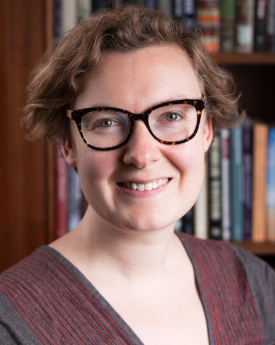
Katherine McDonough is a Lecturer in Digital Humanities at the School of Global Affairs, Lancaster University . She specializes in eighteenth-century French history and spatial digital humanities, focusing on historical maps and computational methods for analyzing infrastructure and socio-political reforms. PhD, Early Modern French History, Stanford University (2013) BA, History and French Literature, Johns Hopkins University (2006) Her research bridges Enlightenment history , infrastructure development , and digital methodologies such as computer vision and text analysis. She explores how historical actors contested coercive labor systems and reimagined governance through spatial data. Her recent work includes the MapReader software library (2023 Roy Rosenzweig Prize) and collaborations with the GEODE project in Lyon. She contributes to Living with Machines and Machines Reading Maps , analyzing 57,000 digitized maps. Roy Rosenzweig Prize (2023) Fellow, Royal Historical Society Software Sustainability Institute Fellow Collegium de Lyon Fellowship She co-leads the AHRC-funded Data/Culture project and previously served as UK PI for the AHRC-NEH Machines Reading Maps initiative. Her teaching includes undergraduate courses on eighteenth-century French history and MA-level modules on text/spatial analysis.
Dr Ruth Craggs is a Professor of Political and Historical Geography at King's College London's Department of Geography, School of Global Affairs. Her work bridges critical historical, political, and development geographies with a focus on North-South relations and decolonisation processes. Reader in Political and Historical Geography since 2013 Previous appointments at University of Hull and St Mary's University College Research spans postcolonial geopolitics, disciplinary histories of geography, urban planning legacies, and Commonwealth networks. She leads the Training Diplomats of Postcolonial African States project (2021-2024) funded by the Leverhulme Trust and contributes to the Empires and Decolonizations Research Hub at King's. Her work intersects with UN Sustainable Development Goals through decolonial lenses. Recent publications examine diplomatic training as anticolonial practice (2025), postcolonial pedagogies (2024), and disciplinary histories (2023). She supervises research on geographies of empire, urban policy mobility, and geopolitical performance at Commonwealth conferences. Scientific Awards Leverhulme Trust Research Grant (2021) Supervision Principal supervisors: Dimitris Venizelos, Nirali Joshi, Jacob Fairless-Nicholson Secondary supervisors: Peter Waring, Lee Butcher
Dr. Ronita Bardhan is Associate Professor of Sustainable Built Environment at the University of Cambridge , where she leads the Cambridge Sustainable Design Group and serves as Director of Research & Deputy Head of the Department of Architecture . She holds courtesy roles at Cambridge Public Health and the Department of Computer Science and Technology , and is a Fellow at Selwyn College . Education: BArch, MCP, MA, PhD (Urban Engineering) Her research intersects built environment , climate change , and public health , focusing on data-driven strategies for precision prevention of health and energy burdens. She pioneers algorithmic approaches to identify decarbonisation potential in buildings and urban areas, with a particular emphasis on gender-inclusive climate adaptation in the Global South. The 15 most recent articles span topics such as urban cooling with tree canopies , heatwave impacts on social systems , and machine learning applications for building energy efficiency . Her work addresses climate justice , hybrid workspace design , and thermal comfort in low-income housing . Awards: Top 50 Finalist Women in Engineering, UK 2024 Exceptional Woman of Excellence, Women Economic Forum Felicitated by Ministry of Health, Maharashtra, India She advises World Bank and ADB on affordable housing and climate resilience, and chairs the Research Ethics Committee at the Department of Architecture. Her lab, the Sustainable Design Group , develops solutions for health and low-carbon potential in built environments.
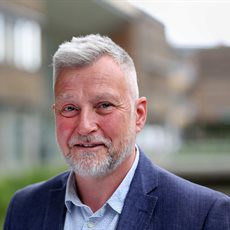
Dr. Bill Davies is a historian specializing in the European Union's constitutional and legal system at American University , where he teaches courses such as JLC-110 Western Legal Traditions and JLC-411 Great Trials in Legal History . His expertise spans Constitutional Law, European Union Law, and Legal History, with a focus on the historical development of European legal frameworks.
Besa Kadriu is an Associate Professor at the Contemporary Social Sciences Faculty of South East European University in Tetovo, North Macedonia. With a Doctor of Sciences in Public Governance and Administration (2015-2019), her work focuses on policymaking in multiethnic states, public administration reforms, and governance challenges. Native Albanian, C2 Macedonian, C1 English, and A2 German speaker Her research interests span public governance frameworks, integration challenges in Western Balkans, pension system sustainability, and youth migration dynamics. She has published extensively on policy implementation in post-conflict societies and institutional development. Recent publications demonstrate expertise in multiethnic governance (2016-2021), educational reforms (2015), and social inclusion policies (2019). Her work combines theoretical analysis with practical case studies from North Macedonia's political and administrative landscape.
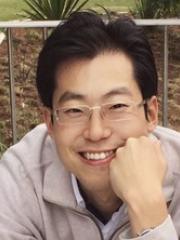
SangHyung Ahn is a Lecturer at the School of Civil Engineering , University of Queensland (UQ), since 2017. He joined UQ as a postdoctoral research fellow in 2015 after earning his PhD in Civil Engineering (Construction Engineering and Management) from Purdue University, USA. Prior to his academic career, he worked as an assistant manager at Hyundai Engineering and Construction Co., Ltd. (2003-2007) and holds an MBA in international business from Hanyang University and a B.Sc in Civil Engineering from Korea University. Research Focus: Construction process modelling with virtual reality, decision support systems for construction, automation of data-driven simulation modelling, sensor-based operations analysis, and integration of Building Information Modelling (BIM). Teaching: Coordinates undergraduate courses Introduction to Project Management (CIVL3510) and Construction Engineering Management (CIVL4522) . Research Trends: His recent publications highlight interdisciplinary work in transportation engineering, structural design, and AI-driven simulation tools. Key themes include application of machine learning to car-following models, drone-based vehicle identification, and optimization of public transport systems using agent-based simulations. Supervision: Available for supervision, with completed supervision of PhD and Master’s theses on topics such as BIM-LCA integration, pedestrian trajectory analysis, and AI-driven driving behavior models.
Nathaly Carolina Pinto Torres is a Doctoral Researcher at Aalto University's Department of Design, working on critical design interventions for marginalized communities. Since 2020, she has led the "Emergencia de Educación en la Amazonía Ecuatoriana" project, collaborating with indigenous students and Confeniae to develop pictographic communication systems challenging social exclusion. Her research spans: Participatory design with indigenous communities Gender justice in education during crises Epistemic justice in plurinational contexts Visual resistance strategies in Amazonian regions Postcolonial educational frameworks Design for socio-environmental transformation Publication trends show focus on: Visual communication systems for marginalized groups Crisis-driven educational design Decolonial methodologies Intersectional analysis of exclusion Epistemic justice in academia Collective resilience building Scientific recognition includes: Best Demo Award (2021) SENESCYT International Graduate Scholarship (2019) Netherlands Fellowship Programmes (NFP) (2010)
Jennifer J. Baker is an Associate Professor in the Department of English at New York University's College of Arts and Science. Holding a Ph.D. in English from the University of Pennsylvania (2000), her academic focus spans 18th- and 19th-century American literary, cultural, and intellectual history. Key research areas include literature and science, environmental literature, transatlantic Romanticism, and Civil War literature. She is currently working on a reception history of Herman Melville’s Moby-Dick , examining its rise to canonical status through Cold War politics and academic culture. Education: Ph.D. in English, University of Pennsylvania (2000) Her upcoming book American Romanticism and the Evolutionary Idea (Stanford UP, 2026) investigates how evolutionary theories intersected with Romantic concepts in 19th-century American literature. Previous publications include Securing the Commonwealth: Debt, Speculation, and Writing in the Making of Early America (Johns Hopkins UP, 2006). Recent research includes articles on Herman Melville, Emerson, Nathaniel Hawthorne, and Judith Sargent Murray, reflecting her interdisciplinary approach combining literary analysis with financial history, scientific thought, and cultural studies. Faculty Fellowship, NYU Center for the Humanities (2014-15) Heyman Prize, Yale University (2004) Morse Fellowship, Yale University (2005) Andrew W. Mellon Dissertation Fellowship (1997-98) She serves on the Board of the Melville Society Cultural Project and has held academic appointments at Yale University and the McNeil Center for Early American Studies.
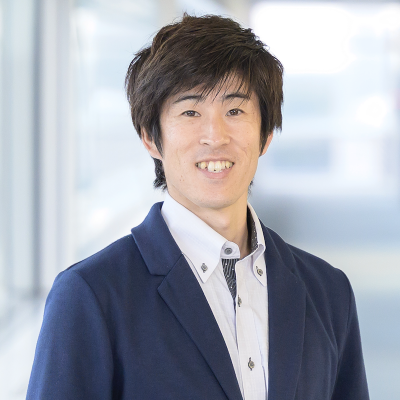
Hirokatsu Kataoka serves as Chief Senior Researcher at the National Institute of Advanced Industrial Science and Technology (AIST) in Japan, with multiple academic affiliations including Academic Visitor at the Visual Geometry Group (VGG) at University of Oxford, Visiting Associate Professor at Keio University, and Adjunct Associate Professor at Tokyo Denki University. He is Principal Investigator of both cvpaper.challenge and LIMIT.Lab, and serves as Research Advisor for SB Intuitions. Dr. Kataoka earned his Ph.D. in Engineering from Keio University (April 2011 - March 2014), where he received the Fujiwara Prize in 2014 as valedictorian equivalent. His research primarily focuses on innovative pre-training methodologies that eliminate dependency on natural image datasets, with his Formula-Driven Supervised Learning (FDSL) framework being particularly influential in the field. Kataoka's research interests center around representation learning with limited data resources, including zero-shot, unsupervised, and synthetic learning approaches. His work explores how visual/multimodal models can be effectively trained with minimal real-world data, addressing critical ethical concerns related to large-scale datasets. He has pioneered methods using fractal geometry, mathematical formulas, and procedural generation to create effective pre-training frameworks that rival traditional ImageNet-based approaches. His publication record shows a clear trajectory toward solving the challenges of learning with limited resources, with recent work expanding FDSL to audio processing, microfossil analysis, and visible-to-infrared translation. His papers consistently address the core challenge of building robust visual recognition systems without relying on massive annotated datasets, with increasing focus on practical applications across diverse domains. Scientific Awards & Recognition ACCV 2020 Best Paper Honorable Mention Award for 'Pre-training without Natural Images' AIST Best Paper Award (2019, 2022) BMVC 2023 Best Industry Paper Finalist Featured in MIT Technology Review His 3D ResNets paper ranks among the top 0.5% most-cited CVPR papers over a five-year period Dr. Kataoka actively advises numerous researchers across multiple institutions, with his research team comprising Ph.D. and Master's students from various universities. He has served as Area Chair for CVPR 2024 and 2025, will serve as IEEE TPAMI Associate Editor beginning in 2025, and organizes the LIMIT Workshop series at major computer vision conferences. His LIMIT.Lab, established in June 2025, serves as a collaboration hub focused on building multimodal AI models under constrained resources including compute, data, and labels.
Professor Yvonne Rydin is Chair of Planning Environment and Public Policy at The Bartlett School of Planning, University College London (UCL), where she has been based since 2006. She currently holds a 50 % part-time appointment at UCL and previously spent 16 years at the London School of Economics in the Department of Geography and Environment. Education PhD in Urban and Regional Planning Studies, University College London (1984) BA (Hons) in Land Economy, University of Cambridge (1978) Research Interests Professor Rydin is an internationally recognised scholar in governing for sustainability. Her work spans urban green space management, community energy, retail planning, and post-growth urban futures. Conceptually, she mobilises network metaphors (including social capital) and discourse analysis to unpack governing processes, while also drawing on socio-technical studies to examine large-scale energy infrastructure. A long-standing strand of research interrogates knowledge production within planning, scrutinising classificatory systems such as BREEAM and sustainability indicators and exploring the implications of socio-materiality. Her forthcoming monograph Planning without Growth (Policy Press, 2025) extends her agenda on low-growth planning by investigating how embedded and new knowledges can support alternative local economic models. Research Outputs & Trends Since 2018 she has published extensively on post-growth planning, regulatory theory, digital tools in participation, and diverse economies. Recent articles in Planning Theory, Built Environment and Planning Practice & Research articulate critical perspectives on moving beyond pro-growth orthodoxies and re-tooling the planning profession. Scientific Awards & Recognition While no specific awards are listed, Professor Rydin has held numerous prestigious roles: member of the RAE 2014 panel, invited oral evidence to the House of Commons Environmental Audit Committee, participant in the Raynsford Review of Planning, and repeated evaluator for the Norwegian Research Council, Finnish Academy, ESRC and FORMAS. Advising & Grants She has supervised collaborative Engineering Doctorate (EngD) studentships with industrial partners BRE Global and Buro Happold (2011-2020), and co-taught on the MSc Sustainable Urban Development at Oxford University’s Department for Continuing Education (2014-2018). Labs & Teams Professor Rydin served as Director of the UCL Environment Institute (2010-2013) and leads teaching on the postgraduate module Planning for Sustainability and Inclusion alongside Dr Yasminah Beebeejaun.
Joy S. Kaufman is a Professor in the Department of Psychiatry at Yale School of Medicine. She serves as Deputy Chair for Career Development, Director of the Yale Consultation Center, and Director of YaleEVAL. Her work focuses on large-scale evaluations of health service delivery systems in under-resourced communities, emphasizing community-based participatory research and stakeholder training. Education: PhD in Clinical and Community Psychology, DePaul University (1994) Postdoctoral Fellow, Yale University (1993) MA in Psychology, DePaul University BA in Psychology, Assumption College Dr. Kaufman specializes in health equity , trauma exposure in children , and program evaluation . Her research bridges public health , social justice , and behavioral health policy through rigorous methodologies. Recent publications highlight her work on opioid use disorder in obstetric care , perinatal substance use reporting , and system-level mental health evaluations . She employs latent class analysis and CBPR frameworks to address disparities. Scientific Awards: Fellow, American Psychological Association Fellow, Society for Community Research and Action Gold Medal, Substance Abuse and Mental Health Services Administration Exemplary Evaluation, American Evaluation Association As principal investigator, she has secured funding from the National Institute of Justice , PCORI , and Connecticut state agencies . Her leadership extends to training community members in evaluation methods and developing trauma-informed healthcare systems .
Hansjörg Schmid is a Full Professor at the Department of Moral Theology and Ethics , University of Fribourg, and serves as Director of the Swiss Center for Islam and Society (SZIG) . His work focuses on interreligious ethics, Christian-Muslim dialogue, and socio-ethical challenges in pluralistic societies. Education: Theology diploma (1998), habilitation (2012) at the University of Munich Research Highlights: Muslim organizations as social actors, Islam in post-secular contexts, conflict transformation, and integration of Muslim pastoral care in welfare systems Grants: Funded by Mercator Foundation Switzerland, State Secretariat for Migration, Robert Bosch Foundation Networks: Christian and Muslim Discussion Group, Building Bridges Seminar, advisory boards for interfaith projects in Germany and Switzerland His academic career spans roles at the University of Salzburg, Munich, and Freiburg, with a focus on intercultural theology and Islamic social work. Recent publications analyze antimuslim racism, chaplaincy practices, and religious education in Switzerland.
John Peters serves as Associate Professor at Memorial University of Newfoundland within the Faculty of Business Administration and Department of Sociology, with additional appointments as Research Fellow at Montreal's CRIMT and Associated Professor at both Montreal's School of Industrial Relations and York University's Department of Politics. His educational background includes a Master's in History from the University of Michigan and PhD in Political Science from York University, building foundational expertise for his interdisciplinary work. Peters' research critically examines labor movements within financialized economies and climate crisis responses, focusing on decarbonization's impact on workers through frameworks of just transition and political economy. His scholarship bridges theoretical analysis of inequality with practical policy solutions for sustainable labor markets. Recent publications (2019-2022) reveal consistent thematic focus: financialization's erosion of labor power, climate-labor intersections, and policy pathways for equitable economic transformation, with significant emphasis on Canadian contexts and comparative frameworks. His research awards demonstrate sustained funding success: SSHRC Engage Grant (2023) analyzing unions' climate crisis strategies SSHRC Connection Grant (2022) exploring climate-work futures Multi-year SSHRC Partnership Grant (2017-2024) for institutional labor innovation Peters actively collaborates through CRIMT on sector-specific policy studies (auto, steel, aluminum) while developing union training programs for zero-carbon transitions, emphasizing worker capacity building for equitable clean energy economies.
Scott McCabe is a Professor of Marketing at Birmingham Business School, University of Birmingham. He earned his PhD from the University of Derby in 2001, focusing on visitor motivations in the Peak District National Park, and holds an MA in Leisure and Tourism Studies from the University of North London (1993) and an HND in Leisure Studies from the University of Salford (1991). Current co-editor in Chief of the Annals of Tourism Research Editorial board member of Tourism Management Elected fellow of the International Academy for the Study of Tourism (2019+) His research spans social tourism , responsible tourism , tourist emotions , and socio-linguistic methodology , with significant work on wellbeing outcomes from supported holidays for disadvantaged families. He has contributed to Annals of Tourism Research , Journal of Travel Research , and other top-tier journals. Recent publications address topics like qualitative research sampling , tourism theory , dark tourism motivations , and smart destination engagement . His work combines tourism policy critique , consumer behavior analysis , and methodological innovation . Scientific awards include fellowships and leadership roles in international tourism research committees. He has served as VP for the International Sociological Association's Tourism Research Committee and co-chairs the Academy of Marketing's Tourism Marketing SIG.
Said Hamdioui serves as a full Professor in the Department of Computer Engineering within the Faculty of Electrical Engineering, Mathematics and Computer Science at Delft University of Technology. His research focuses on cutting-edge hardware architectures for neuromorphic computing and energy-efficient AI acceleration, with particular emphasis on memristor-based systems, emerging memory technologies, and fault-tolerant designs for edge applications. His research interests span Neuromorphic Computing , Memristor-Based Architectures , and Energy-Efficient AI Hardware , addressing critical challenges in hardware security, computation-in-memory, and reliable edge AI deployment. Recent work demonstrates significant advancements in RRAM/FeFET testing methodologies, spiking neural network implementations, and spin wave computing alternatives to traditional CMOS. His publications reveal strong trends toward real-world deployment of brain-inspired hardware with practical constraints like power efficiency, testability, and security. Award highlights include: DATE'20 Best Paper Award DFT'21 Outstanding Student Paper ETS 2021 Best Paper Award LATS 2018 & 2022 Best Paper Awards Professor Hamdioui actively contributes to the research community through editorial roles at IEEE Transactions on VLSI Systems , IEEE Design & Test , and Journal of Electronic Testing from 2017-2018. His leadership in multi-partner projects like CONVOLVE and NEUROKIT2E demonstrates strong industry-academia collaboration for edge AI solutions. Current work shows increasing focus on practical deployment challenges including in-field fault monitoring, security vulnerabilities in neuromorphic systems, and realistic brain simulation frameworks.