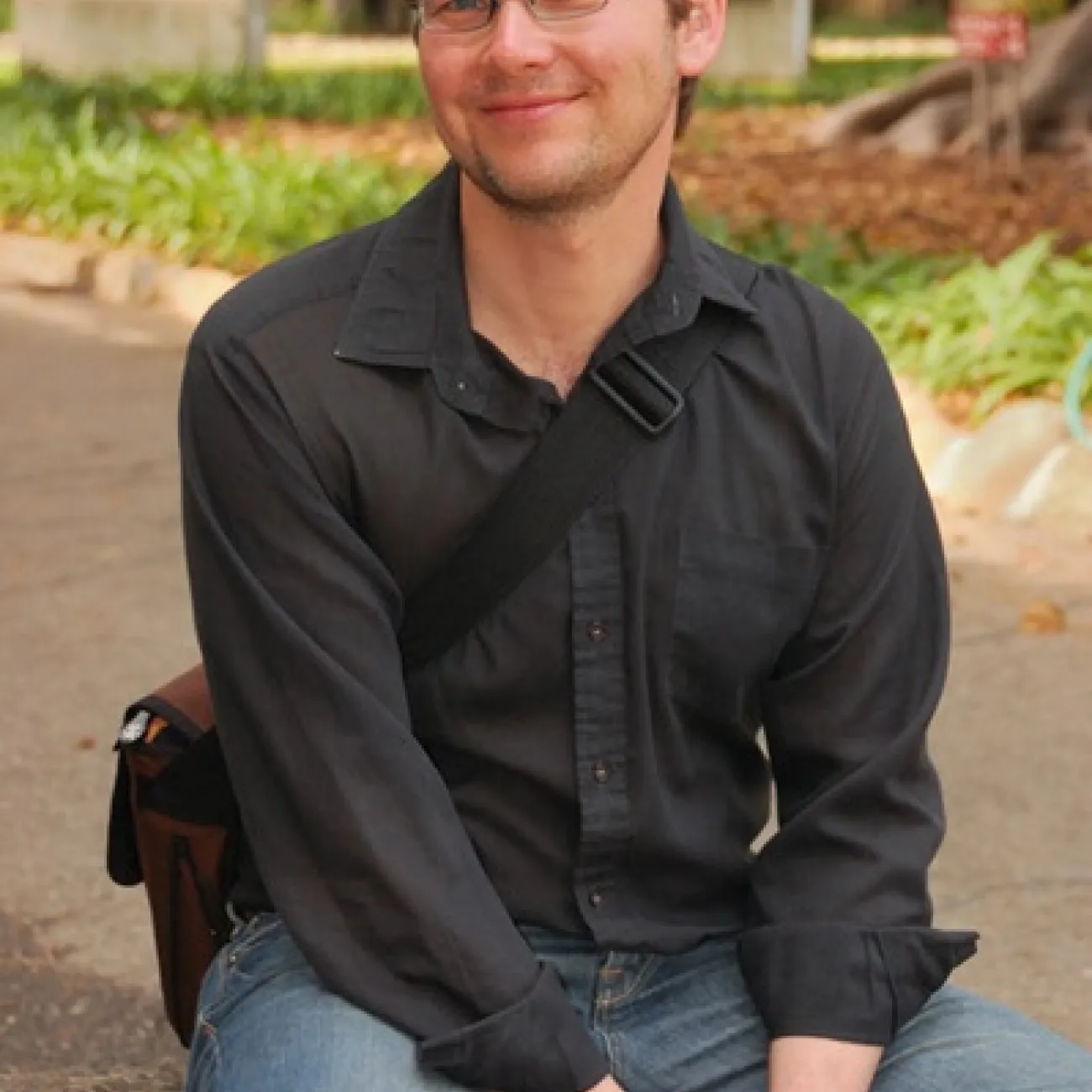
Dr. Jessica Sunshine is a Professor in the Department of Geology at the University of Maryland. Her research focuses on planetary materials and processes, particularly using spectroscopy and morphological analysis to study comets, asteroids, meteorites, and lunar geology. She is a principal investigator on NASA missions such as the Double Asteroid Redirection Test (DART) and the Lucy Mission, contributing to breakthroughs in planetary defense and asteroid composition analysis. Dr. Sunshine holds a Ph.D. from Brown University (1994). Her work integrates field-based and remote sensing techniques, including thermal infrared spectroscopy, to explore topics like the origins of spinel-rich deposits on the Moon, the composition of Trojan asteroids, and the dynamics of impact ejecta. She leads the Lunar Vulkan Imaging and Spectroscopy Explorer (Lunar-VISE) mission to study non-mare volcanic regions on the Moon. Her recent studies include analyzing the DART mission's impact on Dimorphos, revealing insights into asteroid deflection mechanics and surface material responses. She has also contributed to understanding the geological history of Ceres and the compositional diversity of Jupiter Trojans through the Lucy mission's data.
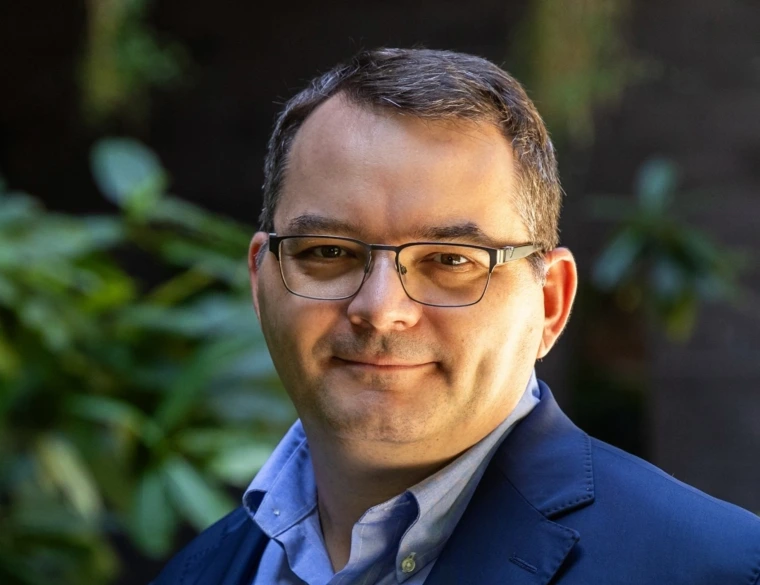
Professor Christian Knigge serves as Professor of Astrophysics at the University of Southampton and is a core member of the Southampton Theory Astrophysics and Gravity (STAG) Research Centre within the Institute for Life Sciences. His research program investigates accretion phenomena across diverse cosmic scales, from stellar-mass compact objects to supermassive black holes. Knigge's primary research focuses on accretion phenomena and associated outflows, cataclysmic variables, close binaries, globular clusters, and active galactic nuclei. He examines the physical mechanisms driving accretion disk instabilities, outflow generation, and explosive events in binary systems, with particular emphasis on white dwarf and black hole accretors. His work integrates observational data with theoretical modeling to unravel the complex physics of these high-energy environments. Recent publications (2024-2025) reveal a strong emphasis on multi-wavelength observational campaigns, especially leveraging JWST capabilities, alongside theoretical code development. Key research threads include characterizing disk winds in active galactic nuclei, identifying quasi-periodic oscillations in white dwarf systems, classifying optical outbursts in cataclysmic variables, and developing computational tools like the SIROCCO radiative transfer code. These studies demonstrate his leadership in connecting observational signatures with fundamental accretion physics across different astrophysical regimes. Supervision: Currently guides six PhD students in Physics (Austen George William Wallis, Cordelia Brown, Brian Luff, Zackery Alexander Irving, Arianna Clarissa Albayati, Pornisara Nuchvanichakul) Grants: Leads STFC-funded projects including 'Line-Driven Disk Winds in Active Galactic Nuclei', 'C Knigge - Astrophysics at Southampton', and previously held a Leverhulme Trust Research Fellowship for 'The Universal Nature of Accreting Compact Objects' As an integral member of the STAG Research Centre, Knigge collaborates within a multidisciplinary team investigating gravity-dominated systems, contributing to Southampton's prominence in theoretical and observational astrophysics through both individual research initiatives and institutional consolidation grants.
Nanna Bach-Møller is a postdoctoral fellow at the Niels Bohr Institute, University of Copenhagen, specializing in astrophysics and planetary research. She completed her PhD in 2024 with a dissertation on exoplanet atmospheres in high-energy radiative environments. Research Interests Exoplanet atmospheres and their interaction with high-energy radiation Microlensing events and brown dwarf characterization Planetary system dynamics and orbital evolution Stellar activity and its impact on exoplanet observations Her work combines theoretical modeling with observational data analysis, focusing on understanding atmospheric processes in extreme environments and the dynamics of planetary systems. Publications Dr. Bach-Møller has published extensively in leading journals such as Astrophysical Journal , Astronomy & Astrophysics , and Monthly Notices of the Royal Astronomical Society . Her recent work includes studies on cloud particle charging, transmission spectroscopy of exoplanets, and precision measurements of brown dwarf masses through microlensing. Collaborations She collaborates with international teams, including the MiNDSTEp Consortium, OGLE Collaboration, and MOA Collaboration, contributing to large-scale surveys and high-impact research projects.
Diana Dragomir is an Assistant Professor in the Department of Physics and Astronomy at the University of New Mexico. Her research focuses on exoplanet detection and characterization, particularly using data from NASA's Transiting Exoplanet Survey Satellite (TESS). She leads efforts to identify and analyze planets in multi-planet systems, with a specialization in atmospheric studies of super-Earths, mini-Neptunes, and gas giants. Dr. Dragomir collaborates extensively with citizen science networks and international teams to validate TESS discoveries and refine observational techniques. Education: PhD in Physics from the University of British Columbia (2013). Her work bridges stellar astrophysics and planetary science, emphasizing the interplay between planetary formation mechanisms and atmospheric evolution. Key projects include the WINE Survey for resonant exoplanet pairs and atmospheric modeling for upcoming James Webb Space Telescope observations. Research interests span exoplanet orbital dynamics, transit timing variations, and the study of planets in evolved binary systems. Recent publications highlight discoveries like TOI-6695 (near-resonant massive planets) and HD 35843 (long-period sub-Neptune system). Her methods often integrate radial velocity measurements with photometric data to validate planet candidates and constrain system parameters. Dr. Dragomir's contributions include advancing algorithms for detecting long-period exoplanets and interpreting complex transit signals. She actively participates in NASA TESS mission working groups and serves as a co-investigator on projects targeting planetary atmospheres and formation pathways. Her team's work provides critical data for understanding planetary diversity and habitable zone dynamics.
Stephen Warren is a Professor of Astrophysics at Imperial College London's Department of Physics, part of the Faculty of Natural Sciences. He has been at Imperial since 1994, previously holding postdoctoral fellowships at institutions like Steward Observatory and ESO. His research focuses on observational astronomy, including surveys for high-redshift quasars, brown dwarfs, gravitational lensing, and quasar absorption lines. He led the UKIRT Infrared Deep Sky Survey as Survey Scientist until 2012 and served as Head of Astrophysics at Imperial from 2010 to 2015. Education: BA and PhD (1988) from the University of Cambridge. His academic positions include Consul for the Faculty of Natural Sciences & Education Office at Imperial College London since 2020. Research interests emphasize discovering celestial objects through surveys and understanding their properties. His work spans quasar environments, galaxy mass modeling, and brown dwarf characterization. Recent publications highlight advancements in gravitational lensing models, Milky Way vertical structure analysis, and Euclid mission predictions for high-redshift quasars. Affiliations include the Astrophysics Group, Physics of the Universe, and Space Lab at Imperial. His contributions to large surveys and observational techniques have been foundational in extragalactic astronomy and sub-stellar object classification.
Professor Stuart Littlefair is a Professor of Astrophysics at the University of Sheffield's School of Mathematical and Physical Sciences. His research focuses on Interacting binary stars , Brown dwarfs and low-mass stars , Star formation , and High time resolution astrophysics . He contributes to projects like the Gravitational-wave Optical Transient Observer (GOTO), which detects transient astrophysical events. His work bridges observational astronomy and theoretical modeling, emphasizing multi-messenger astronomy and gravitational wave source identification. Research interests include studying accretion processes in compact binaries, AGN variability, and transient phenomena like gamma-ray bursts. Recent publications highlight his involvement in analyzing high-cadence optical/X-ray data (e.g., NGC 4395 AGN variability studies) and discovering peculiar systems such as inflated brown dwarfs in eclipsing binaries. He collaborates internationally, serving on committees like the ESO Observing Programmes Committee and the LSST:UK Board. Teaching activities include PHY241 Observational Astronomy . Professional roles include leading the Astrophysics Research Cluster and contributing to departmental administration (e.g., Head of Second Year Astrophysics). His work supports the University of Sheffield's astronomy infrastructure, including the GOTO telescope array.
Daniel Apai is Professor of Optical Sciences and Professor of Astronomy & Planetary Sciences at the University of Arizona, where he also serves as Associate Dean for Research in the College of Science. His core appointments span the Department of Optical Sciences and the Department of Astronomy & Planetary Sciences, reflecting a dual expertise in instrumentation and astrophysical research. He earned a MSc from the University of Szeged, Hungary (2000) and a PhD from the University of Heidelberg, Germany (2004). Research Interests Space telescopes and next-generation instrumentation Infrared spectroscopy of exoplanets and brown dwarfs Habitability assessment of terrestrial and sub-stellar worlds Atmospheric dynamics and weather patterns in ultracool atmospheres Advanced optical systems including multi-order diffractive Fresnel lenses Across his 2022–2025 publication record, Apai’s work reveals a consistent focus on leveraging JWST, HST, and forthcoming missions such as NASA’s Pandora SmallSat to characterize exoplanet atmospheres, map brown-dwarf weather, and refine habitability metrics. Studies span from detecting the faintest brown dwarfs in globular clusters to building quantitative frameworks for biosignature assessment, illustrating a trajectory that couples cutting-edge observations with theoretical modeling. Awards & Honors No specific awards are listed in the provided text; the narrative is limited to appointments and scholarly output. Students & Grants The supplied text does not enumerate graduate students or funding details. Laboratories & Teams While no formal lab names are given, Apai’s leadership in space-telescope instrumentation and participation in large JWST and HST programs suggest active involvement in multi-institutional collaborations centered on exoplanet characterization and infrared instrumentation development.
Kate Follette is an Associate Professor in the Department of Astronomy at Amherst College, where she conducts cutting-edge research in exoplanet detection and STEM education. She serves on the NSF Astronomy and Astrophysics Advisory Committee (2024-2026) and the NASA Exoplanet Exploration Program Analysis Group Executive Committee (2023-2025), demonstrating her leadership in the astronomical community. Ph.D. in Astronomy, University of Arizona (2014) M.S. in Astronomy, University of Arizona (2010) B.A. in Physics and Japanese Studies, Middlebury College (2004) Dr. Follette's research focuses on using adaptive optics technology to detect young exoplanets and circumstellar disks through direct imaging techniques. Her work pushes the boundaries of telescope and image processing technology to isolate light from planets that are millions of times fainter than their host stars. She also leads an education research lab that studies the role of mathematics across science curricula, with particular interest in improving students' quantitative reasoning skills and addressing math anxiety. Her publication record shows a strong focus on direct imaging of protoplanets, with numerous papers on the AB Aurigae system and the Giant Accreting Protoplanet Survey (GAPlanetS). Her work spans observational techniques, data analysis methodologies, and the physical interpretation of circumstellar environments where planets form. Scialog: Signatures of Life in the Universe Fellow (2022-24) Cottrell Scholar (2022-25) Amherst College Center for Teaching and Learning Faculty Fellow (2022-24) NASA Sagan Postdoctoral Fellowship (2016) Dr. Follette actively contributes to the professional development of early-career scientists through her role as Chair of the American Astronomical Society Task Force on Early Career Engagement (2022-2024) and as a member of the National Numeracy Network Board of Directors (2014-present). Her educational research has developed assessment tools like the Quantitative Reasoning for College Science (QuaRCS) to measure and improve students' numeracy skills in science contexts.
Dr. H.K. Vedantham is a Research Fellow at the Kapteyn Astronomical Institute , part of the Faculty of Science and Engineering at the University of Groningen . His work focuses on radio astronomy and astrophysics, particularly the study of exoplanets, brown dwarfs, and stellar systems through low-frequency radio observations and interferometric techniques. Research Interests: Radio astronomy of exoplanets and sub-stellar objects Stellar mass-loss and magnetic interactions Space weather phenomena Astrometric and radial velocity measurements Publications highlight his contributions to understanding radio emission mechanisms in exoplanetary systems, stellar magnetospheres, and dwarf galaxies. His work frequently involves collaborations using advanced instruments like LOFAR and VLBI networks. Contact: Email: h.k.vedantham@rug.nl Phone: +31 50 36 34073
Cullen Blake is an Associate Professor in the Department of Physics and Astronomy at the University of Pennsylvania School of Arts & Sciences. His primary research focuses on exoplanet detection around low-mass stars and the astrophysics of low-mass stars and brown dwarfs. He is deeply involved in observational astronomy, developing techniques to detect Earth-like planets and improving stellar characterization through precision radial velocity measurements and synoptic surveys. Blake plays a key role in projects like the NEID Earth Twin Survey and the Brown Dwarf Kinematics Project, leveraging instrumentation such as the NEID spectrograph and robotic telescopes. Education: Ph.D. (Astronomy) Harvard University (2009), A.M. (Astronomy) Harvard University (2006), A.B. (Astrophysics) Princeton University (2003). Research Interests: Search for Earth-like planets around low-mass stars Stellar astrophysics of low-mass stars and brown dwarfs Instrumentation development for exoplanet surveys Robotic telescopes and synoptic survey strategies Stellar activity mitigation in radial velocity data He has contributed to major collaborations including the APOGEE survey, the MINERVA telescope array, and the design of the NEID spectrometer. His work emphasizes bridging observational techniques and theoretical models to advance our understanding of planetary systems and stellar evolution. Key projects include the NEID Sun-as-a-Star program and the development of algorithms to reduce noise from telluric and stellar variability. Blake's research also extends to brown dwarf kinematics and the analysis of transient phenomena in stellar systems.
Dr. Ben Montet is a Senior Lecturer in the School of Physics at the University of New South Wales (UNSW), where he leads the NEarby Worlds and Their Stars (NEWTS) research group. He joined UNSW in October 2019 and actively seeks to supervise students at undergraduate, Honours, and PhD levels in exoplanet and stellar astrophysics research. His education includes a PhD in Astrophysics from the California Institute of Technology (2016) and a BS in Physics and Astronomy from the University of Illinois at Urbana-Champaign (2011). Dr. Montet's research focuses on detecting and characterizing exoplanets around nearby stars and studying stellar magnetic activity phenomena like starspots and flares. He leverages data from space-based missions (Kepler, TESS) and ground-based facilities, employing machine learning techniques and statistical methods to analyze large datasets. His work spans exoplanet detection methods, stellar activity evolution, and the application of advanced computational tools to astrophysical problems. His recent publications demonstrate a strong focus on exoplanet characterization (including atmosphere studies, transit timing variations, and dynamical interactions), asteroseismology (determining stellar masses and evolutionary states), and stellar activity cycles. A significant portion utilizes data from the TESS mission. Dr. Montet is actively involved in student advising and encourages prospective students interested in exoplanets or stellar astrophysics to contact him. He leads the NEWTS research group at UNSW.
Lorne A. Nelson is a Professor of Physics at Bishop's University, where he joined as an Assistant Professor in 1988 and was promoted to full Professor in 1998. He has served as Chair of the Physics Department during two separate terms (1996-1998 & 1999-2001). His research focuses on the theoretical aspects of stellar evolution, particularly in binary systems containing compact objects such as white dwarfs, neutron stars, and black holes. Nelson received his Ph.D. from Queen's University in 1984. He subsequently held a postdoctoral fellowship at MIT's Center for Space Research, where he conducted pioneering work on brown dwarfs. From 1986-1988, he was a research fellow at CITA (Canadian Institute of Theoretical Astrophysics). Professor Nelson's research interests center on interacting binary stars, Type Ia supernovae, millisecond pulsars, and brown dwarfs. His work provides insights into the formation and evolution of binary systems, with applications to understanding dark matter, testing general relativity, and explaining exotic astronomical phenomena. He employs population synthesis and stellar evolution techniques to develop self-consistent models of binary evolution that can be tested against observational data from instruments like HST, Chandra, and Keck. Analysis of Nelson's publication record reveals a consistent focus on binary stellar evolution across four decades. His work demonstrates progression from foundational studies of brown dwarfs and very low-mass stars to sophisticated modeling of binary millisecond pulsars, cataclysmic variables, and Type Ia supernova progenitors. A recurring theme is the development of theoretical frameworks that connect stellar evolution with observable phenomena, particularly through population synthesis techniques that bridge theoretical predictions with observational constraints. Canada Research Chair in Astrophysics (2002) William & Nancy Turner (Chancellor's) Teaching Award (1996) Invited Contributor to Nature's News & Views (1995) Reinhardt Fellowship from CITA (1999) Invited Review Speaker at multiple international conferences Professor Nelson has advised numerous graduate students who have gone on to successful careers in academia and industry, including Kirk Buckley (NSERC PDF at Berkeley), Chris Burns (Assistant Professor at Swarthmore), and Drew MacCannell (PhD student at UCSD). His research has been supported by significant grants including the Canada Foundation for Innovation, NSERC, and the Ministère de la Recherche, de la Science et de la Technologie of Quebec. Nelson collaborates extensively with researchers at MIT, UCSB, Northwestern, and other institutions worldwide. Nelson leads the Bishop's University Interacting Binary Evolution Server, a valuable resource for the international astrophysics community that provides evolutionary tracks for low-mass interacting binaries. He also co-developed the Elix2 Beowulf cluster in collaboration with the Université de Sherbrooke, creating a high-performance computing environment for theoretical astrophysics research. His team produces detailed animations of binary evolution that serve both research and educational purposes.
Christiane Helling is Full Professor in Weltraumwissenschaften (Space Sciences) at Graz University of Technology and Director of the Institute for Space Research Graz (IWF) at the Austrian Academy of Sciences. She previously held leadership roles at the University of St Andrews, including Director of the Centre for Exoplanet Science, and has been a Senior Scientist at the Netherlands Institute for Space Research. Habilitation in Astrophysics (TU Berlin) PhD in Astrophysics (TU Berlin, with distinction) Diploma in Physics (TU Berlin) Her research focuses on exoplanet and brown dwarf atmospheres, cloud microphysics, charge processes, and atmospheric chemistry. She integrates hydrodynamic simulations with space observations from missions like CHEOPS, JWST, and PLATO to map cloud distributions and study planetary climate. Her recent publications emphasize time-dependent cloud formation, thermodynamic disequilibrium in planetary disks, and exoplanet atmospheric characterization using space telescopes. Key collaborations include the CHAMELEON project (virtual laboratories for exoplanet atmospheres) and the MSG model for cloudy sub-stellar atmospheres. ERC Starting Grant (LEAP Project: Lightning, Electrical and Atmospheric Processes on exoplanets) Marie-Curie Innovative Training Network (CHAMELEON)
Elisabeth Newton is an Assistant Professor in the Department of Physics and Astronomy at Dartmouth College, where she leads a research group focused on stellar and exoplanet astrophysics. She holds a B.S. from the College of Creative Studies at UC Santa Barbara and a Ph.D. from Harvard University. Her research utilizes ground-based observatories (e.g., SALT, MDM) and space telescopes (e.g., TESS) to study stellar magnetic dynamos, exoplanet formation, and Galactic populations. Her work spans stellar rotation-activity relationships, M dwarf characterization, and the discovery of young exoplanets through the THYME collaboration, where she serves as co-PI. Research interests include: Physics of stellar magnetic fields and angular momentum evolution Formation and atmospheric evolution of exoplanets around young stars Dynamics of stellar populations in the Milky Way Her publications emphasize young planetary systems, stellar activity in low-mass stars, and spectroscopic methods. Recent work explores exoplanet atmospheric escape, cluster age dating, and multi-planet system dynamics, often leveraging large surveys and machine learning techniques. Group members have received recognition including: LSST Data Science Fellowship (Rayna Rampalli, 2022) AAS International Travel Grant (Keighley Rockcliffe) Christopher Reed Science Competition 3rd Place (Jack Duranceau) She mentors undergraduates through senior theses and advises graduate students on projects involving exoplanet detection, stellar spectroscopy, and Galactic archaeology. Research is supported by NASA TESS grants and collaborative programs. The Newton Lab develops open-source tools for spectral analysis (e.g., nirew for equivalent widths) and coordinates the THYME collaboration, which combines multi-observatory data to study planetary system evolution.
Beatriz Campos Estrada is a Research Fellow in the APEx department at the Max Planck Institute for Astronomy in Heidelberg, Germany. Education: Joint PhD in Astrophysics from University of Copenhagen (Denmark) and Graz University of Technology (Austria), completed October 2024 through CHAMELEON Marie-Curie ITN Her research focuses on connecting theoretical atmospheric models to observational data for exoplanets and brown dwarfs, specializing in retrieval framework development, cloud formation physics, and atmospheric escape processes. Current work validates retrieval accuracy using GCM simulations for variable brown dwarfs and directly imaged planets while investigating composition constraints for small exoplanets. Publication trends (2020-2025) reveal concentrated expertise in atmospheric retrieval methodologies (notably the MSG model), cloud microphysics in sub-stellar objects, and evaporative mass loss in rocky exoplanets, with significant contributions to interpreting JWST observations and modeling complex atmospheric variability. Scientific Awards: No awards mentioned in source text. Advising and Grants: No student advisees or research grants referenced in provided materials. Laboratory Affiliation: Active member of the atmospheric modelling and retrievals group within APEx department, developing frameworks for synthetic observation analysis and atmospheric parameter retrieval.