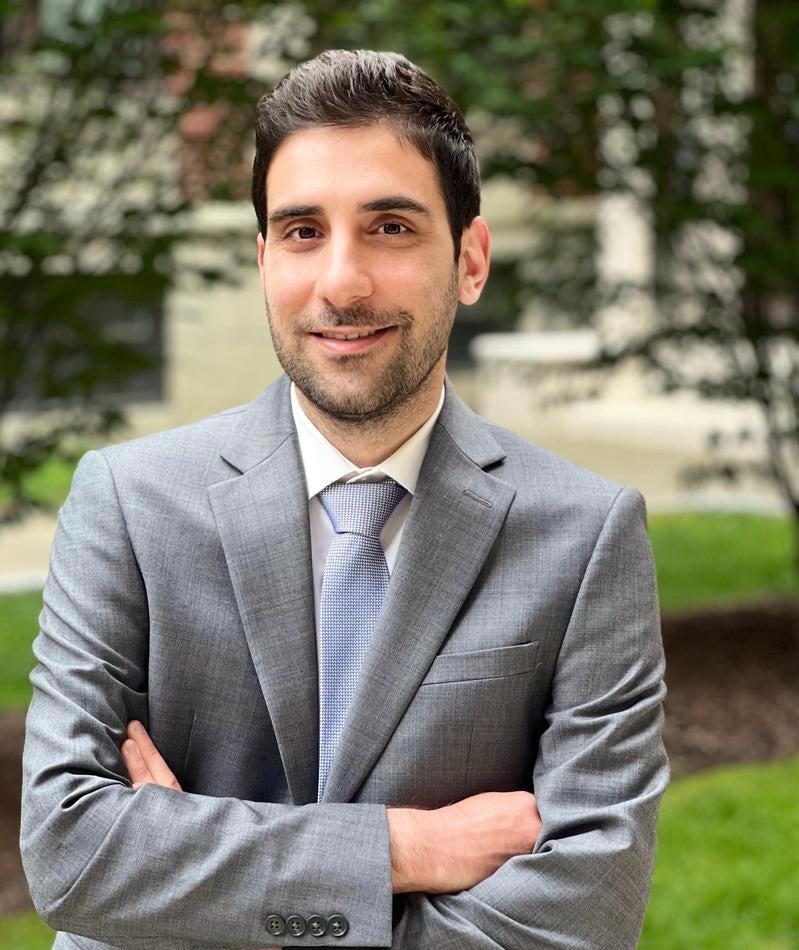
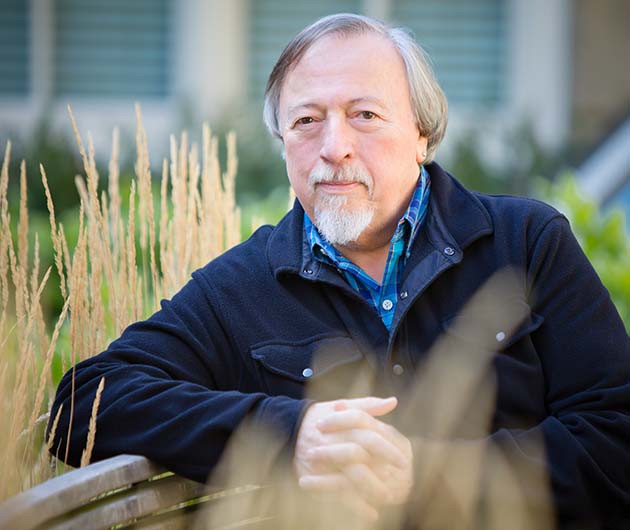
Moritz Wiese is a Researcher at the Chair of Theoretical Information Technology within the Department of Electrical and Computer Engineering at Technische Universität München (TUM) . His work focuses on information-theoretic security, quantum communication, and wireless networks, with significant contributions to interference modeling and secure coding schemes. Research Interests : Information-Theoretic Security, Quantum Wiretap Channels, MIMO Systems, 5G/6G Technologies, Physical Layer Security, and Network Coding. Key Grants : Involved in DFG-funded projects (Gottfried Wilhelm Leibniz Prize, UKoloS) and BMBF initiatives (6G-life, QuaDiQua). Collaborations : Worked with Prof. Holger Boche, Christian Deppe, and Rami Ezzine on secure communication and randomness generation. Labs : Active in the ACES Lab and 6G-life research hub, focusing on joint communication/sensing and neuromorphic computing. Publications : Over 20 papers on secure estimation, wiretap channels, and quantum secrecy, including top-tier journals like IEEE Transactions on Information Theory and Journal of Mathematical Physics .
Bert DE REYCK is the Dean of the Lee Kong Chian School of Business at Singapore Management University (SMU) and holds the rank of Professor of Operations Management. He holds a PhD in Business Economics from the University of Leuven, Belgium, along with an MSc in Business Information Systems and a BSc in Business Engineering from the same institution. His career includes roles as Founding Director and Professor at UCL School of Management (2015–2021), Professor and Head of Department at University College London (2009–2015), and various visiting professorships at institutions like London Business School and the University of Ghent. He has held academic positions since 1998, including Assistant and Associate Professor roles at prestigious institutions such as the London Business School and Rotterdam School of Management. DE REYCK’s research focuses on Operations Management, Business Analytics, and Project Management, with notable contributions to AI applications, transportation systems, and strategic sourcing. His work bridges theoretical rigor and practical impact, addressing challenges in project valuation, contract design, and operations optimization. He has received numerous accolades, including INFORMS’ AAS Best Paper Award (2022), multiple Daniel H. Wagner Prize recognitions, and teaching awards from London Business School and UCL. His research has been supported by grants from organizations like Eurocontrol, NHS, and private sector firms such as Vungle and Noble Group. DE REYCK has led significant industry collaborations, including projects on airport operations optimization, pharmaceutical R&D valuation, and AI-driven advertising strategies. His advisory work spans sectors like aviation, healthcare, and transportation, emphasizing real-world problem-solving through analytics and decision science.
Jon M. Peha is a Full Professor in the Department of Engineering and Public Policy and the Department of Electrical and Computer Engineering at Carnegie Mellon University's College of Engineering. He serves as Founder and Director of the Center for Executive Education in Technology Policy (CEE-TP) and maintains affiliations with the CyLab Security and Privacy Institute and the Information Networking Institute. His career uniquely bridges government service (as FCC Chief Technologist, White House OSTP Assistant Director, and congressional advisor), industry leadership (as CTO for three tech startups), and academic research. Education: Ph.D. in Electrical Engineering, Stanford University (1991) M.S. in Electrical Engineering, Stanford University (1986) B.S. in Electrical Engineering and Computer Science, Brown University (1984) Peha's research spans the technical and policy dimensions of information networks, with particular focus on spectrum management, broadband Internet architecture, wireless communications, cybersecurity, and communications for emergency response. His work integrates engineering principles with economic and regulatory analysis to address real-world challenges in telecommunications infrastructure. Current projects examine connected vehicle communications, spectrum sharing models, and consumer-centric broadband labeling systems that emerged from his large-scale user studies. His research publications demonstrate consistent leadership in both technical innovation and policy analysis, with recent work addressing satellite interference mitigation, V2X communications, and pandemic-era internet performance. The breadth of his scholarship reflects his unique position at the intersection of engineering practice and policy formulation. Scientific Awards: IEEE Fellow AAAS Fellow FCC Excellence in Engineering Award IEEE Communications Society TCCN Publication Award Brown Engineering Medal AAAS Featured Science and Technology Policy Fellow (40@40) Peha actively engages with policymakers through congressional testimony, FCC consultation, and White House advisory roles. His government service has directly informed his academic work on spectrum policy, network neutrality, and public safety communications. He has supervised numerous graduate students across EPP, ECE, and INI programs, with research spanning vehicular networks, spectrum sharing, and emergency communications systems. As Director of CEE-TP, he leads executive education initiatives that bridge technical expertise and policy decision-making. His work with CyLab focuses on cybersecurity and privacy challenges in broadband systems and connected vehicles. Current projects include developing cost-effective spectrum sharing models for intelligent transportation systems and analyzing the economic implications of multi-network access architectures in 5G networks.
Mohammad Mohammadi Amiri serves as an Assistant Professor in the Department of Computer Science at Rensselaer Polytechnic Institute (RPI), appointed in Fall 2023. His research focuses on advancing artificial intelligence through strategic data utilization, with emphasis on large language models, data valuation, federated learning, and deep learning. Previously, he held postdoctoral appointments at Princeton University and MIT Media Lab, building on his strong educational foundation from Imperial College London, University of Tehran, and Iran University of Science and Technology. Education: Ph.D. in Electrical and Electronic Engineering, Imperial College London (2019) - Best Ph.D. Thesis Award recipient M.Sc. in Electrical and Computer Engineering, University of Tehran (2014) - Ranked 1st among all M.Sc. students B.Sc. in Electrical Engineering, Iran University of Science and Technology (2011) - Ranked 1st among all B.Sc. students Dr. Amiri's research centers on optimizing artificial intelligence systems through innovative data strategies. His work addresses critical challenges in large language models including efficiency, memory usage, alignment, and reasoning capabilities. In data valuation, he develops principled methods to quantify data worth for fair trading platforms. His federated learning research tackles privacy concerns, heterogeneous data distribution, and communication overhead in decentralized environments. The deep learning component explores theoretical foundations to improve model interpretability and robustness. Analysis of his recent publications reveals a strong focus on making AI systems more efficient and accessible, with particular emphasis on large language model optimization, federated learning advancements, and data valuation frameworks. His work bridges theoretical foundations with practical applications in wireless communications and distributed computing environments. Scientific Awards: IEEE Communications Society Young Author Best Paper Award (2022) Best PhD Thesis Award from IEEE Information Theory Chapter of UK and Ireland (2019) Eryl Cadwallader Davies Prize for Outstanding PhD Thesis (2019) EEE Departmental Scholarship at Imperial College London (2015-2019) Ranked 1st among M.Sc. students at University of Tehran (2014) Ranked 1st among B.Sc. students at Iran University of Science and Technology (2011) Dr. Amiri actively mentors graduate students, currently supervising five Ph.D. candidates and one M.Sc. student working on efficient LLM fine-tuning, inference, and storage. His research has attracted significant attention, evidenced by numerous keynote invitations at prestigious institutions including Bell Labs, MIT, King's College London, and various IEEE conferences. He serves on program committees for major conferences including IEEE Globecom and ICC, demonstrating his growing influence in the academic community. His research group operates at the intersection of machine learning and wireless communications, developing innovative solutions for resource-constrained environments while addressing fundamental theoretical challenges in AI systems. Current projects focus on making advanced AI more scalable and accessible through efficiency improvements in model training and inference.
Alison Slinskey Legg, Ph.D., is a Teaching Professor and Center Director at the University of Pittsburgh, specializing in expanding access to STEM education through large-scale interventions. She founded the Broadening Equity in STEM Center, a collective impact initiative bridging academic and professional sectors, and serves as Principal Investigator for the $10 million NSF INCLUDES ALLIANCE: STEM PUSH Network. Developed national network of pre-college STEM programs using improvement science Pioneered accreditation model for out-of-school STEM programs Created cross-program research on STEM student enrollment trends Her outreach initiatives include Pitt-Kits curriculum, mobile laboratories serving 10,000+ students annually, and teacher professional development programs. She co-created the PBS pilot Science Mission 101 , winning Pennsylvania Excellence in Broadcasting Award (2010). Recent research focuses on racial equity in STEM spaces, program quality standards, and pandemic-era educational continuity. Her work spans STEM education, equity frameworks, and interdisciplinary curriculum development. Notable awards include: Pennsylvania Excellence in Broadcasting Award for Children’s Programming (2010) Dr. Legg’s lab initiatives include the STEM PUSH Network, Gene Team summer research program, and a tri-state mobile laboratory network. She advocates for evidence-based practices in pre-college STEM education through scholarly publications and practitioner collaborations.
Johanna Sumiala is a Professor of Media and Communication Studies at the University of Helsinki’s Faculty of Social Sciences. She holds a Docent title in Communication and leads research initiatives such as the Helsinki Inequality Initiative (INEQ) and the Helsinki Research Hub on Religion, Media and Social Change. Her expertise spans media anthropology, media and religion, visual culture, and media history. She has supervised doctoral candidates in Social Sciences and Theology, and her work bridges academic research with public engagement through media appearances and policy consultations. Education: Master of Arts (History of Ideas and Learning), University of Oulu, 1996 Licentiate in Philosophy, University of Jyväskylä, 2000 Doctor of Philosophy (Journalism), University of Jyväskylä, 2001 Docent of Communication, University of Helsinki, 2010 Research Interests: Her work examines digital death rituals, media’s role in religious populism, and the intersection of technology and existential security. Projects include Digital Death: Transforming History, Rituals and Afterlife and Mediatized Religious Populism . Grants & Collaborations: Funded by the Academy of Finland and EU CHANSE consortium, her research explores topics like hybrid media events, digital witnessing, and transnational Islam governance. She collaborates internationally with institutions like the London School of Economics and University of Bath. Labs/Teams: Leads the Helsinki Research Hub on Religion, Media and Social Change, focusing on digital religion’s methodological challenges and societal impacts.
Elette Boyle is an Associate Professor at Reichman University (IDC Herzliya) and a Senior Scientist at NTT Research . She holds a Ph.D. in Mathematics from MIT (advised by Shafi Goldwasser and Yael Tauman Kalai) and an undergraduate degree from Caltech . Education Ph.D. in Mathematics, MIT B.S. in Mathematics, Caltech Her research focuses on cryptographic solutions for secure data processing , particularly in secure multi-party computation , function/homomorphic secret sharing , and distributed point functions . Recent work explores topology-hiding communication , memory checking complexity , and sublinear-communication MPC . Key trends in her publications include: Advancements in Function Secret Sharing for branching programs and sparse vectors. Efficient Secure Multi-Party Computation protocols with preprocessing. Information-theoretic and computational Topology-Hiding Broadcast schemes. Optimized Oblivious Transfer with constant computational overhead. Scientific Awards European Research Council (ERC) Award Israeli Science Foundation (ISF) Grant United States Air Force Office of Scientific Research (AFOSR) Grant Google Research Scholar Award International Association for Cryptologic Research (IACR) Recognition As Director of the Foundations & Applications of Cryptography (FACT) Research Center , she leads collaborative work with institutions like Technion Israel , Cornell University , and NTT Research . Her students include Pierre Meyer (Ph.D.) , Matan Hamilis (Ph.D.) , and D'or Banon (MSc.) .
Toril Aalberg is a Professor and Head of the Department of Sociology and Political Science at the Norwegian University of Science and Technology (NTNU) in Trondheim. She was previously Head of the same department from 2017-2021 and serves as Guest Professor at Mid Sweden University in 2024-2025. Aalberg is a member of the research networks NEPOCS (Network of European Political Communication Scholars) and EVPOC (Elections, Values and Political Communication). Her research interests include comparative politics , election campaigns , media effects , public opinion , and stereotypes in political contexts. She has led major projects like the COST Action IS1308: Populist Political Communication in Europe (2014-2018). Toril Aalberg has authored or co-authored 9 books, including Populist Political Communication in Europe (2016) and Communicating Populism (2019). Her recent articles focus on misinformation during crises , media’s role in political efficacy , and cross-national disinformation studies , often analyzing data from 17-19 democracies. She has conducted extensive research on media polarization , immigrant attitudes , and news consumption patterns . Aalberg has held visiting appointments at institutions including the University of California, Berkeley , Stanford University , and University of Oslo , with current affiliations at the Centre for Advanced Studies in Oslo and Mid Sweden University . Her work spans political communication theory , media sociology , and democratic processes .
Professor Maria Löblich holds a position in the Department of Communication History and Media Cultures at the Institute of Journalism and Communication Studies, Faculty of Political and Social Sciences at Freie Universität Berlin. She specializes in historical and comparative approaches to communication studies with particular expertise in German division and reunification contexts, media policy history, and qualitative research methodologies. Her research focuses on communication history, media biographies, and the relationship between East and West German media landscapes. She has developed innovative approaches to studying media use across life courses and historical periods, with particular attention to how media shapes and reflects collective identities during periods of political transformation. Her methodological expertise lies in qualitative approaches including biographical interviews, discourse analysis, and historical media research. Her recent publications demonstrate a strong focus on historical media analysis, particularly examining the Berliner Zeitung as an anchor of East German identity, media usage patterns in divided Berlin, and the development of journalism studies after the student movement. She has also contributed significantly to theoretical discussions on mediatization and media policy frameworks. Fellow at the Berkman Center for Internet & Society, Harvard University (2012/13) Speaker of the Communication History Group of the German Society for Publizistik- and Communication Science (2012-2016) Professor Löblich has supervised numerous research projects examining media history in divided Germany and currently leads investigations into the media legacy of the GDR. Her methodological contributions to qualitative communication research have been widely recognized, including her co-authored book 'Qualitative Forschung in der Kommunikationswissenschaft.'
Professor Jean K. Chalaby is a faculty member in the Department of Sociology at City, University of London . He obtained his PhD in Sociology from the London School of Economics in 1994 and joined City University London as a lecturer in 2000, serving as Head of the Sociology Department from 2012 to 2014. He has also been a visiting lecturer at the University of Geneva for 15 years. His research focuses on international communication, media globalization, transnational television networks , and the global value chain dynamics of the streaming era. He has authored influential works such as The Format Age (2017) and Transnational Television in Europe (2009), while editing collections like Transnational Television Worldwide (2005). His work critically examines the decline of European media groups against U.S. streaming giants, exploring digital policy, cultural dependency , and the uneven power dynamics in global entertainment. Recent publications analyze the streaming market , media value chains , and TV content production , emphasizing network effects , platform economies , and EU policy challenges . Despite his extensive output (over 70 single-authored publications), no scientific awards or student supervision data are explicitly mentioned in the provided text.
Edwin van der Heide is a part-time Lecturer and researcher at Leiden University, affiliated with the Leiden Institute of Advanced Computer Science (LIACS) and the Academy for Creative and Performing Arts (ACPA). His work bridges sound, space, and interaction through installations, performances, and environments. Key roles include: Co-head of ArtScience Interfaculty (Royal Conservatoire & Royal Academy of Art, The Hague) until 2016 Edgard Varèse Guest Professor at TU Berlin (2009) Invited artist at Le Fresnoy (France) and HKB Bern University of the Arts (2019) Research Interests: Spatial sound composition, audience interaction, interdisciplinary art, and the intersection of technology with auditory perception. Notable projects include Whispering Wind (permanent installation at Leiden University) and Spiral of Time (MACBA, Barcelona). Recent Articles & Exhibitions (2023–2024): Focus on large-scale installations like Pneumatic Sound Field and Spiral of Time , emphasizing public engagement and spatial acoustics. Awards: Witteveen+Bos Art+Technology Award (2009), Best Paper Award for BAI (摆) (2018). Grants & Labs: Collaborations with institutions like NCCA (Russia), MAXXI (Italy), and involvement in projects like Evolving Spark Network (global sound art initiatives).
Stephen Kimber is the Inglis Professor and Cohort Director of the MFA in Fiction program at the University of King's College, Halifax. He holds a Master of Fine Arts from Goucher College and has been a prominent figure in Canadian literature, journalism, and broadcasting for decades. His academic affiliations include extensive teaching roles in the School of Journalism, Writing & Publishing from 1983 to 2021, serving thrice as director and co-founding the MFA in Creative Nonfiction program. Professor at University of King's College Cohort Director for MFA in Fiction Former Director of the School of Journalism, Writing & Publishing His research and creative work span fiction, nonfiction, and multimedia projects. He has authored 13 books, including the award-winning novel Reparations and the biographical Alexa! , which earned the Evelyn Richardson Award. Current projects include a WWII-era Halifax TV series and novel series with Two East Productions. His writing has appeared in major Canadian publications, and he has held roles as a political columnist for the Daily News , CBC broadcaster, and contributor to Atlantic Business Magazine . He serves on the National Advisory Council of The Walrus and has leadership roles in writers' organizations such as the Writers’ Federation of Nova Scotia. Key awards include the Evelyn Richardson Award and nominations for major Canadian literary prizes. His grants and advisory work are intertwined with his academic and creative leadership in Halifax's cultural landscape.
Ke Xu is a Professor in the Department of Computer Science at Tsinghua University's School of Information Science and Technology. With extensive research contributions in network security, privacy-preserving technologies, and machine learning applications for networking, Professor Xu has established himself as a leading researcher in computer science. Professor Xu's research interests span network security, privacy-preserving technologies, machine learning for networking, federated learning, internet protocols, encrypted traffic analysis, blockchain applications, and AI in networking. His work bridges theoretical foundations with practical implementations, focusing on real-world security challenges and network optimization problems. He has developed novel frameworks for secure network operations, privacy-preserving data sharing, and efficient AI deployment in distributed environments. Professor Xu's publication record shows a clear trend toward integrating artificial intelligence with traditional networking challenges. His recent work explores federated learning security, encrypted traffic analysis using deep learning, and novel approaches to network security that leverage machine learning techniques. The interdisciplinary nature of his research spans computer networking, security, privacy, and artificial intelligence. Professor Xu has received recognition for his contributions to network security and privacy-preserving technologies through publications in top-tier venues including IEEE journals, ACM conferences, and security symposia. His work has appeared in IEEE Transactions on Dependable and Secure Computing, IEEE/ACM Transactions on Networking, and security conferences like CCS and NDSS. Professor Xu actively collaborates with researchers across institutions, supervising students and junior researchers in exploring cutting-edge problems in network security and AI. His research has been supported by significant grants focusing on network security, privacy, and intelligent networking infrastructure. He leads projects that address fundamental challenges in secure communication, privacy-preserving data analysis, and intelligent network management. Professor Xu is involved with research laboratories focusing on network security and intelligent systems at Tsinghua University. His team works on developing practical security solutions, privacy frameworks, and AI-enhanced networking protocols that address real-world challenges in today's increasingly connected world.
Jonathan Nangle is a Lecturer in Music Technology and Electro-Acoustic Composition at the Royal Irish Academy of Music. His work spans acoustic/electro-acoustic composition, live electronics, installations, and improvisation. Educated at Trinity College Dublin under Donnacha Dennehy, Rob Canning, and later privately with Kevin Volans, his music has been performed by ensembles like RTÉ National Symphony Orchestra and Crash Ensemble. Research interests include spatial music, interactive installations, and hybrid acoustic/digital forms. Notable works include Pause (Ergodos, 2017), Iridescent Cobalt Glow (2015), and our headlights blew softly... which earned a 2009 Rostrum commendation. Awards include dual Irish Rostrum representations (2009/2011) and the 2007 AIC/Music 21 Prize. Recordings span solo piano works to ensemble commissions, often integrating innovative electronic elements. His work has been broadcast internationally and choreographed for stage/film. Current roles include academic teaching and ongoing creative exploration at the intersection of technology and traditional composition.
Fan Zhang is an Assistant Professor in the Department of Computer Science at Yale University. He holds a Ph.D. from Cornell University, advised by Ari Juels, and a B.S. from Tsinghua University. His research focuses on computer security, applied cryptography, decentralized systems, blockchains, and trusted execution environments (TEEs). He leads the Decentralized Systems Group at Yale and is affiliated with the IC3, CDCC, and CADMY centers. He teaches courses on blockchain and real-world cryptography. Key research interests include blockchain decentralization, privacy-preserving protocols, and secure distributed systems. Notable contributions include the Town Crier oracle system (acquired by Chainlink), the DECO TLS protocol, and foundational work on transaction order fairness and MEV mitigation. Awards include the Ethereum Foundation Academic Grant (2022) and the IBM PhD Fellowship (2018-2020). His work has been published in top venues like CCS, S&P, CRYPTO, and USENIX Security.