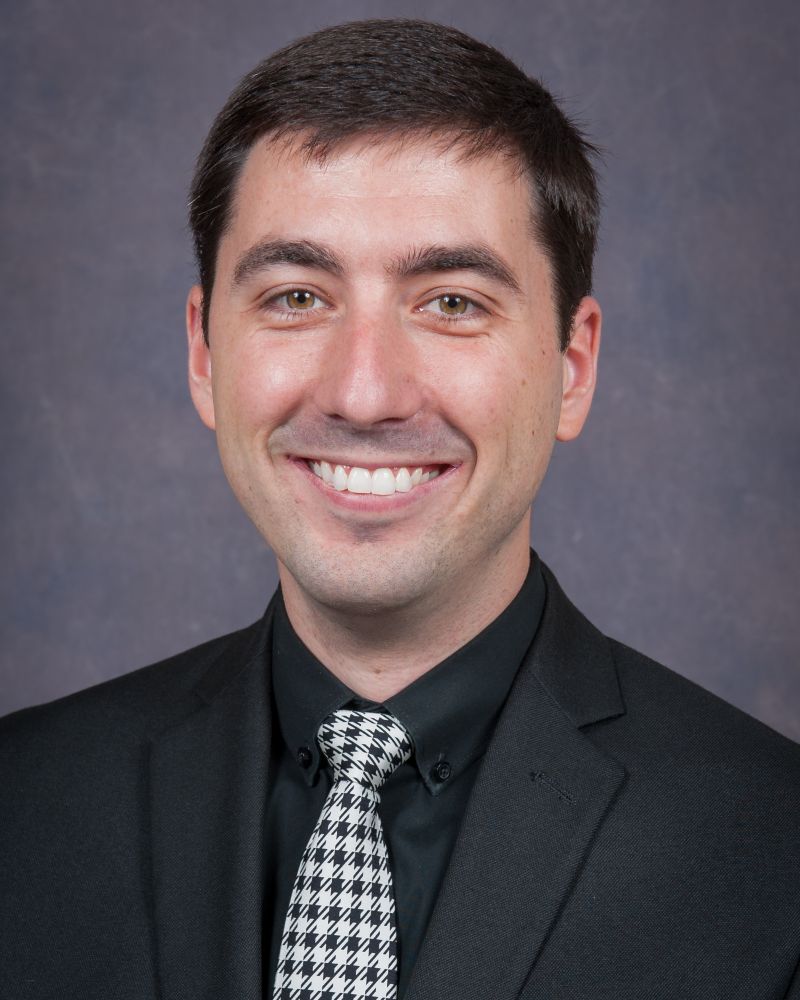
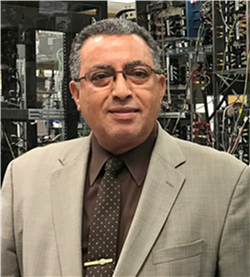
Yahia Baghzouz is Professor of Electrical and Computer Engineering at UNLV's College of Engineering. His expertise encompasses electrical power conversion, renewable energy grid integration, power efficiency optimization, and fuel cell systems. Research applications include unmanned aerial systems, electric vehicles, and sustainable energy infrastructure. Specializes in: Electric motor design and control Battery and super-capacitor hybrid systems Regenerative braking technologies Power conditioning systems Research contributes to advancing sustainable energy solutions and electrified transportation infrastructure.
Dr. Naveed Ashraf is a Senior Lecturer in the Department of Engineering at Manchester Metropolitan University, specializing in automotive and mechanical engineering. With over 20 years of research experience, his work focuses on vehicle braking systems, noise-vibration-harshness (NVH), and braking instabilities. He has contributed to numerous international conferences and peer-reviewed journals, addressing issues like brake squeal, disc-pad interface dynamics, and friction-induced vibrations. His professional memberships include the Institution of Mechanical Engineers (IMechE) and he holds Fellow status with the Higher Education Academy (UK). Dr. Ashraf teaches courses such as Engineering Mathematics, Experimental Mechanics, and Solid Mechanics and Dynamics at both undergraduate and postgraduate levels. Research Highlights: His research emphasizes the interplay between disc-pad interface dynamics and noise generation, with notable projects on stick-slip vibrations, pressure distribution measurement, and rotor asymmetry for noise reduction. He has pioneered methods to analyze dynamic center of pressure and its impact on brake performance. Awards and Professional Affiliations: Recognized as Chartered Engineer (CEng) and Fellow of the Higher Education Academy, he has also served as an external examiner and course assessor for multiple UK universities. Teaching Responsibilities: He contributes to the BEng (Hons) Mechanical Engineering program, delivering core modules that bridge theoretical principles with practical engineering challenges.
Dr Robert Cattley is a Senior Research Fellow at the University of Huddersfield , affiliated with the School of Computing and Engineering and Centre for Efficiency and Performance Engineering . His research focuses on industrial condition monitoring, fault detection in mechanical systems, and energy harvesting technologies. MSc (Process Plant Engineering, Cranfield University, 2003) PhD (Engineering, Lancaster University, 2009) Research interests span rotor dynamics , diesel engine diagnostics , wind turbine condition monitoring , and multivariate statistical analysis . His work contributes to UN Sustainable Development Goals for affordable clean energy and industrial innovation . Recent publications demonstrate expertise in machine learning applications for fault detection, wavelet packet analysis of turbine blades, and energy regeneration systems for combustion engines. Collaborations extend to institutions in China, Norway, and the UK. Active PhD supervisor and industry consultant Leader in RADAR condition monitoring and lubricant additive assessment projects He works full-time in the Department of Engineering , continuing applied research in mechanical fault diagnosis and energy-efficient systems.
Jesús Damián de la Rosa Díaz serves as a Professor in the Department of Earth Sciences within the Faculty of Experimental Sciences at the University of Huelva, Spain. He maintains active affiliations with the Sustainable Chemistry Research Center and was previously associated with the RNM347 research group focused on Geology and Analytical Chemistry. His research expertise spans: Environmental geochemistry with emphasis on trace element behavior in sediments and air particulate matter Advanced source apportionment techniques for PM10 in urban and industrial settings Ecotoxicological assessment of mining and industrial pollution impacts Volcanic emission characterization and atmospheric dispersion modeling Development of low-cost sensor networks for real-time air quality monitoring Analysis of his 15 most recent publications (2023-2025) reveals a dominant focus on Southern European and Latin American environmental challenges. Key trends include quantification of industrial and mining emissions, volcanic plume impacts, North African dust interactions, and innovative monitoring approaches using machine learning and low-cost sensors. His work consistently addresses regulatory needs through source-specific pollution characterization. Scientific Awards: No awards were documented in the provided materials Advising and Grants: Student advising information was not disclosed Research grant details were absent from the source data Labs and Teams: Dr. de la Rosa Díaz operates within the Sustainable Chemistry Research Center infrastructure at the University of Huelva and previously contributed to the RNM347 Geology and Analytical Chemistry research group, focusing on collaborative environmental geochemistry projects across European and Latin American networks.
Dr. Alex Hainen serves as an Associate Professor in the Department of Civil, Construction, and Environmental Engineering within the College of Engineering at The University of Alabama. He directs the Center for Transportation Operations, Planning, and Safety (CTOPS) and maintains affiliations with the Alabama Transportation Institute (ATI), Center for Advanced Vehicle Technology (CAVT), and Center for Advanced Public Safety (CAPS). BSCE from Michigan Technological University MSCE and PhD from Purdue University Dr. Hainen's research focuses on traffic engineering, intelligent transportation systems (ITS), transportation systems management and operation (TSMO), and connected and automated vehicles (CAVs). His work integrates advanced data analytics with field implementation to optimize traffic flow, enhance safety, and develop next-generation transportation systems. He has pioneered approaches for traffic signal optimization using connected vehicle data and developed innovative methods for crash prediction and work zone safety. His recent publications reveal a strong trend toward machine learning applications in transportation, real-time traffic management using connected vehicle data, and safety analysis through advanced data analytics. The research spans theoretical modeling, field implementation, and practical applications with significant emphasis on data-driven decision making. Donald H. McLean Civil Engineering Professor of the Year, 2023 Institute of Transportation Engineers' Transportation Safety Award, 2022 Educator of the Year Award, Engineering Council of Birmingham, 2020 Faculty Excellence in Research & Innovation Emerging Scholar Award, 2019 Donald H. McLean Civil Engineering Professor of the Year, 2019 Dr. Hainen has secured nearly $45 million in research funding from diverse sources including USDOT, FHWA, NSF, USDOE, FTA, DOD, and AAA Foundation. His current projects include a $3 million FTA/USDOT initiative for autonomous bus safety and a $16.8 million smart transportation network transformation in the Tuscaloosa area. He collaborates extensively with ALDOT and leads multidisciplinary teams addressing critical transportation challenges in West Alabama.
Prof. Dr.-Ing. Tobias Leopold is a faculty member at Hochschule Esslingen , serving as Associate Dean for Mobility and Technology , Head of Lab Service , and Academic Director of Automotive Engineering (Bachelor's Program) . His research focuses on Reliability Engineering , Design of Experiments , and Service Engineering . Research Trends : His recent publications emphasize Reliability Demonstration Testing , Uncertainty Quantification , and Robust Design Optimization in automotive systems. Teaching : He lectures on Technical Mechanics , Vehicle Technology , and Reliability Engineering at both Bachelor's and Master's levels. Contact : Email Tobias.Leopold@hs-esslingen.de
Henrique De Carvalho Pinheiro serves as a Fixed-term Assistant Professor in the Department of Mechanical and Aerospace Engineering (DIMEAS) at Politecnico di Torino. He is a member of the CARS@PoliTO Interdepartmental Center for Automotive Research and Sustainable Mobility and participates in the Innovative, Electric and Hybrid Vehicles research group. His academic appointment falls under Law 240/10 art.24-a, reflecting his fixed-term research position with teaching responsibilities. Dr. Pinheiro's research encompasses active suspension systems , automotive engineering , battery electric vehicles , control of hybrid and electric vehicles , and vehicle dynamics . His work particularly focuses on magneto-rheological technology for braking systems and innovative suspension solutions. He contributes to sustainable mobility research aligned with UN Sustainable Development Goals 7 (Affordable and clean energy), 9 (Industry, Innovation, and Infrastructure), and 13 (Climate action). His recent publications demonstrate a strong focus on zero-emission technologies, particularly in braking systems and electric vehicle dynamics. The research spans experimental validation, multi-physics modeling, and control system development for sustainable automotive solutions. A significant portion of his work addresses the integration of magneto-rheological technology with electric powertrains to create innovative braking systems that reduce emissions. Learning to Teach (L2T) badge issued by Politecnico di Torino (June 6, 2024) Dr. Pinheiro supervises three PhD students in Mechanical Engineering: Matteo De Carlo (40th cycle, 2024-present), Elena De Luca (40th cycle, 2025-ongoing), and Elia Grano (38th cycle, 2022-ongoing). He contributes to multiple research projects including SAFEST (2024) on electro-actuated brakes and traction systems, and MATERIALIZED (2023-2025) focused on material rheology for zero-emission driving systems under the PNRR Mission 4 initiative. His laboratory work centers around the development and testing of innovative braking systems, with several national and international patents to his name related to magneto-rheological technology for automotive applications.
Paweł Tarnowski is a researcher at the Institute of the Theory of Electrical Engineering, Measurement and Information Systems , Faculty of Electrical Engineering, Warsaw University of Technology. His work focuses on biomedical signal processing, emotion recognition, and machine learning applications in affective computing and human-computer interaction. Research areas include Information and Communication Technology (ICT) Electrical and Electronic Engineering Artificial Intelligence Neuroscience Human Factors His recent publications highlight trends in emotion recognition using multimodal physiological signals (EEG, EOG, GSR), driver fatigue detection, and deep learning techniques like 1D-CNN for medical diagnostics. Articles also address urban traffic monitoring and neuromarketing research via EEG analysis. At Warsaw University of Technology, he supervises thesis projects and contributes to interdisciplinary research in biomedical engineering and signal processing. Labs/Teams: Institute of the Theory of Electrical Engineering, Measurement and Information Systems .
Roger Stirnimann serves as a Lecturer in Agricultural Engineering at the Bern University of Applied Sciences, specifically within the School of Agricultural, Forest and Food Sciences HAFL, Department of Agronomy in Zollikofen. With over a decade of academic experience since 2013, he has established himself as a specialist in agricultural machinery and tractor technology. His educational background includes an Executive Master of Business Administration from Kalaidos Fachhochschule Bern (2007-2008), a degree in Economics Engineering from Private Hochschule für Wirtschaft Bern (2000-2002), and an Agricultural Engineering degree from SHL Zollikofen (1993-1996). He further enhanced his academic teaching skills with a Certificate of Advanced Studies in University Teaching and e-Learning (2013-2014). Agricultural Engineering in general Tractor Technology and development Transport Technology in agriculture Self-propelled harvesting machinery Alternative drive systems for agricultural vehicles Emissions from Nonroad Mobile Machinery Terramechanics and soil-vehicle interaction Trailer braking systems His publication record demonstrates consistent scholarly output, particularly in tractor technology and agricultural machinery. The analysis of his 15 most recent articles reveals a strong focus on tractor development, engine and transmission systems, alternative drive concepts, and classification methodologies. His work bridges theoretical research with practical applications in agricultural machinery, with particular emphasis on performance optimization, sustainability, and technological innovation in farming equipment. Max Eyth commemorative coin in silver (DLG) Stirnimann actively contributes to academic and industry organizations, serving as a co-author for the Yearbook of Agricultural Engineering, Swiss delegate for OECD's Tractor Test Codes, and chair of DLG's Vehicle Technology examination commission. His industry experience prior to academia, particularly with Ammann Schweiz AG and Matra, provides valuable practical context to his academic work. His research often addresses real-world challenges in agricultural machinery, focusing on performance, efficiency, and environmental impact. His work with various tractor chassis concepts, soil pressure analysis, and alternative drive systems demonstrates his commitment to advancing sustainable and efficient agricultural technology. Through his memberships in organizations like ISTVS (International Society for Terrain-Vehicle Systems) and the Club of Bologna, he maintains strong connections between academic research and industry applications.
Jari Vepsäläinen is an Assistant Professor at Aalto University's Department of Energy and Mechanical Engineering under the College of Engineering. He serves as Director of the Fluid Power group and specializes in mechatronics design, energy efficiency, and generative design methodologies. Research focuses on physics-based modeling for energy recovery AI/ML applications in electromechanical system design Applications in robotics, heavy machinery, and sustainable transportation His recent publications demonstrate expertise in hybrid systems, fluid power optimization, and AI-driven engineering, with a strong emphasis on electrification and efficiency across automotive, maritime, and industrial domains. Key areas: Mechatronics, Energy Systems, Generative Design Technologies: Digital Twins, IoT, Machine Learning Current projects involve thermal energy systems, electric motor optimization, and advanced control algorithms for mobile machinery.
Yi Zhang is a Professor in the Department of Mechanical Engineering at the University of Michigan-Dearborn's College of Engineering and Computer Science. His expertise lies in automotive engineering, focusing on power transmission systems, dual clutch transmissions (DCTs), and hybrid electric vehicle (HEV) control strategies. Zhang's research spans theoretical and applied domains, including gear theory, CAD/CAM, and robotics. His scholarly work emphasizes advanced control systems for automotive components, energy management in hybrid and electric vehicles, and dynamic modeling of transmission systems. Recent publications highlight eco-driving optimization, adaptive gearshift strategies, and coordinated braking-shifting control for electric vehicles. Grants from General Motors, Ford Motor Company, and the U.S. Department of Energy support his research on transmission dynamics, hybrid vehicle systems, and gear design. Zhang's collaborations with industry leaders like Magna International and academic institutions demonstrate his impact in automotive and mechanical engineering.
Professor Andreas Chrysanthou is a Professor of Materials Engineering at the School of Engineering and Technology, University of Hertfordshire. He holds a Bachelor's and PhD from Imperial College London, specializing in novel synthesis routes for carbides. His career includes academic roles at Nottingham and Surrey Universities before joining Hertfordshire in 1996, where he established the Materials and Structures (MAST) research group in 1998. Education: Bachelor's Degree in Materials Science (Imperial College London) PhD in Materials Engineering (Imperial College London) Research Interests: Electromagnetic processing of metals and ceramics Self-propagating high-temperature synthesis (SHS) Corrosion-resistant materials development Advanced manufacturing techniques like additive manufacturing and brazing High-temperature materials for energy applications Automotive materials and joining technologies Collaborations & Funding: EU-funded KMM-Virtual Institute (KMM-VIN) EPSRC collaboration with Meggitt on aircraft brake materials FP7 Marie Curie In-coming Fellowship (electromagnetic processing) Industry partnerships with C4 Carbides (brazing of diamond tools) Awards: FP7 Marie Curie In-coming Fellowship (2007-2012) Co-author of four top-cited publications on self-piercing riveting (SPR) Labs & Infrastructure: Director of the Duncan Calder Materials Characterisation Lab Transmission Electron Microscopy (TEM) facilities Advanced materials testing equipment
Dr. Osama A. Mohammed is a Distinguished Professor and Associate Dean of Research at the College of Engineering and Computing, Florida International University (FIU), where he also serves as Director of the Energy Systems Research Laboratory (ESRL) in the Department of Electrical and Computer Engineering. He has been a faculty member since 1983 and is internationally recognized for his pioneering work in power systems, smart grids, and energy cyber-physical systems. His educational background includes: B.S. in Electrical Engineering, Zagazig University, Egypt (1977) M.S. in Electrical Engineering, Virginia Tech (1981) Ph.D. in Electrical Engineering, Virginia Tech (1983) Dr. Mohammed's research is centered on advancing energy systems through innovation in power electronics, electric drives, computational electromagnetics, and smart grid technologies. He emphasizes real-world applications, student involvement, and interdisciplinary collaboration. His work bridges academia and industry, focusing on resilient, secure, and efficient energy infrastructure. His extensive publication record—over 750 papers—demonstrates a strong trend toward intelligent control, cybersecurity in energy systems, real-time simulation, and optimization of hybrid AC/DC microgrids. Many of his recent works integrate AI and machine learning for predictive maintenance, demand response, and digital twin applications in power systems. His scientific awards and recognitions include: Fellow of the National Academy of Inventors (2022) IEEE Fellow (1996) ACES Fellow (2006) IEEE PES Cyril Veinott Award (2010) Multiple Best Paper Awards in IEEE Transactions Top 2% Scientist Worldwide (Stanford, 2020) Dr. Mohammed is a dedicated mentor, having supervised 34 PhD graduates and over 60 master’s students, many of whom now hold prestigious positions in academia and industry. He has secured over $30 million in research funding from DoE, ONR, NSF, and industry. His leadership extends to major multi-university consortia, including the $12.2M DoE SEEDS Center. He has developed key research labs at FIU, such as the Smart Grid Test-Bed and Power Electronics Laboratory, providing unparalleled hands-on experience for students.
Jonas Sjoberg is a Professor of Mechatronics at Chalmers University of Technology and leader of the Mechatronics research group. His work spans over 30 years with 143 publications and leadership in 29 research projects. His current research focuses on autonomous vehicle systems, vehicle dynamics, and traffic safety applications. Dr. Sjoberg's research interests center on mechatronic systems for transportation applications. His work bridges theoretical control systems with practical automotive implementations, particularly in autonomous vehicle technology. His research group investigates vehicle dynamics, path planning, intersection management, and safety systems, with growing emphasis on micromobility applications including autonomous bicycles and pedestrian interaction. Recent work demonstrates strong focus on real-world applications of control theory to improve vehicle safety and performance. His publication record shows consistent output with 15+ papers annually, demonstrating sustained research activity. The work spans fundamental control theory (system identification, nonlinear control) to applied transportation problems (intersection management, road surface estimation, autonomous docking). Recent publications show increasing focus on micromobility applications, particularly autonomous bicycles, and integration of machine learning techniques with traditional control approaches. Dr. Sjoberg leads multiple significant research projects including MicroSIM (2026-2027), Mintox (2025-2026), and MicroITS, with funding from VINNOVA, EU, and industry partners. His projects address critical challenges in autonomous vehicle safety, micromobility integration, and traffic management. As leader of the Mechatronics research group, Dr. Sjoberg oversees research on vehicle control systems, autonomous driving technologies, and safety applications. His laboratory work focuses on practical implementation of theoretical control concepts, with recent emphasis on bicycle dynamics and micromobility safety systems.
Giovanna Barigozzi is a Full Professor at the University of Bergamo's Department of Engineering and Applied Sciences within the School of Engineering. Since October 2024, she has served as Vice Rector with responsibility for Innovation and Digital Transition of University Processes and Services, with a focus on ethical AI implementation in academic contexts. Previously, from 2018 to 2024, she was Director of the Department of Engineering and Applied Sciences and a Member of the Academic Senate. PhD in Fluid Machine Engineering, University of Genoa (1996) Diploma Course in Turbomachinery, von Karman Institute for Fluid Dynamics, Belgium Bachelor's with honors in Mechanical Engineering, University of Genoa (1992) Professor Barigozzi's research spans thermo-fluid dynamics, gas turbine cooling systems, and sustainable energy technologies. Her work combines experimental and numerical approaches to address complex engineering challenges in film cooling of gas turbine arrays, energy conversion systems, and hydrogen technologies. She has pioneered innovative cooling system analyses through collaborations with Korea University, applying artificial intelligence to optimize cooling geometries. Her recent publication portfolio reveals strong trends in advanced cooling techniques for gas turbines, with particular emphasis on film cooling optimization using shaped holes, trench geometries, and experimental techniques like Pressure Sensitive Paint. The research spans fundamental fluid dynamics investigations to applied studies on hydrogen production systems and automotive brake disc aerodynamics, demonstrating both theoretical depth and practical engineering applications. As an academic leader, Professor Barigozzi serves as Associate Editor of the ASME Journal of Turbomachinery and on the Editorial Board of the International Journal of Turbomachinery, Propulsion, and Power. For ASME IGTI, she coordinates the Honors & Awards Committee for the 2024-2026 biennium, reflecting her standing in the international turbomachinery community. Professor Barigozzi coordinates the Energy Systems and Turbomachinery Laboratory at the University of Bergamo and is a member of the Doctoral School in Sustainable Technologies for Industrial and Construction Engineering (SUSTAIN). Her leadership extends to coordinating teaching activities across multiple engineering programs, including courses on fluid machinery, sustainable energy, and experimental techniques for fluid machinery.