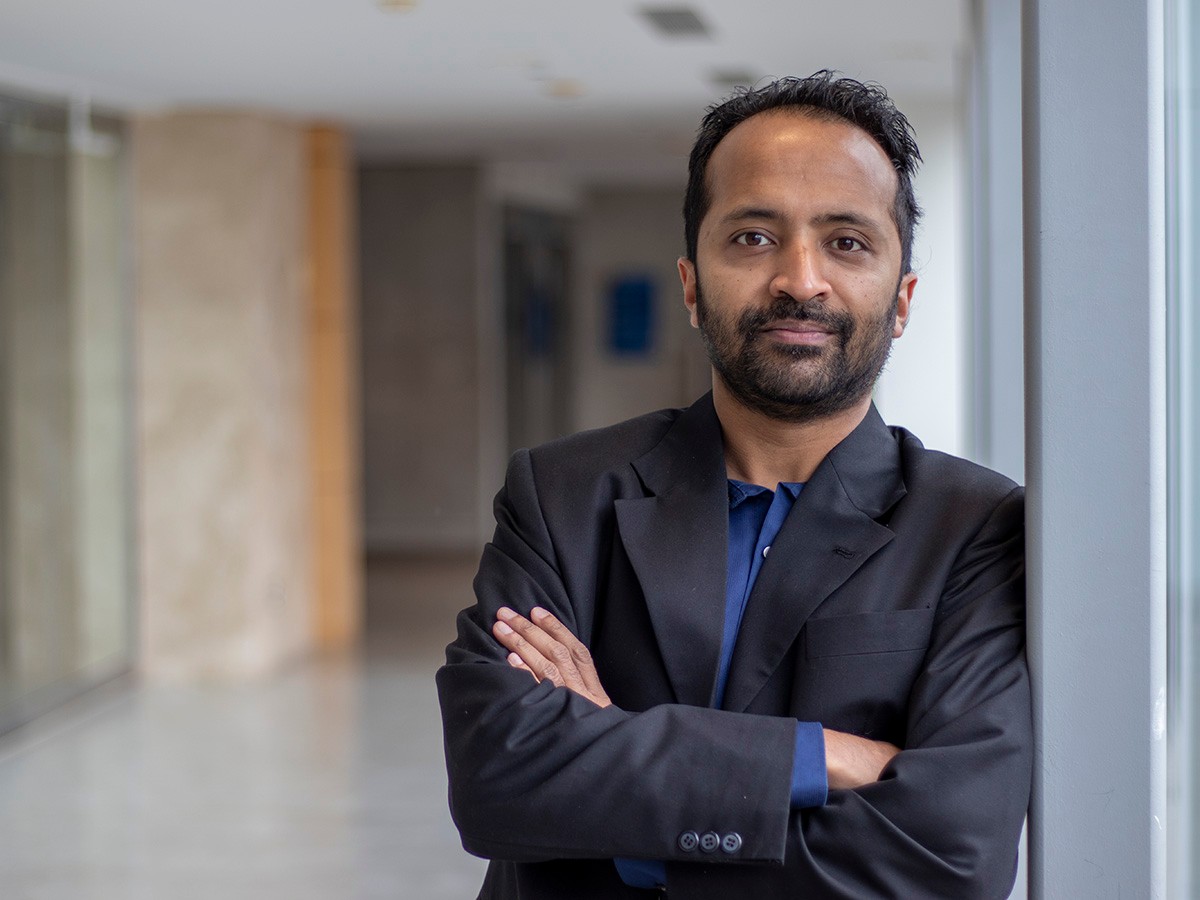
Dr. Aamer Mahmud is an Associate Professor specializing in clinical oncology with a focus on GU, GI, and Sarcoma malignancies. His research emphasizes clinical trials and advanced multimodal data analysis techniques. He currently holds a Regular Attending Staff position at Kingston Health Sciences Centre. Research interests include developing innovative technologies for cognitive load assessment in medical settings, gaze estimation systems, and brain-computer interfaces for driver safety. His work bridges healthcare technology with artificial intelligence, addressing challenges in real-time patient monitoring and clinical decision support. Publications from 2022-2024 highlight contributions to multimodal data fusion, transfer learning in medical imaging, and human factors in automotive safety. No scientific awards are explicitly listed in the provided information. While no formal advising/grants details are provided, his clinical and research roles suggest involvement in oncology-related mentorship and collaborative projects. No lab/team affiliations are explicitly mentioned in the text.
Dr. Garima Bajwa is an Assistant Professor in the Department of Computer Science at Lakehead University, where she joined in January 2021. Her research focuses on authentication systems, brain-computer/machine interfaces, cybersecurity, and machine learning applications. She holds a Ph.D. in Computer Science and Engineering from the University of North Texas (2016), an MEng in Electrical and Computer Engineering from the University of Waterloo (2011), and a B.Tech in Electronics and Communication Engineering from Mody Institute of Technology & Science, India (2009). Education: Ph.D., Computer Science & Engineering, University of North Texas (2016) MEng, Electrical & Computer Engineering, University of Waterloo (2011) B.Tech, Electronics & Communication Engineering, Mody Institute (2009) Her research interests span cybersecurity frameworks for neurotechnology, explainable AI in healthcare diagnostics, and multimodal fusion of EEG and image data. Recent work includes EEG signal anonymization, federated learning for medical diagnosis, and reproducibility in BCI research. Her publications explore cutting-edge topics like BCI standardization, driver distraction detection, and quantum computing integration. Grants and lab affiliations are not explicitly mentioned in the provided text.
Professor Peter D. Lawrence holds a faculty position at the University of British Columbia (UBC) within the Department of Electrical & Computer Engineering, part of the Faculty of Applied Science. He has been a Professor since 1974 and has held visiting research roles at Chalmers University of Technology (1970-1972) and MIT (1972-1974). His educational background includes a B.A.Sc. from the University of Toronto (1965), M.Sc. from the University of Saskatchewan (1967), and Ph.D. from Case Western Reserve University (1970). He is a Professional Engineer (P.Eng.) and Fellow of the Canadian Academy of Engineering (FCAE). Research interests focus on improving human-machine interfaces, sensor technologies for control systems, and medical robotics. Key areas include teleoperation of heavy machinery, vision-based control, EEG-based brain interfaces, and functional approximation methods for complex systems. Collaborations span multiple disciplines at UBC, including Mechanical Engineering, Computer Science, Mining Engineering, and Forestry, with funding from NSERC and PRECARN/IRIS. Medical Robotics: Brain-computer interfaces and ultrasound-guided surgery. Autonomous Systems: Path planning and vision-based tracking for excavators and haul trucks. Sensing Technologies: Eye-tracking, joint-angle sensors, and slip detection for mobile robots. His teaching contributions include coordinating the Project Integrated Program (PIP) for ECE students and co-developing the interdisciplinary New Venture Design course with the Sauder School of Business. He leads the RCL Lab and has authored books on real-time microcomputer systems and contributed to IEEE publications. Awards include recognition as a Fellow of the Canadian Academy of Engineering.
Habib Hamam is a Professor in the Department of Electrical Engineering at the University of Moncton's Faculty of Engineering. His research spans optics, biomedical engineering, wireless communication, and AI applications. Specializations: Diffractive elements, optical interconnections, biomedical engineering, hybrid fiber/wireless systems, and AI-driven optimization. Contact: Email habib.hamam@umoncton.ca | Phone (506) 858-4762 Recent publications highlight his focus on AI integration across healthcare, energy systems, and education, combined with blockchain for security and transparent data management. Key subdomains include medical imaging, renewable energy optimization, and IoT scalability. Notable research trends involve deep learning for diagnostics (e.g., brain tumors, diabetic retinopathy), blockchain applications in smart grids and fisheries, and quantum-inspired algorithms for energy forecasting.
Dinesh K. Pai is a Professor and Tier 1 Canada Research Chair in the Department of Computer Science at the University of British Columbia, where he directs the Sensorimotor Systems Laboratory. He holds cross-appointments at UBC’s Institute for Computing, Information and Cognitive Systems (ICICS), Institute of Applied Mathematics, Graduate Program in Neuroscience, ICORD International Collaboration on Repair Discoveries, and Brain Research Centre. His educational background includes a Ph.D. from Cornell University and a B.Tech. from the Indian Institute of Technology, Madras. His research spans sensorimotor computation with applications in computer graphics, robotics, biomechanics, haptics, and neurobiology. Recent work focuses on human body modeling, garment simulation, soft tissue dynamics, and friction measurement, leveraging machine learning and physics-based simulation techniques. Pai’s publication trends reveal a strong interdisciplinary focus on human-centered computational models, with increasing integration of machine learning for 3D pattern adjustment, body shape generation, and cloth simulation. His work bridges computer graphics with biomechanics and neuroscience through sensorimotor computation. UBC’s 2012 Killam Research Prize CHCCS 2020 Achievement Award Tier 1 Canada Research Chair His research has been supported by significant grants including NSERC Discovery and Idea-to-Innovation grants, a Major Thematic Grant from the Peter Wall Institute for Advanced Studies, and a Human Frontier Science Program grant for studying CNS modularity. As leader of ICICS’ Human Sensorimotor Systems theme, he directs a multidisciplinary team exploring computational models of human sensorimotor function. The Sensorimotor Systems Laboratory operates state-of-the-art facilities featuring a Vicon MX motion capture system, LMI HDI body scanner, eye trackers, skin measurement instruments, EMG systems, haptic interfaces, and robotic platforms for advancing human-computer interaction research.
Guillaume Dumas is a Professor at the Faculté de médecine of Université de Montréal, specializing in computational psychiatry and social neuroscience. He leads the Laboratoire de Psychiatrie de Précision et de Physiologie Sociale at the CHU Sainte-Justine Research Center. His work bridges neuroscience, AI, and clinical practice, focusing on social cognition, brain synchronization, and neurodevelopmental disorders. Education includes a PhD in Cognitive Neuroscience from Sorbonne Université and an HDR in Clinical Neurosciences from Université de Paris. He has held roles at Institut Pasteur and Florida Atlantic University. Research interests span computational psychiatry, interbrain connectivity, and AI-driven diagnostic tools. Notable projects include the SCALE initiative studying autism across levels and InterBrain Synchronization mechanisms. His lab develops serious games for clinical assessment and biomarker discovery. Recipient of FRQS J1/J2 awards, IVADO affiliation, and grants from CIHR and FRQNT. Supervised 7 Master’s students recently, focusing on EEG, genomic variants, and AI models.
Dr. Vincent Taschereau-Dumouchel is an Associate Professor in the Department of Psychiatry and Addictology at the Faculty of Medicine, University of Montreal. His research focuses on integrating real-time neuroimaging with machine learning to develop novel interventions in mental health, particularly targeting anxiety and fear-related disorders. He pioneered the use of decoded neurofeedback (DecNef), a method combining machine learning with fMRI to enable voluntary control over specific brain activity patterns. His work explores the neural basis of emotional experiences, aiming to create personalized mental health treatments through closed-loop systems. Key affiliations include the Centre de recherche de l'Institut universitaire en santé mentale de Montréal (CR-IUSMM) and the UNIQUE initiative, a Quebec-based neuroscience-AI collaboration. Taschereau-Dumouchel leads grants from agencies like FRQNT, CRSNG, and FRSQ, focusing on AI-driven brain activity modulation and mental health innovation. Research highlights include studies on fear dissociation mechanisms, anhedonia in anxiety, and the development of neurofeedback tools for PTSD and specific phobias. He actively collaborates with institutions like CIUSSS de l'Est-de-l'Île-de-Montréal and has supervised students such as Shawn Manuel in applying AI to predict psychiatric symptoms through individual differences analysis. His lab's innovations include a real-time fMRI platform (CLIP), generative AI for neuroimaging feedback, and longitudinal biopsychosocial studies of psychiatric emergencies (Signature Biobank). Taschereau-Dumouchel maintains an active presence in academic networks, bridging clinical psychiatry with cutting-edge neurotechnology.
Claude Frasson is an Associate Professor in the Department of Computer Science and Operational Research at the Faculty of Arts and Sciences, University of Montreal. He serves as Director of the HERON laboratory (Higher Educational Research ON Emotional Intelligence and Privacy Protection) and was formerly Director of GRITI (Inter-university Research Group in Intelligent Tutors), which grouped seven universities in Quebec. Dr. Frasson earned his Doctorat d'État in Computer Science from the University of Nice, France in 1981. His academic journey spans over three decades with significant contributions to the field of intelligent systems for education and cognitive support. His primary research interests focus on the intersection of emotional intelligence, brain-computer interfaces, and virtual reality applications for education and healthcare. He investigates how emotional states affect learning processes and develops intelligent systems that can adapt to users' cognitive and emotional states. His work particularly emphasizes applications for Alzheimer's disease treatment, cognitive rehabilitation, and educational technology. His recent publications (2020) demonstrate a strong focus on virtual reality applications for Alzheimer's disease treatment, cognitive rehabilitation, and emotional regulation. These works combine intelligent tutoring systems with neuroscience principles to create therapeutic environments that respond to users' cognitive states in real-time. Throughout his career, Dr. Frasson has been actively involved in numerous international conferences, serving as keynote speaker at events such as GENEDIS, World Brain Disorder and Neuroscience Summit, and International Conference on Intelligent Tutoring Systems. Dr. Frasson has supervised over 80 graduate students since 1989, spanning both Master's and PhD programs. His students have conducted research in areas including emotional intelligence in learning systems, brain-computer interfaces, virtual reality applications, and intelligent tutoring systems. He has received substantial research funding from organizations including CRSNG, FRQSC, CRIAQ, and FCI. He directs the HERON laboratory, which focuses on emotional intelligence, privacy protection, and cognitive state monitoring in educational contexts. Previously, he led GRITI, an inter-university research group that produced approximately 70 graduate students and established international recognition in the field of intelligent tutoring systems.
Professor Jennifer Chandler is a Professor of Law at the Centre for Health Law, Policy and Ethics and is cross-appointed to the Faculty of Medicine at the University of Ottawa, Canada. She holds the Bertram Loeb Research Chair and serves as Vice-Dean of Research for the Faculty of Law. Additionally, she is an Affiliate Investigator at the Bruyère Research Institute in Ottawa. Professor Chandler leads interdisciplinary research at the intersection of law, ethics, neuroscience, and biomedical technologies, with particular focus on neuroethics and organ donation/transplantation policy. Professor Chandler's research spans several critical areas in bioethics and health law. Her work examines the legal and ethical implications of emerging neurotechnologies, including brain-computer interfaces, deep brain stimulation, and cognitive enhancement technologies. She investigates how these technologies challenge existing legal frameworks related to privacy, autonomy, and personhood. In the realm of organ donation and transplantation, she explores ethical and legal issues surrounding death determination, organ allocation policies, and innovative donation procedures. Her scholarship also addresses mental health law, medical assistance in dying, and the application of biomedical technologies in criminal justice contexts. Professor Chandler's recent publications reveal a strong focus on the ethical, legal, and social implications of neurotechnologies. Her work increasingly examines how artificial intelligence intersects with neural interfaces, the legal conceptualization of human-technology integration, and the protection of cognitive liberties. She has made significant contributions to understanding the regulatory frameworks needed for emerging neurotechnologies and has been instrumental in shaping policy discussions around brain-computer interfaces and neurosurgical interventions for psychiatric conditions. Her interdisciplinary approach combines legal scholarship with insights from neuroscience, philosophy, and social sciences to address complex bioethical challenges. 2024 Steven E. Hyman Award for Distinguished Service to the Field of Neuroethics from the International Neuroethics Society Bertram Loeb Research Chair at the University of Ottawa Professor Chandler actively mentors graduate students and postdoctoral fellows working at the intersection of law, neuroscience, and biomedical ethics. She supervises research on topics including the legal conceptualization of advanced prostheses, lived experiences of brain-computer interface users, and ethical implications of neurotechnology. Her research is supported by multiple grants, including ERA-NET Neuron/CIHR funding for the "Hybrid Minds" project investigating intelligent neuroprostheses. She leads the Bertram Loeb Organ & Tissue Donation Institute research stream and participates in numerous policy initiatives including the Canadian Society of Transplantation Ethics Committee and the Pan Canada Neurotechnology Ethics Collaboration. Professor Chandler directs several major research projects including "Hybrid Minds: Experiential, Ethical and Legal Investigation of Intelligent Neuroprostheses," "The Laws of Neurosurgery for Psychiatric Disorders," and studies on Ulysses contracts related to deep brain stimulation. She also leads important work on organ donation after cardiac death, premortem interventions in donation, and the neurophysiology of the dying process. Her collaborative approach brings together clinical experts, policy-makers, and diverse scholars from multiple disciplines to address complex bioethical challenges.
Xin Tang is an Assistant Professor at the Michael Smith Laboratories and the Department of Computer Science in the Faculty of Science at the University of British Columbia. He leads the Tang Lab, which focuses on developing AI models to advance biological understanding at multiple scales and modalities. PhD in Engineering Sciences from Harvard University and the Broad Institute of MIT and Harvard Xin Tang's research spans computational cell biology, brain-computer interfaces, and in silico cellular digital twins. His work integrates explainable and interpretable AI with biological systems to address fundamental questions from molecular interactions to animal behaviors. Key areas include computational omics, multi-modality cell biology, spatio-temporal gene regulation, neuroengineering, and biological large language models. His lab develops autonomous AI approaches that serve as digital twins for biological systems, enabling in silico experiments that guide wet lab research. Analysis of Tang's recent publications reveals a strong focus on bridging AI and biology across multiple scales. His work spans from molecular and cellular levels (single-cell biology, multi-omics, spatial transcriptomics) to neural systems (brain-computer interfaces, neural activity tracking) and organ-level applications (cardiac interfaces). A consistent theme is the development of explainable and interpretable AI methods that provide mechanistic insights rather than just predictive power. His research has significant implications for understanding development, aging, and diseases like neurodegeneration. NSERC Discovery Grant (2025) Resource Allocation Competition of Digital Research Alliance of Canada (2025) Professor Tang actively supervises multiple graduate students, postdoctoral fellows, and undergraduate researchers across UBC's Computer Science, Bioinformatics, and Genome Science and Technology programs. His lab has received significant research funding including an NSERC Discovery Grant. He is committed to interdisciplinary collaboration and has established research partnerships with biologists, engineers, and clinicians to address complex biological questions related to neurodegenerative diseases, heart disease, and aging. The Tang Lab, located in the Michael Smith Laboratories at UBC, fosters a collaborative environment for researchers interested in AI for biology. The lab actively recruits dry-lab researchers with strong coding and machine learning backgrounds to work on projects spanning computational biology, neuro-inspired AI, explainable AI, biological LLMs, computational omics, and brain-computer interfaces. The lab has a remote work policy that allows flexible arrangements while maintaining strong collaborative ties.
Pierre-Majorique Léger is a Full Professor at the Department of Information Technology , HEC Montréal. He serves as Director of the ERPsim Laboratory , Co-Director of Tech3Lab , and holds the Chair in User Experience IVADO . His research focuses on User Experience (UX) , Human-Computer Interaction , Human-Centered AI , NeuroIS , and Serious Games for Learning . M.Sc.A. (Industrial Engineering), Polytechnique Montréal Ph.D. (Electrical Engineering), Polytechnique Montréal Postdoctoral Fellowship (Information Technology), HEC Montréal His research interests combine neuroscience with information systems, examining: Cognitive load measurement in digital environments Human-AI collaboration dynamics Neuroadaptive interfaces User behavior in e-commerce Technostress mitigation UX evaluation in VR/AR Recent research trends show: Systematic reviews on AI ethics in industry/education Neurophysiological studies using EEG/fNIRS Experiments on multimodal interfaces Gamification effectiveness analysis Scientific Awards : IVADO Chair in User Experience Grand Prix de recherche (2024) Multiple best paper nominations (2020-2022) Advising & Grants : Directed 3 PhD theses and 74 MSc theses (2020-2025) Secured funding for ERPsim Lab's $2M research grant Collaborated with Tech3Lab on international projects Laboratories : Co-Director, Tech3Lab Director, ERPsim Laboratory IVADO-affiliated researcher
Michael Adrian Colicos serves as an Associate Professor in the Department of Physiology and Pharmacology at the Cumming School of Medicine, University of Calgary, and holds Full Membership at the Hotchkiss Brain Institute. His educational foundation includes: B.S. in Biological Sciences from McMaster University (1985) M.S. in Biological Sciences from McMaster University (1988) Ph.D. in Biological Sciences from McGill University (1999) Dr. Colicos leads pioneering research in synaptic physiology , focusing on developmental synaptogenesis, structural plasticity, and neuronal circuit formation within autism and epilepsy contexts. His lab developed a groundbreaking neuron-silicon interface device (with Yukiko Goda at UCSD) to model autism-related neuronal communication deficits and epileptic seizures in vitro . Collaborations with physics and complexity science colleagues investigate non-linear dynamics in neuronal networks, while nano-materials research enhances neuronal interfaces for translational applications. His scientific recognition includes: Society for Neuroscience awards (2009, 2010) American Physiological Society honors (2009, 2010) Thomas Tyson Endowment for Epilepsy Research (2009, 2010) Multiple unspecified awards and scholarships (2009) Dr. Colicos directs an interdisciplinary laboratory integrating neurophysiology, engineering, and computational modeling to develop therapeutic strategies for neurological disorders, emphasizing real-world impact on autism and epilepsy patient care.
Eli Kinney-Lang serves as an Azrieli Accelerator Professor within the Department of Biomedical Engineering at the Schulich School of Engineering, University of Calgary. They also hold appointments as Engineering Core Director and Child Health and Wellness Researcher at the Alberta Children's Hospital Research Institute, Owerko Centre. Their primary research focus is developing inclusive brain-computer interface systems for pediatric applications. Educational background: PhD in Digital Signal Processing (Brain-computer Interfaces), University of Edinburgh, UK BSc in Mathematics, University of Wyoming, USA Kinney-Lang's research specializes in Pediatric Brain-Computer Interfaces, addressing the critical gap in BCI technology for children with complex needs. They investigate adaptations across the entire BCI pipeline - from signal acquisition and processing to machine learning classification and feedback - ensuring inclusivity for diverse pediatric populations. This work bridges biomedical engineering, child health, and assistive technology development. They participate in multiple university strategic initiatives including Brain and Mental Health (2015-2021), Child Health and Wellness (2020-2025), Engineering Solutions for Health (2015-2021), and Human Dynamics in a Changing World (2015-2021). Award: Azrieli Accelerator Professorship in Inclusive Engineering Technologies for Neurodevelopment Kinney-Lang directs the BCI4Kids initiative, which develops brain-computer interface technologies specifically for children. Their work integrates engineering solutions with child health research to create accessible neurotechnology, supported by their dual affiliations with the university's engineering school and children's hospital research institute.
Naimul Khan is an Associate Professor and Associate Chair in Graduate Studies at Toronto Metropolitan University's Department of Electrical, Computer, and Biomedical Engineering. His research focuses on practical applications of machine learning, medical imaging, computer vision, and augmented/virtual reality technologies to solve real-world healthcare and multimedia challenges. PhD (Toronto Metropolitan University, 2014) MSc (University of Windsor, 2010) BSc (Bangladesh University of Engineering and Technology, 2008) His research interests span medical imaging automation, virtual reality systems for healthcare applications, and machine learning techniques for biomedical signal processing. He has developed innovative algorithms for ultrasound analysis, emotion recognition systems using EEG data, and segmentation approaches for diabetic foot ulcers. Publications demonstrate consistent focus on practical implementations across computer vision, medical diagnostics, and extended reality (XR) technologies. Scientific contributions include a Best Paper Award at the IEEE International Symposium on Multimedia (2017) and prestigious postdoctoral and graduate scholarships. He actively collaborates with industry partners through the TMU Multimedia Research Laboratory, teaching graduate courses like ELE 725 (Basics of Multimedia Systems) and COE 318 (Software Systems). Best Paper Award, IEEE International Symposium on Multimedia (2017) OCE TalentEdge Postdoctoral Fellowship (2014-2016) Ontario Graduate Scholarship (2013-2014) Queen Elizabeth II Scholarship in Science & Technology (2012-2013) As co-director of the TMU Multimedia Research Laboratory, Khan bridges academic research with industry applications through practical implementations of machine learning and extended reality technologies in healthcare domains.
Gregor Wolbring is a tenured Full Professor at the University of Calgary's Cumming School of Medicine, specializing in Community Health Sciences and Disability Studies. His affiliations include roles at the Institute for Technology Assessment and Systems Analysis (Karlsruhe) and as a Senior Fellow at the University of Ottawa's Institute for Science, Society and Policy. He leads the WolbPack research group, focusing on disability justice and equity. Research interests center on: Disability and ability studies, exploring societal perceptions of human capabilities. Governance of emerging technologies (AI, neurotech) and their impact on marginalized groups. Equity, diversity, and inclusion (EDI) frameworks in academia and policy. Sustainability, climate justice, and eco-ableism. Accessibility, attitudinal barriers, and disability rights advocacy. His recent publications analyze trends in social equity, technology ethics, and disability inclusion. Works emphasize participatory research, critical pedagogy, and policy-driven solutions to address systemic inequities. Awards and recognition: 2022 University of Calgary EDI Award (Faculty) Tanis Doe Award for disability advocacy (2017) Queen Elizabeth II Diamond Jubilee Medal (2013) Multiple BHSc Research Mentor Awards He actively mentors through the WolbPack, securing grants for projects like SSHRC-funded accessibility mapping and CIHR neurotechnology governance studies. His lab collaborates globally, emphasizing community-engaged scholarship.