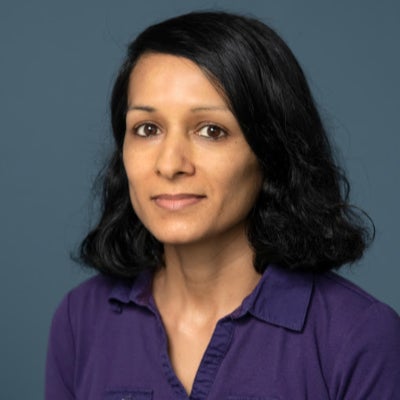
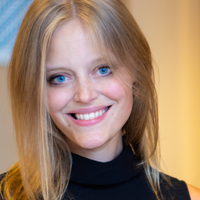
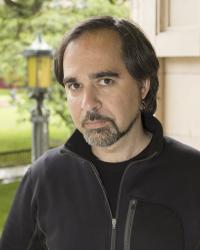
Rachel June Smith is an Assistant Professor in the Department of Electrical and Computer Engineering at the University of Alabama at Birmingham (UAB), affiliated with the Neuroengineering Program. She joined UAB in August 2022. Her research focuses on biomedical signal processing, dynamical network models, neuroengineering, and brain-computer interfaces. Education: B.S. in Biomedical Engineering from the University of Tennessee, Knoxville; M.S. and Ph.D. in Biomedical Engineering from the University of California, Irvine. Completed postdoctoral training at Johns Hopkins University under Dr. Sridevi Sarma. Research emphasizes developing computational metrics for EEG analysis in neurodegenerative disorders, leveraging dynamical systems and control theory. Highlights include work on seizure onset localization using intracranial EEG and therapeutic response prediction in infantile spasms. Labs: Director of the Neural Signal Processing and Modeling Lab, collaborating with neurologists to advance clinical applications of computational neuroscience methods.
Professor Fred Charles serves as Head of Department for Creative Technology at Bournemouth University, specializing in computational intelligence applied to simulated worlds. His expertise spans artificial intelligence, human-computer interaction, and interactive narrative systems, with significant contributions to virtual reality and brain-computer interface technologies. His research has led to award-winning interactive systems and numerous publications in top-tier conferences and journals. Education: PhD in Computer Science ("Intelligent Virtual Actors in Interactive Storytelling") Master's degree in Computer Aided Graphical Technology Applications BSc in Computer Science Professor Charles' research focuses on the intersection of AI, narrative systems, and immersive technologies. His work explores how computational intelligence can enhance virtual environments, particularly through brain-computer interfaces that enable more natural human-virtual agent interactions. Recent projects investigate social anxiety in VR settings, multimodal interaction frameworks, and personalized dialogue systems for virtual characters. His research bridges theoretical AI concepts with practical applications in healthcare, education, and entertainment domains. His most recent publications demonstrate a clear trend toward applying interactive narrative techniques to real-world problems, particularly in mental health assessment (OCD, social anxiety), responsible gambling initiatives, and educational applications. The work increasingly incorporates multimodal input analysis and neurofeedback mechanisms to create more responsive and adaptive virtual experiences. Scientific Awards: Blue Sky Award (ACM Hypertext, 2018) Best Application (International Conference on Automated Planning and Scheduling, 2013) Professor Charles has successfully supervised numerous PhD students working on topics ranging from crowd simulation to narrative generation systems. His research has been supported by substantial grants from Innovate UK, Economic and Social Research Council, AHRC/EPSRC, and the European Commission, including projects on believable agent behavior in VR, responsible online gambling, and machine understanding for interactive storytelling. He maintains active collaborations with researchers across Europe and has contributed significantly to the development of narrative medicine applications.
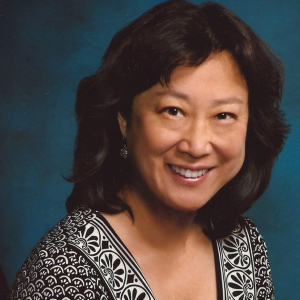
Dr. Yang Jiang is a tenured Professor at the University of Kentucky , affiliated with the Department of Behavioral Science (College of Medicine), Psychology Department (College of Arts and Sciences), and the Sanders-Brown Center on Aging . Her research in the ABC Lab focuses on neural mechanisms of sensory perception and cognition in aging and neurodegenerative diseases like Alzheimer's, using fMRI , EEG/ERPs , and MEG . She developed the Bluegrass EEG protocol for early cognitive decline detection and leads federally funded (NIH, VA) projects on neurofeedback interventions. Dr. Jiang has taught cognitive neuroscience courses at all academic levels and co-directs graduate seminars in the Clinical and Translational Science (CTS) program. Her collaborations span the Alzheimer's Disease Research Center , MRI Center , and a NIH program project on Astrocyte Reactivity . She reviews grants for NIH and international agencies and serves on scientific boards like the Organization for Human Brain Mapping and Alzheimer’s Association . Her recent publications (2025-2023) emphasize EEG/fMRI biomarkers for Alzheimer's and aging, neurofeedback efficacy, and brain connectivity in cognitive impairment. Awards include the WILEY Top Downloaded Article (2021) and leadership roles in federally funded research.
Kaushallya Adhikari serves as an Associate Professor in the Department of Electrical, Computer and Biomedical Engineering at the University of Rhode Island's College of Engineering. Her research bridges theoretical signal processing with practical applications in sonar, radar, and biomedical systems through innovative array design and algorithm development. Her academic credentials include: Ph.D. in Electrical Engineering, University of Massachusetts Dartmouth (2016) M.S. in Electrical Engineering, University of Massachusetts Dartmouth (2012) B.E. in Electronics and Communication Engineering, Tribhuwan University, Nepal (2008) Dr. Adhikari's research centers on array signal processing with emphases on sparse array configurations, direction of arrival estimation, and information-theoretic approaches to detection. She leads the ASPIRE lab (Array Signal Processing for Information REtrieval), which explores statistical signal processing, machine learning integration, and sensor array optimization. Her work demonstrates consistent innovation in transforming circular arrays to linear configurations, developing subspace estimation techniques, and applying neural networks to traditional signal processing challenges. Analysis of her 15 most recent publications reveals a decisive shift toward deep learning integration with classical array processing methods, particularly for direction of arrival estimation in sonar systems. While maintaining strong foundations in estimation theory and information metrics, her recent work increasingly focuses on convolutional neural networks for signal classification, sparse sampling optimization, and biomedical applications like tEEG-based cortical mapping. This evolution reflects her strategic expansion from theoretical frameworks to real-world implementation challenges. Her scientific recognition includes: Office of Naval Research Young Investigator Program (YIP) Award (2020) Dr. Adhikari has secured competitive funding including multiple Office of Naval Research grants for sonar array optimization (2020, 2023) and a NE Big Data Innovation Hub grant for neural network-based cortical mapping (2021). She actively mentors graduate researchers in the ASPIRE lab, where current projects span sonar signal processing, EEG/tEEG analysis, and renewable energy system modeling through autoregressive techniques. The ASPIRE lab maintains a cohesive research program focused on sensor array design, statistical signal processing, and machine learning applications across defense, biomedical, and energy domains, with particular expertise in coprime/nested array configurations and direction of arrival estimation algorithms.
Minos Garofalakis is a Professor of Computer Science at the School of Electrical and Computer Engineering (ECE) of the Technical University of Crete (TUC), where he directs the Software Technology and Network Applications Laboratory (SoftNet). He is also the Director of the Information Management Systems Institute (IMSI) at the Athena Research and Innovation Centre in Athens. Previously, he held roles at Yahoo! Research, Intel Research Berkeley, and Bell Laboratories, and was an Adjunct Associate Professor at UC Berkeley. Education: He earned a BSc in Computer Engineering from the University of Patras (1992), followed by MSc (1994) and PhD (1998) in Computer Science from the University of Wisconsin-Madison. Research Interests: His work focuses on Big Data analytics , including database systems, data streams, approximate query processing, probabilistic databases, and secure/private data analytics. Key areas include distributed stream processing, data synopses, and machine learning applications. He has authored over 150 papers and holds 29 patents, with an h-index of 63 and 13,500+ citations. Recent Work Trends: His recent articles emphasize scalable stream analytics (e.g., OmniSketch), privacy-preserving techniques, and distributed event processing. He explores challenges in handling high-velocity data streams, uncertainty in databases, and real-world applications like healthcare analytics. Scientific Awards: ACM Fellow (2018), IEEE Fellow (2017), TUC Excellence Award (2015), and multiple patents from Bell Labs/Yahoo/AT&T. Advising & Grants: He led EU projects such as FERARI, LEADS, and The Human Brain Project. His lab, SoftNet, develops tools for extreme-scale analytics and declarative networking. Current work includes interactive cross-platform analytics (Infore) and AI-driven medical data systems. Labs/Teams: Director of SoftNet Lab and IMSI. Collaborates with industry partners on distributed systems and privacy-preserving technologies.
Francis Heylighen is a Research Professor at the Free University of Brussels (Vrije Universiteit Brussel), where he directs the transdisciplinary Center Leo Apostel and leads the Evolution, Complexity and Cognition research group. He is also affiliated with the Department of History, Art and Philosophy (HARP), teaching courses such as Complexity and Evolution , Mind, Brain & Body , and Effective Thinking to philosophy students. His work spans cybernetics, complex systems theory, and the concept of the Global Brain , integrating insights from physics, computer science, and philosophy. Research Focus: Emergence of intelligent organization through self-organization, stigmergy, and distributed cognition Key Projects: Principia Cybernetica Project, Global Brain Institute, and computational models of collective intelligence Contributions: Coined the mathematical foundations of the Global Brain concept, developed Challenge Propagation theory for distributed intelligence, and advanced Chemical Organization Theory for modeling autopoietic systems His publications (over 200) and Google Scholar citations (14,000+ with H-index 59) reflect his interdisciplinary impact across evolutionary systems, philosophy of technology, and complexity science. He has received biographical listings in Who's Who and a 2015 Outstanding Technology Contribution Award from the Web Intelligence Consortium.
Gordon Kindlmann is an Associate Professor of Computer Science at the University of Chicago, affiliated with the Systems Group research community. His work bridges computational imaging science and visualization theory, focusing on biomedical applications and machine learning integration. He leads projects in diffusion MRI analysis, surgical planning tools like SlicerDMRI, and theoretical advancements in visualization design. Research Interests: Biomedical Image Analysis Scientific Visualization Theory High Performance Computing Medical Imaging Algorithms Machine Learning Applications Recent Articles Trends: His work emphasizes cardiovascular modeling (e.g., aortic dissection prediction) and visualization validation techniques. Recent collaborations include optimizing visualization tools for scalability and accuracy in threaded data exploration. Awards: None explicitly listed in provided text. Grants/Advising: Involved in CDAC Discovery Grants (2019) and actively supports student research, though specific advisees are not listed here. His lab develops open-source tools like Diderot for tensor field visualization. Labs & Teams: Member of the Systems Group, a collaborative environment advancing systems research, programming languages, and software engineering.
Dr. Seung-Goo Kim is a Postdoctoral Researcher at the Max Planck Institute for Empirical Aesthetics (since 2021), working under Prof. Daniela Sammler. His career spans postdoctoral roles at Duke University, University of Cambridge, and MPI for Human Cognitive and Brain Sciences, with a PhD in Psychology from University of Leipzig (2017, summa cum laude). He holds graduate degrees in Cognitive Science and dual BA in Economics/Psychology, with early training in Musical Composition. PhD: University of Leipzig & MPI for Human Cognitive and Brain Sciences Postdoc: Duke University (USA), University of Cambridge (UK) Current affiliation: Max Planck Institute for Empirical Aesthetics, Frankfurt/Main His research focuses on the neural encoding of music and speech , particularly: shared mechanisms of musical emotion and prosody; intersubject variability in musical reward sensitivity; temporal structure processing; pitch perception correlates; and applications in clinical neuroscience. Key methodologies include MEG, fMRI, and computational modeling of auditory systems. Major scientific awards include: Johanna Quandt Young Academy Fellowship (2023) Postdoc Research Grant Award (Duke University, 2021) Summa cum laude PhD (2017) Conference Scholarship (Mariani Foundation, Italy, 2014) Best Poster Presentation Award (Korean Society of Human Brain Mapping, 2010) His work includes collaborations with leading labs in neuroaesthetics , music cognition , and clinical neuroscience , with recent publications analyzing tonal hierarchy, dissonance encoding, and myeloarchitecture of impulsivity. Current projects emphasize computational models of auditory processing and empirical aesthetics.
Prof. Dr. Armin Iske is a Full Professor of Numerical Approximation at the University of Hamburg's Department of Mathematics, within the Faculty of Mathematics, Computer Science and Natural Sciences. He holds a PhD from the University of Göttingen (1994) and habilitation from TU Munich (2002). His research focuses on numerical approximation, kernel-based methods, computational fluid dynamics, and medical imaging. He has held academic positions globally, including visiting roles at ANU (Australia) and the University of Leicester (UK). Research interests include scattered data approximation, adaptive particle methods for flow simulation, and high-dimensional data analysis. He has authored 118+ publications, including works on kernel interpolation, medical imaging reconstruction, and machine learning applications. He serves on editorial boards for journals like Advances in Computational Mathematics and Sampling Theory . His contributions span interdisciplinary projects, such as SFB/TRR 181 on energy transfer in atmosphere and ocean, and collaborations in nanotechnology for brain interfaces. His work bridges theoretical mathematics with practical applications in engineering and biosciences.
Emilie Caspar is an Associate Professor at Ghent University (Belgium), specializing in cognitive and social neuroscience. Her research primarily focuses on voluntary actions, sense of agency, responsibility, empathy, and moral decision-making. She leads research at the CO3 lab, which investigates the intersection of neuroscience, psychology, and social behavior. Dr. Caspar completed her master's degree in neuropsychology and cognitive psychology, along with a certificate in forensic sciences and psychiatry. She earned her PhD in social and cognitive neurosciences from the Université libre de Bruxelles (Belgium) under the supervision of Axel Cleeremans. Following her PhD, she conducted postdoctoral research at University College London (UK) in Patrick Haggard's lab and later received a prestigious Marie-Curie Individual Fellowship for a 2-year postdoc at the Netherlands Institute for Neurosciences with Christian Keysers and Valeria Gazzola. Her research investigates how obedience to authority changes individual cognition and moral behaviors, with a particular focus on the neuro-cognitive mechanisms that prevent individuals from complying with immoral orders. Dr. Caspar has pioneered innovative experimental approaches to study disobedience to authority that comply with modern ethical standards. Her work extends beyond traditional WEIRD (Western, Educated, Industrialized, Rich, Democratic) populations to include diverse groups such as inmates, military personnel, and survivors/perpetrators of genocide. This global perspective allows her to develop a more comprehensive understanding of the societal impact of obedience and moral decision-making. Dr. Caspar employs a diverse methodological toolkit including behavioral experiments, EEG, ERPs, TFR, fMRI, robotics, and brain-computer interfaces to investigate questions related to free will, voluntary action, and the sense of agency. Her research spans multiple domains including forensic psychology, psychopathology, antisocial behaviors, moral consciousness, and applications in robotics and prosthetics. Dr. Caspar has received notable recognition including a Marie-Curie Individual Fellowship, which supported her postdoctoral research at the Netherlands Institute for Neurosciences. Her work has been published in high-impact journals including Nature Communications, Scientific Reports, and PLOS ONE. As a scientific consultant through Be Brain Consultancy, Dr. Caspar applies her expertise in behavioral neuroscience to humanitarian and societal projects focused on preventing blind obedience and promoting peace-building. She collaborates with NGOs and non-academic institutions to translate her research into practical applications. Her lab website (https://moralsocialbrain.com/) provides additional information about her research team and ongoing projects.
Michael Hines is a Senior Research Scientist in the Department of Neuroscience at the Yale School of Medicine. His work focuses on developing and optimizing computational tools for neural modeling, notably the NEURON simulation environment. This software enables researchers to model cellular and network mechanisms involved in neurological disorders and therapeutic interventions. Hines holds a PhD from the University of Chicago (1975) and has contributed extensively to computational neuroscience through software development and interdisciplinary collaboration. Education: PhD, University of Chicago, 1975 MS, Physics, University of Chicago, 1972 BS, Physics, Michigan State University, 1970 His research interests revolve around advancing computational methods for simulating neural systems, including the development of dynamic clamp techniques and real-time interfacing with living cells. He has collaborated with institutions globally to enhance the scalability and accuracy of NEURON for supercomputing environments. Hines' work bridges neuroscience, mathematics, and computer science, addressing challenges in modeling complex neural networks and their applications to disease mechanisms. Publications highlight his contributions to neural simulation software, error analysis in computational models, and interdisciplinary tools like ModelDB and SenseLab. His research underscores the integration of experimental and computational approaches to advance understanding of neurological disorders and therapeutic strategies. Labs/Teams: Hines leads the development of the NEURON Simulation Environment and contributes to collaborative projects in computational neuroscience at Yale.
Srinivas Tadigadapa is a Professor of Electrical and Computer Engineering and Senior Vice Provost for Institutes, Centers, and Impact Engines at Northeastern University. He leads the Cross-College Magnetics Center and has held prior positions at Pennsylvania State University. With a PhD from the University of Cambridge (1994), his research focuses on MEMS-based sensor systems, including biomedical applications, magnetic technologies for neural interfaces, and nanomaterial integration. Notable honors include IEEE Fellow, NAI Senior Member, and Alexander von Humboldt Fellowship. Educations: PhD, Cambridge University, 1994 His research explores micro/nano-sensor fabrication, thermoelectric materials, and plasmonic light emitters. Key projects include NSF-funded work on mid-IR light emitters, magnetic resonance imaging systems, and biomarker detection via quartz resonators. Over 50+ publications span journals like Nanotechnology and Biosensors and Bioelectronics . Major awards include the 2020 IEEE Sensors Council Meritorious Service Award. He has secured NSF grants for neurodisease treatment via ultrasound and kidney function monitoring. As Founding Editor-in-Chief of IEEE Sensors Letters , he contributes to interdisciplinary research dissemination. Grants/Awards: NSF EAGER Grants ($250K-$110K), COE Collaborative Research Projects, TIER 1 Interdisciplinary Seed Funding Labs/Teams: Cross-College Magnetics Center, Northeastern Sensor Systems Lab
Roghayeh Barmaki is a researcher with extensive publications in virtual reality, augmented reality, and educational technology. Her work spans rehabilitation systems, autism therapy, and neuroimaging analysis using fNIRS. She collaborates with institutions including Georgia Institute of Technology and University of Florida. Key Collaborators : Anjana Bhat, Jicheng Li, Shayla Sharmin, Vuthea Chheang Research Themes : Wearable sensors, LSL framework, movement synchrony, multimodal learning analytics Research Interests She focuses on immersive technologies for education and therapy, with expertise in: Functional Near-Infrared Spectroscopy (fNIRS) for cognitive engagement Wearable sensor integration in rehabilitation Gender perspectives in AR/VR education Multimodal affect analysis for autism Privacy-preserving behavioral analytics 3D visualization for anatomy training Publication Trends Recent work emphasizes fNIRS applications in gaming environments and hybrid deep learning models for cognitive analysis. Earlier studies focused on gesture recognition, movement synchrony estimation, and autism intervention datasets. Impactful Projects She developed the MMASD dataset for autism research and contributed to VR therapy systems. Her collaborations include: Georgia Tech's Autism Technology Research University of Florida's TeachLivE virtual classroom Germany's AIxVR conference contributions International collaborations on sensor systems
Juan Pampin is a Professor and Chair of the Department of Digital Arts and Experimental Media (DXARTS) at the University of Washington (UW). He also serves as an Adjunct Professor in the School of Music and the Department of Electrical & Computer Engineering. His expertise spans composition, electronic music, and interdisciplinary research at the intersection of art and technology. Education: MA in Composition from Conservatoire National Supérieur de Musique de Lyon (France, 1995); DMA in Composition from Stanford University (2000). Research interests include high-dimensional sound reproduction systems, ultrasonic beamforming, brain-computer interfaces, and data-driven generative sound systems. He collaborates with institutions like Swedish Hospital and the Meany Center for the Performing Arts on projects such as 'Performing with the Brain,' a music prosthetic for paralyzed individuals using EEG signals. Notable works include the 'Percussion Cycle' (recorded by Les Percussions de Strasbourg) and 'Human Subjects,' a composition exploring neuro-sensing in performance. He co-founded the improvisation ensemble Indigo Mist, featured at the 2018 Earshot Jazz Festival. Funding includes grants from the Andrew W. Mellon Foundation and National Endowment for the Arts (NEA).
Abidemi Bolu Ajiboye, PhD, is the Robert & Brenda Aiken Professor of Biomedical Engineering at Case Western Reserve University's Case School of Engineering. He holds key administrative roles including Faculty Director of Postdoctoral Affairs, Associate Chair, and Executive Vice Chair of the Case School of Engineering. His research focuses on developing brain-computer interface (BCI) technologies to restore motor function in individuals with spinal cord injuries and stroke. Notable projects include the ReHAB initiative, aiming to reconnect paralyzed limbs to the brain through bidirectional neuroprostheses. Education: PhD Biomedical Engineering (Northwestern University, 2008), MS Biomedical Engineering (Northwestern, 2003), BS Biomedical & Electrical Engineering (Duke University, 2000) Research interests span neural control mechanisms, FES-based systems, and clinical translation of BCI technologies. He has pioneered closed-loop systems for natural movement restoration and received VA Career Development Awards. His work integrates neuroscience with engineering to address complex rehabilitation challenges. Publications emphasize BCI system design, neural signal processing, and clinical applications. Recent efforts focus on tactile feedback restoration and addressing biocompatibility challenges in neural implants. He advises on postdoctoral training programs and contributes to interdisciplinary neural engineering initiatives through the Cleveland Neural Engineering Workshop.