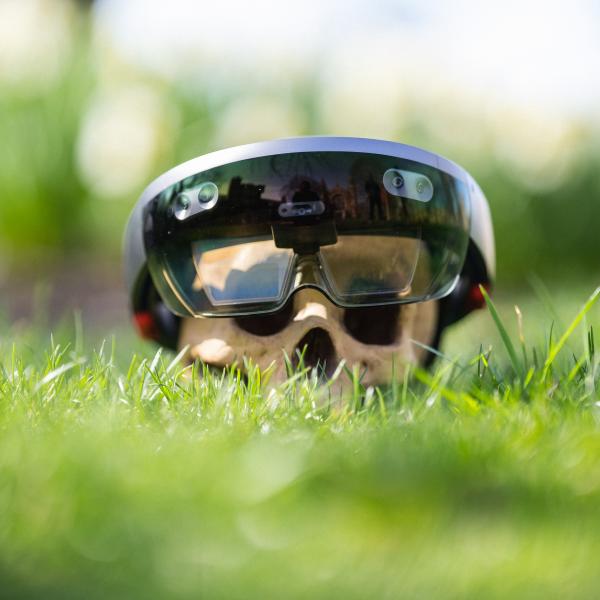
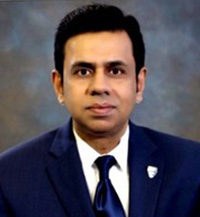
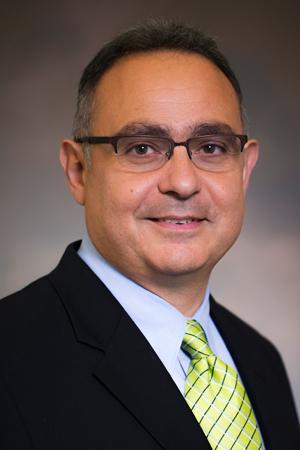
Elizabeth Hunter is Assistant Professor of Drama and Director of the Fabula(b) Theatre + New Media Lab at Washington University. She holds a PhD and MA in Theatre and Drama from Northwestern University, an MFA in Dramaturgy from Columbia University, and a BA in English and Psychology from the University of Michigan. Hunter's research examines emergent technologies in performance through critical theory and digital making. Her current projects investigate how audiences participate across physical/digital spaces and how performance theory illuminates digital resurrection technologies. She directs the Fabula(b) where interdisciplinary teams create digital adaptations of canonical works as historiographic analysis. Creative Projects: VISIBLE: Resurrecting Henry 'Box' Brown's Moving Panorama Something Wicked: Macbeth video game adaptation Bitter Wind: Mixed reality Greek tragedy
Magnus Strömberg is a Lecturer and Programme Supervisor in the Music department at the University of Gothenburg. His roles involve academic teaching and administrative oversight of music programmes. He is based at Eklandagatan 86 in Gothenburg, Sweden. While specific research interests are not detailed in the provided text, his affiliation with the Music department suggests a focus on areas such as music education, performance pedagogy, and theoretical studies in music. No recent publications or grants are explicitly mentioned, but his role likely involves curriculum development and student supervision. Contact details include the email magnus.stromberg@hsm.gu.se and postal address Box 210, Göteborg.
Dr. Damith Mohotti is a Senior Lecturer and Engineering Consultant at the School of Civil Engineering and IT, UNSW Canberra. He also serves as a Visiting Associate Professor at the University of Wollongong. His expertise spans protective structure design, numerical modeling, finite element analysis, and computational fluid dynamics. He holds a PhD in Structural Engineering from the University of Melbourne, alongside professional qualifications including Chartered Engineer (CPEng) and Fellowships in multiple engineering societies. His research focuses on blast/impact mitigation, smart materials, advanced numerical methods, and CFD applications. Notable contributions include developing safety guidelines for hydrogen explosions and vulnerability models for critical infrastructure. He has secured over $1.4M in grants, including ARC Discovery Projects and DSTG funding. Awarded the Australian Museum Eureka Prize (2013) and Engineering Excellence Award (2017), Mohotti leads initiatives like the International Association of Protective Structures (IAPS) Australian Chapter. He supervises PhD candidates exploring AI in wind/blast prediction and novel materials. Teaching includes civil engineering materials, structural design, and construction management courses. His work bridges academia and industry through projects with DMTC, Karagozian & Case, and international collaborations. Media engagements include The Conversation and SBS Sinhala articles highlighting his contributions to disaster resilience and defense technologies.
Christiane Lemieux is a Professor in the Department of Statistics and Actuarial Science at the University of Waterloo and Associate Dean of Operations and Academic for the Faculty of Mathematics. Her research focuses on quasi-Monte Carlo methods, low-discrepancy sequences, and their applications in computational finance, machine learning, and risk management. Education includes a Ph.D. in Computer Science from Université de Montréal (2000), M.Sc. in Mathematics from Université de Montréal (1996), and B.Sc. in Actuarial Science from Université Laval (1994). Her research explores quasi-Monte Carlo methods for multidimensional integration, low-discrepancy sequence constructions, dependence concepts for point set characterization, machine learning-based construction paradigms, and applications in finance and risk management. Recent publications demonstrate strong emphasis on combining quasi-Monte Carlo methods with machine learning techniques, particularly graph neural networks for low-discrepancy point set generation and randomized methods for various computational applications. Awards include the Outstanding Performance Award from University of Waterloo (2012, 2018, 2022) and Journal of Complexity IBC Young Researcher Award (2004). She actively supervises graduate students and postdoctoral researchers, and has led several NSERC and MITACS grants supporting her research program.
Brad Stappenbelt is a Senior Lecturer at the University of Wollongong's School of Mechanical, Materials, Mechatronic and Biomedical Engineering since 2013. His research focuses on mechanical engineering, fluid dynamics, renewable energy systems, and engineering education pedagogy. He has pioneered work on flow-induced vibration in marine energy harvesting, AI integration in education, and student-supervisor dynamics in thesis supervision. Dr. Stappenbelt has led multiple grants, including the 2024 Learning and Teaching Innovation Grant (LTIG) for AI Tutor development and the 2022 Advancement and Equity Grants Scheme for ocean-wave energy research. He has supervised four higher-degree students, contributing to over 70 publications. His work bridges technical innovation with educational strategies, emphasizing sustainable energy solutions and active learning methodologies. Research Interests : Marine renewable energy, vortex-induced vibration mitigation, AI in education, and student-mentor alignment in engineering training. Grants : Australian Wool Innovation (2023), UOW Advancement & Equity Grants (2022), and UOW ESDF grants (2011-2010). Key Projects : Development of in-glove boxing sensors, flipped-classroom pedagogy, and Limits-to-Growth model uncertainty analysis. His articles span topics like energy harvesting efficiency (2022), AI tutoring potential (2024), and plagiarism prevention strategies (2016). He actively participates in international conferences such as SEFI and AAEE, advancing both technical and pedagogical frontiers in engineering.
Patrick Purcell is an Associate Professor in the School of Civil Engineering at University College Dublin. He holds academic roles such as Module Coordinator for courses like 'Water & Wastewater Treatment' and 'Construction Practice'. His research focuses on environmental hydraulics, water treatment processes, and fluid mechanics. He has contributed to over 100 publications, with recent work addressing hybrid academic advising models, Fenton process optimization for wastewater treatment, and sediment dynamics in African wetlands. Purcell has led projects on mitigating motorway construction impacts on aquatic ecosystems and advised on infrastructure development in Ireland. He served on accreditation panels for engineering programs and contributed to EU-funded research on wastewater management. Education: Bachelor of Engineering (BE), University College Dublin Master of Engineering Science (MEngSc), University College Dublin Doctor of Philosophy (PhD), University College Dublin Research Interests: Purcell’s work integrates laboratory and field studies to address challenges in water quality, sustainable infrastructure, and environmental engineering. Key areas include advanced oxidation processes for contaminant removal, sediment management in wetlands, and the ecological impacts of road construction. His studies often apply statistical optimization techniques like Box-Behnken design to refine treatment methodologies. Articles Trends: Recent publications emphasize Fenton-based wastewater treatment, sedimentation analysis, and urban water governance. He combines experimental methods with computational modeling to evaluate processes like photocatalytic degradation and linear reservoir analogs for flood control. Professional Activities: Former Chairman of the Water and Environmental Engineering section of the Institution of Engineers of Ireland Member of accreditation panels for engineering programs at NUIG and UCC EU COST 628 committee member on wastewater plant management Teaching & Grants: Coordinates undergraduate and postgraduate modules in civil engineering. His research has been supported by institutional grants and EU initiatives. Collaborates with industry on projects involving expert witness testimony for legal proceedings and infrastructure assessments.
Nicolas Berger is a Senior Lecturer in Exercise Physiology at the School of Health & Life Sciences, Teesside University, affiliated with the Centre for Rehabilitation. He holds a PhD from the University of Exeter on 'The Effects of Fitness and Training on VO2 Kinetics.' His research focuses on endurance and ultra-endurance performance optimization, environmental physiology, sports nutrition, and exercise's role in mental and physical health improvement. Education: BSc Sport Science (University of Brighton), MSc Exercise Physiology (Manchester Metropolitan University), PhD (University of Exeter) Teaching: Exercise Physiology, Applied Sport Science, Environmental Physiology at undergraduate and postgraduate levels His research interests include analyzing elite sports performance (cycling, running, ultra-endurance events), nutritional strategies, ergogenic aids, and the impact of exercise on longevity. He has collaborated with athletes across disciplines (boxing, kayaking, triathlon) and supported record-breaking events like the 7-day treadmill run by Sharon Gayter and extreme mountain ascents. He currently supervises PhD students exploring cyclist training strategies and has previously guided two completed PhDs. He leads projects like the 'Systematic Review Protocol on Training Intensity Distribution Models in Cycling.' Key collaborations include work on anti-doping policies in e-cycling and interdisciplinary analyses of ultra-endurance limits. His lab focuses on practical applications of physiological insights to improve athlete performance and public health.
Prof Steve Draper is an academic dean and professor at Hartpury University's Department of Sport. He holds a PhD in sport physiology (2002) and has published extensively across sport, exercise, and health. His expertise includes oxygen uptake kinetics, athletic performance modeling, and the Clem Burke Drumming Project's impact on health and wellbeing. He has supervised 20 research degrees and is actively involved in applied sport science projects like the Olympic Boxing initiative and sleep interventions for athletes. His research focuses on sleep patterns in athletes, music's cognitive impacts, and behavioral interventions. Recent studies explore early morning training effects on sleep and the effectiveness of targeted sleep programs. He has presented at high-profile events such as the Royal Society Summer Exhibition and Cheltenham Science Festival, contributing to media discussions on science and sports. Draper’s work spans interdisciplinary collaborations, addressing topics like lameness in equestrian sports, classroom physical activity interventions, and neuroplasticity changes from drumming. His academic leadership includes roles in Research and Knowledge Exchange at Hartpury, emphasizing applied research and community engagement.
Jonah W. Jurss is an Associate Professor in the Department of Chemistry & Biochemistry at the University of Mississippi's College of Liberal Arts. He earned his PhD from the University of North Carolina at Chapel Hill and conducted postdoctoral research at UC Berkeley. His research develops earth-abundant molecular catalysts for renewable energy applications and hydrocarbon functionalization, with emphasis on electrochemical and light-driven CO₂ reduction. Research in the Jurss Lab focuses on translating molecular inorganic systems to electrode surfaces and understanding proton-coupled electron transfer mechanisms. Current projects explore bioinspired catalyst designs for artificial photosynthesis and selective C-H bond activation. Professor Jurss teaches courses across the chemistry curriculum including Inorganic Chemistry, Physical Chemistry, and special topics in Energy & Catalysis. He advises graduate and undergraduate researchers in synthetic inorganic chemistry, electrochemistry, and mechanistic studies. Laboratory facilities include Schlenk lines, glove boxes, electrochemical workstations, and microwave reactors supporting catalyst synthesis and characterization.
Dr. Mashrur “Ronnie” Chowdhury is the Eugene Douglas Mays Chair of Transportation and holds triple professorial appointments in Automotive Engineering, Civil Engineering, and Computer Science at Clemson University. He is the founding director of the USDOT UTC National Center for Transportation Cybersecurity and Resiliency (TraCR) and the USDOT UTC Center for Connected Multimodal Mobility (C2M2), and co-director of the Complex Systems, Analytics and Visualization Institute (CSAVI). Education B.S., Civil Engineering – Bangladesh Institute of Technology, 1988 M.S., Transportation – Morgan State University, 1991 Ph.D., Civil Engineering – University of Virginia, 1995 Research Interests Dr. Chowdhury’s scholarship converges at the intersection of cyber-physical systems , connected and autonomous vehicles , and smart-city transportation . His work advances secure, resilient, and data-rich mobility by integrating big-data analytics , artificial intelligence , and vehicle-to-everything (V2X) communication . Core themes include: Cyber-Physical Systems for Connected and Autonomous Vehicles Cyber-Physical Systems for Smart Cities Transportation Cybersecurity and Resiliency Big-Data-driven Intelligent Transportation Systems Sustainable and Green Transportation Solutions Publication Landscape Between 2009 and 2015, Dr. Chowdhury authored or co-authored more than 45 refereed journal articles. These works collectively trace an evolution from foundational traffic simulation and incident-management studies to cutting-edge research on connected vehicle security , energy-efficient electrified transportation , and big-data-enabled urban mobility analytics . A pronounced emphasis on cyber-physical security , overweight-truck infrastructure impacts , and real-time AI applications is evident across the portfolio. Scientific Awards & Honors Wilbur Smith Distinguished Transportation Educator Award (2015) AASHTO High-Value Research Project Award (2014) Faculty Mentoring Award, CECAS (2013) McQueen Quattlebaum Faculty Achievement Award (2012) National Academy of Engineering Indo-U.S. Frontiers of Engineering Invited Speaker (2012) Clemson Board of Trustees Award for Faculty Excellence (2011, 2010) IDEaS Professor, CECAS (2010) Frank A. Burtner Award for Excellence in Advising (2010) Murray Stokeley Award for Excellence in Teaching (2009) Fellow, American Society of Civil Engineers (ASCE) Senior Member, IEEE Advising & Grants Dr. Chowdhury has mentored more than 30 Ph.D. and M.S. students whose names appear as first or co-authors on his publications. His research funding portfolio includes multi-million-dollar grants from the U.S. Department of Transportation (USDOT) through two national UTC centers—TraCR and C2M2—focused on cybersecurity and multimodal mobility innovation. Laboratories & Teams He directs the Connected Transportation Lab located in 351 Engineering Innovation Building and maintains an office in 216 Lowry Hall. These facilities host interdisciplinary teams of graduate researchers, post-docs, and visiting scholars advancing next-generation connected and autonomous transportation systems.
Keri Walsh is a Professor of English and Director of the Institute of Irish Studies at Fordham University. She holds degrees from the University of Saskatchewan (BA), Queen's University (MA), Oxford University (MPhil), and Princeton University (PhD). Her research focuses on Irish, French, and American modernism, James Joyce, Sylvia Beach, expatriate and bohemian cultures, theatre, film, and book history. She edits the Joyce Studies Annual and has published seminal works such as Women, Method Acting, and the Hollywood Film (2021) and James Joyce's Exiles (2020). Her current project explores the history of Paris's Shakespeare and Company bookstore. Professor Walsh has also received a fellowship from the Academy of Motion Picture Arts and Sciences for her work on method acting. Her affiliations include roles as editor for academic journals and leadership in Fordham's Irish Studies initiatives. Her publications span monographs, edited volumes, and articles on topics ranging from modernist literature to feminist film theory. Walsh's work bridges literary and cultural studies, emphasizing interdisciplinary approaches to understanding artistic movements and their socio-political contexts. Awards include recognition for her scholarship on film and literature, notably the 2018 Academy Film Scholar award. Her teaching spans undergraduate and graduate courses in modern Irish literature, critical theory, and the intersection of literature with other arts.
Ali Emami is an Assistant Professor in the Department of Computer Science at Brock University (Canada), with a tenure-track position at Emory University starting Fall 2025. His research focuses on natural language processing, machine learning, and AI ethics, particularly evaluating large language models' reasoning and societal impacts. He holds a PhD in Computer Science from McGill University/Mila (2021), with prior degrees from McGill in MSc (2016) and BSc (2014). Research interests include: Natural Language Processing (NLP) and Machine Learning Ethics, bias, and fairness in AI Language understanding and generation AI interpretability and reliability Computational social science Recent work emphasizes benchmarking LLMs' reasoning capabilities (e.g., NYT-Connections, STOP!) and addressing societal bias through books. Notable achievements include the COLING 2025 Best Dataset Award and the EMNLP 2024 Social Impact Award . He has supervised multiple undergrad and graduate researchers, with a focus on fostering collaborative projects. His lab explores personalized narrative generation (MirrorStories) and tool-augmented LLM evaluation frameworks (TALE). Upcoming roles include a talk at the FirstOntario Performing Arts Centre on LLMs' societal mirrors and a 2024 teaching award from Brock’s Faculty of Mathematics & Science.
Gary Doyle is a Senior Lecturer at the University of East London, affiliated with the Health, Sport & Bioscience research institute. His work focuses on physiological profiling of athletes and performance optimization in combat sports. Doyle's research examines how physiological parameters correlate with athletic performance in disciplines like Muay Thai and boxing. His investigations span strength training efficacy, biomechanical differences in movement patterns, and sport-specific conditioning methodologies. His publications demonstrate consistent focus on translating physiological insights into practical training applications. Research trends show strong emphasis on: Biomechanical analysis of striking techniques Resistance training protocols Physiological monitoring in combat sports No awards or student advising relationships are documented in available materials.
Issam Khoury is an Associate Professor and Director of the Ohio Research Institute for Transportation and the Environment (ORITE) at Ohio University's Russ College of Engineering and Technology. He holds a Ph.D. (Ohio University), M.S. (Ohio University), and B.S. (Ohio State University) in Civil Engineering. His research focuses on structural instrumentation, pavement performance testing, and geotechnical data analysis. Khoury has extensive experience in highway research projects for agencies like ODOT and FHWA, including work on perpetual pavements, bridge instrumentation, and material testing. He has co-authored over 40 technical reports and papers on topics like pavement durability, fiber-reinforced materials, and forensic infrastructure analysis. His applied research aids in improving transportation infrastructure design and maintenance strategies. Key contributions include instrumentation of test roads (e.g., US 23 in Delaware, OH) and bridges, and validation of ODOT’s design methodologies. Education: Ph.D., Civil Engineering, Ohio University M.S., Civil Engineering, Ohio University B.S., Civil Engineering, Ohio State University Research Highlights: Khoury’s work emphasizes field data collection and analysis, including sensor installation for pavements and bridges. He evaluates material properties (e.g., concrete, asphalt) and develops tools like the JPCP Design Catalog for New York State. His research bridges lab testing (e.g., MEPDG material inputs) and real-world infrastructure performance. Grants & Projects: Leads projects funded by Ohio Department of Transportation (ODOT), FHWA, and others. Recent efforts include optimizing perpetual pavement thickness, analyzing culvert corrosion, and investigating tree-pavement interactions for urban infrastructure resilience. Labs/Teams: Directs ORITE, which specializes in transportation and environmental research. Collaborates with the Accelerated Pavement Load Facility for large-scale testing.
Shad Sargand is the Russ Professor of Civil Engineering at Ohio University's Russ College of Engineering and Technology. He serves as the Vice Director for Business Development at the Ohio Research Institute for Transportation and the Environment (ORITE). His roles include leading the Ohio Strategic Highway Research Program (SHRP) National Test Road and managing ORITE's Asphalt Laboratory and Accelerated Pavement Load Facility in Lancaster, Ohio. Sargand has authored over 200 publications and holds multiple patents related to pipeline security and exfiltration systems. Education: Ph.D., Civil Engineering, Virginia Polytechnic Institute and State University, 1981 M.S., Civil Engineering, University of Nebraska, 1978 B.S., Civil Engineering, University of Nebraska, 1976 Research Interests: His work focuses on rigid and flexible pavements, finite element methods, soil-structure interaction, and pipeline engineering. Notable projects include long-term studies on thermoplastic pipe performance and the structural analysis of adjacent box-girder bridges using ultra-high-performance concrete shear keys. Publications & Awards: Over 100 journal articles highlight his contributions to pavement design, pipeline durability, and forensic engineering. He has received prestigious awards such as the William W. “Bill” Baker Award (2011) and the D.R. Harting Award (1992 & 1999). His research spans field investigations, material testing, and infrastructure optimization. Labs & Teams: Leads ORITE’s Asphalt Laboratory and Accelerated Pavement Load Facility, which support large-scale testing of pavements and materials. Collaborates with industry partners on projects like copper mine pipeline analysis and exfiltration trench systems for stormwater management.