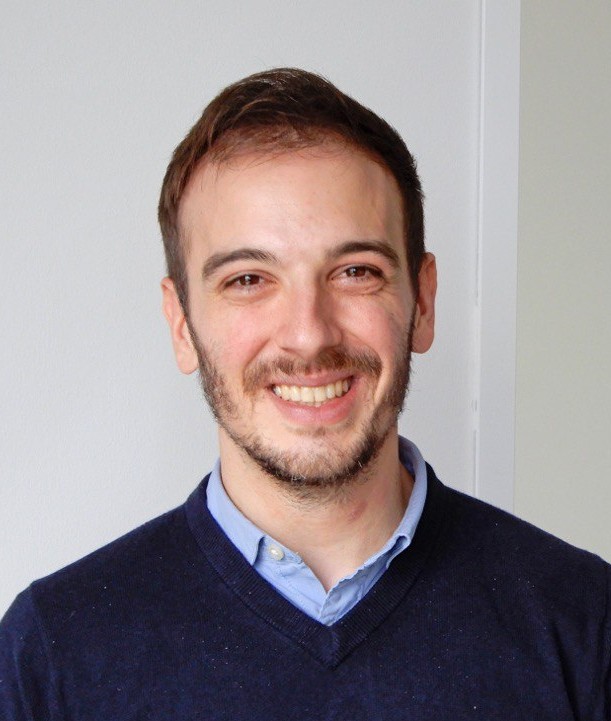
Jinhyung Park is an Associate Professor in the Department of Mathematical Sciences at KAIST, Daejeon, Korea. He obtained his Ph.D. from KAIST in 2014 under Prof. Sijong Kwak and was mentored as a CMC Fellow at KIAS (2014–2019). His research focuses on Algebraic Geometry , particularly syzygies of algebraic varieties , secant varieties , and positivity of line bundles . Education: Ph.D., KAIST (2014); MS/BS, KAIST and University of Chicago (2002/2001). Research Interests: His work explores geometric properties of projective manifolds, singularities in algebraic geometry, and applications of Okounkov bodies to divisors and syzygies. Recent trends include Castelnuovo-Mumford regularity bounds (e.g., for threefolds with rational singularities) and subadditivity of Okounkov bodies in fiber spaces. Teaching: Courses include Matrix Groups, Algebraic Geometry, and Calculus. He previously taught at Sogang University and Purdue University. Professional Affiliations: Member of the Korean Mathematical Society, American Mathematical Society, and other international societies. Organized the 8th East Asia Number Theory Conference at KAIST (2019).
Prof. Igors Gorbovickis is an Associate Professor of Mathematics at the Department of Mathematics, School of Computer Science and Engineering, Constructor University (formerly Jacobs University Bremen). His research focuses on complex dynamical systems, including topics such as renormalization theory, bifurcation analysis, Julia sets, and applications to mathematical physics. He also contributes to discrete geometry, particularly exploring conjectures like the Kneser-Poulsen problem. His work bridges pure mathematics with interdisciplinary applications, emphasizing rigorous analysis of nonlinear systems and geometric configurations. Key areas of investigation include critical point accumulations, Hausdorff dimension estimates, and equidistribution phenomena in parameter spaces. Recent publications highlight advancements in understanding chaotic systems, circle maps, and the interplay between algebraic structures and dynamical behavior. Prof. Gorbovickis collaborates internationally, with co-authored papers appearing in journals like Advances in Mathematics , Ergodic Theory and Dynamical Systems , and Nonlinearity . His office is located at Research I, Room 128 on the Constructor University campus in Bremen, Germany.
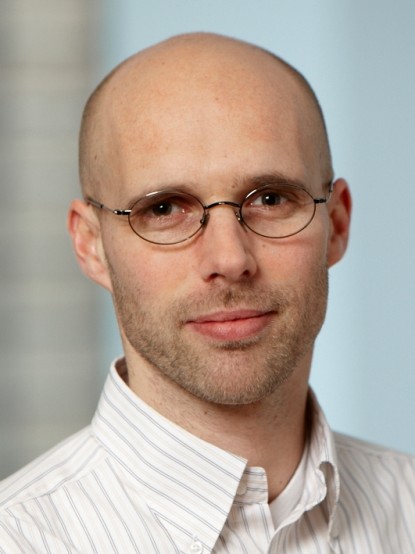
Prof. Dr. Hendrik Weber is a Professor of Mathematics at the University of Münster, leading the Workgroup for Stochastic Analysis. He holds the Bridging the Gaps Professorship and is affiliated with the Faculty of Mathematics and Computer Science. His expertise lies in stochastic analysis, particularly stochastic partial differential equations (SPDEs) and their applications in mathematical physics and statistical mechanics. Weber's research focuses on regularity structures, singular SPDEs, and the interplay between stochastic processes and nonlinear dynamics. Education and Career: Weber earned his PhD from the University of Bonn (2010) and held positions at the University of Warwick (2010–2018) and the University of Bath (2018–2022) before joining Münster in 2022. He has been recognized with awards including the ERC Consolidator Grant (2022), Philip Leverhulme Prize (2017), and Rollo Davidson Prize (2016). Research Interests: Weber's work addresses theoretical challenges in SPDEs, including invariant measures, phase transitions, and scaling limits. His projects span topics like singularities in PDEs, field theory randomness, and deep learning surrogate methods. Recent studies include the dynamic Φ⁴ model, stochastic quantization in non-commutative spaces, and a priori bounds for quasilinear SPDEs. Publications: Over 60 peer-reviewed articles, including high-impact contributions to Annals of Probability , Communications in Mathematical Physics , and Archive for Rational Mechanics and Analysis . His work emphasizes rigorous mathematical analysis of stochastic systems and their physical implications. Awards and Grants: ERC Consolidator Grant (2022), Royal Society Fellowship (2016), and multiple collaborative projects funded by the EPSRC and DFG. His research also bridges theoretical developments with applications in machine learning and feature engineering using regularity structures. Labs/Teams: Leads a dynamic research group comprising PhD students (e.g., Sophie Mildenberger) and postdoctoral researchers. Collaborations with global institutions like the University of Warwick and the University of Bath drive interdisciplinary advancements in stochastic analysis.
Carlo D'Eramo is a Professor of Reinforcement Learning and Computational Decision-Making at the University of Würzburg. He leads the LiteRL group at hessian.AI until 2025 and is affiliated with the Intelligent Autonomous Systems group at TU Darmstadt's Computer Science Department, as well as the Hessian Centre for Artificial Intelligence. Ph.D. : Information Technology, Politecnico di Milano (2019) Double MSc : Computer Engineering, Politecnico di Milano (2015) and University of Illinois at Chicago (2015) BSc : Computer Engineering, Politecnico di Milano (2011) His research focuses on lightweight reinforcement learning methods for adaptive autonomous agents, spanning multi-task/curriculum RL, multi-agent RL, deep RL, uncertainty quantification, residual learning, and planning. He developed MushroomRL, a widely adopted RL library, and investigates how agents can acquire real-world expert skills efficiently. The 15 most recent publications highlight trends in deep reinforcement learning architectures, adversarial and multi-agent systems, domain randomization, and curriculum design. Key subfields include optimal transport applications, entropy maximization, neural network distillation, and bounded rationality frameworks for robust learning. He has contributed to top venues like ICML, NeurIPS, AAAI, ICLR, JMLR, and IEEE Transactions on Pattern Analysis and Machine Intelligence, with a focus on advancing scalable and adaptive RL methodologies.
Professor Emiliano Cortés is a faculty member at the Ludwig Maximilian University of Munich (LMU), where he leads research in Plasmonic and Photonic Chemistry at the Nano-Institute Munich. His work bridges the fields of nanotechnology, physical chemistry, and materials science, focusing on light-matter interactions for energy conversion applications. Dr. Cortés' research focuses on plasmonics , photocatalysis , and electrocatalysis at the nanoscale. His group investigates how the dynamics of photons, plasmon-polaritons, carriers, phonons, and molecular states influence chemical reactivity. A key aspect of his work involves developing techniques to study plasmonic systems at the single particle level and designing rational synthesis approaches for plasmonic colloidal photo and electrocatalysts. His research has significant implications for sustainable energy technologies, environmental remediation, and advanced sensing applications. Analysis of Professor Cortés' recent publications reveals a strong focus on energy conversion processes, with particular emphasis on CO2 reduction, ammonia synthesis, and hydrogen production. His work integrates plasmonic effects with catalytic processes to enhance reaction efficiencies, often through innovative interface engineering and nanostructure design. The research spans fundamental studies of charge carrier dynamics to practical applications in energy storage and environmental technologies. Professor Cortés actively mentors doctoral candidates and postdoctoral researchers, currently advertising open positions for projects on Single particle photo and electrocatalysis and Synthesis of hybrid colloids . His research group, the Hybrid Plasmonics Lab (www.hybridplasmonics.org), receives funding from various sources to support their work on plasmon-mediated chemistry for sustainable applications. The Cortés research group operates within the Nano-Institute Munich, utilizing state-of-the-art facilities for nanomaterial synthesis, characterization, and testing. Their work combines experimental approaches with theoretical modeling to understand and harness light-matter interactions at the nanoscale for practical applications in energy conversion and environmental technologies.
Prof. Heinz Koeppl is a Professor in the Department of Electrical Engineering and Information Technology at TU Darmstadt. His research focuses on self-organizing systems, systems biology, and control theory, with applications in synthetic biology, robotics, and stochastic processes. He explores interdisciplinary topics such as genetic circuit design, UAV swarm dynamics, and machine learning-driven modeling of biochemical systems. Key research areas include the development of deep learning frameworks for kinetic modeling, Bayesian optimization for riboswitch design, and mean field control theory for sparse networks. His work bridges theoretical foundations with practical engineering solutions, addressing challenges in molecular communication, gene regulation, and robotic swarm coordination. Publications from 2023–2025 highlight advancements in bio-inspired algorithms, swarm intelligence, and computational biology. Notable contributions include studies on RNA-based circuits, active matter dynamics, and optimization strategies for large-scale systems. His research emphasizes interdisciplinary collaboration, leveraging tools from electrical engineering, mathematics, and life sciences. No scientific awards are explicitly listed in the provided text. Advising and grants details are not available. Prof. Koeppl’s lab focuses on integrating systems biology approaches with engineering principles to solve complex problems in healthcare, environmental sustainability, and technological innovation.
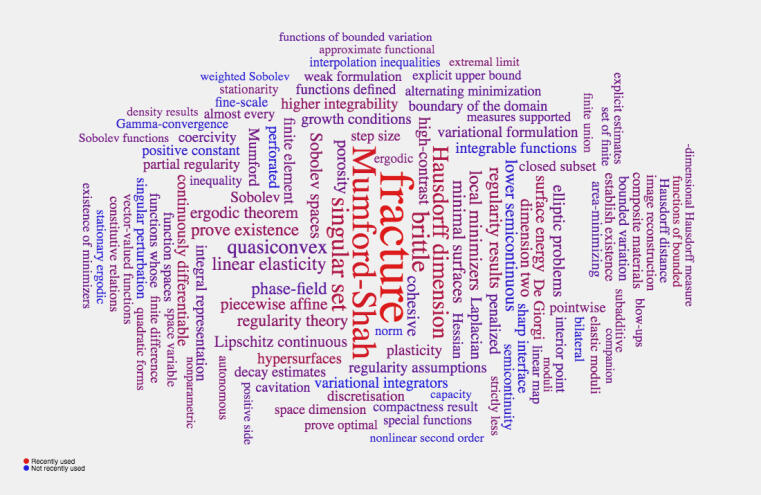
Gianni Dal Maso is a Professor of Mathematical Analysis at the International School for Advanced Studies (SISSA) in Trieste, Italy. He has been a faculty member at SISSA since 1985, first as Associate Professor and then as Full Professor since 1987. He has held several leadership positions at SISSA including Head of the Sector of Functional Analysis and Applications (1993-1998, 2001-2010), Deputy Director (2010-2015), and Coordinator of the Mathematics Area (2016-2020). His educational background includes: 1973-1977: Undergraduate student in Mathematics at the University of Pisa and Scuola Normale Superiore 1977: Degree in Mathematics with honors at the University of Pisa (thesis: "Gamma-limits of set functions," advised by Ennio De Giorgi) 1977: "Diploma" in Mathematics from the Scuola Normale Superiore 1977-1981: Post-graduate Research Fellowship in Mathematics ("Perfezionamento") at the Scuola Normale Superiore Dal Maso's research focuses on the Calculus of Variations, with particular emphasis on semicontinuity and relaxation problems, Gamma-convergence, and more recently, free discontinuity problems and their applications to mechanics. His work bridges pure mathematical analysis with practical applications in material science, particularly in plasticity and fracture mechanics. He has developed mathematical frameworks for understanding crack propagation, material failure, and the behavior of solids under stress, contributing significantly to both theoretical foundations and practical modeling approaches in these areas. His extensive publication record shows a clear evolution from foundational work in Gamma-convergence (culminating in his influential book "An Introduction to Gamma-Convergence" in 1993) toward increasingly sophisticated models of material behavior, particularly in fracture mechanics and plasticity. Recent work demonstrates continued innovation in handling complex discontinuities, non-local effects, and multi-scale phenomena in material science applications. Among his notable scientific recognitions: 1982: Stampacchia Prize, awarded by the Scuola Normale Superiore 1990: Caccioppoli Prize, awarded by the Italian Mathematical Union 1996: Medaglia dei XL per la Matematica, awarded by the Accademia Nazionale delle Scienze detta dei XL 2003: Prize of the Minister for the Cultural Heritage for Mathematics and Mechanics, awarded by the Accademia Nazionale dei Lincei 2005: Prize Luigi and Wanda Amerio, awarded by the Istituto Lombardo Accademia di Scienze e Lettere Dal Maso has supervised 42 PhD students at SISSA, demonstrating a strong commitment to academic mentorship. His research has been significantly supported by multiple National Research Projects (PRIN) in Italy, and notably by an ERC Advanced Grant "Quasistatic and Dynamic Evolution Problems in Plasticity and Fracture" (QuaDynEvoPro) from 2012-2017, where he served as Principal Investigator. This major project focused on nonlinear evolution problems in plasticity and fracture, with three main research directions: plasticity with hardening and softening, quasistatic crack growth, and dynamic fracture mechanics. His scholarly activities extend to editorial service, with membership on the boards of numerous prestigious journals including Archive for Rational Mechanics and Analysis, SIAM Journal on Mathematical Analysis, and Journal of Convex Analysis. He has also been active in the mathematical community through membership in scientific committees and academies, including the Accademia Nazionale dei Lincei since 2014.
Klaus Schmidt is a Professor of Economics at Ludwig Maximilian University of Munich, holding the chair in the Department of Economics within the Faculty of Economics. His research focuses on theoretical and applied aspects of contract theory, game theory, and industrial organization, with significant contributions to understanding venture capital finance, privatization, and fairness in economic behavior. His educational background includes a Ph.D. in Economics from the University of Bonn (1991) with the dissertation "Commitment in Games with Asymmetric Information" and Habilitation (1994) with "Contracts, Competition, and the Theory of Reputation". Early academic support included scholarships from Studienstiftung des Deutschen Volkes (1982-87) and a German Academic Exchange Service grant (1988/89). Professor Schmidt's research centers on contract theory applications across diverse domains. His work on fairness and reciprocity (notably with Ernst Fehr) revolutionized behavioral contract theory, while contributions to venture capital finance and privatization established foundational frameworks for analyzing incomplete contracts in real-world settings. He employs rigorous game-theoretic modeling to address incentive problems in procurement, privatization, and organizational design. His publication record since 1991 reveals consistent focus on contract-theoretic problems, with increasing emphasis on behavioral aspects after 1999. Key thematic clusters include venture capital finance (2002-2003), fairness/reciprocity (1999-2000), and privatization/incomplete contracts (1995-1996), demonstrating evolution from pure theory to policy-relevant applications. Gossen Prize of the German Economic Association (2001) Commerzbank Prize of the Berlin-Brandenburg Academy of Sciences (2001) Teaching Prize of the Bavarian ministry of science (2000) Walter-Adolf-Jörn Prize (1993) German Academic Exchange Service Grant (1988/89) Studienstiftung des Deutschen Volkes Scholarship (1982-87) Professor Schmidt has secured major research funding including German Science Foundation grants for "Incomplete Contracts" (1999-present) and "Venture Capital Finance" (1998-present). His teaching excellence was recognized with Bavaria's highest teaching award (2000), and he maintains active collaboration with leading economists including Ernst Fehr and Monika Schnitzer. While specific student mentorship details aren't documented, his extensive publication record and seminar leadership indicate significant academic supervision.
Prof. Dr. Nils Stieglitz is a distinguished Professor of Strategy at Frankfurt School of Finance & Management since 2012 and serves as President & CEO since 2018. He leads the Management Department (2015–2018) and held the Executive Board role as Vice President Corporate Development (2017–2018). His research spans Strategic decision-making Organizational adaptation Human-agent interaction across dynamic environments. His scholarly work appears in top-tier journals like Strategic Management Journal , Management Science , and Organization Science , focusing on complex organizational trade-offs, incentive design, and scenario planning. He also contributes strategic insights to global media outlets such as Harvard Business Review and The Economist . As Senior Editor at the Journal of Organization Design and editorial board member of Organization Science , he shapes discourse on organizational theory. His teaching emphasizes strategy formulation and organizational design principles.
Friederike Mengel is a Professor of Economics at the University of Essex and holds a Visiting Professorship at Erasmus University Rotterdam. She is also a Fellow of the Academy of Social Sciences (UK). Her research focuses on Behavioural Economics , integrating Game Theory , Evolutionary Dynamics , and Social Network Analysis . Key research themes include social influence in networks , opinion dynamics , emergence of social norms , and links between social identity, bounded rationality, and discrimination . Recent work explores Covid-19 impacts on productivity and innovation in hybrid work environments . Her scientific awards include the Best Paper Award from Quantitative Economics (2018) and recognition as an Academy of Social Sciences Fellow. Her publications span topics like cooperation in viscous populations , strategic behavior in repeated games , and gender bias in opinion aggregation , with media coverage in outlets like The Economist and Financial Times .
Professor Caterina Ida Zeppieri is a distinguished mathematician at the Westfälische Wilhelms-University Münster (University of Münster) in Germany, where she leads the Research Group 'Analysis and Modelling' within the Institute for Analysis and Numerics. She has maintained a continuous academic presence since at least the Winter semester 2012/13 through to upcoming semesters in 2025/26, consistently teaching advanced mathematics courses and supervising research activities. Her research focuses on fundamental aspects of mathematical analysis with significant applications to materials science. She specializes in Calculus of Variations, Elliptic PDEs, Gamma-convergence, Homogenization theory, Free-discontinuity problems, Nonlinear elasticity, and Plasticity. Her work bridges theoretical mathematics with practical applications in understanding material behavior, particularly fracture mechanics and composite materials. Professor Zeppieri's publication record demonstrates a consistent and impactful research trajectory from 2007 through forthcoming publications in 2025. Her recent work shows a strong emphasis on stochastic homogenization techniques applied to free-discontinuity problems and singularly-perturbed functionals, revealing sophisticated mathematical approaches to modeling complex material behaviors across multiple scales. She regularly collaborates with leading researchers including Filippo Cagnetti, Gianni Dal Maso, and Lucia Scardia, contributing to significant advances in the mathematical understanding of material science phenomena. Her research has been published in top-tier mathematics journals including Calculus of Variations and Partial Differential Equations, Archive for Rational Mechanics and Analysis, and SIAM Journal on Mathematical Analysis. Within the department, Professor Zeppieri plays an active role in teaching advanced courses such as Partial Differential Equations, Calculus of Variations, and Advanced Topics in the Calculus of Variation, while participating in the department's Advanced Seminar in Applied Mathematics and Colloquium on Applied Mathematics.
Matthias Lang is an Associate Professor of Economics at Ludwig Maximilian University (LMU) Munich, specializing in applied microeconomic theory. He holds a PhD from the Bonn Graduate School of Economics and is Principal Investigator of the Collaborative Research Centre/Transregio 190 (CRC TRR 190) on 'Rationality and Competition.' He is also a CESifo Fellow. His research focuses on uncertainty, contract design, and behavioral economics, with applications to insurance fraud, tax evasion, and political competition. Lang has served as an Assistant Professor at Freie Universität Berlin and Humboldt University Berlin, and was a Senior Research Fellow at the Max Planck Institute for Research on Collective Goods. His work bridges game theory, mechanism design, and decision theory, addressing strategic uncertainty and contractual solutions to mitigate its effects. He has been awarded the Walther-Rathenau Award for Best Paper (2015) for his work on communicating subjective evaluations. His recent research explores ambiguous product information dynamics, narrative-based mechanisms, and the value of transparency in campaign promises. Lang actively contributes to academic communities through numerous presentations at international conferences and serves on editorial review boards for top journals.
Ernst Fehr is a Professor at the University of Zurich and serves as Director of the Institute for Empirical Research in Economics . He is a leading figure in the Behavioral Economics research area at CESifo, focusing on the intersection of economics, psychology, and experimental science. University: University of Zurich Institutional Role: Director, Institute for Empirical Research in Economics Key Affiliation: CESifo Research Network His research examines social preferences , bounded rationality , and decision-making under uncertainty . Themes include fairness norms, trust, risk aversion, and the psychological drivers of economic behavior, with applications to markets, policies, and institutional design. Recent publications address ambiguity aversion , cooperation dynamics , and cognitive development in children . His work often combines experimental economics, game theory, and behavioral modeling to uncover foundational patterns in human behavior. Co-authors in his publications include prominent researchers such as Klaus M. Schmidt , Henning Hermes , and Matthias Sutter . These collaborations highlight interdisciplinary approaches to understanding economic agents' motivations and biases.
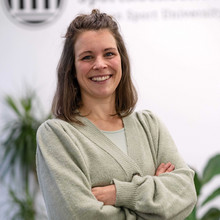
Lisa Musculus is a post-doctoral researcher at the Psychological Institute, Department of Performance Psychology, German Sport University Cologne. She holds a PhD in Psychology and is actively involved in research, teaching, and PhD supervision. Her work spans sport psychology, cognitive-motor development, and performance science, with strong interdisciplinary applications. Education: M.Sc. in Psychology, University of Cologne and University of Konstanz Dr. in Psychology, German Sport University Cologne Her research focuses on the interaction between cognitive and motor processes in sports, particularly in children and youth. She explores how these processes develop and contribute to expertise in sports such as soccer, climbing, table tennis, and esports. Using a developmental embodied-cognition framework, she conducts experimental, longitudinal, and training studies, integrating cognitive testing, motor assessment (including Vicon), and psychophysiological data. Her work has practical implications for talent identification, individualized training, and health and education programs. Her recent publications reflect a strong trend in decision-making, reinvestment under pressure, and perceptual-cognitive development in youth athletes. Topics include meta-analyses on option generation, psychophysiological reviews of reinvestment, and biomechanical studies of climbing expertise. Scientific Awards: Best Dissertation Award (Life Sciences), German Sport University Cologne, 2019 Member, Young Academy of the Academy of Sciences and Arts NRW, 2023 Early Career Research Prize, German Society of Sport Psychology, 2014 ASP Poster Prize (2nd Place), 2017 Health Psychology Congress Poster Prize, 2015 Lisa Musculus supervises several PhD students working on elite female sports performance, soccer decision-making, perceptual-cognitive development, reinvestment, and esports cognition. She is also involved in major research projects such as 'in:prove', 'Climbing to yourself', and collaborations with professional clubs like 1.FC Köln and DSC Arminia Bielefeld. She teaches courses in motor learning, sport psychology, health psychology, and research methods. Labs and Teams: She is part of the research group led by Prof. Markus Raab and collaborates extensively within the Department of Performance Psychology. Her work is embedded in the 'Mind in Motion' profile focus and involves interdisciplinary teams using advanced motor and cognitive assessment tools.
Burkhard Nonnenmacher is Außerplanmäßiger Professor (Adjunct Professor) of Systematic Theology at the University of Tübingen’s Faculty of Protestant Theology , where he has taught since 2010. He also serves regularly as temporary chair for systematic theology / ethics in Tübingen, Hamburg and Giessen. His research integrates classical dogmatics with post-Kantian philosophy of religion, concentrating on Luther’s reception, Hegel & Schelling’s late systems, and contemporary constructive dogmatics. Education & Career: 1995 – Abitur (Greek, Latin, Hebrew) at Evangelisches Seminar Blaubeuren 1995 – Internship, World Council of Churches, Bossey 1995-2000 – Studies in Philosophy, Protestant Theology & Psychology, LMU Munich 2000 – Magister Artium, LMU Munich 2002-2005 – Doctoral scholarship, Evangelisches Studienwerk Villigst 2005 – Dr. phil., LMU Munich 2010 – Post-doc fellowship, Fritz-Thyssen-Stiftung 2010-2016 – Akademischer Rat auf Zeit, Chair of Systematic Theology III, Tübingen 2016 – Habilitation & venia legendi, Systematic Theology, Tübingen since 2016 – Privatdozent, Tübingen since 2020 – Außerplanmäßiger Professor, Tübingen Research Areas: Nonnenmacher works at the intersection of systematic theology and modern philosophy. His systematic focus covers dogmatic loci such as the doctrine of God, Christology, pneumatology, and the Lutheran Law-Gospel dialectic. Historically he investigates the reception of Reformation theology (especially Luther) in 19th- and 20th-century Protestantism and the transformations of the concept of sin. Philosophically he specialises in Kant, Hegel and Schelling, asking how reason, feeling and revelation can be correlated within post-Kantian theology. Projects & Grants: He coordinates the DFG research project “Religionsphilosophie im Spätwerk Hegels und Schellings” (2017-2024) and previously led a WGTh working-group on “Transformations of the Concept of Sin in 20th-Century Theological Anthropology”. Selected Publications: Two monographs— Hegels Philosophie des Absoluten (2013) and Vernunft und Glaube bei Kant (2018)—and three co-edited volumes document his range. Over thirty articles analyse Kant’s Christology, Hegel’s critique of rational theology, Luther’s doctrine of Law and Gospel, Tillich’s existential realism, and contemporary debates on evil and ecological theology. Memberships: Wissenschaftliche Gesellschaft für Theologie (WGTh) Deutsche Gesellschaft für Religionsphilosophie (DGR) Contact: Room 320, Faculty of Protestant Theology, University of Tübingen, burkhard.nonnenmacher@uni-tuebingen.de, +49 7071 29-78018.