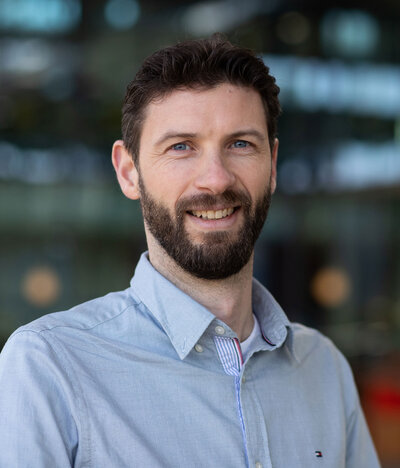
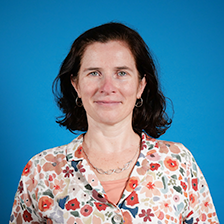
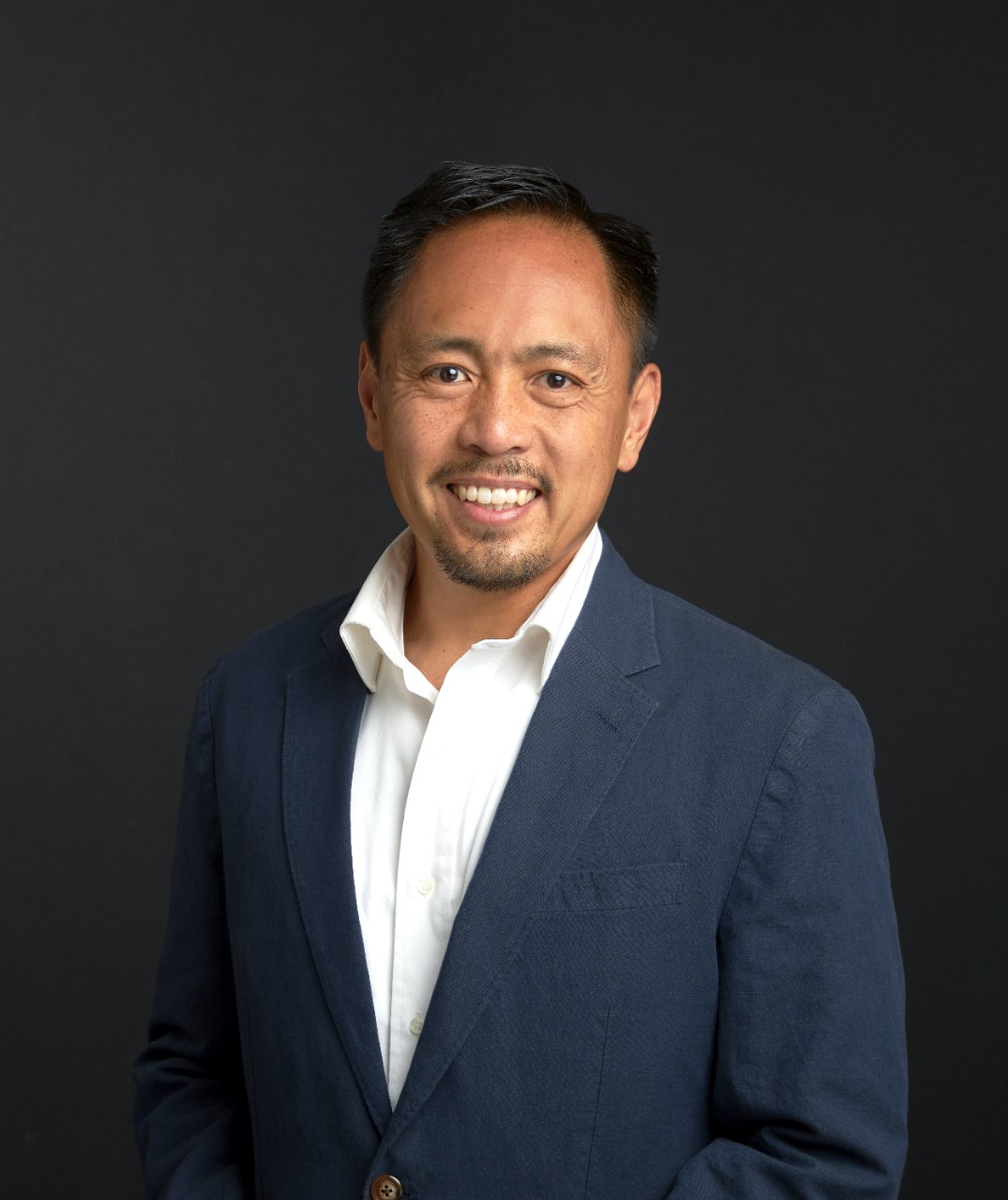
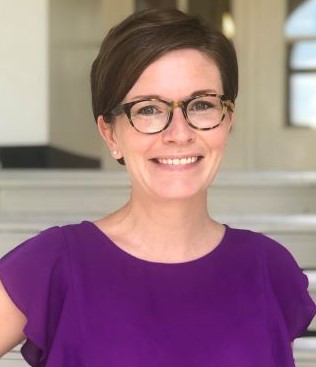
Thijs van Keulen is a Part-time Assistant Professor at the Mechanical Engineering Department of Eindhoven University of Technology (TU/e), affiliated with the Control Systems Technology Group under the supervision of Professor W.P.M.H. Heemels. He also holds an ancillary position as Mechatronics Engineer at ASML since 2018. MSc in Mechanical Engineering (Delft University of Technology, 2007) PhD in Mechanical Engineering (TU/e, 2011) Research Interests : Thijs specializes in optimal control theory , focusing on constrained systems and extremum seeking control . His work bridges theoretical development with industrial applications in hybrid vehicles , heavy-duty powertrains , and high-performance mechatronic systems . Key contributions include modeling solutions for emissions reduction, fuel efficiency improvements, and adaptive feedforward parameter learning frameworks for industrial machinery. Article Trends : His research spans control systems engineering with a focus on hybrid transportation technologies and industrial automation . Recent publications highlight applications of Pontryagin's Minimum Principle to eco-driving challenges, recursive learning in high-tech motion systems, and robust control frameworks for varying reference trajectories, demonstrating interdisciplinary impact across automotive, industrial, and applied mathematics domains. Grants & Collaborations : His work has been supported by the Dutch Research Council (NWO) and Project NEON (17628). Collaborations with DAF Trucks N.V. (2011-2018) and ASML emphasize industry-academia partnerships.
Mercè Roca i Puigvert is an Associate Professor and researcher at Universitat Pompeu Fabra (UPF) and ESCI-UPF, with affiliations to the Barcelona School of Management. She holds a PhD in Management from Leeds University Business School (2006), a Master's in Economics and Business (UPF, 2002), and dual bachelor's degrees in Business Administration (UPF, 2000) and Economics (UPF, 1999). Her research focuses on International business and market research Consumer and organizational decision-making Sustainability, CSR, and circular economy Environmental policy and waste systems Data analytics for economic decisions Recent publications analyze complementary currency impacts, sustainable tourism, opera sector eco-design, and packaging waste policies. She leads the UNESCO Chair in Life Cycle and Climate Change projects and participates in EU-funded initiatives like GREENTOUR and LIFE15/ENV/ES/000209. As director of the MSc in International Business and academic coordinator for multiple programs, she integrates research into curriculum design and industry partnerships.
Eduardo Liz Marzan is a Professor in the Department of Applied Mathematics II at the School of Mining Engineering, University of Vigo. He holds a PhD from the University of Vigo (1995) with thesis titled 'Boundary problems for new types of differential equations,' supervised by Dr. Juan Jose Nieto Roig. His research focuses on differential equations and their applications in biological and ecological systems. His primary research interests include Ordinary Differential Equations, Dynamical Systems, Mathematical Biology, Difference Equations, Population Dynamics, Delay Differential Equations, Chaos Theory, and Control Theory. Liz Marzan has made significant contributions to understanding stability properties in discrete and continuous population models, harvesting effects, and bifurcation phenomena in ecological systems. His recent publications (2018-2023) demonstrate a continued focus on population dynamics, particularly exploring threshold harvesting, stability analysis of discrete models, and the interplay between harvesting strategies and population stability. His work spans from theoretical mathematical analysis to practical ecological applications, with a strong emphasis on global stability criteria for various population models. Liz Marzan has published extensively throughout his career, with 105 publications since 1991 and 4 edited contributions. He has collaborated with numerous researchers worldwide, particularly with Sergei Trofimchuk, Juan Jose Nieto Roig, and Alberto Cabada. He is a member of the MA1 Differential Equations and Numerical Simulation Research Group at the University of Vigo, where he contributes to advancing mathematical modeling techniques for complex dynamical systems.
Jochen Merker serves as Professor for Analysis and Optimization at the Faculty of Computer Science and Media, Leipzig University of Applied Sciences (HTWK Leipzig). His academic profile demonstrates deep expertise in mathematical analysis, numerical methods, and computational mathematics with applications across various scientific domains. Institution: Leipzig University of Applied Sciences (HTWK Leipzig) Faculty: Computer Science and Media Position: Professor for Analysis and Optimization Contact: Available by appointment via email Professor Merker's research spans multiple mathematical disciplines with particular emphasis on partial differential equations, numerical analysis, and mathematical modeling. His work bridges theoretical mathematics with practical applications in fluid mechanics, epidemiology, and machine learning. He has made significant contributions to the understanding of doubly nonlinear evolution equations, positivity preservation in numerical methods, and rate-induced tipping phenomena. His research demonstrates how advanced mathematical techniques can solve complex problems in physical systems and data science. Analysis of his publication trends reveals a consistent focus on mathematical rigor combined with practical applicability. His recent work shows increasing integration of mathematical theory with computational approaches, particularly in digital learning environments and e-assessment systems for STEM education. The interdisciplinary nature of his publications demonstrates how mathematical analysis serves as a foundation for solving problems across physics, engineering, epidemiology, and computer science. Primary research areas: Mathematical Analysis, Numerical Methods, Partial Differential Equations Application domains: Fluid Mechanics, Epidemiology, Machine Learning Methodological focus: Positivity preservation, Maximum principles, Numerical stability Educational contributions: Digital teaching in STEM fields, E-assessment systems Professor Merker actively contributes to the academic community through his research publications and educational initiatives. His work on digital teaching methods for STEM disciplines reflects his commitment to modernizing mathematical education. While specific grant information isn't available in the provided materials, his extensive publication record suggests sustained research activity across multiple projects. His laboratory or research team likely focuses on computational mathematics and numerical analysis, though specific details aren't provided in the source material.
Esma Dirican Erdal serves as an Assistant Professor in the Department of Mathematics within the Faculty of Engineering and Natural Sciences at Istanbul Kültür University. Her academic profile combines rigorous research in geometric and algebraic topology with dedicated undergraduate instruction across foundational mathematics courses. Her educational journey includes: BSc in Mathematics from Hacettepe University (2008-2013) MSc in Mathematics from Hacettepe University (2013-2015) PhD in Mathematics from Izmir Institute of Technology (2017-2021) Postdoctoral research at Istanbul Technical University (2022-2023) Dr. Erdal's research centers on topological invariants and their geometric applications, with particular expertise in Reidemeister torsion, discrete topological complexity, and representation varieties. Her work bridges abstract topological concepts with concrete geometric structures, focusing on surfaces and 3-manifolds through techniques like pants decomposition and volume form analysis. She investigates how torsion invariants behave under manifold operations such as connected sums and boundary gluings, revealing deep connections between algebraic topology and differential geometry. Analysis of her publication record reveals two dominant research trajectories: (1) The systematic development of Reidemeister torsion theory for surfaces and 3-manifolds, including multiplicative properties under connected sums and applications to representation varieties; (2) The extension of discrete topological complexity to higher analogues, providing new theoretical frameworks for motion planning problems. Her recent work increasingly integrates geometric structures with topological invariants, particularly in the context of Kahler manifolds and moduli spaces. Dr. Erdal actively contributes to academic instruction through courses including Discrete Mathematics (Turkish, 2021-2024), Linear Algebra (English, 2022-2024), Calculus-I (English, 2020-2022), and Basic Mathematics (English, 2020-2021). Her research projects encompass investigations into Reidemeister torsion's multiplicative properties on unique factorization monoids, applications to Kahler manifolds, and connections between Lefschetz numbers and the Cartan determinant conjecture.
Robert J. McCann is a Professor and Canada Research Chair in Mathematics, Economics and Physics at the University of Toronto, where he has been faculty since 2004. He is affiliated with the Faculty of Arts and Science and the Department of Mathematics, working from the Bahen Centre at 40 St George St Room 6290 in Toronto, Canada. McCann is a leading researcher in optimal transportation theory, with significant contributions spanning mathematical physics, economics, and geometry. McCann received his Ph.D. in Mathematics from Princeton University (1989-1994) and his B.S. in Mathematics from Queen's University, Kingston, Canada (1985-1989). His academic journey began with studies in engineering and physics at Queen's University before focusing on mathematics. McCann's research interests center around mathematical physics and mathematical economics, with deep expertise in convex analysis, geometry and optimization, and partial differential equations. His work has been instrumental in developing the theory of optimal transportation, balancing pure mathematical contributions with applications to gravity, fluids, image processing, and economic decision-making. He has made significant advances in understanding the regularity of optimal maps, connections between transportation theory and geometric analysis, and applications to economic models including principal-agent problems and monopolist pricing. His recent work has expanded into Lorentzian geometry and mathematical relativity, establishing connections between optimal transportation and general relativity. McCann's publication record shows a clear trajectory from foundational work in optimal transport to increasingly sophisticated applications in economics and physics. His most recent papers demonstrate a strong focus on principal-agent problems in economics, Lorentzian geometry, and the connections between optimal transportation and general relativity. The interdisciplinary nature of his work is evident in the diverse range of journals where he publishes, spanning pure mathematics, applied mathematics, economics, and physics. McCann has received significant recognition for his work, including: Canada Research Chair in Mathematics, Economics and Physics Fellow of the Royal Society of Canada (FRSC) McCann actively supervises graduate students and postdoctoral researchers, with notable collaborators including Kelvin Shuangjian Zhang, Cale Rankin, Tongseok Lim, and Cameron Davies. His research has been supported by numerous grants, including funding from NSERC. He has organized several major conferences, including the Fields Medal Symposium and thematic semesters at the Fields Institute, demonstrating his leadership in the mathematical community. McCann teaches advanced courses such as "Mathematical Problems in Economics" and "General Relativity," bridging theoretical mathematics with practical applications. McCann leads research activities within the University of Toronto's mathematics department, particularly in the areas of optimal transport and geometric analysis. His work connects with the Fields Institute for Research in Mathematical Sciences and the Data Sciences Institute (DSI) at the University of Toronto, fostering interdisciplinary collaborations across mathematics, physics, and economics.
Max Goplerud is an Assistant Professor in the Department of Government at the University of Texas at Austin, where he teaches courses in political methodology and Bayesian statistics. He received his Ph.D. from Harvard University in 2020, where he was an affiliate of the Institute for Quantitative Social Science and the Minda de Gunzberg Center for European Studies. His educational background includes: Ph.D. in Government, Harvard University (2020) Goplerud's research spans two primary areas. First, he develops new statistical methods at the intersection of Bayesian statistics and machine learning to address limitations in existing approaches for political science research. His methodological work focuses on solving problems related to heterogeneous effects, hierarchical models, and ideal point estimation. Second, he applies text-as-data methods to study legislative behavior across different political contexts, including Europe, the United States, and Japan. His research combines advanced statistical techniques with substantive political questions, creating tools that enhance empirical analysis in political science. His publications reveal a strong focus on methodological innovation in political methodology. Goplerud frequently publishes in top political science and statistics journals, with recent work appearing in the American Political Science Review, American Journal of Political Science, Journal of Politics, Biometrika, Political Analysis, and Bayesian Analysis. His research bridges the gap between statistical methodology and political science applications, with particular emphasis on Bayesian approaches, variational inference, and machine learning techniques adapted for political science research questions. Goplerud has developed several R packages that implement his methodological contributions: vglmer - for estimating hierarchical models using variational inference FactorHet - for estimating heterogeneous effects in factorial and conjoint experiments gKRLS - for kernel regularized least squares estimation He teaches graduate courses including Bayesian Statistics and Statistical Analysis in Political Science, as well as undergraduate research methods courses. His teaching spans institutions including the University of Texas at Austin and the University of Pittsburgh, where he previously taught courses on measurement, Bayesian statistics, and social data visualization.
Oriol Guasch Fortuny is Full Professor at the Department of Engineering, La Salle, Ramon Llull University in Barcelona, specializing in computational acoustics and aeroacoustics. He holds a five-year Physics degree from Universitat de Barcelona and a PhD in Computational Mechanics from UPC. His research spans acoustic black holes , graph theory in vibroacoustics, parametric array technology , and numerical voice production . Current projects: GENIOVOX (expressive voice generation), EUNISON (voice simulation) Editorial roles: Subject Editor , Journal of Sound and Vibration Leadership: Heads acoustics research in the GTM group His 15 most recent publications focus on acoustic black hole applications in vibration control, parametric loudspeaker optimization , and chaotic vocal fold modeling . Work combines finite element analysis with theoretical acoustics . Collaborations include: CIMNE (UPC, Barcelona) GIPSA-LAB (Grenoble, France) INSA Lyon (France) Northwestern Polytechnical University (Xi’an, China) KTH Stockholm (Sweden) Patents: NºU-201230809: Horn amplifier for parametric arrays Nº201230043: Omnidirectional ultrasonic sound source
Vincent Cho serves as Associate Professor and Program Director for the Educational Leadership (Ed.D.) and Professional School Administrator Program (PSAP) at Boston College's Department of Educational Leadership & Higher Education. His research bridges educational leadership theory with practical technology integration challenges in K-12 settings, focusing on the human dimensions of digital transformation in schools. His academic credentials include: Ph.D. from the University of Texas at Austin M.Ed. from the University of Houston B.A. from Boston College Cho's research examines how technologies reshape school discipline systems, data-informed decision processes, and professional identities of educators. With extensive experience as a former classroom teacher and school administrator, he investigates the 'people problems' that emerge during technology implementation, particularly how digital tools create unintended consequences in school organization and culture. His work emphasizes practical solutions for educational leaders navigating the digital age. Analysis of his recent publications (2016-2024) reveals three evolving research trajectories: (1) the impact of behavior management technologies on school discipline equity, (2) data system implementation challenges in educational leadership, and (3) social media's role in professional learning networks. His 2024 work on 'The New Discipline Machinery' critically examines algorithmic behavior tracking apps, while earlier award-winning research (2012-2021) established foundational insights into Twitter-based knowledge brokering among school leaders. His scholarly recognition includes: Carol Weinstein Outstanding Research Award from AERA's Classroom Management SIG (2021) Early Career Scholar of Color award from AERA's Committee on Scholars of Color (2013) Best Paper Award from AERA's Organizational Theory SIG (2012) As Program Director for BC's Ed.D. program, Cho mentors doctoral candidates in educational leadership while maintaining active research collaborations. His current affiliations include serving as Affiliate Faculty for UCEA's CASTLE Center (2021-present) and Advisory Board Member for UMass-Lowell's Center for Program Evaluation (2020-present), reflecting sustained engagement with national educational technology initiatives. Funded projects include EU Parliament presentations on digital-era school innovation and multi-year studies of data system impacts on student achievement.
Joakim Sundnes is a Chief Research Scientist and Research Professor at the Department of Scientific Computing, Simula Research Laboratory. He specializes in computational physiology, cardiac biomechanics, and mathematical modeling of cardiovascular systems. Key Research Areas: Cardiac electromechanics, computational fluid dynamics in cardiology, uncertainty quantification in cardiac models, and mechano-electric feedback mechanisms Recent Trends: Focus on patient-specific modeling, left atrial flow dynamics, right ventricular mechanics in pulmonary hypertension, and personalized treatment simulations Scientific Contributions: Active participant in international conferences and editorial work. Co-author of multiple benchmark studies and educational texts on physiological modeling.
Robert Adams is an Associate Professor in the Department of Electrical & Computer Engineering at the University of Kentucky. He holds a Ph.D., M.S., and B.S. in Electrical Engineering from Virginia Tech and Michigan Technological University, respectively. His academic career spans roles as Research Assistant Professor at Virginia Tech and EM Research Scientist at Science Applications International Corp. Ph.D., Virginia Tech, Electrical & Computer Engineering, 1998 M.S., Virginia Tech, Electrical Engineering, 1995 B.S., Michigan Technological University, Electrical Engineering, 1993 His research focuses on computational electromagnetics, with expertise in applied and theoretical electromagnetics, numerical methods for integral equations, and finite element analysis. His work addresses challenges in wave scattering, eddy current modeling, and nonlinear magnetic material simulations. Dr. Adams' recent publications emphasize advancements in the Nyström method for solving augmented integral equations, Helmholtz decomposition techniques for stability, and sparse matrix factorizations. These studies highlight applications in electromagnetic scattering, hysteresis modeling, and efficient computational algorithms. Teachers Who Made a Difference (2007) ECE Department Outstanding Teaching Award (2006) NSF CAREER Award (2006-2011) R.W.P. King Paper Award (2005) Bradley Postdoctoral Fellowship (1999-2001) Bradley Fellowship (1995-1998) His awards include prestigious NSF funding and multiple Bradley Fellowships, alongside recognition for teaching excellence. Research grants and collaborations further underscore his contributions to computational electromagnetics.
Professor Nazanin Emami is a leading researcher in the Department of Engineering Sciences and Mathematics at Luleå University of Technology, specializing in Machine Elements. She serves as Director of Studies for the National Research School in Tribology, coordinating efforts among LTU, KTH, Uppsala University, and Högskolan i Halmstad. Her research spans polymer tribology, biotribology, and orthopedic biomaterials development. 1994: Doctor in Dentistry (DDS) 2001: Licentiate in Engineering Science, Luleå University of Technology 2004: PhD in Engineering Science, Luleå University of Technology 2006-2008: Postdoctoral research at University of South Australia 2011-2015: Associate Professor 2016-onward: Full Professor Professor Emami's research focuses on understanding friction and wear mechanisms in polymers and polymer-based composites, with particular emphasis on applications in orthopedic implants and biological environments. Her work bridges dental materials science with mechanical engineering, developing novel biomaterials for load-bearing joints. She investigates how nanofillers enhance polymer performance in orthopedic applications and explores biolubrication phenomena in human joints. Her recent publications (2025) demonstrate a strong focus on advanced materials for medical applications, particularly examining PEEK-based materials under extreme conditions, nanodiamond additives for friction reduction, and wear mechanisms in joint replacements. These works reflect her interdisciplinary approach combining materials science, tribology, and biomedical engineering to solve practical problems in orthopedics and manufacturing. 2019: Royal Swedish Academy of Engineering Sciences (IVA) award for materials science research 2010: First place in Dental ceramic challenge 2008: Royal Skytteanska Samfundet award as outstanding young researcher 2002: IADR Travel award 2001: Edward Hatton Award winner Professor Emami has supervised numerous PhD and Master's students, with several receiving prestigious awards for their theses. Her research projects often involve international collaborations with universities in the UK, Portugal, Sweden, Canada, and Slovenia. She leads multiple ongoing projects funded by various sources including the Central of Doctoral Education UK, focusing on polymer composites for extreme tribological conditions, biobased materials, and advanced manufacturing techniques for orthopedic applications. Her research group maintains strong connections with industry partners and collaborates with specialized laboratories including the TINT Laboratory for Tribology and Interface Nanotechnology in Ljubljana and the Polymer Engineering Research Group at LTU.
Julien FAVIER is a Professor at Aix-Marseille Université, where he directs the M2P2 laboratory and coordinates the H2020 FALCON project on fluid-structure interaction in aeronautics. He also serves as an associate editor for Computers and Fluids . Research Focus: Fluid-structure interaction (FSI), Lattice Boltzmann Method (LBM), Immersed Boundary Method (IBM), turbulent and compressible flows Applications: Biomedical (aortic valves, mucus transport), aerospace (hypersonic flows), and mechanical systems (rupture/fragmentation) Scientific Contributions include: Developing stable explicit FSI solvers for LBM-IBM coupling Modeling metachronal wave dynamics in cilia arrays Advancing compressible LBM with rotating overset grids Studying drag reduction via flexible filament coatings Pioneering non-Newtonian fluid transport simulations Technical Expertise spans: Multi-grid and dual-time stepping techniques GPU acceleration for heterogeneous architectures Viscoelastic and Herschel-Bulkley flow modeling Validation of immersed boundary methods for turbulent flows
Dr. Yuri Cath is a Senior Lecturer in the Department of Politics, Media and Philosophy at La Trobe University, Australia, where he has been employed since February 2015, initially as a Lecturer before being promoted to Senior Lecturer in July 2019. Prior to joining La Trobe, he held academic positions at the University of East Anglia (2012-2014) and served as an AHRC Research Fellow at the University of St Andrews (2008-2012). His educational background includes a PhD in Philosophy from the Australian National University (2009), an MA from the University of Auckland, and a BFA also from the University of Auckland. Dr. Cath's research primarily focuses on epistemological questions concerning the nature and sources of different kinds of knowledge, with particular emphasis on the distinction between knowledge-how and knowledge-that, and the implications of these distinctions for debates in philosophy of mind and moral philosophy. His work often explores the relationship between testimony and various forms of 'knowing-wh', including 'what it is like'-knowledge, knowing-why, and knowing-how. He has developed a distinctive approach that combines elements of intellectualism and Ryleanism, which he calls 'practical attitude intellectualism.' His recent work has examined transformative experiences, social dimensions of knowing-how, and the retention of phenomenal knowledge through imagination, memory, and recognition. Dr. Cath's publications reveal a consistent trajectory exploring the boundaries between different forms of knowledge, with a special focus on how knowledge-how relates to abilities, skills, and propositional knowledge. His work has been influential in contemporary debates about the nature of knowledge, particularly in challenging strict dichotomies between theoretical and practical knowledge. His 2024 Element 'Knowing What It Is Like' represents a significant contribution to understanding phenomenal knowledge, while his 2025 article 'Transformative experiences and the equivocation objection' offers a novel critique of L.A. Paul's influential work on transformative experiences. Dr. Cath has demonstrated expertise across multiple philosophical domains, with publications spanning epistemology, philosophy of mind, metaphilosophy, and philosophical methodology. His work often bridges conceptual analysis with considerations of practical epistemic concerns, making significant contributions to our understanding of how different forms of knowledge function both theoretically and in practical contexts.
Emily M. Buehler is an Assistant Professor of Interpersonal Communication and Social Media in the Brian Lamb School of Communication at Purdue University, where she has been faculty since Fall 2019. She is a core member of the Purdue Steps to Leaps Research Collaborative, translating research on social support into student well-being initiatives. Her work bridges interpersonal communication theory with digital media practices. Dr. Buehler's academic journey includes: Ph.D. in Interpersonal Communication and Relationships from the University of Iowa (2018) M.A. in Communication from Wake Forest University (2014) B.A. in English from Ohio Northern University (2007) Prior to Purdue, she served as an assistant teaching professor at Penn State University. Her research centers on how personal and social media transform supportive communication dynamics, examining anonymity, visibility, channel publicness, and relational factors in online support exchanges. She investigates how technology both enables and constrains effective social support provision and reception across contexts from grief to chronic illness management. Her approach integrates communication interdependence theory with computer-mediated communication frameworks to reveal nuanced technological affordances. Analysis of her 13 publications (2017-2025) reveals consistent focus on support-seeking message design across platforms, particularly Facebook and emerging social technologies. Key trends include the impact of channel characteristics on message sophistication, the role of gratitude in support reception, and how norm violations affect online help-seeking. Her work spans health communication, family dynamics, and online dating contexts, consistently published in top-tier journals like Communication Monographs and Journal of Social and Personal Relationships. Dr. Buehler has received significant recognition for her teaching excellence: Purdue’s College of Liberal Arts Outstanding Undergraduate Teacher (2023) As an advisor, she mentors graduate students in interpersonal and computer-mediated communication research, emphasizing goal-setting and intellectual independence. She actively advises Purdue's Association for Women in Communication and has volunteered over 15 years with HOBY leadership programs for high school students, guiding youth in community problem-solving. Her teaching portfolio includes undergraduate courses on interpersonal communication and graduate seminars on relationships and technology. Through the Purdue Steps to Leaps Research Collaborative, she applies her findings to develop campus-wide well-being initiatives, directly connecting her scholarship to student support systems in the digital age.