Andreas Weber is an Associate Professor at the University of Twente's Digital Society Institute , specializing in the Knowledge, Transformation & Society (KiTeS) research group . His work examines the long-term historical and global relationship between Science, Technology, and Society , with particular focus on colonial histories of natural history, chemistry, and sustainability , as well as computational technologies for contextualizing digitized archives . He leads the HAICu project (2023–2029) on digital cultural heritage and coordinates STS PhD training for the Netherlands Graduate Research School (2019–2024). MA & PhD in History (2005 & 2012), Leiden University Assistant Professor (2017–2023), University of Twente Andreas' research integrates digital humanities with colonial science history , emphasizing global histories of minerals , digital humanism , and AI's societal context . His 15 most recent publications (2016–2025) explore topics like colonial bias in natural history collections , FAIR data implementation , and semantic annotation of handwritten archives , spanning disciplines from history of science to computer science and museum studies . He has received 7 scientific awards , including multiple Best Teacher Awards (2020–2023) and the IEEE eScience Best Poster Award (2018). Andreas supervises PhD and postdoctoral projects while engaging in media commentary on colonial heritage issues and co-organizing international conferences like Hydrogen Pasts and Futures (2024).
Andrea Büttner is a Professor at the Academy of Fine Arts Munich (AdBK München), where she leads the class in Painting and Graphics. She previously served as Professor of Art in a Contemporary Context at the Kunsthochschule Kassel from 2017 to 2024. Her academic and artistic work bridges fine arts with philosophical, theological, and social inquiry. Her research and artistic practice focus on themes such as poverty, labor, community, botany, theology, and philosophy. Drawing from extensive research, she employs diverse media including woodcuts, sculptures, paintings, photography, and video installations. Her work critically engages with historical and ethical dimensions of visual representation. Büttner's work has been exhibited internationally in major institutions, including the Kunstmuseum Basel, K21 Düsseldorf, Hammer Museum Los Angeles, Museum Ludwig Cologne, and the Walker Art Center. She has participated in Documenta 13 and the São Paulo Biennale, and her works are held in collections such as Tate London, MoMA New York, Lenbachhaus Munich, Art Institute of Chicago, and Reina Sofia Madrid. Shortlisted for the Turner Prize (2017) Numerous international awards (not specified) She mentors emerging artists through her class at AdBK Munich and offers portfolio consultations, actively shaping the next generation of contemporary artists. No specific grants or formal advisees are mentioned in the available materials. Andrea Büttner’s studio is located in the Old Building (A.O2.25), with classrooms at A.O1.08 and A.O1.09 at the Academy of Fine Arts Munich.
Geoff Bil is an Assistant Professor in the Department of History at the University of Victoria, where he also completed his undergraduate studies. He holds a PhD from the University of British Columbia (2018) and an MA from McMaster University (2008). He previously held fellowships at Victoria University of Wellington, the University of Sussex, the Newberry Library, and the New York Botanical Garden, and taught at the University of Delaware before returning to UVic in 2025. His research lies at the intersection of the history of science and empire, with a particular focus on Indigenous plant knowledge and its entanglement with colonial science. His work draws on science studies, Indigenous critical theory, and environmental humanities, with regional expertise in the Pacific, especially Aotearoa New Zealand, Tahiti, and the Himalayas. Geoff's recent publications explore topics such as the linguistic and cultural translation of plant knowledge, the colonial history of plant-based pharmaceuticals, and the representation of nature in scientific and cultural contexts. His articles reflect a strong interdisciplinary trend, combining historical analysis with insights from anthropology, botany, and cultural studies. He is currently completing a book titled Indexing the Indigenous: Plants, Peoples, and Empire (under contract with Johns Hopkins University Press) and is developing a second book on ethnoscience and American imperial interests. He is also editing three book projects on plant knowledge, the cultural history of nature, and colonial intersections with gender and science. Former Fellow, Victoria University of Wellington Former Fellow, University of Sussex Former Fellow, Newberry Library Former Fellow, New York Botanical Garden Geoff Bil mentors emerging scholars in the history of science and colonialism. Though no current advisees are listed, his editorial and collaborative projects suggest active engagement in academic community building. He has not advertised specific grants, but his fellowships indicate sustained external research support. His scholarly work is deeply connected to critical conversations about decolonizing knowledge, the ethics of scientific collection, and the resilience of Indigenous epistemologies. While no formal lab or research team is mentioned, his multi-project agenda suggests leadership in collaborative, interdisciplinary research networks.
Dr. Stefan Bojowald is a Lecturer in the Egyptology department at the Institute of Archaeology and Cultural Anthropology, University of Bonn. He holds a doctorate completed between 2014 and 2017 and has been actively contributing to the field through teaching and extensive scholarly publication. His institutional affiliations include membership in ATINER, Academic Genesis, and the Alliance Academy of Sciences, reflecting his engagement with international academic networks. Doctoral studies: 2014–2017 Master's degree: 2001 Studies: Egyptology, Classical Archaeology, Classical Philology, Semitic Studies, and Studies of the Christian Orient (1992–2000) Stefan Bojowald's research is deeply rooted in philological and linguistic analysis of ancient Egyptian and Coptic texts. His primary interests include Egyptian lexicography and phonology, with a particular focus on sound changes and word origins. He investigates cultural and linguistic contacts between Egypt and the Near East, drawing parallels between Egyptian, Hebrew, Akkadian, and Ugaritic languages. A distinctive aspect of his work is Egyptian ornithology—the study of birds in ancient Egyptian literature and symbolism. Additionally, he explores Coptic monasticism, especially through the lens of the Vita of Pachom , analyzing textual details, moral themes, and biblical intertextuality. His scholarship often bridges linguistic precision with cultural and religious interpretation. His recent publications, spanning from 2021 to 2025, reveal a consistent output in high-quality journals such as Aula Orientalis , Göttinger Miszellen , N.A.B.U. , and Le Muséon . These articles primarily focus on etymological investigations, phonological shifts (e.g., loss of 'q', 'n', 'h'), lexical analysis of specific terms, and comparative studies across Semitic and Afro-Asiatic languages. A significant trend is his exploration of linguistic survivals from ancient Egyptian into Coptic, metaphorical language in religious texts, and the interpretation of monastic literature. His 2023 monograph on the Vita of Pachom underscores his expertise in Coptic hagiography. While no scientific awards are listed in the provided text, Bojowald’s extensive publication record in specialized Egyptological and Coptic journals demonstrates scholarly recognition and contribution to the field. Dr. Bojowald advises students in Egyptology and Coptic studies, particularly through his courses in Coptic language (Koptisch I + II) and Coptic reading. There is no public information on external research grants he may have received. He is an active academic with a strong focus on textual analysis and linguistic research. There is no information provided about specific research labs or collaborative teams led by Dr. Bojowald. However, his membership in academic platforms and frequent publication in collaborative journals suggest participation in broader scholarly communities and networks within Egyptology and Coptic studies.
Laurence Pattacini is a Senior Lecturer at the University of Sheffield , affiliated with the School of Architecture and Landscape. With qualifications as a licensed architect in France and a Master in Urban Design (Distinction) from Oxford Brookes University, they integrate professional practice, research, and teaching to address sustainability challenges in urban environments. MA in Urban Design (Distinction), Oxford Brookes University Postgraduate Certificate in Higher Education (PGCFHE) Diplôme d’Architecte (DPLG), France Their research focuses on urban forms , landscape perception , and riverside industrial site regeneration , emphasizing sustainable design strategies. Publications analyze riverside urbanity, public open spaces, and historical landscape practices. Teaching includes modules like Sustainable Urban Environments and Landscape Urbanism and Design , prioritizing hand-drawing and critical spatial analysis. Recent publications reveal trends in climate-responsive urban design , design guidance , and cultural-environmental intersections . They have contributed to GIS-based urban modeling, policy documents, and cross-European case studies, bridging academic research with practical applications for community engagement. As a fully qualified higher education teacher , Laurence co-ordinates curriculum development and supervises students, leveraging their European professional experience across landscape architecture firms in London, Berlin, Milan, and Amsterdam. Current research explores urban-industrial riverside regeneration in Northern Europe, with ongoing PhD work.
Susanne Lorenz is Professor of Fine Arts at Berlin University of the Arts (UdK Berlin) since 2010, where she heads the basic teaching program for fine arts students and teacher training programs with a core subject in fine arts. Previously, she served as Professor at Hamburg University of Fine Arts (2006-2010) and taught art history at Berlin's Lette Association (2001-2006). From April 2017 to March 2019, she was Dean of the Faculty of Fine Arts, and since 2020 has served as liaison lecturer for the German National Academic Foundation. She has also been a member of the founding advisory board for Studium Generale since 2012. Lorenz's artistic practice demonstrates a spatially focused and interdisciplinary approach, creating objects, sculptures, photographs, drawings, and large-scale installations that draw cultural-historical, scientific, social, architectural, and landscape analogies to current observations. Her work spans gallery and museum exhibitions in Germany and abroad, as well as significant site-specific installations in public spaces including nach Japan (1999/2000) in Berlin's Sophienhöfe, Line of Beauty in the Seseke River near Kamen (since 2010), and the Badeschiff floating swimming pool she designed for Berlin in 2002. Her recent artistic output shows a consistent focus on environmental and spatial interventions, with works like Drain/On Hold (2022) and Rebound Rotation / Rotation Rebound (2021) demonstrating her continued exploration of urban infrastructure, material transformation, and the relationship between natural systems and human intervention. These works frequently incorporate elements of historical reference while addressing contemporary environmental concerns, particularly climate change. Lorenz has received numerous prestigious awards and grants including: Working grant from Stiftung Kunstfonds Studio prize and grant from Karl Hofer Society Paris scholarship from French government Casa Baldi and catalog grants from Berlin Senate DAAD scholarships for research in England, Japan and China Artist grant from Cusanuswerk As an educator, Lorenz has significantly contributed to art pedagogy through publications including grund. Stellung/Übung (2021), featuring 64 contributions from artists in artistic education, and Vom Anfangen (2016) co-edited with Prof. Dr. Thomas Düllo. She heads the basic teaching program for fine arts students at UdK Berlin and has served as a visiting artist at institutions including the School of the Art Institute of Chicago and Goethe-Institut in Tashkent. Lorenz's work frequently engages with public and semi-public spaces, creating installations that transform everyday environments while maintaining conceptual depth. Her projects often involve collaboration with communities and other artists, as demonstrated by her partnership with Tilman Wendland on Rebound Rotation / Rotation Rebound for the IG Metall Haus in Berlin.
Aisling O'Carroll is a Lecturer in Landscape Architecture at the Bartlett School of Architecture, University College London. Her research focuses on reconstructing historical landscapes, architectural history, and the intersection of geology with cultural heritage. She holds a PhD candidacy at the Bartlett, exploring the methodologies behind historical reconstructions. Her work investigates the relationship between landscape and memory, particularly through projects like Reconstructing the Dent du Requin (LA+ Journal, 2020) and studies of Eugène-Emmanuel Viollet-le-Duc’s Alpine architecture. She has curated sessions at international conferences such as ACHS 2020 Futures, examining geological approaches to heritage. O'Carroll’s projects blend design research with scholarly analysis, producing exhibitions (e.g., Reconstructing a Geological Monument , 2020) and publications. Her work is supported by grants from UCL and The Landscape Research Group. She collaborates with institutions like KADK (Copenhagen) and has published in MAS Context and LA+ Journal .
Clint Carroll is an Associate Professor in the Department of Ethnic Studies at the University of Colorado Boulder. A citizen of the Cherokee Nation, he bridges Indigenous studies, anthropology, and political ecology to examine Cherokee environmental governance and land-based resurgence. His work emphasizes the intersection of cultural revitalization, tribal sovereignty, and ecological stewardship. Education: Ph.D. in Environmental Science, Policy, and Management from the University of California, Berkeley (2011); B.A. in Anthropology from the University of Arizona, Tucson (2003). Carroll's research explores how Indigenous nations navigate settler colonial structures to assert environmental sovereignty. He focuses on Cherokee land relations , ethnobotany , and tribal natural resource management , drawing on ethnographic fieldwork and community partnerships. His current projects include a National Science Foundation-funded initiative training Cherokee youth in traditional ecological knowledge and modern conservation strategies. His publications span journals like EcoHealth , Environmental Research , and Geoforum , as well as edited volumes and public scholarship. Awards include fellowships from the National Science Foundation , Udall Foundation , and NIH Native Investigator Development Program . Carroll co-edits the Elements in Indigenous Environmental Research series for Cambridge University Press and serves on editorial boards for Cultural Anthropology and Environment and Society . His advocacy includes the Denver Botanic Gardens Board of Trustees (2022-2025) and Indigenous Education, Inc. (Cobell Scholarship). He is a leading voice in movements like #NoDAPL and Mauna Kea protection, emphasizing the inseparability of Indigenous political and ecological engagement.
Isabel Barbas (b.1974) is an Assistant Professor in the Department of Architecture at Universidade Lusófona (ULHT) 's Faculty of Architecture and Urbanism Technology (ECATI) since 2010. She is currently a PhD candidate in Architecture at ULHT with an FCT scholarship (SFRH/BD/148141/2019), expected to complete in 2025. Her work bridges architecture, art, and design through experimental public space interventions. Architecture degree from FAUTL (Technical University of Lisbon) with Erasmus year at La Sapienza, Rome Masters in Drawing from FBAUL PhD candidate at ULHT (completion 2025) Research Focus : Barbas investigates how architecture shapes participatory urban environments through tactical urbanism , artistic installations , and climate-responsive design . Her work explores urban ambiences , critical spatial practices , and the poetics of materiality , particularly in the context of rising sea levels and ephemeral markets. Current projects include the COST Action CA23145 on European urban ambiences (2024-2027) and the SOSClimateWaterfront Horizon 20/20 project (2019) focusing on public space. Publications & Projects : Her recent work appears in Urbanistica Dossier on public space socialization and the Malagueira International Congress discussing poetic urban fragments. Key projects include the award-winning Jardim das Gaivotas urban furniture (Lisbon, 2017), Nine Swings in Porto (2013-2020), and the Slim Moon lighting installation (2013). She maintains an active practice through her studio MAGstudio (founded 2009) and previously in Madrid (2004-2009). Scientific Awards 1st Prize, Enjoy the Tagus competition 1st Prize, HM RIBA`08 Finalist, Lexmarkex European Art Prize Outros Mercadus`08 II Award Teaching & Collaborations : She has collaborated with institutions like CCB and Museu Berardo's educational services (2004-2019) and contributed to architectural media as a member of the Jornal dos Arquitetos editorial team (2012-2014). Her studio projects combine art, architecture, and urban design with a focus on participatory processes.
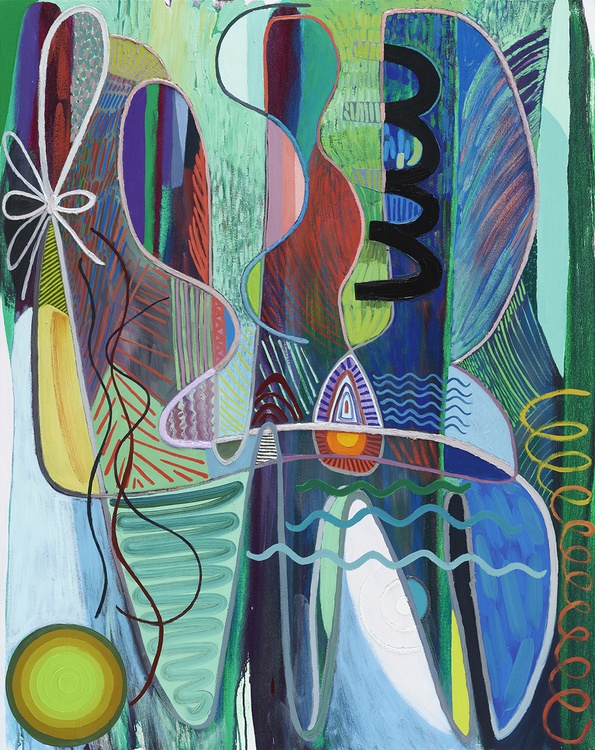
Karla Wozniak is an Associate Professor in the Painting and Drawing Program at California College of the Arts (CCA), where she contributes to both undergraduate and graduate fine arts education. She is based in the San Francisco Bay Area and maintains an active studio practice. Education: MFA in Painting and Printmaking, Yale University, New Haven, CT Skowhegan School of Painting and Sculpture, Skowhegan, ME BFA in Painting (Art History Minor), Rhode Island School of Design, Providence, RI European Honors Program, RISD, Rome, Italy Wozniak's research and artistic practice focus on the liminal space between representation and abstraction, creating synesthetic visual experiences. Her work explores landscape, memory, and symbolic forms through oil and acrylic painting, often incorporating layered compositions and vibrant color palettes. She draws from both personal and political narratives, engaging with themes of place, environment, and perception. Her recent body of work, including exhibitions like Pleasures and Days (2025), Heavy Weather (2024), and Sunshower (2024), reflects a sustained exploration of atmospheric conditions, natural forms, and emotional resonance. These works span abstract landscapes, symbolic still lifes, and gestural compositions, demonstrating a consistent evolution in technique and thematic depth. Scientific and Artistic Recognition: New York Foundation for the Arts Fellowship (2011) SECA Award Finalist, SFMOMA (2019) MacDowell Colony Fellowships (2007, 2005) Marie Walsh Sharpe Space Program (2009–10) Virginia Center for the Creative Arts Residencies (2022, 2013) UCross Foundation Residency (2012) Skowhegan and Vermont Studio Center Fellowships Karla Wozniak has curated exhibitions such as Making (It) Work (2019) at CCA and co-founded Ortega y Gasset Projects in New York. She has received grants and fellowships supporting her research and creative development. Her work is featured in major publications including the New York Times , Wall Street Journal , San Francisco Chronicle , and Huffington Post , and is held in the permanent collections of the Boston Museum of Fine Arts and the Knoxville Museum of Art. She is represented by Paul Thiebaud Gallery in San Francisco and GGLA in Los Angeles, and continues to exhibit nationally and internationally. Her studio and academic work are deeply interconnected, fostering innovation in contemporary painting and mentorship in art education.
Sara Sejin Chang (also known as Sara van der Heide) is a Korean-Dutch artist born in 1977 in Busan, South Korea, who currently serves as Interim Professor administering the Chair of Spatial Concepts at the University of Braunschweig (HBK) for the 2024-2025 academic year, replacing Candice Breitz. Based in Berlin, Chang creates shamanic film installations that combine film, historical research, rituals, drawings, texts, and sound compositions to challenge Eurocentric thinking, racialization, and persistent colonial narratives. Her work has been exhibited internationally at major venues including Moderna Museet Stockholm, Kunstinstituut Melly Rotterdam, Centraal Museum Utrecht, and ARGOS Brussels, and she has participated in significant biennials such as the Berlin Biennale, Dhaka Art Summit, and Busan Biennale. Chang's research interests focus on the intersection of Korean shamanism and contemporary art practice as a means of healing colonial trauma, particularly examining transnational adoption narratives between Korea and the Netherlands. Her work critically engages with the historical relationship between these two countries, including the participation of 3,418 Dutch soldiers in the Korean War (1950-1953) and the subsequent adoption industry that saw approximately 40,000 people adopted from the Global South to the Netherlands. She interrogates Eurocentric systems of categorization, racialization, and their penetration into all levels of contemporary Western society, proposing what she terms 'meta-cosmic and inclusive approaches to modernity' that transform conventional understandings of value and time. Through her practice, Chang seeks to repair historical ruptures, particularly those affecting diasporic communities, and create spaces for ancestral reconnection. Chang's artistic output demonstrates a consistent trajectory toward using shamanic practices as frameworks for decolonial critique and healing. Her recent major work Dismemberment (2024) employs the Korean Ssitgimgut ritual tradition to symbolically heal 'sick Europe' through a dismemberment and cleansing process, while Four Months, Four Million Light Years (2020) addresses colonial narratives behind transnational adoption through a shamanic healing journey across time and space. These works, along with her long-term project The Mother Mountain Institute , form a cohesive body of work that challenges the normalization of racialization within European society while proposing alternative knowledge systems rooted in Korean shamanic traditions. Scientific Awards: Theodora Niemeijer Prize (2023) - the largest Dutch Art Prize Berlin Artistic Research Grant Fellowship (2022-2023) Jeanne Oostingprize for 'Claim to Universality; Colour Theory Exercise 1-12' Chang's practice extends beyond traditional academic advising, functioning instead through collaborative research frameworks and institutional critique. Her work has been supported by significant grants including the Mondriaan Fund and the Berliner Programm Künstlerische Forschung. She operates through what she terms 'the Mother Mountain Institute,' a conceptual framework that connects her artistic practice with shamanic knowledge systems and decolonial theory. This institute serves as both a research platform and a metaphorical space for healing colonial ruptures, particularly those affecting transnationally adopted individuals. Chang's work consistently challenges the 'whiteness of contemporary art spaces' in European cities, using these spaces themselves as metaphors for the colonial structures they inhabit while simultaneously transforming them into sites of ritual and healing.
Dr. Anna Colin is Programme Director of the MFA Curating program at Goldsmiths, University of London, where she serves as a Lecturer in the Department of Art. With over twenty years of experience as a curator working both freelance and institutionally, her practice spans curatorial, pedagogical, social, and ecological fields. She has held significant positions including associate curator at Lafayette Anticipations in Paris (2014-2020), associate director of Bétonsalon – Centre for art and research in Paris (2011-2012), and curator at Gasworks, London (2007-2010). She co-curated British Art Show 8 (2015-2016) and has worked with numerous international institutions including CA2M in Madrid, Whitechapel Gallery in London, and Contemporary Image Collective in Cairo. PhD, School of Geography, University of Nottingham (2022) Permaculture Design Certificate, Permaculture Association UK (2024) Level 2 Practical Horticulture Certificate, Royal Horticultural Society (2022) MA Curating Contemporary Art, Royal College of Art (2005) BA Arts Management, London Southbank University (2003) Dr. Colin's research interests focus on the intersection of art, ecology, and alternative educational models. Her work explores how cultural practitioners can engage with human and non-human ecosystems, examining holistic and intersectional organizational models that resist chrononormativity. She investigates sustainability as a dynamic, cyclical process rather than a product-oriented goal, drawing inspiration from ecology, agroecology, and arboriculture to reconceptualize art institutions' relationship to waiting, slowness, rest, and longevity. Her current research examines regenerative artistic, curatorial, and institutional practices that serve ecosystems, with particular attention to the Black Atlantic, agricultural and digital commons, and colonialism's impact on the natural environment. Analysis of Dr. Colin's recent publications reveals a consistent thematic focus on ecological approaches to art and institutions, with increasing emphasis on practical applications of ecological principles. Her work demonstrates a clear trajectory from examining alternative educational spaces (as in her PhD research on multi-public educational and cultural spaces) toward developing concrete ecological frameworks for cultural institutions. The publications show growing integration of horticultural knowledge with curatorial practice, particularly evident in projects like 'Chaleur Humaine' and 'ĝardeno paradizo' which combine energy studies with landscape design and community engagement. Dr. Colin welcomes doctoral applicants seeking to work in cultural production at the service of ecosystems, regenerative artistic practices, alternative institutional models, and critical pedagogies. She has supervised numerous curatorial projects and community-based initiatives through Open School East, which she co-founded in 2013 as an alternative art school and community space in London and later Margate. Her collaborative approach extends to working with artists, horticulturalists, and community groups on projects that integrate art with practical ecological interventions. Dr. Colin has established several significant collaborative spaces and research groups, most notably Open School East which operated for eight years under her directorship. Her work with the Centre for Art and Ecology at Goldsmiths demonstrates her commitment to developing institutional frameworks that support ecological thinking in the arts. Current projects include 'The Ecosystemic Clock' research initiative exploring non-linear time in ecological contexts and 'ĝardeno paradizo,' a pedagogical and landscaping project in Sète, France that rehabilitates outdoor spaces to accommodate biodiversity and community needs.
Ethan Murrow is a Professor of the Practice at the School of the Museum of Fine Arts (SMFA), Tufts University , where he teaches drawing, site-specific projects, and narrative development in visual art. His work blends historical narratives with surreal, human-centric ecological exploration, often portraying figures engaged in absurd yet poignant interactions with nature. Education : Bachelor of Arts from Carleton College, Master of Fine Arts from The University of North Carolina, Chapel Hill. Murrow’s practice focuses on historical narratives , large-scale wall drawings , and community collaborations , merging pastoral idealism with critiques of ambition and revisionism. His recent paintings and drawings emphasize theatrical color, surreal landscapes, and alchemical transformations of the mundane. Notable exhibitions include solo shows at the Cahoon Museum of American Art, ICA Boston, Currier Museum of Art, MOCA Jacksonville, and Winston Wachter galleries in New York/Seattle. He has created murals for institutions like the Broad Institute, Facebook Inc., and Expedia Group. Awards & Fellowships : Stein Prize, Ballinglen Arts Foundation Fellowship (Ireland), Bemis Center for Contemporary Art residency (Nebraska), Massachusetts Cultural Council Fellowship. Murrow’s work has been reviewed globally, with a 2015 monograph by Hatje Cantz. His film Dust (collaboration with Vita Weinstein Murrow) was a 2008 New York Film Festival selection. He collaborates with D+S Editions in France on lithography projects and is represented by Galerie Les Filles du Calvaire (Paris), Obsolete Gallery (LA), and Winston Wachter Fine Art (NYC/Seattle).
Dr. Katharina Massing serves as Senior Lecturer in the Department of Humanities within Nottingham Trent University's School of Social Sciences, where she leads modules in the Museum and Heritage Development Masters program including Global Heritage Management, Engaging Local and Global Communities, and Sustainable Heritage, Well-being and Place. Her academic foundation includes a PhD in Museum, Gallery and Heritage Studies from Newcastle University, with doctoral research examining ecomuseum development in China's Hainan Province, and a Master of Arts in Chinese Studies (major), Chinese Language (minor), and East Asian Art History from Freie Universität Berlin. Massing's research centers on community-led approaches to safeguarding landscapes and traditional knowledge through sustainable heritage practices , with specialized expertise in ecomuseums. She investigates innovative museum-community engagement strategies for communicating anthropogenic environmental changes, drawing from international fieldwork in Vietnam, China, and Uzbekistan. Her publication trajectory reveals consistent focus on ecomuseum applications across Asian contexts and UK implementations, particularly examining community participation in intangible heritage protection and the translation of theoretical frameworks into practical conservation models like Southwell's ecomuseum development. No scientific awards were documented in available sources. She actively supervises postgraduate research including Victoria McMillan's 2025 PhD thesis on UK ecomuseum potential, and has secured involvement in international research collaborations and local Midlands initiatives such as the narrative-diversification project with Birmingham Botanical Gardens. Massing maintains active partnerships with community organizations including Southwell and Birmingham Botanical Gardens, developing participatory heritage practices that integrate artistic engagement with community knowledge systems.
Luciana Martins is Professor of Latin American Visual Cultures at Birkbeck, University of London, within the School of Creative Arts, Culture and Communication. She serves as Programme Director for BA/Grad Cert Spanish and Latin American Studies. A founding Director of the Centre for Iberian and Latin American Visual Studies (CILAVS) from 2007-2016, she recently served as CILAVS' Co-Director (2020-23). Since 2017, she has been a Visiting Researcher at the Royal Botanic Gardens, Kew, and was Assistant Dean for Research in the School of Arts at Birkbeck (2021-23). Her educational background includes: PhD in Geography from Federal University of Rio de Janeiro (1999) MSc in Geography from Federal University of Rio de Janeiro (1994) Bachelor's degree in Architecture and Urban Planning from Federal University of Rio de Janeiro (1986) Dr. Martins specializes in visual and material culture, historical geography, and environmental humanities. Her current research explores image-making practices on European expeditions to South America from the 1850s to the 1950s, supported by a Leverhulme Research Fellowship. Since 2015, she has collaborated with the Royal Botanic Gardens, Kew on research concerning Richard Spruce's biocultural collections, building on her previous AHRC-funded work on Andean textiles. Her work bridges historical exploration with contemporary digital methodologies for repatriating indigenous knowledge. Her publications reveal consistent engagement with Amazonian studies, indigenous visual cultures, and the intersection of visual representation with environmental knowledge. Recent presentations include commemorating Alexander Hamilton Rice's Amazon expedition centenary at the Royal Geographical Society (2024) and participating in Plant Humanities Conversations (2025). Dr. Martins has received significant recognition: Leverhulme Research Fellowship for "Drawing together: the visual archive of expeditionary fieldwork" British Academy funding for "Digital Repatriation of Biocultural Collections: Rio Negro, Amazonia" Member of the AHRC Peer Review College since 2012 As a supervisor, she guides doctoral research on Latin American visual cultures and indigenous knowledge systems. Her teaching includes modules on arts, memory, Brazilian environments, and cultural imagery. Dr. Martins maintains active professional affiliations as a Fellow of the Royal Geographical Society and member of multiple academic associations focused on Latin American studies.