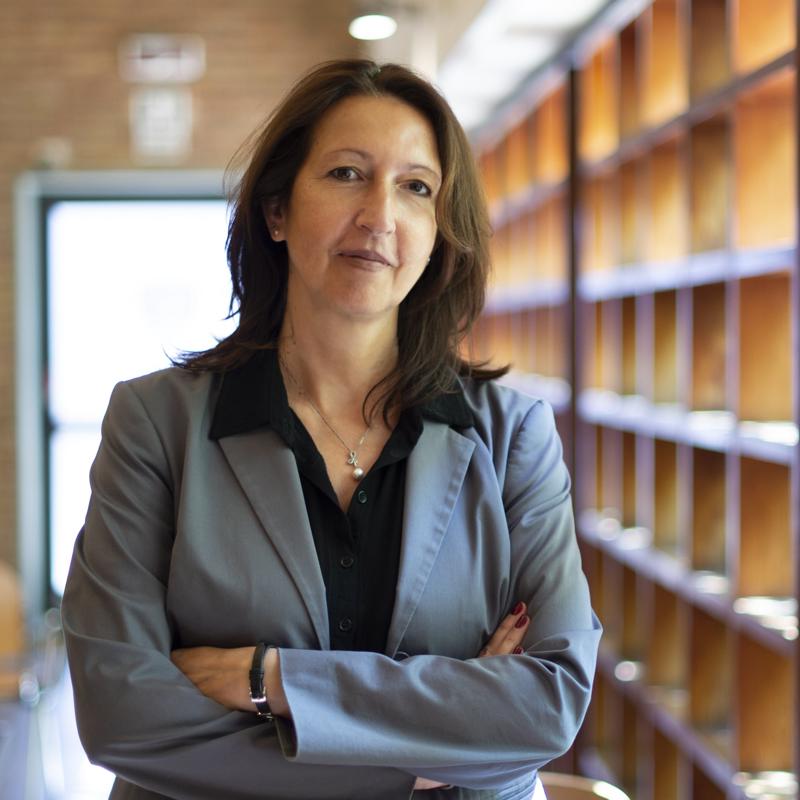
Kathryn Ciancia is Associate Professor of History and Director of Undergraduate Studies at University of Wisconsin-Madison. Her work examines modern Poland, citizenship, and borderlands. Award-winning book 'On Civilization’s Edge' explores modernization in interwar Poland. Current project 'Sites of Sovereignty' analyzes Polish statehood during WWII exile.
Rhenish Friedrich Wilhelm University of BonnGermany
Gül Şen is a Senior Lecturer and Privatdozentin at the Institute of Oriental and Asian Studies, University of Bonn, and also serves as a Lecturer at the University of Heidelberg. Her academic work focuses on premodern Ottoman history, historiography, and the dynamics of dependency, particularly in maritime contexts such as galley slavery and war captivity. She is actively involved in major research programs including the DFG-Priority Program 'Transottomanica' and the Bonn Center for Dependency and Slavery Studies. Her research areas include: Premodern Ottoman historiography and narrative strategies Legitimacy of rule and political transitions Maritime unfree labor and galley slavery War captivity and captivity narratives in the 18th century Dependency and asymmetrical power relations in the early modern Mediterranean Her recent publications reveal a strong thematic trend centered on the interplay between narrative construction and social power, particularly in contexts of slavery and captivity. She investigates how historical actors used storytelling to assert legitimacy, cope with crises, and negotiate identity. Her work bridges literary analysis with social history, offering nuanced understandings of agency within systems of dependency. She frequently collaborates with leading scholars like Stephan Conermann and contributes to major edited volumes and series in Ottoman studies. Her scientific awards include: DAAD Award for outstanding academic achievements (2012) Postdoctoral Scholarship from the Fritz Thyssen Foundation (2012–2013) Postdoctoral Fellowships at the Annemarie Schimmel Kolleg (2015–2016, 2018–2019) Postdoctoral Scholarship from the University of Bonn (2019–2020) She has supervised numerous B.A. and M.A. theses at the University of Bonn and Heidelberg and has secured third-party funding, including a DFG project (€192,000) from 2016–2018 and Fritz Thyssen Foundation grants. She is co-editor of the 'Ottoman Studies' and 'Otto Spies Memorial Series' book series, and holds leadership roles in the Society for Turkic, Ottoman and Turkish Studies (GTOT) and the International Association for Ottoman Social and Economic History (IAOSEH). Her academic activities are deeply embedded in collaborative and interdisciplinary research environments. She is affiliated with the Bonn Center for Dependency and Slavery Studies and contributes to the DFG-Priority Program 'Transottomanica,' where she examines mobility dynamics and captivity narratives. Her work is supported by a strong network of international collaborations and editorial engagements.
David Glovsky serves as Assistant Professor of History and African and African American Studies within Harvard University's Faculty of Arts and Sciences, focusing on 19th-20th century West Africa with regional expertise in Senegal, Gambia, Guinea-Bissau, and Guinea. His research examines borderlands through lenses of mobility, citizenship, and alternative geographies, challenging state-imposed borders with community-driven spatial narratives. His educational foundation includes a B.A. in History and Human Geography from Dartmouth College and a Ph.D. in African History from Michigan State University. Prior academic appointments include the Department of Africana Studies at University at Albany and the Department of History at Boston University, following Peace Corps service in southern Senegal that redirected his career from sports media into academia. Glovsky's research program centers on social justice-oriented historical narratives of marginalized West African communities, particularly Fulbe populations. His work synthesizes oral histories and archival research across six nations to analyze how borderland residents construct fluid geographies that transcend colonial/postcolonial boundaries. Key themes include migration as resistance , gendered border experiences , and Islam's role in transnational community formation , with methodological innovation in spatial history and decolonial approaches. Analysis of his nine recent publications (2019-2023) reveals consistent engagement with West African borderland resilience , demonstrating how communities maintain cross-border networks despite state fragmentation. His work bridges historical scholarship and contemporary migration debates , employing interdisciplinary frameworks from anthropology, geography, and postcolonial theory to document alternative spatial organizations that challenge Western cartographic traditions. ACLS Fellowship supporting book project Borderlanders: Popular Geographies, Mobility, and Belonging in West Africa Glovsky actively mentors graduate students interested in African history, emphasizing pathways for underrepresented scholars into U.S. academia. His research has received competitive external funding including the ACLS Fellowship, while his collaborative work on the NEH ‘Ajamī Project advanced accessibility of Pulaar manuscripts through digitization and multilingual translation. He maintains strong community ties with West African scholars and institutions, particularly in Senegambia. Though not leading a formal laboratory, Glovsky collaborates with international research teams across West Africa on borderland studies and manuscript preservation, working closely with scholars in Kolda (Senegal), Dakar, and Guinea-Bissau to document community histories through participatory methodologies.
Paul B. Kreitman is an Associate Professor at Columbia University's Department of East Asian Languages and Cultures. He specializes in 20th Century Japanese History, Environmental History, and the History of Science and Technology. 20th Century Japanese History Environmental History Commodity History Global Sovereignty Studies His research explores intersections between nature and sovereignty , with a focus on Japan's borderlands and trans-Pacific interactions. His 2018 article on Tokyo's wartime sanitation politics won the Leopold-Hidy Prize , and his 2023 monograph Japan's Ocean Borderlands redefines environmental sovereignty narratives. He teaches courses on Asian Mobilities , Indo-Pacific Geopolitics , and graduate seminars about Borderland Japan . Previously held positions include Junior Research Fellow at University of London's Institute of Historical Research and Senior Teaching Fellow at SOAS. Publications: Environmental History (2018), Cambridge University Press monograph (2023) Media Appearances: The Financial Times, The Japan Times, The New Statesman Current projects examine trans-Pacific border controls with emphasis on Japan-Hawaii connections. His work integrates environmental, technological, and geopolitical perspectives to reshape historical understanding of sovereignty dynamics.
Prof. Dr. Olena Palko is a historian specializing in Eastern Europe, the Soviet Union, and Ukraine. She holds the SNSF Professorship at the University of Basel's Department of History, focusing on East European History. Her research emphasizes Soviet minority policies, cultural politics, and national identity formation in interwar Ukraine. She is a leading scholar with notable works including Making Ukraine Soviet (2021), awarded the 2023 Alexander Nove Prize. Her current SNF-funded project, Red Tower of Babel , examines Soviet minority experiments in Ukraine. Education: PhD from University of East Anglia (2017); Kandydat nauk from National Academy of Sciences of Ukraine (2013). Research Interests: Soviet nationality policy, minority history, Ukrainian twentieth-century history, transnational border dynamics. Her work bridges archival analysis with transnational perspectives, addressing contested borderlands between Poland and the USSR. Key publications include co-edited volumes like Making Ukraine (2022) and Ukraine's Many Faces (2023). She actively contributes to academic governance roles, including co-convening the BASEES Study Group for Minority History and serving on the Scientific Advisory Council of the Council of Europe's history observatory.
Dr. Joshua Savala is an Associate Professor of History at the University of Texas at El Paso (UTEP), part of the College of Liberal Arts. He holds a PhD from Cornell University (2019) and previously taught at Rollins College in Florida. His research focuses on Latin American social movements, transnational histories of the Pacific, and labor solidarity in the Andean and Southern Cone regions. Key areas of expertise include maritime workers, anarchism, public health epidemics, and border studies. Education: PhD in History, Cornell University (2019) MA in History, Cornell University (2015) MA in History, Tufts University (2012) BA in History and Sociology, University of California, Davis (2007) Research Interests: His groundbreaking work examines collaborative relationships between Peruvians and Chileans in the 19th and early 20th centuries, including studies on cholera epidemics, anarchist networks, and cross-border solidarity. Recent projects investigate cooperative urban planning on the U.S.-Mexico border and disaster responses in Valparaíso. Publications: Includes the award-winning book Beyond Patriotic Phobias (2022) and articles in Hispanic American Historical Review and Journal of Social History . His Spanish translation Más allá de la guerra (2024) is a binational publication with universities in Peru and Chile. Awards: Best Book (Social Sciences) on the Southern Cone (Honorable Mention), 2023 Flora Tristán Book Prize (Honorable Mention), 2023 José María Arguedas Prize, 2020 Teaching: Teaches courses on Modern Latin America, Pacific World histories, and borderland studies. Recent courses include Studies in Latin American History and South America Since 1810 . Labs/Teams: Engaged with UTEP's Borderlands Digital Humanities Center and the Institute of Oral History, emphasizing collaborative interdisciplinary projects.
David Sneath serves as Director of the Mongolia and Inner Asia Studies Unit (MIASU) at the University of Cambridge, holding the position of Professor of Social Anthropology and Fellowship at Corpus Christi College. His work centers on Inner Asian societies, with extensive fieldwork among Mongolian pastoralist communities and leadership in major transnational research initiatives. Professor Sneath completed his PhD at Cambridge in 1991 and received a British Academy Postdoctoral Research Fellowship in 1994 for studies on environment-society dynamics in Inner Asia. His academic trajectory includes a Lectureship in Anthropology and Development at Oxford University (1998-2000) prior to returning to Cambridge. His research explores socio-political transformations in post-socialist Mongolia, examining intersections of kinship, state structures, environmental governance, and cultural identity. Current projects address water resource management across trans-border Asian rivers, climate histories, oral histories of 20th-century Mongolia, and Mongolian-Chinese border healing practices, reflecting his interdisciplinary approach to Inner Asian studies. His publications reveal evolving scholarly focus from foundational analyses of pastoral society-state relations (2000) through theoretical examinations of nomadic political orders (2007) to contemporary investigations of post-socialist cultural reconfiguration (2018), consistently emphasizing Mongolian agency within global systems. Academic recognition includes: British Academy Postdoctoral Research Fellowship (1994) Professor Sneath actively supervises PhD candidates in Social Anthropology while directing MIASU's collaborative research portfolio, which includes Climate Histories, Pathways to Understanding Climate Change, and the Mongolian Cosmopolitical Heritage project. His work integrates anthropological fieldwork with historical and environmental analysis across multiple international partnerships. As MIASU Director, he maintains the unit's role as a global hub for Inner Asian scholarship through the journal Inner Asia (which he co-edits), research seminars, and the Chinggis Khaan Grant program, fostering connections between Cambridge scholars and Mongolian research communities.
Professor Martin Doevenspeck is a distinguished scholar of Political Geography at the University of Bayreuth, where he holds a professorship in the Department of Political Geography within the Faculty of Biology, Chemistry & Earth Sciences. Since 2019, he has served as a Principal Investigator in the Cluster of Excellence "Africa Multiple" and as Spokesperson of the Research Section Mobilities. Previously, he was Managing Director of the Institute of Geography at the University of Bayreuth (2018-2022) and a member of the Executive Board of the Institute of African Studies Bayreuth. Professor Doevenspeck earned his "Diplom" in Geography from the University of Bonn and completed his PhD thesis entitled "Migration in rural Benin – Studies in social geography at an African border" at the University of Bayreuth in 2004. His academic journey includes positions as a Teaching and Research Assistant at the University of Bayreuth (2005-2011), Post-doc at the University of Bonn (2004), and various research and teaching roles focused on African geography and development. At the intersection of migration studies and political geography, Professor Doevenspeck's research focuses on (forced) im/mobilities, conflict, and border studies, with particular emphasis on African contexts. His current work centers on the project "Oil movements: the production and government of petro-(im)mobilities in East Africa" within the Bayreuth Cluster of Excellence "Africa Multiple," where he serves as Spokesperson of the Research Section Mobilities. His research spans West Africa (particularly Benin), Central Africa (Democratic Republic of Congo, Rwanda), and East Africa, examining how borders, conflicts, and resource extraction shape human mobility and territorial control. Analysis of Professor Doevenspeck's recent publications reveals a consistent focus on migration, borders, and conflict in African contexts, with increasing attention to environmental factors and resource extraction. His work demonstrates interdisciplinary approaches combining political geography, migration studies, and African studies. Recent publications particularly emphasize petro-mobilities, terrorism impacts on education, and migration control in West African borderlands, reflecting evolving research interests in the interplay between infrastructure development, security concerns, and human mobility. Professor Doevenspeck has supervised numerous doctoral and master's students, including Jaana M. Janßen, Fabian Liedl, Clemens Romankiewicz, Morgane Anziani-Vente, Muhire Blaise Mwanga, and Daniela Boß. His academic leadership extends to serving as Vice Dean of the Bayreuth International Graduate School of African Studies (BIGSAS) from 2012-2021, where he played a significant role in shaping graduate education in African studies. As a Principal Investigator in the Cluster of Excellence "Africa Multiple," Professor Doevenspeck leads research initiatives examining diverse manifestations of "Africa" across the continent and diaspora. His work involves collaboration with researchers from multiple disciplines and institutions, focusing particularly on mobilities as a key research section within the cluster. This collaborative research environment has produced significant insights into migration patterns, border dynamics, and conflict resolution in African contexts.
Linda Hulin is a Researcher at the School of Archaeology, University of Oxford , serving as Research Assistant to the Director of the Oxford Centre for Maritime Archaeology. She works part-time as a tutor in the Department for Continuing Education.
Raffaella A. Del Sarto is a Full-time Professor holding a Joint Chair in Mediterranean Studies between the Department of Political and Social Sciences and the Robert Schuman Centre for Advanced Studies at the European University Institute (EUI). Previously, she served as Associate Professor of Middle East Studies at Johns Hopkins SAIS Europe and held an ERC-funded BORDERLANDS project at the EUI. She earned her PhD (summa cum laude) in International Relations from the Hebrew University of Jerusalem and a MA in Political Science from Albert-Ludwigs University in Freiburg, Germany. Her research focuses on Middle East-North Africa (MENA) international relations, Europe-MENA relations, regional order dynamics, and the Israeli-Palestinian conflict. Notable works include Borderlands: Europe and the Mediterranean Middle East (2021) and Israel under Siege (2017). She is fluent in English, German, French, Italian, Hebrew, and has intermediate knowledge of Arabic and Spanish. Her publications analyze regional alliances, EU foreign policy, and border governance, reflecting her expertise in qualitative methods and constructivist approaches. Awards include the Robert Schuman Distinguished Fellowship (2019-2020) and Italian habilitation as Full Professor (2019). She advises on topics linking Mediterranean IR with comparative frameworks, emphasizing conceptual innovation beyond 'exceptionalism' narratives. Her research projects include the MENARA initiative (2016-2021) on post-2011 Middle East transformations and the BORDERLANDS ERC project (2011-2017), exploring EU-MENA border dynamics.
Laura Maria Lojo Rodriguez is a Professor in the Department of English and German Philology at the University of Santiago de Compostela , specializing in British literature and modernist/postmodernist fiction. She leads the Discourse and Identity research group (GI DI-1924), focusing on English language, literature, and culture through interdisciplinary frameworks. Her work intersects with the Humanities Research Institute (iHUS) . Her research spans: Gender and identity in Woolfian studies Migration narratives in contemporary short fiction Postcolonial themes in British-Irish literature Ecocritical and posthuman anxieties in Johnson's works Recent publications examine border politics, maternal discourses, and cross-cultural literary bonds. She has also contributed to translation studies, particularly Woolf's Spanish reception. Her academic output bridges literary theory with socio-political analysis.
Reyhan Durmaz is an Associate Professor of Religious Studies at the University of Pennsylvania, affiliated with the School of Arts & Sciences and multiple interdisciplinary programs. Her research focuses on Syriac Christianity, medieval religious dynamics, and the intersection of Christianity and Islam in late antiquity. She holds a Ph.D. from Brown University (2019) and has received prestigious fellowships such as the Dumbarton Oaks Junior Fellowship and the Charlotte Newcombe Dissertation Fellowship. Her seminal book Stories between Christianity and Islam (2022) examines the transmission of saints' stories between religious traditions, earning Honorable Mention from the Middle East Medievalists. Current projects include a study of rural Christianity in the medieval Middle East through soldier-monk narratives and an analysis of the 19th-century Arabic newspaper Kawkab America . She co-leads the Digital Photograph Archive project Visualizing Countryside , documenting medieval religious sites. Dr. Durmaz teaches courses on global Christianity, material culture, and late antiquity, and serves as co-chair of the Philadelphia Seminar on Christian Origins. Her work bridges historical analysis, textual scholarship, and digital humanities, addressing themes of religious identity, cultural exchange, and marginalized communities.
Dr. Jennifer Cearns is an Associate Professor in AI at the University of Manchester and a Visiting Professor at KU Leuven . Previously, she held roles as an ESRC Postdoctoral Fellow and Lecturer in Digital Anthropology at University College London , an Associate Postdoctoral Fellow at the Alan Turing Institute , and a Leach Fellow in Public Anthropology at the Royal Anthropological Institute . Her work bridges digital anthropology and AI , focusing on culturally-constructed empathy and the reproduction of norms in algorithmic systems. PhD in Anthropology (University College London, 2016-2020) Languages : English, Portuguese, Spanish (Latin American) Her research spans Artificial Intelligence , Algorithms , and Data Practices , with ethnographic fieldwork in Brazil, Cuba, the US, Guyana, Panama, Mexico, Spain, and the UK. Current projects explore the ethics of AI in mental healthcare, transnational digital networks , and contraband economies in Latin America. Recent publications analyze cultural norms in AI , transnational exchange , and digital piracy , with a focus on Latin America. Her 2023 monograph Circulating Culture (University Press of Florida) examines postsocialist networks and contraband economies. Nominated for Association of Latina and Latino Anthropologists First Book Prize Nominated for Society for Latin American & Caribbean Anthropology Book Prize Finalist, BBC New Generation Thinker Award She collaborates with institutions like UCL's Centre for Digital Anthropology and KU Leuven, and has advised the technology industry for over a decade. Her ORCID identifier is 0000-0001-6498-1766.
Jamella Gow is the Rasuli Lewis Assistant Professor of Sociology at Bowdoin College, where she teaches courses on race and ethnicity, Black culture and activism, migration, policing, borders, and globalization. She is affiliated with the Department of Sociology and actively contributes to interdisciplinary scholarship at the intersection of Black Studies and migration studies. Her research centers on how race, Blackness, and immigration intersect for Black Caribbean migrants in the United States, particularly Haitians, Jamaicans, and Afro-Cubans in South Florida. She investigates the dynamics of racial and ethnic identity, inclusion/exclusion, diasporic politics, and the criminalization of Black migrants under U.S. immigration policy. Her work critically engages anti-Blackness, differential Blackness, and transnational solidarity. Her recent publications include a co-edited volume titled Modern Migrations, Black Interrogations: Revisioning Migrants and Mobilities through the Critique of Anti-Blackness (Temple University Press, 2024), and journal articles in Sociology of Race and Ethnicity , Ethnic and Racial Studies , and Diaspora: A Journal of Transnational Studies . Her publications reflect a consistent focus on racialization, diaspora, and the socio-political marginalization of Black migrants. She frequently presents her research at major academic conferences such as the American Sociological Association and the Society for the Study of Social Problems. Jamella Gow has not been mentioned as receiving specific scientific awards in the provided text. However, her scholarly impact is evident through her publications and invited presentations. She advises and mentors students in sociology and related fields, though no named advisees are listed. Her research is collaborative, involving partnerships with scholars across institutions and community-based projects, such as her work with the Carrefour-Feuilles community in Haiti. She has also contributed to public scholarship through newsletters and book reviews. Her work is grounded in critical sociological theory and qualitative methods, and she is currently developing a book manuscript titled Black Migrants from Black Nations: Race, Blackness, and Immigrant Exclusion , which promises to make a significant contribution to the understanding of how racial, ethnic, and national statuses shape the lived experiences of Black immigrants.
University of California, Los AngelesUnited States
M. Rahim Shayegan is a prominent scholar in Iranian and Near Eastern studies, specializing in Old and Middle Iranian philology, Achaemenid-Sasanian history, and Greco-Roman-Iranian cultural interactions. He holds a PhD from Harvard University and has conducted postdoctoral research at the University of Göttingen and Sorbonne. His work bridges philology, epigraphy, and historical analysis to explore ancient political ideologies, religious traditions, and cross-cultural exchanges. Education: PhD, Iranian Philology & Ancient History, Harvard University MA, Iranian Philology, Sorbonne University BA, Philosophy & Comparative Philology, University of Cologne Research Interests: Iranian epigraphy and royal inscriptions Political dynamics of pre-Islamic Iranian empires Greco-Roman and Iranian cultural dialogues Zoroastrianism and ancient Near Eastern religions His publications include seminal works like Arsacids and Sasanians: Political Ideology in Post-Hellenistic Persia (2011) and Cyrus the Great: Life and Lore (2019). He has held prestigious fellowships at the Guggenheim Foundation and is a member of the Austrian Academy of Sciences. Awards: Ehsan Yarshater Book Award (2012) Academia Europaea Membership (2019–) Courses Taught: Achaemenid Civilization Sasanian History Old Persian Cuneiform Zoroastrianism and Ancient Religions