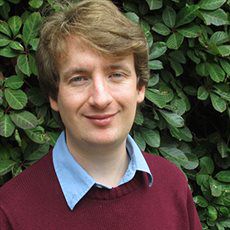
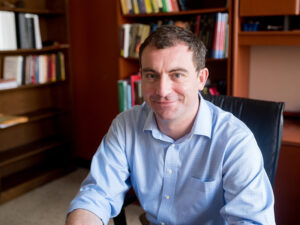
Andrew Mitchell is a Professor at the Faculty of Law, Monash University, and a member of the WTO Dispute Settlement Panelists Indicative List. He has extensive legal practice experience with Allens Arthur Robinson and consults for governments, international organizations, and the private sector. Mitchell has taught law in Australia, Canada, Indonesia, Singapore, and the US. He holds law degrees from the University of Melbourne, Harvard Law School, and a PhD from the University of Cambridge. His research focuses on international economic law, public international law, and digital trade governance, with a particular emphasis on the intersection of trade law and public health. Mitchell has secured six major grants, including an Australian Research Council Future Fellowship, and has authored over 170 books and articles. He serves as an editor for Edward Elgar’s International Economic Law Series and multiple journal editorial boards. Recent projects include 'Safeguarding Health in International Investment Agreements' (2022–2025) 'Maritime Cooperation for a Sustainable Indo-Pacific' (2021–2022) 'Global E-Commerce and Cottage Industries in India' (2020–2021) He has contributed to policy submissions on bilateral investment treaties and delivered lectures on data sovereignty and digital trade. His awards include editorial leadership roles at journals like the Journal of World Investment and Trade and Asia Pacific Law Review .
Azizjon ALIMOV is a Full Professor at IÉSEG School of Management (University of Lille, France), specializing in Corporate Finance, Mergers and Acquisitions, and Law and Finance. He holds a Ph.D. in Finance from the University of Oregon (2007) and an MBA from Central Michigan University (2001). His HDR (Habilitation) in Management Sciences was awarded by the University of Lille in 2023. His research focuses on corporate governance, cross-border M&A dynamics, and the interplay between legal frameworks and financial decision-making. Key themes include intellectual property rights' impact on corporate debt costs, product market competition effects on corporate cash holdings, and government borrowing influences on acquisition strategies. His work frequently examines global contexts, with studies spanning North America, Asia, and Europe. Notable publications include analyses of IPO staging mechanisms (2024), managerial discipline through trade liberalization (2023), and the role of labor protection laws in loan contracting (2015). His recent work emphasizes reproducibility in management science methodology (2023) and cross-border regulatory challenges in M&A. No scientific awards are explicitly listed; however, his extensive publication record reflects sustained academic contributions. He has advised students across institutions including City University of Hong Kong and the Sauder School of Business, though specific advisee names are not documented here. His professional experience includes roles at the University of Arizona (2008–2010), California State University (2007–2008), and as an HSBC Visiting Assistant Professor at the University of British Columbia (2016–2018). He currently leads the Finance Track at IÉSEG, contributing to programs like the Grande École Master’s in Finance and MSc Corporate Finance courses.
Professor Andrew Murray is a leading academic in Law with expertise in New Media and Technology Law. He holds the position of Professor of Law at the LSE Law School and directs the LSE Law, Society and Technology Group. His research focuses on digital rights, AI ethics, and regulatory frameworks for emerging technologies. Murray has held roles including Fellow of the Royal Society for the Arts and advisor to the Saudi Arabian government on e-commerce law. He has advised parliamentary committees, including the House of Lords Communications Committee on digital regulation, and delivered the prestigious TMC Asser Lecture on AI and human agency. Education: LL.B. Hons from Edinburgh University (1994), followed by academic roles at Stirling University and LSE since 2000. Professional memberships include the Society of Computers and Law (SCL) and the Higher Education Academy (HEA). He has been a visiting professor at Amsterdam Law and Technology Institute and Sciences Po Paris. Research interests span cyberspace regulation, AI governance, and the intersection of technology with human rights. Key publications include Human Rights in the Digital Age (2004) and The Regulation of Cyberspace (2007). Awards include recognition as an Independent Expert in Nominet UK dispute resolution (2001–2008) and a 2024 Leibniz Prize reviewer. Advocacy includes contributions to EU e-commerce directives and UK surveillance law debates. His work emphasizes balancing innovation with legal accountability in digital spaces.
Professor Elaine Fahey is a leading scholar in EU law and global governance at the City Law School, City St George's, University of London, where she serves as Professor of EU Law and Deputy Head of Department (academic programmes). She is co-convener of the Institute for the Study of European Law (ISEL) and the UACES James Madison Trust EUFUtures initiative (2022–2025). Her academic career includes visiting professorships at Washington College of Law (American University), Keio University, and NYU, as well as fellowships at the European University Institute and the University of Graz. LLB, Trinity College Dublin LLM, Sidney Sussex College, University of Cambridge PhD, Trinity College Dublin Barrister-at-Law, Honorable Society of King’s Inns, Ireland Attorney-at-Law, State of New York Senior Fellowship, Higher Education Authority UK Her research focuses on the intersection of EU law with global governance, digital regulation, transatlantic relations, and the Area of Freedom, Security and Justice. She explores how the EU navigates legal frameworks beyond the nation-state, particularly in digital trade, cybersecurity, and data protection. Her work critically examines the EU’s role as a global regulatory actor and its interactions with international institutions. Her extensive publication record includes the monograph The EU as a Global Digital Actor (Hart, 2022) and numerous articles on digital sovereignty, data transfers, and transatlantic cooperation. Recent research analyzes the EU–US Trade and Technology Council (TTC), the evolution of the Privacy Shield, and strategic litigation in digital rights. Her work reveals a strong trend toward understanding how soft law, institutional design, and judicial decisions shape EU external relations and digital governance. Erasmus+ Jean Monnet Chair in Law & Transatlantic Relations (2019–2022) Emile Noël Fellow, NYU Law School Max Weber Fellow, European University Institute Senior Land Steiermark Fellow, University of Graz Senior Fellowship, Higher Education Authority UK Professor Fahey has supervised multiple PhD students, including Isabella Mancini, Giulio Kowalski, and Christos Karetsos, on topics such as algorithmic collusion, digital markets, and investment law. She has led significant research projects, including the ESRC-funded TRILATTRADE grant and the Marie Curie ITN on EU and Transatlantic Investment and Trade (EUTIP). She previously held leadership roles as Associate Dean (International) and interim Associate Dean (Research) at the City Law School. She is an elected member of the EU Studies Association (EUSA) Executive (2021–2025). She has also contributed to public policy through briefings for the Welsh Parliament and reports on CJEU litigation in Ireland. She is associated with research initiatives such as the Institute for the Study of European Law (ISEL) and has collaborated on interdisciplinary projects on Facebook regulation, transatlantic relations, and EU technological sovereignty. Her work bridges legal scholarship, policy, and international academic collaboration.
Adèle Garnier is an Associate Professor at the Department of Geography, Université Laval's Faculty of Forestry, Geography and Geomatics. She serves as Director of undergraduate geography programs and the certificate in sustainable tourism. Her research focuses on political geography, migration dynamics, and humanitarian governance, particularly examining refugee labor market participation, temporary migration policies, and technological impacts on immigration systems. Education : PhD in Political Science (Macquarie University/Universität Leipzig, 2012), MA in Political Science (Universität Leipzig, 2006), Diploma in Political Science (Paris, 2002) Her research integrates political geography , migration studies , and geographies of inequality , analyzing power structures in migration governance. Recent work explores Canada's digitalization of immigration, multiscalar impacts of refugee policies, and settler-colonial migration frameworks. Current research trends focus on technological governance of migration , refugee resettlement , and marketization of humanitarian services , with interdisciplinary approaches bridging political science and geography. Research Units : Graduate School of International Studies (ESEI), Immigration Research Team (ERIQA), Cultures-Arts-Societies Center (CELAT) Collaborations : Study Group on Ethnic Relations (Flers), Center for Refugee Studies (York University), Peace Research Institute Oslo She supervises graduate students in geography and co-leads multiple funded projects, including Liberating Migrant Labour (2023-2030) and digital migration governance research (2023-2028).
Professor Jennifer Payne is Warden of Merton College, Oxford, and a leading authority in company law, corporate finance law, financial regulation, and corporate insolvency. She has authored numerous influential books and articles, and holds significant editorial and advisory roles in the academic and policy-making spheres. Research Interests: Company law and corporate governance Corporate finance and securities regulation Financial regulation and policy Corporate insolvency and debt restructuring Comparative and European financial law Her work spans both theoretical and practical dimensions, with a strong focus on regulatory frameworks, legal reforms, and cross-border financial issues. She has contributed extensively to policy debates and legal developments in the UK and EU. Scientific Awards & Honors: Elected to membership of the International Insolvency Institute (2016) Member of ESMA’s Securities and Markets Stakeholders Group (2016–2018) Member of ESMA’s Corporate Finance Standing Committee Consultative Working Group (2015–2017) Law Delegate of Oxford University Press (2020–present) Expert Advisory Panel member to the Law Commission on Intermediated Securities and Digital Assets Editorial & Advisory Roles: Founder editor, Journal of Corporate Law Studies Founder editor, Oxford Business Law Blog Review Articles editor, Oxford Journal of Legal Studies Contributor to Palmer’s Company Law Visiting Positions: She has held visiting professorships at Melbourne Law School, National University of Singapore, and the University of Auckland, reflecting her international academic influence.
Mariana Gkliati is an Assistant Professor of International and EU Law at Radboud University, Nijmegen. She holds a Graduate Diploma in Law (Magna Cum Laude) from the National and Kapodistrian University of Athens and a Legal Research Master (Summa Cum Laude) from Utrecht University. Her PhD from Leiden University focused on Frontex accountability, supervised by Professors Rodrigues and Besselink, and was supported by the Meijers Research Institute. Education: PhD in Immigration Law, Leiden University (2016-2020) Legal Research Master, Utrecht University (Summa Cum Laude) Graduate Diploma in Law, National and Kapodistrian University of Athens (Magna Cum Laude) Her research interests center on migration, refugee law, and human rights, particularly the accountability of the European Border and Coast Guard Agency (Frontex). She leads the externally funded project 'European Border and Coast Guard Agency: Systemic Accountability in Practice,' involving an 8-member team. Her work emphasizes evidence-based policy-making and anti-smuggling policies. Professional Activities: Research Affiliate, Refugee Law Initiative (RLI), University of London Teaches on the RLI MA in Refugee Protection and Forced Migration Studies Former visiting Research Fellow at the School of Advanced Study (2016) and Amsterdam Centre for Migration and Refugee Law (2019-2020) Awards: Magna Cum Laude, Graduate Diploma in Law Summa Cum Laude, Legal Research Master Her grants and projects include systemic accountability research on Frontex. She advises NGOs, law firms, and the European Parliament, and contributes to expert reports on migration and borders. Labs/Teams: Leads an 8-member research team for her funded project on Frontex accountability.
Associate Professor Mark Humphery-Jenner is a distinguished faculty member at the University of New South Wales (UNSW) Business School, specifically within the School of Banking and Finance. With an exceptional academic pedigree including multiple PhDs from prestigious institutions worldwide, he has established himself as a leading researcher at the intersection of finance, law, and corporate governance. Dr. Humphery-Jenner's educational background demonstrates remarkable breadth and depth, featuring PhDs from UNSW, Tilburg University, and Leiden University, along with master's degrees from Columbia University and the University of Washington. His undergraduate achievements include a BCom with First Class Honours and University Medal, and an LLB with First Class Honours, both from UNSW. This multidisciplinary foundation spanning business, law, and finance informs his comprehensive research approach. His research spans corporate finance, venture capital, and law, with particular focus on how legal frameworks shape financial decision-making and corporate behavior. Humphery-Jenner has published extensively in top-tier finance journals including the Journal of Financial Economics, Journal of Financial and Quantitative Analysis, Review of Finance, and Journal of Corporate Finance, as well as leading management journals such as Strategic Management Journal and Journal of International Business Studies. His scholarly contributions address critical issues in executive compensation, securities litigation, corporate governance, and private equity markets. Analysis of his recent publications reveals a sophisticated research trajectory increasingly focused on the relationship between litigation risk and financial reporting practices, corporate governance mechanisms, and investor protection frameworks. His work demonstrates particular attention to Australian regulatory contexts while maintaining a strong international comparative perspective, especially regarding Asian capital markets and cross-border investment. With substantial industry experience including work in investment banking and consulting for hedge funds, Humphery-Jenner brings practical insights to his academic work. He has been teaching in various capacities since 2006 and has served as an assistant professor in finance since 2012, contributing significantly to business education at UNSW. His professional background enhances his ability to bridge theoretical research with real-world financial practice.
Gerald L. Neuman is the J. Sinclair Armstrong Professor of International, Foreign, and Comparative Law at Harvard Law School (HLS), where he serves as Director of the Human Rights Program. His expertise spans human rights, constitutional law, immigration law, and international legal frameworks. Previously, he taught at the University of Pennsylvania Law School (1984-1992) and Columbia Law School (1992-2006). Research Interests: Neuman's work focuses on: Human rights in populist and pandemic contexts Transnational constitutionalism Immigration law and extraterritorial constitutional rights Age discrimination as a human rights violation Impeachment's role in human rights protection Indirect discrimination analysis Selected Trends: His recent articles examine pandemic-era immigration policies ( Title 42 ), impeachment mechanisms for human rights violations, and age discrimination frameworks. Publications show consistent engagement with: Constitutional law intersections Comparative legal analysis Administrative law critiques Human rights treaty body applications Scientific Contributions: Neuman's work appears in leading journals like Harvard International Law Journal and Harvard Human Rights Journal . He has organized workshops on indirect discrimination related to: Sexual orientation/gender identity Chronological age Religious practice Disability rights Pandemic policy impacts He has served as a UN expert workshop organizer and contributed to international human rights literature through edited volumes and treaty analysis.
Sakari Melander is a Professor at the Faculty of Law , University of Helsinki, specializing in Criminal Law , with a focus on constitutionalization, Europeanization, and sentencing policies. His work bridges theoretical criminal law with practical legislative and policy challenges. Key research areas include EU criminal law, constitutional constraints on criminal legislation, and general doctrines of criminal law. He has extensive experience in parliamentary legal consultation, providing expert opinions to Finland’s Legislative Committees (e.g., on immigration control, anti-corruption directives, and digital evidence handling). Recent publications address topics like EU corporate sanction policies, constitutionalization of criminal law, and reforms in Finnish sentencing systems. His 2025 article in the New Journal of European Criminal Law explores balancing administrative and criminal sanctions in the EU. Scientific awards include: Hilkka ja Otto Brusiin Foundation Thesis Prize (2001) Magister Bonus – Good Teacher Award (2014) Primustohtori Award (2010) Year’s Teacher (2010) Year’s Opponent (2008) He leads research projects such as Criminal Law Under Pressure: Differentiation and Harmonization (2012-2015) and Assessment of Human Trafficking Sanction Practices (2021-2022), and supervises doctoral theses on criminal law topics.
Dr. Thomas Brodie is an Assistant Professor in 20th Century European History at the Department of History, University of Birmingham. His academic career spans prestigious institutions including Oxford University, University of Leeds, and Jesus College, Oxford before joining Birmingham in 2018. Education: DPhil in History (The University of Oxford, 2014) MSt in Modern British and European History (The University of Oxford, 2010) BA in History (The University of Oxford, 2009) Fellowship of the Higher Education Academy (2020) Postgraduate Certificate in Higher Education (University of Birmingham, 2020) Dr. Brodie specializes in Modern European history with particular focus on Germany during the Nazi era and post-war periods. His research examines the intersection of religion, society, and war, with special attention to Catholic communities in Germany during WWII and the subsequent evolution of mourning practices and memory culture. His work combines theological analysis with social and cultural history using previously unused archival materials from church, state, and private collections. His recent publications demonstrate a clear trajectory from examining wartime religious communities to post-war memory practices, showing his evolving scholarly interests in how societies process mass bereavement and construct collective memory. The articles primarily focus on German religious history during and after WWII, with increasing attention to spatial dimensions of mourning and commemoration. Scientific Awards: Runner-up award for the Wiener Library's Fraenkel Prize (2014) AHRC award for doctoral research Hanseatic Scholarship for archival research in Berlin and German cities Dr. Brodie teaches a range of undergraduate and postgraduate courses including 'The Rise and Fall of the Third Reich' and 'Life After Death: Culture, Memory and Power in Postwar Europe.' He supervises BA dissertations and welcomes PhD students working on Modern German history or thematic interests in religion, war, and memory in European contexts since 1800. His current research project examines German society's responses to bereavement during WWII and its aftermaths through personal diaries, letters, artistic representations, and war memorials.
Marie Sandberg is an Associate Professor in the Promotion Programme at the Saxo Institute, University of Copenhagen. She is affiliated with the Faculty of Humanities and participates in HUM:Global initiatives focused on interdisciplinary global studies. Her research emphasizes ethnological analyses of migration, borders, and refugee policies, particularly exploring temporal governance, state-civil society interactions, and the paradoxes of welfare-state frameworks. Her work examines the everyday practices of refugees and volunteers in contexts of temporary protection status, as well as the ethical challenges in digital migration studies. She contributes to debates on deterrence policies, repatriation agendas, and the precarity of academic labor. Sandberg’s research methodologies often combine ethnography with critical analysis of policy frameworks. Key Research Themes: Refugee temporariness, border studies, humanitarianism, and academic precarity Professional Roles: Member of the Professional Project Group (PPG) in HUM:Global, coordinating interdisciplinary projects Geographic Focus: Europe, with emphasis on Denmark, Poland, and Germany Recent publications highlight her focus on the interplay between state policies and grassroots efforts, as well as the temporal dimensions of displacement. She has co-edited special issues on migration and authored studies on volunteerism in refugee relief work.
Verena Zimmermann serves as Assistant Professor (Tenure Track) for Security, Privacy and Society at ETH Zurich within the Department of Humanities, Social and Political Sciences. She leads the Security, Privacy and Society research group, focusing on human-centered approaches to safety, IT security, and privacy challenges in emerging technologies. Her academic foundation includes a PhD in Usable Security from TU Darmstadt, where her dissertation From the Quest to Replace Passwords towards Supporting Secure and Usable Password Creation earned dual awards from the German Association for Data Protection and Data Security (GDD) and the Ernst-Ludwigs-Hochschulgesellschaft. Zimmermann's research pioneers the shift from viewing humans as security vulnerabilities to recognizing them as integral solutions. Her work spans password security, phishing interventions, smart home privacy, and cybersecurity education, consistently applying human factors principles to design systems that align with natural user behavior. Current projects explore emotional dimensions of security engagement, quantum governance frameworks, and LLM-related privacy concerns through interdisciplinary lenses combining computer science, psychology, and safety science. Recent publications reveal strong thematic trends toward understanding user motivations in security behavior, developing personalized training through augmented reality and adaptive systems, and translating safety science principles to cybersecurity incident management. Her work increasingly addresses societal implications of emerging technologies like quantum computing and generative AI. Her distinguished recognitions include: GDD Dissertation Award for Usable Security research Ernst-Ludwigs-Hochschulgesellschaft Dissertation Award IANUS Award (2nd place) for Moving from a 'Human-as-Problem' to a 'Human-as-Solution' Cybersecurity Mindset Zimmermann actively mentors through ETH's Human-Centered Security and Privacy Lab while collaborating internationally with institutions including ATHENE (German National Center for Applied Cybersecurity), Abertay University's Cybersecurity Division, and the Safety Science Innovation Lab. Her research receives support from Swiss and European funding bodies focused on privacy-preserving technologies and organizational security behavior. At ETH Zurich, she directs the Security, Privacy and Society group which employs design thinking, LEGO Serious Play, and mixed-methods research to tackle real-world security challenges. The team partners with industry stakeholders to develop practical solutions for phishing resistance, smart home privacy, and cybersecurity education while maintaining strong ties to the Research Training Group 2050 Privacy and Trust for Mobile Users.
Michael Baldea is an Associate Professor in the Department of Chemical Engineering at the University of Texas at Austin . He holds a Ph.D. in Chemical Engineering from the University of Minnesota (2006), with prior degrees from 'Babeş-Bolyai' University in Romania (M.Sc. 2001, Diploma 2000). His research group develops theoretical and computational methods for Process and Energy Systems Engineering , focusing on integrated decision-making, performance optimization, and process intensification with industrial validation. Education: Ph.D., Chemical Engineering, University of Minnesota (2006) M.Sc., Interface Process Engineering, 'Babeş-Bolyai' University (2001) Diploma, Chemical Engineering, 'Babeş-Bolyai' University (2000) Research Thrusts: Integrated decision-making in chemical/energy supply chains Process performance monitoring and optimization Process integration and intensification Key applications include grid-responsive chemical plants, intensified distillation/column designs, and renewable energy integration for building systems. Scientific Awards: Frank A. Liddell, Jr. Fellowship NSF CAREER Award (2015-2020) Moncrief Grand Challenges Faculty Award (2014) AIChE Outstanding Young Researcher Award (2017) Implementation : His group has translated research into commercial tools through partnerships with industrial test beds and is working to integrate methods into commercial simulators. They explore predictive approaches for building energy management and strategic capital investment analysis in next-generation energy systems.
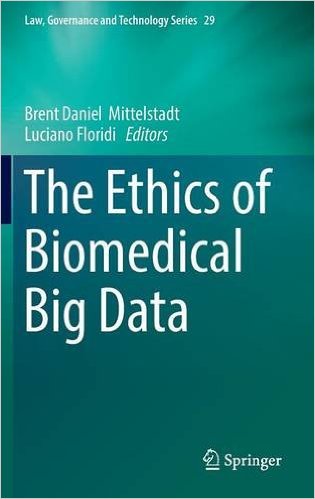
Professor Brent Mittelstadt is a leading academic in data ethics and AI governance at the University of Oxford's Oxford Internet Institute (OII), serving as Professor of Data Ethics and Policy and Director of Research. He coordinates the Governance of Emerging Technologies (GET) programme, focusing on ethics, law, and technology interplay. His work bridges academic research with policy impact, contributing frameworks like 'counterfactual explanations' and fairness metrics ('Conditional Demographic Disparity') used globally. He leads high-profile projects such as Trustworthiness Auditing for AI and A Right to Reasonable Inferences in Advertising and Financial Services. Research interests span AI ethics, medical ethics, technology governance, and non-discrimination law. He has pioneered ethical frameworks addressing algorithmic bias, GDPR compliance, and AI accountability. His work has influenced policy bodies like the UK Information Commissioner’s Office and the European Commission, and is implemented by tech giants such as Google and Microsoft. Awarded O2RB Excellence in Impact Awards (2018, 2021) and PLSC Best Paper (2019) Funded by Wellcome Trust, Sloan Foundation, and others Advisory roles for NHSx, GSK Consumer Healthcare, and regulatory bodies Recent work focuses on AI regulation (EU AI Act), generative AI ethics, and healthcare AI governance. He co-leads the OxonFair toolkit for algorithmic fairness and investigates societal impacts of deepfake proliferation and large language models.