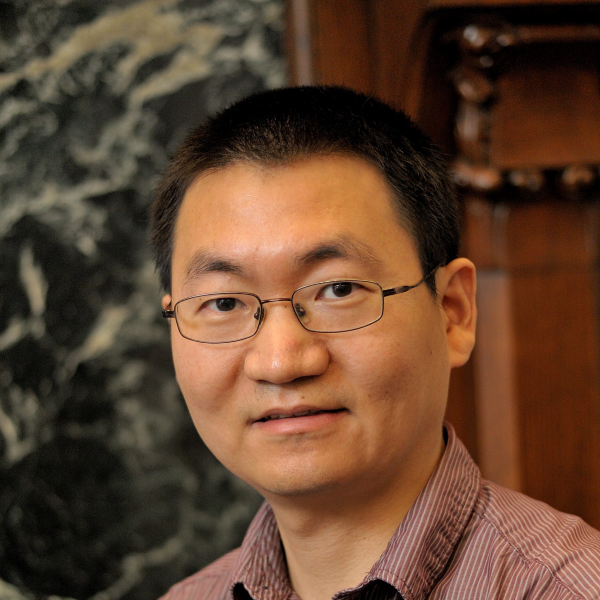
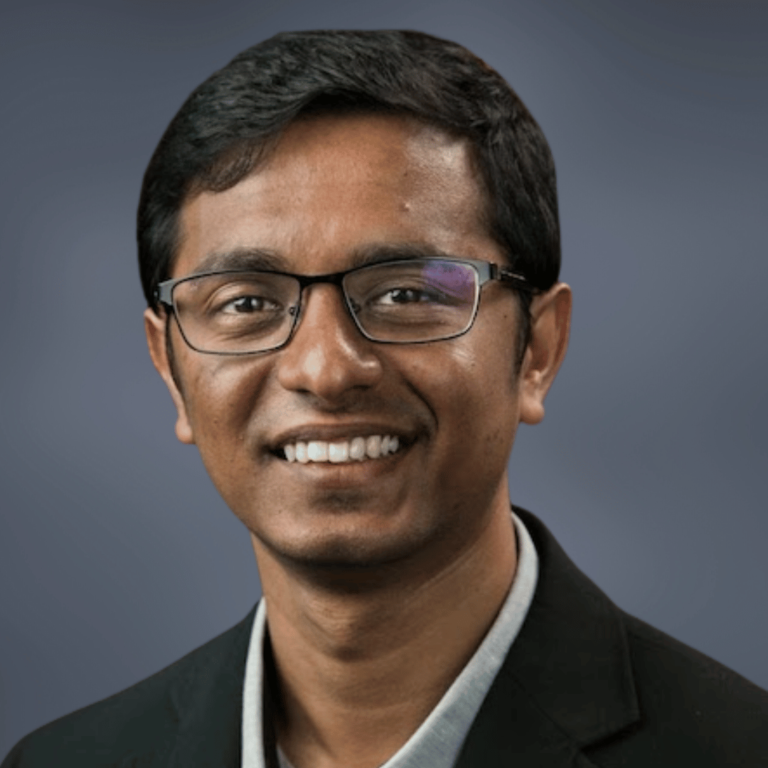
Xiaofeng Shao is a Professor of Statistics & Data Science at Washington University in St. Louis, with a joint appointment in the Department of Economics. He holds a PhD from the University of Chicago and previously served at the University of Illinois at Urbana-Champaign for 18 years. He is a Fellow of the Institute of Mathematical Statistics and the American Statistical Association. His research focuses on econometrics, time series analysis, change-point detection, high-dimensional statistics, nonparametric methods, and functional data analysis. Recent work emphasizes object-valued time series modeling and machine learning applications in high-dimensional and imaging data. Notable contributions include the dependent wild bootstrap method and self-normalization techniques for time series inference. Key awards include Fellowships from leading statistical societies. His publications span over 20 years, addressing topics like change-point detection in climate projections, statistical methods for COVID-19 infection trends, and high-dimensional dependence testing.
Harold D. Chiang is an Assistant Professor in the Department of Economics at the University of Wisconsin-Madison. His research focuses on econometric theory and methods, particularly robust inference techniques for clustered and network data, machine learning applications, and causal inference frameworks like regression discontinuity/kink designs. He employs computational statistics and asymptotic theory to address methodological challenges in high-dimensional and complex datasets.
Axel Gandy is a Professor of Statistics at the Department of Mathematics, Imperial College London. He serves as Director of the EPSRC CDT in Modern Statistics and Statistical Machine Learning , overseeing PhD supervision and advanced statistical training.
Holger Dette is a Professor and Chair Holder of Stochastics (specializing in Statistics) at the Faculty of Mathematics, Ruhr University Bochum. He leads the prominent Group Dette within the Institute of Statistics, overseeing a team of researchers, doctoral students, and administrative staff including Birgit Tormöhlen as team assistant. His research group is deeply integrated within the university's mathematical ecosystem, collaborating with other research groups across algebra, analysis, numerics, and topology. Dette's research spans mathematical statistics with strong applications in real-world problems. His primary interests include optimal experimental design, time series analysis, functional data, change point problems, nonparametric regression, biostatistics, special functions, goodness-of-fit tests, and random matrices . His work bridges theoretical statistics with practical applications, particularly evident in his collaborations with pharmaceutical giants Novartis and Bayer AG in biostatistics, as well as Quasol, a spin-off company from his statistics institute. His recent publications (2024-2025) reveal a research program increasingly focused on high-dimensional and functional data analysis, privacy-preserving statistics, and novel methodological approaches to longstanding statistical problems. Dette's work shows strong interdisciplinary connections, particularly with biomechanics (analyzing joint angles during fatigue phases) and data science (addressing challenges in the era of big data). His research group is actively involved in multiple DFG-funded projects including the newly established 'Small Data' collaborative research center (Sonderforschungsbereich 1597) and the Spatio-temporal Statistics for the Transition of Energy and Transport (Transregio 391). Dette has received significant recognition including the prestigious Humboldt Research Award . His paper 'With Great Power Come Great Side Channels: Statistical Timing Side-Channel Analyses with Bounded Type-1 Errors' achieved second place at the CSAW'24 Applied Research Competition MENA. His research group has also secured multiple significant funding awards from the German Research Foundation (DFG). As an advisor, Dette supervises numerous doctoral and master's students including Pascal Quanz, Marius Kroll, and Carina Graw. His group offers statistical consulting services for scientists and students across bachelor's, master's, and doctoral phases. The group maintains strong industrial partnerships, particularly in biostatistics applications, demonstrating Dette's commitment to translating theoretical statistics into practical solutions for real-world challenges.
Srijan Sengupta is an Associate Professor of Statistics at North Carolina State University (NC State) since 2020. Previously, he served as an Assistant Professor at Virginia Tech from 2016 to 2020. He holds a Ph.D. in Statistics from the University of Illinois at Urbana-Champaign (2016) and degrees from the Indian Statistical Institute (B.Stat and M.Stat with Distinction). His research focuses on statistical methodology for network data, anomaly detection, bootstrap methods, and scalable inference, with applications in healthcare analytics, epidemiology, and cybersecurity. Education: Ph.D. in Statistics, University of Illinois at Urbana-Champaign (2011–2016) M.Stat (1st Division with Distinction), Indian Statistical Institute (2007–2009) B.Stat (1st Division with Distinction), Indian Statistical Institute (2004–2007) Research Interests: His methodological work includes statistical inference in networks, anomaly detection, bootstrap techniques, and scalable algorithms for big data. Applications span social determinants of health, healthcare analytics, space physics, epidemiology, and cybersecurity. He emphasizes interdisciplinary collaborations, particularly in patient safety event analysis and medical device safety. Awards and Grants: Norton Prize for Outstanding PhD Thesis (2015) NIH R01 Grant ($890,055, Principal Investigator) for statistical algorithms in patient safety (2019–2022) Multiple grants for network inference and anomaly detection (NSF, Socially Determined Inc., Virginia Tech Foundation) Advising and Service: Advises over 20 students across PhD, master’s, and undergraduate research programs. Serves as an Associate Editor for Sankhya, Series B and peer reviewer for top journals. Active in university service roles at NC State and Virginia Tech, including faculty hiring committees and curriculum development. Labs and Collaborations: Leads research on statistical network analysis, including projects funded by NIH and NSF. Collaborates with institutions globally on topics like epidemic thresholds, cybersecurity defenses (e.g., phishing detection), and healthcare analytics.
Dr. Robert Lunde is an Assistant Professor in the Department of Mathematics and Statistics at Washington University in St. Louis. He holds a PhD in Statistics and Data Science from Carnegie Mellon University and completed postdoctoral research at the University of Michigan and University of Texas at Austin. His research encompasses statistical inference for network data, resampling methods, and distribution-free inference. Key areas include conformal prediction for network-assisted regression, bootstrap methods for streaming algorithms, and theoretical analysis of network resampling techniques. His work bridges high-dimensional statistics with computational efficiency in network analysis. Dr. Lunde has taught courses including Mathematical Statistics at Washington University and Probability Theory at Carnegie Mellon. His instructional approach emphasizes foundational theory and practical applications of statistical methods.
Dimitris N. Politis is a Distinguished Professor in the Department of Mathematics and the Halicioglu Data Science Institute at the University of California, San Diego. He holds the prestigious Halicioglu Data Science Institute Chancellor's Endowed Chair II position and has been affiliated with UCSD since 1997, progressing from Associate Professor to his current distinguished position. His educational background includes a Ph.D. in Statistics from Stanford University (1990), along with multiple master's degrees in Statistics, Mathematics, and Computer and Systems Engineering from Stanford and Rensselaer Polytechnic Institute. Professor Politis's research focuses on advanced statistical methodologies, with particular expertise in: Time Series and Random Fields analysis Computer-Intensive Methods in Statistics Resampling and Subsampling for Dependent Observations Spatial Statistics and Point Processes Nonparametric Spectral and Probability Density Estimation Model-free Prediction and Regression Information Theory and Signal Processing Econometric Analysis of Financial Time Series His scholarly output includes over 100 journal papers and several influential books, most notably "SUBSAMPLING" (1999), "MODEL-FREE PREDICTION AND REGRESSION" (2015), and "TIME SERIES: A FIRST COURSE WITH BOOTSTRAP STARTER" (2020), which has become a key educational resource in the field. Professor Politis has received numerous prestigious awards and honors: Guggenheim Fellowship (2011) Fellow of the American Statistical Association (2011) Fellow of the Institute of Mathematical Statistics (2004) Distinguished Author Award from the Journal of Time Series Analysis (2020) Econometric Theory Multa Scripsit Award (2013) Tjalling C. Koopmans Econometric Theory Prize (2012) He has been principal investigator on numerous NSF and NIH grants, including current funding for "Computer-intensive methods for dependent and complex data" (NSF DMS 24-13718, 2024). Professor Politis has held significant leadership roles, including serving as Chair of the Faculty Council of the Halicioglu Data Science Institute (2019-2023) and Associate Director (Founding) of the Institute (2018-2024). As a co-founder of the International Society for NonParametric Statistics, Professor Politis has made substantial contributions to the organization of major conferences and workshops in his field, including the First Conference of the International Society for NonParametric Statistics in 2012. His editorial work includes serving as Co-Editor of the Journal of Time Series Analysis since 2013 and Senior Editor for the ACM/IMS Journal of Data Science since 2022.
Professor Chenlei Leng is a faculty member in the Department of Statistics at the University of Warwick. Previously, he held positions at Peking University, the University of Munich, and the National University of Singapore. He earned a bachelor's degree in mathematics from the University of Science and Technology of China and a PhD in statistics from the University of Wisconsin-Madison. His research focuses on developing statistical methodologies for analyzing complex, high-dimensional data, including network analysis, longitudinal data modeling, and machine learning applications. He has organized workshops on statistical network analysis and co-directed the Oxford-Warwick Statistics Centre for Doctoral Training (CDT). Elected Member of the International Statistical Institute Fellow of the Institute of Mathematical Statistics His current research group at Warwick explores network structures and high-dimensional statistical challenges. Advising includes PhD candidates like Yuanhe Zhang and Xinyuan Fan, alongside visiting students from institutions such as Tsinghua University. He actively participates in academic leadership roles, including chairing the Research Section of the Royal Statistical Society. Publications span topics like network models, covariance estimation, and sparse regression, with a focus on methodological advancements in statistics and machine learning.
Min Tsao is a Professor in the Department of Mathematics and Statistics at the University of Victoria (UVic). He holds a PhD from Simon Fraser University. His primary research interests focus on empirical likelihood methodologies, model/variable selection techniques, and group effects in regression models with strongly correlated predictors. He has contributed to advancements in constrained minimum criterion (CMC) for model selection and group least squares regression to address multicollinearity issues. Education: PhD in Statistics, Simon Fraser University Research Interests: Development of extended empirical likelihood frameworks for improved statistical inference Model selection criteria using log-likelihood ratios (e.g., CMC as an alternative to AIC/BIC) Handling multicollinearity through group effects and group least squares regression Applications of saddlepoint approximation in statistical methods Notable Achievements: Recipient of the Canadian Journal of Statistics Award Teaching: Fall 2024: STAT 350 (Mathematical Statistics I) and STAT 353 (Applied Regression Analysis) Spring 2025: Courses to be announced Prof. Tsao’s work bridges theoretical statistics with practical applications, emphasizing robust methodologies for complex regression scenarios.
Robert Lunde is an Assistant Professor in the Department of Mathematics and Statistics at Washington University in St. Louis. He holds a PhD in Statistics and Data Science from Carnegie Mellon University and completed postdoctoral research at the University of Michigan and University of Texas. Lunde's research focuses on statistical inference for complex data structures including networks and time series. His expertise encompasses resampling methods, distribution-free inference, and high-dimensional statistics. Specific interests include conformal prediction for network data, validity of jackknife methods for graphs, and bootstrap techniques for streaming algorithms. His recent publications explore subsampling sparse graphons, bootstrap error analysis for Oja's algorithm, and theoretical foundations for network-assisted regression. Lunde teaches courses in mathematical statistics and probability theory, employing his research expertise in statistical learning and inference methods.
Taisuke Otsu is a Professor of Econometrics at the Department of Economics, London School of Economics and Political Science (LSE), and an affiliated researcher at Keio University's Keio Economic Observatory. His expertise includes nonparametric and semiparametric methods, microeconometrics, causal inference, and structural analysis. He holds a PhD in Economics from the University of Wisconsin-Madison. His research focuses on developing methodologies for causal inference, structural economic models, and high-dimensional data analysis. Notable contributions include advancements in empirical likelihood estimation, nonparametric instrumental variables, and econometric methods for policy evaluation. He has also contributed to game theory applications and network data analysis. Recent work emphasizes causal inference under complex data environments, such as spatial competition models and functional covariates. Otsu collaborates widely, with projects funded by the Keio Economic Observatory, and has published over 70 peer-reviewed articles in top journals like the Journal of Econometrics and Econometric Theory . He teaches courses on econometric analysis, advanced econometrics, and pre-sessional econometrics for graduate students. His academic leadership includes roles at LSE and organizing research initiatives on Big Data and structural econometric models.
Olivier Scaillet is a Full Professor at the Geneva Finance Research Institute (GFRI) of the University of Geneva and holds a senior chair at the Swiss Finance Institute . His academic focus spans Finance , Statistics , and Econometrics , with expertise in Derivatives Pricing , Asset Pricing , Econometric Theory , and Quantitative Risk Management . Education : PhD in Applied Mathematics from University Paris IX Dauphine Leadership : Director of GFRI and Deputy Director (Education) His research includes nonparametric methods , instrumental variable regression , stochastic volatility models , and systemic risk measures . Recent work explores dynamic portfolio optimization , high-frequency jump analysis , and time-varying risk premia in equity and cryptocurrency markets. Professor Scaillet has been recognized with awards for best papers in Journal of Empirical Finance and Banque Privée Espirito Santo , and is a Fellow of the Society of Financial Econometrics . He serves as an associate editor for journals in Econometrics , Statistics , and Finance , and advises BNPParibas research teams in Paris and London.
Fabio Trojani is a Full Professor of Finance at the University of Geneva since 2015, holding the AXA Chair in Socioeconomic Risk of Financial Markets at the University of Turin and serving as a Senior Chair of the Swiss Finance Institute (SFI). He previously held Full Professorships at the University of Lugano (Statistics), University of St Gallen (Finance), and Bocconi University (Adjunct Professor of Finance). Currently, he directs the SFI PhD program and serves as Editor of the Journal of Financial Econometrics since 2019. His research focuses on Asset Pricing , Quantitative Finance , Financial Econometrics , and Statistical Methods in finance. His work bridges theoretical finance with empirical validation , addressing model robustness , volatility timing , and international SDF frameworks . Articles like ‘ Tradable Factor Risk Premia ’ (2024) and ‘ Smart Stochastic Discount Factors ’ (2019) highlight his contributions to factor risk analysis and model-free pricing . Scientific Awards and honors are not explicitly mentioned in the provided text. However, his frequent invitations to speak at conferences like the Financial Econometrics Conference (2024) and ESEM Annual Meeting underscore his influence in the field. As a director of the SFI PhD program and a former faculty member at multiple institutions, he has shaped academic and professional finance education globally.
Azeem M. Shaikh is the Ralph and Mary Otis Isham Professor and Chairman of the Department of Economics at the University of Chicago. He co-directs the Big Data Initiative at the Becker Friedman Institute. His research spans econometric theory, causal inference, and experimental design, with applications to early childhood education and economic mobility. B.S. in Mathematics, Duke University Ph.D. in Economics, Stanford University (2006) His research interests include: Randomization and resampling methods (bootstrap, subsampling) Multiple hypothesis testing and partial identification Design and analysis of experiments with matched pairs Evaluation of social programs like the HighScope Perry Preschool Recent publications focus on: Advances in randomization inference and stratified experiments Ranking methodologies for political parties and neighborhoods Handling imperfect compliance in experimental settings Software tools like csranks for statistical inference Scientific awards include: Dennis J. Aigner Award for Applied Econometrics Hoover National Fellowship Alfred P. Sloan Fellowship Elected Fellow of the Econometric Society (2018) Elected Fellow of the International Association for Applied Econometrics (2018) Grants from the National Science Foundation, Stanford Institute for Economic Policy Research, and the Hoover Institution supported his work. He held editorial positions at Journal of Political Economy , Econometrica , and Journal of Econometrics .
Professor Jean-Marie Dufour holds the William Dow Chair in Economics at McGill University's Department of Economics and is a Research Professor at the Halle Institute for Economic Research (IWH). His research focuses on econometrics, macroeconomics, finance, and public finance, with a particular emphasis on dynamic models, policy analysis, and financial asset pricing. He has held prestigious roles such as Bank of Canada Research Fellow and Fellow of the Econometric Society. Education: PhD in Economics (University of Chicago, 1979), M.Sc. Mathematics (Université de Montréal, 1973) Affiliations: CIRANO, CIREQ, and invited researcher at IWH Major awards include the Killam Prize (2006), Officer of the Order of Canada (2008), and Fellowships from the Royal Society of Canada and the Econometric Society. His work bridges theoretical econometrics with applied macroeconomic and financial analysis. Editorial roles include Associate Editorships at Econometrica and Journal of Econometrics . His research outputs span structural equation modeling, causality, and volatility analysis in financial markets.