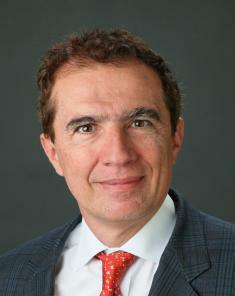
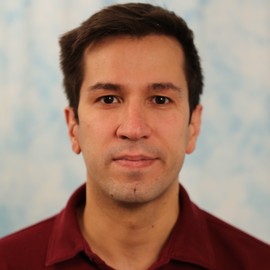
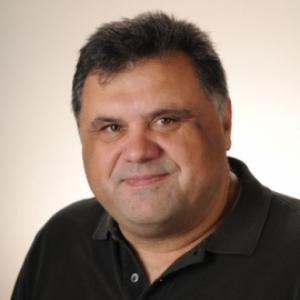
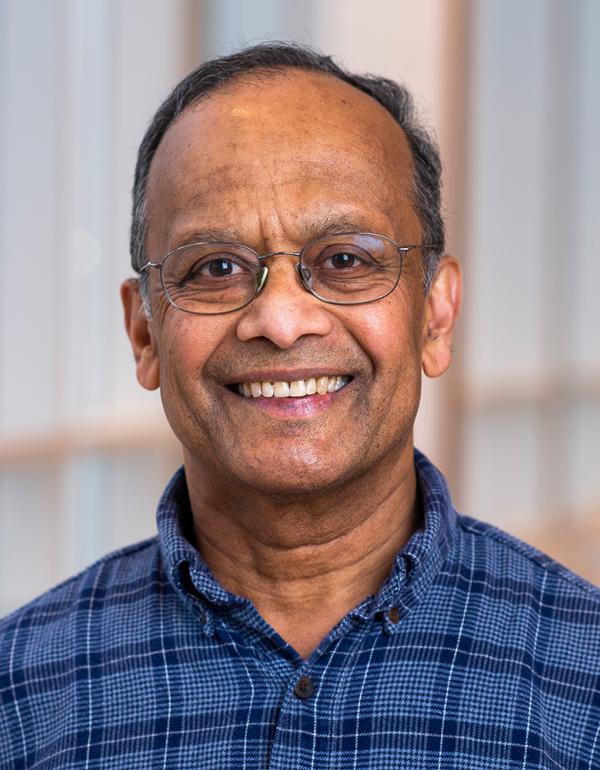
Giovanni De Micheli is a Professor of Electrical Engineering and Computer Science at EPF Lausanne, Switzerland. He also serves as Director of the Integrated Systems Centre and the Institute of Electrical Engineering at EPFL, and chairs the Scientific Committee of CSEM in Neuchatel. Previously, he held academic roles at Stanford University for 18 years, including Full Professor, Associate Professor, and Assistant Professor in the Department of Electrical Engineering. His research spans synthesis of digital circuits, hardware/software co-design, low-power design, and Networks on Chip (NoC) technology. 2003: IEEE Emanuel Piore Award 2000: Golden Jubilee Medal of the IEEE CAS Society 2000: ACM Fellow 1994: IEEE Fellow 1990: IEEE/CS Distinguished Service Award 1988: NSF Presidential Young Investigator Award His seminal contributions include pioneering C-based synthesis and Boolean matching algorithms for digital circuits, foundational work in dynamic power management using stochastic control, and the development of Network-on-Chip (NoC) technology. His publications, such as "Networks on Chips: A New SoC Paradigm" and "Dynamic Power Management for Portable Systems" , have shaped modern SoC design practices. With over 400 technical articles, 9 books, and an H-index of 56, his work remains highly influential.
Ruben Martins is an Assistant Professor at Carnegie Mellon University's School of Computer Science and serves as the program director of the Master of Science in Computer Science (MSCS) . His research focuses on the intersection of constraint programming, program synthesis, analysis, and verification, with recent work aiming to make formal methods tools more accessible through automated reasoning. Ruben earned his Ph.D. with honors from the Technical University of Lisbon, Portugal (2013) , followed by postdoctoral research at the University of Oxford (2014-2015) and UT Austin (2015-2017) . Research Interests : Ruben's work bridges constraint programming and program synthesis , with applications in software verification , optimization , and automated reasoning . He has developed award-winning tools like Open-WBO , a modular MaxSAT solver that has won gold medals in international competitions. His publications span top-tier venues such as POPL , PLDI , FSE , SAT , and CP , often addressing real-world challenges from program analysis to network security. Scientific Awards include: Distinguished Paper Award at PLDI 2018 Distinguished Paper Award at FSE 2021 Distinguished Paper Award at SAT 2022 Gold medals for Open-WBO in MaxSAT competitions Teaching & Advising : Ruben mentors Ph.D., Master’s, and undergraduate students in research projects related to program synthesis, formal methods, and constraint solving. He teaches courses such as Bug Catching: Automated Program Verification and Advanced Topics in Logic: Automated Reasoning and Satisfiability , emphasizing hands-on experience with tools like Why3. His advising spans topics from AI-driven program repair to network protocol verification , fostering collaboration across disciplines.
Wilson W. Wong is a Professor in the Department of Biomedical Engineering at Boston University's College of Engineering. His research focuses on synthetic biology and engineering cellular therapies, particularly CAR T and CAR-NK cells for cancer, diabetes, and vaccine applications. He leads the Wilson Wong Lab, developing genetic circuits for precise control of cell functions through molecular, chemical, and optogenetic tools. Key achievements include FDA-approved drug-gated circuits, light-inducible recombinases, and saRNA platforms for reduced immunogenicity. Education: PhD in Chemical Engineering (UCLA), B.S. in Chemical Engineering (UC Berkeley). Awards include the Allen Distinguished Investigator Award (2022), NAE German-American Frontiers Invitee (2021), and NIH Director’s New Innovator Award (2013). He collaborates with institutions like MIT and Harvard on lung regeneration projects through the Allen Distinguished Investigators program. Research Highlights: Logic-gated CAR therapies, optogenetic cell patterning, and saRNA-based vaccines Lab Members: Supervises students including Cristina, Huishan, Josh, and Justin Letendre Grants: Allen Foundation, NSF CAREER Award, NIH funding His work bridges synthetic biology with clinical translation, emphasizing spatiotemporal control of cell functions for regenerative medicine and oncology. Recent breakthroughs include multiplex light-inducible circuits and saRNA modifications enhancing therapeutic efficacy.
Stefano Nichele is a Professor at the Department of Computer Science and Communication, Østfold University College, Norway. He holds additional roles as Professor II at OsloMet and has served in leading academic positions since 2014. His research focuses on Artificial Life (ALife), Neuro-Inspired AI, and Machine Learning, with a particular emphasis on cellular automata, reservoir computing, and neuro-inspired substrates. Nichele co-directs the Østfold AI (ØAI) hub and is an active member of IEEE, ELLIS, and the Norwegian AI Research Consortium (NORA). He earned his PhD in Computer Science from NTNU (2015) and completed his MSc at the University of Insubria, Italy. His work bridges computational systems and biological substrates, exploring criticality in neural networks and quantum-evolutionary algorithm interactions. He has received prestigious awards, including the Young Research Talent grant (2019) and the Distinguished Early-Career Investigator award (2024). Nichele’s research spans theoretical and applied domains, with over 50 publications on cellular automata dynamics, neuro-inspired robotics, and AI ethics. His recent projects include studying in vitro neural networks for computational capacity assessment and developing frameworks for body-brain co-evolution in soft robotics. Education: PhD in Computer Science, NTNU (2015) MSc in Computer Science, University of Insubria (2009) Awards: Young Research Talent grant (2019) Distinguished Early-Career Investigator (2024) Grants & Roles: Co-director of the Østfold AI hub Board member of NORA (Norwegian AI Research Consortium) Labs & Collaborations: Focus on neuro-inspired AI systems and unconventional computing Partnerships with institutions like Simula Metropolitan and the International Society for Artificial Life (ISAL)
Bryan Daniels is an Assistant Professor at Arizona State University's School of Complex Adaptive Systems . He is affiliated with the ASU-SFI Center for Biosocial Complex Systems , Biosocial Complexity Initiative , and holds the title of Senior Global Futures Scientist . Educational Background: Ph.D. in Theoretical Physics from Cornell University. Research Interests: Daniels focuses on predictive modeling of collective behavior in biological systems, exploring how functional aggregates emerge from heterogeneous networks. His work spans computational biology, network science, and dynamical systems. Key Article Trends: Recent publications emphasize collective behavior in biological systems, network dynamics, criticality, and control strategies. Topics range from neural networks and Boolean models to animal group behavior and conflict analysis. Teaching: He teaches courses like Fundamentals of CAS Science and Applied Complex Adaptive Systems at the graduate level. Labs & Affiliations: Leads the Collective Logic Lab and contributes to interdisciplinary research through multiple ASU-SFI collaborations.
Susanna Röblitz is a Professor at the Department of Informatics within the Computational Biology Unit at the University of Bergen. Her research focuses on mathematical modeling of high-dimensional dynamical systems in life sciences, including molecular conformation dynamics, systems biology, and pharmacology. She specializes in rare event sampling, meshfree methods, clustering algorithms, and uncertainty quantification, with a particular emphasis on oscillatory systems such as hormonal rhythms. Her teaching includes courses such as BINF100 Introduction to Bioinformatics and BINF305 Systems Biology . Her research has been supported by grants from the Research Council of Norway and Nordforsk, including projects like Markov State Models for Cellular Phenotype Switching and RAS-TOOLS . Key research areas include hormonal regulation (e.g., menstrual cycle modeling), gene regulatory networks, and applications in pharmacokinetics and aquaculture. Recent work highlights include the development of Markov state models for gene networks and spectral clustering techniques for analyzing complex biological systems. She has supervised students such as Anna Kristina Fredheim Grandma, whose master’s thesis focused on pharmacokinetic modeling in personalized dosing. Her interdisciplinary collaborations span computational biology, veterinary medicine, and clinical pharmacology.
Hideyuki Suzuki is a Professor at the Department of Information and Physical Sciences , Graduate School of Information Science and Technology , Osaka University , where he has been employed since April 2016. His research spans nonlinear dynamics , hybrid systems , and many-body dynamics , with applications to power systems , brain modeling , and epidemic networks . 2001 : Ph.D. in Mathematical Engineering and Information Physics, University of Tokyo 1998 : M.Eng. in Mathematical Engineering and Information Physics, University of Tokyo 1996 : B.Sc. in Mathematics, University of Tokyo His research interests focus on nonlinear dynamical systems , particularly those with discontinuities or large-scale interactions , such as chaotic billiards , hybrid systems , and spatio-temporal chaos . He explores computational applications in machine learning (e.g., chaotic Boltzmann machines ), epidemiology (e.g., vaccine allocation models ), and power grid stability . The 15 most recent articles highlight his work in photonic computing , nonlinear sampling algorithms , and chaotic dynamics in engineering and biology . Key trends include interdisciplinary applications of nonlinear mathematics to renewable energy , neuroscience , and epidemic spread . Scientific awards include: 2022 Osaka University Prize 2018 JSIAM Best Paper Award for Hamiltonian Monte Carlo (2017) He leads the Nonlinear Mathematics Course laboratory, which accepts graduate and undergraduate students. His team investigates hybrid dynamical systems , chaotic computation , and real-world modeling in fields like traffic dynamics and epidemic networks . Research is supported by grants from JST CREST and ALCA-Next programs.
Spyros Reveliotis is a Professor at the Stewart School of Industrial & Systems Engineering within the College of Engineering at Georgia Institute of Technology. His work bridges theoretical advancements with practical applications in automation and control systems. Education : PhD in Industrial Engineering (University of Illinois at Urbana-Champaign), B.Sc. in Electrical Engineering (National Technical University of Athens), M.Sc. in Computer Systems Engineering (Northeastern University) Reveliotis focuses on discrete event systems theory , emphasizing control of flexible automation and traffic management for multi-agent systems. His research integrates machine learning and Markov decision processes to optimize scheduling and coordination in complex environments like robotics and manufacturing systems. Recent trends in his publications address deadlock avoidance , min-time coverage in constrained spaces, and liveness enforcement for transport systems. These works often leverage combinatorial optimization and graph theory for scalable solutions. Scientific Awards : IEEE Fellow As a core faculty member of the Institute for Robotics and Intelligent Machines (IRI) , Reveliotis contributes to interdisciplinary robotics research. His affiliations with professional societies like INFORMS reflect his impact on operations research and automation fields.
Sheldon Andrews is an Associate Professor of Software Engineering and IT at École de technologie supérieure (ETS) in Montreal, Canada, with an adjunct appointment in Computer Science at McGill University. He is a member of the Multimedia Research Laboratory and has established himself as a leading researcher in physics-based computer animation and simulation. Andrews earned his Ph.D. in Computer Science from McGill University (2015), MASc in Electrical and Computer Engineering from the University of Ottawa (2007), and B.Eng. in Computer Engineering from Memorial University (2004). His academic journey reflects a strong foundation in both theoretical and applied aspects of computer engineering and graphics. His research focuses on real-time physics simulation, articulated mechanism simulation, 3D character animation, motion capture, computational contact mechanics, and virtual environment modeling. Andrews' work bridges the gap between theoretical physics and practical applications in computer graphics, with particular emphasis on creating physically plausible animations that can run in real-time. His research has significant implications for video games, virtual reality, and robotics applications. Analysis of his recent publications (2022-2025) reveals a strong trend toward increasingly sophisticated physics-based character animation techniques, with growing integration of machine learning approaches. His work spans multiple subfields including collision detection, deformable object simulation, vehicle physics, and reinforcement learning for character control, demonstrating both breadth and depth in his research program. VRIPHYS 2012 best paper award for 'Policies for goal directed multi-finger manipulation' Andrews has advised numerous graduate students through their PhD and Master's degrees, with many going on to positions at major companies like DNEG, CM Labs Simulations, and AMD. His professional service is extensive, having served as Program Chair for SCA 2025 and MIG 2024, Conference Chair for I3D 2019, and on program committees for major conferences including SIGGRAPH, SCA, and MIG for multiple years. He has also been active in the Montreal SIGGRAPH Chapter as Secretary from 2018-2021. As a core member of the Multimedia Research Laboratory, Andrews collaborates with researchers across multiple disciplines to advance the state of the art in physics-based simulation. His lab maintains strong industry connections, including a visiting researcher position at Roblox Research, ensuring that theoretical advances translate to practical applications in gaming and virtual environments.
Silvia Holler is a Researcher (RTD-A) at the Department of Cellular, Computational, and Integrative Biology (CIBIO) at the University of Trento. She specializes in biochemistry, biotechnology, and synthetic biology with a focus on enzymology, catalysis, and structural biology. Her work spans experimental and computational studies of protocells, droplet-based systems, and self-organizing soft matter. Teaching responsibilities include co-teaching the Biochemistry course at CIBIO, where she collaborates with scholars like Giovanni Piccoli and Martin Michael Hanczyc. The course covers foundational topics in biochemistry, enzymology, and molecular structures with practical skills in chromatography and enzymatic kinetics. Research interests emphasize artificial life systems, droplet engineering, and the physics of biological organization. Key themes include protocell formation, compartmentalized biochemistry, and ethical implications of synthetic biology innovations. Recent work explores self-organized patterns in soft matter, active matter dynamics, and computational modeling of multi-phase systems. Publications focus on droplet microfluidics, vesicle interactions, and agglomeration phenomena across scales. Collaborative efforts include editorial roles for artificial life conference proceedings and interdisciplinary projects combining biophysics with materials science. No scientific awards were explicitly mentioned in the provided materials. Her research lab activities are embedded within CIBIO's facilities, focusing on experimental setups for droplet-based synthetic biology and computational simulations of complex systems.
Pedro Orvalho is a Research Associate in the Department of Computer Science at the University of Oxford, working with Professor Marta Kwiatkowska on the FUN2MODEL ERC project. His research bridges theoretical computer science with practical applications in software engineering and programming education. His educational background includes: PhD in Computer Science and Engineering (2025) from Instituto Superior Técnico, Universidade de Lisboa MSc in Information Systems and Computer Engineering (2019) from Instituto Superior Técnico BSc in Information Systems and Computer Engineering (2017) from Instituto Superior Técnico Orvalho's research spans Artificial Intelligence, Automated Reasoning, Formal Methods, and Program Repair, with significant contributions to programming education tools. His work integrates formal methods with machine learning techniques to develop novel approaches for program verification and repair, particularly focused on introductory programming assignments. His scientific achievements have been recognized with prestigious awards: Vencer o Adamastor (VoA) - 3rd Edition (2025) ELISE Mobility Grant (2024) COST Travel Grant (2022) Excellence in Teaching IST Awards (2021 and 2024) ACM SIGSOFT Distinguished Paper Award (ESEC/FSE 2021) FCT PhD Scholarship (2020-2024) With five years of teaching experience at Instituto Superior Técnico, Orvalho has developed educational tools like GitSEED and MENTOR that bridge his research with practical classroom applications. His research has been supported by multiple grants including the ERC FUN2MODEL project and FCT PhD Scholarship, demonstrating both academic and practical impact. He maintains active collaborations with researchers from Czech Technical University in Prague, Carnegie Mellon University, and industry partners like OutSystems, contributing to an international research network focused on software reliability and educational technology.
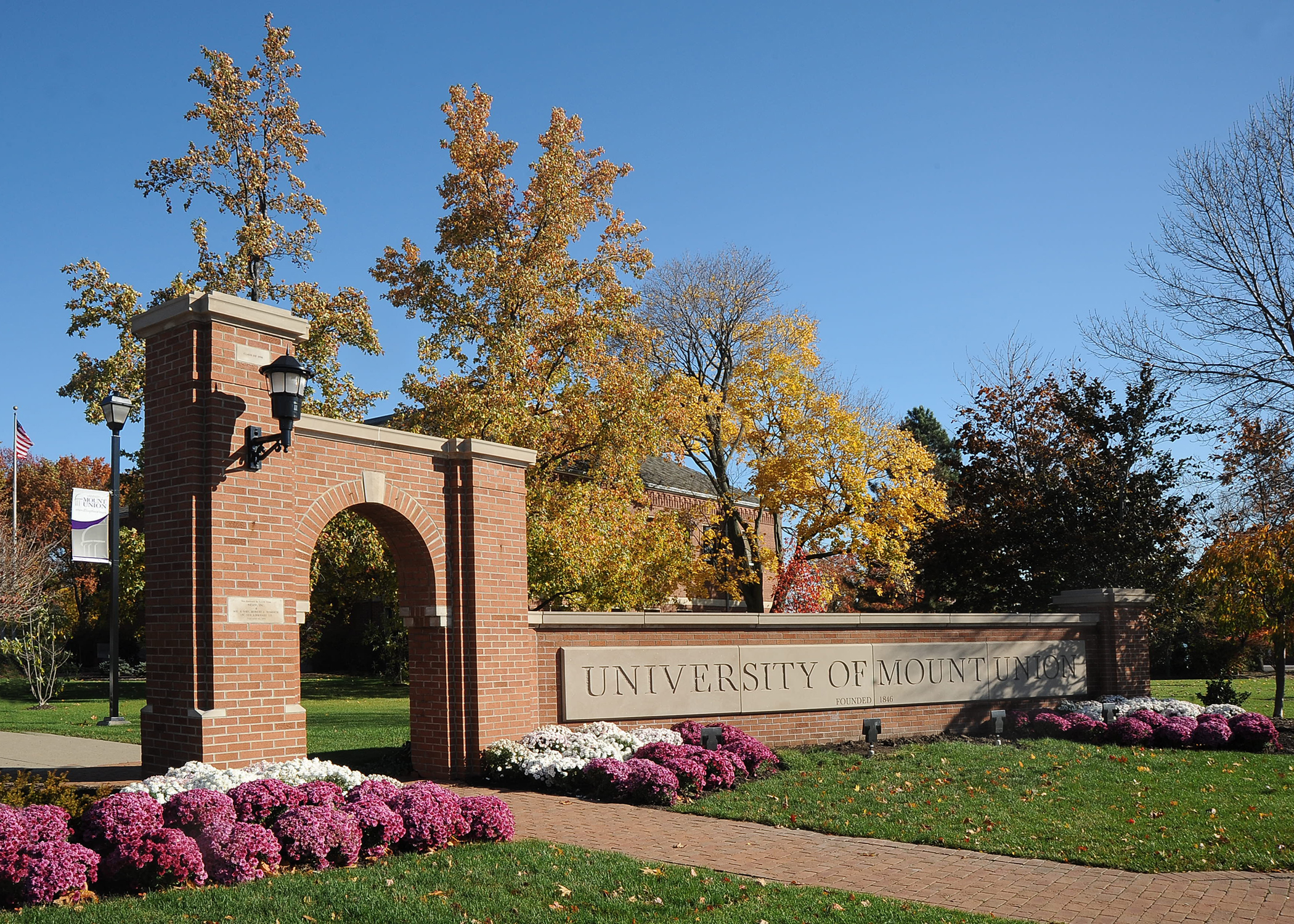
Dr. Colin Campbell serves as an Associate Professor of Physics and Astronomy within the Biochemistry, Chemistry, and Physics Department at the University of Mount Union. He also coordinates the university's data science program, bridging physics and interdisciplinary data-driven research. His teaching portfolio includes foundational courses such as General Physics II, Modern Physics, Thermodynamics and Statistical Mechanics, and Data Science Fundamentals, emphasizing active student engagement and collaborative learning environments. Campbell's research centers on complex systems and network science, applying computational and theoretical physics to diverse domains including ecology, cellular biology, and neuroscience. He investigates phenomena like electrical grid failures, immune system dynamics, and ecological community resilience through network topology and graph theory. His work often involves modeling biological networks using Boolean dynamics to understand emergent behaviors and system stability. Analysis of Campbell's recent publications (2015-2024) reveals a consistent focus on network-based modeling across disciplines. Key themes include plant-pollinator network robustness against species invasions, control strategies for complex networks, and medical physics applications like proton beam therapy optimization. His interdisciplinary collaborations span ecology, neuroscience, and oncology, highlighting the unifying power of network science in solving complex real-world problems. While no specific scientific awards are listed in available sources, Campbell actively mentors undergraduate students, co-authoring publications with them on topics ranging from ecological networks to medical physics. He champions active learning and maintains an 'open door' policy, fostering strong student-faculty interactions both inside and outside the classroom. The Biochemistry, Chemistry, and Physics Department at Mount Union provides research opportunities through faculty-led projects and student organizations. Campbell encourages student involvement in computational physics and data science initiatives, promoting a collaborative and supportive academic environment where students can explore their interests.
Rajarshi Roy is a Professor at the Institute for Physical Science and Technology (IPST) at the University of Maryland. His research focuses on nonlinear dynamics, chaos theory, and their applications in optical systems. He explores phenomena such as synchronization patterns, machine learning-driven network analysis, and quantum-optical systems. His experimental work includes studies on optoelectronic oscillators, delay-coupled systems, and photonic random number generation. His research interests span nonlinear dynamics , chaos theory , and optical systems . Key areas include synchronization of coupled oscillators, chimera states, and machine learning applications in network inference. He also investigates noise effects in photonics and quantum technologies, such as entanglement quality estimation in fiber systems. His recent work emphasizes combining machine learning with nonlinear dynamics to analyze complex systems. For instance, his studies on delayed dynamical systems and neuromorphic computing showcase innovations in network inference and reservoir computing. Experimental validations using optoelectronic setups highlight his interdisciplinary approach. Roy’s articles explore cutting-edge topics like entropy harvesting in photon-counting systems, topological control of synchronization, and suppression of optical scattering via chaos. His contributions bridge fundamental nonlinear science with technological applications in photonics and information systems.
Prof. John Franco is a Professor of Computer Science at the University of Cincinnati, serving as Director of the National Center of Academic Excellence in Cyber Operations. His roles include Editor-in-Chief of the Journal on Satisfiability, Boolean Modeling, and Computation , and Vice Chair of the SAT Association. He has held visiting scientist positions at institutions in Germany (FAW Ulm, Universität Paderborn) and spent sabbatical leave at Fort George G. Meade. Education: Ph.D. in Computer Science, Rutgers University, 1981 M.S. in Electrical Engineering, Columbia University, 1971 B.S. in Electrical Engineering, City College of New York, 1969 Research Interests: Franco’s work focuses on satisfiability (SAT) algorithms, formal verification, cybersecurity, and computational complexity. He has pioneered probabilistic analysis of SAT-solving heuristics and contributed to the integration of SAT techniques into network security and formal methods. His research bridges theoretical computer science with practical applications in cyber defense and algorithm optimization. Grants & Funding: Franco has secured over 18 grants from agencies like the NSA, NSF, and ONR. Notable projects include Satisfiability Algorithm Research (NSA grants since 1999), cybersecurity curriculum development (NSA 2018–2022), and Ohio Cyber Range initiatives. He has led or collaborated on federal and state-funded projects totaling millions in funding. Labs/Teams: Directs the National Center of Academic Excellence in Cyber Operations, a collaborative effort with local defense contractors. His work involves partnerships with institutions like Wright State Applied Research Corporation and Riverside Research Institute.
Eugene Stark is a Professor in the Department of Computer Science at Stony Brook University, affiliated with the College of Engineering and Applied Sciences. His work focuses on theoretical foundations and practical applications in systems and programming languages. Educational Background: He earned his Ph.D. in Computer Science from the Massachusetts Institute of Technology (MIT) in 1984. Research Interests: His primary areas include Operating Systems, Programming Language Semantics, Concurrency Theory, Distributed Algorithms Verification, and Functional Programming Languages. He explores formal methods to ensure correctness and efficiency in complex systems, leveraging category theory for rigorous semantic frameworks. His work often addresses challenges in indeterminate dataflow networks and probabilistic models. Publications Overview: Stark’s recent articles emphasize categorical structures (e.g., residuated transition systems, bicategories) and probabilistic I/O automata. They reflect a trajectory from foundational theory to tool development for concurrent system analysis. Academy of Teaching Scholars award Department Award for Undergraduate Teaching (2000) Advising & Grants: No formal advisees are listed in current records. His research projects include the Probabilistic I/O Automata framework, CARA Infusion Pump specifications, and SAMSON Network Memory Server initiatives. Grants and funding details are not explicitly mentioned. Labs/Teams: He is associated with the Laboratory for 體魯 Institute of (1988), though the lab name’s full English title remains unclear. Collaborations likely extend to interdisciplinary projects involving formal methods and systems engineering.