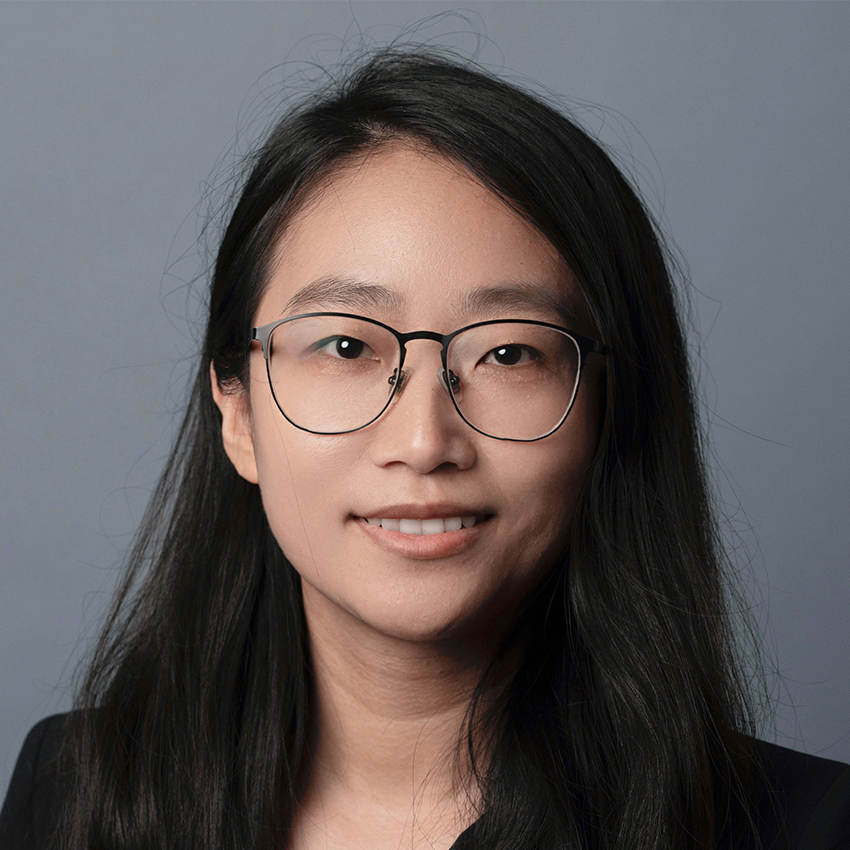
Lei Wang is an Assistant Professor of Bioengineering (College of Engineering) and Biology (College of Science) at Northeastern University since January 2024. Her research focuses on mammalian synthetic biology, microfluidics, and organ-on-a-chip technology for biomedical applications. Ph.D. in microfluidics and biosensors Postdoctoral training in genetically programming hiPSCs at MIT Biological Engineering Department Her research interests include: Designing genetically encoded microRNA sensors for live cell-state monitoring Bioengineering cell fate transitions for regenerative medicine and cancer therapy Developing organ-on-a-chip models with patient-specific hiPSCs Creating ultra-sensitive biosensors for pathogen detection Integrating synthetic biology with microfluidics Advancing automated, logic-driven cellular differentiation Her recent publications show a strong trend in synthetic biology tools for cell fate engineering, with applications in cancer therapy, infectious disease diagnostics, and tissue modeling. Notable work includes programmable microRNA sensors for cell state transitions and microfluidic systems for dynamic hypoxia studies. Scientific Awards: NIH Trailblazer Award (2024): $673,600 for programmable RNA sensors in targeted therapies Additional Contributions: Co-inventor on patents for multi-input miRNA sensing and capacitive pathogen detection Developed tumor-on-chip models and ultra-sensitive biosensors Research supported by collaborations with MIT and Northeastern labs Lei Wang Lab focuses on humanized disease models and cell fate engineering
Mohammad Sadoghi is a Professor in the Department of Computer Science at University of California, Davis, where he leads the Exploratory Systems Lab. His research spans database systems, distributed computing, and blockchain technologies with over 54 publications from 2007-2025 and more than 900 citations. His primary research domains include: Distributed database transactions Byzantine fault tolerance Consensus protocols Event processing systems Blockchain applications Database indexing techniques Prof. Sadoghi's publication trajectory shows evolution from foundational work on boolean expression indexing and event processing to cutting-edge research on blockchain consensus mechanisms. His recent work (2023-2025) demonstrates significant contributions to understanding BFT protocols, with publications in top venues like VLDB, EuroSys, and IEEE TKDE. His research bridges theoretical analysis with practical implementations, particularly focusing on performance optimization and security in distributed environments. His notable recognition includes: ACM Senior Member (2020) Prof. Sadoghi has advised multiple doctoral students who have become active researchers in distributed systems, including Suyash Gupta and Thamir M. Qadah. His lab has secured research funding for projects spanning database engines, consensus protocols, and blockchain infrastructure. The Exploratory Systems Lab maintains strong industry and academic collaborations worldwide, with recent work focusing on edge-cloud consensus applications and high-performance data management systems.
Venkat Anantharam is a Professor in the Department of Electrical Engineering and Computer Sciences at the University of California, Berkeley . His research spans Information Theory , Network Security , Coding Theory , and Stochastic Processes , with a focus on theoretical foundations and applications in communication systems, game theory, and data compression. He has supervised numerous PhD and Master’s students , including Soham Phade, Payam Delgosha, and Sudeep Kamath, and hosted postdoctoral fellows such as Lei Yu and Charles Bordenave. His recent publications address advanced topics like hypercontractivity in Boolean functions, universal compression of graphical data, and game-theoretic models for security. Articles from 2019-2021 highlight work on entropy power inequalities, error bounds for Markov chains, and distributed compression techniques. Venkat's research often bridges theoretical insights with practical applications, including LDPC decoders, network coding, and risk-sensitive control.
Enrico Tronci is a Full Professor in the Department of Computer Science at Università degli Studi di Roma La Sapienza , Italy. His research focuses on model checking, formal verification, and synthesis of cyber-physical systems, with applications to mission-critical and safety-critical domains such as space systems, smart grids, and healthcare. He leads the Model Checking Lab (MCLab) and has coordinated numerous national and international research projects funded by organizations including the European Community (EC), European Space Agency (ESA), and Italian Ministry of University and Research (MUR). Research Highlights : Automatic control software synthesis from closed-loop specifications Model checking algorithms for hybrid and stochastic systems Technology transfer in sectors like energy, transportation, and aerospace Teaching : Undergraduate: Software Engineering (Fall 2024) Graduate: Automatic Verification of Intelligent Systems (Fall 2024), Verification and Validation of Intelligent Systems (Spring 2025) Scientific Awards : Recipient of the IBM-Italia 1987 prize for best thesis in Artificial Intelligence Publications Trends : 2024: Scaling up model checking for cyber-physical systems via HPC 2023: Hormonal impact on behavior and fault-tolerant sensor deployments 2021-2022: In silico clinical trials, smart grid management, and scenario enumeration 2020: AI-guided diabetes patient modeling and forensic psychiatry applications Software Tools : QKS (Quantized Kontrol Synthesizer) NashMV (MAD systems verification) CMurphi (Hybrid systems model checker) FHP-Murphi (Probabilistic verification) BSP (Boolean symbolic programming)
Michael Margaliot is a Professor of Electrical Engineering and incumbent of the Systems and Control Chair at Tel Aviv University's School of Electrical and Computer Engineering. His research focuses on dynamical systems, control theory, and systems biology, with specialized interests in stability analysis of switched systems, Boolean networks, compound matrix applications, and ribosome flow modeling. His work bridges theoretical control concepts with biological applications, particularly in mRNA translation dynamics. Recent publications demonstrate consistent focus on: Extensions of contraction theory (k-contraction) Cooperative dynamical systems Matrix compound methodologies Ribosome flow modeling Networked control systems He maintains active collaborations with researchers globally and will teach a specialized course on The Ribosome Flow Model in 2025.
Sebastian Dalleiger is an Assistant Professor at the Division of Theoretical Computer Science, Kungliga Tekniska Högskolan (KTH Royal Institute of Technology). His research focuses on theoretical foundations of machine learning, data mining, and graph theory, with particular expertise in matrix factorization, pattern discovery, and hypergraph analysis. Current affiliation: KTH Royal Institute of Technology Department: Theoretical Computer Science Email: sdall@kth.se His recent work explores federated learning architectures, non-negative matrix factorization, and structural analysis of stochastic block models across multiple graphs. He develops algorithms combining proximal optimization with privacy-preserving techniques, addressing challenges in distributed data analysis. Publications demonstrate interdisciplinary applications in network science, information theory, and computational geometry. Key contributions include novel frameworks for Ollivier-Ricci curvature in hypergraphs and sequential false discovery control for pattern mining.
Wei Zhang, PhD is Professor of Cancer Biology and Professor of Biostatistics and Data Science (Public Health Sciences) at Wake Forest University School of Medicine . He directs the Wei Zhang Lab , where his team conducts pioneering research in cancer genomics, precision oncology, and systems biology, with a special focus on glioma and other solid tumors. Education: BS, 1985 MS, University of Texas MD Anderson Cancer Center, 1990 PhD, University of Texas MD Anderson Cancer Center, 1992 Research interests span genomic profiling , discovery of oncogenes and tumor suppressor genes (e.g., MIIP), miRNA regulatory networks , and mathematical modeling of gene-regulatory systems using Probabilistic Boolean Networks and MIRACLE algorithms. His group integrates wet-lab cancer biology with advanced bioinformatics to identify actionable biomarkers and therapeutic targets. Recent publications (2011–2018) reveal a consistent emphasis on integrative analyses of large cancer genomics datasets (notably TCGA), uncovering germline and somatic drivers of tumorigenesis, elucidating miRNA-mediated control of epithelial-to-mesenchymal transition (EMT) and DNA-damage response, and translating these findings into predictive markers for chemotherapy response and patient survival. Scientific contributions include: Discovery and functional characterization of the tumor suppressor gene MIIP Identification of miR-506 as a key EMT-inhibitory miRNA in ovarian cancer Demonstration of BRCA2 mutation impact on ovarian cancer prognosis Elucidation of POLE mutation and PD-L1 co-occurrence in lung adenocarcinoma Dr. Zhang is actively involved in graduate education through the Cancer Biology PhD Program and Biomedical Engineering PhD Program , mentoring trainees at the intersection of cancer biology, genomics, and computational science. His laboratory is supported by the National Foundation for Cancer Research Center for Cancer Systems Informatics and multiple NIH and foundation grants. The Wei Zhang Lab is located within the Wake Forest Comprehensive Cancer Center ecosystem, providing access to cutting-edge genomics cores, bioinformatics resources, and collaborative clinical networks.
Jürgen Dassow is a Professor for Theoretical Computer Science at the Faculty of Computer Science, Otto-von-Guericke-University of Magdeburg, Germany. He has held this position since 1992 and previously served as Rector of the university from 1993 to 1996. His academic career spans over five decades, beginning with studies in mathematics at the University of Rostock in the 1960s. Professor Dassow's research focuses on formal languages, regulated rewriting, Lindenmayer systems, grammar systems, syntactical complexity, and biocomputing . His work has significantly contributed to theoretical computer science, particularly in the mathematical foundations of language theory and automata. He has maintained a prolific publication record with over 200 scientific papers and 4 monographs, including the influential 1989 work 'Regulated Rewriting in Formal Language Theory' co-authored with Gheorghe Păun. His recent research (2020-2023) continues to explore operational complexity, closure-involution operations, contextual grammars, and networks of evolutionary processors. These publications demonstrate his sustained engagement with cutting-edge theoretical problems in computer science. Professor Dassow has also been instrumental in organizing the international Descriptional Complexity of Formal Systems (DCFS) workshop series and has edited numerous proceedings volumes. Professor Dassow has been actively involved in the academic community through approximately 100 lectures at conferences and universities across 18 countries. His work bridges theoretical computer science with biological computing models, reflecting the interdisciplinary nature of modern theoretical research. His research group at the Otto-von-Guericke-University continues to advance knowledge in formal language theory, with recent publications addressing contemporary challenges in descriptional complexity and bio-inspired computational models. Professor Dassow's career exemplifies long-term dedication to advancing the theoretical foundations of computer science while maintaining relevance to emerging computational paradigms.
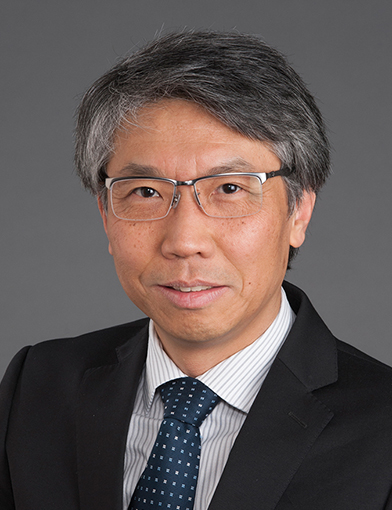
Daniel W. C. HO is a Chair Professor of Applied Mathematics and Associate Dean (Undergraduate Education) at the College of Science, City University of Hong Kong. He has been with City University of Hong Kong since 1989, having previously served as a Research Fellow at the University of Strathclyde, Glasgow, UK from 1985 to 1988. Prof. Ho received first class honours in BSc, MSc, and PhD degrees in mathematics from the University of Salford, Greater Manchester, UK in 1980, 1982, and 1986, respectively. His academic journey began with foundational work in control theory and has evolved into a distinguished career spanning over three decades. Prof. Ho's research interests span multiple domains in control theory and systems engineering. His primary focus areas include Control Theory , Estimation and filtering theory , Complex dynamical distributed networks , Multi-agent networks , Nonlinear singular systems , and Stochastic systems . His work bridges theoretical advances with practical applications, particularly in networked control systems, cybersecurity for cyber-physical systems, and distributed optimization. Prof. Ho has made significant contributions to the understanding of synchronization phenomena in complex networks, resilient control under cyber attacks, and quantized control systems with communication constraints. His research has evolved from classical control theory to address contemporary challenges in networked and distributed systems, reflecting the changing landscape of control engineering. Prof. Ho's publication record shows a strong emphasis on secure control systems under cyber attacks, distributed optimization with communication constraints, event-triggered control schemes, quantized control systems, and synchronization of complex networks. His work demonstrates a consistent progression from theoretical foundations to addressing practical implementation challenges in cyber-physical systems, with increasing focus on security aspects in recent years. Prof. Ho has received numerous prestigious awards and honors throughout his career. He was named a Fellow of the Institute of Electrical and Electronics Engineers (IEEE) in 2017 and elevated to IEEE Life Fellow status in 2024. He was awarded the Chang Jiang Chair Professorship by the Ministry of Education, China in 2012. Prof. Ho has been recognized as a Highly Cited Researcher for eleven consecutive years from 2014 to 2024, and is among the Top 2% of most highly cited scientists globally from 2020 to 2024. He received the Best Paper Award from The 8th Asian Control Conference in 2011 and the Teaching Excellence Award from City University of Hong Kong in 2020 for his innovative teaching approaches. Prof. Ho has held significant editorial responsibilities, serving as Subject Editor of the Journal of Franklin Institute, Co-Editor in Chief of Franklin Open, Associate Editor of IEEE Transactions on Neural Networks and Learning Systems, Asian Journal of Control, and Action Editor of Neural Networks. He has also served on the editorial boards of several other prestigious journals, contributing to the advancement of his field through scholarly communication. His leadership extends beyond research and teaching as Associate Dean (Undergraduate Education) of the College of Science at City University of Hong Kong, where he plays a key role in shaping the educational experience for science students.