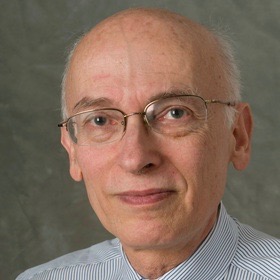
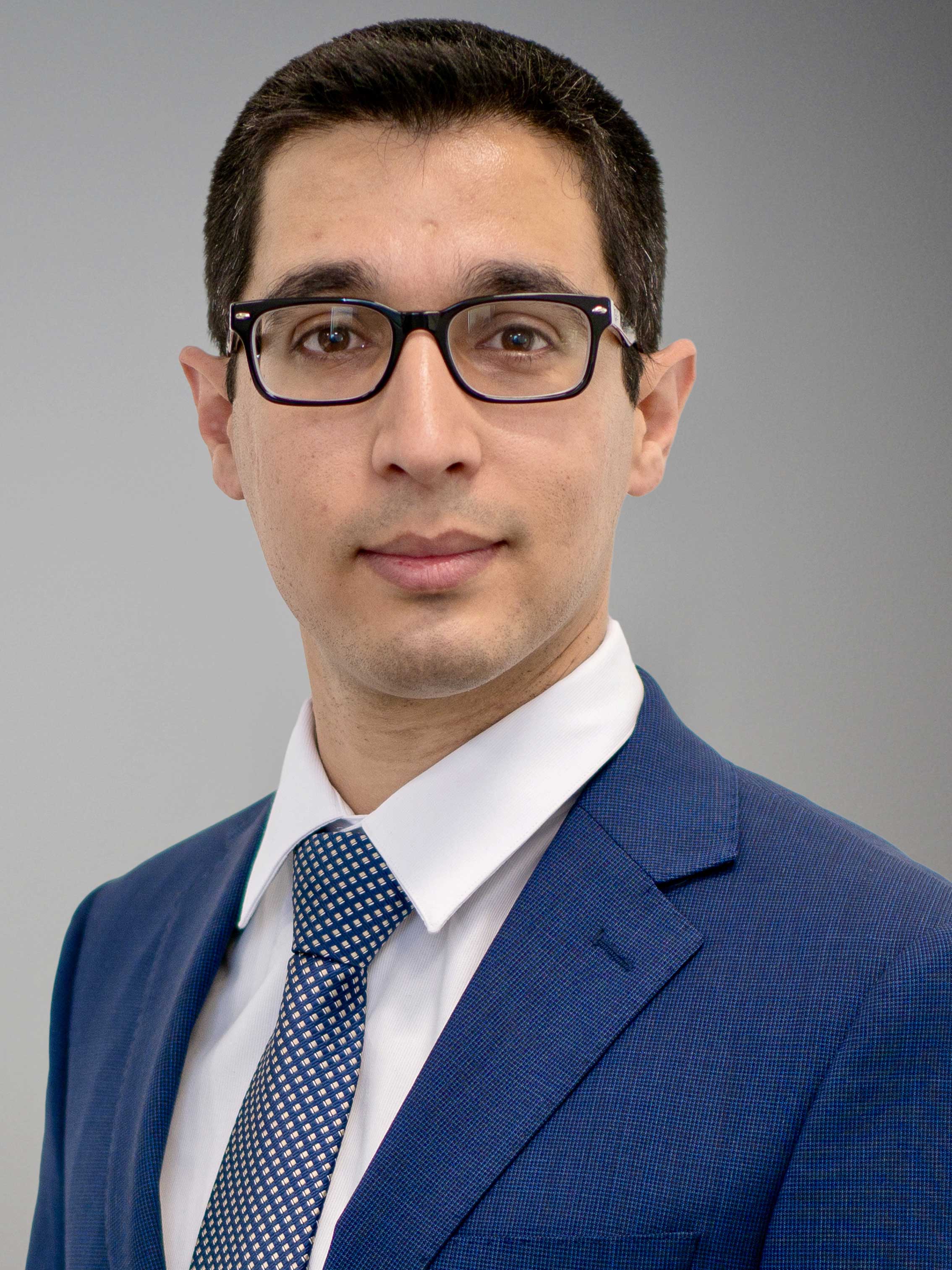
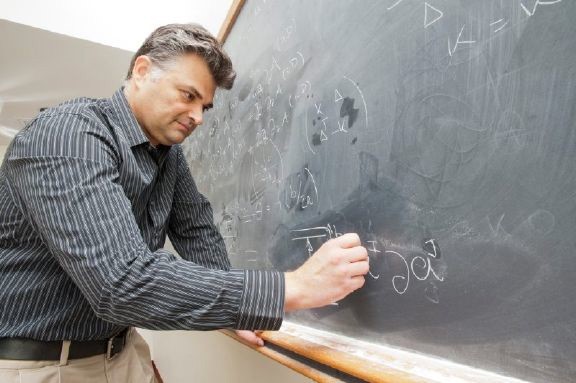
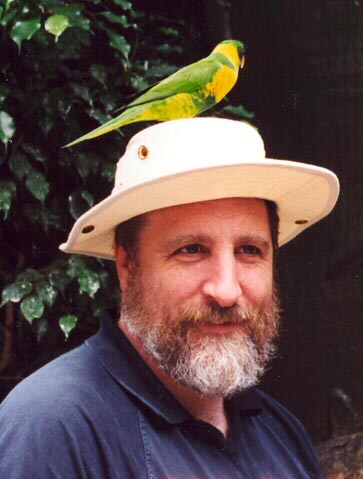
Janos Simon is a Professor of Computer Science at the University of Chicago. His research focuses on computational complexity, algorithms, and distributed systems, with special interests in lower bound techniques and fault-tolerant models. He serves as Editor in Chief of the Chicago Journal of Theoretical Computer Science. His research explores diverse areas including combinatorial algorithms for optical networks, distributed computing in mobile networks, and biologically-inspired computational models. Work spans theoretical foundations to applied problems in vehicular networks and sensor systems. Professor Simon has supervised numerous PhD students in theoretical computer science and maintains active collaborations in fault-tolerant distributed computations and complexity theory.
Dr. Lucas Slot is a Lecturer at the Department of Computer Science, ETH Zurich, specializing in theoretical computer science, computational complexity, and optimization algorithms. His research focuses on polynomial optimization, sum-of-squares hierarchies, and semidefinite programming, with applications to algorithmic design and complexity analysis. Recent work includes studies on computational thresholds in stochastic block models, convergence rates of optimization hierarchies, and kernel-based methods for high-dimensional inference. His contributions span theoretical foundations and algorithmic advancements in mathematical programming and geometric data analysis. Lacking explicit mentions of academic awards or grants, Dr. Slot’s scholarly activities emphasize computational and mathematical challenges in optimization and discrete geometry. No student advisees are listed in the provided materials.
Richard Kiehl is a retired professor in the School of Electrical, Computer and Energy Engineering at Arizona State University (ASU), previously holding faculty positions at Stanford University, University of Minnesota, and University of California, Davis. He holds a Ph.D. from Purdue University (1974) and has extensive industry experience at Sandia National Laboratories, AT&T Bell Labs, IBM Research, and Fujitsu Laboratories. His research focuses on nanoscale electronics, molecular nanotechnology, spintronics, and topological insulators. He pioneered DNA-based self-assembly for nanoelectronics and led interdisciplinary initiatives like the Molecular Nanoscience Alliance (MONALISA) and the Functional Engineered Nano Architectonics (FENA) center. Education: Ph.D. (1974), M.S. (1970), and B.S. (1970) in Electrical Engineering from Purdue University. Research Interests: Nanofabrication, quantum devices, non-Boolean computing, and interdisciplinary applications of nanotechnology. Awards: Life Fellow of IEEE (2001), Louis John Schnell Professorship (Minnesota). His work spans corporate R&D, university leadership (e.g., Department Chair at UC Davis), and over 100 publications in journals like Nano Letters, Physical Review Applied, and Applied Physics Letters. He also served on technical committees for IEEE conferences and edited volumes on heterostructure devices.
Dr. Leroy Chew is a Research Fellow at the Institute of Logic and Computation at Technische Universität Wien. He specializes in theoretical computer science with focus areas in proof complexity, quantified Boolean formulas (QBF), and SAT solving. His educational background includes a PhD from the University of Leeds and postdoctoral research at Carnegie Mellon University. Dr. Chew's research explores the boundaries of computational complexity and formal verification systems. His current projects include developing novel proof systems for quantified formulas and expansion-based approaches for constraint satisfaction problems. He leads research funded by the ESPRIT Grant on QBF Proofs and Certificates. His publication record demonstrates consistent contributions to formal verification and computational logic, with recent advances in strategy extraction techniques and dual proof systems. He maintains academic collaborations across Europe and the United States, and has served on program committees for major conferences including SAT and QBF Workshops. Dr. Chew has received the EPSRC Postdoctoral Prize Research Fellowship and continues to develop computational tools for the research community, including proof generators and strategy extraction software.
Uwe Egly is an Associate Professor at the Department of Knowledge-Based Systems, Faculty of Informatics, Technische Universität Wien (TU Wien). His research focuses on automated reasoning, proof theory, knowledge representation, and computational logic, with a strong emphasis on quantified Boolean formulas (QBFs), argumentation frameworks, and applications of AI in engineering. He leads projects funded by the Austrian Science Fund (FWF) and the Vienna Science and Technology Fund (WWTF), including the Boolean project (2011–2019) and FAME (2011–2014). Egly is known for developing QBF solvers like DepQBF and contributing to SAT-solving techniques. He teaches courses such as Abstract Argumentation , Formal Methods in Computer Science , and Quantum Computing . His research interests span proof complexity, satisfiability checking, and AI-driven algorithms for path planning. He has advised numerous students on theses involving quantum algorithms, QBF solver optimizations, and argumentation frameworks. Egly’s work bridges theoretical computer science with practical applications, including contributions to deformation monitoring systems and circuit synthesis using SAT-based methods. He is involved in international workshops and conferences, such as SAT, FMCAD, and Dagstuhl Seminars, and has edited proceedings for events like SAT 2014 . His collaborations include projects on scenario-based testing of UML diagrams and semantics-aware model versioning. Egly’s interdisciplinary approach integrates logic, artificial intelligence, and computational methods to solve complex theoretical and applied problems.
Leroy Nicholas Chew is a PostDoc Researcher and FWF Projektassistent at the Vienna University of Technology (TU Wien). He is affiliated with the Department of Algorithms and Complexity within the Faculty of Informatics. His roles include contributing to research projects such as QBFPC (2022–2025), Overcoming Intractability in the Knowledge Compilation Map, and REVEAL-AI (2020–2024). These projects reflect his focus on advancing theoretical computer science and automated reasoning methodologies. While specific educational details are not explicitly provided in the text, Leroy Nicholas Chew holds a PhD, as indicated by his role listing. His current position suggests a strong background in computer science and theoretical foundations, consistent with his research activities. His research interests span several key areas in theoretical computer science, including proof complexity, quantified Boolean formulas (QBF), automated reasoning, and knowledge compilation. He explores the hardness of computational problems in logical frameworks, such as analyzing resolution and CDCL proof systems, developing optimal dual proof systems for answer set programming (ASP), and investigating model counting techniques. His work often bridges foundational theory with practical applications in formal verification and algorithm design. Recent publications (2024) highlight advancements in circuits and proofs, model counting, and ASP-QRAT proof systems. Earlier work (2016–2022) addressed QBF resolution calculi, dependency schemes, and certification challenges. These trends underscore his specialization in formal methods and computational logic. No scientific awards are explicitly mentioned in the provided text. In addition to his research, Chew is involved in multiple funded projects. These include the FWF-supported QBFPC (2022–2025), which examines QBF proofs and certificates, and the REVEAL-AI project (2020–2024), focusing on overcoming intractability in knowledge compilation. While specific grant details beyond project funding are not mentioned, his participation underscores his role in collaborative, grant-funded research initiatives. No formal advisees are listed. Chew is part of the Algorithms and Complexity department at TU Wien, collaborating on projects that emphasize proof systems, formal verification, and algorithmic foundations. His work integrates theoretical insights with practical computational methods.
Mahdi Imani is an Assistant Professor in the Department of Electrical and Computer Engineering at Northeastern University, with a courtesy appointment in the Khoury College of Computer Sciences. He holds a PhD in Electrical Engineering from Texas A&M University (2019), and MSc and BSc degrees in Electrical and Mechanical Engineering from the University of Tehran (2014 and 2012, respectively). His research focuses on machine learning, control theory, Bayesian statistics, and signal processing, with applications in gene regulatory networks, network security, and human-AI collaboration. Dr. Imani has received prestigious awards, including the NIH NIBIB Trailblazer Award (2022), the NSF CISE Career Award (2020), and the Outstanding Associate Editor Award from IEEE Transactions on Neural Networks and Learning Systems (2023 and 2024). He serves as an Associate Editor for IEEE Transactions on Neural Networks and Learning Systems and IEEE Transactions on Vehicular Technology, and is a Senior Member of IEEE. His research projects include DARPA-funded work on verified probabilistic reasoning in mixed reality systems, NSF-funded statistical inference methods, and ONR-funded studies on human-AI team synergy. He leads a lab focused on developing scalable Bayesian methods and reinforcement learning techniques for complex systems.
Claudio Chamon is a Professor at Boston University, specializing in condensed matter physics and quantum computing. His research focuses on electron fractionalization in topological systems, quantum spin liquids, and fractonic behavior. He holds a Ph.D. in Theoretical Physics from MIT, along with M.S. and B.S. degrees in Electrical Engineering and Aeronautics/Astronautics, also from MIT. His work bridges theoretical and experimental condensed matter physics, with contributions to topological materials, quantum phase transitions, and quantum information science. Key research areas include topology-driven fractionalization in graphene-like structures, non-Abelian gauge theories, and quantum computing applications such as encrypted operator computing. Chamon has pioneered studies on Majorana zero modes in nanowire networks and braiding non-Abelian anyons in photonic systems. His experimental collaborations aim to realize topological qubits and quantum spin liquids in programmable devices. He has received prestigious awards including the American Physical Society Fellowship, Alfred P. Sloan Fellowship, and NSF CAREER Award. Chamon’s recent work explores quantum circuit complexity, fracton dynamics, and secure computation on encrypted data, leveraging tensor networks and combinatorial symmetries.
David Mix Barrington is an Adjunct Professor at the Manning College of Information and Computer Sciences (CICS) at the University of Massachusetts Amherst. His primary research focuses on computational complexity, including boolean circuits, automata, and logic. He has held significant administrative roles, such as Associate Chair for Academics in the College of Information and Computing Sciences, Chief Undergraduate Advisor, and Undergraduate Program Director. He is also a seasoned educator, teaching courses like COMPSCI 250 (discrete mathematics), COMPSCI 501 (formal languages and computability), and graduate seminars on complexity theory. His contributions extend to textbook development, notably Discrete Mathematics: A Foundation for Computer Science . Research Interests: Dr. Barrington’s work bridges theoretical computer science and mathematics, emphasizing foundational topics such as complexity theory, automata theory, and logic. His teaching spans undergraduate and graduate levels, with a focus on rigorous core courses and advanced theory. He has also contributed to interdisciplinary initiatives, including co-authoring the alternate history collaborative For All Nails . Advising & Leadership: Beyond teaching, Dr. Barrington has served in leadership roles to enhance academic programs and student advising at UMass Amherst. He coordinates the CICS Theory Seminar (COMPSCI 891M) and has led efforts to refine curricula and academic policies.
Chris Umans is a Professor of Computer Science in the Computing and Mathematical Sciences department at the California Institute of Technology (Caltech), affiliated with the Theory Group. He earned his Ph.D. from UC Berkeley in 2000 and joined Caltech in 2002 after a postdoc at Microsoft Research. His research focuses on theoretical computer science, particularly computational complexity, including derandomization, algebraic complexity, and matrix multiplication algorithms. Education: Ph.D. in Computer Science, UC Berkeley (2000); Postdoc, Microsoft Research (2000-2002). Research interests span computational complexity, explicit constructions, and hardness of approximation. His work often intersects algebraic methods and group theory to advance algorithm design, such as group-theoretic approaches to matrix multiplication. Professional Activities: Program committee member for FOCS 2024, STOC, SODA, and others. Vice-Chair of SIGACT (2021-24). Editor for Theory of Computing (ToC), ACM Transactions on Computation Theory (TOCT), and Computational Complexity (CC). Member of the ECCC scientific board. Research Trends: Recent articles explore fast matrix multiplication via matrix groups, algebraic problems over finite fields, and generalized DFTs for finite groups. His work bridges theoretical foundations with algorithmic innovations in algebraic structures. Grants & Labs: His research is supported by NSF grants focused on algebraic methods in complexity theory. He advises students in theoretical computer science and has contributed to collaborative projects on computational algebra and combinatorics.
Ciaran McCreesh is a Research Fellow in the School of Computing Science at the University of Glasgow. His research focuses on solving hard combinatorial problems in practice, particularly in graph theory and subgraph finding, leveraging symbolic AI techniques like constraint programming and Boolean satisfiability. He explores closing the gap between theoretical worst-case complexity and practical performance through empirical algorithmics and computational experiments. His work also addresses algorithm reliability via proof logging, parallel hardware exploitation (bit-parallelism, multi-core computing), and algorithm engineering to improve solver accessibility. Research interests: Combinatorial optimization, constraint programming, proof logging, parallel computing, algorithm reliability. Developed the Glasgow Subgraph Solver, a constraint programming-based tool for hard subgraph isomorphism problems. Publications span graph computation models, certified solvers, and algorithmic advancements. His work emphasizes practical algorithmic improvements with rigorous validation methods. Supervised students include Matthew McIlree and José Antonio Rodríguez Bacallado.
Sylvain Sené is a Professor of Computer Science at Aix-Marseille University (AMU), affiliated with the Department of Computer Science and Interactions (DII) and the Computer Science and Systems Laboratory (LIS). He leads the ANR-funded project FANs (Foundations of Automata Networks) and focuses on discrete mathematics, theoretical computer science, and computational properties of automaton networks. His research bridges abstract computational models with applications in biology, particularly gene regulatory networks and cellular reprogramming. Research Interests: Automaton networks, Boolean networks, and cellular automata Computational complexity and dynamical systems Discrete mathematics and theoretical computer science Applications in systems biology and genetic networks Key Projects: Principal investigator of the ANR project FANs (2019–2023), focusing on advancing automata network theory Collaborations with CNRS, Chilean universities, and international institutions Advising & Grants: Directed PhD students including Pacôme Perrotin and Martín Ríos Wilson Secured funding through ANR and other national/international grants Labs & Teams: LIS (Computer Science and Systems Laboratory), collaborating with interdisciplinary teams in biology and mathematics.
Wilfred G. van der Wiel is a Full Professor in the Nano Electronics department at the MESA+ Institute for Nanotechnology, University of Twente. His work bridges nanotechnology, quantum physics, and unconventional computing, focusing on novel hardware for machine learning and brain-inspired systems. Full Professor, Nano Electronics, MESA+ Institute, University of Twente Research Interests: His research lies at the intersection of nanoelectronics and cognitive computing. He investigates disordered dopant-atom networks in silicon , gold nanoparticle assemblies , and in-materio computing to develop energy-efficient, adaptive hardware. His work explores how physical systems can inherently perform computation, bypassing traditional von Neumann architectures. Publication Trends: Recent articles (2023–2025) highlight a shift toward practical implementations of neuromorphic computing, including speech recognition in physical systems and systematic reviews of brain-inspired architectures. Earlier works focus on fundamental transport mechanisms in nanostructures. Collectively, his publications reveal a trajectory from basic physics of nanodevices to applied neuromorphic engineering and software frameworks like Brains-PY. Scientific Contributions: While specific awards are not listed, his high-impact publications in journals like Nature and Physical Review Applied , along with continuous funding and supervision of research, indicate significant recognition in the field. Advising and Grants: He has supervised at least 29 research projects, including PhD and postdoctoral work, as indicated by 'Supervised Work (29)'. He leads or participates in externally funded projects related to nanotechnology and neuromorphic computing, evidenced by collaborative publications and datasets. Labs and Teams: He is a key member of the MESA+ Institute for Nanotechnology at the University of Twente, working within the Nano Electronics group. He collaborates extensively with researchers in physics, materials science, and computer science, particularly on projects involving unconventional computing and nanofabrication.
Kosmas Iordanidis is a Professor of Mathematics actively involved in teaching courses related to computer science and numerical analysis. His academic contributions include instruction in: Introduction to Computer Science Numerical Analysis II Numerical Solution of Partial Differential Equations (Postgraduate Course) Research interests are evident from his teaching focus, spanning computational mathematics, algorithm design, and numerical methods for differential equations. He has developed extensive educational materials, including lecture notes, slides, and exercises in FORTRAN programming , Boolean Algebra , and Arithmetic Logic Units (ALU). Key technical themes include computer arithmetic, logic function simplification with Karnaugh maps, and numerical solutions for scientific computing. Course materials from 2005–2006 highlight structured teaching across 13 educational weeks, covering topics such as: Computer components and information processing systems Combinational circuits and symbolic languages Microprogramming, memory systems, and high-level language comparisons Applications in BCD arithmetic , Newton-Raphson method , and Gaussian integration
Sandrine Blazy is a Professor at the University of Rennes , where she teaches mechanized semantics (in Coq), functional programming (in OCaml), formal methods (using Why3), and software vulnerabilities. She is a member of the CELTIQUE and Epicure project-teams, both affiliated with Inria Rennes and IRISA laboratory. Her research focuses on formal verification of compilers and program transformations, notably through the CompCert compiler and Versaco static analyzer. Education : HDR (Habilitation à Diriger des Recherches) in Computer Science, Université d'Évry Val d'Essonne (2008). Research Interests : Her work ensures mathematical guarantees in compiler correctness, preventing security bugs during program translation. She specializes in deductive verification , static analysis , and software security , with applications in critical systems like avionics and cryptography. Scientific Awards : CNRS Silver Medal (2023) Lucas Award from Formal Methods Europe (2023) ACM SIGPLAN Programming Languages Software Award (2022) ACM Software System Award (2021) Best Paper Award at FMTea 2014 La Recherche Award in Information Sciences (2011) Advising and Grants : She has advised numerous PhD students (e.g., Solène Mirliaz, Aurèle Barrière) and led research projects like Scrypt (secure compilation for cryptography), ERC VESTA (verified static analysis), and VERASCO (formal verification of compilers). Her grants include ANR and FNRAE funding. Labs and Teams : Actively involved in IRISA CNRS UMR 6074 as deputy director (2021), and collaborates with Inria Rennes and CNRS project teams.