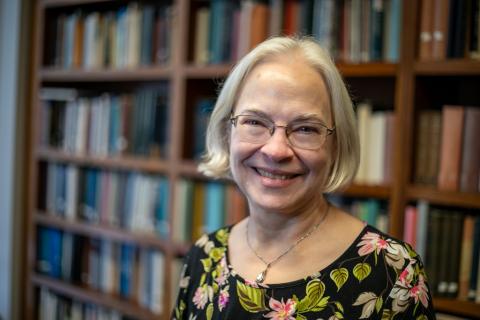
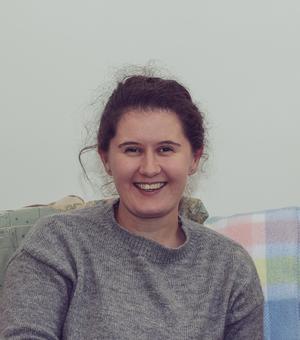
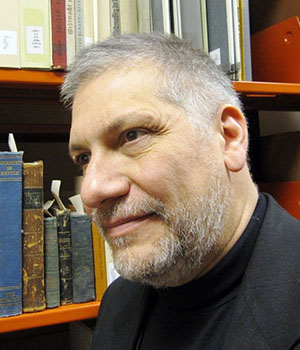
Dr Anna Reynolds is a Lecturer in Early Modern and Renaissance Literature at the School of English, University of Sheffield , where she has been since 2022. Prior to this, she lectured at the University of St Andrews and completed her PhD at the University of York. Her research explores the intersection of material culture and literary thought in the 16th and 17th centuries, particularly focusing on waste paper, textual decay, and environmental engagement. Education: PhD in Literature, University of York Research Interests: Her work examines how discarded books and fragments shaped early modern intellectual and environmental discourses. Recent projects include a monograph on waste paper and a collaborative database with Prof Adam Smyth (Oxford) and Dr Megan Heffernan (DePaul). She also investigates the symbolic relationship between paper and skin in early modern science and literature. Publications: Includes an edited volume ( The Paper Trade in Early Modern Europe , 2021) and articles on binding waste and material practices. Current projects emphasize interdisciplinary approaches to material texts and discard studies. Collaborations: Active in cross-institutional research, partnering with leading scholars to advance studies in early modern book history and material culture.
Alexey Morozov is a Research Fellow at the Department of Patristics and Church History within the Faculty of Theology at the University of Fribourg, Switzerland. He serves as an FNS Postdoc (Swiss National Science Foundation Postdoctoral Fellow) working on critical editions of early Christian texts with particular focus on Methodius of Olympus and Coptic literature. His research interests span Patristics, Church History, Coptic Studies, and Syriac Studies. Morozov specializes in the textual transmission of early Christian works, with significant contributions to the study of Methodius of Olympus' De Resurrectione , Coptic biblical translations, and pseudepigraphic literature. His work demonstrates deep engagement with manuscript traditions across multiple languages including Greek, Coptic, Syriac, and Old Church Slavonic. Analysis of his recent publications reveals a consistent focus on critical editions of patristic texts, particularly those preserved in Eastern Christian traditions. His work shows strong methodological rigor in textual criticism while making valuable contributions to understanding the transmission history of early Christian literature across linguistic boundaries. Morozov has established himself as a specialist in the intersection of Greek patristics and Coptic/Syriac traditions. Currently, Morozov leads the FNS-funded research project 'Lebendige Tradition: Der pseudoklementinische Oktateuch als historisches Dokument von der Spätantike bis ins arabisch-muslimische Mittelalter' (2023-2027), which examines the Arabic and Coptic traditions of the Pseudo-Clementine Octateuch. His academic activities include extensive bibliographic reviews of Coptic studies publications, demonstrating his commitment to documenting and advancing research in this specialized field. Morozov's work bridges Eastern and Western scholarly traditions, with publications in multiple languages including English, French, German, and Russian.
Mitchelle Lyons-Mcfarland is a full-time Lecturer in the Department of English at Case Western Reserve University. She specializes in eighteenth-century British literature, book history, material culture, and descriptive bibliography. Her research focuses on the works of Charlotte Lennox through the Lennox Bibliography Project , an open-access digital initiative. She teaches composition and professional/technical communication courses. Education: B.A., University of Washington (2010) Ph.D., Case Western Reserve University (2018) Her research explores intersections between literary texts and their material forms, emphasizing accessibility and digital humanities methodologies. Recent publications engage with book history, textual editing, and professionalization in academic fields.
Stefan Morent serves as Professor of Musicology with a focus on Digital Musicology and Music before 1600 at the Musicological Institute of the University of Tübingen's Faculty of Philosophy. Since October 2023, he has held the position of Pro-Dean for Studies, Teaching, and Digital Affairs. His academic career spans international research collaborations and leadership roles in major digital humanities projects. Morent earned his doctorate in 1995 from the University of Tübingen, followed by his habilitation in 2004 with the thesis "Das Mittelalter im 19. Jahrhundert. Ein Beitrag zur Kompositionsgeschichte in Frankreich." His educational background includes studies in Musicology (primary), Romance Studies, and Computer Science at Tübingen, recorder performance at Trossingen University of Music, and historical performance practice with Kees Boeke. His research spans medieval music, its performance practice and reception, Renaissance music theory, regional Southwest German music history, 19th-century French music, and Digital Musicology. Morent has pioneered work on digital encoding of neumatic notation, virtual acoustic reconstruction of medieval sacred spaces, and the study of liturgical music fragments. His interdisciplinary approach bridges musicology, computer science, and archival studies. His recent publications demonstrate a consistent focus on digital methodologies applied to medieval music sources, particularly liturgical fragments and neumatic notation. The articles reveal growing emphasis on virtual reconstruction techniques, collaborative digital tools like MEI (Music Encoding Initiative), and interdisciplinary approaches combining musicology with archaeology and computer science. Classical Music Award 'Golden Label' DFG Research Scholarship Habilitation Scholarship from Graduate School 'Ars and Scientia' Doctoral Scholarship from State Graduate Funding Baden-Württemberg Research Fellowship from Herzog August Library Wolfenbüttel Morent has supervised numerous doctoral and master's theses across disciplines, including collaborations with computer science students on digital tools for music encoding. His third-party funding includes major projects like 'Sacred Space: eHeritage and Virtual Acoustics' (ongoing), 'Digital Erschließung mittelalterlicher Musikfragmente' (DFG, 2017-2022), and multiple grants from the University of Tübingen's Zukunftskonzept. He maintains active partnerships with institutions including St. Gallen Abbey Library, Max Planck Institutes, and Swiss cultural foundations. As director of the Schola Cantorum at Tübingen's Musicological Institute and founder of the Ordo Virtutum ensemble, Morent bridges academic research and performance practice. His leadership extends to the 'Sacred Sound' research group and collaborations with the Collaborative Research Center 'Material Text Cultures.' Current projects focus on virtual acoustic reconstruction of medieval sacred spaces and digital encoding of neumatic notation systems.
Carlos Alberto Redondo Díaz is a researcher specializing in Library and Information Science at the University of Salamanca, where he works in the Department of Library and Information Science within the Faculty of Translation and Information Science. He earned his PhD in Training in the Knowledge Society from the University of Salamanca in 2022, with his thesis "Iconography of the book in painting: development of a model for its cataloging and analysis" receiving Outstanding Cum Laude distinction and an International mention. His academic background includes a graduate degree in Information and Documentation (2014) and a Master's in Evaluation and Management of Cultural Heritage (2015). Prior to completing his doctorate, he served as Administrator of the Library Network of the Archdiocese of Granada (2016-2017) and conducted his doctoral research through a predoctoral FPU contract from 2017-2022. Dr. Redondo Díaz's research focuses on Digital Humanities, particularly book iconography in painting, historical bookbinding traditions, and cultural heritage preservation. His work bridges traditional library science with modern digital methodologies, creating innovative approaches to document and analyze bibliographic heritage. He has conducted extensive studies on collections at the Cathedral of Salamanca and the former Jesuit college of Monterrey, examining bindings from the 15th through 19th centuries. His publication record demonstrates consistent scholarly output across multiple venues, with recent work focusing on metadata standards for art collections, development of the LiberIC cataloging system for book representations in painting, and the application of semantic web technologies to historical documentation. His research shows a clear trajectory from traditional bookbinding studies toward increasingly digital and interdisciplinary approaches. Outstanding Cum Laude doctoral thesis International mention for doctoral work Development of LiberIC cataloging system Extensive documentation of Spanish bookbinding traditions Dr. Redondo Díaz actively collaborates with the "Teresa Andrés" Research Group on Information and Society (GIR-TAIS), the Association of Archivists of Castile and León (ACAL), and the University Association against Gender-Based Violence (AUVIM). His work with academic centers, cathedral archives, and historical libraries demonstrates strong institutional connections and practical applications of his research. His future work appears focused on expanding digital methodologies for book iconography analysis and developing more comprehensive conservation frameworks for historical bindings in the digital age.
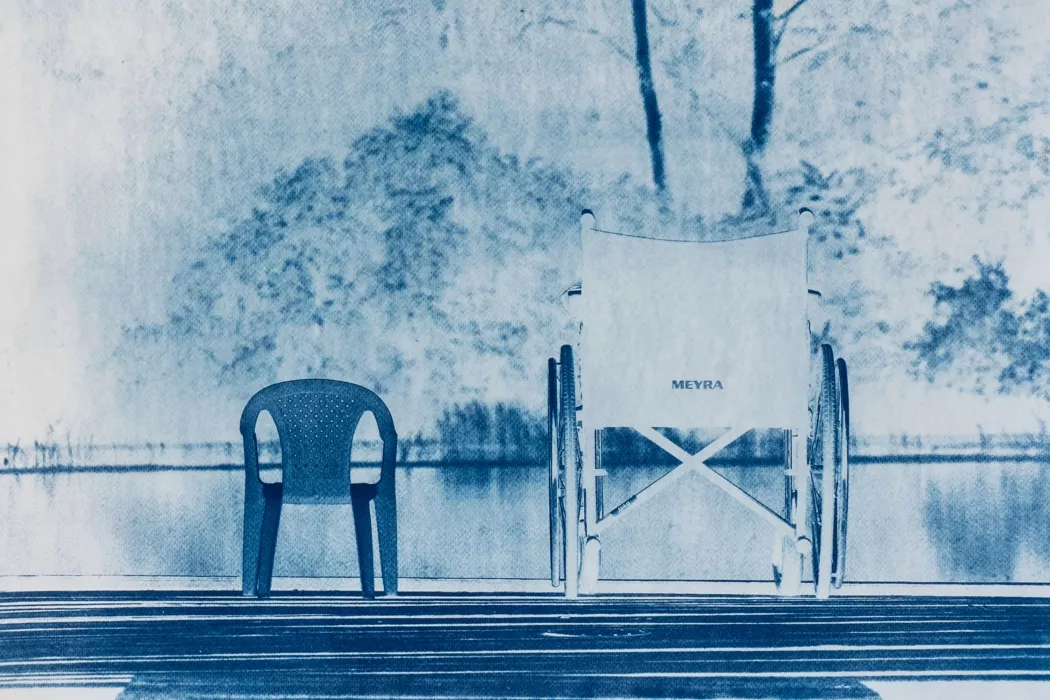
Andrea Pézman serves as Assistant Professor in the Department of Graphics and Other Media at the Academy of Fine Arts and Design, Bratislava, teaching Graphic Space and Object courses and Free Graphics Studio while contributing to Slovakia's visual arts education. Her academic background includes a Doctor of Art (ArtD.) from the Academy of Fine Arts Bratislava (2008-2018) under Prof. Robert Jančovič, a degree in Graphics and Other Media (2001-2005) with Prof. Dušan Kállay, specialized bookbinding training (2003-2004) under Assoc. Prof. Jiří H. Kocman, and architecture studies at Slovak University of Technology (1993-1999). Pézman's creative research focuses on experimental printmaking techniques including cyanotype, etching, and screenprint, with signature works in artist's books that bridge traditional graphic media and conceptual installation art. Her practice explores abstract narrative structures, bodily themes, and spatial interventions through multi-dimensional visual communication. Her publications demonstrate consistent innovation in book art and graphic media, evolving from early award-winning works like "Bird flying" (2001) to recent large-scale cyanotype installations such as "Wound..." (2021), reflecting ongoing exploration of materiality, scale, and conceptual depth in contemporary graphic arts. Notable recognitions include: 2014 MEGA–PIXEL 2014, Budapest 2013 OPENED BOOK International Biennial, Győr 2012 ABOT Project Finalist 2010-2009 SVU Awards for Liberal/Applied Arts 2005-2002 Most Beautiful Books of Slovakia awards 2001 Biennial of Book Art Martin Mayor's Award No documented graduate student advising or research grants are publicly associated with Pézman; her professional focus remains centered on creative practice and studio-based teaching within the Department of Graphics and Other Media. While Pézman maintains an individual studio practice, her extensive participation in international collective exhibitions and projects like ABOT demonstrates collaborative engagement with broader artistic communities without formal laboratory or team leadership structures.
Cathie Ruggie Saunders serves as Professor and Art Gallery Director in the Department of Art & Design at Saint Xavier University's College of Arts and Sciences, overseeing both the SXU Gallery and Visual Arts Center (VAC) student gallery while teaching printmaking, drawing, artists' books, and children's book illustration courses. Educational background: MFA in Art, University of Wisconsin-Madison (1976) Her research centers on hand-printed, bound artists' books through The Hosanna Press imprint, specializing in letterpress techniques and interdisciplinary connections between book arts, illustration, and contemporary visual expression. This work preserves traditional craftsmanship while innovating within limited-edition artistic publishing. Her seminal 2019 handbook established national standards for letterpress education, demonstrating consistent focus on pedagogical development and technical mastery across book arts disciplines. Scientific awards: None documented in source materials. Professor Saunders mentors students through the Art and Design Senior Seminar thesis course and gallery operations, though no formal advisees or research grants are specified. Her gallery leadership provides critical exhibition platforms for emerging artists. She directs the SXU Gallery and VAC, curating programs that integrate student work with professional artistic practices to strengthen campus-wide engagement with visual arts.
Laura Pani is Full Professor of Latin Palaeography at the University of Udine's Department of Humanities and Cultural Heritage, where she has served since 1994. She coordinates modules on Palaeography, Codicology, and Diplomatics, previously for the Faculty of Humanities (now split into multiple degree programs). Her research focuses on Carolingian manuscript studies Medieval book production during epidemics Latin diplomatics Manuscript transmission across the Eastern Alps Lately, she has explored 20th-century manuscript distribution networks and paleographic education in Italy. Her 2022 paper on Lothar's manuscripts and 2021 work on lay scribes remain particularly influential. Prof. Pani contributes to the Chartae Latinae Antiquiores series and maintains active involvement in manuscript conservation and education initiatives.
Sarah Herbert is a Lecturer in the Department of Classics at the University of Virginia, based in Cocke Hall B018. She earned her BA in English and Math Science from Rice University in 1983 and completed her PhD in Classics at the University of Virginia in 2017. Her dissertation, The Philosopher and the Farmer: Spatial Metaphor in Three Conversations in Euripides, Plato, and Xenophon , examines spatial metaphors across classical texts. Her research focuses on Greek and Roman historiography and epic poetry, with specialized attention to georgic metaphor and imagery in Xenophon and Vergil. She has presented on topics including Herodotus the Gift (Classical Association of Virginia, 2020) and Socrates and Tantalus in Xenophon’s Oeconomicus (CAMWSS, 2018), highlighting interdisciplinary connections between agricultural symbolism and philosophical discourse. Dr. Herbert co-chairs the Ecoclassical Caucus e-newsletter and engages in professional development through paper marbling and bookbinding workshops.
Eliana Dal Sasso is a Doctoral Researcher at the Centre for the Study of Manuscript Cultures (CSMC), University of Hamburg, affiliated with the Cluster of Excellence 'Understanding Written Artefacts'. Her research focuses on Coptic and Ethiopian manuscript cultures, particularly bookbinding techniques as instruments for knowledge transmission in Christian Egypt (4th-11th centuries). Her publications demonstrate expertise in: Comparative analysis of Ethiopian and Coptic sewing techniques Cataloguing and preservation of Coptic bindings Digital documentation methods for cultural artifacts Federated information systems for manuscript research Publications span journals, conference proceedings, and edited volumes, with recent works published in 'Studi del Museo Egizio' and 'Studies in Manuscript Cultures'.
Prof. Boris Kvasnica is a Professor and Head of the Studio of Artwork on Paper and Other Media at the Department of Conservation and Restoration, Academy of Fine Arts and Design in Bratislava (AFAD). His expertise focuses on art conservation, book design, and graphic illustration. He collaborates extensively with artists like Katarína Vavrová on culturally significant publications. Key roles include teaching restoration techniques, printmaking for conservation, and artistic research. He leads courses such as Technologic Copy and Introduction to Restoration . Recipient of multiple awards including the Ministry of Culture of SR Award for Book Quality (2007) and IBBY Honorary List (2020). Contributions span children's literature, classical adaptations, and Slovak cultural heritage preservation. His work emphasizes interdisciplinary approaches, blending traditional restoration with modern graphic design principles.
Dr. Hannah Ryley is a Lecturer in English at Balliol College, University of Oxford, affiliated with the Faculty of English Language & Literature. Her research focuses on manuscript studies, material culture, ecocriticism, postcolonial literature, and early print culture. She authored the 2022 monograph *Re-Using Manuscripts in Late Medieval England*, examining sustainability in medieval manuscript culture. She co-edits a volume on recipes and book culture (Liverpool UP, 2023) and a Routledge handbook on medieval book history with Dr. J.D. Sargan. Dr. Ryley co-organizes academic networks like 'Cultures of Use and Reuse' and conferences such as the 2023 Oxford workshop. She co-founded the AHRC-funded 'Medieval Storytelling: Engaging the Next Generation' project and the 'Literature and Material Culture' seminar series. Her recent work bridges digital humanities and medieval studies, including a special issue of *Digital Philology* on big data in manuscript studies.
Stephen Partridge is an Assistant Professor at the Department of English Language and Literatures, Faculty of Arts, University of British Columbia. His research focuses on Middle English manuscripts, authorship theory, and Chaucer studies, with particular emphasis on textual criticism of paratextual elements like glosses, rubrics, and paraph marks. He teaches Chaucer's Canterbury Tales , women writers of the Middle Ages, Old English language, and medieval epic/romance courses. Education: BA from Yale University, MA and PhD from Harvard University Research Interests Material forms of medieval texts Scribal practices and manuscript relationships Authorial self-consciousness in Chaucer Manuscript glosses and digital editing His publications analyze manuscript evidence, scribal handling of texts, and authorship attribution, including collaborations with the Canterbury Tales Project. He has held research fellowships at major libraries like the Huntington, Folger, and Harry Ransom Center. His teaching includes graduate supervision in Middle English manuscript studies. Scientific Awards Beatrice White Award (English Association) for Chaucer CD-ROM project Research fellowships at four major libraries Publications Three co-edited collections on medieval authorship, text editing, and baseball 15+ articles on manuscript analysis and Chaucerian studies
Max Yela serves as Adjunct Instructor at the University of Wisconsin-Milwaukee's School of Information Studies and has led the Special Collections Department since 1994, following prior roles at the University of Delaware Libraries (1985-1994). He also taught book arts in UWM's Art & Design Department from 2004 to 2015. Education: MS, Library and Information Science, Simmons College, Boston BA, History (minors in Art History and Classical Civilizations), University of Massachusetts, Amherst His research investigates media theory's cognitive impacts through historical and artistic lenses, specializing in book history as cultural medium, art mediation dynamics, and the book as creative artifact. This interdisciplinary work bridges library science, cognitive studies, and visual arts with emphasis on physical book forms in digital contexts. Publications and lectures consistently explore book arts preservation, fine press legacies, and ethical conservation dilemmas, demonstrating sustained engagement with material culture studies. Key themes include William Kentridge's bookish aesthetics, Kabbalistic influences in Borges' works, and rare books' enduring relevance. Scientific Awards: 2017 Wisconsin Visual Art Achievement Award As an educator, Yela developed courses like 'History of Books and Printing' and mentored students in book arts practice. His institutional leadership includes founding the Krug Rare Books Room Educational Series, though specific grant funding isn't documented. Community engagement spans 25+ years through Milwaukee arts institutions and national conferences. The Special Collections Department under his direction functions as a vital research nexus, integrating rare materials with public programming like exhibition series and conservation workshops that connect academic scholarship with artistic practice.
Prof. Dipl.-Ing. Dipl.-Rest. Ulrike Hähner is a faculty member at the HAWK Hildesheim since 2009, affiliated with the Faculty of Architecture, Engineering and Conservation . She serves as Head of the Department of Conservation and Restoration of Documents, Books and Graphics, specializing in the conservation and restoration of written materials, books, and graphics with a focus on historical, object-specific, and material science issues. Teaches conservation methods, quality assurance, and damage prevention Developed a minor in conservation management for the master's program Collaborates with archives, libraries, and museums for practical training Her work emphasizes knowledge transfer and interdisciplinary cooperation, offering systematic teaching programs with workshop manager Barbara Rittmeier. She supports career-building and part-time studies through personalized study plans.