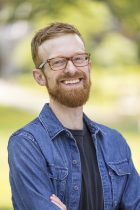
Theis Zetner Trolle Jensen is a Researcher at the Section for Molecular Ecology and Evolution within the Globe Institute at the University of Copenhagen. His work focuses on applying molecular techniques to archaeological questions, particularly using ancient DNA and paleoproteomics to address historical population dynamics and evolutionary questions. His research interests center on ancient DNA analysis , paleogenomics , and archaeological science , with specific expertise in ZooMS (Zooarchaeology by Mass Spectrometry) and biomolecular analysis of ancient remains. His work spans multiple disciplines including molecular ecology, evolutionary biology, and population genetics, with a particular focus on European prehistory. Jensen has contributed to several high-impact publications in Nature , PLoS ONE , and Current Biology , with research spanning from Neolithic Denmark to ancient wildcat domestication patterns. His methodological contributions include developing streamlined paleoproteomics workflows that enable analysis of extremely ancient samples. His collaborative research network is extensive, with co-authorship on major population genomics studies involving dozens of international researchers. He has presented his work at significant conferences including the Tenth International Conference on the Mesolithic in Europe.
Dr Geoffrey Nowell is an Associate Professor (Research) and Senior Research Officer in the Department of Earth Sciences at Durham University, specializing in radiogenic isotope geochemistry and mass spectrometry techniques. He has maintained a continuous research career at Durham University since 2001, following a series of NERC Postdoctoral Research Scientist positions at Durham and the NERC Isotope Geosciences Laboratory. Nowell earned his BSc (Hons) from the University of Leicester and completed his PhD at The Open University in 1993. His research focuses on the development and application of the Lu-Hf isotope system, Multi Collector ICP Mass Spectrometry methodologies, and the geochemistry of kimberlites and lamproites. He has established himself as a leading expert in MC-ICP-MS analytical techniques with particular emphasis on precise isotope ratio measurements. Nowell's recent publications reveal a strong interdisciplinary approach that bridges fundamental geochemistry with archaeological applications. His work spans from methodological advances in mass spectrometry to applied studies in mantle geochemistry, diamond formation, and human migration patterns through isotopic analysis. The breadth of his research demonstrates how analytical chemistry techniques can be applied across diverse fields, from understanding deep Earth processes to reconstructing human history. Specialist in multi-collector plasma ionisation and thermal ionisation mass spectrometry Expert in Lu-Hf isotope measurements applied to mantle samples Developed methods for ultra-low Pt analyses in DNA from cancer therapy patients Developed laser ablation sulphur isotope ratio measurements Contributed significantly to Re-Os geochemistry research Nowell has made substantial contributions to both methodological advances in mass spectrometry and their application to fundamental geological questions as well as interdisciplinary archaeological projects. His collaborative research appears consistently in top Earth science and analytical chemistry journals, demonstrating his ongoing research impact and leadership in the field of isotope geochemistry.
Caroline Polet is a Lecturer at CReA-PATRIMOINE (Research Centre in Archaeology and Heritage) at the Free University of Brussels, where she teaches Paleoanthropology (HAAR-B-5070). Her academic work focuses on the analysis of human skeletal remains from archaeological contexts, with particular expertise in medieval European and Central African populations. Her research interests span multiple areas of bioarchaeology and physical anthropology: Reconstruction of health status through bone and dental pathologies Dietary regime analysis using stable isotopes in bone collagen Activity pattern reconstruction based on enthesopathies Analysis of cremated human remains Forensic applications to historical contexts Recent publications demonstrate her active research program examining medieval monastic communities, mining disaster victims, and Merovingian period remains. Her work often involves international collaboration and interdisciplinary approaches combining archaeological, biological, and historical perspectives. As part of CReA-PATRIMOINE, she contributes to the university's research in archaeology and heritage, with numerous publications appearing in journals such as Journal of Archaeological Science, Anthropologica et Praehistorica, and Journal of Forensic Sciences. Her research has practical applications in both archaeological interpretation and forensic anthropology. Dr. Polet maintains an active role in developing identified skeletal collections in Belgium and has contributed to significant historical investigations including the Bois du Cazier mining disaster (1956) and studies of Merovingian period remains. Her work bridges academic research with practical applications in heritage management and historical understanding.
Dr. Joydeep Chaudhuri is a Professor at the College of Medicine in Mt. Pleasant, Michigan, with over 25 years of international teaching experience across India, Malaysia, Finland, Canada, and the United States. He instructs medical, dental, physician assistant, physical therapy, and occupational therapy students in anatomy and medical education disciplines. His educational background includes: MS in Anatomy and Cell Biology from All India Institute of Medical Sciences, New Delhi M.B.B.S. from Regional Medical College, Imphal Dr. Chaudhuri's research spans two distinct phases: early neuroscience investigations of Fetal Alcohol Syndrome and Alzheimer's disease using animal models, and current pioneering work in medical education. His contemporary scholarship focuses on enhancing intrinsic motivation in medical students and mitigating psychological distress during cadaveric dissection. This research bridges educational theory, cognitive psychology, and anatomical sciences, producing practical interventions that transform anatomy pedagogy. Analysis of his 15 most recent publications reveals a strategic evolution toward medical education scholarship, with 2020-2022 works demonstrating rigorous evaluation of prelaboratory assignments, drawing exercises, and mental preparation protocols. These studies consistently show improved academic performance, increased engagement, and reduced anxiety among students, establishing him as a significant contributor to evidence-based anatomy education. Dr. Chaudhuri actively mentors medical and graduate students in educational research. His international collaborations across five countries provide unique cross-cultural perspectives on medical training. While no specific awards are documented, his sustained publication record in top anatomy education journals reflects scholarly impact. Current work continues to develop innovative frameworks for student motivation and psychological support in anatomical sciences education.
Robin Shields-Cutler is an Associate Professor of Biology at Macalester College in St. Paul, MN, currently on sabbatical. His research focuses on the biochemical interface between diverse bacteria and their hosts (primarily humans), utilizing both computational and experimental approaches to investigate complex microbial interactions. Education: BA: Grinnell College (Biological Chemistry) PhD: Washington University in St. Louis (Molecular Microbiology & Microbial Pathogenesis) Postdoc: University of Minnesota (BioTechnology Institute, College of Biological Sciences) Shields-Cutler's research spans multiple areas of microbiome science, with particular emphasis on computational profiling of secondary metabolites in bacterial communities and primate microbial biodiversity. His work bridges wet lab experimental microbiology with dry lab computational analysis, using techniques ranging from culture work and mass spectrometry to advanced bioinformatics. He maintains active collaborations with the Como Zoo, Mayo Clinic, University of Minnesota Masonic Cancer Center, and multiple other institutions. His publication record reveals strong focus areas in gut microbiome dynamics related to transplantation medicine, host-microbe interactions in primates, and the development of computational tools for microbiome analysis. Several of his methods papers like SHOGUN and SplinectomeR have become important resources for the microbiome research community. Scientific Awards: Faculty of 1000 Prime Recommended for Chemical Biology Selected as JBC 'Paper of the Week' Cover feature for June 26, 2015 issue of Journal of Biological Chemistry Highlighted in Nature Reviews: Gastroenterology and Hepatology Shields-Cutler actively mentors undergraduate researchers at Macalester College, with numerous publications featuring undergraduate co-authors. His research program has secured funding through collaborative grants with major institutions including the Mayo Clinic, Como Zoo, and University of Minnesota. His work on the gut microbiome in hematopoietic cell transplantation patients has particular clinical significance. His laboratory features dedicated space for both computational and experimental work, reflecting his dual approach to microbiome research. He maintains active GitHub repositories for his computational tools and collaborates extensively through the Macalester College Biology Department and beyond.
Thomas Bjarnsholt is a Professor at the Department of Immunology and Microbiology within the Faculty of Health and Medical Sciences at the University of Copenhagen. He leads research at the Costerton Biofilm Centre and serves as Editor-in-Chief of APMIS (Journal of Pathology, Microbiology and Immunology). His work involves close collaboration with clinicians across major Danish hospitals and extensive international partnerships. MSc in Chemistry (Civil engineer), DTU (2001) PhD: 'Experimental investigation of quorum sensing and biofilms of Pseudomonas aeruginosa in relation to lung infection in cystic fibrosis patients', DTU (2005) Doctor of Medicine 'The Role of Bacterial Biofilms in Chronic Infections', University of Copenhagen (2013) Bjarnsholt's research focuses on bacterial and fungal biofilms in chronic infections, investigating why biofilm-based infections exhibit extreme resistance to antibiotics and evade host defenses. His work spans from fundamental biofilm biology to clinical applications, with particular interest in diagnostic development and therapeutic approaches for chronic wound management, orthopedic infections, and cystic fibrosis-related infections. He has pioneered research on the role of biofilms in various clinical settings and developed novel methods for biofilm detection and treatment. His publication record shows a strong emphasis on translational research connecting basic biofilm science with clinical applications. The recent articles demonstrate growing focus on interdisciplinary approaches to bone and joint infections, advanced diagnostic limitations, tri-species infection models, and bridging environmental biofilm research with clinical solutions. His work increasingly incorporates advanced methodologies including transcriptomics, sophisticated animal models, and spatial microbiome analysis. 2015 Award and Honorary Lecture at Danish Society for Orthopedic Surgery annual meeting 2015 Journal of Wound Care 'Best Laboratory/Pre-Clinical Study' Award 2013 ESCMID Young Investigator Award 2013-2017 Lundbeck Foundation Junior Group Leader Fellowship (EUR 1,34 Mill) Bjarnsholt supervises an active research group including 7 Postdocs (4 current), 12 PhD students (9 current plus 5 co-supervised), and numerous Master's and Bachelor's students. His research is supported by significant funding totaling DKK 30,524,264 (4.1 million Euro) as Principal Investigator, with additional contract research funding of approximately 12 DKK million. Major funders include the Lundbeck Foundation, RegionHovedstadens Udviklingsfond, Faculty of Health Sciences, Gerda og Aage Haenschs Fond, and Human Frontier Science Project. He founded and serves on the advisory board of the Biofilm Test Facility, participates in the Copenhagen Microbiology Center, and is a member of the SUND-UCPH and UCPH Innovation Board. His international collaborations span institutions in the USA, UK, Sweden, and beyond, focusing on biofilm behavior, host defense mechanisms, and clinical applications.
Tim Holm Jakobsen is an Associate Professor in the Department of Immunology and Microbiology at the University of Copenhagen's Faculty of Health and Medical Sciences (SUND). His research focuses on the interaction between pathogenic bacteria and their host, with particular emphasis on bacterial biofilms in chronic infections. Dr. Jakobsen integrates clinical sample studies with laboratory models to develop insights that enhance diagnostic and treatment strategies for bacterial infections. Dr. Jakobsen earned his Ph.D. in Microbiology from the University of Copenhagen in 2013, following a Cand. Scient. in biology from Roskilde University in 2007. His academic career progressed from Scientific Assistant positions at UCPH and DTU (2007-2010), through postdoctoral work at Rigshospitalet and UCPH (2014-2016), to Assistant Professor (2016-2021), and finally Associate Professor (2021-present). His research interests center on bacterial biofilm formation in chronic wound infections, host-pathogen interactions, and the development of novel strategies to combat biofilm-related infections. Dr. Jakobsen's work spans from basic research on bacterial signaling systems (Quorum Sensing and cyclic-di-GMP) to translational applications, including the validation of substances for inhibiting pathogenic bacteria. His research has led to patent development and commercial applications, with Dr. Jakobsen serving as scientific advisor in these ventures. Dr. Jakobsen's publications reveal a strong focus on chronic wound infections, bacterial biofilms, and antimicrobial strategies. His recent work has advanced methodologies for studying biofilms in clinical samples, developed novel anti-biofilm compounds, and improved diagnostic approaches for bacterial infections. His research bridges fundamental microbiology with clinical applications, addressing critical challenges in infection treatment. Best paper award, AAC journal, American Society for Microbiology (2024) Article selected as the Highly Cited Paper of Microorganisms (2022) Finalist, PhD of the year competition, SUND-UCPH (2014) Student travel grant awards (2011, 2012) Dr. Jakobsen has supervised 5 PhD, 9 MSc, 5 BSc, and 2 MD students, demonstrating his commitment to academic mentorship. He has secured significant research funding, including a DKK 4.6 million grant from the European Defense Fund (2025), DKK 500,000 from the National Defense Technological Center (2024), and multiple other grants totaling over DKK 2 million. As Principal Investigator, he leads projects focused on new biomarkers of infection, battlefield wound microbiome mapping, chronic wound microbiome understanding, and diagnosis of sterile site infections. Dr. Jakobsen serves on the Education Committee and Academic Board at ISIM-UCPH (2024), chairs PhD assessor committees, and acts as National Editor for the APMIS Journal. His research group collaborates with clinical partners to translate laboratory findings into improved patient care for chronic wound infections.
Dr. Mina Xu is a Professor of Pathology and Laboratory Medicine at Yale School of Medicine, specializing in hematopathology and oncologic diagnostics. She directs Yale's Hematopathology division and Expert Consultation Practice, with affiliations spanning the Yale Cancer Center's genomics and immuno-oncology programs. Her research targets hematopoietic malignancies (leukemia, lymphoma, myeloma), biomarker discovery, and molecular diagnostics, utilizing cutting-edge techniques like spatial transcriptomics and AI-driven histopathology. Research Focus: Dr. Xu's work bridges tumor immunology, diagnostic innovation, and translational medicine. Key interests include: Development of immunohistochemical biomarkers for myeloid/lymphoid neoplasms Machine learning applications in predicting lymphoma transformation Spatial multi-omics mapping in archival tissue samples Therapeutic response prediction in targeted cancer therapies Recent Publications: Her 118+ articles (2023-2025) in journals like Nature Biotechnology and Blood demonstrate focus on: (1) Spatial transcriptomics for tumor microenvironments, (2) AI-enhanced diagnostic criteria, and (3) Novel biomarkers for hematologic malignancies. Trends show increasing integration of computational biology with clinical pathology. Awards & Honors: American Society of Hematology Trainee Grant (2005) Westinghouse Science Award (1996) National Science Foundation Trainee Grant (1994) Weizmann Institute of Science Scholarship (1996) Training & Collaboration: Actively mentors residents/fellows in pathology and collaborates with 13+ principal investigators, including Dr. Stephanie Halene (12 joint publications) and Dr. Amer Zeidan (9 joint publications). Research emphasizes team science within Yale Cancer Center consortia.
Neil A. Mabbott is a Professor at the Royal (Dick) School of Veterinary Studies, University of Edinburgh, UK, where he leads research at the intersection of immunology and neuroscience. His work spans neurodegenerative diseases, particularly prion pathologies, with strong collaborations across the University of Edinburgh ecosystem including The Roslin Institute and SRUC. His research program focuses on neuroimmune mechanisms in aging and disease pathogenesis. Key investigations include: How peripheral immune challenges (e.g., LPS exposure) modulate susceptibility to prion infections Microglial repopulation dynamics in brain disorders Host-pathogen interactions at mucosal barriers Neuropathological consequences of genetic mutations like Csf1r These studies integrate immunology, neuroscience, and infectious disease models to unravel neurodegenerative mechanisms. Recent publications (2024-2025) reveal a cohesive trajectory in neuroinflammation research, with emphasis on microglial function, astrocyte activation, and genetic determinants of brain pathology. His work bridges fundamental immunology with clinical neuropathology, particularly in prion diseases and leukoencephalopathies. No scientific awards are documented in the available information. Prof. Mabbott maintains an active grant portfolio evidenced by continuous high-impact publications and extensive collaborations (496+ co-authors). While specific funding sources aren't detailed, his research requires substantial resources for in vivo modeling and neuropathology analysis. Current student supervision details aren't provided, though his Professorship implies graduate mentorship responsibilities. His research group operates within the Royal (Dick) School of Veterinary Studies infrastructure, utilizing advanced techniques in cellular immunology and neurobiology. The collaborative environment with The Roslin Institute provides access to cutting-edge genomics and imaging facilities for studying brain-immune interactions.
Dr. Liviu NEDELCU is a Scientific Researcher II at the National Institute of Materials Physics (NIMP) in Romania, where he has been working continuously since 2002. He earned his undergraduate degree from the Faculty of Physics - Section 'Materials Science and Technology' at University of Bucharest in 2002, followed by an MSc in 'Materials Physics' in 2004, and completed his PhD in Physics in 2011, all from the University of Bucharest. His research program centers on: Development of dielectric materials for microwave, millimeter wave, and terahertz applications Dielectric polarization and ferroelectric phase transitions Solid-state synthesis methods for electroceramics Advanced characterization techniques including XRD, SEM, and broadband dielectric measurements Microwave dielectrics, dielectric resonators, and tunable capacitors Dr. NEDELCU's publication record demonstrates consistent research excellence with 52 articles in Web of Science journals, an H-index of 15, and 530 citations (excluding self-citations). His recent work (2020-2025) shows a strategic expansion into biomedical applications of piezoelectric materials, terahertz characterization techniques, and sustainable materials development, reflecting his ability to bridge fundamental materials science with practical applications across multiple domains. His research achievements include: 1 awarded patent (RO 131868 B1) for 'Process for obtaining of Mg4Nb2O9 ceramics with low absorption in terahertz domain' Coordination of 1 international project and 6 national projects (4 as Principal Investigator) Active scientific reviewing for prestigious journals including Journal of Alloys and Compounds, Materials Science and Engineering B, and IEEE Access Dr. NEDELCU maintains professional profiles through UEFISCDI ID (U-1700-039C-8541), ORCID ID (0000-0002-0612-590X), and WoS ResearcherID (B-9882-2011), documenting his comprehensive scholarly contributions to materials science.
Mihai-Alexandru Grigoroscuta is a Scientific Researcher at the Laboratory of Magnetism and Superconductivity at the National Institute of Materials Physics (NIMP) in Romania. His primary research focuses on superconducting materials, particularly magnesium diboride (MgB 2 ), and advanced materials processing techniques such as Spark Plasma Sintering. His educational background includes: PhD in Materials Science and Engineering from University "Politehnica" of Bucharest (2016-2021) MSc in Biomaterials from University "Politehnica" of Bucharest (2014-2016) Bachelor's degree in Materials Science and Engineering from University "Politehnica" of Bucharest (2010-2014) Research internships at NIMS, Tsukuba, Japan (2018-2019) and IPCMS, Strasbourg, France (2013) Grigoroscuta's research spans multiple interdisciplinary areas including superconductivity, materials science, and biomedical applications. His work primarily investigates the processing-structure-property relationships of MgB 2 and related boride materials, with emphasis on enhancing superconducting properties through various doping strategies and texturing techniques. He has made significant contributions to understanding flux pinning mechanisms, critical current density enhancement, and the development of novel superconducting materials for practical applications. His research also extends to biomedical applications where he explores antimicrobial and biodegradable properties of MgB 2 for potential use in medical devices and wound healing. Analysis of his publication record reveals a strong focus on superconducting materials, particularly MgB 2 and its variants, with significant contributions to understanding flux dynamics, pinning mechanisms, and microwave properties. His work spans fundamental materials science to applied research with potential applications in magnetic shielding, biomedical devices, and energy technologies. Recent publications show an expansion into nanocomposites, drug delivery systems, and archaeological materials analysis, indicating broad interdisciplinary research interests. Grigoroscuta has been actively involved in research since 2015, initially as a Research Assistant and currently as a Researcher at NIMP. His work involves extensive collaboration with researchers across Romania and internationally, particularly with Petre Badica who appears as a frequent co-author and mentor. His expertise includes Spark Plasma Sintering, crystal growth techniques, and comprehensive materials characterization using various magnetic, mechanical, and structural analysis methods. He is part of the Magnetism and Superconductivity research group at NIMP, which focuses on developing advanced superconducting materials and investigating their fundamental properties. The laboratory appears to have strong capabilities in materials synthesis, particularly through Spark Plasma Sintering, and comprehensive characterization facilities including VSM, SQUID, and PPMS systems for magnetic and superconducting property measurements.