
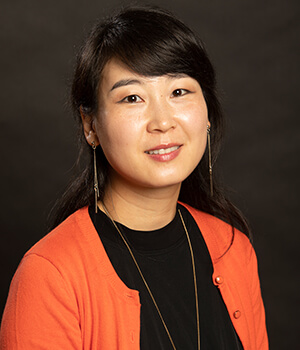
Hyunkyoung Ohمشاهده پروفایل
دانشیار
Hyunkyoung Oh serves as Associate Professor in the College of Nursing at the University of Wisconsin-Milwaukee, directing research on technology-enhanced self-management for adults with multiple chronic conditions (MCC) and autism spectrum disorder (ASD) families. Her work bridges nursing science with AI-driven health informatics to reduce disease burden through voice assistants, mHealth, and NLP applications. Education: PhD in Nursing, University of Iowa, Iowa City, IA MSN in Nursing, Chungnam National University, Daejeon, South Korea BSN in Nursing, Chungnam National University, Daejeon, South Korea Research Focus: Dr. Oh pioneers metabolic-focused MCC self-management using AI/voice technology for cardiovascular diseases, diabetes, and hypertension, while developing ASD communication support systems to enhance caregiver independence. Her Cardiac Health Behavior Scale (CHB-K21) validates nursing-sensitive outcomes, and her NSF/NIH-funded projects address health disparities through human-centered design. Publication Trends: Recent work (2020-2024) reveals three dominant trajectories: (1) Voice-activated self-monitoring tools (VoiS) for diabetes/hypertension, (2) Social media NLP analysis of lay health terminology, and (3) Robot-mediated exercise for geriatric populations. Over 70% of publications integrate AI with chronic disease management, emphasizing patient-centered technology adaptation. Scientific Recognition: Sigma Theta Tau Honorable Mention (2017) Ballard Seashore Dissertation Fellowship (2013) Midwest Nursing Research Society 2nd Place Award (2012) Grant Leadership: As PI on NIH R21NR019707 ($500k) and NSF I-Corps grants, she develops the VoiS platform and ASD learning app. Current $1.2M NIH U54MD018935-01 (Co-I) tackles maternal morbidity disparities. She mentors UWM SURF fellows in health tech innovation through 8 active projects. Research Infrastructure: Leads the Self-Management and Healthcare Delivery research groups, utilizing Cunningham Hall labs for prototyping voice interfaces and validating outcome measures with diverse patient populations.