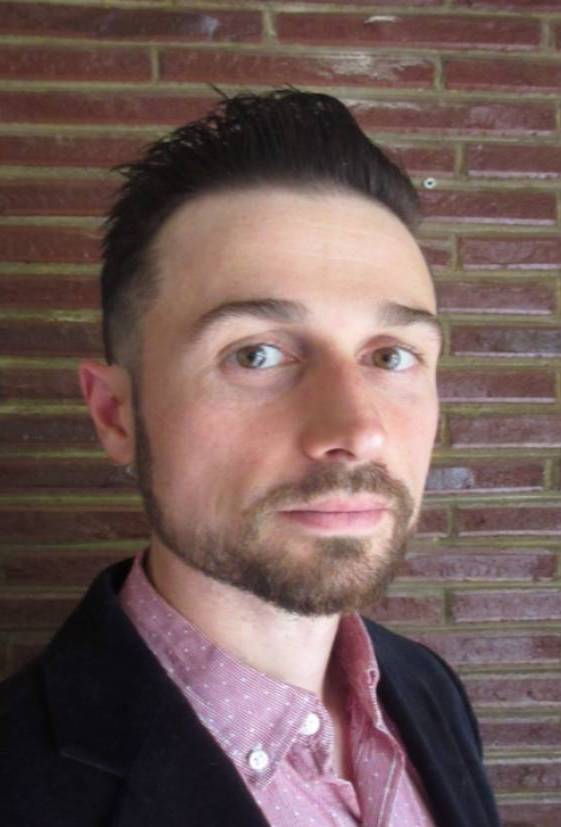
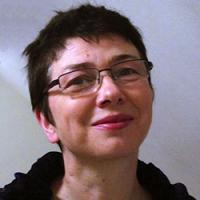
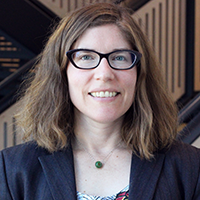
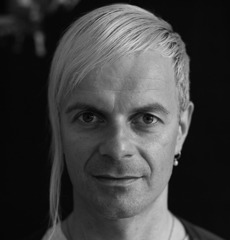
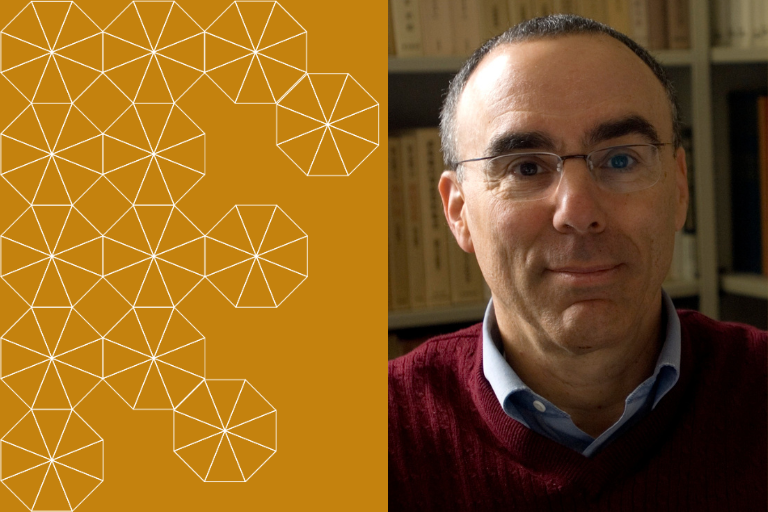
Professor Adam Yuet Chau is a Fellow and Director of Studies at St John's College and holds the Professor of the Anthropology of China position at the Faculty of Asian and Middle Eastern Studies, University of Cambridge . His academic journey includes training at Stanford University (PhD in Anthropology, 2001) and teaching roles at Oxford and SOAS before joining Cambridge in 2008. Focus on Chinese religions and their social dimensions Specializes in ritual theory and cultural transformations Develops comparative frameworks for understanding religious practices His research spans religion under socialism , hosting in political/religious contexts , and ritual polytropy . Recent projects include editing Chinese Religious Culture in 100 Objects and analyzing 'spheres' (界) in Chinese society . Publications like Miraculous Response (2006) and Religion in Contemporary China (2011) establish him as a key figure in religious anthropology. Current and past PhD/MPhil students explore topics from temple festivals in Taiwan to religious subjectification . He actively reviews for leading presses (Cambridge, Oxford, Harvard) and journals ( Ethnos , Modern China ), and participates in international academic workshops.
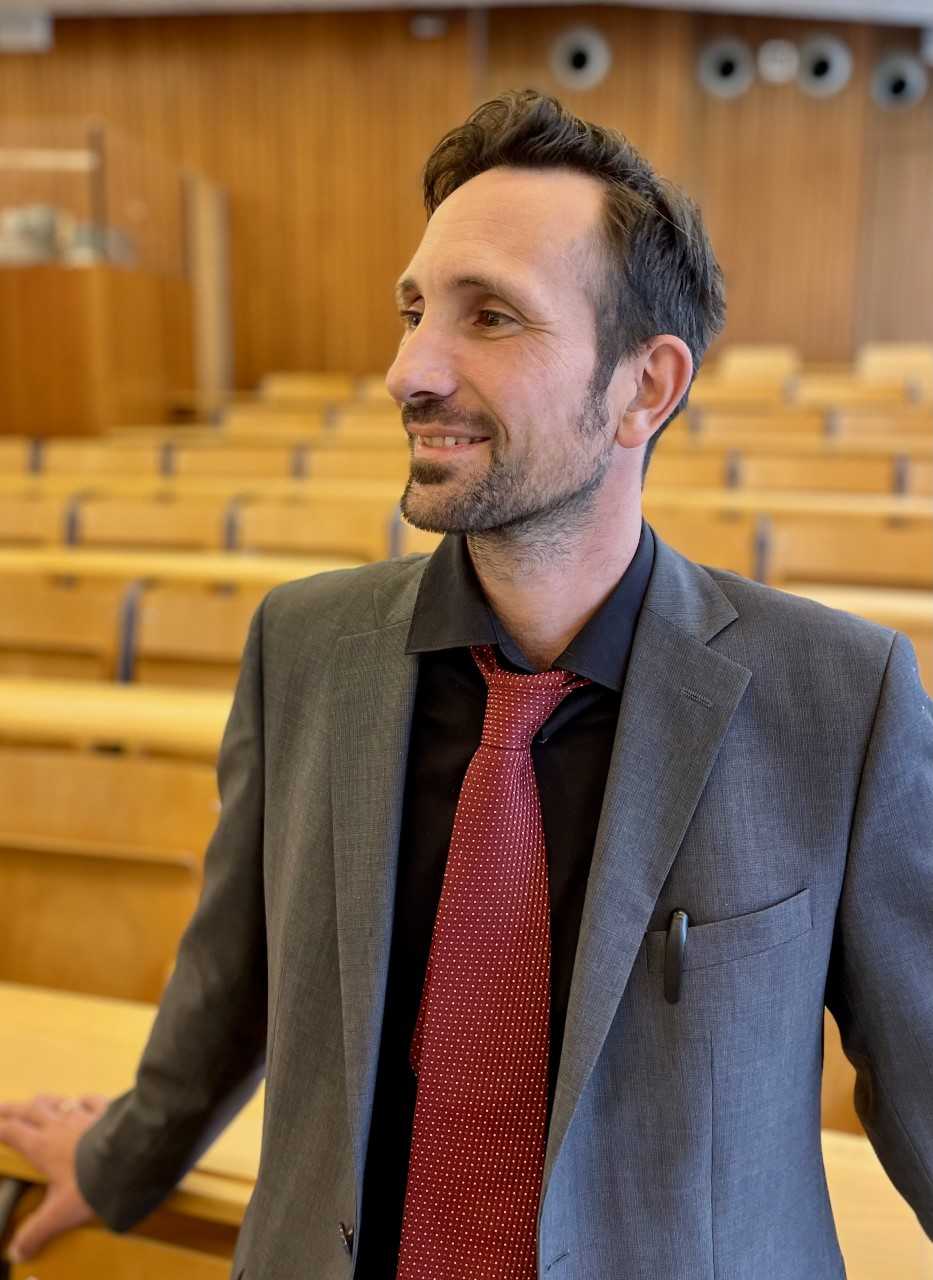
Jacob M. Baum serves as the Buena Vista Foundation Associate Professor in the Department of History at Texas Tech University, specializing in later medieval and early modern European history with particular focus on the German-speaking world from 1400-1800. His research explores the intersections of ideas, culture, and daily life through the lens of the human body, spanning sensory studies, disability studies, and medical history. Dr. Baum challenges traditional narratives by examining how bodily experiences shaped historical developments during pivotal periods including the Protestant Reformation and early European colonial expansion, emphasizing how sensory knowledge emerged from practical problems confronted in daily life rather than purely intellectual frameworks. Dr. Baum's scholarly contributions include significant publications such as Reformation of the Senses (2019) and the co-edited volume Embodiment, Expertise and Ethics in Early Modern Europe: Entangling the Senses (2020), with his work increasingly focusing on disability history, particularly deafness in sixteenth-century Germany. His research demonstrates consistent methodological innovation, moving from sensory history to disability studies while maintaining focus on how bodily differences influenced social, cultural, and religious transformations. Hans Rosenberg Article Prize (2015) for 'From Incense to Idolatry: The Reformation of Olfaction in Late Medieval German Ritual' His research has received substantial support from prestigious organizations including the National Endowment for the Humanities, the National Humanities Center, the Mellon Foundation, and the Leibniz Institute for European History. At Texas Tech, Dr. Baum teaches undergraduate courses in European history, medical history, and disability history, as well as graduate courses in research methodology and historiography, actively mentoring students interested in his specialized chronological and thematic areas.
Michele Matteini serves as Associate Professor in the Department of Art History at New York University's College of Arts and Science, specializing in Late Imperial Chinese painting and material culture (ca. 1400-1800) with focus on Qing dynasty antiquarianism, collecting practices, and eighteenth-century transnational artistic exchanges. His academic credentials include: Ph.D. (2012) in History of Art from the Institute of Fine Arts M.A. (2004) in History of Art from New York University B.A. (2000) summa cum laude from the University of Venice, Ca’ Foscari Research interests encompass Late Imperial Chinese painting, antiquarianism, collecting culture, Qing history, urban culture, inter-Asian artistic exchanges, eighteenth-century globalism, craft traditions, embodied knowledge, and art historical methodology. His interdisciplinary approach bridges anthropology, religious studies, and art history to examine material culture across East Asia. Recent publications reveal consistent thematic focus on eighteenth-century material practices, analyzing antiquarian objects, historical figure cults, and cross-cultural artistic production. Works integrate art historical analysis with anthropological perspectives on topics like rock collecting, filial piety, and sacred materiality, demonstrating how objects functioned within social and global contexts. His scholarly recognition includes: The Andrew Mellon Foundation Fellowship for Assistant Professors, Institute for Advanced Study, Princeton (2013-2014) Ittleson Fellowship, Center for Advanced Study in the Visual Arts, National Gallery of Art (2007-2009) Panofsky Distinguished Fellowship, Institute of Fine Arts, New York University (2002-2007) Matteini's research has been supported by major fellowships from the Andrew W. Mellon Foundation and National Gallery of Art. While current advising activities and grant projects beyond these fellowships are not detailed in available sources, his extensive publication record indicates sustained scholarly productivity focused on East Asian material culture.
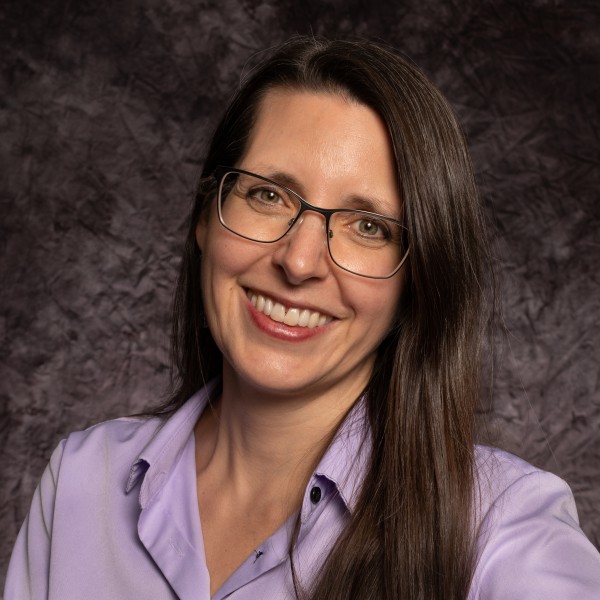
Dr. Brigitte Steger is a Senior Lecturer in Modern Japanese Studies at the University of Cambridge, where she serves as a Fellow in Asian and Middle Eastern Studies at Downing College. She teaches modern Japanese society courses and directs graduate affairs while serving as Secretary of the Degree Committee. MA, MPhil, PhD in Japanese Studies (University of Vienna) Visiting researcher at multiple Japanese universities Co-founder of Cambridge Creative Circular Plastics Centre sub-project Her research focuses on cultural anthropology of Japanese daily life, particularly sleep practices (inemuri), gender dynamics in urban spaces, disaster response rituals, and cleanliness/waste practices. She conceptualizes sleep as socio-cultural performance and examines temporal practices in premodern Japan. Recent publications analyze Heian-era sleep patterns, 2011 tsunami shelter hygiene, and plastic consumption in consumer societies. She leads international research on historical timekeeping and contemporary waste practices. Her edited volumes explore Japanese gender diversity, including 'herbivore boys' and manga girl culture. Scientific awards: Bank Austria Prize (2002) Vorarlberg Science Award (2005) University of Cambridge weekly research contributor She supervises graduate research projects and serves on the European Association for Japanese Studies and Japan Anthropology Workshop councils. Her 2025-26 sabbatical focuses on completing Heian-period sleep research.
London School of Economics and Political Science (LSE)United Kingdom
Professor Leigh K. Jenco holds the position of Professor of Political Theory at the Department of Government, London School of Economics and Political Science (on sabbatical during 2024/25). Her expertise spans Chinese Thought, Taiwan Studies, Political Philosophy, and Global Intellectual History. She previously taught at the National University of Singapore and has held visiting roles at Taiwan's Academia Sinica, National Taiwan University, and the University of Heidelberg. Education: B.A. from Bard College M.A. and Ph.D. from University of Chicago Her research explores late Ming neo-Confucian concepts of equality through literary theory and the 20th-century rediscovery of Chinese folksong compendia. She leads the £1.5M British Academy-funded 'Chinese Global Orders' project and was the principal investigator for the EU's 'East Asian Uses of the European Past' initiative. She served as associate editor of the American Political Science Review (2016–2020). Her publications include groundbreaking monographs like Changing Referents (Oxford UP, 2015) and Making the Political (Cambridge UP, 2010), which bridge political theory with Chinese intellectual history. Current projects focus on Ming dynasty poetics and cross-cultural knowledge transfer. Grants & Projects: Lead investigator for 'Chinese Global Orders' (£1.5M, British Academy) EU H2020 'East Asian Uses of the European Past' (€1.2M) She is fluent in Classical Chinese, Mandarin, and English, and her work emphasizes global comparative frameworks to challenge Eurocentric narratives. Her research often intersects historical texts with contemporary political debates, particularly around cultural borrowing and identity formation.
Dr. Jennifer Evans is a Senior Lecturer in History within the School of Creative Arts at the University of Hertfordshire. Her academic career spans over a decade since completing her PhD at the University of Exeter in 2011, followed by two years of teaching there before joining Hertfordshire. She serves as the founding editor of the Early Modern Medicine blog and co-directs the Perceptions of Pregnancy research network with colleagues Leanne Calvert, Sarah Fox, and Chelsea Phillips. Her research focuses on the history of the body, medicine, and gender during 1550-1750, with particular emphasis on reproductive health, infertility, and miscarriage. Her scholarly work demonstrates deep engagement with both male and female experiences of health and sexuality in early modern England. Current projects include 'Wounded Wombs and Empty Cradles: Miscarriage and Pregnancy Loss in Early Modern England c.1600-1780' (Folger Shakespeare Library, 2025-2026) and 'Foraging for Early Modern Medicines 1600-1750' (AHRC-funded). Analysis of her recent publications reveals consistent thematic concentration on bodily experiences, particularly reproductive health across genders. Her work bridges medical history with gender studies, examining how bodily functions and dysfunctions intersected with social structures. The scholarship shows increasing attention to male experiences of reproductive health alongside traditional focus on women's histories, reflecting broader historiographical shifts toward more inclusive medical history. Dr. Evans actively supervises postgraduate students including Kiran Seera (PhD: 'Domestic Disorder: Crime, Kinship, and Space in Bedfordshire, c. 1650-1790') and has completed supervision of three PhD and two MA students. Her research has received substantial external funding including AHRC Early Stage Impact Accelerator Award funding for her foraging project that explores historical medicinal plant knowledge. She directs the Perceptions of Pregnancy researchers' network which has published two major collections and hosted multiple conferences. The network brings together scholars examining all aspects of fertility, pregnancy, childbirth and early parenthood from the seventeenth to twentieth century. Her public engagement includes numerous media appearances including BBC Radio 4's 'The Food Programme' (February 2024), BBC World Service's 'The Food Chain', and multiple television appearances.
Burak Sunguralp Tekin is an Assistant Professor in the Department of Translation and Interpretation at the Faculty of Humanities and Social Sciences, Ankara Yıldırım Beyazıt University. His academic career includes positions as both Lecturer (2021-2022) and Assistant Professor (2022-present) at the same institution. Dr. Tekin's research primarily focuses on human sociality and the interplay of language, bodies, and technology, with particular emphasis on embodied interaction, social practices, and multimodal communication. Dr. Tekin's educational background includes: Doctorate (2014-2019) from University of Basel, Switzerland, with dissertation "Bodies at play: Exploring participation, spectatorship, and morality in videogaming activities" Postgraduate studies (2012-2013) from University of Newcastle Upon Tyne, United Kingdom, with thesis "Smiles and affective alignment in naturally occurring dyadic academic supervisions" Undergraduate degree (2006-2010) from Hacettepe University, Turkey Dr. Tekin's research interests center on social interaction, multimodal communication, and embodied practices. His work examines how people coordinate their actions, bodies, and language in various contexts including gaming, photography, public spaces, and pandemic-related social adaptations. He employs conversation analysis and multimodal interaction analysis to investigate the micro-details of human sociality, with particular attention to how technology mediates social practices. His research bridges sociology, linguistics, and human-computer interaction to understand the embodied nature of social organization. Analysis of Dr. Tekin's recent publications reveals a consistent focus on embodied social interaction across diverse contexts. His work demonstrates sophisticated methodological approaches to studying how people coordinate their movements, manage social spaces, and create meaning through multimodal resources. A notable trend is his examination of how social practices adapt during extraordinary circumstances like the COVID-19 pandemic, as well as his sustained interest in gaming activities and their social organization. His collaborative work with Lorenza Mondada is particularly prominent in the field of conversation analysis. Dr. Tekin has taught various courses including Multimodal Communication, Introduction to Applied Linguistics, Language and Communication, Language Acquisition, Consecutive Interpreting, Intercultural Communication, World Englishes, Applied Linguistics, Turkish Grammar, Language Culture and Society, and Discourse Analysis at both undergraduate and postgraduate levels. His teaching reflects his research expertise in communication, language, and social interaction.
Barbara Penner is Professor of Architectural Humanities at University College London's Bartlett School of Architecture, where she serves as Co-Director of the MA Architectural History program and supervises PhD students. Her academic appointments include Senior Lecturer positions at UCL since 2000 and previous roles at University of East London, Middlesex University, and Chelsea College of Art. Her educational background comprises a PhD from Birkbeck College (2003), MSc from University College London (1996), and BA from McGill University (1994). Penner's research focuses on the social and cultural dimensions of everyday spaces, examining how domestic environments, urban infrastructure, and commercial architecture shape social identities. Her interdisciplinary approach integrates architectural history with anthropology, literary theory, and cultural studies, particularly exploring gender dynamics in spaces like bathrooms, kitchens, hotels, and housing. Her publications reveal consistent engagement with themes of gender, domesticity, and infrastructure across historical periods. Key works include Bathroom (2013), Newlyweds on Tour (2009), and co-edited volumes on public toilets and gender. Recent scholarship examines social scientific research in home design, urine diversion systems, and historical housing models. RIBA President’s Award for Outstanding University-Located Research (2014) Leverhulme Major Fellowship (2021-2023) Provost Teaching Award, UCL (2013) Council of Editors of Learned Journals Best New Journal Award (2009) Penner actively supervises doctoral research on topics including Billy Butlin’s holiday camps and Gulf female shoppers' impact on London retail. She has completed twelve PhD supervisions and examined nearly thirty theses internationally. Her professional activities include serving on the Architectural Association Publications Committee, as North American Editor for Architectural History, and as External Examiner at University College Dublin. She participates in the 'Insurgent Domesticities' research group at Columbia University and contributes to Places Journal as a contributing editor.
Wolfgang Mayer is a Professor for Performative Practice at the State Academy of Fine Arts Stuttgart , teaching collaborative artistic processes. He co-founded the art group Discoteca Flaming Star (DFS) in 1998 with Cristina Gómez Barrio, focusing on performative works that challenge memory and institutional frameworks. 1990–1995: Studied at Academy of Fine Arts Munich 1996–1997: DAAD scholarship at School of Visual Arts NYC 2005–2006: Whitney ISP participant Mayer’s research integrates performative practice , body theory , and collaborative art . His works interrogate memory , feminist narratives , and public space dynamics through sculptures , performances , and experimental music . Recent projects like Momentum:synthesize.r (2024) and Love Any Out of (90 Seconds) End (2023) explore temporal structures and emotional labor . Scientific honors include: 2013 Fundacion Estrenos Grant 2006–2007 Pollock-Krasner Scholarship 1993 Salzburg Summer Academy scholarship He emphasizes non-formalized artistic development through Sound & Body modules, public space interventions , and critical response protocols . Mayer’s DFS collective has shown globally at institutions like The Kitchen , Whitney Museum , and Tate Modern , often collaborating with figures like Rita McBride and Jeremiah Day.
Robert Sharf is the D.H. Chen Distinguished Professor of Buddhist Studies in the Department of East Asian Languages and Cultures at the University of California, Berkeley . He also serves as Chair of the Numata Center for Buddhist Studies and Head Graduate Advisor for the Group in Buddhist Studies . With a PhD in Buddhist Studies from the University of Michigan (1995), he previously taught at McMaster University (1989-1995) and the University of Michigan (1995-2003). Research Interests: Medieval Chinese Buddhism (especially Chan) Japanese Buddhism Buddhist Art and Archaeology Ritual Studies Buddhist Modernism Philosophical Paradoxes Methodology in Religious Studies Critical Buddhist Discourse Publications & Collaborations: Author of Coming to Terms with Chinese Buddhism: A Reading of the Treasure Store Treatise (2002) Co-editor of Living Images: Japanese Buddhist Icons in Context (2001) Co-author of What Can’t Be Said: Contradiction and Paradox in East Asian Thought (2021) Co-author of How to Lose Yourself: An Ancient Guide to Letting Go (2025) Editor of Chinese translations of his works: Xiafu Chanxue zixuan ji and Xiafu Mijiao Yanjiu zixuan ji (2022) Academic Leadership: Director of the Group in Buddhist Studies Director of Religious Studies Chair of the Center for Buddhist Studies
HUANG Fei is a Professor of Chinese History and Society in the Department of Chinese Studies at the Faculty of Humanities, University of Tübingen, Germany. She has held this position since 2020, following a Junior Professorship at the same institution from 2014 to 2020. Her academic journey began with a BA in History from Sun Yat-sen University (Guangzhou, 2005) and culminated in a PhD in Chinese Studies from Leiden University (2012). University: University of Tübingen School: Faculty of Humanities Department: Department of Chinese Studies Academic Rank: Professor Email: fei.huang@uni-tuebingen.de Her research spans an interdisciplinary terrain, combining landscape studies, environmental history, history of the body, cultural geography, historical anthropology, art history, and material culture studies . Her work primarily investigates China’s historical development from the 16th to the 20th century, with a regional focus on Southwest China, especially Yunnan, and thematic attention to frontier dynamics, urban environments, and the interplay between natural resources and cultural memory. Professor Huang’s recent publications reveal a consistent and evolving scholarly trajectory centered on the transformation of natural and urban landscapes. Her research on hot springs —such as Huaqing Hot Springs—explores their roles in public health, urban planning, and ideological representation in modern China. Her earlier work on Dongchuan examines how imperial and local actors reshaped frontier landscapes through cultural representation, religious practice, and economic interests. Articles on sulfur manufacturing, bathing culture, and Tusi succession highlight her ability to connect local practices with broader global and environmental networks. Scientific Awards and Recognition: No specific awards or fellowships are mentioned in the provided texts. Advising and Grants: She supervises PhD and Master’s theses in Chinese history and culture, though specific student names are not listed. No explicit mention of grants or funded research projects is made in the texts, but her extensive publication record in top-tier journals suggests active research engagement. Labs and Research Teams: She is affiliated with the Department of Chinese Studies at the University of Tübingen and participates in interdisciplinary research within the Faculty of Humanities. Her work often involves collaboration with scholars in anthropology, geography, and environmental history, as evidenced by her co-taught courses and international academic engagement.
Yiqun Zhou serves as Associate Professor of East Asian Languages and Cultures and, by courtesy, of Classics at Stanford University. Holding dual appointments since 2013, Zhou is actively engaged in teaching and research within Stanford's Department of East Asian Languages and Cultures and the Department of Classics, with program affiliations at the Center for East Asian Studies. Research interests span Chinese and comparative women's history, early Chinese literature, Ming-Qing fiction, China-Greece comparative studies, and the reception of classical antiquity in modern China. Zhou's scholarly approach emphasizes cross-cultural analysis between ancient Chinese and Greek civilizations, particularly examining gender relations, literary traditions, and the modern Chinese reception of classical antiquity. Zhou's publications demonstrate consistent scholarly output with recent works appearing in 2024, focusing on imperial performance, gender dynamics, and intellectual history. The research trajectory reveals a sustained engagement with comparative methodologies, particularly examining intersections between Chinese and Greco-Roman civilizations across historical periods. Zhou actively mentors graduate students through multiple roles including Doctoral Dissertation Advisor for Xiaoyi Huang and Bingxiao Liu, Master's Program Advisor for Helen Bovi and Yuan Wei, and Doctoral Program advisor for ZiFan Yang. Teaching responsibilities include courses such as Beginning Classical Chinese, Heroes and Heroism (co-listed with Classics), Proseminar in East Asian Humanities, and The Use of Classical Antiquity in Modern China. Academic background includes a Ph.D. in Comparative Literature from the University of Chicago (2004). Zhou maintains an active research agenda with publications spanning journal articles and book chapters, primarily focusing on comparative approaches to Chinese literature and history with Greco-Roman antiquity.
Konstantin Voigt, Professor of Musicology II , serves at the University of Würzburg within the Faculty of Philosophy and Institute of Music Research. His research spans medieval Latin song traditions, music theory, notation systems, and digital humanities applications. He also explores 20th-century composers like Arnold Schoenberg and the reception of medieval music in popular culture. Current: Chair of Musicology II, University of Würzburg (2024–) Previous: Tenure-track Professor, University of Freiburg (2020–2024) Education: PhD (Würzburg), MA (Erlangen-Nürnberg), Musicology & Art History Voigt's research bridges premodern music history with digital methodologies, focusing on: Medieval Latin song structures (9th–13th centuries) Development of musical notation and visualization Digital editions as tools for manuscript analysis Intermedial relationships in postmodern composition Stefan George’s poetry in Schoenberg’s works His recent publications analyze scribal practices in Paris 1139 manuscripts and digital approaches to monophonic music. He co-leads the Weave Lead project on French music reception in Central Europe before 1350 and contributes to the Corpus monodicum digital edition. Collaborations include PD Dr. Hana Vlhova-Wörner (Prague) and institutions like the Schola Cantorum Basiliensis.
Anja Kraus is a Professor in Arts and Culture Education at Stockholm University, Department of Teaching and Learning. She has held academic positions at the University of Education Ludwigsburg (2003-2013), Linnaeus University Växjö (2013-2019), and joined Stockholm University in 2018. Her academic journey began with studies in Philosophy and Educational Sciences at Free University Berlin and Arts Education at the University of the Arts Berlin, Germany. Her research focuses on Pedagogical Anthropology, with special emphasis on tacit knowledge, corporeality, aesthetic education, and multimodal learning. She has developed systematic approaches to understanding tacit knowing in educational contexts, particularly examining how corporeality, aesthetic learning, and inclusivity function in schools. Her work bridges phenomenological, ethnographical, and body-phenomenological approaches with practical educational applications. She has made significant contributions to understanding how materiality, performativity, and imaginaries shape educational practices. Her recent publications reveal strong trends in embodiment studies, with particular attention to kinesthetic learning, spatial pedagogy, and the relationship between aesthetics and sustainability. Her work increasingly explores educational practices within the Anthropocene context, examining how arts education can address environmental concerns through embodied approaches. The recurring theme across her publications is the exploration of how tacit knowledge manifests in educational settings and how this understanding can transform teaching practices. As head convenor of the international scientific network 'Tacit Dimensions of Pedagogy,' she has organized numerous workshops and conferences addressing pedagogical terminologies across languages. Her collaborative projects span Scandinavia, Europe, Asia, and North and South America, demonstrating her commitment to transcultural approaches in educational research. Her teaching spans multiple languages (German, English, Swedish, Spanish) and covers diverse areas including Classroom Education, Cultural and Media Education, Sciences of Bildung, Elementary Education, and Vocational Training. Her pedagogical approach emphasizes practice-oriented competence, inclusive school development, and aesthetic learning environments with a comparative perspective.
Dr. Mona Tokarek LaFosse serves as Assistant Professor of New Testament and Sacred Literature Studies (Teaching Stream) at the University of Toronto's Faculty of Divinity through a joint appointment at Emmanuel College and Victoria College. She teaches across undergraduate, basic-degree, and graduate programs at Victoria University, specializing in New Testament studies and early Christian history through interdisciplinary lenses. Her educational background includes a PhD from the University of Toronto's Department for the Study of Religion (2011), MA in Religion and Culture from Wilfrid Laurier University (2001), Honors BA in Anthropology from the University of Waterloo (1998), and Biblical Studies certificate from Columbia Bible College (1994). She previously taught at Martin Luther University College, Wilfrid Laurier University, Huron University College, and the University of Toronto. Dr. LaFosse approaches New Testament scholarship through cultural anthropology, storytelling theory, and age studies. Her research examines early Christian communities through the lens of age structure, intergenerational dynamics, and oral storytelling practices. She explores how life course stages shaped social relationships in the ancient Mediterranean, particularly focusing on 1 Timothy's treatment of age hierarchies. Her innovative teaching methodology emphasizes 'embodied story'—integrating performance and physical engagement with texts influenced by Indigenous storytelling traditions. Her recent publications reveal a strong focus on aging in early Christianity, with 2024 articles examining age demographics and comparative gerontology. She also maintains active scholarship in oral tradition studies, particularly regarding the Gospel of Mark and Shepherd of Hermas, while contributing to academic discourse through society leadership and book reviews. Dr. LaFosse holds significant leadership roles including current service on the Canadian Society for Patristic Studies Nominating Committee (2025–26) and co-chairing the Society of Biblical Literature's Social-Scientific Criticism of the New Testament section (2025–27). She actively participates in the Canadian Society of Biblical Studies, Society of Biblical Literature, and KW Biblical Colloquium. Her distinctive teaching portfolio includes innovative courses like 'Zombies, the Bible and the End of the World' and 'Gospel of Mark as Embodied Story,' reflecting her commitment to interdisciplinary engagement with biblical texts through contemporary cultural frameworks and physical performance.