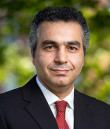
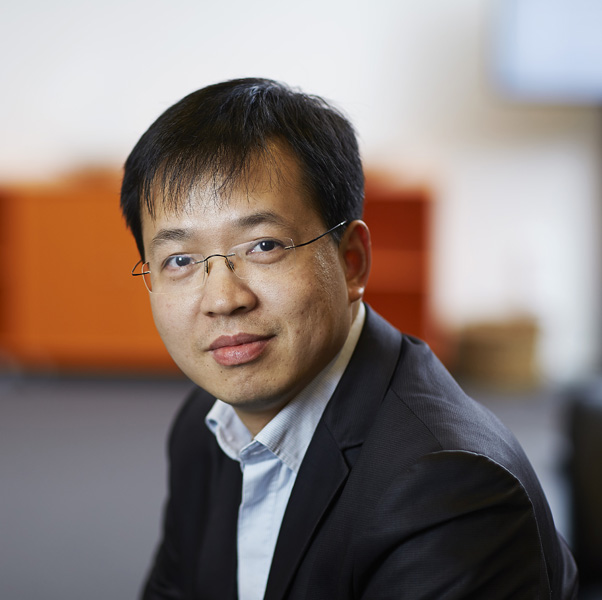
Frankie O'Connell is a Reader in Air Transport Management (equivalent to Associate Professor) at the University of Surrey's Department of Hospitality and Tourism Management. He holds a PhD in Airline Strategy from Cranfield University, an MSc in Air Transport Management from Cranfield, and an MBA in Aviation from Embry-Riddle Aeronautical University. His extensive industry experience includes roles at Boeing and consultancy work with over 55 airlines globally. Research focuses on airline strategy, revenue management, environmental policies, and the impact of global events like pandemics and political conflicts on aviation. Recent work examines airline pricing psychology, blockchain applications in maintenance operations, and sustainability initiatives including passenger willingness to pay for carbon taxes. Dr. O'Connell's publications demonstrate methodological diversity, combining econometric analysis, behavioral experiments, and case studies of airlines in Southeast Asia and Europe. His research informs airline management practices, regulatory policy, and crisis response strategies in global aviation.
Dr. Arash Habibi Lashkari is an Associate Professor and Canada Research Chair in Cybersecurity at York University's School of Information Technology. He holds a PhD from the University of Technology Malaysia and completed a Post-Doc at the University of New Brunswick. With over 25 years of teaching experience, he specializes in cybersecurity risk management, malware analysis, and threat hunting. He pioneered Canada’s first cybersecurity Capture the Flag (CTF) competition for post-secondary students and has authored 10 books and over 110 academic articles. Research Interests: Cybersecurity, Network Security, Threat Hunting, Malware Analysis, Cybersecurity Risk Management, and Blockchain Security. He leads the Behaciour-Centric Cybersecurity Center (BCCC), focusing on vulnerability detection technologies and cybersecurity dataset generation. Awards: Mitacs 150 Top Researchers (2017), University of New Brunswick Teaching Innovation Award (2020), Gold Medal at 2020 Canadian Online Publishing Awards, and multiple international security competition awards. His work has been featured in CBC, CIC, and global cybersecurity conferences. Key Projects: Development of intrusion detection datasets (e.g., CIRA-CIC-DoHBrw-2020), malware analysis frameworks, and AI-driven cybersecurity tools. He actively collaborates with organizations like Aviva and NICT on cybersecurity resilience strategies. Teaching: Offers courses in Digital Forensics, Network Security, and Cybersecurity Management. His 'Think-Que-Cussion' teaching methodology emphasizes interactive learning.
Ingrid Bauer-Hänsel is an Assistant Professor of IT Management at the University of St. Gallen (HSG), affiliated with the Information Management (IWI-HSG) department. Her academic career includes roles as a Senior Technology Manager at Chage:ON (AMAG Group) and a doctoral researcher at the University of Zurich. She holds a Ph.D. in Blockchain Information Systems from the University of Zurich and a M.Sc. in Business Administration and Information Systems from Copenhagen Business School. Her research focuses on blockchain technologies, data markets, agile IT systems, and interorganizational systems design. Notable projects include the InnoSuisse Cardossier Project and studies on blockchain consortia. Bauer-Hänsel teaches courses such as Agile IT and Organization , Information Management , and Business Informatics 1 at both bachelor and master levels. She received the 2018 2nd Runner-up Best Paper Award at the ICIS conference. Her work explores socio-technical systems, tokenization, and AI-driven business models, with a particular emphasis on automotive and financial sectors. Current initiatives include designing blockchain-based data markets and exploring generative AI’s impact on knowledge work. Bauer-Hänsel’s professional background includes IT consulting at PwC, risk management roles at Danske Bank, and academic research at IBM and the Karlsruhe Institute of Technology. She actively contributes to bridging academic research with industry applications through collaborative projects and advisory roles.
Zhang Yan is a Full Professor at the Department of Informatics, University of Oslo, Norway. He previously served as Head of Department and Chief Scientist at Simula Research Laboratory (2014–2016). His research focuses on advanced communication technologies including Internet of Things (IoT), 5G/6G networks, mobile edge computing, and blockchain applications. He has held significant roles such as IEEE VTS Distinguished Lecturer (2016–2020) and Chair of IEEE TCGCC (2019–2021). His honors include IEEE Fellow (2020), election to Academia Europaea (2020), and recognition as a Web of Science Highly Cited Researcher (2018–2019). Research interests span interdisciplinary areas like network dynamics, socio-economic systems, and algorithmic design. His work bridges theoretical foundations with practical applications in smart grids, vehicular networks, and global trade systems. Recent publications emphasize network science methodologies applied to economic complexity and information diffusion. Professional contributions include editorial roles for top journals and leadership in EU-funded projects. His awards reflect impactful contributions to both technical innovation and scientific leadership in informatics and communications.
Beng Chin Ooi is a Lee Kong Chian Centennial Professor at the National University of Singapore (NUS), School of Computing. He has been with NUS since 1991, progressing through the ranks from Lecturer to his current distinguished position. He previously served as Dean of the School of Computing from 2007 to 2013 and as Director of the Smart Systems Institute from 2011 to 2021. His educational background includes: 1985: B.Sc. (1st Class Honors) from Monash University, Melbourne, Australia 1989: Ph.D. in Computer Science from Monash University, Melbourne, Australia Beng Chin Ooi's research focuses on database systems, large scale analytics, and distributed systems. His work has been instrumental in advancing the field of data management technology, particularly in the context of "big data" in large-scale parallel and distributed systems. He has made significant contributions to spatio-temporal and distributed data management, as well as pioneering research in distributed database management and peer-to-peer based enterprise quality management. His recent publications demonstrate a strong focus on blockchain technology, machine learning systems, and healthcare informatics. There's a clear progression from foundational database research to applications in emerging technologies like blockchain and AI. His work bridges theoretical advances with practical system implementations, as evidenced by multiple open-source projects associated with his publications. His notable awards include: 2021: NUS Research Recognition Award 2020: ACM SIGMOD E.F. Codd Innovations Award 2020: ACM SIGMOD Research Highlight Award 2019: VLDB Best Paper Award 2016: Fellow of Singapore National Academy of Science 2016: China Computer Federation Overseas Outstanding Contributions Award 2014: VLDB Best Paper Award 2014: IEEE TCDE CSEE Impact Award 2013: Singapore National Day's Public Administration Medal (Silver) 2013: NUS Outstanding Researcher Award 2012: IEEE Computer Society Kanai Award 2011: ACM Fellow 2011: Singapore President's Science Award 2009: IEEE Fellow 2009: ACM SIGMOD Contributions Award Throughout his career, Professor Ooi has demonstrated exceptional leadership in the database community, promoting high standards of database research at both international and regional levels. His BLOCKBENCH framework became the world's first benchmarking tool for private blockchains, and his work on data provenance on blockchain systems earned both the VLDB Best Paper Award and the ACM Research Highlight Award. He has led several major research initiatives, including the Smart Systems Institute at NUS. Professor Ooi has established multiple open-source projects including FabricSharp for blockchain data provenance and Cool for cohort online analytical processing. His research group has consistently produced high-impact work that bridges theoretical advances with practical system implementations.
Aseem Kinra is a Professor at the School of Energy, Geoscience, Infrastructure and Society, Heriot-Watt University, United Kingdom. He is actively involved in research and supervision, currently accepting PhD students for projects focused on digital transformation and sustainability in global supply chains. His research interests lie at the intersection of digital technologies and sustainable operations, particularly in supply chain management. He investigates how digital objects, blockchain, and data-driven technologies can enable transformative change toward net-zero and regenerative supply systems. His work emphasizes decision-making, resilience, transparency, and stakeholder engagement in complex logistics environments. The recent trends in his publications reflect a strong focus on digital supply chains, sustainability transitions, and technological innovation. His research spans topics such as blockchain for trust in food supply chains, digital twins for maritime logistics, bibliometric analysis of data-driven technologies, and sustainability in humanitarian and circular supply chains. These works collectively demonstrate a commitment to leveraging digital transformation for environmental and social impact. While no specific scientific awards are mentioned, his extensive publication record in high-impact journals and conference proceedings indicates significant scholarly contribution. He has supervised or collaborated on numerous research projects, as evidenced by his co-authored works and editorial roles, including serving as a co-editor for conference proceedings. His research is aligned with multiple UN Sustainable Development Goals, particularly those related to sustainable industries, responsible consumption, climate action, and innovation. Aseem Kinra is engaged in collaborative research across international boundaries, with recent work involving partners in Europe and beyond. His projects often involve qualitative and quantitative analysis of organizational practices, policy frameworks, and technological adoption, aiming to generate actionable insights for both industry and policymakers.
Ricardo F. Ramos is an Adjunct Professor at the Oliveira do Hospital School of Technology and Management, Polytechnic Institute of Coimbra (ESTGOH-IPC), and at the Information Management School, NOVA University Lisbon (NOVA-IMS). He serves as an Associate Researcher at ISTAR-Iscte - Research Center in Information Sciences, Technologies and Architecture, focusing on Information Systems. His educational background includes: PhD in Management with specialization in Marketing from ISCTE (2015-2018) Master's degree in Sports Management from University of Lisbon Faculty of Human Kinetics (2012-2015) Bachelor's degree in Sport from Polytechnic Institute of Setúbal Higher School of Education (2009-2012) Ricardo's research spans diverse areas within marketing, with particular focus on consumer behavior in tourism and hospitality, sports marketing, and text mining applications. His methodology often involves analyzing textual data to uncover consumer insights, as demonstrated in publications examining social media, mobile applications, and online reviews. His work frequently explores the intersection of technology and consumer behavior, investigating how digital platforms influence purchasing decisions and service experiences. His recent research trends show a growing interest in sustainability within business contexts, virtual and augmented reality applications in tourism, artificial intelligence in marketing, and the evolving dynamics of digital consumer behavior across various industries including hospitality, aviation, and retail. Ricardo has received significant recognition for his scholarly work, with publications in high-impact journals such as the International Journal of Hospitality Management, Journal of Air Transport Management, and Journal of Hospitality and Tourism Technology. His research on topics like social media's impact on retail websites, airline sustainability, and customer satisfaction in tourism contexts has accumulated hundreds of citations across multiple databases. His academic contributions extend to collaborating with researchers across various institutions, with a methodological approach that frequently employs text mining and data analytics to extract meaningful consumer insights from large datasets.
Assoc. Prof. Meltem Gürünlü serves as a faculty member and department head of the Department of International Trade and Finance (Eng.). She has conducted Erasmus teaching mobility at the University of Split, Croatia (May 2023), delivering a seminar on legislative-environment interactions and strengthening academic ties. Her research focuses on corporate finance, behavioral finance, sustainability, and emerging markets, with particular attention to digital transformation, corporate governance, and fintech innovations. Recent work explores topics like cryptocurrency ecosystems, green bonds, and the future of financial systems. Her academic contributions span over 40 publications since 2007, addressing themes such as capital structure dynamics, foreign ownership impacts, and the role of technology in finance. Key areas include analyzing business groups' financial behaviors, evaluating earnings management practices, and investigating investor perceptions of sustainability initiatives. Her work bridges theoretical frameworks with empirical evidence, often using Turkish market data (e.g., Borsa Istanbul). Notably, Prof. Gürünlü’s research highlights interdisciplinary intersections—e.g., blockchain’s governance implications, renewable energy financing challenges, and the ethical dimensions of AI in finance. Her scholarship emphasizes practical policy recommendations for regulatory frameworks and corporate strategies in evolving financial landscapes.
Saeed Reza Mohandes is an Assistant Professor in the Engineering Management Department at the University of Manchester , specializing in Construction Project Management with a focus on AI-based techniques and Digital Twin technology. His academic journey includes a Doctor of Engineering from Hong Kong University of Science and Technology (HKUST) , M.Sc. in Construction Technology from Universiti Teknologi Malaysia (UTM) , and B.Eng. in Technical Design from Islamic Azad University (IAU) . Education: Ph.D. in Engineering, Hong Kong University of Science & Technology, 2020 M.Sc. in Construction Technology, Universiti Teknologi Malaysia, 2014 B.Eng. in Technical Design, Islamic Azad University, 2010 His research leverages deep learning, fuzzy logic, and IoT to advance Construction Safety , Green Construction , and Infrastructure Management , aligning with UN Sustainable Development Goals (SDGs). Recent publications examine Digital Twin for net-zero buildings, blockchain in sustainable procurement, and UAVs for safety management. Scientific Awards : Best Paper Award, International Conference on Circular Economy (2023) Editorial Roles : Associate Editor, Guest Editor, and Reviewer for leading journals in construction and AI
Devki Nandan Jha is a researcher specializing in Internet of Things (IoT) , Cloud/Edge Computing , and Cybersecurity . His work focuses on runtime monitoring, security frameworks, and deployment optimization in heterogeneous environments. Collaborations include institutions across Europe and Asia, with frequent co-authorship with Rajiv Ranjan, David Wallom, and David Blundell.
TRAN Minh Tam is an Assistant Professor at NEOMA Business School, France, specializing in Management Science and Operations Research. He holds a PhD in Industrial Engineering from INSA Lyon and dual Master’s degrees in Statistical and Financial Engineering, Data Science, and Mathematics of Insurance, Economics, and Finance from Paris Dauphine University, PSL University, and École Normale Supérieure de Paris. Research Focus: Digital transformation of supply chains, with emphasis on blockchain, AI, and data-driven decision-making Key Topics: Dual/multi-channel retailing, pricing strategies, stochastic demand modeling, omnichannel optimization Methodologies: Machine learning, operations research, game theory His work addresses cost reduction, service level improvements, and inventory accuracy challenges through quantitative models. Publications appear in journals like the International Journal of Production Economics and at conferences including INFORMS and ISIR. He previously conducted postdoctoral research at CentraleSupélec’s Industrial Engineering Laboratory and Future Cities Lab.
Dr. Rosario Giustolisi is an Associate Professor in the Department of Computer Science at the IT University of Copenhagen . His research centers on computer security with a focus on cryptographic protocols for decision systems (e.g., voting and exams), automated security analysis, accountability frameworks, and sociotechnical security aspects. Before joining ITU, he held postdoctoral roles at SICS RISE and Lund University, Sweden, and earned his PhD from the University of Luxembourg with work on secure exam protocols, culminating in his book Modelling and Verification of Secure Exams (Springer, 2018). Research Trends: His 15 most recent articles (2016–2025) span cryptographic protocol design, coercion-resistant voting/exams, zk-SNARK applications, differential privacy, automated security analysis, and sociotechnical threat modeling. Key subfields include secure decision systems, privacy-preserving mechanisms, and formal verification. Scientific Awards: Best Paper Award, NordSec 2017 Best Paper Award, SECRYPT 2014 Villum Experiment Grant (Sole PI) 2020 ICT TNG Postdoc Grant (Sole PI) 2016 CSC Best PhD Thesis Award 2016 Acknowledgments from Apple for Security Advisory Professional Service: Organized cybersecurity breakfast talks at ITU and served on conference committees for ACM SAC (Security track), STAST, E-VOTE ID, and NordSec. He also contributed as a journal referee and sub-reviewer for multiple conferences.
Irena Vodenska is Professor of Finance and Director of Finance Programs at Boston University’s Metropolitan College, Department of Administrative Sciences. She holds a PhD in statistical finance and an MA in economics from Boston University, an MBA from Vanderbilt University, and a BS in computer information systems from the University of Belgrade. She is also a Chartered Financial Analyst (CFA) charter holder. Her research is at the intersection of finance, complexity science, and artificial intelligence, focusing on systemic risk modeling, ESG investments, and financial network dynamics. She has led major interdisciplinary research projects funded by the National Science Foundation, the European Commission, and the U.S. Army Research Office. PhD, Statistical Finance – Boston University MA, Economics – Boston University MBA – Owen Graduate School of Management, Vanderbilt University BS, Computer Information Systems – University of Belgrade Dr. Vodenska’s research interests include network theory in finance, systemic risk propagation, AI-powered ESG analysis, cryptocurrency price forecasting, and financial regulation. She employs big data, machine learning, and natural language processing to analyze financial news, market dynamics, and corporate sustainability. Her work investigates how climate disinformation spreads via social networks and influences public policy and governance. The recent articles highlight a consistent focus on modeling financial and economic systems using network science and AI. Trends include systemic stress testing, sentiment analysis in financial markets, cascading failures, and the interplay between macroeconomic indicators and financial networks. Her work spans econophysics, behavioral finance, public health economics, and ethical AI in fintech. National Science Foundation (NSF) research grant (2023) NSF EAGER Award (2014–2015) European Commission FET Open Grant (2012–2014) U.S. Army Research Office (ARO) Grant (2020–2021) MEXT Post-K Computer Grant, Japan (2016–2019) Alexander Hamilton Fulbright Fellowship (1994) Owen Graduate School Fellowship (1995–1996) Dr. Vodenska teaches core finance courses such as Investment Analysis and Portfolio Management, Derivatives Securities, and Financial Regulation and Ethics. She co-developed the MET AD 678 course with Professor Tamar Frankel from BU Law, emphasizing real-world case studies and ethical decision-making. Her research grants have supported innovative work in systemic risk modeling, AI for ESG, and financial network stability. She is actively involved in mentoring, conference organization, and editorial roles in leading journals. She is a key organizer of the International School and Conference on Network Science (NetSci) and the Big Data in Economics, Science, and Technology (BEST) Conference. Her lab and research team focus on complexity in financial systems, bringing together economists, physicists, computer scientists, and data analysts to study global financial stability and sustainability.
Charalampos Alevizos is a Research Fellow at the University of Central Lancashire (UCLan), specializing in cybersecurity and blockchain technologies. He completed his doctoral thesis in 2024 on enhancing Zero Trust Architecture using blockchain and distributed ledger technologies. His research focuses on AI-driven cybersecurity solutions, threat intelligence systems, and resilient network defense mechanisms. Alevizos has published extensively in top-tier journals, including International Journal of Information Technology , Electronics , and Sensors , addressing topics such as blockchain-based intrusion detection, probabilistic cyber resilience metrics, and AI-enhanced threat analysis. His work bridges theoretical frameworks with practical applications in critical infrastructure, transportation systems, and financial services sectors. Key contributions include frameworks for quantifying defense effectiveness against cyberattacks, dynamic throttling strategies for 6G-enabled networks, and methodologies for incorporating uncertainty in cyber risk analysis. He collaborates with global researchers on interdisciplinary projects, emphasizing real-world cybersecurity challenges.
Dr. Milan Markovic is an Interdisciplinary Fellow at the School of Natural and Computing Sciences, University of Aberdeen, where he conducts research at the intersection of computing, sustainability, and societal impact. He is actively involved in teaching, supervising PhD students, and leading interdisciplinary research projects focused on transparency, accountability, and trust in intelligent systems. His research spans several key domains, including accountable AI, data provenance, IoT governance, and sustainable agri-food systems. He investigates how technologies like AI, blockchains, and semantic web can support transparent and ethical digital infrastructures. His work emphasizes real-world applications in healthcare data governance, smart cities, and environmental sustainability. The recent publications highlight a strong trend toward developing tools and frameworks for transparency and accountability, such as the Transparent Emissions Calculation (TEC) Toolkit, Farm Explorer, and semi-automated provenance tracking in Trusted Research Environments. These works integrate knowledge graphs, federated learning, and blockchain to ensure verifiable, auditable, and sustainable digital systems. Dr. Markovic has contributed to numerous collaborative research initiatives, including EATS (Enhancing Agri-Food Transparent Sustainability) and SARA (Semi-Automated Risk Assessment), which aim to improve data governance and sustainability in complex socio-technical systems. He supervises PhD students in computing science and collaborates with interdisciplinary teams across academia and industry. His leadership in projects like RAInS, TrustLens, and PROoFD-IT demonstrates a long-standing commitment to building trustworthy IoT and AI ecosystems. These projects explore user empowerment, data transparency, and compliance in digital systems, particularly in food safety, healthcare, and urban environments. He is affiliated with the Department of Computing Science and contributes to both theoretical and applied research, with a strong emphasis on open, reproducible, and socially responsible computing.