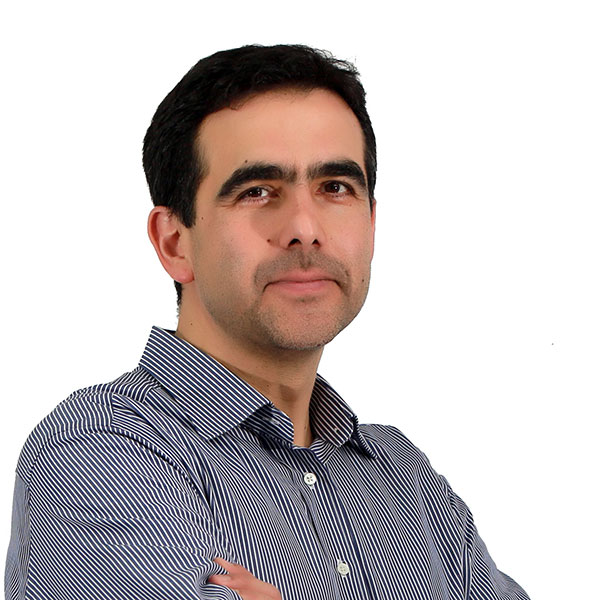
Shan Chen is an Assistant Professor at the Southern University of Science and Technology (SUSTech) , Shenzhen, China, with research expertise in Cryptography and Information Security , particularly focused on real-world applications and secure protocols. Ph.D. in Computer Science , Georgia Institute of Technology (2020) MEng in Computer Science and Technology , Tsinghua University (2014) BSc in Mathematics and Applied Mathematics , Beijing Normal University (2011) His research addresses practical challenges in cryptographic protocol design, including security analysis of TLS 1.3 and QUIC, causality preservation in secure messaging, and committing authenticated encryption. Key trends include improving protocol efficiency while maintaining provable security against real-world adversaries. He leads the Applied Cryptography Group and teaches courses like Algorithm Design and Analysis and Discrete Mathematics . Contact: chens3@sustech.edu.cn
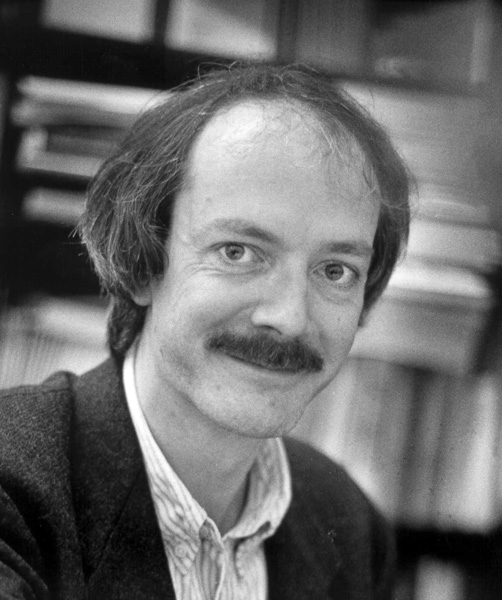
Dr. Aleksandar Ignjatovic is an Associate Professor at the School of Computer Science and Engineering, University of New South Wales. His research focuses on signal processing, approximation theory, and applications of mathematical logic to computational complexity, with an emphasis on algorithms for embedded systems and information aggregation. Grants: ARC Discovery DP180104188 (block-cipher circuits), DP210103704 (urban flood modeling), LP170100311 (approximate algorithms). Education: PhD in Logic and Methodology of Science (University of California, Berkeley), MSc in Mathematics (University of Belgrade), BSc in Mathematics (University of Belgrade). His work explores signal expansions combining Shannon and Taylor methodologies, and he supervises projects in rapid flood simulations and neural net training. He is based at Kensington Campus, Building K-17, Office 504, with contact +61 2 9385 6659.
Phillip Rogaway is a Professor in the Department of Computer Science at the University of California, Davis, within the College of Engineering. His work focuses on cryptography and cybersecurity, particularly authenticated encryption, secure communication protocols, and cryptographic definitions. University: University of California, Davis Department: Computer Science Ranks: Professor Rogaway's research spans foundational and applied cryptography, including deterministic encryption, format-preserving encryption, and provable security frameworks. He actively contributes to cryptographic standards like OCB and explores the social and ethical dimensions of cryptographic work. His recent publications emphasize authenticated encryption mechanisms, secure data distribution, and cryptographic efficiency. Rogaway has received grants such as the SaTC: CORE: Small: Crypto-for-Privacy (2017) and participated in workshops like the Dagstuhl Seminar on Symmetric Cryptography (2012). Rogaway also engages in educational advocacy, authoring materials like "Giving Good Talks" (2017) and "Introduction to Modern Cryptography" (2012). His work underscores the importance of aligning cryptographic practices with societal needs.
Tianren Liu is an Assistant Professor at the Center on Frontiers of Computing Studies (CFCS), Peking University, where he joined in 2022. His research focuses on cryptography and theoretical computer science with particular emphasis on information-theoretic approaches to cryptographic problems. Dr. Liu received his Bachelor's degree from IIIS Tsinghua University, advised by Prof. John Steinberger, and his Master's and Ph.D. degrees from MIT, where he was advised by Prof. Vinod Vaikuntanathan. Prior to joining Peking University, he was a postdoctoral researcher at the University of Washington, mentored by Prof. Huijia (Rachel) Lin. His primary research interests include information-theoretic cryptography (covering problems such as Private Information Retrieval, Conditional Disclosure of Secrets, Private Simultaneous Messages, and secret sharing), secure multi-party computation with information-theoretic security properties, garbled circuits, analysis of practical ciphers from an information-theoretic perspective, and separation results regarding the possibility of basing cryptography on NP-hardness assumptions. His work often bridges theoretical foundations with practical cryptographic applications, favoring protocols with information-theoretic security guarantees. Dr. Liu's publication record demonstrates consistent contributions to top-tier cryptography venues including CRYPTO, EUROCRYPT, STOC, and TCC. His recent work explores garbled circuits for mixed computation types, statistical properties of cryptographic primitives like SPN block ciphers, and efficient protocols for secure computation. His research shows a trajectory of addressing fundamental questions in cryptographic theory while developing practical techniques that overcome previous limitations in circuit size barriers and security guarantees. Best Student Paper award at TCC 2018 Dr. Liu actively mentors graduate students, currently supervising two Ph.D. candidates: Luojian Wei and Liqiang Liu, who began their doctoral studies in 2023. He welcomes motivated students with background in cryptography and theoretical computer science for potential Ph.D. opportunities starting in 2026. He also teaches courses in Cryptography and Discrete Mathematics at Peking University. His office is located in Room 103-2, Jingyuan Courtyard No.5, Peking University.
Keivan Navaie is a Professor of Intelligent Networks at Lancaster University’s School of Computing and Communications. He serves as a member of the Independent Scientific Advisory Committee at the Alan Turing Institute, overseeing the £100 million BridgeAI programme, and previously as Principal AI Technology Advisor to the UK Information Commissioner’s Office (ICO). He is recognized with Fellowships from the Institution of Engineering and Technology (IET), Chartered Engineer status in the UK, Senior Fellowship of the Higher Education Academy (HEA), and the IEEE Young Investigator Award. Research Focus: Wireless communications, mathematics, artificial intelligence, 6G networks, blockchain technology, edge computing, cognitive radio networks, and non-orthogonal multiple access (NOMA). Supervision: Actively supervises PhD students in areas like wireless communications and mathematical modeling. Projects: Involved in distributed learning, blockchain integration, 6G research, and spectrum sharing systems. Awards: IEEE Young Investigator Award, Fellow of IET, Chartered Engineer, Senior Fellow of HEA.
Alan J. Michaels is a Professor and Director of the NSI Spectrum Dominance Division at Virginia Tech, leading research in digital communications, electronic warfare, and quantum algorithms. He holds affiliations with the Bradley Department of Electrical and Computer Engineering and the Department of Mathematics. Previously, he served at Harris Corporation in engineering leadership roles. Education includes multiple degrees from Georgia Institute of Technology (B.S., M.S., Ph.D. in ECE; B.S., M.S. in Applied Mathematics; M.S. in Operations Research) and an MBA from Carnegie Mellon University. Research focuses on RF spectrum dominance, applied mathematics, and cybersecurity. Notable contributions include 44 U.S. patents, over 80 peer-reviewed publications, and leadership in $171M+ research projects. He pioneered initiatives like the Vertically Integrated Projects (VIP) model for undergrad research and the Southwest VA node of the Commonwealth Cyber Initiative (CCI). Awarded Fellow of the National Academy of Inventors for his inventive impact. His work bridges academia and industry, emphasizing practical applications in restricted research domains.
Ali Aydın Selçuk is a Professor in the Department of Computer Engineering at TOBB University of Economics and Technology (TOBB-ETÜ) in Ankara, Turkey, with prior professional experience at RSA Data Security, Novell, Purdue University's Network Systems Laboratory, and Bilkent University. His academic credentials include: B.S. in Industrial Engineering from Middle East Technical University (1993) M.S. in Industrial Engineering from Bilkent University (1995) Ph.D. in Computer Science from University of Maryland, Baltimore County (2001) His research centers on cryptographic security, specifically developing secure communication protocols, blockchain systems, and cryptanalysis methods while addressing trust mechanisms in distributed networks. His work bridges theoretical cryptography with practical network security implementations, emphasizing robust key management frameworks for evolving cyber threats. Professor Selçuk maintains significant academic leadership through program committee roles for IEEE CNS, Africacrypt, and ICISSP conferences (2018-2023), serving as program co-chair for ISC Turkey 2022 and LightSec 2011. No scientific awards are documented in available sources. Information regarding research grants and student advising remains unspecified in current records.
Alex Biryukov is a full professor in Cryptography and Information Security at the University of Luxembourg, affiliated with the Computer Science and Communications Research Unit (CSC) and the Interdisciplinary Centre for Security, Reliability and Trust (SnT). Previously, he served as an associate professor and visiting professor at K.U.Leuven, contributing to European standards (NESSIE) and ECRYPT consortia. His expertise spans applied cryptography, cryptanalysis, lightweight cryptography for IoT, cryptocurrency security, and privacy technologies like Tor and blockchain. Biryukov has held roles as program chair for FSE'07, SAC'10, and INDOCRYPT'15, and is a program committee member for top conferences including CRYPTO and CCS. He leads the FNR CORE project ACRYPT on lightweight cryptography for IoT and contributes to the COST Action IC1403 on cryptanalysis of ubiquitous systems. His teaching focuses on symmetric cryptography, network security, and real-world applications. Biryukov earned his M.Sc. and Ph.D. from the Technion and completed postdoctoral research at the Weizmann Institute under Adi Shamir. Research interests include cryptanalysis of block ciphers (e.g., AES, SIMON, SPECK), cryptocurrency protocols, and privacy-enhancing technologies. He has pioneered attacks on AES variants and contributed to lightweight algorithms like SPARX and Argon2. Biryukov's work bridges theoretical cryptography with practical implementations, addressing security in embedded systems and blockchain.
Michael Rosulek is a Professor in the School of Electrical Engineering and Computer Science at Oregon State University, focusing on cryptography and secure computation. He received his Ph.D. in Computer Science from the University of Illinois and a B.S. in Computer Science from Iowa State University. Professor, Oregon State University (2025-present) Associate Professor, Oregon State University (2013-2025) Assistant Professor, University of Montana Research Interests: Dr. Rosulek's research focuses on cryptographic protocols for secure computation, allowing parties to perform computations on private data without revealing the data itself. His work spans both theoretical foundations and practical implementations in areas like: Private set intersection protocols Garbled circuits optimization Secure computation against malicious adversaries Practical applications of cryptography Efficient oblivious transfer techniques His recent publications demonstrate a consistent focus on improving efficiency and security in cryptographic protocols, with particular attention to making these techniques more practical for real-world applications. Scientific Awards: 2022 College of Engineering Graduate Mentoring Award 2019 College of Engineering Engelbrecht Young Faculty Award 2012 NSF CAREER Award Research awards from Google, Facebook and Visa Research Advising: Dr. Rosulek has advised numerous Ph.D. and M.S. students, many of whom have continued to academic positions or research labs at institutions like UC Berkeley, MIT Lincoln Labs, and Aarhus University.
Dr. Yuliya Volodymyrivna Tanasyuk is an Associate Professor at the Department of Computer Systems and Networks, Chernivtsi National University named after Yu. Fedkovych . She holds a Candidate of Physical and Mathematical Sciences degree (2003) and has been an active researcher and educator in computer science and physics domains. Academic Rank: Associate Professor Email: y.tanasyuk@chnu.edu.ua Her research spans multiple disciplines: Cryptography Cellular Automata Internet of Things (IoT) Software Engineering Network Technologies Project Management Notable trends in her publications include: Applications of cellular automata in cryptographic hash functions (2017–2021) Advancements in CdTe semiconductor materials (2003–2007) Interdisciplinary work bridging physics and computer science Scientific recognition includes: Multiple Cisco certifications (CCNA Security, DevNet Associate) 2023 UGEN Uni-Biz Bridge award for teaching flexibility British Council Academic Teaching Excellence (2016) International conference presentations at E-MRS and ISCP As an academic advisor, she has supervised numerous student research projects including: TensorFlow-based pattern recognition Traffic sign tracking systems Blockchain interaction frameworks University event planning software Smart parking detection systems Her work often intersects hardware-software integration and security protocols, with educational contributions through methodological guides in C++ programming and network technologies.
Mohamed GAFSI is a Professor of Management Sciences at the National Higher School of Agricultural Education of Toulouse-Auzeville (ENSFEA) and a permanent member of the Interdisciplinary Laboratory for Solidarity, Societies, Territories (LISST), specifically within the Rural Dynamics team. His work focuses on sustainable farm management through analysis of farmers' strategies, innovations in production systems, and conditions for improving sustainability via collective action and learning processes across diverse agricultural contexts in France and Africa. Professor GAFSI's research spans productivist agriculture, organic farming, and subsistence farming, employing intervention research approaches with quantitative and qualitative methods. He is renowned for his contributions to the IDEA4 method for farm sustainability assessment, which provides scientifically valid, pedagogical tools for evaluating sustainability levels and identifying change levers in farming systems. His work bridges theoretical frameworks with practical applications in agricultural management and sustainability transitions. His recent publications reveal strong thematic continuity around sustainable agricultural systems, with particular emphasis on animal traction as part of sustainable production models, the emergence of biosourced value chains (especially hemp, wool, and leather), and the application of sustainability assessment methods in agricultural education. The IDEA4 framework serves as a unifying thread across his scholarly output, demonstrating consistent methodological rigor and practical relevance. Professor GAFSI actively supervises doctoral research with 5 theses currently in progress and contributes extensively to academic service through scientific committees for conferences and seminars, including the SFER 'Journées' in Montpellier (2010), the SFER-DEVAB colloquium on organic agriculture in Strasbourg (2011), and the ACTA-INRA seminar on crop-livestock systems in Toulouse (2013). He serves as a reviewer for leading journals including Agricultural Systems, Cahiers Agricultures, and Journal Rural Studies. As part of LISST's Rural Dynamics team, Professor GAFSI collaborates with researchers across France and internationally, particularly in West and Central Africa, to understand how family farms adapt to changing environmental, economic, and social conditions. His work on the adaptation and resilience of family farms addresses critical challenges related to climate change, market integration, and sustainability transitions in agricultural systems.
Professor Elmar Tischhauser is a faculty member at Philipps University of Marburg in the IT-Security research group within the Department of Mathematics and Computer Science. His work focuses on symmetric cryptography, cryptanalysis, and cryptographic algorithms for high-performance and lightweight platforms. Research Interests: Dr. Tischhauser's research emphasizes symmetric encryption and authentication, hashing, applied cryptography, and security/privacy in e-Health and cloud infrastructures. His team investigates hash functions, block ciphers, and authenticated encryption schemes. Recent Publications include work on MILP modeling of Boolean functions, authenticated encryption modes, and cryptanalysis of lightweight algorithms. His articles address both theoretical and practical aspects of cryptographic security mechanisms. Best paper award (CANS 2012) Distinguished paper award (EUROCRYPT 2012, solicited to Journal of Cryptology) Best student paper award (2nd place) (ISC 2010) Teaching includes advanced cryptography, IT security, and seminars on cloud security and cryptanalysis. He supervises numerous B.Sc. and M.Sc. theses on cryptographic topics.
Liam Keliher is an Associate Professor in the Department of Mathematics and Computer Science at Mount Allison University. His research focuses on cryptography, particularly cryptanalysis of block ciphers, linear and differential cryptanalysis techniques, and provable security in symmetric-key systems. He has contributed to the analysis of ciphers like Camellia, AES (Rijndael), and SPN structures, emphasizing vulnerability assessment and cryptographic protocol validation. His work spans theoretical and applied cryptography, including slide attacks on iterated ciphers, weak key identification, and the design of secure substitution-permutation networks. He has published extensively in venues such as the Selected Areas in Cryptography (SAC) workshops and peer-reviewed journals, addressing both classical ciphers (e.g., Hill cipher variants) and modern encryption standards. Notable contributions include refining bounds for differential and linear cryptanalysis on AES and evaluating security metrics for SPNs with randomized S-boxes. His research bridges foundational cryptographic principles with practical security evaluations, ensuring robustness against emerging threats. While no scientific awards are explicitly listed, his prolific publication record and conference contributions highlight his expertise in cryptanalysis and cryptographic systems design. He teaches advanced courses in computer science, such as COMP4951-A, and has supervised student projects in related areas.
Levent Ertaul is a Professor and Chair of the Department of Computer Science at California State University, East Bay (CSUEB). He holds a PhD in Computer Networks Security from the University of Sussex, UK, and advanced degrees in Electrical and Electronics Engineering from Hacettepe University, Turkey. His expertise spans Cyber Security & Privacy, Cyber War, Cryptology, and Wireless Security. He has led research in IoT Security, Post-Quantum Cryptography, and Enterprise Security Planning. Ertaul has held leadership roles including CSUEB Department Chair and served on committees such as the California Cybersecurity 4 Year Education Program Workgroup. His professional development includes summer faculty positions at Lawrence Livermore National Laboratory (LLNL) focusing on CyberDefenders and Global Security programs. He has authored over 50 publications and presented globally at venues like RSA Conference and IEEE events. Awards include the Cisco Instructor Excellence Award and Keynote Speaker recognitions. He teaches advanced courses in Cyber Security, Cryptology, and Network Security Management. Notable contributions include inventing the L4NE protocol for location-based services and the ERTAUL Crypto Algorithm. His grants exceed $15M, including work on National Military Messaging Systems and Firewall Development. He actively participates in cybersecurity competitions (HackCSUEB, CTFs) and advises on policy matters through roles like Bay Area Council Cyber Security Representative.
Bart Preneel is a Full Professor at KU Leuven since 2006 and director of the COSIC research group (60 members). He has held visiting professorships at institutions including the Technical University of Denmark and University of California, Berkeley (1993-1994). He co-founded the Leuven Security Excellence Consortium (L-SEC) and chairs the International Association for Cryptologic Research (IACR). Education : Electrical Engineering (1987) and Doctorate in Applied Sciences (1993), both from KU Leuven. Research Focus : Cryptology, cryptographic algorithm design, privacy protocols, and secure software/hardware implementations. His work bridges theoretical cryptography (e.g., hash functions, side-channel analysis) with real-world applications (e.g., automotive privacy, mobile authentication). Scientific Contributions : His publications span cryptanalysis, authentication, privacy metrics, and secure protocol design, with a focus on both foundational theory and practical implementations. Notable works include advancements in side-channel distinguishers and privacy-preserving insurance systems. Scientific Awards : European Information Security Award 2003; Honorary CISM designation by ISACA. Leadership : Supervised 45 PhD students, served as ERC grant panel chair (2013), and contributed to over 30 European research projects. He has testified as an expert before the Belgian and European Parliaments and participated in standardization initiatives (IEEE, ISO/TC68, IETF). Labs/Teams : Leads COSIC (KU Leuven), a member of iMinds; co-founded L-SEC vzw, a security industry collaboration network.