Prof. Dr. Oliver Krüger is a behavioral ecologist and evolutionary biologist at Bielefeld University 's Faculty of Biology , where he leads the Department of Animal Behaviour since 2013. His research spans avian and marine mammal systems, focusing on life history strategies, parasite-host interactions, and environmental adaptation. Education: Biology studies at Bielefeld University (1994-1996) MSc in Oxford (1996-1997) PhD at Bielefeld University with Fritz Trillmich and Jan Lindström (1998-2000) Research Themes: Behavioral ecology, evolutionary biology, and population dynamics across tropical and temperate ecosystems. Key projects include NC³ (Niche Choice/Construction) and studies on Galápagos sea lions, common buzzards, and pinniped species. Scientific Leadership: Spokesperson, SFB TRR 212 "NC³" (2018-2025) Advisory Board member: German Ornithologists Union, IUCN SSC pinniped group, German Primate Centre Peer review roles: Humboldt Foundation, DFG, HFSP, NSF Awards: Leopoldina Prize (2001) Niko Tinbergen Award (2008) DFG Heisenberg Professorship (2010-2015)
Prof. Dagmar Haase is a Full Professor in Landscape and Urban Ecology at Humboldt Universität zu Berlin, serving as Deputy Director of the Geographical Institute. She holds affiliations with the Helmholtz Centre for Environmental Research (UFZ) and has earned honorary professorships in Sweden and Romania. Her academic journey includes a PhD from the University of Leipzig (1999) and Habilitation from Martin-Luther-University Halle-Wittenberg (2009). Her research focuses on urban ecosystem services, social-ecological systems, and nature-based solutions to urban challenges. Key projects include EU-funded initiatives on green infrastructure (e.g., Horizon Europe’s NaturaConnect) and climate resilience. Awards include the AXA Research Fund Award (2014) and Honorary Wallenberg Professorship (2016). Haase’s work integrates remote sensing, citizen science, and participatory modeling to address urban sustainability. Over 250+ publications and an h-index of 77 reflect her prolific contributions. She advises numerous PhD candidates exploring urban dynamics, biodiversity, and governance. Current grants span climate adaptation, urban densification, and ecological networks.
Michael Symmons Roberts is Professor of Poetry at Manchester Metropolitan University, within the Department of English, Faculty of Arts and Humanities. A renowned poet, librettist, and broadcaster, he holds a degree in Philosophy and Theology from Oxford University and was formerly Executive Producer at BBC Religion & Ethics. Full Name: Michael Symmons Roberts Position: Professor of Poetry Institution: Manchester Metropolitan University Department: Department of English Field: Poetry and Creative Writing His research interests center on modern and contemporary poetry, with a particular focus on intersections between poetry and theology, science, music, and broadcast media. He is deeply engaged in exploring how poetic form interacts with spiritual, scientific, and ethical questions, often through collaborative and interdisciplinary projects. Michael’s recent publications and creative works reflect a sustained exploration of spiritual and existential themes. His poetry collections such as Drysalter and Ransom , radio dramas like Paradise Lost and Utopia , and choral works including Quickening and The Birds of Rhiannon demonstrate a consistent engagement with religious symbolism, myth, and the human condition. His works are frequently shortlisted for major literary prizes, highlighting their critical acclaim. Among his many honors are the Forward Poetry Prize (twice), the Costa Poetry Prize, the T.S. Eliot Prize shortlist (five times), the Jerwood Award for Non-Fiction, and the Sandford St. Martin Award. He is a Fellow of the Royal Society of Literature and a trustee of the Royal Literary Fund. Forward Poetry Prize for Best Collection (2013, 2004) Costa Poetry Prize (2013) T.S. Eliot Prize Shortlist (2001, 2004, 2013, 2017, 2021) Fellowship of the Royal Society of Literature (2014) Whitbread Poetry Award (2004) Eric Gregory Award (1988) BBC Audio Drama Awards (2013, 2014) He supervises PhD students in poetry and creative writing, teaches campus and online workshops, and is active in public engagement through performances, radio broadcasts, and commemorative poetry projects. His collaborations with composer James MacMillan have resulted in major commissions for the BBC Proms, Royal Opera House, and Welsh National Opera, underscoring his impact across literature and music. He has not been associated with any formal research lab but leads creative teams in interdisciplinary performance and literary projects.
Prof. Damaris Zurell is a Full Professor of Ecology/Macroecology at the University of Potsdam, leading an interdisciplinary research group focused on biodiversity responses to global change. She holds a PhD in Geoecology (2011) and MSc in Geoecology (2007), both from the University of Potsdam. Her career includes roles as a junior research group leader (2018–2023), postdoctoral researcher (2011–2018), and awards such as the 2024 Henriette-Herz Scout and 2008 Junior Scientist Award. Research Interests: Bridging theoretical ecology, conservation science, and predictive modeling, Prof. Zurell explores how biodiversity adapts to climate change, focusing on terrestrial ecosystems (birds, mammals, plants). Her work emphasizes spatial eco-evolutionary dynamics, species distribution modeling (SDMs), and invasive species management. Collaborative initiatives include ISIMIP (Terrestrial Biodiversity Sector Lead) and GEOBON’s biodiversity modeling working group. Publications & Trends: Recent work highlights SDM methodological advances, climate-driven range shifts, and niche dynamics in birds and plants. She prioritizes open science, co-developing tools like RangeShifter 2.0 and the ENM2020 course. Key Projects: DEBTs (detecting biodiversity drivers), NichePac (alien plant spread in the Pacific), BirdWatch (Copernicus-based habitat monitoring). Grants: DFG, HORIZON, and Swiss National Science Foundation-funded projects totaling over €10M. Labs & Teams: Her lab at the University of Potsdam collaborates globally, hosting postdocs, PhD students, and international fellows. Current openings include Humboldt Postdoc/Sabbatical positions focused on global change ecology.
Kasper Thorup is a Professor in Movement Ecology at the Globe Institute , University of Copenhagen , and serves as Section Head of the Center for Macroecology, Evolution and Climate . He is also an Affiliated Scientist at the Max Planck Institute of Animal Behavior in Radolfzell, Germany, and holds advisory roles at the Copenhagen Bird Ringing Centre and the Natural History Museum of Denmark . Education PhD in Zoology , University of Copenhagen (2004) MSc in Biology , University of Copenhagen (2000) Research Interests Thorup’s research lies at the intersection of movement ecology , behavioral ecology , ornithology , and conservation . His work focuses on the mechanisms and drivers of bird migration , using advanced tracking technologies such as satellite telemetry, geolocators, and radio transmitters. His lab investigates orientation systems , climate change impacts , and conservation strategies for migratory birds across continents. His team also explores animal navigation , disease spread via migratory birds , and habitat use across breeding and wintering grounds. Fieldwork has taken him to remote locations including Kamchatka, Angola, Svalbard, and the Ural Mountains. Scientific Awards Corresponding Member , Deutsche Ornithologen-Gesellschaft Sapere Aude – Research Leader , Danish Fund for Independent Research Fellow , International Ornithologist's Union Post-doc Scholarship , Danish Fund for Independent Research DTUsat Payload Competition , DTU Supervision and Teaching Thorup has supervised 6 postdocs , 9 PhD students , and 19 Master’s students since 2005. He teaches Danish vertebrates (BSc) and Ornithology (MSc) at the University of Copenhagen, and welcomes theoretical and field-based student projects in bird migration, orientation, and conservation. Labs and Teams He leads the Bird Migration Lab and is head of the Thorup Group within the Section for Biodiversity at the Globe Institute. His team is closely affiliated with the Copenhagen Bird Ringing Centre and collaborates globally with institutions like the Max Planck Institute and Lund University.
Dr. Andrea Flack is an Independent Emmy Noether Group Leader at the Max Planck Institute of Animal Behavior, Konstanz, Germany, and a Junior Group Leader at the Centre for the Advanced Study of Collective Behaviour, University of Konstanz. Her research focuses on understanding how ecological, environmental, and genetic factors shape migratory behaviors in birds, particularly white storks, and their evolutionary consequences. Current Positions: Independent Emmy Noether Group Leader, Max Planck Institute of Animal Behavior (2022–present) Junior Group Leader, Centre for the Advanced Study of Collective Behaviour (2020–present) Education: DPhil in Zoology (2009), University of Oxford Diploma in Biology (2009), Freie Universität Berlin Her work integrates cutting-edge technologies such as high-resolution GPS, accelerometers, and on-board cameras with experimental approaches like delayed-releases and cross-fostering to explore behavioral variation and its implications. Recent research highlights include social learning in migration and the impact of anthropogenic habitats on stork movement patterns. Key trends across her publications emphasize collective decision-making, environmental adaptation, and technological innovations in tracking. Notable contributions appear in journals like PNAS , Current Biology , and Journal of Applied Ecology . Scientific Awards: Emmy Noether Fellowship Dr. Flack collaborates extensively, utilizing Movebank for data integration and leading studies on avian collision risks and migration phenology. Her lab team includes researchers like William Fiedler and Emily Aikens , focusing on experimental designs and ecological modeling.
Dr. Niloofar Alaei Kakhki is a researcher at the State Museum of Natural History Stuttgart , specializing in bioinformatics and data analysis within biodiversity monitoring. Her research focuses on evolutionary biology, particularly speciation and phenotypic diversification, using birds as model organisms. Key projects: Bunting Zone (species boundaries in birds), Convergent evolution in songbirds , and Invasive species success Her work investigates the interplay of hybridization, gene flow, and evolutionary forces in species diversification. Publications highlight phylogenomic analyses of open-habitat birds, plumage color evolution, and biogeographic patterns. Recent research trends include: Phylogenetic relationships in avian species complexes Genomic mechanisms of convergent evolution Role of climate niche modeling in speciation history Comparative studies of mitochondrial DNA divergence
Dr. Linda Amos is a researcher at the Institute of Prehistoric and Protohistoric Archaeology within the Faculty of Arts and Humanities at Kiel University . She leads the PaleoBIRD Project , which applies biomolecular methodologies to archaeological bird remains from the southern Levant to improve identification of remains and assess climate change impacts on avian populations during the Pleistocene. Her work bridges archaeology, ecology, and biomolecular science to reconstruct early human habitats and ecological dynamics. Research Focus : Zooarchaeology, human-bird interactions, paleoenvironmental reconstruction, and biomolecular analysis of ancient proteins/isotopes. Affiliations : Kiel University; previously at the University of Haifa and Liverpool John Moores University. Her academic journey includes fieldwork in South Africa, Canada, and Gibraltar, with expertise in Stone Age archaeology and Neanderthal studies. She emphasizes interdisciplinary approaches and has contributed to debates on Pleistocene migration patterns and resource exploitation.
Onur Güntürkün serves as Professor for Psychology at Ruhr University Bochum and holds a Permanent Fellowship at the Wissenschaftskolleg zu Berlin (Institute for Advanced Study). His academic career spans decades of pioneering research in comparative cognition, with a focus on evolutionary parallels between avian and mammalian cognitive systems. As a Permanent Fellow, he leads the "One Cognition" project investigating convergent evolution of cognitive abilities across species with vastly different neuroanatomies. Academic Background: Diploma in Psychology, Ruhr University Bochum Dr. phil. in Psychology, Ruhr University Bochum Güntürkün's research centers on the paradox of equivalent cognitive abilities emerging from radically different neural architectures—specifically how birds with tiny brains (3-25g) and no neocortex achieve cognitive feats matching chimpanzees. His work demonstrates that corvids and parrots exhibit identical cognitive capabilities to primates in working memory, problem-solving, and social cognition. He investigates whether algorithmic constraints or neural implementation bottlenecks drive this convergence, using working memory as a model system due to its well-defined parameters across species. His experimental approach integrates behavioral studies with neural circuit analysis to uncover universal principles of cognitive evolution. Analysis of his publication history reveals a consistent trajectory from foundational neuroanatomical studies toward theoretical frameworks for cognitive convergence. The most recent works (2021-2024) emphasize circuit-level homologies between avian pallium and mammalian neocortex, while earlier publications established birds as valid models for complex cognition. Key thematic clusters include neural lateralization mechanisms, sensory modality effects on cognition, and evolutionary constraints on information processing. His 2024 Trends in Cognitive Sciences paper synthesizes two decades of evidence showing birds solve mental problems using cognitive mechanisms nearly identical to mammals despite 300 million years of divergent evolution. Professional Recognition: Honorary Doctorate (Dr. h.c.) Güntürkün actively contributes to scientific discourse through invited colloquia, including an upcoming presentation at Wiko on November 25, 2025. While specific grant details aren't documented in the source material, his sustained research output and leadership in major projects indicate significant funding acquisition. His work bridges neuroscience, evolutionary biology, and cognitive psychology, fostering interdisciplinary collaborations evident in co-authored publications with researchers from diverse fields. As Principal Investigator of the "One Cognition" project, Güntürkün directs a research initiative examining why evolution repeatedly produces similar cognitive solutions across phylogenetically distant species. This work involves comparative analysis of neural circuits across avian and mammalian models, with particular focus on working memory constraints and neural implementation strategies. His laboratory at Ruhr University Bochum collaborates with international teams studying bird cognition, contributing to the growing paradigm shift recognizing avian intelligence as a powerful model for understanding universal cognitive principles.
Helmholtz Centre for Environmental ResearchGermany
Prof. Dr. Martin Volk is a Professor at the Institute for Geosciences and Geography of Martin-Luther-University Halle-Wittenberg , while also leading the Computational Landscape Ecology department at the Helmholtz Centre for Environmental Research - UFZ . His work focuses on climate change impacts on agricultural systems, ecosystem services valuation, and sustainable land management. Key research trends in his recent publications include climate-adaptive water retention strategies , multi-objective land use optimization , and emergy-based ecosystem service valuation . Notable projects like CLIMALERT and TALE demonstrate his emphasis on stakeholder-driven solutions for agricultural resilience. BiodivERsA Prize for Excellence and Impact (TALE project) His work bridges computational modeling (e.g., SWAT+, Bayesian networks) with field studies on soil moisture, glacier hydrology, and riparian zone restoration. He actively engages with policy frameworks through UFZ's Climate Office for Central Germany and contributes to the Helmholtz Climate Initiative .
Alexandra Pesch is a Senior Research Fellow at the Centre for Baltic and Scandinavian Archaeology (ZBSA) and Associate Professor at the Christian-Albrechts-University of Kiel, Faculty of Philosophy, affiliated with the Institute of Prehistory and Early History and the Institute of Scandinavian Studies, Frisian Studies and General Linguistics. She holds a venia legendi in Prehistoric and Early History Archaeology and Old Norse Philology and was appointed as an extraordinary professor in 2020. Her research focuses on archaeological imagery, particularly the interpretation of Germanic and Viking visual culture from the first millennium AD. She specializes in gold bracteates, gold neck collars (guldhalskragar), gold foil figures (guldgubbar), picture stones, and runestones, analyzing their symbolic meanings and role in elite communication and religious practices. Her interdisciplinary approach integrates archaeological evidence with Old Norse textual sources and philology. The trends in her recent publications reveal a sustained focus on the iconography and symbolism of Migration Period art, particularly goldwork. She investigates the continuity of Germanic artistic traditions into the early medieval period, the function of divine and elite imagery, and the social mechanisms behind artistic production. Her work often challenges popular misconceptions, such as the so-called 'Viking compass' (Vegvisir), and critically examines the modern reception and misuse of ancient symbols. Oscar Montelius Medal by Svenska Fornminnesföreningen, October 2016 Alexandra Pesch has supervised numerous research projects and workshops, often in collaboration with international scholars. She is a member of several academic boards, including the Scientific Advisory Board of the DFG Specialized Information Service Northern Europe and the Monument Council of the State of Schleswig-Holstein. She has not received specific grant mentions in the text but her long-term employment and project leadership imply sustained funding. She has edited multiple conference volumes and contributed extensively to academic discourse. She leads research at the ZBSA, particularly within the thematic area of 'Mensch und Artefakt' (Human and Artefact), and has continued the scholarly legacy of Karl Hauck on bracteate research. Her work is central to the Johanna Mestorf Academy at CAU Kiel, and she is involved in the Schleswig Section of the Schleswig-Holstein University Society and the International Saxon Symposium.
Leibniz Institute of Agricultural Development in Transition EconomiesGermany
Prof. Dr. Daniel Müller is a leading academic at the Leibniz Institute of Agricultural Development in the Global South (IAMO) and serves as Deputy Head of the Department for Structural Development of Farms and Rural Areas. His research focuses on land-system change , sustainability , agricultural production , and climate change impacts, with fieldwork spanning Central and Eastern Europe , former Soviet Union , Southeast Asia , and Western China . He combines resource economics and natural sciences using multi-scalar empirical methods. Key research areas: Land use Sustainability Agricultural production Climate change Ecosystem services Recent publications reveal trends in agricultural land ownership , cropland abandonment , and snow hydrology in Central Asia. His work addresses agricultural resilience in conflict zones (e.g., Ukraine) and employs Bayesian networks and remote sensing for land-use analysis. He leads international research groups including the Land Systems Group , International China Research Group , and Central Asia Research Group , with collaborations on platforms like ResearchGate , ORCID , and Google Scholar .
Timothy Sparks is a Research Fellow at Coventry University's Department of Engineering and Computing, affiliated with the TUM Institute for Advanced Study (TUM-IAS) as a 2010 Hans Fischer Senior Fellow. His research focuses on detecting climate change impacts through long-term ecological data, particularly in phenology and biodiversity. He holds visiting professorships at Poznań University of Life Sciences and the University of Liverpool. Notable awards include the 2007 British Ecological Society Award and the Royal Meteorological Society Margary Lecturer (2002). Sparks' work emphasizes interdisciplinary collaboration, especially with Central/Eastern European researchers. His studies explore phenological shifts in plants, animals, and ecosystems, with contributions to global change biology. He has edited Climate Research and served on editorial boards of five journals, reflecting his leadership in ecological science. Recent publications highlight climate-driven changes in plant and animal behavior, invasive species resilience, and museum data applications for historical trends. His TUM-IAS fellowship advanced projects like biodiversity indicators and phenological forecasting for pests like bark beetles. Awards include recognition for ecological engagement and contributions to climate science. His research bridges data-driven methods with practical conservation, addressing urgent environmental challenges.
Max Planck Institute for Biological IntelligenceGermany
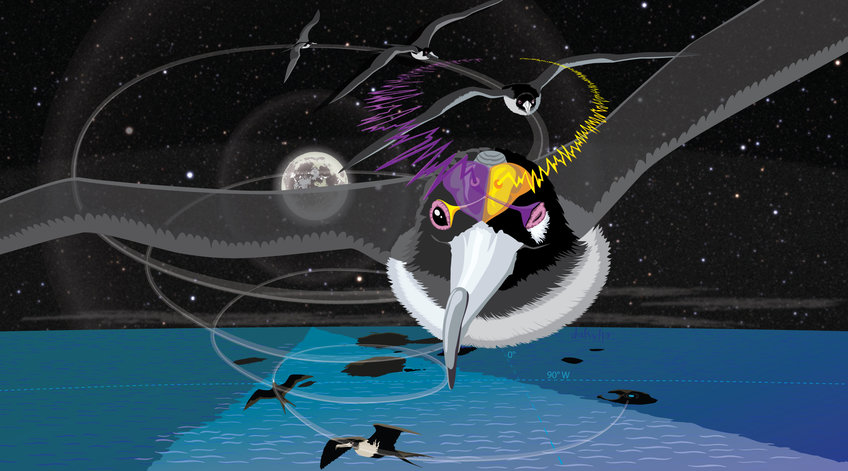
Dr. Niels Rattenborg serves as Research Group Leader at the Max Planck Institute for Biological Intelligence (formerly Max Planck Institute for Ornithology) in Seewiesen, Germany, where he has directed the Bird Sleep Research Group since 2005. His pioneering work focuses on the evolution and neurophysiological mechanisms of sleep in birds, utilizing advanced techniques including high-density electrode arrays and telemetry systems to study sleep patterns in both controlled laboratory environments and natural field settings. Dr. Rattenborg's research has fundamentally changed our understanding of avian sleep through groundbreaking discoveries about sleep in flight. His work with great frigatebirds (Fregata minor) demonstrated that birds can sleep while flying over the ocean, typically with one brain hemisphere at a time but occasionally with both hemispheres simultaneously. Remarkably, these birds accumulate less than one hour of sleep per day for up to 10 days during flight, challenging the mammalian paradigm that adaptive waking performance requires substantial sleep. His research extends to diverse avian species including grey-breasted sandpipers (Calidris melanotos) and chinstrap penguins, revealing how birds employ unique sleep strategies to survive in challenging ecological environments. Analysis of Dr. Rattenborg's recent publications (2022-2025) reveals three major research themes: neurophysiological mechanisms of avian sleep, ecological adaptations of sleep patterns in natural environments, and comparative evolutionary studies across species. His work spans multiple disciplines including neuroscience, ecology, evolutionary biology, and physiology, with particular emphasis on how birds adapt their sleep architecture to environmental constraints. The research demonstrates remarkable diversity in avian sleep strategies that challenge traditional mammalian models of sleep regulation. Dr. Rattenborg's significant contributions to sleep science have been recognized with prestigious awards: Sleep Research Society Young Investigator Award (2000) for best peer-reviewed paper Sleep Research Society Outstanding Scientific Achievement Award (2017) As leader of the Bird Sleep Research Group, Dr. Rattenborg oversees a multidisciplinary team conducting cutting-edge research that has developed innovative methodologies for studying sleep in natural settings. His laboratory's development of the ONEIROS device—a miniature standalone recorder for sleep electrophysiology, physiology, temperatures, and behavior—has revolutionized field studies of sleep. The group's comparative approach to sleep research provides crucial insights into the evolutionary history and fundamental functions of sleep, with implications for understanding sleep disorders and the consequences of sleep loss in humans.
Dr. Veit Hennig is a Postdoctoral Researcher in Evolutionary Immunogenomics at the University of Hamburg, working within the Faculty of Mathematics, Computer Science and Natural Sciences, Department of Biology, and specifically in the Institute of Animal Cell and Systems Biology (IZS). His office is located in Room 462 at Martin Luther King Square 3, 20146 Hamburg. Dr. Hennig's primary research focuses span two main areas: Ornithology : With emphasis on seabird biology, population and feeding biology of coastal terns (Sterna paradisaea) and common terns (Sterna hirundo), community ecology of shorebirds, and habitat use of coastal birds in the Wadden Sea. Urban Ecology : Investigating distribution patterns of species along the urban/rural gradient of Hamburg, as well as population biology of ravens (Corvus corax) and conflicts with livestock farming. His research also extends to marine mammal ecology, particularly the distribution and behavior of harbor porpoises (Phocoena phocoena) in the Baltic Sea and Elbe River. Dr. Hennig has conducted extensive field research on various ecological systems, from the Wadden Sea to the Mediterranean. Analysis of Dr. Hennig's publication record reveals a strong focus on practical conservation applications, with research spanning marine ecology, ornithology, and wildlife management. His work often addresses human-wildlife conflicts and the implementation of conservation directives in European contexts. The publications demonstrate expertise in field methodology development, particularly for monitoring difficult-to-study species in challenging environments like offshore areas. As an educator, Dr. Hennig teaches across multiple levels: Bachelor level: Geographic Information Systems, Field Ecology Methods, Baltic Sea Ecology Master level: GIS in Ecology, Population Ecology, Project Excursions, Terrestrial Ecology His teaching emphasizes practical field experience combined with theoretical understanding, particularly in ecological monitoring and spatial analysis techniques. Dr. Hennig is affiliated with the Evolutionary Immunogenomics research group led by Prof. Dr. Tobias Lenz at the University of Hamburg, where he has been a scientific employee since 1998.