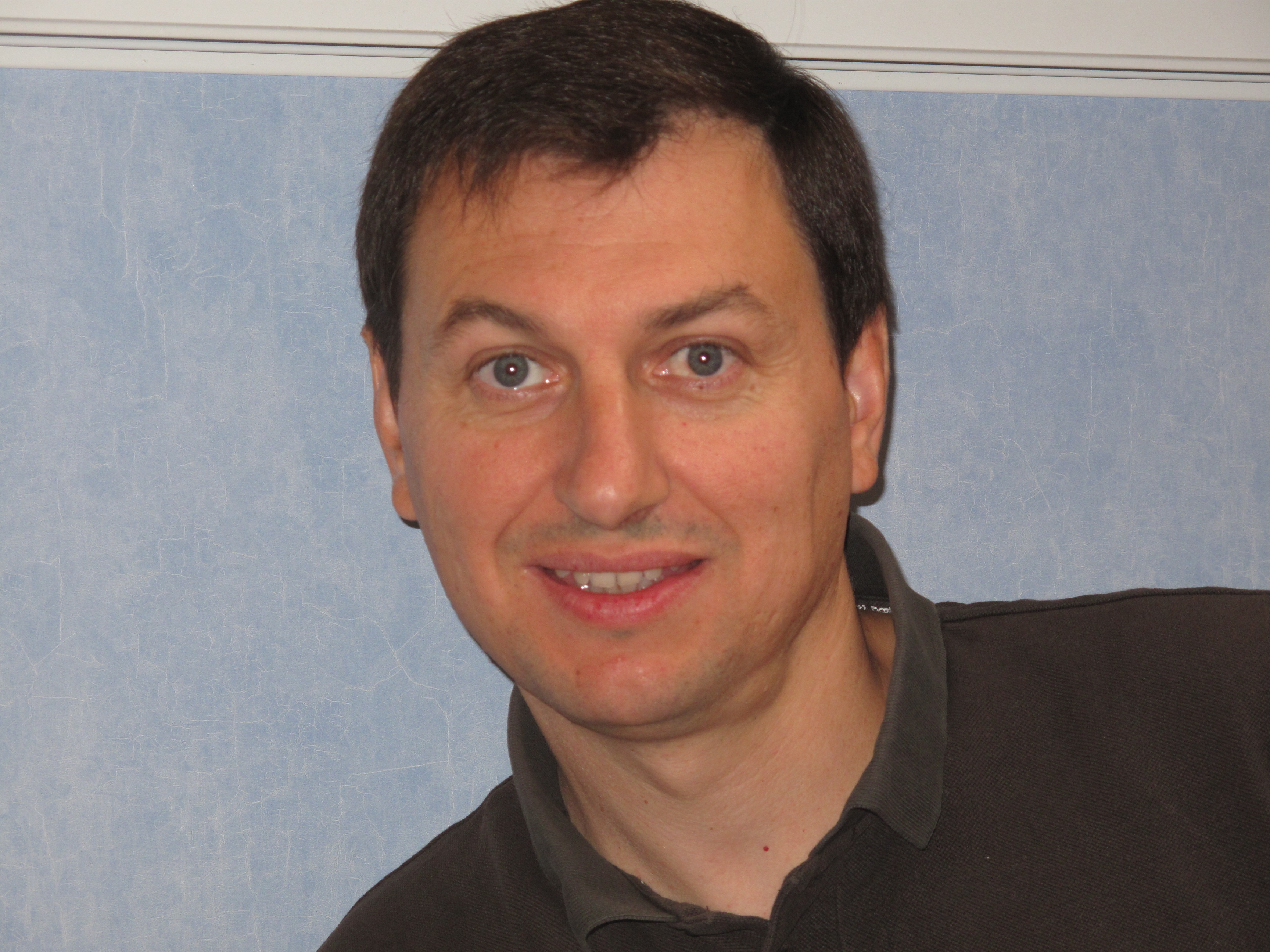
Mariagrazia Graziano is an Associate Professor at the Department of Applied Science and Technology (DISAT) at Politecnico di Torino, where she also serves as Director of the Teaching and Language Lab (TLLab). Her academic career spans multiple institutions, including her involvement with doctoral colleges at the University of Palermo for 'Technologies and Methods for University Education' from 2022-2025. Her research interests are at the forefront of nanotechnology and quantum computing, focusing on areas including: Molecular field-coupled nanocomputing Logic-in-memory computing architectures Quantum hardware design and optimization Single-molecule devices for logic and memory applications Nanomagnetism and spintronics Micro-for-Nano (M4N) Systems for Single Molecule Sensors Dr. Graziano's work bridges fundamental physics with practical applications in electronics, with particular emphasis on next-generation computing paradigms that address the memory-wall problem and explore alternatives to traditional von Neumann architectures. Her research has significant implications for fields ranging from molecular electronics to quantum information processing. Her recent publications demonstrate a strong focus on molecular field-coupled nanocomputing, quantum optimization techniques, and single-molecule device modeling. These works reveal a consistent research trajectory toward developing novel computing architectures that leverage quantum effects and molecular-scale phenomena to overcome limitations of conventional semiconductor technology. Dr. Graziano has received notable recognition including the prestigious Marie Curie Intra-European Fellowship for Career Development from the European Commission (2014). She serves as Associate Editor for FRONTIERS IN ELECTRONICS (since 2022) and JOURNAL OF COMPUTATIONAL ELECTRONICS (since 2019), and has participated in program committees for major conferences including the IEEE Design Automation and Test Conference Europe. As an advisor, Dr. Graziano mentors numerous PhD students working on cutting-edge research in quantum computing, molecular electronics, and nanotechnology. Her supervision spans multiple doctoral programs at Politecnico di Torino, with students exploring topics from quantum algorithms for urban traffic optimization to single-molecule junctions for next-generation electronics. Additionally, she leads several research projects including TENS (Toward Excellence in Nanocharacterisation of single-molecule Sensors) and previously served as Scientific Leader for the Quantum Computing e Quantum Networking project. Dr. Graziano is actively involved in the VLSILAB research group, where she contributes to advancing the state-of-the-art in electronic design and nanoscale computing technologies. Her work on patents, particularly the 'Device for Realizing Boolean Logic Functions XOR XNOR Inside Racetrack Memory,' demonstrates her commitment to translating theoretical research into practical technological innovations.