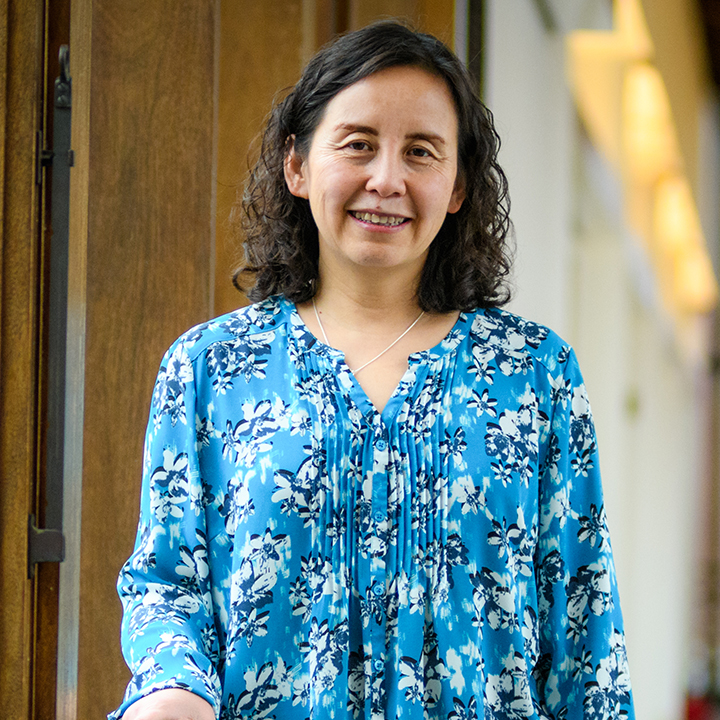
Michael Levitt is the Robert W. and Vivian K. Cahill Professor of Cancer Research and Professor of Structural Biology at Stanford University School of Medicine. He is also a member of Bio-X and the Wu Tsai Neurosciences Institute. Dr. Levitt served as Chair of the Department of Structural Biology from 1993 to 2004 and as Associate Chair from 2005 to 2010. A Nobel Laureate in Chemistry (2013), he is a member of the US National Academy of Sciences, the American Academy of Arts & Sciences, and a Fellow of the Royal Society. Dr. Levitt pioneered computational biology, establishing the conceptual and theoretical framework for the field. His research focuses on three interconnected areas: 1) predicting protein folding with emphasis on hydrophobic forces; 2) predicting protein structure from sequence through homology modeling and refinement of near-native structures; and 3) mesoscale modeling of large macromolecular complexes like RNA polymerase. His work employs diverse energy functions ranging from statistical potentials to quantum-mechanical force-fields. His technical expertise includes developing simulation packages, molecular graphics interfaces, and advanced scripting capabilities. Dr. Levitt's recent publications demonstrate his continued leadership across computational chemistry, molecular biology, and public health. His work spans fundamental research on molecular force fields and protein dynamics to epidemiological analyses of pandemic impacts. He has made significant contributions to understanding water ionization, neural network applications in molecular modeling, and global patterns of excess mortality during the COVID-19 pandemic. Nobel Prize in Chemistry (2013) Member, US National Academy of Sciences (2002) Fellow, The Royal Society (2001) Member, American Academy of Arts & Sciences (2010) Anniversary Prize, Federation of European Biochemical Societies (1986) Member, European Molecular Biology Organization (1981) Dr. Levitt actively mentors students through numerous independent study and research courses across computer science, biomedical informatics, biophysics, and structural biology programs. His teaching includes Advanced Reading and Research, Biomedical Informatics Teaching Methods, and various directed research opportunities. He has supervised work in computational biology, protein structure prediction, and molecular dynamics. His lab collaborates extensively with experimentalists to overcome challenges in modeling large, complex biological systems. Dr. Levitt leads a research group focused on developing advanced computational methods for molecular simulation. His team works on integrating machine learning with traditional force-field approaches to improve accuracy while maintaining computational efficiency. Current projects include neural network corrections for molecular force fields, mesoscale modeling of macromolecular complexes, and analysis of global health data related to pandemic impacts.