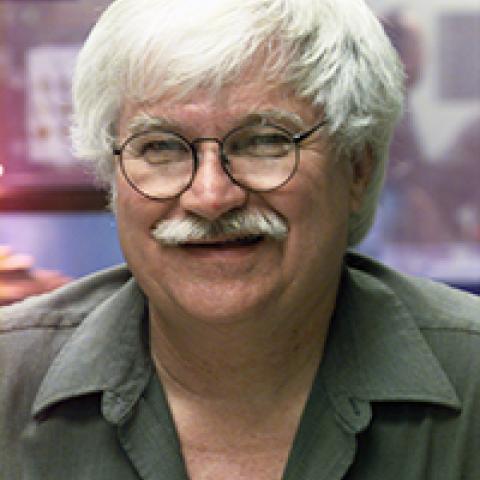
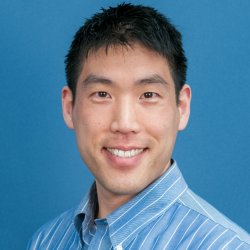
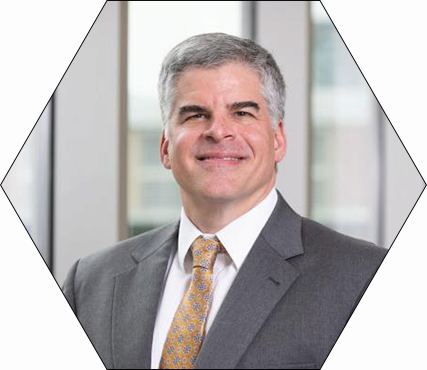
Dr. Min Xu is a Courtesy Professor in the Computational Biology Department within the School of Computer Science at Carnegie Mellon University. His research focuses on advancing computer vision and machine learning for biomedical image analysis, particularly cellular cryo-electron tomography (Cryo-ET) and automated science video analysis. He leads a lab developing cutting-edge computational tools for structural biology and medical imaging. Key research directions include: High-resolution 3D Cryo-ET image analysis AI-driven medical image segmentation Few-shot learning for cryo-EM analysis Video analysis frameworks for laboratory automation Notable contributions include the AITom toolkit for Cryo-ET analysis and pioneering work in adapting foundation models for medical imaging tasks. His work has been published in top venues like CVPR, MICCAI, and Nature-associated journals. No academic awards or grants are explicitly listed in the provided text. He maintains an active lab focused on translating computational methods into impactful biomedical research tools.
Thomas Berger is a Professor at the University of Hohenheim , affiliated with the Faculty of Agricultural Sciences and leading the Department of Economics of Land Use . He also contributes to the Computational Science Hub and Hohenheim Tropics initiatives. Focus Areas: Climate change adaptation, land-use modeling, biodiversity-productivity trade-offs, agent-based simulation, and machine learning in agricultural systems. Key Projects: Simulation frameworks for smallholder resilience in Ethiopia, bioeconomic modeling in the Amazon, and hybrid intelligence applications in European agricultural policy. Recent Publications: 2025 study on climate change effects on insecticide reduction in Germany, 2024 work on reconciling biodiversity with productivity via hybrid models, and 2023 methodological contributions to surrogate modeling and seasonal forecast integration. Research Trends: Interdisciplinary integration of climate science, agricultural economics, and computational modeling, with increasing emphasis on AI-assisted decision support systems and sustainability policy validation. Teaching & Outreach: Offers Agricultural Economics seminars and Hohenheim Tropics discussions, requiring advance email registration for office hours.
Michael J. Ragusa is an Associate Professor of Chemistry at the Department of Chemistry, College of Arts and Sciences, Dartmouth College , specializing in molecular mechanisms of selective autophagy . His research integrates structural biology , biochemical reconstitution , and cell biology to understand how cells degrade toxic components like damaged organelles. Education: B.S. in Chemistry from Siena College, Ph.D. in Biochemistry from Brown University His work focuses on autophagy , particularly the role of Atg proteins in membrane tethering and cargo selection. His lab has published extensively on mitophagy , ALFY , and Atg11 , linking defects in these pathways to cancer , neurodegeneration , and infectious diseases . Recent studies highlight mechanisms of vesicle clustering and dimerization-dependent membrane interactions . Dr. Ragusa teaches courses such as CHEM 5: General Chemistry , CHEM 42: Biological Chemistry II , and CHEM 95.05: Protein Crystallography . His lab employs techniques like X-ray crystallography , NMR spectroscopy , and membrane reconstitution to dissect protein-lipid interactions.
Ueli Grossniklaus is an Ordinary Professor at the University of Zurich within the Faculty of Mathematical and Natural Sciences , affiliated with the Department of Plant and Microbiology . His work focuses on plant developmental biology, particularly epigenetic and genetic mechanisms governing reproduction and adaptation. Key Courses: Epigenetics, Plant Biology Workshop, Group Seminars on Current Research Laboratory Techniques: Advanced methods in plant cell mechanics, transcriptomics, and genome editing Research Interests span plant epigenetics, reproductive biology, and the interplay between environmental stress and genetic regulation. He investigates: Mechanistic control of gametogenesis and fertilization Epigenetic contributions to plant adaptation Evolutionary implications of asexual reproduction Biophysical forces in plant cell growth Publication Trends (2025–2018) reveal expertise in: Arabidopsis and fern model systems Epigenetic regulation (DNA methylation, histone dynamics) Apomixis and hybrid seed failure mechanisms Biomechanics of pollen tubes and carnivorous plants Genome editing tools (CRISPR) and long-read sequencing Scientific Collaborations include interdisciplinary projects on: Microfluidic devices for plant cell analysis Gene drive ecology and ethics 3D imaging of plant reproductive structures Advising and Grants focus on mentoring through research internships in developmental biology, genetics, and systems biology. His lab engages in: Epigenetic response to environmental stress Cell wall mechanics in reproduction Computational modeling of plant growth Laboratory Teams integrate plant biologists, bioengineers, and computational scientists to study: Mechanistic gene regulation Evolutionary developmental biology Microrobotics for cellular force measurement
Professor David Thomas holds the position of Professor in Computer Engineering at the University of Southampton's Electronics and Computer Science Department. His research focuses on the intersection of software and hardware, particularly leveraging FPGAs for novel digital architectures and event-driven computing. He has a notable academic trajectory, having previously served as a Lecturer and Senior Lecturer at Imperial College London before joining Southampton in 2021. Dr. Thomas is actively involved in supervising PhD students and contributes to interdisciplinary research projects funded by the EPSRC, such as the SONNETS initiative exploring scalable event-triggered systems. Education: BSc in Computer Science (Imperial College London), PhD in Digital Architectures (Imperial College London). Postdoctoral roles included Research Associate and Research Fellow at Imperial's Department of Computing. Research Interests: Event-driven computing, FPGA-based systems, high-level synthesis, and high-performance computing. His work emphasizes practical implementations of theoretical models, such as custom processors and application-specific accelerators. Current projects include optimizing random number generation for FPGAs and exploring meta-programming techniques for hardware design. Advising and Grants: Supervises multiple PhD students in areas like neuromorphic computing and algorithm optimization. Active in securing funding for distributed system architectures and FPGA-based solutions. Labs/Teams: Member of the Cyber Physical Systems research group. Collaborates with interdisciplinary teams on projects like POETS (Partially Ordered Event-Triggered Systems) for large-scale parallel computing.
Prof. Dr. Thomas Koop is a Professor of Physical Chemistry at Bielefeld University, where he leads the Atmospheric and Physical Chemistry research group within the Faculty of Chemistry. He has served as Dean of the Faculty of Chemistry from 2022-2024 and currently serves as Vice Dean (2024-2025). His research focuses on phase transition phenomena, particularly ice nucleation and growth, supercooled liquids, and the formation of amorphous glassy materials. His work has significant implications for understanding atmospheric aerosols, cloud formation mechanisms, and cryobiological processes. The group employs experimental techniques such as differential scanning calorimetry and optical cryo-microscopy, developing specialized equipment for studying phase transitions at micro and nanoscales. Prof. Koop's publication record shows a consistent focus on atmospheric chemistry with increasing exploration of biological ice nucleators, planetary atmospheres (including Venus), and the physical properties of atmospheric aerosols. His most cited work includes 'Water activity as the determinant for homogeneous ice nucleation in aqueous solutions' (Nature, 2000), which established fundamental principles in the field. 2024-2025: Vice Dean of Faculty of Chemistry 2022-2024: Dean of Faculty of Chemistry 2001-2022: Co-founder and Executive Editor of Atmospheric Chemistry and Physics Since 2004: Coordinator of Graduate School of Chemistry and Biochemistry Prof. Koop has mentored numerous students and postdoctoral researchers, contributing significantly to the development of the next generation of atmospheric scientists. His research has been supported by various funding agencies and has led to collaborations with institutions worldwide, from MIT and UC Berkeley to research centers in Switzerland and Israel.
Ario Sadafi is a researcher at the Technical University of Munich (TUM) , affiliated with the Chair of Computer Science Applications in Medicine under Prof. Nassir Navab. His work spans medical image analysis , machine learning , and computational pathology , with a strong focus on developing AI-driven solutions for microscopic imaging in hematology and oncology. Research Focus: Multiple Instance Learning for weakly supervised medical image classification. Explainable AI for biomedical single-cell imaging. Continual and cross-domain learning for robust diagnostic models. Microscopic image analysis for blood cell disorders and leukemia subtyping. Teaching Contributions: Sadafi has been actively involved in teaching courses such as Computer Aided Medical Procedures , Medical Augmented Reality , and Deep Learning for Medical Applications . He also supervises practical courses and seminars in 3D Computer Vision and Machine Learning in Medical Imaging . Labs & Collaborations: He works closely with the MEDIA (Medical Image Analysis) and NARVIS labs at TUM, contributing to projects in surgical data science , generative models , and robotics & ultrasound . Publications Impact: His research output (2018–2025) emphasizes AI-driven hematology , with applications in red/white blood cell classification, leukemia subtype diagnosis, and interpretable deep learning models for clinical use.
Koenraad Muylaert is a Full Professor at the Faculty of Science, KU Leuven, and head of the Biology department at KU Leuven Kulak. His research focuses on microalgae ecology and phytoplankton physiology , with applications in eutrophication studies , wastewater treatment , and biofuel production . Based in Kortrijk, Belgium, he works with international teams in Ecuador, Qatar, and Belgium. Current projects on mountain lake eutrophication and urban aquatic systems Specializes in nano-material flocculation and omega-3 fatty acid production from microalgae Research Trends from his recent articles show emphasis on: Microalgae harvesting innovations (cellulose nanocrystals, PDMAEMA polymers) Comparative processing techniques (DAF vs sedimentation, drying methods) Biotechnological applications in flavor chemistry and microbiome interactions Laboratory operates at KU Leuven's Kortrijk campus, with strong collaborations in environmental engineering and food science . His work bridges fundamental ecological research with industrial biotechnology for sustainable solutions.
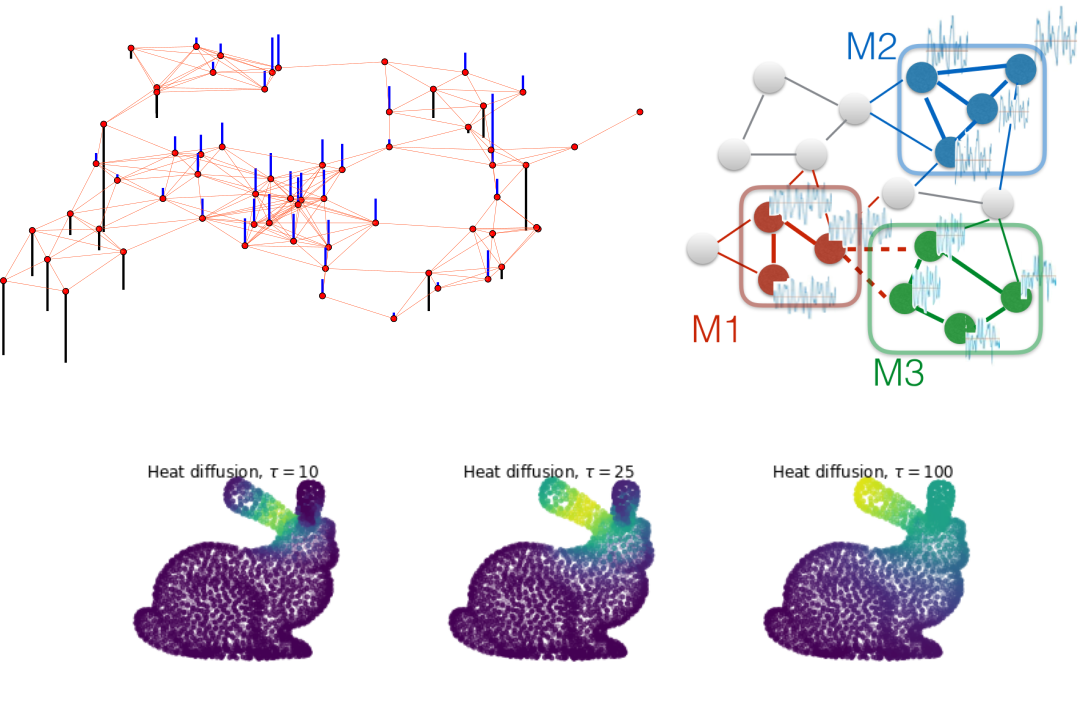
Benjamin Ricaud is an Associate Professor and Group Leader in Machine Learning at UiT The Arctic University of Norway's Department of Physics and Technology. His core affiliations include membership in the Machine Learning Group, Visual Intelligence center, and co-directorship of the Digital Technology Innovation Lab focused on Arctic-region tech startups. He also co-chairs the annual Northern Light Deep Learning conference. Ricaud's research spans: Fundamental ML : Graph signal processing, explainable AI, and generative models Applications : Microfossil classification, medical diagnostics (retinal aging), drug analysis, and climate data interpretation Emerging domains : Self-supervised learning and biological data analysis using Raman spectroscopy His recent publications (2020-2025) cluster in three domains: Graph ML methodologies (35%) Biomedical/biological applications (40%) Geoscience/climate informatics (25%) with consistent focus on interpretability and real-world data challenges. Teaching includes Image Processing (FYS-2010), Pattern Recognition (FYS-3012), and Machine Learning (FYS-2021). He leads outreach initiatives developing AI exhibits for Tromsø Science Centre.
Scott Forth is an Associate Professor in the Department of Biological Sciences at Rensselaer Polytechnic Institute's School of Science. He specializes in biophysics, focusing on microtubule networks in cell division and neuronal development. Ph.D. in Physics from Cornell University (2009) B.S. in Physics and B.M. in Music Performance from Oberlin College (2002) Postdoctoral Fellow at Rockefeller University (2010-2016) His research combines optical trapping and fluorescence microscopy to study how forces are transmitted across biopolymer networks. Key areas include: Mechanics of mitotic microtubule networks PRC1-mediated force resistance in cell division Kinesin motor protein dynamics Single-molecule biophysical methods Neuronal cytoskeleton organization Recent work analyzes force generation in reconstituted microtubule bundles and mechanical roles of proteins like PRC1 and kinesin-5. Scientific Awards Ruth Kirschstein National Research Service Award (NIH postdoctoral F32) Rensselaer School of Science Outstanding Teacher Award Rensselaer School of Science Early Career Research Award Biophysical Society Early Career Award (Motility and Cytoskeleton Subgroup) Dr. Forth's lab studies how nanometer-scale proteins coordinate to create micron-scale cellular mechanics. Current projects focus on microtubule network organization during cell division and neuronal development.
Raymond Keller is the Thomas Jefferson Professor of Biology at the University of Virginia. He leads the Keller Laboratory, which investigates cellular and molecular mechanisms driving early amphibian morphogenesis, focusing on convergent extension movements during gastrulation and neural tube formation. His work integrates high-resolution imaging of cell motility with biomechanical analyses of embryonic tissues to understand how molecular events generate forces shaping the embryo. Research interests include embryonic tissue mechanics, cell intercalation dynamics, and the biomechanical basis of vertebrate body plan formation. Collaborations include work with Ann Sutherland (UVA School of Medicine) on mouse early morphogenesis, combining amphibian and mammalian systems for comparative insights. Notable contributions include pioneering studies on convergent extension, direct embryonic force measurements, and innovative tissue engineering approaches. His research bridges developmental biology with biophysics and engineering principles.
Dr. Youngchan Kim is a Lecturer in Quantum Biology at the University of Surrey , serving as Director of the Quantum Biology Doctoral Training Centre (QB-DTC). He is affiliated with multiple departments including the School of Biosciences, Advanced Technology Institute, and Quantum Sciences Group. PhD in Physics (2011), Korea Advanced Institute of Science and Technology MSc in Physics (2008), KAIST BSc in Physics (2006), Chung-Ang University Graduate Certificate in Learning and Teaching (2022), Advance HE His research focuses on quantum phenomena in biological systems at physiological temperatures, particularly using femtosecond optical spectroscopy and genetically engineered fluorescent proteins to explore evolutionary adaptations and develop quantum-bio-inspired technologies like room-temperature single-photon sources. The 15 most recent publications span quantum biology, biophotonics, and optical spectroscopy, with particular emphasis on quantum coherence in biological systems , terahertz birefringence , fluorescent protein dynamics , and biomedical imaging innovations . These works demonstrate his interdisciplinary approach bridging physics, biology, and medical applications. As QB-DTC Director, he leads transdisciplinary initiatives fostering collaboration between quantum physics and biosciences. His technical expertise includes time-correlated single-photon counting , common-path interferometry , and ultrafast fluorescence depolarization techniques.
Andrés J. García is the Executive Director of the Parker H. Petit Institute for Bioengineering & Bioscience and a Regents’ Professor in the George Woodruff School of Mechanical Engineering at Georgia Institute of Technology. His research focuses on engineered biomaterials for regenerative medicine, including tissue repair, inflammation modulation, and cell adhesion mechanisms. He co-founded three startups (CellectCell, CorAmi Therapeutics, iTolerance) and holds multiple patents in biomaterials and drug delivery systems. Education: Ph.D., University of Pennsylvania, 1996 M.S.E., University of Pennsylvania, 1992 B.S., Cornell University, 1991 Research Interests: García’s work integrates engineering, materials science, and cell biology to develop biomaterials that direct cellular responses. Key areas include: Biomaterial platforms for bone repair and vascularization Immunomodulatory hydrogels for islet transplantation Antibacterial hydrogels for implant infection control Organoid generation using synthetic hydrogels Mechanisms of cell adhesion and mechanotransduction Publications: Over 30+ peer-reviewed articles in Nature Communications , Science Advances , Biomaterials , and others, highlighting innovations in hydrogel design, stem cell therapies, and biomaterial-driven tissue repair. Awards: Member of both the National Academy of Engineering and National Academy of Medicine (2021), Clemson Award for Basic Research (2012), and Fellowships with the American Society of Mechanical Engineers and AAAS. Labs/Teams: Leads the García Laboratory, collaborating across disciplines to translate biomaterials research into clinical applications. Active in startup partnerships and federal grants (e.g., NSF, NIH).
Professor Matthew Simpson is a leading figure in applied mathematics at the School of Mathematical Sciences, Faculty of Science, Queensland University of Technology (QUT). He holds the position of Professor of Applied Mathematics and is an Australian Research Council (ARC) Future Fellow, reflecting his sustained research excellence. His work bridges mathematical theory and biological applications, particularly in cell migration, tissue invasion, and multiscale modeling. BE (Environmental) Honours 1, University of Newcastle (1995–1998) PhD (with Distinction), Environmental Engineering, University of Western Australia (2000–2003) Research Fellow, Department of Mathematics and Statistics, University of Melbourne (2003–2006) ARC Postdoctoral Fellow, University of Melbourne (2006–2009) Lecturer (2010–2011) and Senior Lecturer (2011–2013), QUT Associate Professor (2013–2014), QUT Professor and ARC Future Fellow (2014–present), QUT Matthew Simpson’s research focuses on mathematical and computational modeling of biological systems , particularly collective cell motion, diffusion processes, and reaction-diffusion dynamics. His interests span multiscale modeling , random walk processes , cell biology , and numerical and computational mathematics . He develops and analyzes models to understand phenomena such as wound healing, cancer progression, and tissue engineering. His recent publications (2023–2025) demonstrate a strong trend toward integrating data-driven modeling , likelihood-based inference , and equation learning with traditional mechanistic models. These works emphasize parameter identifiability , uncertainty quantification , and prediction robustness in biological contexts. Themes include sharp-fronted wave propagation, mechanical cell interactions, tumor spheroid formation, and generalized diffusivity in food drying, showcasing the breadth and depth of his modeling expertise. Among his key accolades are: J.H. Michell Medal (2012) – Awarded by ANZIAM for distinguished research by an early-career applied mathematician in Australia and New Zealand. ARC Future Fellowship (2013–2017) – For the project 'New data-driven mathematical models of collective cell motion' (FT130100148). Professor Simpson has also played significant editorial and leadership roles, including: Executive Associate Editor, Journal of Engineering Mathematics Academic Editor, PLoS ONE Editorial Board Member, ANZIAM Journal Co-chair of the 2015 ANZIAM meeting He has supervised PhD students on topics such as moving boundary problems, first-passage times, stochastic simulations, and curvature-dependent growth in biological systems. His research projects have been funded by competitive Australian grants (ARC DP and FT schemes), including studies on 3D cell migration, ghrelin’s role in cell invasion, and epithelial-to-mesenchymal transition in cancer and wound healing. He is actively involved in developing computational tools for biological modeling and promoting best practices in scientific publishing.
Thomas Ouldridge is a Royal Society University Research Fellow and Reader in Biomolecular Systems at the Department of Bioengineering, Faculty of Engineering, Imperial College London. He leads the 'Principles of Biomolecular Systems' group, which focuses on theoretical and computational modeling of complex biochemical systems, particularly exploring the interplay between molecular details and emergent behaviors like sensing, replication, and self-assembly. His work integrates natural systems analysis with synthetic biology applications, aiming to engineer artificial analogs of biological processes. His research spans interdisciplinary areas including stochastic thermodynamics, DNA-based computation, and molecular reaction networks. Key affiliations include the Physics of Life, Synthetic Biology Hub, and the Leverhulme Centre for Cellular Bionics. He has contributed to over 60 peer-reviewed articles since 2009, with recent work emphasizing energy-efficient molecular information processing and thermodynamic limits of biochemical systems. Awards: Royal Society University Research Fellowship (current). Labs/Teams: Principles of Biomolecular Systems Group, collaborating with multiple centers including the Centre for Synthetic Biology and Institute of Chemical Biology. Grants/Positions: Maintains research funding through the Royal Society and UKRI grants, focusing on non-equilibrium biomolecular systems and synthetic biology tools. Recent publications highlight advances in DNA templating networks, stochastic thermodynamic modeling of computation, and optimal protocols for molecular copying systems. His work bridges foundational physics with applied biotechnology, aiming to push the boundaries of synthetic biological engineering.