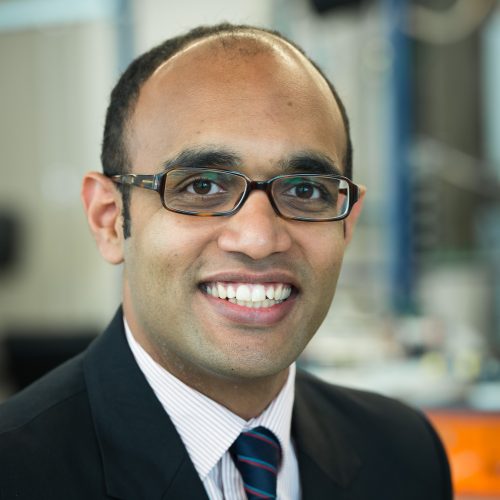
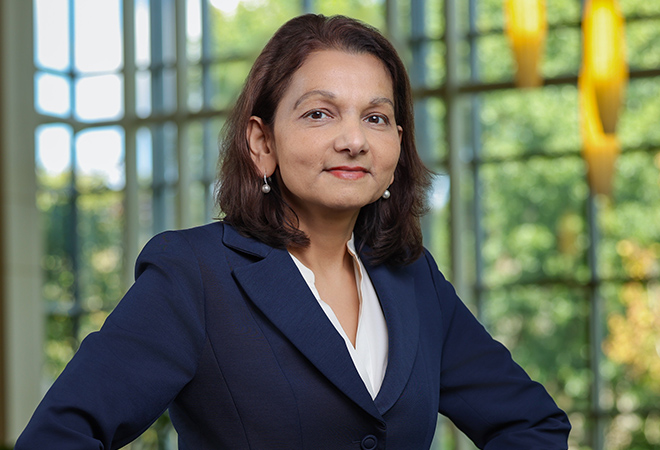
Vikramaditya G. Yadav is an Associate Professor at the University of British Columbia (UBC) in the Department of Chemical and Biological Engineering, Faculty of Applied Science. He directs the Master of Engineering Leadership (MEL) Program in Sustainable Process Engineering and leads the BioFoundry research group. Education: B.A.Sc., University of Waterloo (2007) Ph.D., Massachusetts Institute of Technology (2013) Postdoctoral Associate, Harvard University (2014) His research spans sustainable chemical manufacturing, metabolic engineering, and biotechnology. Key areas include: Designing biosynthetic enzymes for biomass valorization Developing bioremediation strategies for industrial water quality Creating innovative drug delivery systems and tissue engineering solutions Advancing synthetic biology for pharmaceutical and bioenergy applications His recent work focuses on ocular drug delivery, cannabinoid biosynthesis in E. coli, lignin-based nanoparticles for cancer therapy, and computational analysis of plant secondary metabolites. Collaborations with start-ups, industry, and medical labs drive innovation in Canada's bioeconomy. Professional Leadership: Chair, Biotechnology Division of the Chemical Institute of Canada Associate Editor, The Canadian Journal of Chemical Engineering He is affiliated with UBC's BioProducts Institute and contributes to project-based learning pedagogy.
David Vocadlo is a Distinguished Professor of Chemistry and Molecular Biology & Biochemistry at Simon Fraser University (SFU), holding the Canada Research Chair in Chemical Biology. His research focuses on Chemical Glycobiology, investigating carbohydrate-processing enzymes and developing chemical tools to study glycan roles in health and disease. His lab explores O-GlcNAc signaling, neurodegenerative disorders (e.g., Alzheimer’s, Parkinson’s), and enzyme inhibitors for therapeutic applications. Education: PhD from University of British Columbia (UBC), followed by a CIHR postdoctoral fellowship at UC Berkeley. Key roles include E.W.R. Steacie Memorial Fellow and Royal Society Fellow. Research highlights include O-GlcNAcase inhibitors for neuroprotection, glycan structure-function relationships, and enzyme activity imaging tools. Collaborates globally with experts in glycobiology and employs cutting-edge techniques like chemical synthesis, mass spectrometry, and live-cell imaging. Awards: Distinguished Professor title, Canada Research Chair, Royal Society Fellowship. Active in training researchers through SFU’s graduate programs, emphasizing interdisciplinary approaches. Lab members work on topics ranging from enzyme mechanisms to disease modeling.
Liang Zhao, PhD, MAS, MBA, is a Professor in the Department of Bioengineering and Therapeutic Sciences within the Schools of Pharmacy and Medicine at the University of California, San Francisco (UCSF). Prior to joining UCSF, he served as director of the Division of Quantitative Methods and Modeling (DQMM) in the Office of Research and Standards in the Office of Generic Drugs in the Center for Drug Evaluation and Research (CDER) at the U.S. Food and Drug Administration (FDA) from 2015 to 2024. His professional career spans over 19 years with experience at Pharsight, Bristol Myers Squibb (BMS), MedImmune, and the FDA. Dr. Zhao's research focuses on pharmacometrics, drug delivery modeling, and artificial intelligence-based tools that impact drug development and regulatory decision-making. His work encompasses mechanistic models for brain drug delivery, regulatory science modeling and simulation, AI-driven drug discovery and development, drug interactions, biological availability, generic drugs, clinical pharmacology, therapeutic equivalency, computer simulation, and FDA regulatory processes. He has pioneered innovative approaches including model master files for model sharing and model-integrated evidence for generic product development and approval. His research integrates machine learning tools into pharmacometrics to advance drug delivery and bioequivalence assessment methodologies. Dr. Zhao has published over 120 articles and book chapters in prestigious journals. His recent publications demonstrate strong focus on applying advanced modeling techniques, machine learning algorithms, and pharmacometric approaches to solve complex problems in drug development and regulatory science. His work shows consistent innovation in developing quantitative methods to enhance bioequivalence assessment, improve drug product characterization, and support regulatory decision-making for generic drugs. FDA Group Recognition Award, FDA, 2024 Gary Neil Prize for Innovation in Drug Development, American Society for Clinical Pharmacology & Therapeutics (ASCPT), 2023 Commissioner's Special Citation, FDA, 2021 Humanitarian Award, Victims' Rights Foundation, 2020 30+ FDA CDER team and Individual Awards, CDER, FDA, 2011 Academic Award for Executive MBA Class 2009, Judge Business School, University of Cambridge, 2011 Dr. Zhao leads the Zhao Lab at UCSF, which advances drug development and regulatory science through cutting-edge research in pharmacometrics, drug delivery modeling, and artificial intelligence. His work bridges academic research with regulatory applications, demonstrating leadership in translating scientific innovations into practical regulatory frameworks. His experience across industry, regulatory agencies, and academia provides a unique perspective on drug development challenges and opportunities.
Timo Minssen is Professor of Law at the University of Copenhagen (UCPH) and the Founding Director of UCPH's Center for Advanced Studies in Bioscience Innovation Law (CeBIL). He also holds affiliations as an LML Research Affiliate at the University of Cambridge and an Inter-CeBIL Research Affiliate at Harvard Law School's Petrie-Flom Centre. With extensive expertise in Intellectual Property, Competition, and Regulatory Law, Minssen focuses on the legal aspects of emerging health and life science technologies, including genome editing, big data, artificial intelligence, and quantum technology. His educational background includes a German law degree (Staatsexamen) from Georg-August-University in Göttingen, and Swedish biotech & IPR related LL.M., LL.Lic., and LL.D. degrees from Lund University and Uppsala University. His PhD thesis on the patentability of biopharmaceutical technology in the US & Europe received the prestigious Swedish King Oscar award. 2024: TUM Global Visiting Professor, Technical University of Munich (Germany) 2016: Visiting Research Fellow, University of Cambridge (UK) 2014: Visiting Research Fellow, University of Oxford (UK) 2013-14: Visiting Scholar, Harvard Law School (US) 2012: LL.D. - Doctor of Laws (Swedish "juris doktor"), EU/US patent law, Lund University, Sweden Minssen's research spans AI & Big Data in Health & Life Sciences, Sustainable and responsible innovation & tech transfer, Pharmaceutical-, Life Science- & Biotech Law, Comparative European & US Patent Law, Intellectual Property Law & Open Innovation, and EU Competition- & US Antitrust Law. His work addresses legal issues throughout the lifecycle of health and life science products and processes, from R&D regulation to technology transfer and commercialization. His extensive publication record includes 7 books and over 200 articles and book chapters published in leading journals such as Science, Nature Biotechnology, JAMA, and Harvard Business Review. His research has been featured in The Economist, Financial Times, and other major media outlets. Minssen's recent work shows a strong focus on AI regulation, quantum technology law, and data governance in health contexts, reflecting the evolving landscape of technology and law. Scientific Awards and Recognition King Oscar award for best Jur. Dr. thesis (2014) Jorcks Fonds Forsknings Pris (Jorck's Foundation Research Prize) (2017) Awapatent Research Prize (2009) Max Planck Research Scholarship (2005) Visiting Scholar appointments at Harvard Law School, University of Oxford, and University of Cambridge Recipient of a Novo Nordisk Foundation Grant for a "Collaborative Research Program in Biomedical Innovation Law" (2018) As an advisor, Minssen serves international organizations including the WHO, WIPO, and EU Commission. He has supervised numerous PhD students in areas including pharmaceutical law, biotechnology patents, and antimicrobial resistance. His current research projects include the Novo Nordisk Foundation's International Collaborative Bioscience Innovation & Law (Inter-CeBIL) Programme (50 million DKK), CLASSICA: EU Horizon Project on AI-assisted surgery, and AI@Care: Law and Ethics and Algorithmic Bias in Healthcare. Minssen leads the Center for Advanced Studies in Bioscience Innovation Law (CeBIL), which serves as a hub for interdisciplinary research on the intersection of law, technology, and innovation in the health and life sciences. The center collaborates with institutions worldwide to address pressing legal challenges in emerging technologies.
Pablo Perez-Pinera is an Associate Professor in Biomedical and Translational Sciences at the Carle Illinois College of Medicine, University of Illinois. He leads the Genome Engineering and Transcriptional Regulation Laboratory, focusing on developing gene editing technologies for treating neurodegenerative and neuromuscular diseases. His research integrates cutting-edge genome engineering tools with innovative delivery systems to address previously incurable conditions. Dr. Perez-Pinera's research interests center on developing CRISPR-based genome editing technologies for therapeutic applications. His laboratory specializes in base editing approaches for exon skipping, particularly targeting diseases like Duchenne muscular dystrophy, Huntington's disease, Parkinson's disease, Alzheimer's disease, and ALS. His team develops novel delivery systems using AAV vectors to enable precise in vivo genome editing, with a particular focus on neurological and muscular disorders. The lab's work bridges fundamental molecular biology with translational applications, aiming to move promising technologies from bench to bedside. His laboratory has made significant contributions to the field of therapeutic genome editing, particularly in developing the SPLICER platform for efficient exon skipping through simultaneous splice site editing. His publications demonstrate expertise in base editing for neurodegenerative diseases, with multiple first-author and corresponding author papers in high-impact journals. His research has been supported by several NIH grants including R01 GM131272, UL1 TR001422, R01 GM141296, among others. Dr. Perez-Pinera actively mentors a diverse team of researchers including postdoctoral fellows, graduate students, and undergraduates. His laboratory includes researchers such as Devyani Swami (Postdoctoral Fellow), Michael Gapinske, Jackson Winter, Shraddha Shirguppe, Angelo Miskalis, and others who contribute to various aspects of genome engineering research. His grant funding supports both basic research on genome editing mechanisms and translational work toward therapeutic applications. The Genome Engineering and Transcriptional Regulation Laboratory maintains state-of-the-art facilities for molecular biology, cell culture, and in vivo studies. The team collaborates extensively with clinicians and researchers across the University of Illinois campus to translate genome editing discoveries into potential therapies for patients suffering from neurodegenerative and neuromuscular conditions.
Syed S.H. Rizvi is a Professor of Food Process Engineering at Cornell University's Department of Food Science, affiliated with the College of Agriculture and Life Sciences. He holds the title of International Professor and advises over 65 graduate and 70 undergraduate students. His expertise spans food engineering, processing, and international development. Education: Ph.D., The Ohio State University (1976) MEng, Chemical Engineering, University of Toronto (1988) B.Tech., Panjab University (1968) Research Focus: Physical, chemical, and engineering aspects of food and biomaterials Supercritical fluid technology, liposome synthesis, and sustainable processing International value-chain developments and food security Articles Trends: Recent works emphasize supercritical fluid extrusion, liposome encapsulation, and novel food processing innovations. Key themes include material characterization, functional food development, and sustainable technologies. Awards: Distinguished Professor (2017), Chinese Academy of Agricultural Science Excellence in Teaching Award (2014) Stanley Watson Award (2012) Advising & Grants: Mentor to numerous students globally. Collaborates internationally under sponsorships like FAO, UNIDO, and World Bank. Teaches courses on food engineering, international agriculture, and bioprocessing systems. Labs/Teams: Leads the Rizvi Lab, focusing on novel food processes and engineering. Active in developing sustainable technologies for bioactive delivery and food security.
James M. Piret is a Professor at the University of British Columbia (UBC), affiliated with the School of Biomedical Engineering and the Michael Smith Laboratories. He holds a Sc.D. from MIT (1989), an S.M. from MIT (1986), and an A.B. from Harvard College (1981). His research focuses on bioprocessing, biomedical engineering, and cell therapy biotechnology, with emphasis on optimizing therapeutic cell production and biomanufacturing processes. Education : Sc.D. in Chemical Engineering, Massachusetts Institute of Technology (1989) S.M. in Chemical Engineering, Massachusetts Institute of Technology (1986) A.B. in Chemistry, Harvard College (1981) Professor Piret’s research integrates bioreactor engineering, Raman spectroscopy, and data analytics to advance cell-based therapies for diseases like cancer and diabetes. Collaborations with stem cell biologists (e.g., Drs. Kieffer and Levings) and engineers (Drs. Turner and Gopaluni) drive innovations in bioprocess optimization and device development. His lab emphasizes multidisciplinary approaches to accelerate biotechnology production processes and cell therapy manufacturing. Awards : William F. Meggers Award (2022) R.S. Jane Memorial Award (2015) Cell Culture Engineering Award (2012) Fellow, Chemical Institute of Canada (2004) His work includes developing novel methodologies for CHO cell glycosylation engineering, optimizing fed-batch bioreactor systems, and advancing Raman spectroscopy techniques for real-time cell analysis. The lab actively recruits motivated graduate and postdoctoral researchers to tackle high-impact challenges in biomedical and chemical engineering.
Caitriona M. O'Driscoll is Professor and Chair of Pharmaceutics at University College Cork's School of Pharmacy, Ireland. With over four decades of academic experience, she previously served as Head of the School of Pharmacy at UCC from 2003-2009 and 2010-2013. Her established drug delivery research team spans from pre-formulation through to production and manufacture of prototype delivery systems suitable for clinical trial, with strong industry links underpinning many research projects. Her research interests focus on translational drug delivery with emphasis on 'problem' drugs including poorly water soluble compounds and biopharmaceuticals like peptide/protein drugs, plasma DNA and siRNA. She develops nano-sized delivery constructs that are robust enough to survive processing, stable on storage, and achieve cell/site specific delivery in vivo. Greater than 40% of new chemical entities are poorly water soluble Biopharmaceuticals now approach 50% of all new drugs in development Major barrier is design of efficient delivery systems Special focus on oral drug delivery despite challenges Analysis of her recent publications reveals a strong emphasis on targeted nanodelivery systems for cancer therapy, particularly prostate and colorectal cancer, as well as neurodegenerative diseases like Huntington's. Her work demonstrates expertise in cyclodextrin-based nanoparticles, siRNA delivery, and disease-specific formulations that account for conditions like Crohn's disease that affect drug delivery. Scientific awards include: 'Person of the Year award' by Parenteral Drug Association (Ireland Chapter) in 2013 'Award for Professional Excellence' by Helix Health in 2007/2008 'Award for Pharmacist of the Year' by Helix Health in 2007/2008 With €10.5M in career research income and 25 PhDs graduated, Professor O'Driscoll's work has attracted funding from diverse sources including Science Foundation Ireland, Enterprise Ireland, and industry partners. Her research group maintains strong links with Pharmaceutical Chemistry and Process & Chemical Engineering at UCC, creating a unique strength for drug development research from design through to clinical trial. She has served as external examiner for multiple universities and as PhD thesis examiner at institutions worldwide. Her research team operates within UCC's drug delivery group, which has established expertise spanning from pre-formulation through to production and manufacture of prototype delivery systems. The group maintains strong industry connections and offers various PhD positions, focusing particularly on translational research with product-driven applications.
Marjo Yliperttula is a Professor at the Department of Pharmaceutical Biosciences, Faculty of Pharmacy, University of Helsinki. She serves as a supervisor in the Doctoral Programmes in Biomedicine, Drug Research, and Materials Research and Nanosciences, with expertise in biomaterials and pharmaceutical technology. Her research focuses on nanofibrillated cellulose (NFC) hydrogels for wound healing and drug delivery, extracellular vesicle (EV) engineering for therapeutic applications, and freeze-drying technologies for biomaterial preservation. Key contributions include NFC-based wound dressings that enhance platelet-rich plasma release (2024), Raman spectroscopy methods for monitoring freeze-drying-induced mutarotation (2024), and tandem chromatography techniques for high-purity EV isolation (2023). Her work bridges pharmaceutical sciences with regenerative medicine, emphasizing translational applications in chronic wound treatment and targeted drug delivery. Recent publications (2022-2025) reveal three dominant trends: (1) Optimization of NFC hydrogels for controlled drug release and tissue regeneration, (2) Advanced characterization of EV phenotypes under hypoxic conditions for improved therapeutic efficacy, and (3) Development of analytical methods (Raman spectroscopy, chromatography) to address manufacturing challenges in biopharmaceuticals. These themes reflect her group's commitment to solving critical problems in biomaterial stability, EV-based delivery, and precision wound care. Professor Yliperttula has supervised 10 doctoral theses, including recent work on NFC for skin substitutes (Elle Koivunotko), freeze-drying of hydrogels (Arto Merivaara), and mesenchymal stromal cells for wound healing (Jasmi Snirvi). She currently leads the Academy of Finland-funded GeneCellNa project (2024-2026) on gene/cell/nanotherapy for chronic diseases and a Finnish Red Cross project (2023-2024) on NFC for blood products, with cumulative project funding spanning 18 initiatives since 2005. She heads the Biopharmaceuticals Group within the Drug Research Program, fostering collaborations across pharmaceutical biosciences, materials science, and clinical medicine to advance next-generation therapeutic platforms.
Amitabh Chandra is the Ethel Zimmerman Wiener Professor of Public Policy at Harvard Kennedy School (HKS) and the Henry and Allison McCance Family Professor of Business Administration at Harvard Business School (HBS). He holds dual roles as Director of Health Policy Research at HKS and chairs several initiatives, including the Pagliuca Harvard Life Lab and the joint MS/MBA program in life sciences. His research focuses on healthcare pricing, pharmaceutical innovation, racial disparities in care, and Alzheimer’s treatment economics. Dr. Chandra has advised the U.S. Congress, the Massachusetts government on healthcare reform, and serves on the Congressional Budget Office’s Health Advisors Panel. His affiliations include the Malcolm Wiener Center for Social Policy and the Mossavar-Rahmani Center for Business and Government at HKS. His research spans biopharmaceutical capital allocation, Medicare drug negotiation policies, and the economic implications of healthcare cost-sharing. Notable recent work addresses price regulation in healthcare, orphan drug exemptions, and the impact of the Inflation Reduction Act on pharmaceutical innovation. Key Awards: ASHE Medal (under 40), Kenneth Arrow Award, Eugene Garfield Award Committees: Blavatnik Fellows Board, Health Affairs Council on Spending Grants: NIH funding (NIA, NICHD), Robert Wood Johnson Foundation He explores how economic principles shape healthcare systems, focusing on aligning drug pricing with therapeutic value and improving equitable access to treatments. His work bridges academia and policy, influencing national dialogues on healthcare reform and innovation incentives.
John Bagterp Jørgensen is a Professor at the Department of Applied Mathematics and Computer Science, Technical University of Denmark (DTU). His research focuses on computational methods for Model Predictive Control (MPC), numerical optimization, and dynamic optimization, with applications in industrial processes, biomedical systems, and sustainable energy. He holds leadership roles in 2-control ApS, a company developing advanced control solutions for industries such as cement production and oil recovery. Education: PhD and M.Sc. in Technical Sciences from DTU (1997–2005 and 1991–1997). Professional experience includes roles as an Assistant Professor at DTU and CTO/CEO at 2-control ApS. Research interests span MPC algorithms, numerical methods for differential equations, and system identification. His work bridges academia and industry, addressing challenges in energy efficiency, vaccine manufacturing, diabetes treatment, and cement production processes. His recent articles emphasize industrial applications of control systems, including cement rotary kiln dynamics, vaccine production optimization, and dual-hormone artificial pancreas development. He has received the Nordic Energy Research Award (1994) and contributed to UN Sustainable Development Goals related to affordable energy and industrial innovation. Advising and grants: Supervises multiple PhD projects on topics like electrification of industrial processes and sustainable SCP production. Collaborates with global institutions on energy and biomedical research. Labs/teams: Leads teams in DTU’s Scientific Computing and Center for Energy Resources Engineering, with active partnerships in industry and academia.
Prof. Dr. Ralph Bock serves as Director of Department 3: Organelle Biology, Biotechnology and Molecular Ecophysiology at the Max Planck Institute of Molecular Plant Physiology in Potsdam, Germany, where he also leads the Organelle Biology and Biotechnology research group. Previously, he held positions as C4 Professor for Plant Biochemistry and Biotechnology at the University of Münster (2001-2004) and Group Leader at the Institute of Biology III, University of Freiburg (1996-2001). His academic credentials include: Habilitation: University of Freiburg, 1999 Doctorate: University of Freiburg, 1996 Diploma: University of Halle, 1993 Prof. Bock's research focuses on plant molecular biology with particular emphasis on chloroplast biology, organelle biotechnology, and molecular ecophysiology. His work spans genetic engineering of plastids, photosynthesis research, plant biotechnology applications, and understanding organelle-nucleus communication. He has made significant contributions to developing chloroplast transformation systems and applying them to molecular farming, metabolic engineering, and understanding fundamental processes in plant cell biology. His research has important implications for sustainable agriculture, bioenergy, and pharmaceutical production, particularly through the development of plant-based systems for producing vaccines and therapeutic proteins. Analysis of Prof. Bock's recent publications (2023-2025) reveals a strong focus on chloroplast biology, genetic engineering, and molecular farming applications. His work spans fundamental research on organelle genetics, photosynthesis, and stress responses, as well as applied research on using plant and algal systems for biopharmaceutical production. A notable trend is the increasing use of advanced genetic engineering techniques, including CRISPR-based approaches, to manipulate organelle genomes. His research also shows growing interest in algal systems as alternative expression platforms for molecular farming, particularly red algae like Porphyridium for producing viral antigens and glycoproteins.
Zhiming Cai is a Visiting Professor at the National Cancer Institute (NCI) and holds multiple leadership roles in China, including President of Shenzhen Medical Association, Deputy Director of Carlson International Oncology Center at Shenzhen University, and Director of the Guangdong Key Laboratory of Systemic Biology and Synthetic Biology in Genitourinary Oncology. As an Outstanding Principal Investigator at the Chinese Academy of Science's Institute of Synthetic Biology, he leads groundbreaking research in cancer genomics and synthetic biology. Doctor Philosophiae Honoris Causa, The National Academy of Science of Ukraine Fellow, American Institute for Medical and Biological Engineering (AIMBE) His research focuses on synthetic biology applications for cancer therapy , including engineered cell treatments and artificial gene circuits for tumor targeting. Notable work includes the "Remodeling Tumor Suppressor Theory" and CRISPR-based signal transduction systems that earned recognition from Nobel laureates and top-tier journals. With over 330 publications and an H-Index of 36, Cai's work has appeared in Nature , Cell , and European Urology . His research team has successfully treated over 200 advanced tumor patients using synthetic biology approaches, demonstrating clinical translation of cutting-edge technology. Guangdong Medical Natural Science Award (First Class) May 1st Labor Medal (China's highest worker award) State Council Special Allowance Expert National Model Worker International Genetically Engineering Machine Competition Gold Award Cai directs multiple high-profile research institutions including the National Tumor Genome Application Engineering Laboratory and the Academic Committee of the National and Local Joint Medical Synthetic Biology Engineering Laboratory. His work bridges basic research with clinical applications in genitourinary oncology through systematic biology approaches.
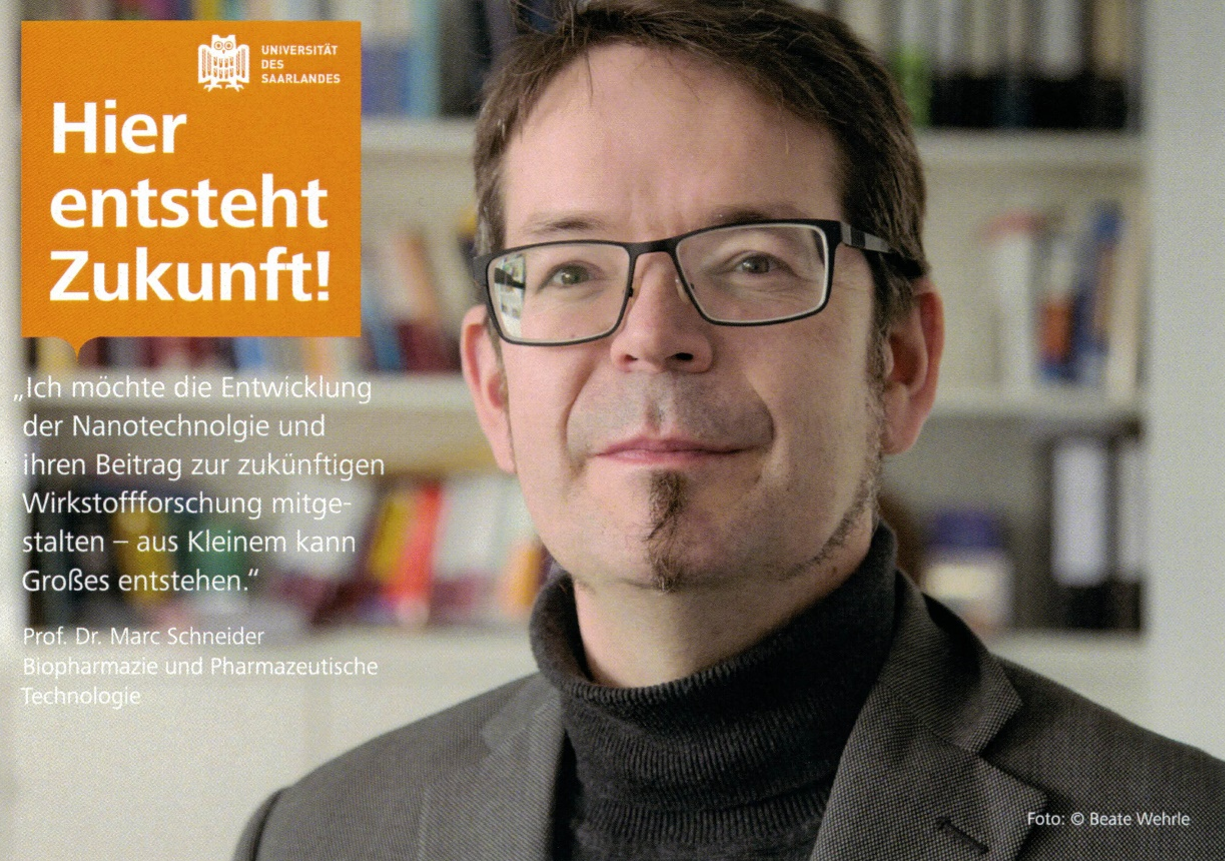
Prof. Dr. Marc Schneider holds a professorship in Biopharmaceutics and Pharmaceutical Technology at Saarland University's College of Pharmacy . His research focuses on colloidal drug delivery systems, particularly nanostructured and non-spherical particle engineering for overcoming biological barriers in pulmonary and transdermal applications. He leads an internationally recognized lab in Saarbrücken, collaborating with Helmholtz Institute for Pharmaceutical Research Saarland (HIPS) and trinational institutions. Research Highlights: Development of inhalable nano/microparticle systems Surface modification of gelatin nanoparticles Characterization of mucus-penetrating particles 3D printing for microneedle fabrication Atomic Force Microscopy (AFM) for nanoparticle analysis Selected Scientific Awards: European Journal of Pharmaceutics and Biopharmaceutics Best Paper Award (2018) for mucus-penetrating nanoparticles Recognized in 'Ausgezeichnete Orte im Land der Ideen' competition (2018) for 'Nano-Mais' drug delivery system Collaborative Networks: Co-editor for Advanced Drug Delivery Reviews special issue on biological barriers Key participant in trinational Master's program in Biomedicine with Strasbourg, Mainz, and Luxembourg Active in Controlled Release Society (CRS) conferences and local chapters
Arti K. Rai is the Elvin R. Latty Professor of Law and Co-Director of the Center for Innovation Policy at Duke Law School. She is an internationally recognized expert in Intellectual Property Law , Biotechnology , Administrative Law , and Health Law , with research funded by NIH, NSF, Arnold Ventures, and other institutions. Her work spans peer-reviewed journals like Science , New England Journal of Medicine , and Nature Biotechnology . Recent articles focus on AI challenges in patent law , biologics manufacturing patents , orphan drug policies , and data privacy in medical information commons . She has served in federal advisory roles, including the Department of Commerce and the National Academies’ Forum on Drug Discovery . Key themes in her research include trustworthiness in data-sharing systems , participant-centric governance , and legal frameworks for biomedical innovation . Her policy work addresses drug pricing , patent reform , and government licensing authority .