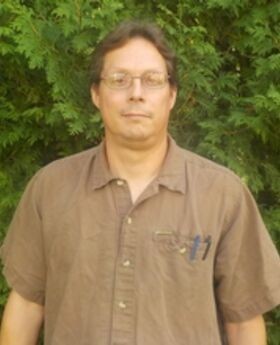
Professor İbrahim Cemal is a faculty member at Aydın Adnan Menderes University, holding a primary appointment in the Department of Animal Science within the Faculty of Agriculture, with a secondary affiliation to the Department of Biometry and Genetics. His academic career spans over two decades, focusing on research and education in animal sciences. Education background: Licence (1988-1992): Animal Science, Centennial University MSc (1994-1996): Animal Science, Centennial University Doctorate (1996-2001): Animal Science, Adnan Menderes University His research encompasses Animal Science with specialized interests in Genetics and Biometry , focusing on advanced methodologies in animal breeding and genetic data analysis.
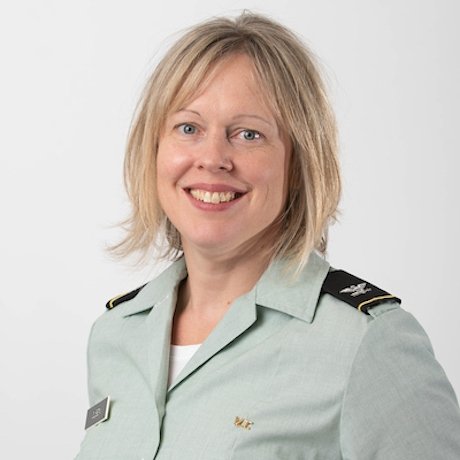
Dr. Nezih Ata serves as a Lecturer in the Department of Animal Science within the Faculty of Agriculture at Aydın Adnan Menderes University. His academic foundation includes: Doctorate in Animal Science (2012-2018) from Adnan Menderes University Institute of Science Master's in Animal Science (2009-2012) from Adnan Menderes University Institute of Science Bachelor's in Agricultural Engineering (2005-2009) from Adnan Menderes University Faculty of Agriculture Dr. Ata's research focuses on the intersection of animal breeding, genetic principles, and statistical methodologies in agricultural systems. His background bridges engineering precision with biological sciences, particularly emphasizing quantitative analysis in livestock production and genetic improvement programs. This dual expertise enables rigorous experimental design and data interpretation in agricultural research contexts. Professional activity centers on teaching and research within Aydın Adnan Menderes University. While specific grant details remain undisclosed, his departmental affiliation suggests engagement with national agricultural research initiatives. Current advising load and student mentorship details are not specified in available records.
Peter Hensen is a Professor of Quality Development and Management in Health and Social Services at the Alice Salomon University of Applied Sciences Berlin since 2010. His work focuses on quality management systems, healthcare policy, and professional development within the healthcare sector. He previously served as Head of the Master's program in 'Management and Quality Development in Health Care' from 2011-2020 and was Professor for Health Management at the University of Applied Sciences for Small and Medium-Sized Businesses in Bielefeld (2009). Professor Hensen holds a Doctorate (Dr. med.) from Philipps University of Marburg, a Habilitation (Priv.-Doz.) from the University of Münster, and multiple Master's degrees including MA in Human Resources Development and MA in Health and Social Institution Management from Technical University of Kaiserslautern, and MBA in University and Science Management from Osnabrück University of Applied Sciences. His research interests center on Healthcare Quality Management, Medical Quality Development, and Healthcare Systems, with significant contributions to understanding quality development principles in healthcare professions. Professor Hensen has published extensively on topics including peer review systems, organizational control mechanisms, healthcare quality reporting, and the relationship between healthcare management and professional qualifications. His work bridges theoretical frameworks with practical applications in healthcare settings, demonstrating an evolution from technical healthcare economics toward more comprehensive approaches integrating organizational psychology. Professor Hensen is actively involved in multiple professional organizations including the Society for Quality Management in Health Care (GQMG), German Society for Medical Informatics, Biometry and Epidemiology (GMDS), German Society for Quality (DGQ), and the Berlin Medical Association (AeKB). He has led significant research projects including 'Principles of professional quality development in healthcare – ProQual' (2018-2019), 'Konzeptionen und Praxeologie eines subjekt- und systembezogenen Managementbegriffs im Gesundheitswesen – KoPraG' (2017-2018), and 'Nachhaltigkeit in der Unternehmensführung und im Qualitätsmanagement – NahUQ' (2016-2017). His research has focused on quality development in healthcare, DRG systems, and healthcare management education.
Associate Professor Amanda French serves as Head of Discipline (Orthoptics) and Course Director for the Master of Orthoptics in the Graduate School of Health at the University of Technology Sydney. With extensive experience in both teaching and research, she has established herself as a leading expert in orthoptic practice and vision science. Dr. French's research focuses on ophthalmic epidemiology and eye healthcare services, with particular expertise in refractive errors, pediatric eye conditions, vision screening, and neuro-ophthalmology including stroke-related vision issues. Her work on the population-based Sydney Childhood Eye Disease Studies has gained international recognition, particularly her findings on the relationship between outdoor time and myopia development. She led the multidisciplinary evaluation of the NSW Statewide Eyesight Preschooler Screening (StEPS) Program, which informed national vision screening frameworks. Her publication record demonstrates consistent contributions to understanding myopia development and prevention, with recent work focusing on intervention strategies including outdoor time recommendations and optical/pharmacological approaches. Her research has influenced clinical practice guidelines adopted by organizations including the Royal Australian New Zealand College of Ophthalmology. Learning & Teaching Award for Individual Teaching (High Commendation), 2021 As an educator, she has played a leading role in designing the UTS Orthoptics Curriculum and teaches across multiple courses including Binocular Vision, Ocular Motility, and Neurological Ocular Disorders. Her professional leadership extends to Orthoptics Australia, where she has served on the National Council, as NSW Committee Chair (2018-2021), Vice President (2020-2022), and currently as President (since 2023).
Jing Tang is an Assistant Professor at the Department of Biochemistry and Developmental Biology within the Faculty of Medicine at the University of Helsinki . She also holds a Docentship in Biometry and serves as a Supervisor in Doctoral Programmes for Computer Science, Biomedicine, and Integrative Life Science. Education: PhD in Statistics (University of Helsinki, 2016), Docentship in Biometry (2016) Key Research Areas: Network pharmacology for precision medicine, mathematical modeling of drug synergy, systems-level cancer pathway inhibition, computational drug discovery, and biomedical informatics Article Trends : Recent publications focus on network-driven drug response prediction in acute myeloid leukemia, causal inference for essential gene analysis, graph neural networks in drug-target interaction modeling, and seasonal brain-adipose tissue interactions via μ-opioid receptor imaging. Tools developed include SynergyFinder+ and DrugComb platforms. Awards: Academy of Finland Research Fellow (2018), Helsinki Challenge Award (2017), HiLIFE Research Fellow (2017) Supervision: Leads the Tang Lab team, mentoring PhD researchers in method development and software engineering for cancer drug discovery
Ryan Stephens is an Assistant Professor in the Department of Biological Sciences within the School of Science, Engineering, and Math at East Tennessee State University. His research bridges animal ecology, fungal ecology, and forestry to understand how small mammals influence forest ecosystems through their consumption and dispersal of fungal spores and seeds. He maintains affiliations with multiple natural history museums as a specimen depositor and serves as a Curatorial Affiliate at the Yale Peabody Museum of Natural History. Dr. Stephens' research focuses on the intricate relationships between mycorrhizal fungi, small mammals, and trees. He investigates how small mammals act as dispersal vectors for mycorrhizal fungi, which are essential for tree nutrient and water uptake, similar to pollinator-plant relationships. His work examines how these interactions affect forest regeneration, particularly following timber harvesting, and how resource availability influences small mammal behavior and dietary niches. His methodological approach integrates field surveys and experiments with isotopic analyses, microscopy, and modeling to understand ecological processes across multiple spatial and temporal scales. Analysis of his recent publications (2020-2024) reveals a strong focus on mammal-fungal interactions, trophic ecology, and forest ecosystem functioning. His work spans multiple disciplines including mammalogy, mycology, stable isotope ecology, and forest management. Key themes include the role of rodents in fungal spore dispersal networks, effects of resource availability on small mammal behavior, and implications of forest management practices on ecosystem recovery. His research demonstrates how small-scale interactions between mammals and fungi scale up to influence larger ecosystem processes. Dr. Stephens has mentored numerous undergraduate students, with 13 completing independent research projects under his guidance. Five of these students have become co-authors on peer-reviewed publications, and four are pursuing graduate studies in biology or natural resources. His teaching includes courses in Vertebrate Zoology, Animal Evolution and Ecology, and Biometry, reflecting his expertise in both theoretical and quantitative aspects of ecology. In addition to his research and teaching, Dr. Stephens is deeply involved in natural history collections, having deposited over 6,000 mammal specimens and hundreds of truffle specimens in museums across the United States. He has trained dozens of students in specimen preparation techniques and advocates for the importance of museum collections in ecological research and education.
Christopher Bloch is a Professor of Biological Sciences at Bridgewater State University's Bartlett College of Science and Mathematics. He joined the faculty in fall 2006 and teaches General Biology II, Ecology, and Biometry (experimental design and statistical analysis in biological research). BS, Old Dominion University (1994) - Biology MS, Old Dominion University (1997) - Biology PhD, Texas Tech University (2004) - Biology Dr. Bloch's research focuses on population and community ecology, particularly examining how natural disturbances like hurricanes and anthropogenic disturbances such as logging affect population dynamics and community structure. His primary model organism is terrestrial snails, though he has also studied whip spiders, rodents, and bats across both tropical and temperate ecosystems. He maintains a strong interest in the mechanisms that generate broad-scale patterns of biodiversity. Dr. Bloch actively involves Bridgewater State students in his research, particularly in ongoing projects examining the ecology of terrestrial snails in Puerto Rico and local studies investigating the effects of habitat loss and fragmentation. His work bridges theoretical ecological principles with practical conservation applications. As an educator, Dr. Bloch specializes in biometry, providing students with essential skills in experimental design and statistical analysis for biological research. His interdisciplinary approach connects ecological theory with quantitative methods, preparing students for advanced research in the biological sciences.
Hande GÜÇLÜ is a Professor in the Department of Ophthalmology at Trakya University's Faculty of Medicine. Her academic qualifications include a Bachelor's degree (2007) and Post-Doctoral studies (2012). Her research focuses on ophthalmology, with emphasis on retinal diseases (e.g., age-related macular degeneration, diabetic retinopathy), glaucoma therapeutics, corneal pathology, ocular inflammation, and advanced imaging techniques like optical coherence tomography (OCT). She extensively investigates pharmacological interventions, oxidative stress mechanisms, and molecular pathways in ocular tissues. Her publications (2018–2024) predominantly explore clinical and experimental ophthalmology, including intravitreal drug efficacy, retinal barrier integrity, corneal alterations from medications, and molecular targets for neuroprotection. Research often integrates imaging biomarkers and in vitro disease modeling.
Prof. Dr. Michael Hauptmann serves as Head of the Institute for Biometry and Registry Research and Scientific Director of ZKS-BB (Center for Clinical Studies) at Brandenburg Medical School Theodor Fontane. He joined the institution on April 9, 2019, establishing himself as a leading academic in biostatistical research and medical education. His research focuses on statistical methods , health services research , and registry research , with particular emphasis on cancer epidemiology, radiation effects, and risk assessment in observational studies. Prof. Hauptmann's work bridges statistical methodology with practical applications in medical research, especially in understanding long-term health outcomes following radiation exposure. Recent publications demonstrate expertise in analyzing radiation-related cancer risks, developing statistical methods for observational studies, and conducting large-scale epidemiological research. His work spans from methodological developments in bias correction to applied studies on cancer risks following medical radiation exposure. Expertise in registries and biostatistics Specialized knowledge in radiation epidemiology Research on cancer risk factors and prevention Methodological work on bias in observational studies Analysis of long-term health effects following radiation exposure As an educator, Prof. Hauptmann teaches biometrics and statistics to medical students and researchers, emphasizing practical applications of statistical methods in medical research and clinical practice. His leadership at the Institute for Biometry and Registry Research supports clinical researchers across the medical school with study design, data analysis, and interpretation of results.
Dr. Marwan Suheimat is a Research Fellow at Queensland University of Technology's Faculty of Health, School of Clinical Sciences, specializing in advanced vision science research. His work focuses on ocular biometry, refractive error mechanisms, and myopia control interventions, collaborating extensively with leading researchers including Professor David Atchison. His primary research interests include Myopia Control , Accommodation Mechanisms , Peripheral Refraction Analysis , and Ocular Biomechanics . His investigations into choroidal thickness dynamics during accommodation and ciliary muscle dimension changes have provided critical insights into refractive error development. His methodological innovations in autorefractor technology and peripheral vision measurement have advanced clinical assessment protocols. Analysis of his recent publications reveals a strong emphasis on quantitative measurement techniques for studying ocular structures, with particular focus on myopia progression mechanisms and optical correction efficacy . His work bridges fundamental optical principles with clinical applications, particularly in developing improved diagnostic tools for vision science. Dr. Suheimat's research program demonstrates consistent productivity with high-impact publications in premier vision science journals including Ophthalmic and Physiological Optics , Investigative Ophthalmology & Visual Science , and Biomedical Optics Express , reflecting his significant contributions to understanding the optical and biomechanical properties of the human eye.
Prof. Dr. Mekin SEZİK is a distinguished faculty member at Süleyman Demirel University, Faculty of Medicine, Department of Obstetrics and Gynecology. With over 25 years of academic experience since completing his medical degree at Hacettepe University in 1997, he has established himself as a leading researcher in obstetric ultrasound, perinatology, and fetal medicine. His scholarly work spans more than 60 publications in high-impact journals, with an h-index of 20 and over 1,250 citations according to Google Scholar. Bachelor's Degree: Hacettepe University, Faculty of Medicine (English Program), June 30, 1997 Master's Degree: Akdeniz University, Medical Education (Thesis), August 4, 2016 Prof. SEZİK's research primarily focuses on advanced ultrasound techniques for fetal assessment, mechanisms of preterm birth, and interventions for fetal protection. His work explores three-dimensional volumetric measurements of fetal brain structures, cervical cerclage outcomes, and neuroprotective strategies against inflammation-mediated fetal brain injury. He frequently employs animal models to investigate fetal responses to various interventions and stressors, bridging basic science with clinical applications. His recent publications demonstrate expertise in developing reference ranges for fetal measurements and predictive models for adverse pregnancy outcomes. Analysis of Prof. SEZİK's recent publications reveals a strong emphasis on three-dimensional ultrasound applications for fetal brain assessment, particularly measurements of intracranial structures like the cisterna magna and cavum septi pellucidi. His research bridges clinical obstetrics with experimental studies investigating cellular and molecular mechanisms of fetal responses to stress and inflammation. A notable trend is his exploration of combined neuroprotective strategies, particularly magnesium sulfate with other agents like fingolimod, to prevent preterm brain injury. His work also addresses practical clinical questions regarding cervical assessment, prediction of preterm delivery, and management of pregnancy complications including hyperemesis gravidarum. Prof. SEZİK actively contributes to medical education through teaching Obstetrics and Gynecology courses for medical students in Periods 4 and 6, as well as a Project Implementation Course. His research on educational climate in surgical specialties demonstrates commitment to improving medical training environments. International Society of Ultrasound in Obstetrics and Gynecology (2010-Present) Turkish Gynecology and Obstetrics Association (1998-Present) Turkish Medical Association (1998-Present)
Allan Strand is a Professor at the Grice Marine Laboratory of the College of Charleston, specializing in evolutionary biology, global change biology, population genetics, and molecular ecology with emphasis on marine systems and invasive species. His academic credentials include: Ph.D. from New Mexico State University M.S. from the University of Georgia B.S. from the University of the South Strand's research examines evolutionary responses to environmental change through genomic approaches, focusing on marine organism population structure, invasion genetics, and host-parasite coevolution. He develops integrative models combining genetic, fossil, and environmental data to reconstruct biogeographic history and predict climate change impacts. Analysis of his recent publications (2020-2025) reveals consistent integration of multi-source data for biogeographic modeling, with strong themes in marine invasion genetics, co-phylogeography, and method development for conservation. His work bridges fundamental evolutionary questions with applied conservation, while his education research emphasizes undergraduate involvement in authentic research experiences. No scientific awards are documented in the provided materials. Strand actively mentors undergraduates through course-based research projects like unPAK (undergraduate phenotyping of Arabidopsis knockouts) and remote research initiatives. His collaborative NSF-funded work includes the 2018 ABI Innovation grant for biogeographic history modeling, demonstrating sustained external research support. Based at the Grice Marine Laboratory (205 Fort Johnson Road, James Island, SC), he teaches botany, plant taxonomy, genetics, biogeography, and biometry while leading genomic research on marine invasions and climate responses.
Darlene Olsen serves as Charles A. Dana Professor of Mathematics at Norwich University within the College of Arts & Sciences Department of Mathematics, concurrently coordinating the Vermont Biomedical Research Network (VBRN) for the institution. Her academic credentials include a Ph.D. in Mathematics from University at Albany, SUNY; M.S. in Biometry and Statistics; M.A. in Mathematics from the same institution; and B.A. in Mathematics from SUNY Geneseo. Dr. Olsen's research centers on biostatistics and pedagogy in mathematics/statistics, with interdisciplinary applications spanning engineering education curriculum development, clinical competency simulation in nursing, and environmental toxicology studies. Her work demonstrates consistent translation of theoretical frameworks into practical educational and biomedical contexts. Publication trends reveal strong cross-disciplinary collaboration across STEM and healthcare fields, with recent works addressing undergraduate engineering retention, nursing simulation efficacy, and molecular stress responses—highlighting methodological versatility in both quantitative and applied research. Her scientific recognition includes prestigious teaching and research honors. Homer L. Dodge Award for Excellence in Teaching (2013) Dr. Olsen has secured substantial external funding through NIH's Vermont Biomedical Research Network and a $2,000,000 NSF S-STEM award focused on eliminating financial barriers for STEM undergraduates. These grants support institutional capacity building and workforce development initiatives. As VBRN coordinator, she leads Norwich's integration into statewide biomedical research infrastructure, facilitating resource sharing and collaborative projects across Vermont academic and clinical institutions.