David-Olivier Jaquet-Chiffelle is a Full Professor at the School of Criminal Justice, University of Lausanne, where he serves as head of the Master program in forensic science (digital investigation and identification). He co-founded VIP Research & Consulting Sàrl and participates in the University of Zurich's Digital Society Initiative as a community member. He earned a PhD in Mathematics from the University of Neuchâtel and completed a post-doctoral fellowship at Harvard University, where he also lectured in the Department of Mathematics. His research spans digital security and societal technology implications , with emphasis on: Forensic science foundations and cybercrime investigation methodologies Privacy-preserving authentication systems and biometric pseudonyms Blockchain applications for document integrity (e.g., Horodocs timestamping) Ethical governance frameworks for cybersecurity in digital societies Current projects include EU H2020 CANVAS (workpackage leadership), Swiss NRP 77 ethical governance research (co-PI role), and blockchain development for medical statistics infrastructure used nationwide in Switzerland.
Jason Liu is a Researcher in the Department of Molecular Biophysics and Biochemistry at Yale University’s Yale School of Medicine. His work focuses on computational genomics, epigenetics, and the development of bioinformatics tools for analyzing genomic and regulatory data. He collaborates extensively on projects such as the ENCODE and EN-TEx initiatives, contributing to resources for cancer genomics and multi-tissue epigenome analysis. His research integrates machine learning, functional genomics assays, and systems biology approaches to study gene regulation, transcriptional networks, and the impact of genetic variants in diseases like cancer and psychiatric disorders. Key research interests include single-cell genomics, regulatory network modeling, and the application of AI to wearable health data. Notable contributions include SCAN-ATAC-Sim (a single-cell ATAC-seq simulation tool), the RADAR framework for RNA-binding protein variant analysis, and the DiNeR model for network rewiring analysis. His work bridges computational methods with experimental biology to advance personalized medicine and functional genomics. Liu has published over 15 peer-reviewed articles in journals like Nature, Nature Communications, and Genome Biology. His recent studies explore digital phenotyping via wearable devices, single-cell brain genomics, and multi-tissue epigenome integration. While no awards or grants are explicitly listed, his publications reflect significant contributions to bioinformatics and genomic medicine.
Dr. Xi Wang is an Assistant Professor in the Department of Materials Science and Engineering at the University of Delaware, where he has been since September 2018. Prior to this, he served as a postdoctoral researcher in the Department of Materials Science and Engineering at the University of California, Berkeley from 2014. He holds a PhD in Electrical Engineering from the State University of New York at Buffalo (2014) and a B.S. in Microelectronics from Tsinghua University, China (2007). Research Interests: Dr. Wang's work focuses on Nanophotonics , Dynamic tunable photonic devices , Micro/Nano-Electro-Opto-Mechanical Systems (MEOMS/NEOMS) , Semiconductor plasmonics , Metamaterials , Metasurfaces , Phase transition materials , and Two-dimensional materials . His research integrates theoretical and experimental approaches to advance optoelectronic and photonic technologies. Awards: University of Delaware Research Foundation (UDRF) Award (2020) Advising & Grants: Dr. Wang currently advises no listed students but has contributed to funded research through grants such as the UDRF Award. His work often involves collaborations with industry and academic partners to explore applications of novel materials and devices. Labs/Teams: While specific lab affiliations are not explicitly mentioned, his research likely aligns with interdisciplinary groups at the University of Delaware focused on advanced materials and photonics.
Roshan Peiris is an Assistant Professor at the School of Information, Golisano College of Computing and Information Sciences, Rochester Institute of Technology. His research focuses on creating accessible human-computer interaction systems for people with disabilities through virtual reality, haptic interfaces, and assistive technologies. Current courses taught: HCIN-600 Research Methods HCIN-700 Current Topics in HCI HCIN-797 MS HCI Directed Final Project ISTE-799 Independent Study His research explores: Accessible VR/AR for Deaf and Hard-of-Hearing individuals Thermal and vibrotactile feedback for sensory substitution Authentication methods for visually impaired users Immersive technologies for job training in neurodiverse populations Design of wearable haptic displays Biometric measurement of VR immersion Recent article trends include: Developing haptic captioning systems (2023-2025) Enhancing VR accessibility through spatial feedback (2020-2025) Creating inclusive authentication interfaces (2022-2024) Investigating olfactory and thermal haptic interfaces (2024) Evaluating assistive technologies for diverse populations (2020-2025) He collaborates with researchers across institutions in the United States, Canada, Germany, and Nigeria, with consistent publication presence at ACM SIGACCESS, CHI, and Human Factors in Computing Systems conferences.
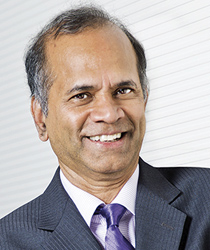
Prof. Rama Chellappa is a College Park Professor at the University of Maryland, affiliated with the Electrical and Computer Engineering Department and the UMIACS Institute. He holds dual appointments in the A.J. Clark School of Engineering and Computer Science. His academic career includes roles as Chair of ECE (2011–2018) and previously at the University of Southern California. Education: B.E. (Honors) from University of Madras (1975), M.E. from Indian Institute of Science (1977), M.S.E.E. and Ph.D. from Purdue University (1978, 1981). He has held prestigious titles like Minta Martin Professorship and Distinguished Faculty Research Fellow. Research focuses on computer vision, biometrics (face/gait analysis), secure AI systems, and medical imaging applications. Key interests include 3D modeling from video, hyper-spectral processing, and AI-driven healthcare solutions like aging and tumor evolution modeling. Awards: NAI Fellow (2020), IEEE Jack S. Kilby Medal (2020), K.S. Fu Prize (2012), multiple IEEE/OSA fellowships, and teaching awards (e.g., Poole and Kent Senior Faculty Teaching Award). Service contributions include Editor-in-Chief of IEEE TPAMI, leadership roles in IEEE Signal Processing Society, and conference organization. Holds four patents and co-authored influential books on neural networks and image processing. Labs/Teams: Active in UMD’s Computer Vision and Pattern Recognition groups, collaborating on projects like AI+AgeTech collaboratories and multi-modal biometric systems.
Jussi Rantala is a Staff Scientist at the Computing Sciences TAUCHI Research Center, specializing in multimodal interaction and human-computer interfaces. His work focuses on integrating haptic, olfactory, and visual feedback in extended reality (XR) systems to enhance user experience and sensory perception. Key research areas include haptic feedback design, ion mobility spectrometry for scent classification, and virtual reality applications in food science and environmental monitoring. Recent research highlights include studies on multimodal food augmentation to improve satiety perception, directional vibrotactile feedback for XR wearables, and odor-based human identification systems. Rantala’s contributions span 77 publications across conferences and journals, with notable datasets on scent classification and collaborative projects on wearable haptic devices. He has served as a reviewer for prestigious events like NordiCHI and EuroHaptics, and led a visiting research fellowship at the University of British Columbia (2015-2016). His work aligns with UN SDGs related to sustainable consumption and responsible innovation in technology.
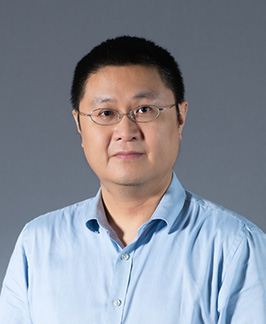
Professor Dong Xu is a faculty member at the University of Hong Kong's School of Computing and Data Science, Department of Computer Science. He holds a PhD from the University of Science and Technology of China (USTC). His research focuses on computer vision, multimedia, and machine learning, with applications in autonomous driving, AR/VR, medical image analysis, and video surveillance. He has published over 150 papers in top venues like CVPR, ICCV, and IEEE Transactions. He has received prestigious awards including IEEE and IAPR Fellowships, and holds editorial roles at ACM Computing Surveys and multiple IEEE Transactions journals. Education: B.Eng. and PhD from USTC (2001, 2005). Postdoctoral work at Columbia University, tenure-track roles at Nanyang Technological University and the University of Sydney. Current research includes developing machine learning methods for vision and multimedia systems. His publications emphasize cross-domain adaptation, neural networks for video analysis, and medical imaging. Recent work explores spatial-temporal modeling, adversarial learning, and generative AI in HCI. Leadership roles include Program Coordinator for ACM Multimedia 2024, steering committee member for ICME, and program co-chair for multiple conferences. Awards highlight his editorial contributions and research impact in pattern analysis. Advising: Supervised students whose work earned Best Student Paper (CVPR 2010) and IEEE Prize Paper (2014). Active in organizing international conferences and training future researchers.
Chern Hong Lim is a Senior Lecturer at the Malaysia School of Information Technology, Monash University Malaysia. He holds a Ph.D. and B.Sc. (Hons) in Computer Science from the University of Malaya. Previously, he was a Senior Lecturer at Tunku Abdul Rahman University College (2016–2018) and a Senior Associate Researcher at Telekom Research & Development Sdn Bhd (2014–2015). He is actively involved in the IEEE Computational Intelligence Society Malaysia Chapter and has served on organizing committees for international conferences such as ICIRA2020 and APSIPA 2017. His research focuses on applying AI and fuzzy logic to solve computer vision challenges, including explainable AI, cognitive video analysis, and medical imaging. He has published in prestigious journals like IEEE Transactions and Springer, and his work contributes to UN Sustainable Development Goals related to education and health. Recent projects include leadership roles in initiatives like WAge (healthy work environments) and CQP (data hiding formalization), demonstrating expertise in interdisciplinary research. Awards include the ITEX 2021 Gold Medal for BAITRADAR, an AI-driven clickbait detection system. Education: Ph.D. (2015), B.Sc. (2010) in Computer Science, University of Malaya Key Projects: WAge (2023–2027), CQP (2023–2026), DELTA (2022–2024) Expertise: Fuzzy computation, knowledge representation, pattern recognition, medical imaging
Laureano Moro-Velazquez is an Assistant Professor at Johns Hopkins University with appointments in the Department of Electrical and Computer Engineering and the Center for Language and Speech Processing (CLSP) . His work bridges signal processing , machine learning , and medical applications , focusing on neurodegenerative disease diagnosis and speech enhancement for under-resourced languages. PhD in Systems and Services Engineering for the Information Society (2018, Universidad Politécnica de Madrid) Master in Telecommunications Engineering (2006, Universidad Politécnica de Madrid) BSc in Sound and Image Engineering (2003, Technical University of Madrid) Research spans Voice pathology detection for Parkinson's and Alzheimer's Speech synthesis and enhancement using AI Cognitive assessment through handwriting and speech Domain adaptation in speaker verification Recent publications focus on multimodal biomarkers , handwriting analysis , and explainable AI for neurological disorders. Notable trends include cross-lingual speech processing and biometric fairness in speech recognition. Scientific contributions include Spanish Ministry of Economy and Competitiveness Mobility Grant (2017) Johns Hopkins University Teaching as Research Fellowship (2020) Teaching roles include Machine Learning for Medical Applications (undergraduate/graduate) and Artificial Intelligence in Medicine Reading Group . Collaborations involve Johns Hopkins School of Medicine (Neurology, Critical Care) and CLSP teams.
Kiran Bylappa Raja is an Associate Professor at the Department of Computer Technology and Informatics, Norwegian University of Science and Technology (NTNU). His research spans interdisciplinary domains including computer vision, biometrics, and remote sensing, with a focus on deep learning, image processing, and ethical AI applications. Recent publications highlight trends in next-generation computer science education, fire detection optimization for edge devices, facial recognition ethics, UAV-based re-identification, and demographic variability in biometric quality measures. Collaborations span institutions like Technische Universität Darmstadt (TUD) and University of Stavanger (UoS).
Jonas Auda is an active researcher at University of Duisburg-Essen specializing in virtual reality, cross-reality systems, and human-computer interaction. His work focuses on novel interaction techniques, haptic feedback systems, and bridging physical and virtual environments. He has published consistently since 2014, with a significant increase in output following his 2023 PhD completion. Dr. Auda's research interests center around enhancing user experience in virtual environments through innovative interaction methods. His work spans cross-reality systems that bridge physical and virtual worlds, haptic feedback mechanisms including drone-based interfaces, and novel approaches to 3D interaction and visualization. He has made significant contributions to understanding how users navigate and interact within virtual spaces, particularly through his work on hand displacement techniques and haptic props. His publication record shows a clear trend toward increasingly sophisticated cross-reality systems, with recent work focusing on generative AI applications in virtual environments, human-in-the-loop robot training, and comparative studies of different interaction modalities. The research demonstrates strong methodological rigor with careful comparative evaluations of different techniques across multiple platforms. Dr. Auda has received recognition through publications in top venues including CHI, MobileHCI, and ACM Computing Surveys, indicating his work is well-regarded in the human-computer interaction community. His collaborative pattern shows strong ties with researchers at University of Duisburg-Essen, particularly Stefan Schneegass and Uwe Gruenefeld. His research has practical implications for remote collaboration, education technology, and advanced user interfaces for virtual environments. Current work suggests continued exploration of AI integration with virtual reality systems and refinement of cross-reality interaction paradigms.
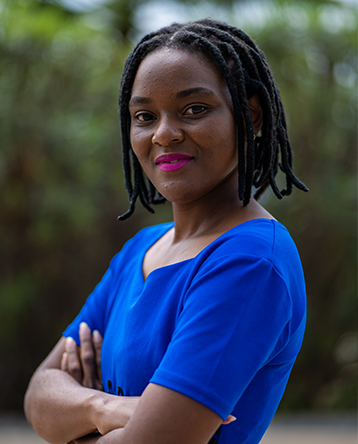
Edith Luhanga is an Assistant Professor at Carnegie Mellon University Africa . She previously served as a lecturer at the Nelson Mandela African Institution of Science and Technology (NM-AIST) in Tanzania. Her research focuses on designing theory-based behavior change systems that integrate human-centered approaches, with applications in health informatics (nutrition, maternal and child health, disabilities management), digital financial inclusion , and privacy/security . Education : Ph.D. in Information Science, Nara Institute of Science and Technology, Japan MSc in Advanced Computing Science BEng (Hons) in Electronic and Computer Engineering, University of Nottingham, UK Her recent publications highlight interdisciplinary work in mobile security , health informatics , and environmental monitoring , particularly using machine learning and deep learning for flood prediction in Tanzania's Kikuletwa River. She has also explored biometric technology adoption and mobile money practices in East Africa. Scientific Awards : OWSD Early Career Fellowship (2023) Next Einstein Forum Award (2022) Luhanga served as deputy project leader for a 10-year capacity-building project via digital technologies at NM-AIST and represented Tanzania in UNESCO's intergovernmental committee on AI ethics. She is affiliated with the Persuasive Technologies Lab and FINIA research group.
Dr. Jean-Luc Zarader is a Professor at Sorbonne University's Faculty of Engineering , serving as Deputy Director of the UFR of Engineering. Based at ISIR (Institute of Intelligent Systems and Robotics) in Paris, his research focuses on speech processing , neural networks , and binaural sound localization with applications in humanoid robotics and aircraft diagnostics. Key research areas: Speech coding, Nonlinear signal processing, Humanoid auditory systems, Fault diagnosis Active collaborations with teams: ACIDE, MLIA, IRIS Research Trends (2017-1996): 2017-2012: Whale bioacoustics, Aircraft diagnostics, Binaural localization 2007-2000: Speaker verification, Predictive coding, Neural network applications 1999-1996: Doppler lidar analysis, Speech compression His scientific contributions span multiple disciplines, including: Neural network optimization for signal processing Acoustic feature extraction Humanoid robot perception systems Aerospace fault detection Bioacoustic pattern recognition
Professor Mark Hansen is a distinguished academic at the University of the West of England (UWE Bristol), holding a professorship in the Department of Engineering, Design and Mathematics within the Faculty of Environment and Technology. He is a key member of the Centre for Machine Vision at the Bristol Robotics Laboratory, where his work bridges theoretical computer vision with practical applications across multiple industries. His research portfolio spans academic and commercial projects, with a strong emphasis on translating laboratory innovations into real-world solutions through close industry partnerships. Professor Hansen earned his academic credentials from prestigious institutions, completing a BSc(Hons) in Psychology and an MSc in Computer Science at the University of Bristol before earning his PhD at UWE in 2012 with a thesis titled "3D Face Recognition Using Photometric Stereo." His educational background in both psychology and computer science has uniquely positioned him to develop biometric systems that incorporate human perception principles. Professor Hansen's research interests center around computer vision and machine learning, with particular expertise in photometric stereo techniques for 3D acquisition. His work spans multiple domains including agricultural technology (agri-tech), livestock welfare monitoring, microplastic detection, and precision farming systems. He has pioneered applications of photometric stereo for face recognition, plant phenotyping, and animal biometrics, demonstrating exceptional versatility in applying core computer vision techniques to diverse problems. His research consistently emphasizes practical implementation, with numerous projects resulting in commercialized technologies that address real-world challenges in agriculture and environmental monitoring. Analysis of Professor Hansen's recent publications reveals a strategic expansion of his core expertise in photometric stereo and 3D vision into increasingly diverse application domains. While maintaining his foundational work in biometrics and face recognition, he has successfully transitioned these techniques to agricultural contexts (pig and cow identification), environmental monitoring (microplastic detection), and sustainable food production systems (aquaponics optimization). His publication pattern shows a clear progression from fundamental computer vision research to applied interdisciplinary work addressing global challenges in food security, environmental sustainability, and animal welfare. Highly commended prize for innovation at the National Potato Industry Awards for the Harvesteye system Associate Editor for Elsevier's Computers and Electronics in Agriculture Featured on BBC Click for 3D Handprint Recognition research Featured on Netflix's "Connected" S1Ep1 for Pig Face Recognition work Professor Hansen has supervised six PhD students to completion with projects including "3D video based detection of early lameness in dairy cattle" and "3D plant phenotyping system using photometric stereo," and currently supervises seven additional PhD students through UWE, the Farscope CDT and SWBio schemes. His research is supported by substantial grant funding from diverse sources including InnovateUK, BBSRC, AHRC, EPSRC, JPIAMR, and international collaborations with institutions such as Imperial College, Notre Dame University, Bristol University, Manchester University, SRUC, and others. Current major projects include Intellipig (pig health monitoring), Mealworm protein production automation, FARM interventions to Control Antimicrobial Resistance, Pig ID tracking systems, and microplastic monitoring in home environments. Professor Hansen leads research within the Centre for Machine Vision at the Bristol Robotics Laboratory, a world-class facility that fosters interdisciplinary collaboration between computer scientists, engineers, and domain experts from agriculture, environmental science, and healthcare. His team includes three dedicated research staff working on 3D Face Recognition, Photometric Stereo, 3D acquisition technologies, reflectance mapping, and agri-technology applications. The collaborative nature of his work is evident in the extensive network of academic and industry partners spanning multiple continents, reflecting the practical impact and interdisciplinary relevance of his research.
Yan Zhang is a Professor at the University of Texas at Austin's School of Information, specializing in information systems and consumer health informatics. His research focuses on user perceptions of web-based information retrieval systems and the design of consumer health information systems. He teaches courses such as Information Architecture and Design, Survey of Information Studies, and Consumer Health Informatics. His work spans cutting-edge topics in artificial intelligence, including vision-language models, 3D reconstruction, and large language model optimization. Recent research includes advancements in dataset distillation, diffusion models, and neural rendering techniques like Gaussian splatting. He actively explores applications in healthcare, such as AI-driven echocardiography interpretation and medical privacy in generative models. Publications highlight contributions to model efficiency (e.g., sparse transfer learning, rank-aware pruning) and multimodal systems (e.g., fusion of biometric data for person recognition). His work often addresses practical challenges in deploying AI systems across domains like autonomous driving, robotics, and clinical decision support. Zhang's research is supported by collaborations involving advanced visualization techniques, long-tailed disease classification, and multimodal SLAM systems. His courses reflect a commitment to bridging theory and practice in information science education.